
Prominent theorists and critics within the discipline contend that architecture is once again approaching a paradigmatic shift, catalyzed by the rapid proliferation of artificial intelligence tools. Yet, a critical disjunction remains between the generative potential of computational design and the material realities of fabrication. This section of the thesis investigates and develops novel design methodologies oriented toward the realization of three-dimensional physical models, as opposed to the predominantly two-dimensional visual outputs characteristic of current AI-assisted architectural design. In this context, fabrication is not merely an afterthought but is re-integrated as a vital design parameter—one that actively engages with AI-generated hallucinations and other emergent computational strategies within the creative process.

Desert Biomimetics
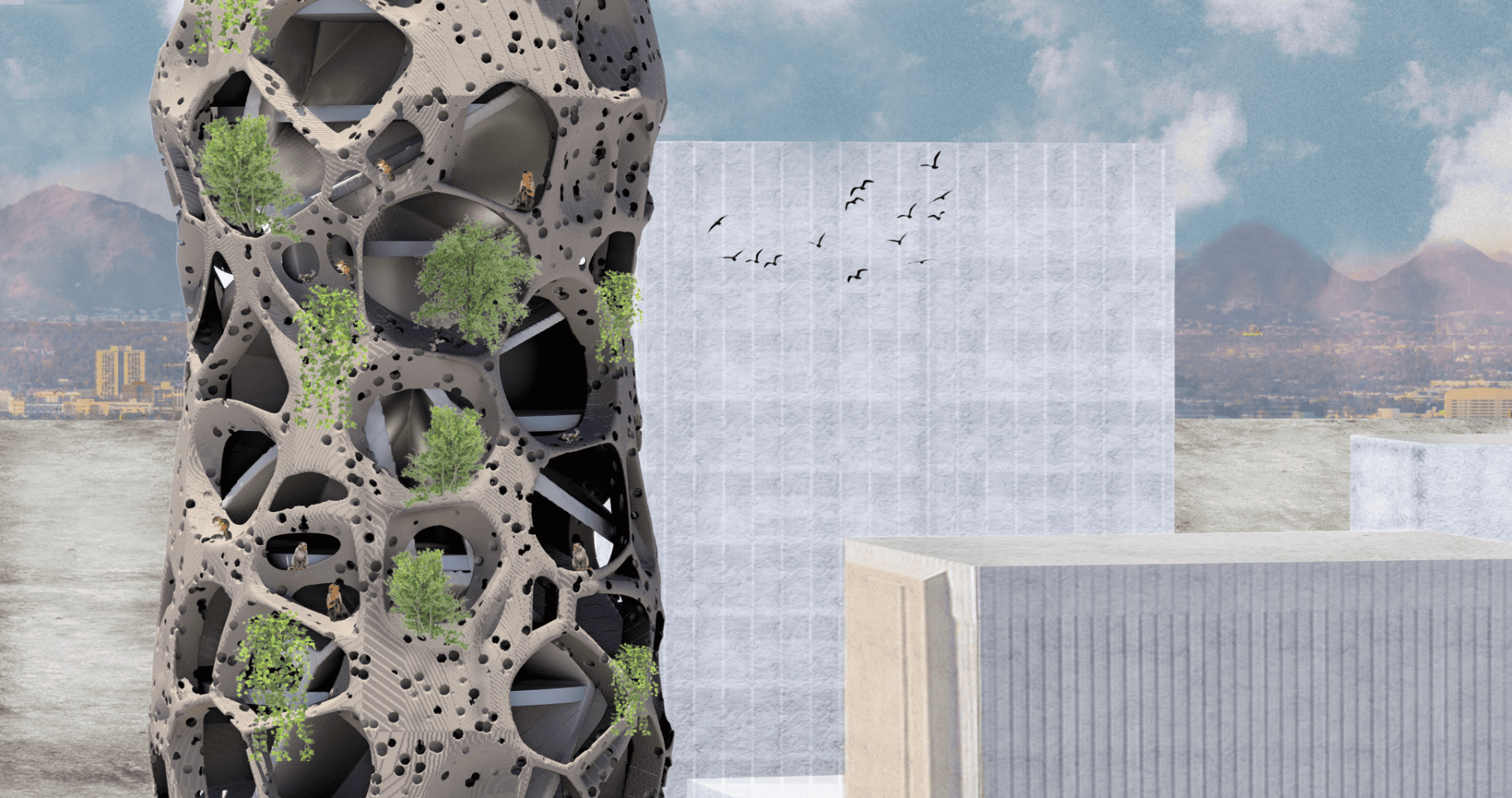
Natural systems often display a balance of order and randomness—seen in honeycombs, soap bubbles, and plant growth—demonstrating highly evolved, efficient solutions developed over millennia. Designers have long drawn on such biological intelligence to solve architectural challenges. Bio-inspiration, encompassing bionics, biomimetics, and bioinformed design, offers powerful strategies for enhancing performance.
This thesis explores how AI tools can be leveraged to translate biomimetic principles into three-dimensional architectural forms, with a focus on performance-driven outcomes. Set in Phoenix’s arid climate, the Cholla cactus serves as a model. Its interlocking, lightweight skeleton informs a structural system optimized for strength, material efficiency, and environmental responsiveness.
The proposed design uses a composite of desert sand and organic binders, reducing material impact while enhancing ventilation, passive cooling, and daylighting. Ultimately, this research investigates how AI and biomimicry together can drive high-performance, sustainable architecture rooted in natural intelligence.

Hallucinating Heritage: Reimagining Spatial Boundaries as Non-Rigid Surfaces
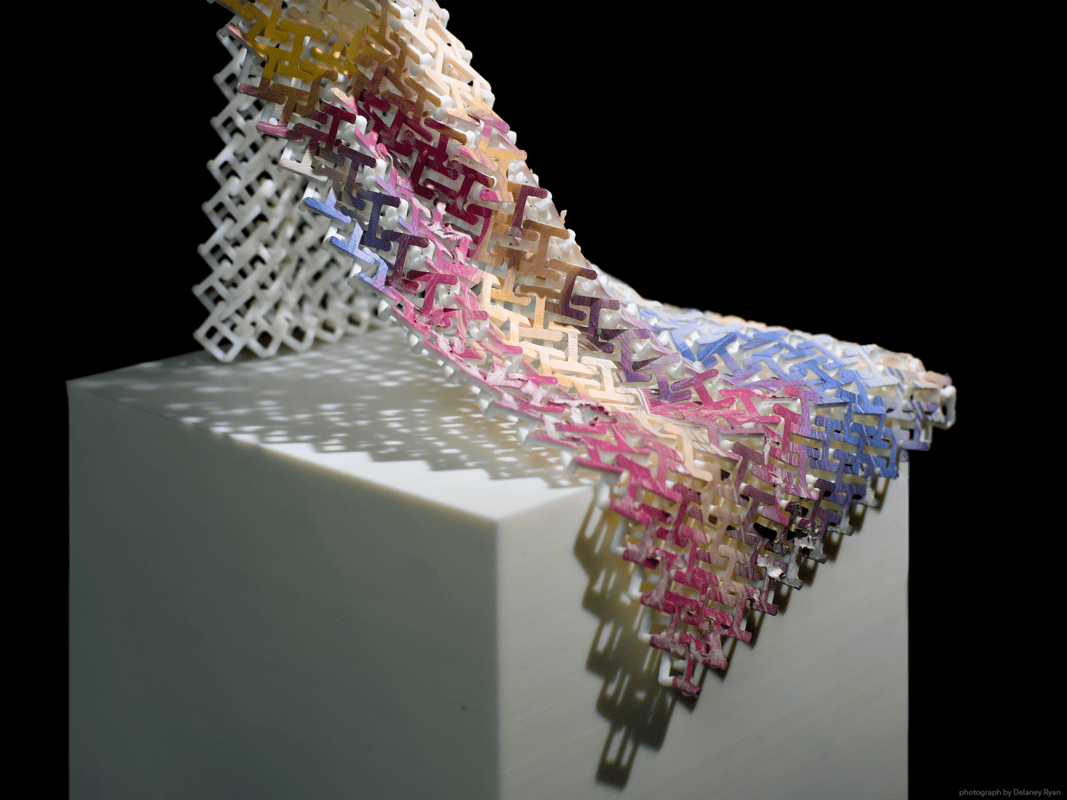
This research repositions textiles as generative design elements challenging traditional architectural notions of rigidity and structure. By integrating indigenous textile traditions with digital fabrication it proposes a material and spatial framework that reintroduces cultural specificity into contemporary practice. The project develops interlocking, flexible connections for 3D-printed textile modules that enable adaptable fabric-inspired architectural systems. It also investigates how 3D printable construction materials like concrete, metal or wood can be assembled additively to simulate textile flexibility, reimagining their potential through novel fabrication approaches. Using PLA-based modular systems and sublimation printing, the research maintains the visual language of traditional textiles while pushing the boundaries of tectonic performance. This synthesis of heritage and technology envisions a new architectural vocabulary rooted in softness, adaptability and identity transforming how we conceive, fabricate and inhabit space.
Ornamental Hallucination: Aggregational Structure & Generative Scenery
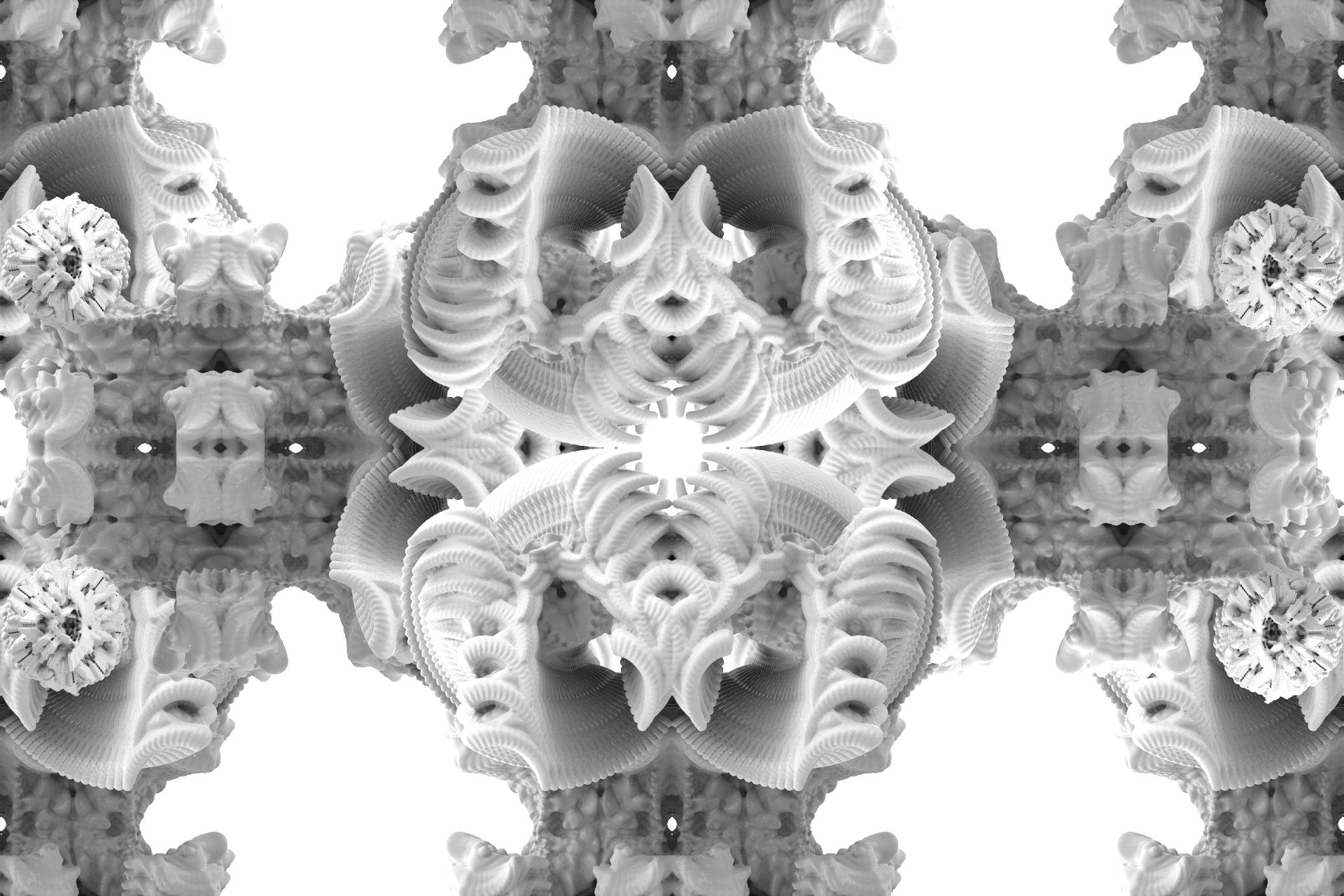
This research blends computational design, artificial intelligence, and digital fabrication to challenge the traditional dichotomy between ornamentation and structure in contemporary architecture. Through algorithmic deconstruction and reinterpretation of historical ornamentation, decorative elements are reconceived as integral components of building frameworks, transcending their traditional role as superficial adornments. A novel methodology redefines the conventional role of columns by integrating ornamentation directly into column-to-floor and column-to-ceiling connections. This integration transforms columns from passive load-bearers into dynamic architectural elements that “embrace” adjoining surfaces. Supported by advanced computational techniques and 3D printing, the study demonstrates how contemporary technology can reintroduce ornamentation as a functional feature of primary structural elements, effectively bridging aesthetic and structural roles in architectural design.
Suspended Symbiosis: Displacing Density Through a Lightweight, Adaptive Superstructure
As humanity continues to expand, we have occupied over 6.24% of the Earth’s total surface, even though only 9.6% is truly habitable. That means 65% of livable land is already developed—leaving just 3.36% untouched. In consuming so much of what little Earth can offer, we’ve erased ecosystems, forests, and biodiversity. This thesis is an experimental proposition—a new way of thinking about how architecture can evolve to diminish our physical footprint on the land by reimagining both the form and geometry of how we build.
It proposes a suspended, porous superstructure that elevates human civilization above the ground, making way for a continuous international park below. Inspired by the microscopic strength of graphene and carbyne, the system uses a voronoi-based geometry to distribute density in the air through a lightweight, resilient lattice. The structure rises above dense urban cores and lowers over suburban landscapes, responding to existing conditions while minimizing ground impact.
The story this thesis tells is one of reversal: by lifting our footprint, we restore the planet’s surface—opening space for biodiversity, sustainable agriculture, and ecological stewardship. This is not architecture as domination, but as symbiosis—a continuous, evolving system that lets the Earth breathe, and redefines how we coexist with the land.

Synaptic-smith
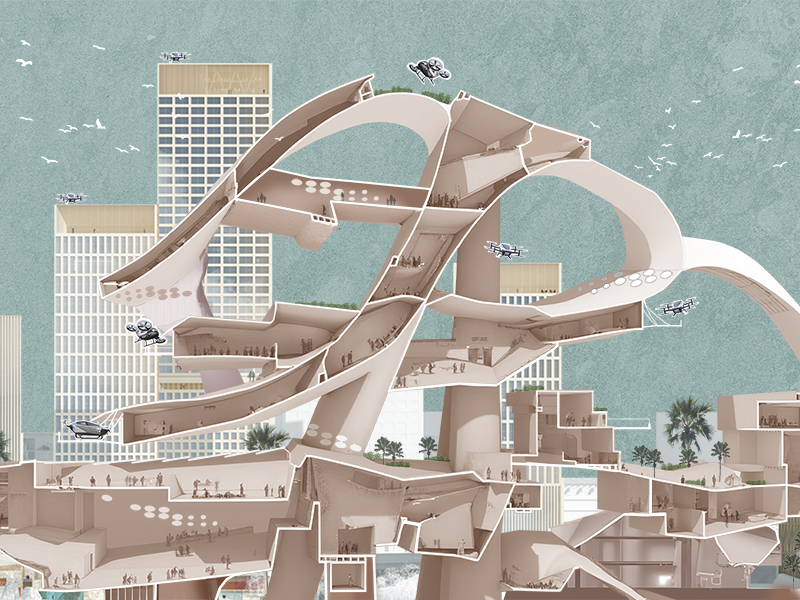
In the near future, as humans live increasingly isolated lives within high-density vertical towers, traditional circulation systems will no longer suffice. With advancements in vertical mobility, such as passenger drones, architecture must adapt to facilitate multidimensional movement and social interaction. This thesis explores neuroscience-inspired circulation strategies that are incorporated into vertical architecture system. Drawing from neural networks, these pathways will be designed using AI-generated spatial patterns and computational creating intuitive, organic circulation systems. Rather than mere passageways, these structures will foster engagement and counteract isolation, transforming circulation into an
immersive spatial experience. By integrating neuroscience aesthetics and emerging mobility technologies, this project envisions a new architectural paradigm where buildings can be programmed into vertical cities that promote connection, interaction, and fluid movement beyond traditional corridors and elevators.
Embedded Ontology: Object Ontologies through higher dimensional word embeddings in AI architecture
This research examines how object relationships encoded in AI embedding spaces manifest as formal properties through vicarious causation, where AI-generated forms reveal dormant connections between objects. Through Object-Oriented Ontology and vector space analysis, we investigate how AI mediates object relationships in architectural design, suggesting that AI latent spaces partially model a deeper topology containing all possible object relationships.
By analyzing how AI systems leverage lexical hierarchies across modalities—from image generation (Stable Diffusion, DALLE) to 3D synthesis (MeshGPT)—through WordNet-based datasets (MS COCO, ImageNet, ShapeNet), we explore how latent spaces encode object relationships. The persistence of WordNet’s hypernym-hyponym relationships across evolving transformer AI systems indicates that lexical hierarchy fundamentally structures AI understanding, independent of output modality.
While human perception shapes lexical relationships through labeled datasets, the vector transformations in latent space constitute relationships between real objects. This research leverages these transformations to establish an architectural language where proto-architectural objects, united by shared formal principles, can be combined while maintaining their distinctness. This shifts the architect’s role from form-maker to curator of object relationships, positioning non-architectural objects as active agents in AI-mediated design intelligence and suggesting new directions for architectural pedagogy and practice.
A Collapsing Environment
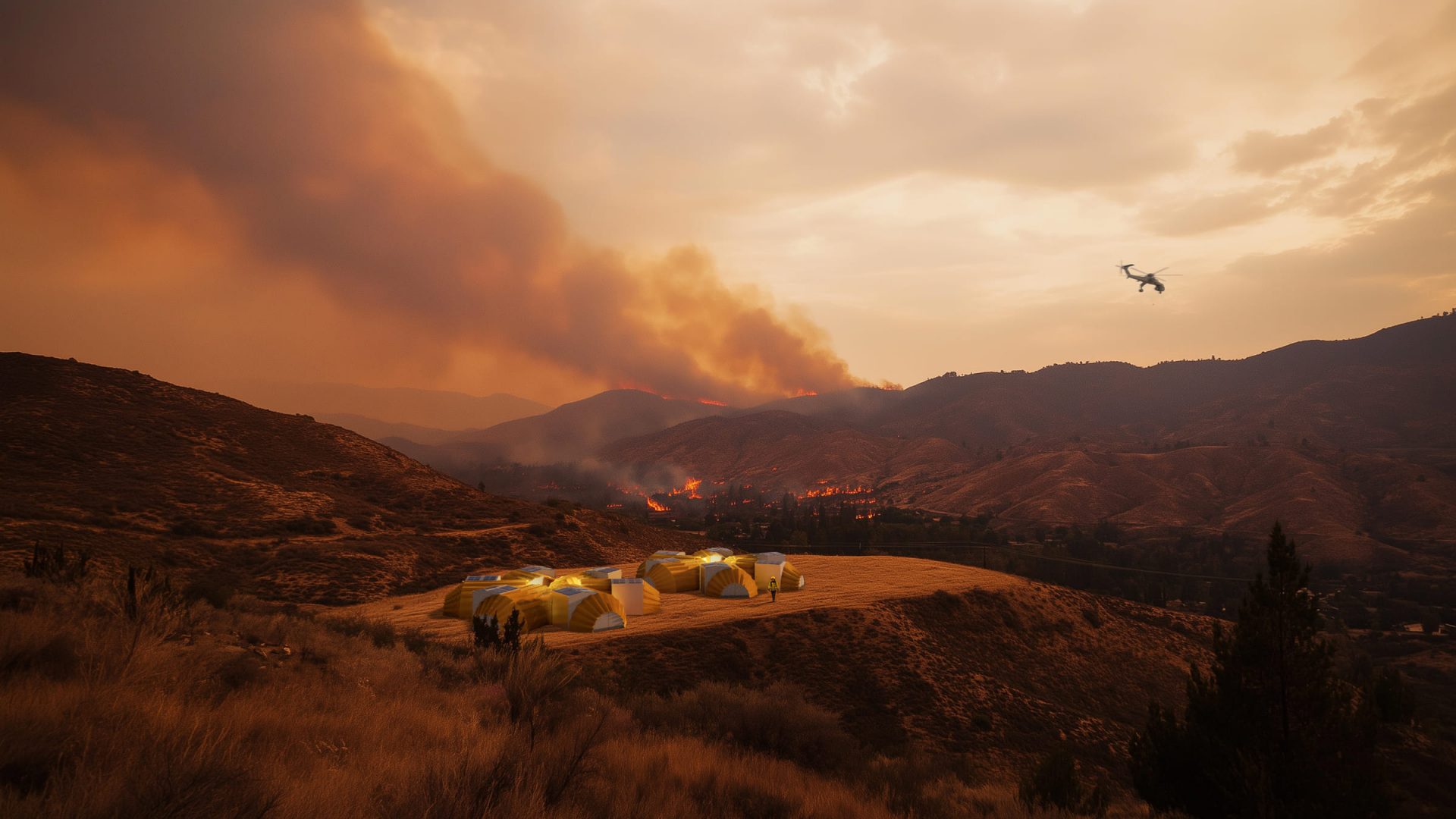
As the frequency of natural disasters continues to increase, we must ensure that our response to these events is as quick, reliable, and effective as possible. Earlier this year, thousands of emergency personnel were actively helping to manage and extinguish an unprecedented series of wildfires across Los Angeles County, many of whom traveled from out-of-state and occupied local hotels. With over 10,000 homes destroyed by these fires, this hotel space is a critical safety net for displaced residents. Providing temporary shelters to first responders would free up hotel space and allow them to operate closer to the fireground, reducing transportation time and improving fire coverage. In order to be effective, these shelters need to be durable, easy to operate, and compatible with emergency equipment. By utilizing 3D printed material with innovative built-in folding patterns, new shelters can be created with a reinforced enclosure and efficient operation on-site, making it effective for quickly changing conditions. Experimenting with the granular settings of the 3D printing process, such as its infill, density, angle, or layering allows us to add functional details to the enclosure of these shelters that is custom-made to enhance the working conditions of first-responders through aesthetic and equipment-specific features.
ANOMALOUS ASSEMBLAGES: Reconfiguring Memory, Material, and Space Beyond the Ground for New Spatial Formations and Material Legacies
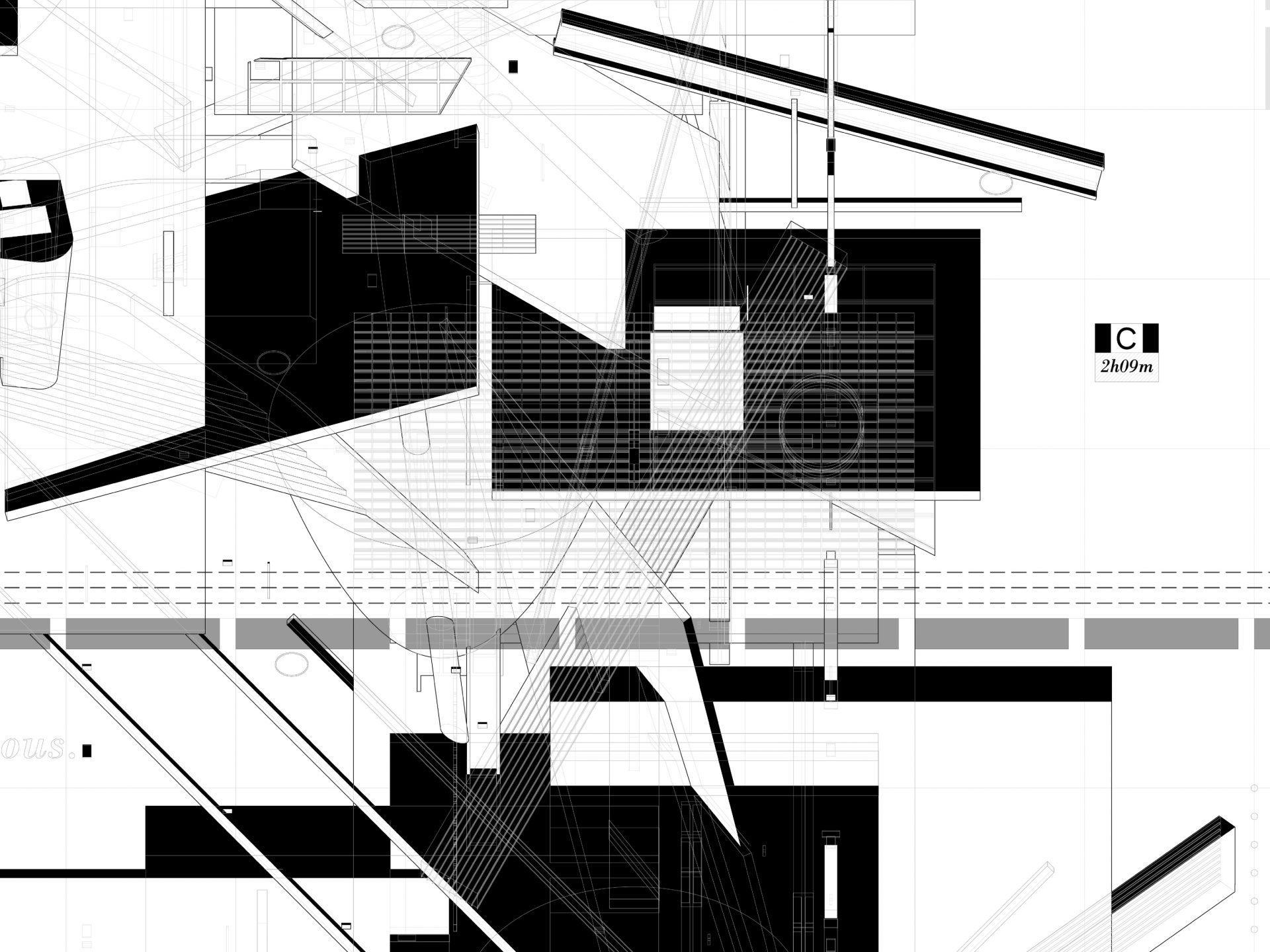
There is an architecture that exists beyond the ground—one that is suspended, entangled, and radically assembled from fragments of the past. But what happens when these fragments are not just structural remnants, but carriers of memory, layered with histories of use, abandonment, and transformation? If the ground has long been a contested site—marked by power, division, and resource consumption—what spatial possibilities emerge when architecture rejects its fixity? As material scarcity accelerates and the climate crisis renders traditional modes of construction untenable, how can architecture move beyond the logic of infill and repair toward a paradigm of computational assemblage offering a new spatial language and typology when it comes to adaptive reuse? What if reuse is no longer an act of preservation, but a generative method—one that algorithmically recombines architectural debris into new, hyper-connected spatial formations? And how might this method challenge the way we perceive permanence, enclosure, and form?
Thus, how can computational assemblage redefine architectural space by rejecting the ground plane, transforming found fragments into hyper-connected, suspended formations that challenge conventional power structures, material permanence, and memory?
Crafting Excess: AI, Poche, and the New Ornamental
This thesis reclaims ornamentation as a democratized and emotionally resonant language for the digital age. It leverages AI’s capacity to generate semantically ambiguous motifs—hyper-complex geometries that challenge traditional craftsmanship and aristocratic symbolism. By combining these with advanced additive fabrication, the work proposes a new paradigm of architectural expression. The forms created through human-AI collaboration prioritize individuality and cultural diversity. They transform facades into dynamic poche of textured spatial narratives. By bridging algorithmic creativity with mass customization, this thesis redefines ornamentation as a performative and inclusive act. It represents a sensory rebellion against homogeneity that re-enchants the built environment.
