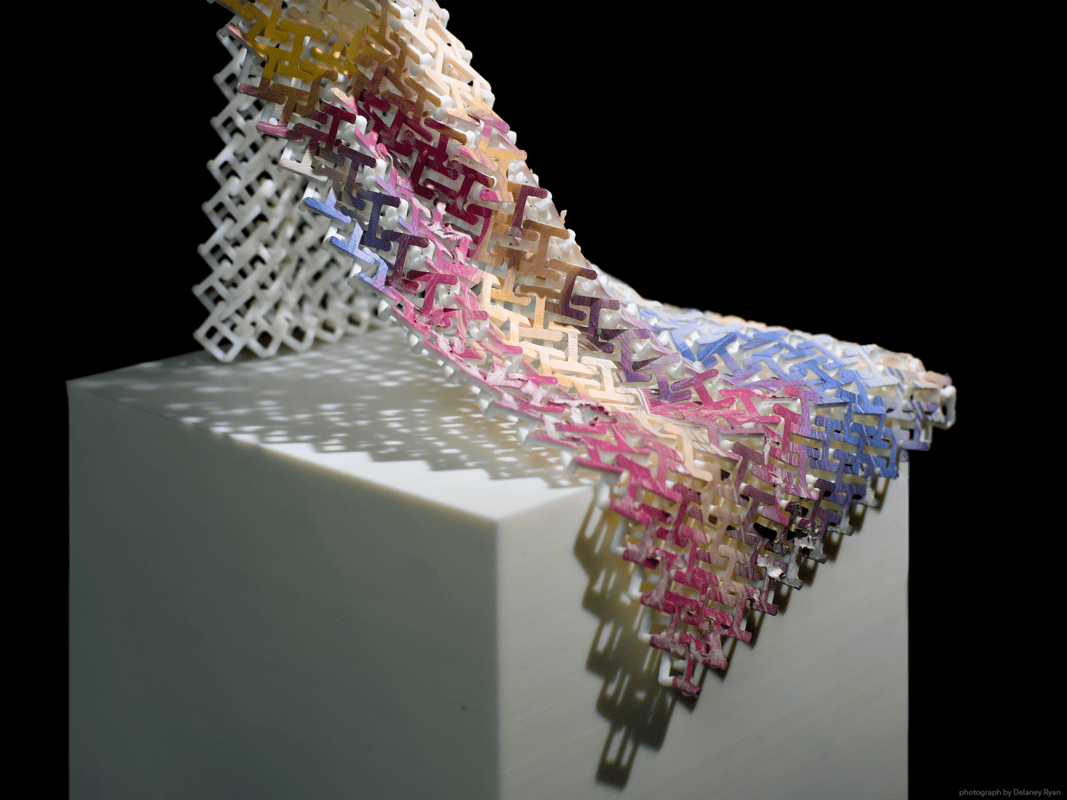
This research repositions textiles as generative design elements challenging traditional architectural notions of rigidity and structure. By integrating indigenous textile traditions with digital fabrication it proposes a material and spatial framework that reintroduces cultural specificity into contemporary practice. The project develops interlocking, flexible connections for 3D-printed textile modules that enable adaptable fabric-inspired architectural systems. It also investigates how 3D printable construction materials like concrete, metal or wood can be assembled additively to simulate textile flexibility, reimagining their potential through novel fabrication approaches. Using PLA-based modular systems and sublimation printing, the research maintains the visual language of traditional textiles while pushing the boundaries of tectonic performance. This synthesis of heritage and technology envisions a new architectural vocabulary rooted in softness, adaptability and identity transforming how we conceive, fabricate and inhabit space.
Hallucinating Heritage: Reimagining Spatial Boundaries as Non-Rigid Surfaces