
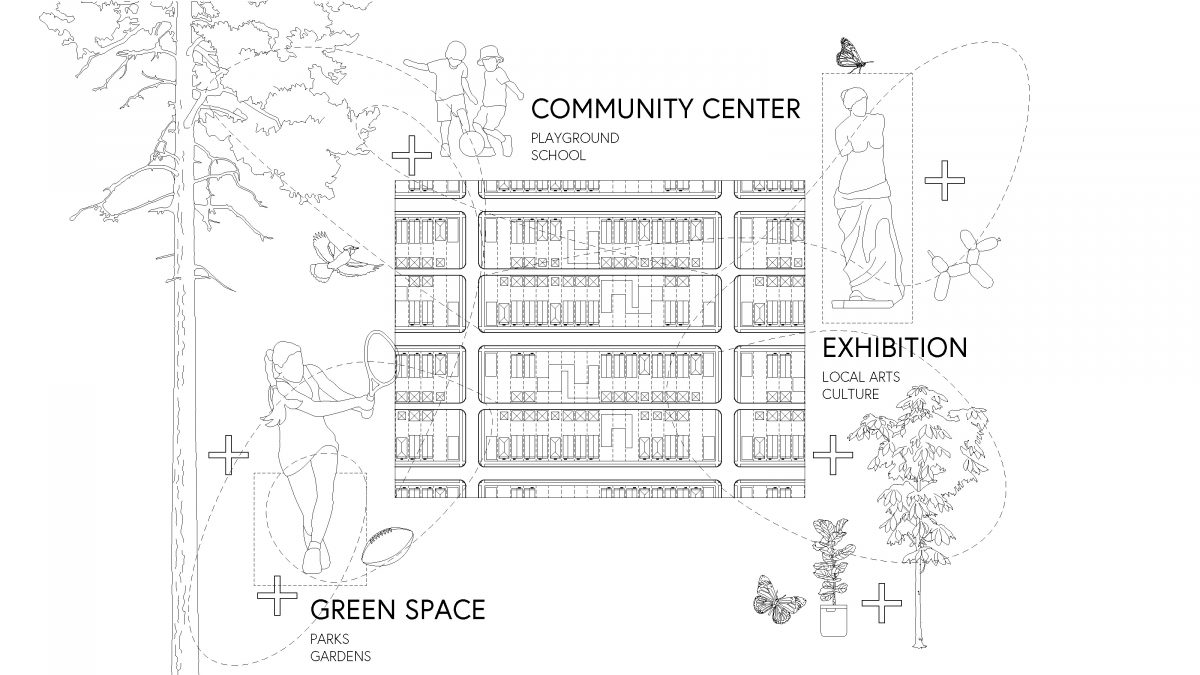
Re:Alley explores the transformation of Los Angeles’ overlooked alleyways into dynamic, community-driven spaces. This thesis proposes a modular, flat-pack kit system inspired by traditional Japanese joinery to activate and reimagine these underutilized corridors. Drawing from the principles of craftsmanship, modularity, and tactical urbanism, Re:Alley presents a scalable solution that fosters flexibility, adaptability, and inclusivity in public space design. The kit incorporates a variety of programmable elements—such as market stalls, seating areas, garden spaces, and art installations—that can be easily assembled, disassembled, and rearranged without specialized labor or permanent construction. This adaptability allows alleyways to support a range of activities, from pop-up markets and educational workshops to cultural events and communal gatherings.
The design process is informed by a combination of ArcGIS mapping, AI-generated visualizations, and hands-on material research. Through this methodology, Re:Alley identifies key alleyway networks with the highest potential for social and economic revitalization, while also exploring how visual storytelling can reframe public perception of these spaces. By treating alleyways not as leftover infrastructure but as vital connectors within the urban landscape, the project challenges the conventional understanding of what constitutes public space in a sprawling metropolis like Los Angeles.
At its core, Re:Alley is a call to rethink small-scale urban interventions as catalysts for broader community engagement and urban regeneration. The project highlights how thoughtful design and craftsmanship—embodied through joinery techniques and modular systems—can offer a cost-effective, sustainable way to revive neglected infrastructure. In doing so, it aims to elevate alleyways from spaces associated with neglect and crime to active, celebrated parts of the city’s cultural and social life. Ultimately, Re:Alley proposes a future where these hidden corridors are not forgotten voids, but thriving spaces of gathering, creativity, and connection.


