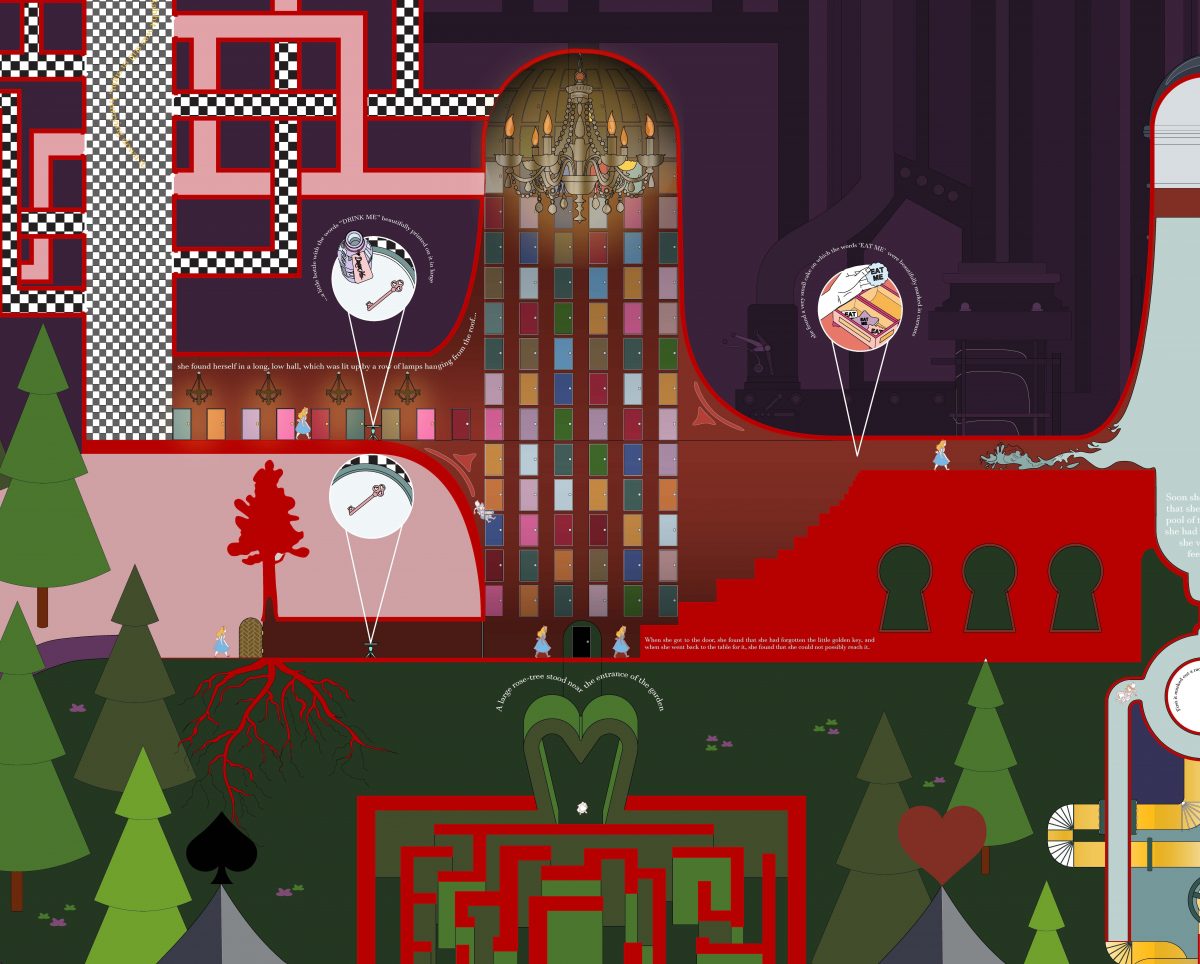
This thesis project explores how standard orthographic drawings, much like literature, communicate stories through visual and pictorial clues. By examining parallels between architectural representation and narrative techniques in literature, film, video games, and comics, the project challenges the notion that architecture is limited in its expressive capacity, demonstrating that drawings themselves can act as narrative devices that engage both practical and emotional storytelling. Using the story of Alice in Wonderland as a narrative framework, the project investigates architectural representation techniques through a series of vignettes, each exploring different levels of control over information given to the audience. These moments reveal how drawings can shape perception, obscure or reveal meaning, and guide interpretation—treating architectural representation not just as a technical tool, but as a visual language of narrative construction.
Spatial Fiction:Exploring the narrative potential of architectural representation