Master of Heritage Conservation students learn how to strengthen communities using existing places and the stories they tell. Each student selects a thesis topic that fuels their passion, pushes the boundaries of the field, and has very real consequences for the built environment. How do we use places to advance racial equity and social justice, address climate change, and foster healthy communities? How do we choose which places and stories matter? This course introduces and explores topics to help students develop a thesis prospectus and directed research toward the completion of their master’s thesis in heritage conservation.

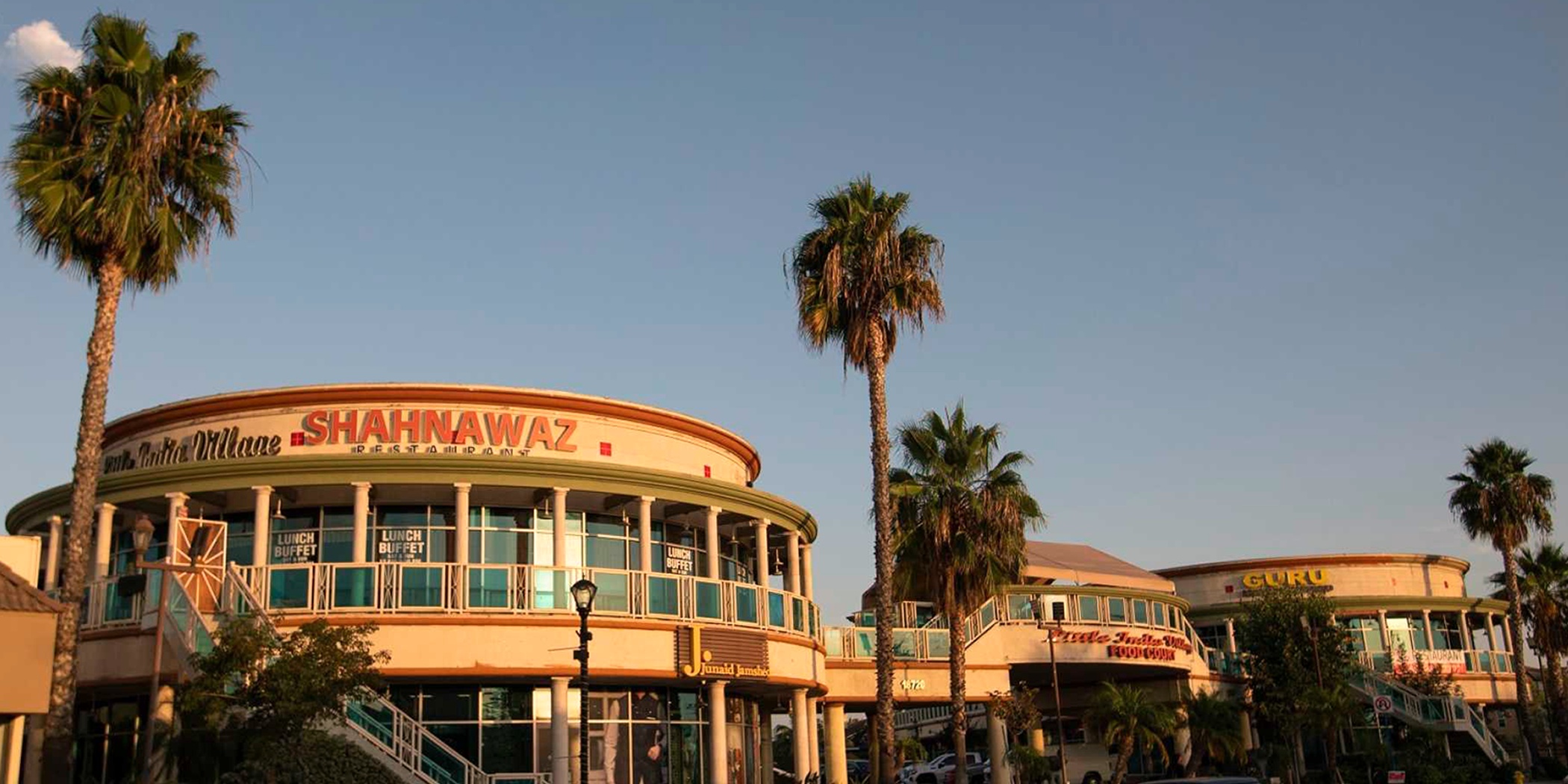
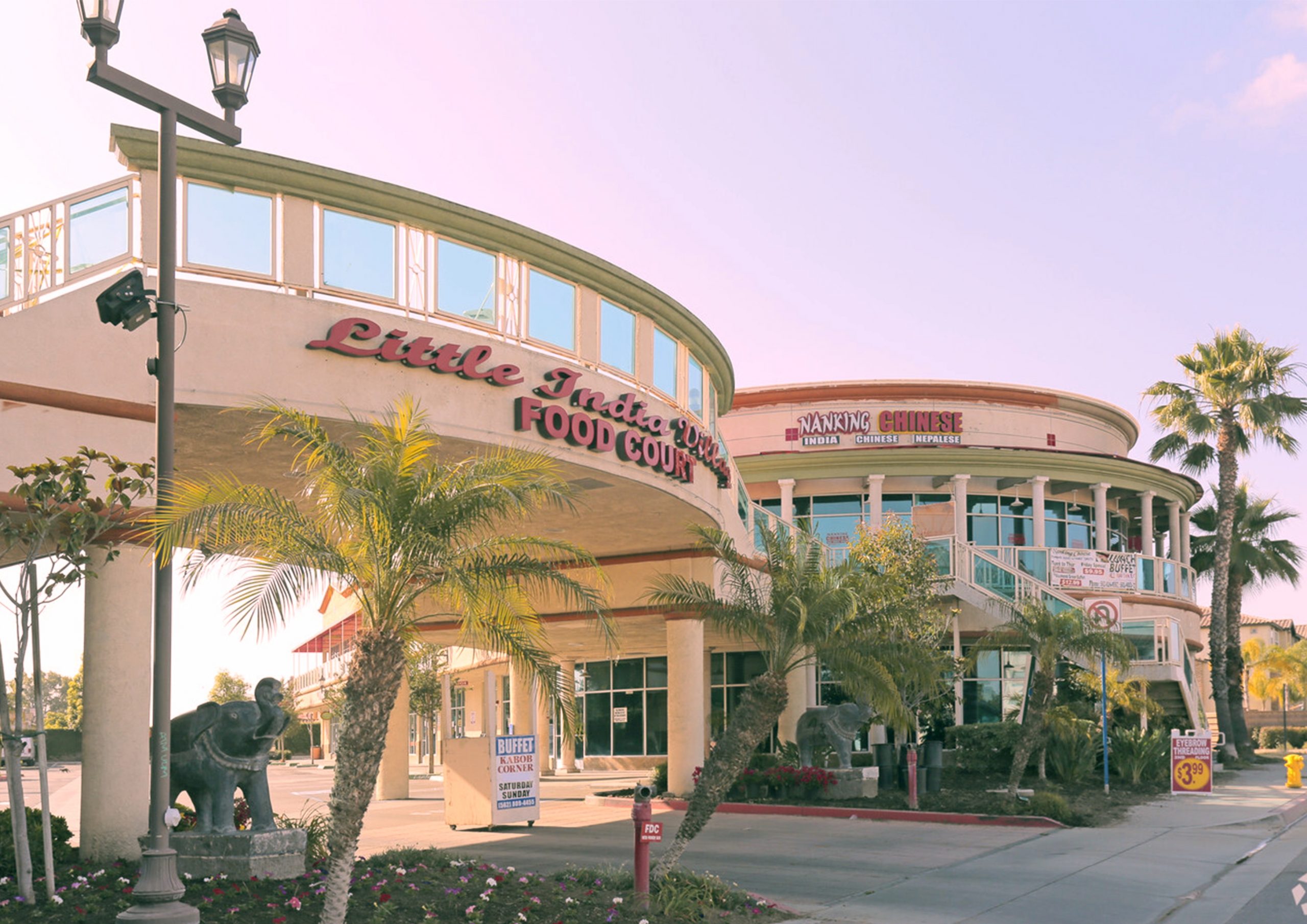
Living Heritage: Cultural Resilience in Artesia’s South Asian Community
Artesia is situated in the southeast part of Los Angeles County. Over time, it has become one of the most renowned locations for South Asian culture in California. In the 1970s, South Asian immigrants, mostly from India, began immigrating to this area because of the inexpensive housing and employment opportunities. Over time, Pioneer Boulevard over the years evolved into what is today known as Little India, a vibrant commercial and cultural hub marked by Indian restaurants, spice shops, jewelry and apparel stores, and religious centers such as Hindu temples and Sikh gurdwaras. Artesia today is a symbol of preserving culture and embracing change.
This thesis explores how the South Asian immigrant community in Little India in Artesia sustains its cultural identity in the face of increasing global influences. The study also investigates how these immigrant communities utilize social, economic, and institutional structures to maintain and reimagine their cultural traditions in a modern urban context.
Using fieldwork observations, local interviews, and archival records, this research considers how religious establishments, cultural groups, and commercial enterprises all play important parts in sustaining identity. Hindu temple festivals, and public celebrations help create a sense of belongingness, especially among young people. This thesis aims to understand how urban spaces like Artesia shape the cultural life of immigrant groups. Through the case study of Artesia’s Little India, this thesis highlights the critical role of place-making, social infrastructure, and cultural engagement in preserving heritage and fostering a sense of belonging amidst ongoing globalization.


Reclaiming Barnsdall: Writing Women’s History Back into Los Angeles’ Cultural Landscape
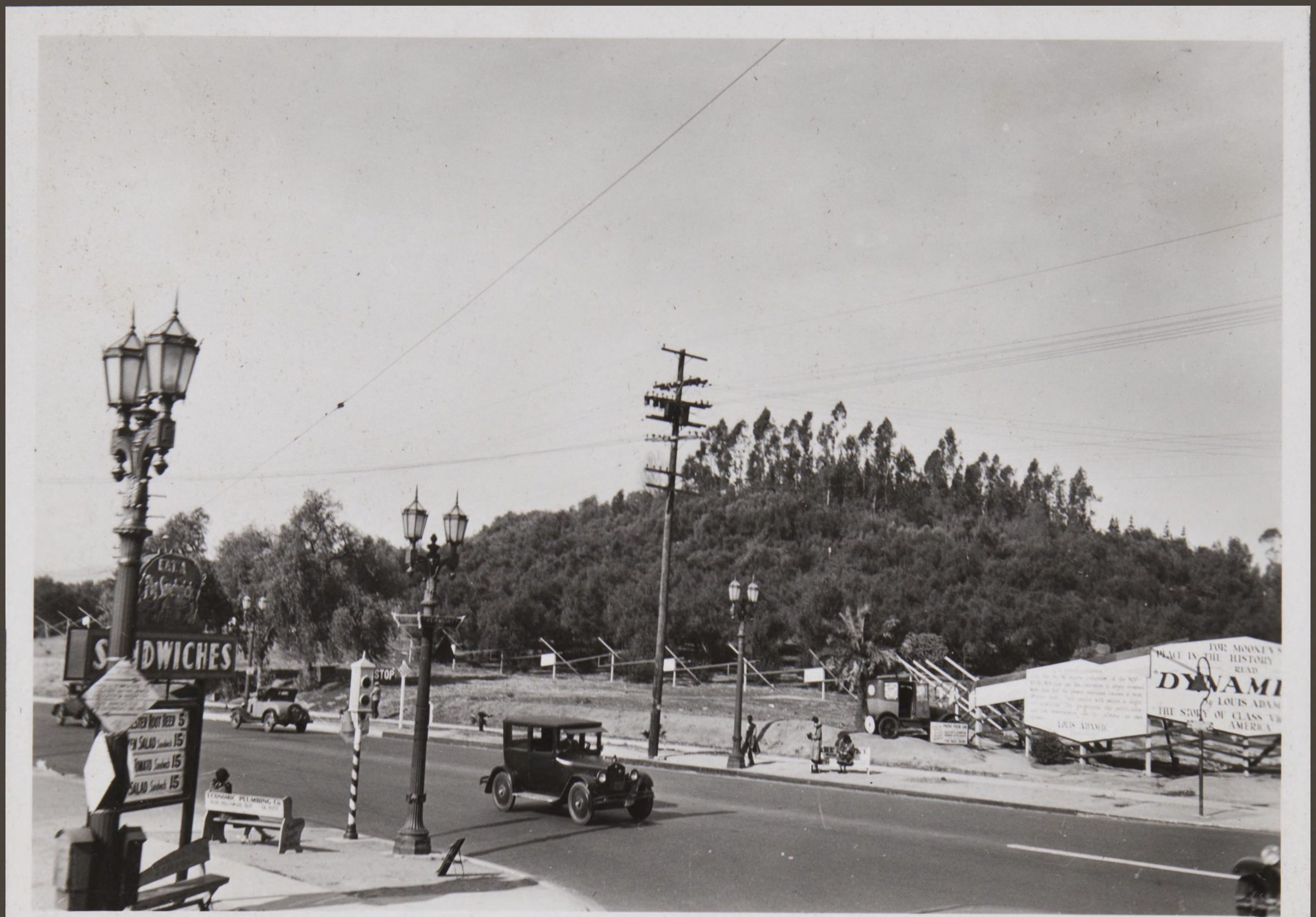
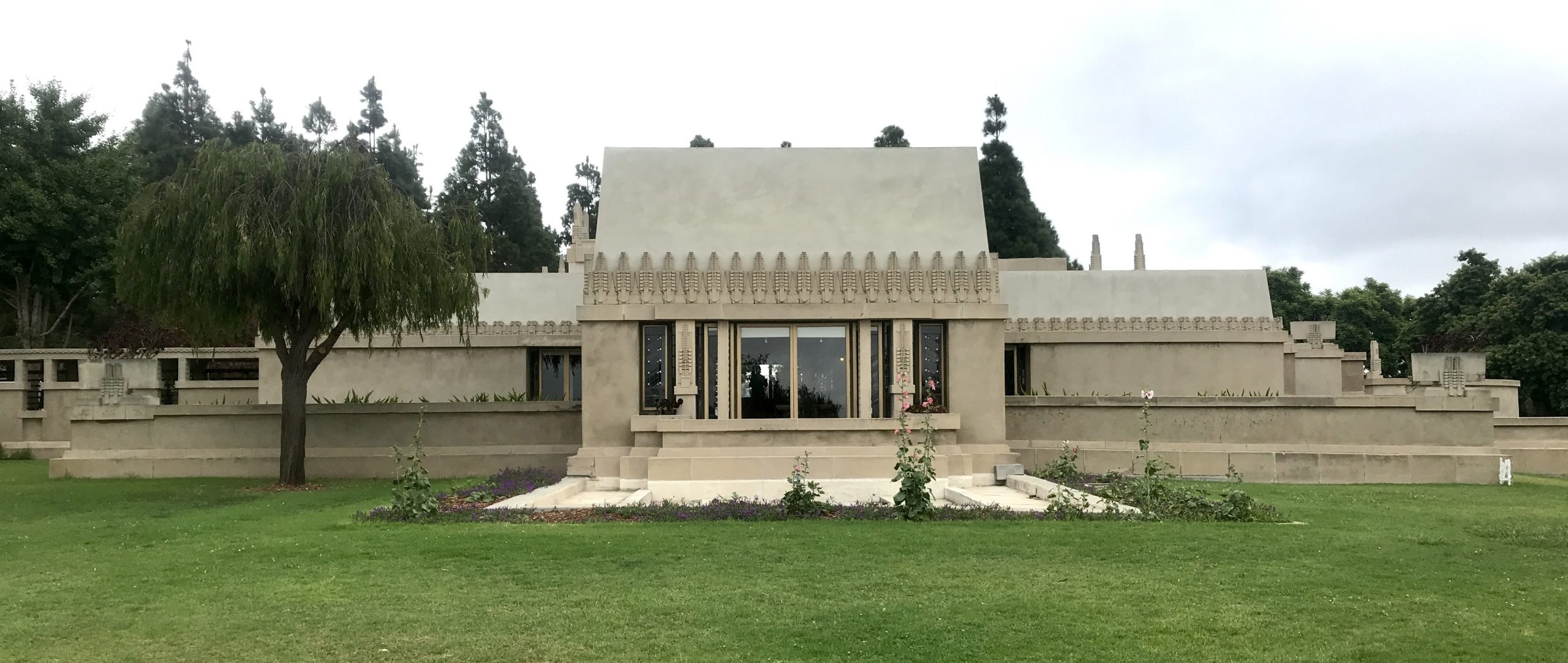
Aline Barnsdall is often remembered solely for commissioning Frank Lloyd Wright’s Hollyhock House, yet this narrow association obscures her broader legacy as a cultural activist and civic visionary. This thesis reclaims Barnsdall’s significant contributions, particularly her advocacy for working women and marginalized communities, by reinterpreting Barnsdall Art Park not only as an architectural site, but as a platform for progressive ideals and feminist civic engagement.
Developed through my work in the USC School of Architecture’s Master of Heritage Conservation Practicum and Advanced Documentation course Preserving Women’s Heritage, this thesis supports the Los Angeles Women’s Landmarks (LAWL) initiative, led by Professor Sian Winship in collaboration with the National Trust for Historic Preservation and the Los Angeles Conservancy. LAWL responds to the systemic underrepresentation of women in local heritage: fewer than 3% of Los Angeles’ 1,300 Historic-Cultural Monuments (HCMs) recognize women’s contributions. This absence is more than a statistical oversight—it reflects whose stories are preserved and whose are erased.
This thesis critically examines how traditional heritage conservation methods have failed to fully recognize or represent Barnsdall’s broader contributions, especially her social, political, and feminist ideals, in how the site is currently interpreted and designated. It asks: Why has Barnsdall’s activism, patronage, and progressive vision been left out of the official record? What’s missing from the current narrative? And how can we correct that through more inclusive heritage practices?
Using Barnsdall Art Park as a case study, this research proposes new interpretive strategies and conservation approaches that center both the physical site and the social values it represents, ensuring women’s legacies are visible, valued, and written back into the civic record and memory of Los Angeles.
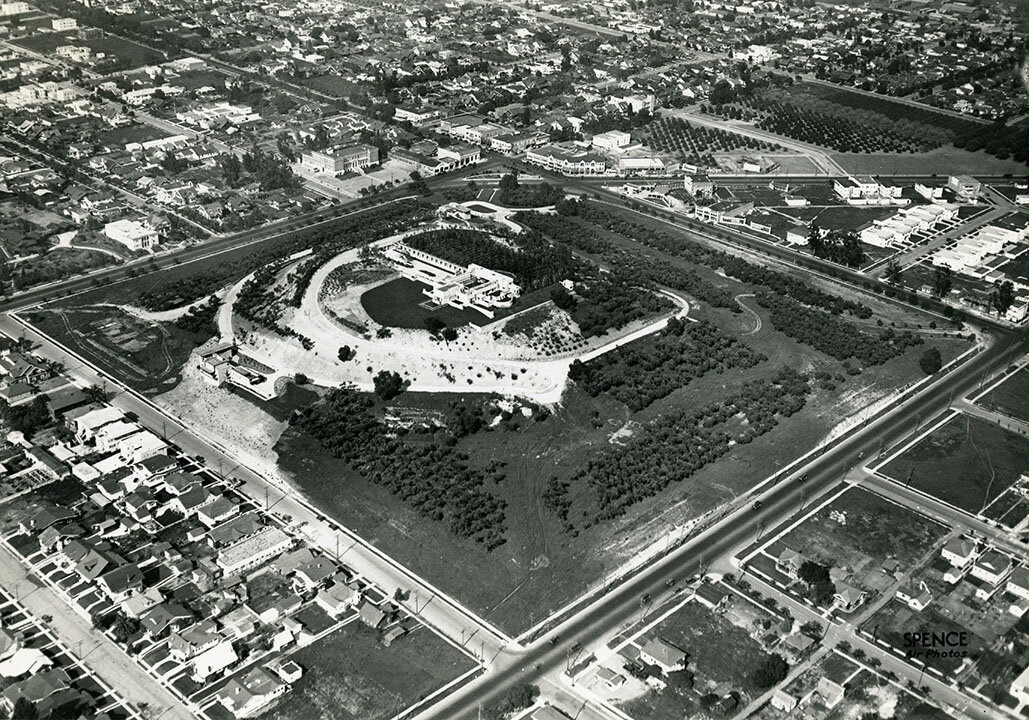
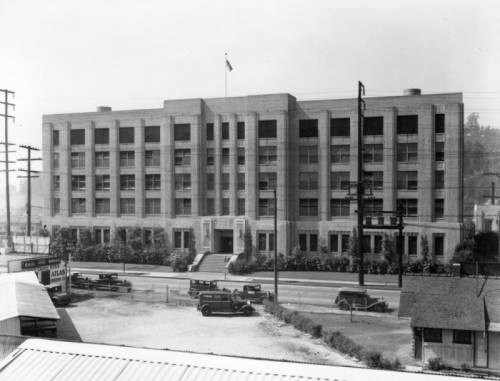
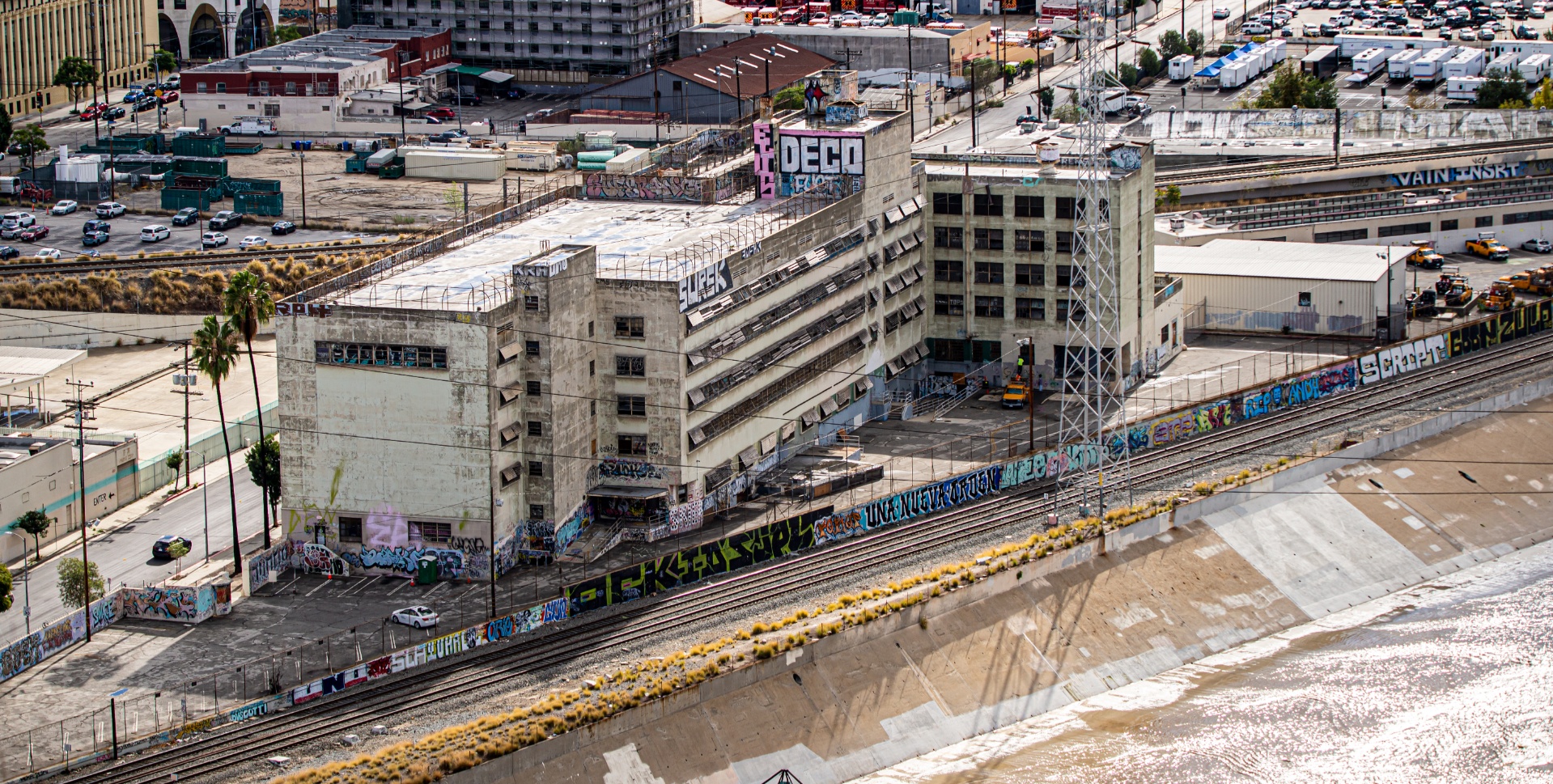
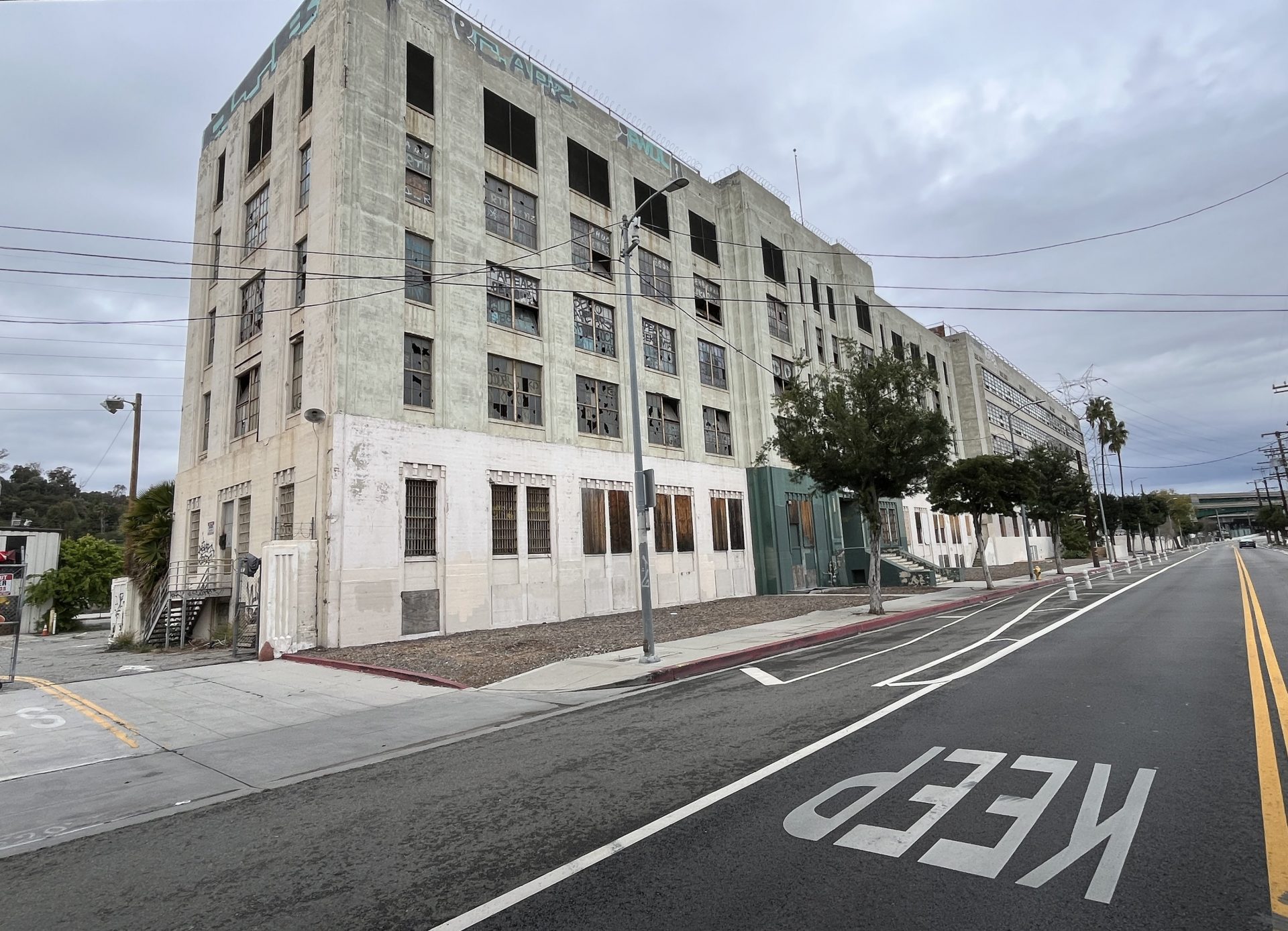
Repairing the Breach & Restoring the Paths to Dwell In: The Legacy of Women Performing Artists at Lincoln Heights Jail
This thesis explores Lincoln Heights Jail in Los Angeles, California to discuss the intersection of heritage conservation and carceral geography; geographical engagement with spaces, practices and experiences of confinement and coercive control. This thesis also highlights the important social histories of Cisgender and Queer Women in Los Angeles.
Los Angeles has long been proclaimed a haven for Women and LGBTQIA+ Artists. However, the city’s 20th century government believed the haven identity threatened urban and social development, therefore new penal codes were created and in 1930 Lincoln Heights Jail was constructed. This 5-story reinforced concrete building with Art Deco features was a space of harm and dehumanization for many, including Cisgender and Queer Women who were overwhelmingly incarcerated for challenging 20th century gender expectations, often through performance art.
Unfortunately, Lincoln Heights Jail has been vacant since 2014 and has undergone high levels of vandalism. As a final part of this thesis, 21st century jails and prison reuse case studies (domestic and international) will be analyzed to determine how the City of Los Angeles can repair past wrongs by continuing to reuse this difficult heritage site for arts centered community healing.


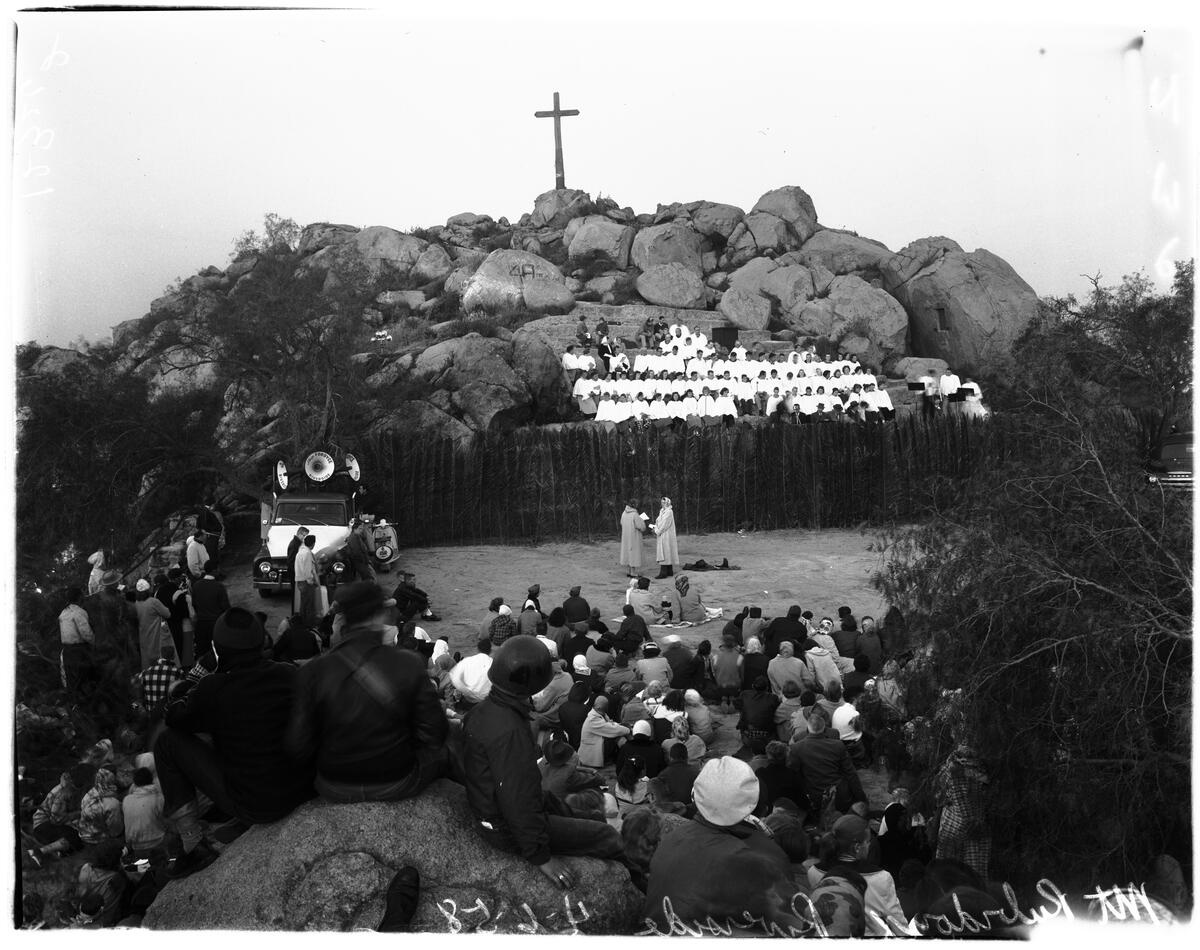
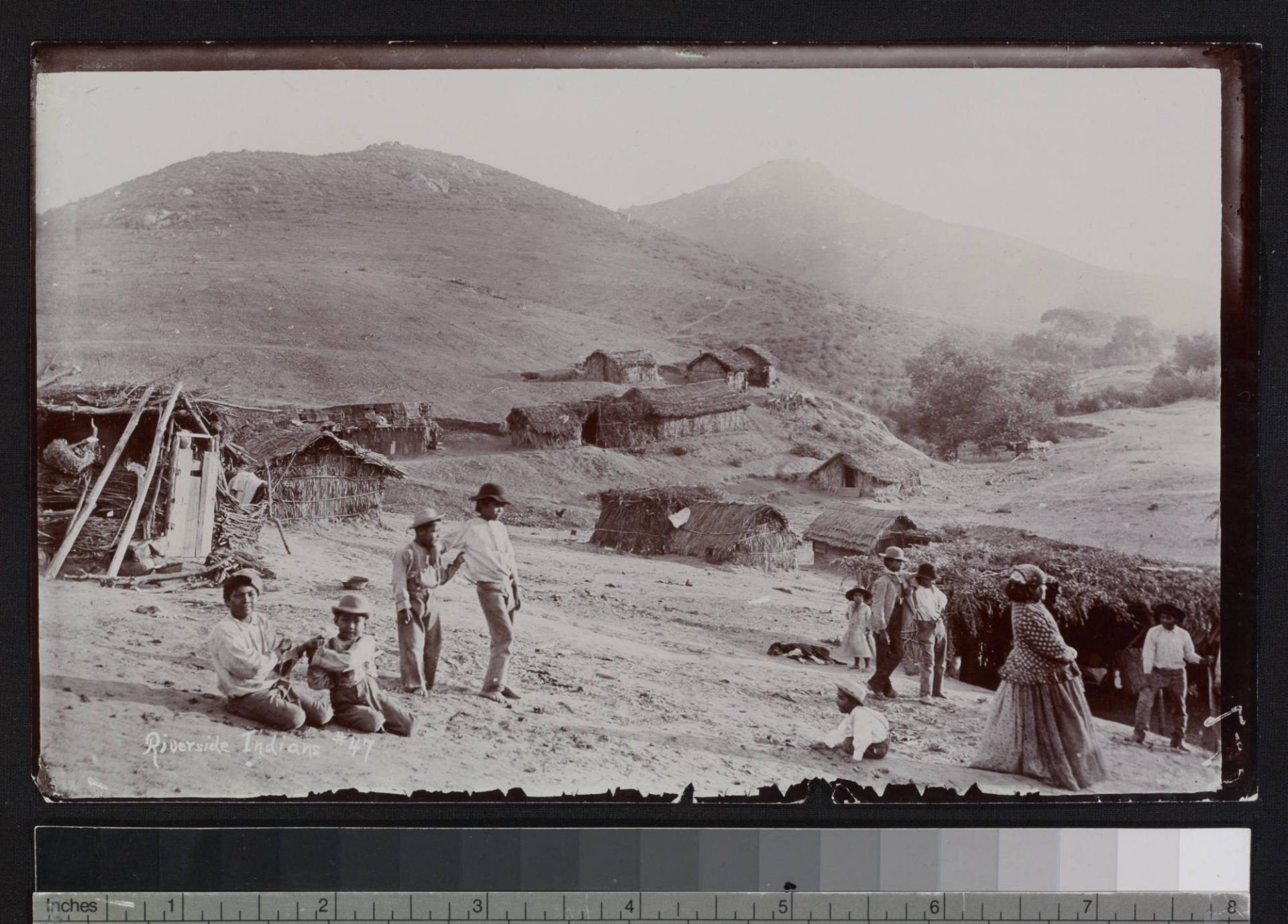
A Rift in Time: Examining Memory, Power, and Erasure at Riverside’s Mt. Rubidoux and Spring Rancheria
At the heart of Riverside, California, two neighboring sites, Mt. Rubidoux and the Spring Rancheria, tell vastly different stories of memory, power, and erasure. This thesis examines how preservation practices have been weaponized to elevate Mt. Rubidoux into an iconic city landmark while neglecting the neighboring Indigenous Spring Rancheria, despite both sites once forming a shared landscape. The division of these spaces, accelerated by Mission Inn Boulevard, reflects broader patterns of selective preservation, where civic narratives favor certain histories over others.
As Riverside transformed into a citrus hub in the late 1800s, civic figures like Frank A. Miller rebranded the city by romanticizing a Spanish colonial past, shaping which histories would be preserved. This project investigates how landmark designation works, how certain sites gain official status based on dominant values and what happens when excluded narratives re-emerge. Through a comparative analysis of Mt. Rubidoux and the Spring Rancheria, this thesis uses archival research and preservation documents to trace how each site has been remembered—or forgotten—in official narratives.
Ultimately, this thesis calls for a more inclusive approach to heritage conservation, one that centers marginalized histories, confronts cultural erasure, and proposes actionable amendments to current preservation frameworks. By spotlighting the contrasting trajectories of Mt. Rubidoux and the Spring Rancheria, this work contributes to ongoing efforts to decolonize preservation practices and challenges the field to rethink how historical value is determined, whose stories are honored, and how overlooked histories can be meaningfully reintroduced without further harm.
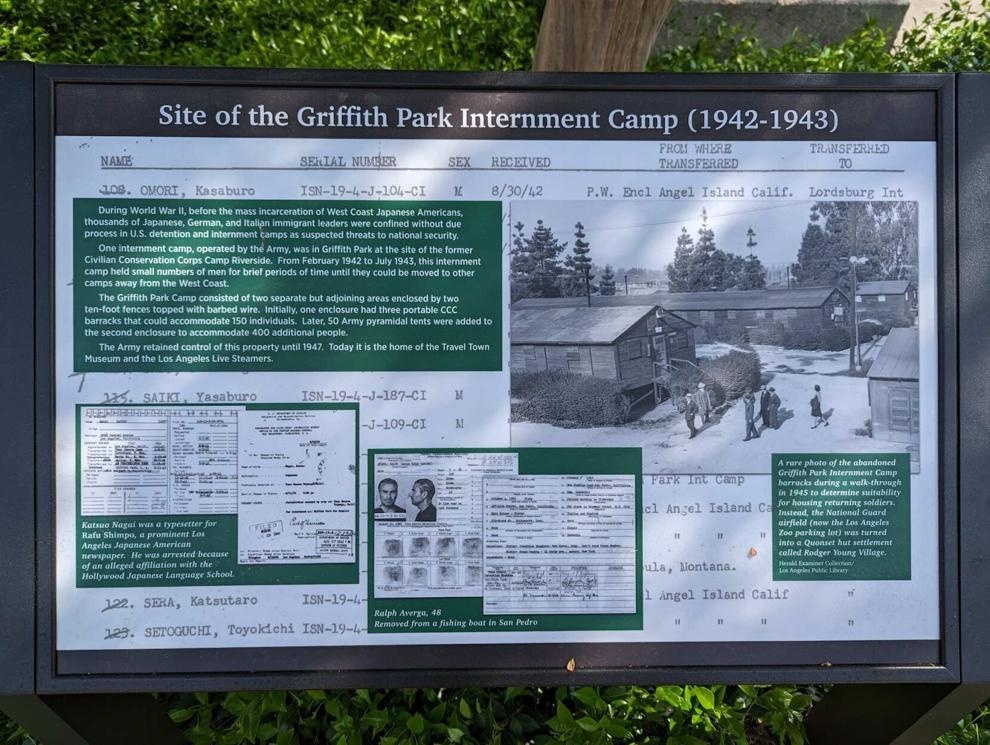
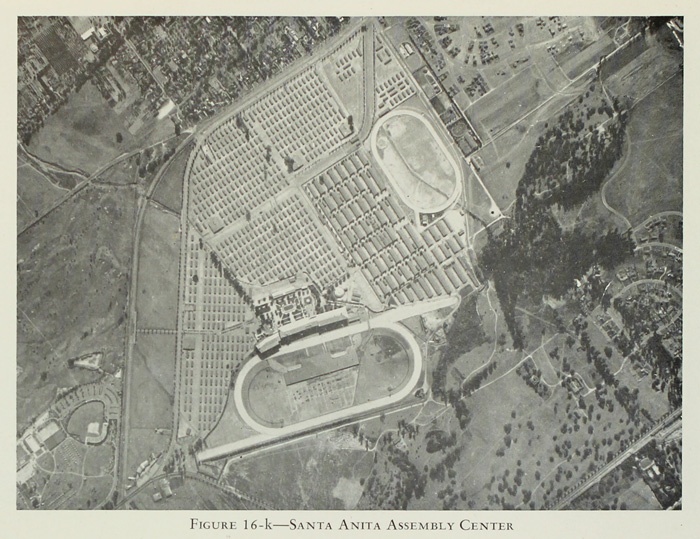
Erased Sites of Internment and Detention
While sites like Manzanar and Tule Lake have become central to the public memory of Japanese American incarceration during World War II—often serving as destinations of dark tourism where visitors engage with curated narratives of trauma—many lesser-known internment and detention sites in California, such as those at Griffith Park, Tuna Canyon, and Santa Anita, remain largely unmarked, unmemorialized, and at risk of being forgotten entirely. These sites also held German and Italian immigrants, whose stories have been similarly marginalized in dominant historical narratives. This thesis explores these “erased sites” as critical, though often invisible, spaces of cultural memory. It asks how we remember trauma when material traces are gone, and what role heritage conservation can play in preserving histories that have been deliberately or structurally silenced.
Blending archival research, memory studies, heritage theory, and ethnographic reflection, this project examines how absence itself can act as a form of memory. It investigates how communities navigate the tension between remembrance and forgetting in landscapes that have been repurposed, commodified, or neglected. Through case studies of under-recognized internment and detention sites in California, the thesis traces how survivors, descendants, and local advocates engage in remembrance without the support of formal tourism or state-sponsored heritage.
This thesis argues for a reparative conservation ethic—not one that seeks to restore the past, but one that makes visible what was made to disappear. By expanding the boundaries of dark tourism and heritage discourse, the thesis reimagines memory as a living, collective act of justice and care rooted in place.
Sources for images:
https://encyclopedia.densho.org/sources/en-denshopd-i224-0001101/
https://theclio.com/entry/57323
How to preserve what’s meant to decay?
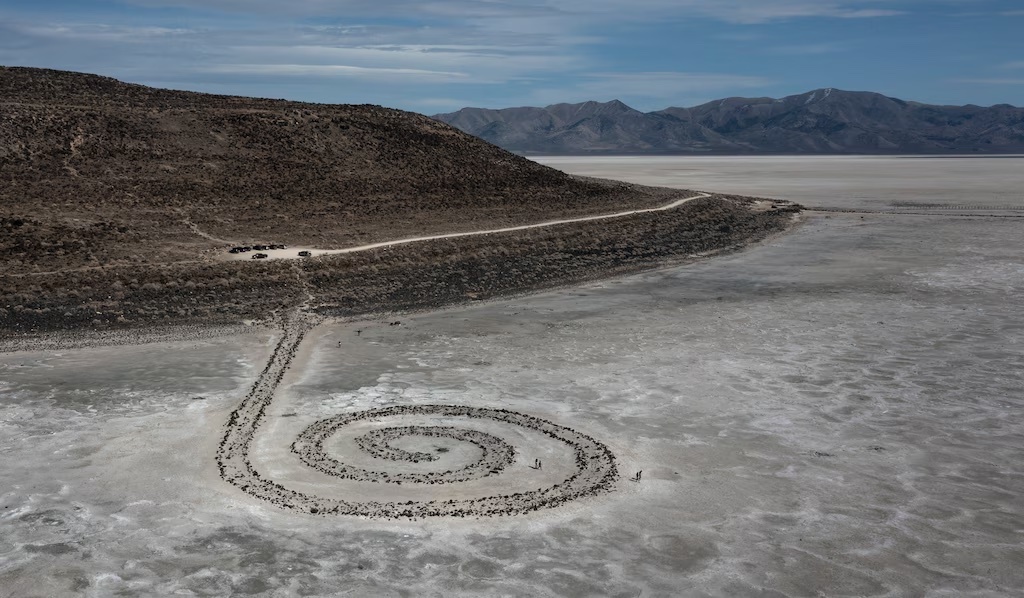
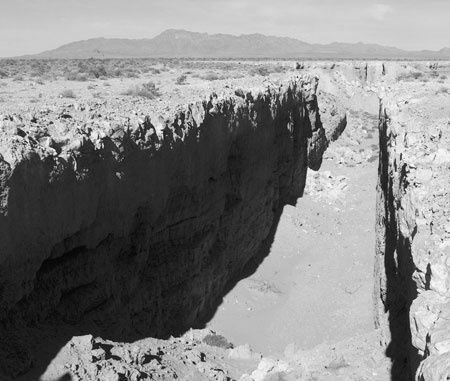
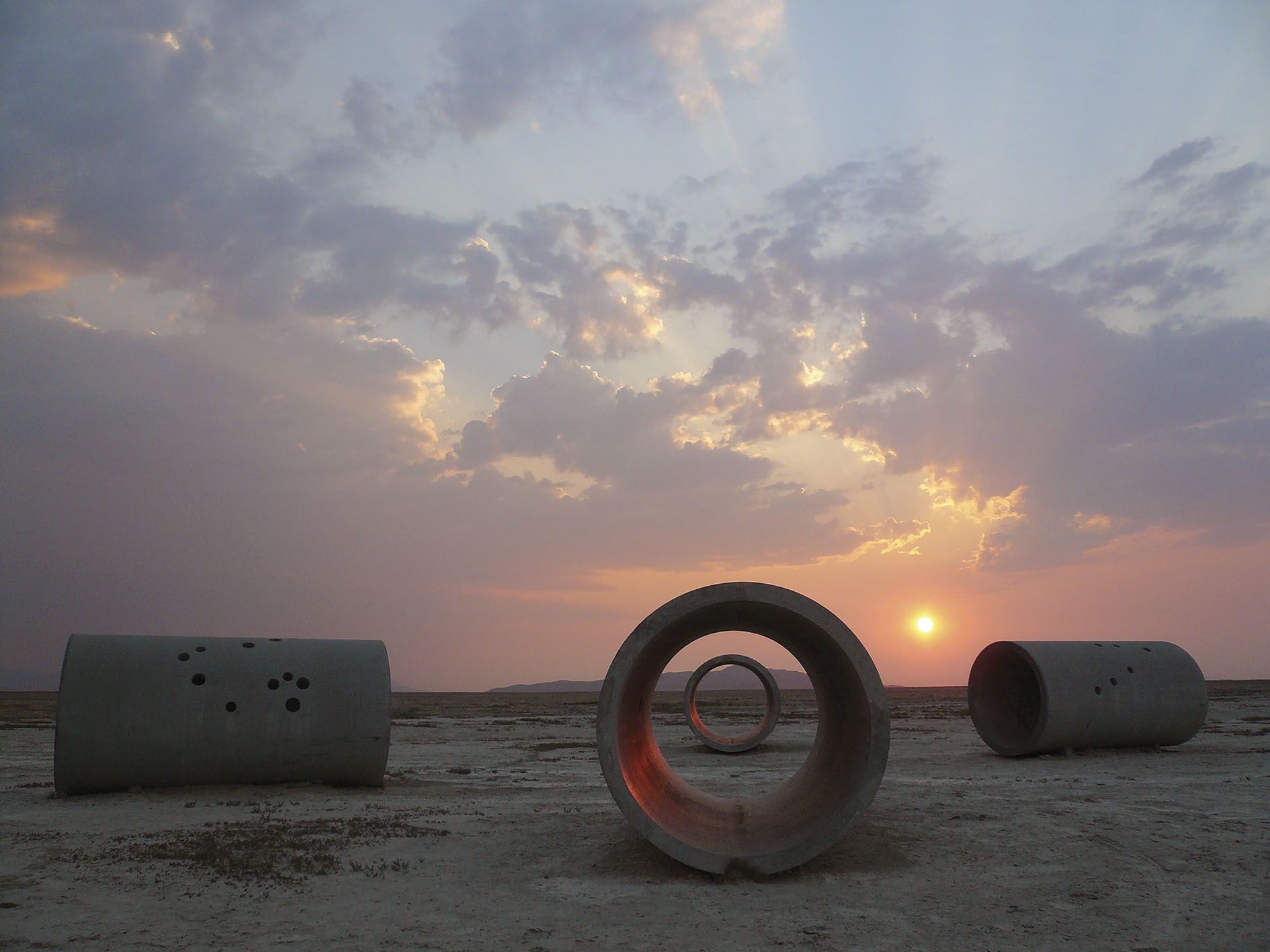
The Earthworks movement of the 1970s was a pivotal moment in contemporary art that merged sculpture with the natural landscape. Created to break out of the confines of the commercial art world and redirect focus away from gallery-based art, Earthworks were created at a large scale, using natural materials located on remote sites. Earthworks pose unique conservation dilemmas due to their exposure to natural elements, evolving ecosystems, and the artists’ often intentional embrace of change and decay.
Robert Smithson’s Spiral Jetty, which is perhaps the most widely recognized earthwork, was placed on the National Register of Historic Places in December of 2024 as a “cultural landscape.” The National Parks Service defines a cultural landscape as “a geographic area, including both cultural and natural resources…, associated with a historic event, activity, or person, or exhibiting other cultural or aesthetic values.” By considering earthworks as cultural landscapes rather than simply works of art, they are eligible to be protected and plans can be put in place for their conservation.
Through site visits and surveys of key Earthworks by artists Robert Smithson, Michael Heizer, and Nancy Holt, this project examines the philosophical, material, and environmental factors that shape their preservation. I explore the conservation strategies that have already been put in place while identifying strategies that could be adopted. I aim to ensure that Earthworks remain accessible for future generations while balancing the original artistic intent of ephemerality.
Spiral Jetty Photo Source: https://www.sltrib.com/artsliving/2024/12/21/spiral-jetty-joins-national/
Sun Tunnels Photo Source: https://spruethmagers.com/artists/nancy-holt/
Double Negative Photo Source: https://doublenegative.tarasen.net/double-negative