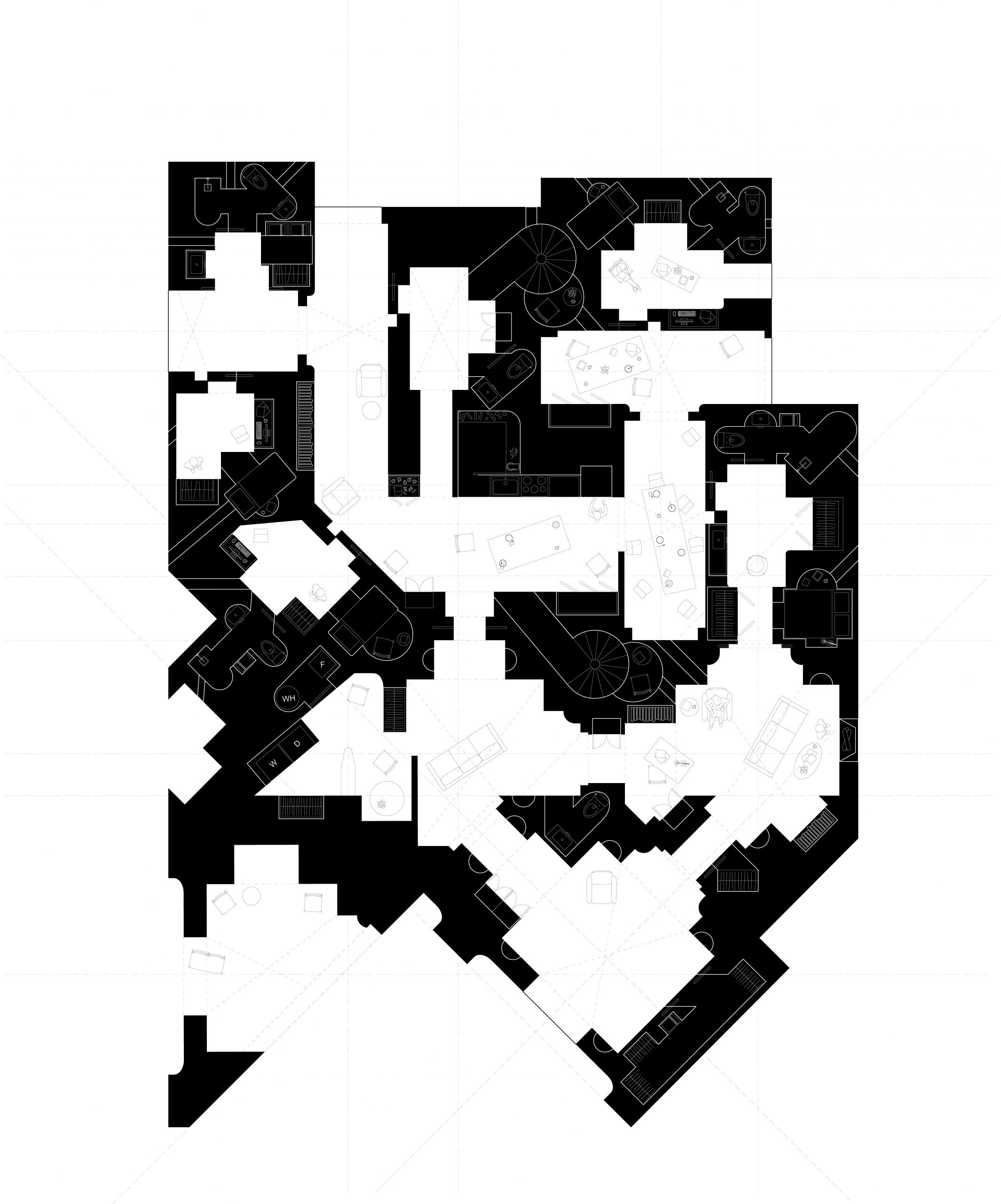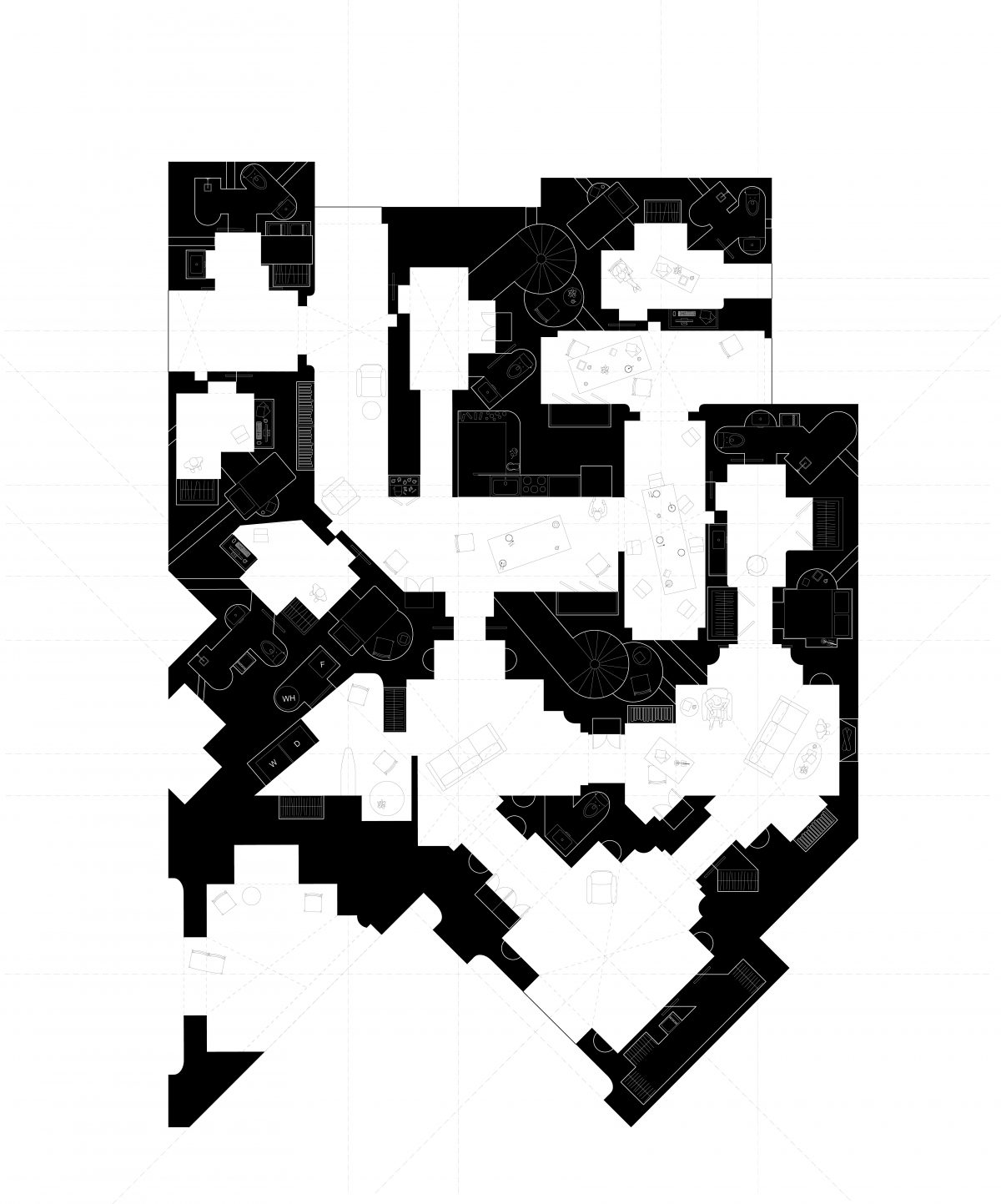
This thesis examines the corridor as a primary architectural element rather than a secondary space of circulation. Beginning with Robert Evans’s Figures, Doors and Passages, it understands movement as a social and architectural instrument that structures privacy, hierarchy, and interaction. In English country houses such as Amesbury House and Nun Appleton, passages did more than connect rooms. They organized access to adjacent rooms, tempered views, and paced encounters, shaping how domestic life unfolded. Building from this historical condition, the project extracts sectional qualities from existing architecture and recomposes them into new spatial form. Thickness, alignment, overlap, and sequence are hybridized through mirroring, rotation, and Boolean operations, allowing different passage logics to collide within a continuous system. Circulation is therefore produced spatially in section rather than merely traced in plan. The resulting figures transform residual poché into inhabitable depth, where walls, stairs, and ceilings organize movement, occupation, and moments of encounter.