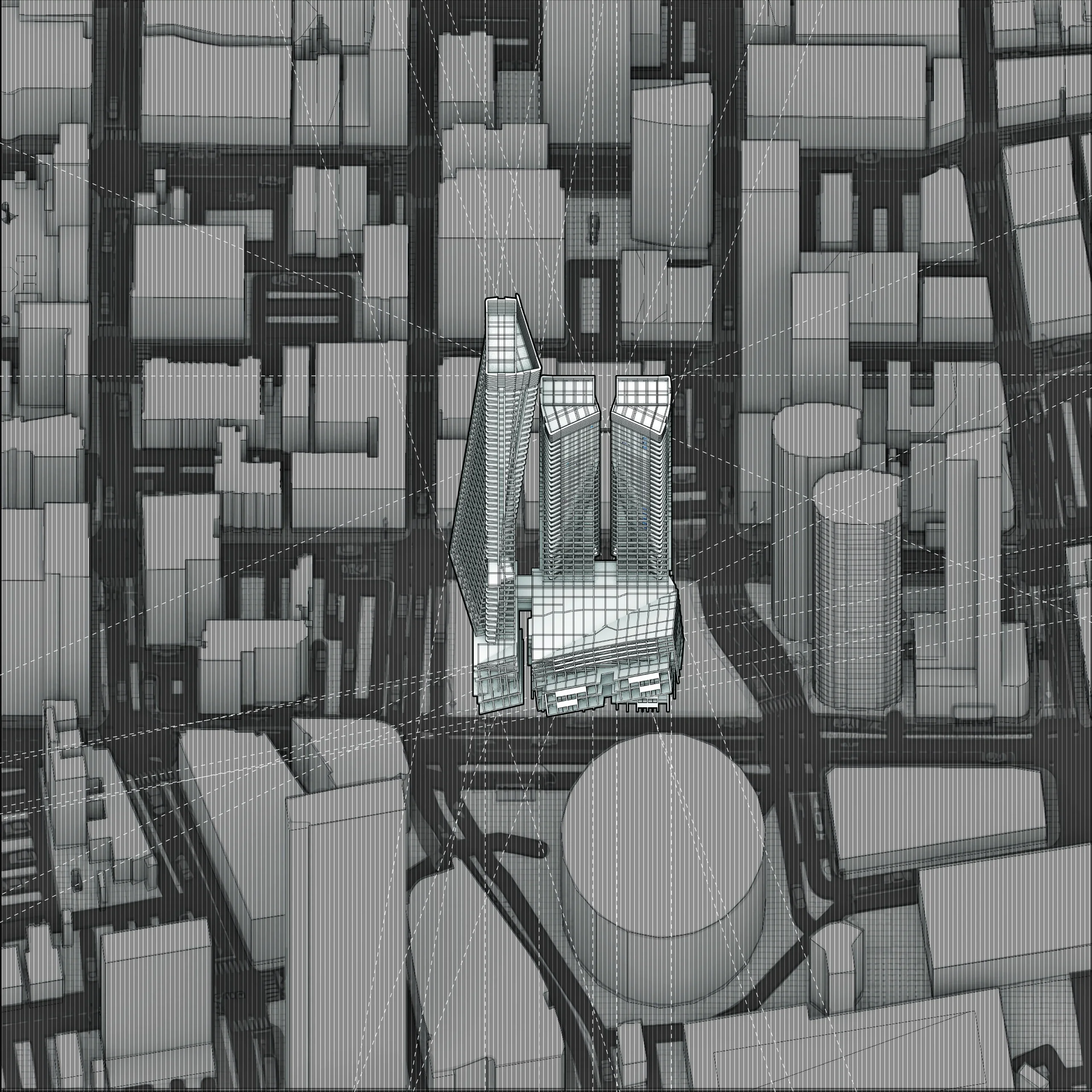
This thesis examines how people understand places through expectations shaped by media, memory, and experience. Hong Kong is often associated with 1990s cinema, dense urban imagery, and environments like Kowloon Walled City. Studying and visiting the site revealed conditions that appear vandalistic—exposed infrastructure, patched surfaces, and irregular spaces—but are actually the result of necessity and continuous adaptation, blurring the boundary between damage and construction.
In Hong Kong, graffiti often operates in a more controlled or aestheticized manner, while in American cities it is more visible as an unsanctioned form of expression tied to identity and territory. This shift informs the project’s focus on the Graffiti Tower in Los Angeles, where vandalism is reinterpreted as a spatial operation. Through cutting, rotation, and intersection, the building is disrupted and reassembled, producing new relationships where order emerges from conflict rather than being imposed.