This thesis studio proposes that resolution is scale — not a technical afterthought, but a primary design driver. Students investigate how architecture emerges from the interplay between information density, representational units, and material realization, operating across three linked domains: digital resolution (the relationship between discrete units like pixels, voxels, and polygons and overall form); simulated resolution (the granularity of computational behaviors such as noise frequency, agent density, and solver step size, spanning both massing-scale fields and surface-scale micro-patterns); and physical resolution (the translation losses and gains that occur between digital models and fabricated matter). The studio's theoretical framework is grounded in monolithic architecture as the tight integration of fine-grain parts into a coherent whole, drawing on thinkers including Robin Evans, Mario Carpo, Stan Allen, Greg Lynn, and Hito Steyerl.

Disruption, Intersection, and New Order
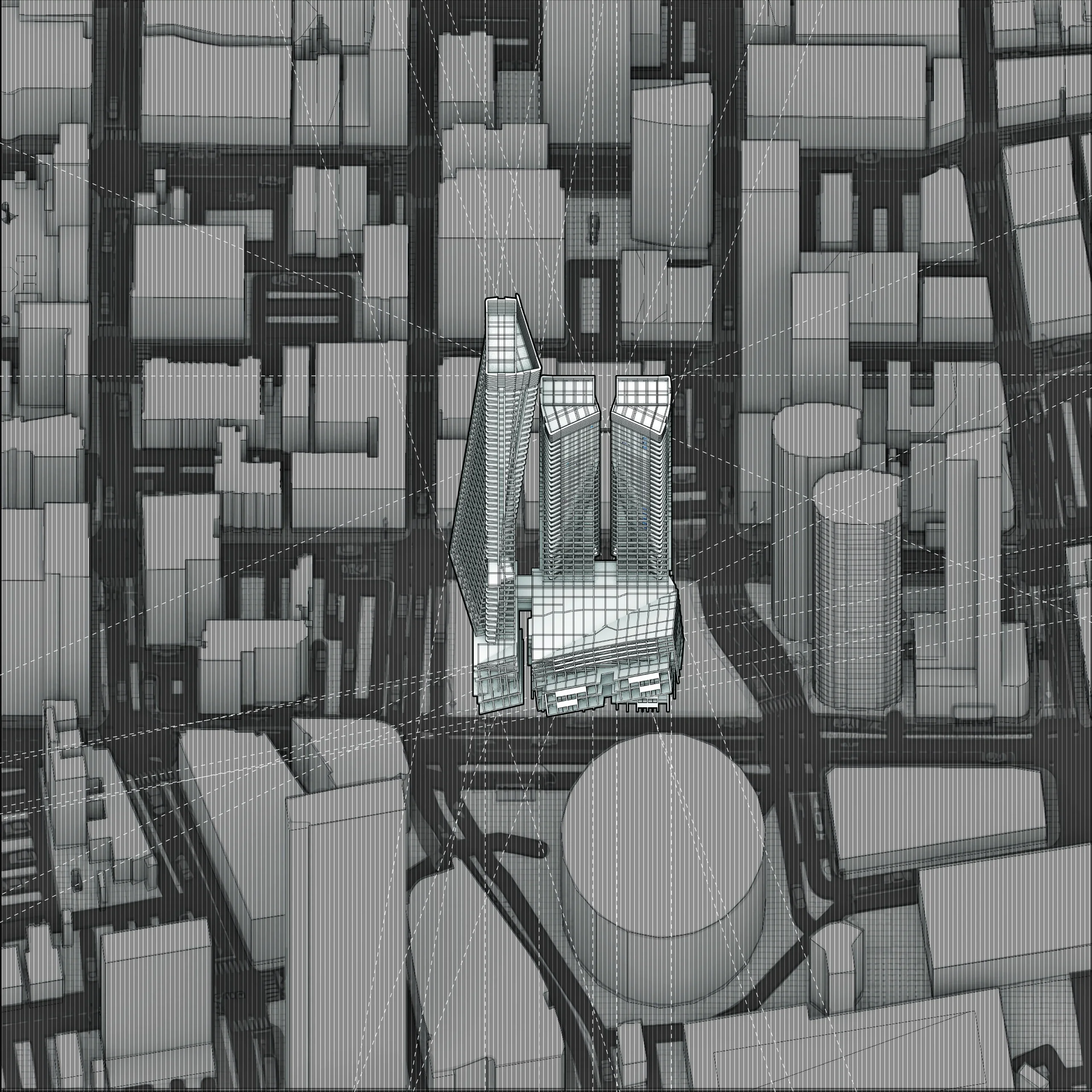
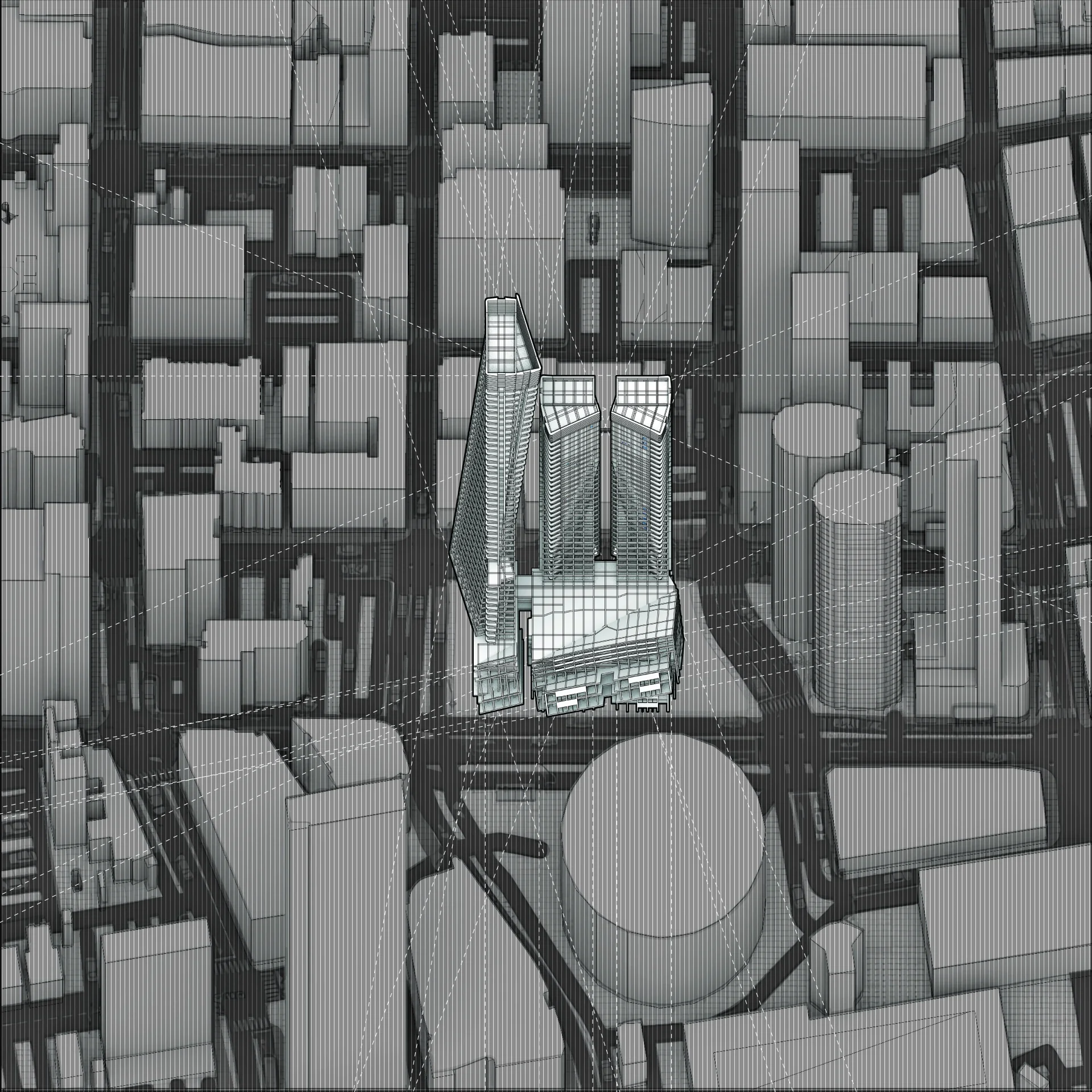
This thesis examines how people understand places through expectations shaped by media, memory, and experience. Hong Kong is often associated with 1990s cinema, dense urban imagery, and environments like Kowloon Walled City. Studying and visiting the site revealed conditions that appear vandalistic—exposed infrastructure, patched surfaces, and irregular spaces—but are actually the result of necessity and continuous adaptation, blurring the boundary between damage and construction.
In Hong Kong, graffiti often operates in a more controlled or aestheticized manner, while in American cities it is more visible as an unsanctioned form of expression tied to identity and territory. This shift informs the project’s focus on the Graffiti Tower in Los Angeles, where vandalism is reinterpreted as a spatial operation. Through cutting, rotation, and intersection, the building is disrupted and reassembled, producing new relationships where order emerges from conflict rather than being imposed.

Discrete Resilience: Liberating Space Through Invasive Structural Networks
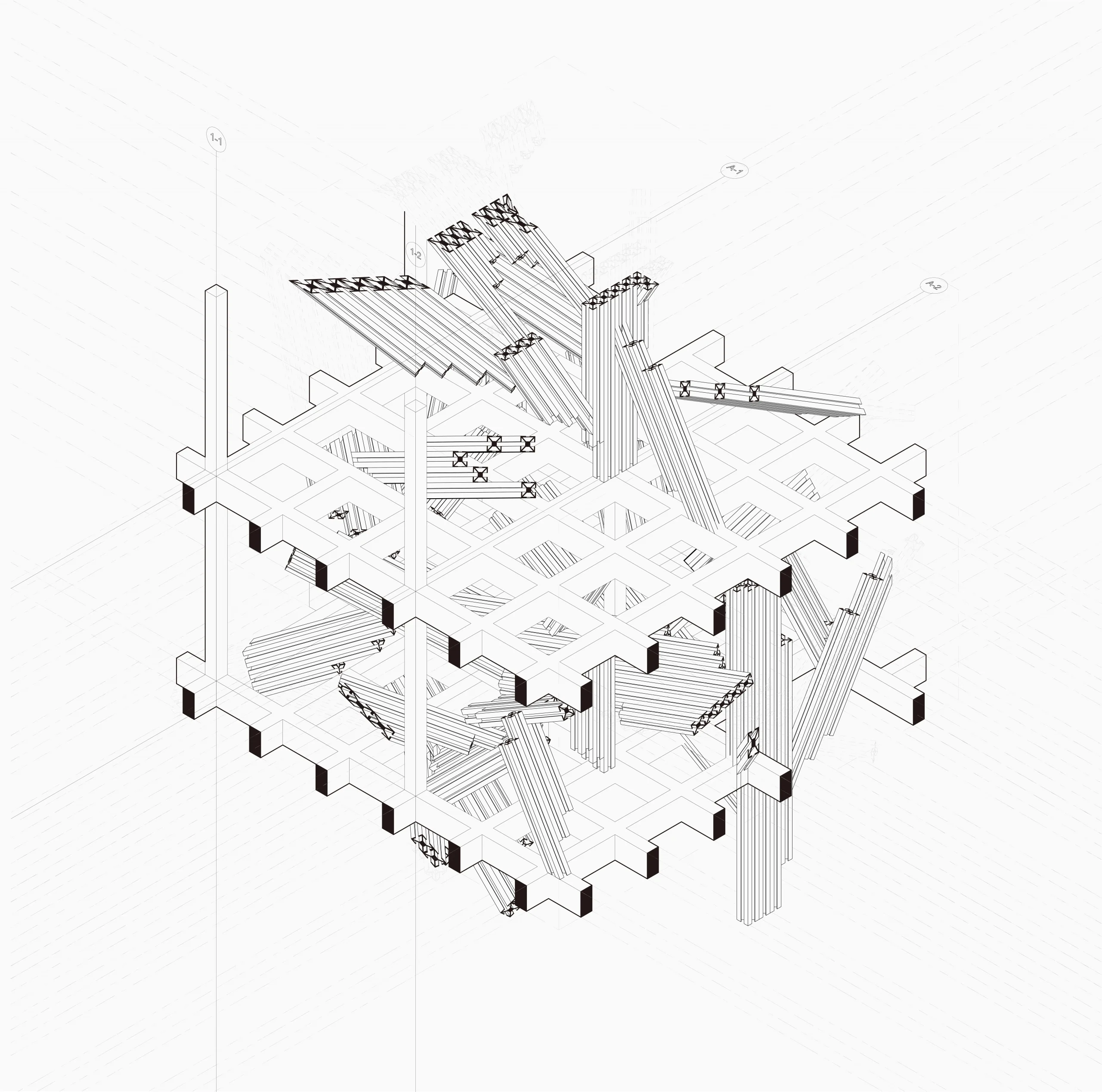
Traditionally, the architectural grid dictates a rigid hierarchy where space is enslaved by structural alignment. This thesis proposes a Discrete Resilient System that moves beyond mere structural redundancy to achieve Total Spatial Liberation. By utilizing a non-linear syntax of 30°, 60°, and 90° rotations, the system generates an "invasive" network that functions independently of traditional column-and-wall alignment.
While modernism attempted to free the plan, this system freed the structure itself. This "structural granularity" allows for a truly flexible design approach where floors, sections, and programs are no longer constrained by the grid. The result is a resilient architectural fabric capable of evolving its spatial quality in real-time, proving that even within a rigid environment, a discrete modular network can foster infinite spatial adaptability.
Shell of Lost Typology
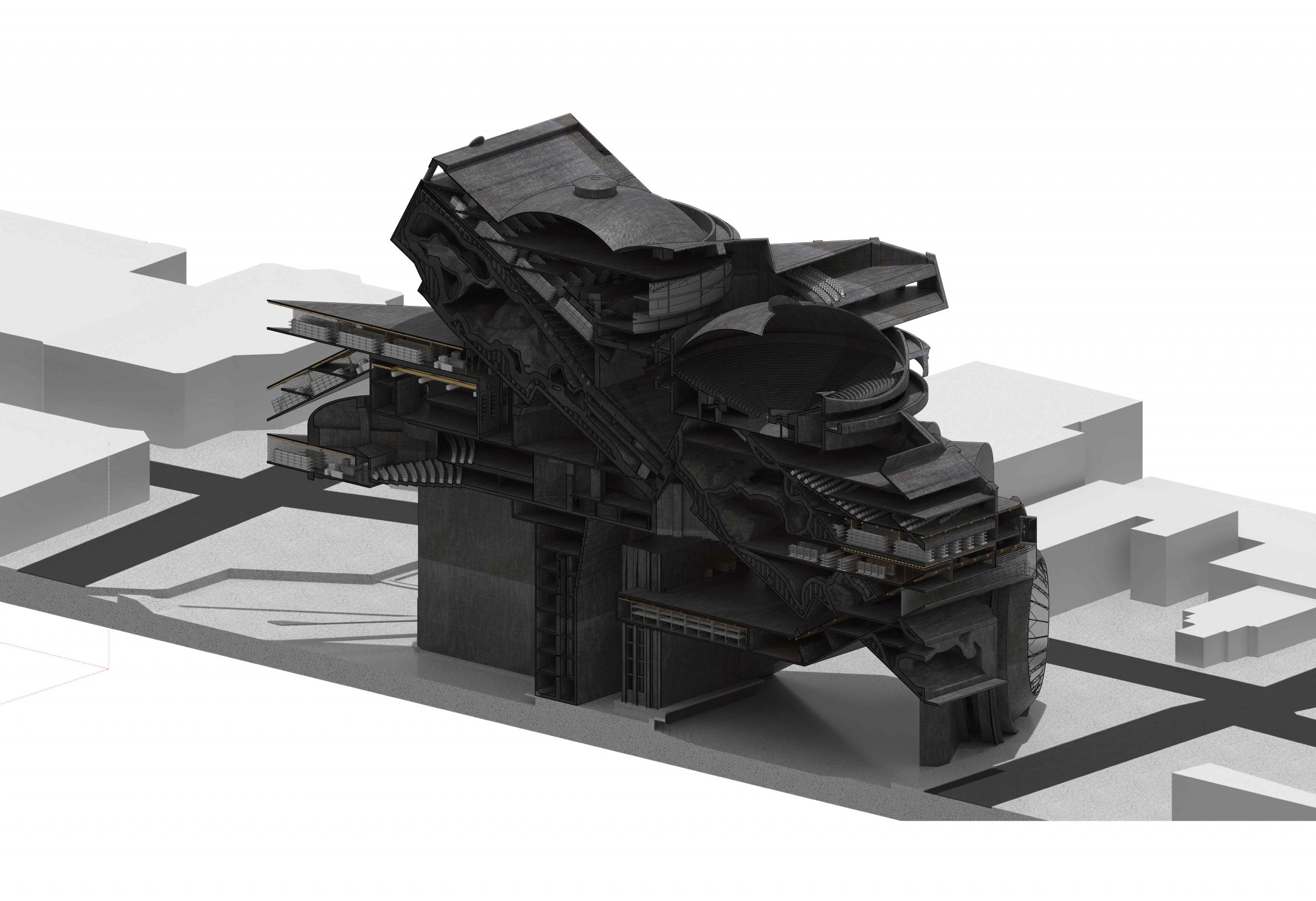
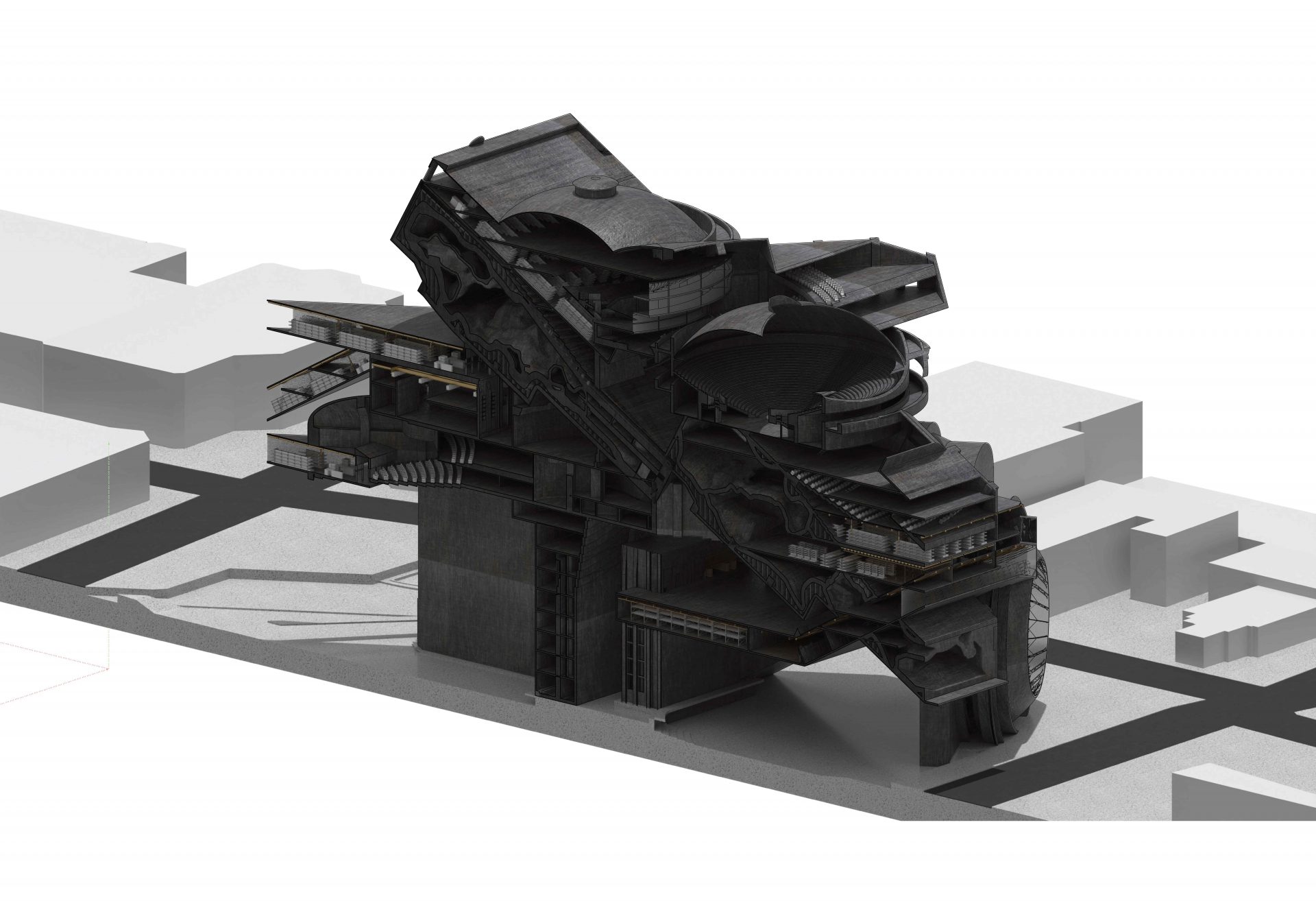
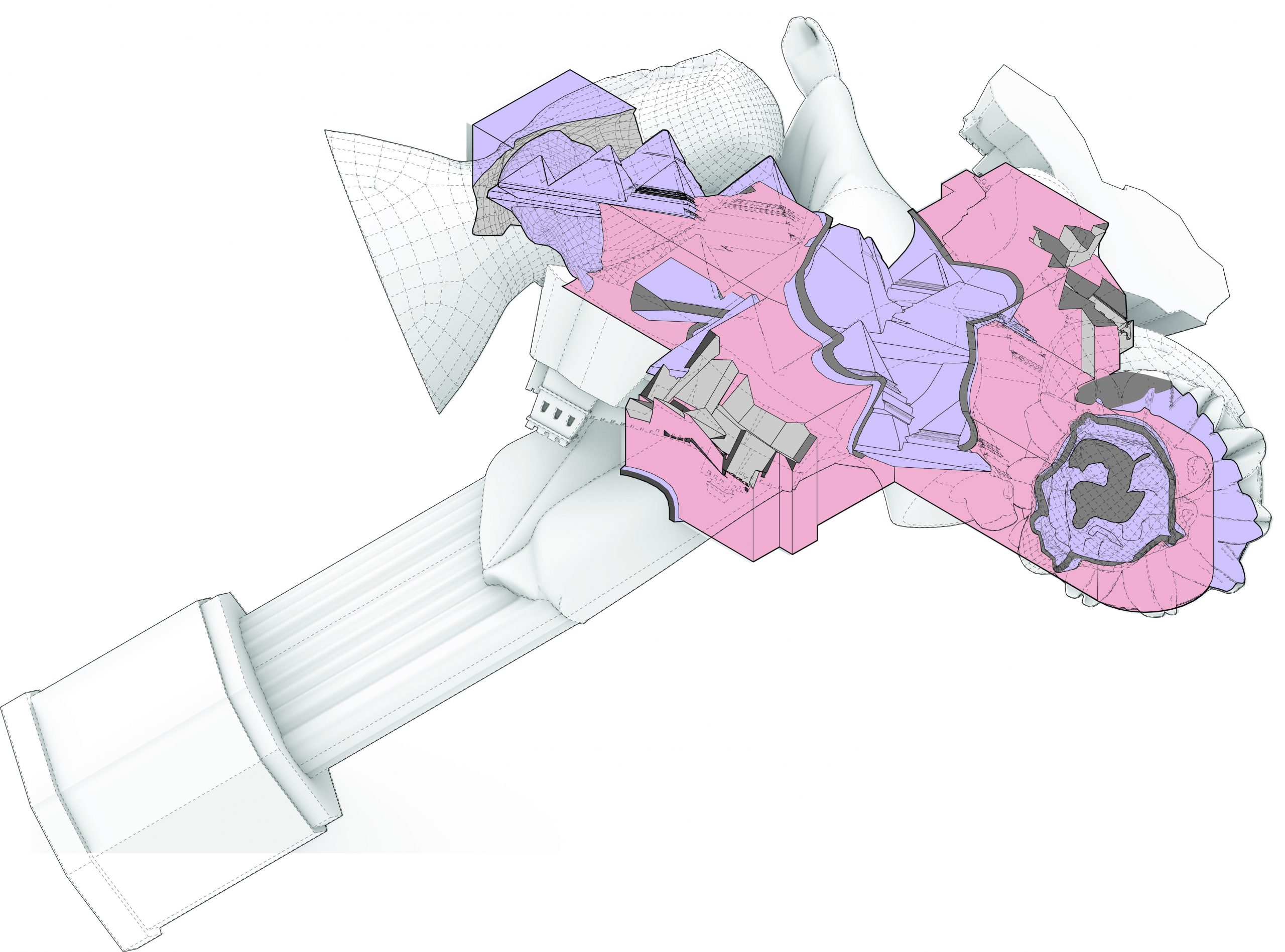
This thesis is about taking the outer shell of iconic, every day building
types, and redefining the interior. In order to save those dying typologies,
and resolve the conflict between ordinary building and extraordinary
architecture.
Because of society's progression, lots of culturally important building
typology are lost through time. Some of them have unique structural
systems, others specific curved or slanted walls that are directly correlated
with the function of the spaces that they define. But because of
form-function correlation, it is hard to repurpose them to a function that is
completely different.
I try to achieve this goal by choosing a series of iconic architectcural
typologies. From those iconic outer shells a collage is created. it has the
geometry from the memories. the inherent duty of those buildings is lost,
the symbolism of those familiar building types are returned to hints for the
speciality. Creating a familiar outlook with an unfamiliar internal. This
project is not an adaptive and reuse project, but assignment new meanings
and qualities to existing typologies. In this process of recycling old
programs, the incompatible relationship of everyday architectural and
monumental architecture is softened.
Up Over Out
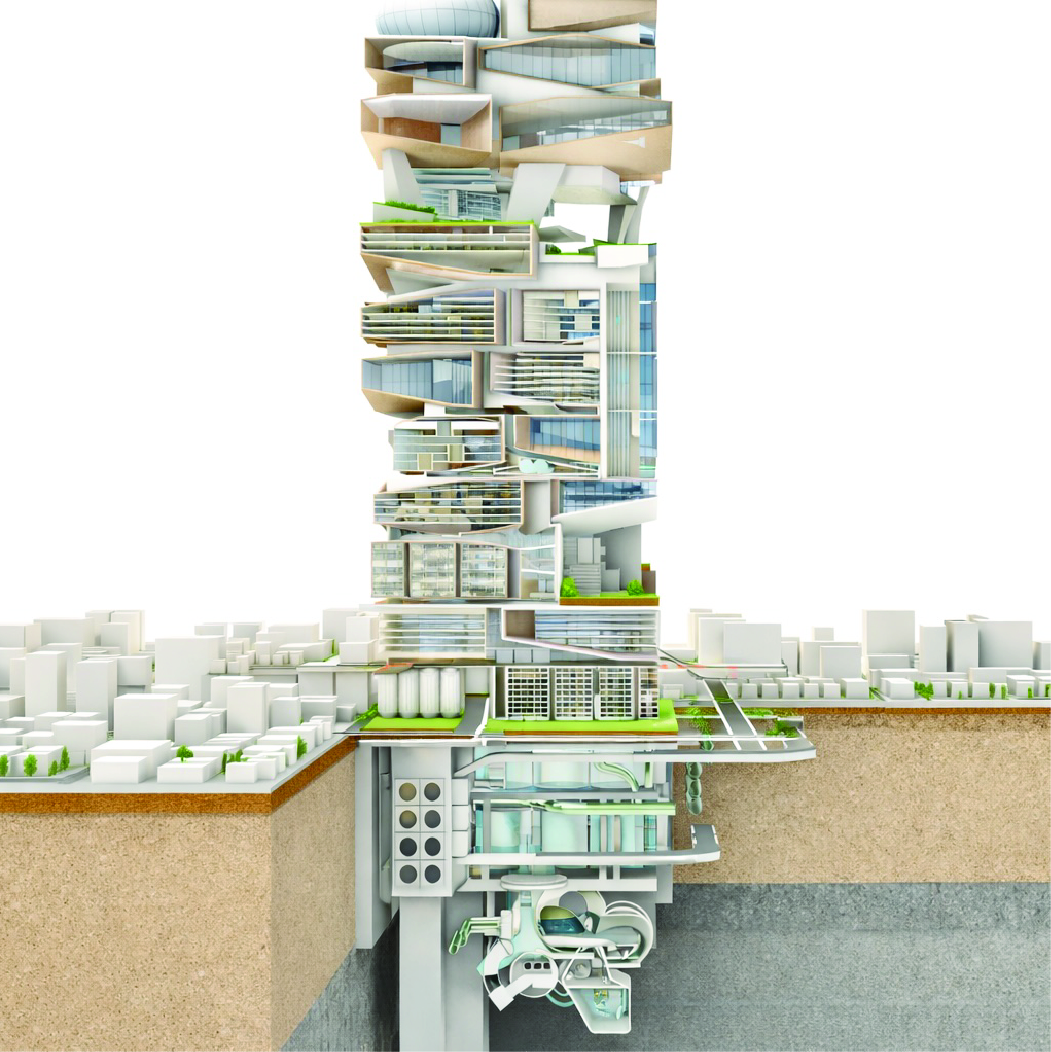
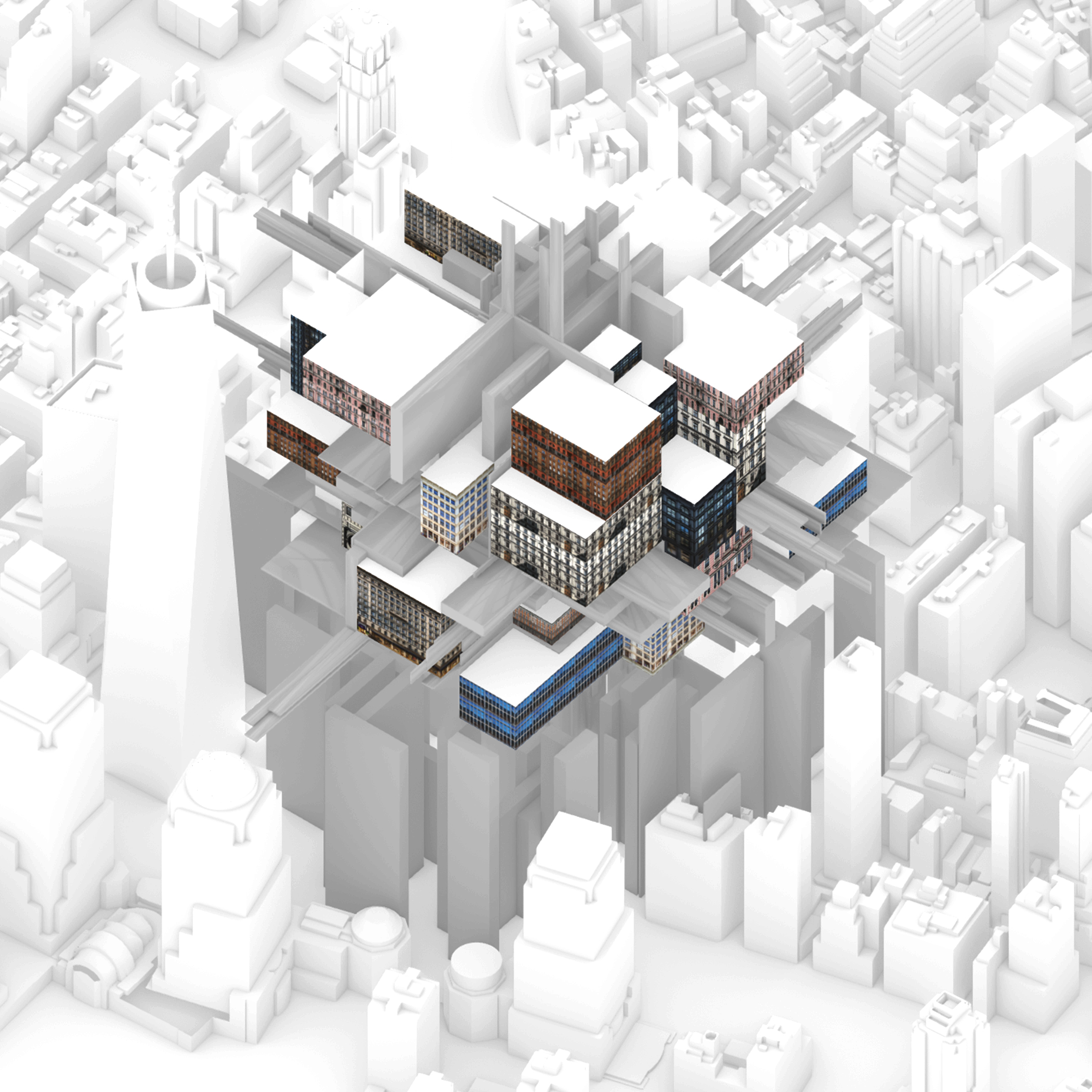
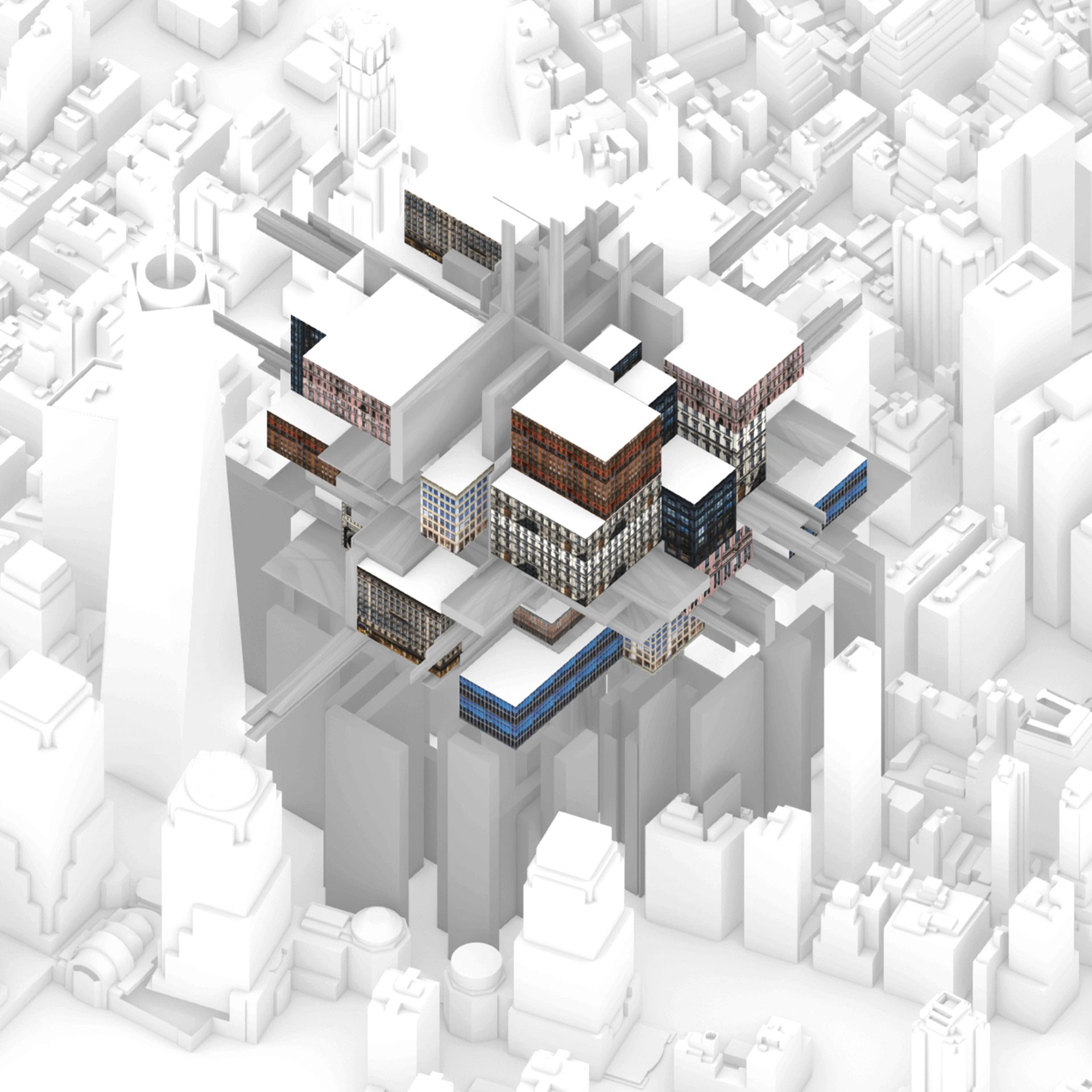
This thesis proposes an architectural model that pulls the city “up” instead of “out,” challenging limitations to vertical city planning and urban development. Traditional infrastructure, such as roads and streets, becomes vertical circulation and structural systems that envelop and segment stacked “blocks”, each containing distinct programs and functions as typical blocks would. This vertical infrastructure, or “spine,” acts as the foundational framework, supporting everything from self-sustaining resource systems to residential neighborhoods while serving as the main space for transit. Pushing against the notion of urban sprawl, the project introduces a new form of navigation and spatial organization defined by density, proximity, and collapsed typological boundaries. The result is a vertically integrated urban environment that reconsiders how cities can function, circulate, and grow in limited land conditions.
Morphological Field
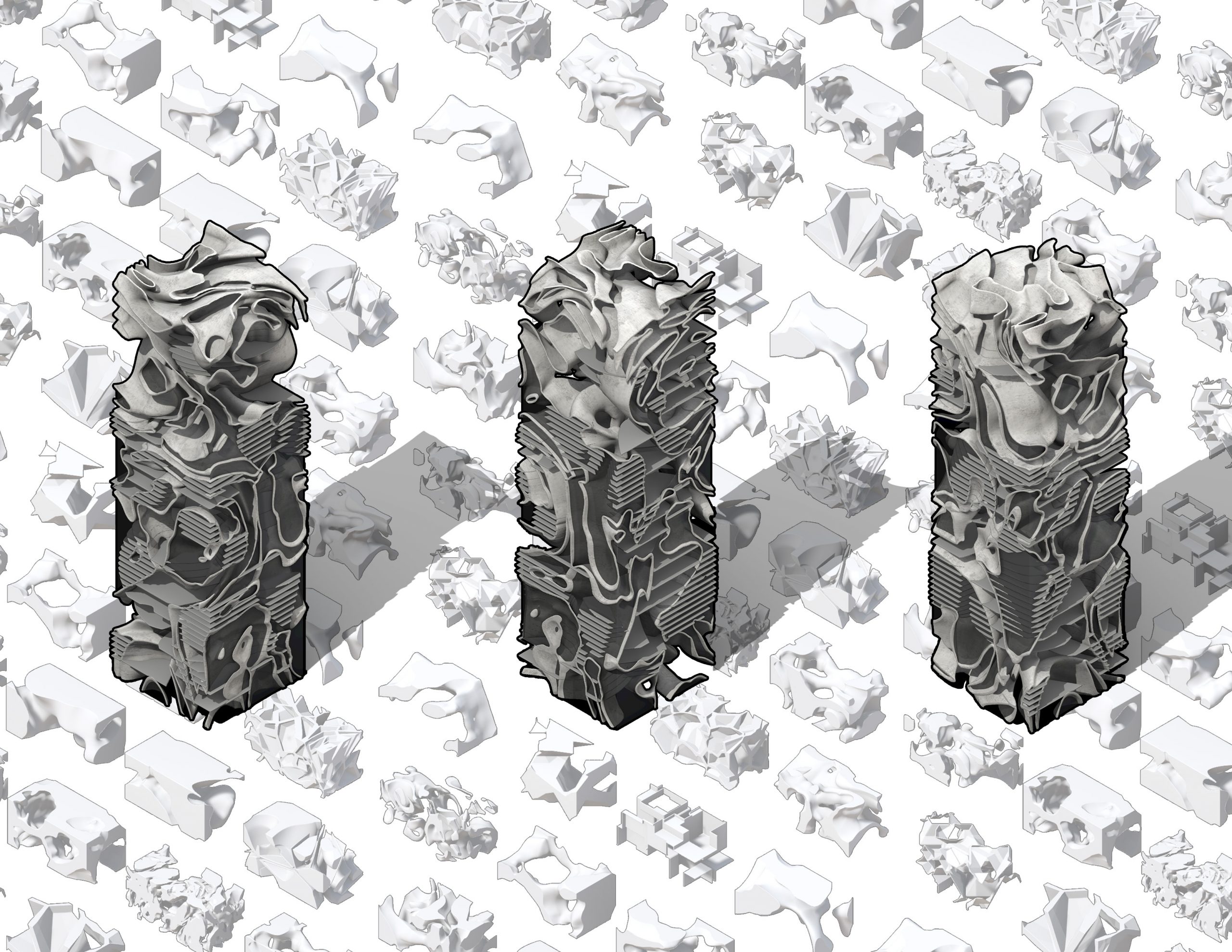
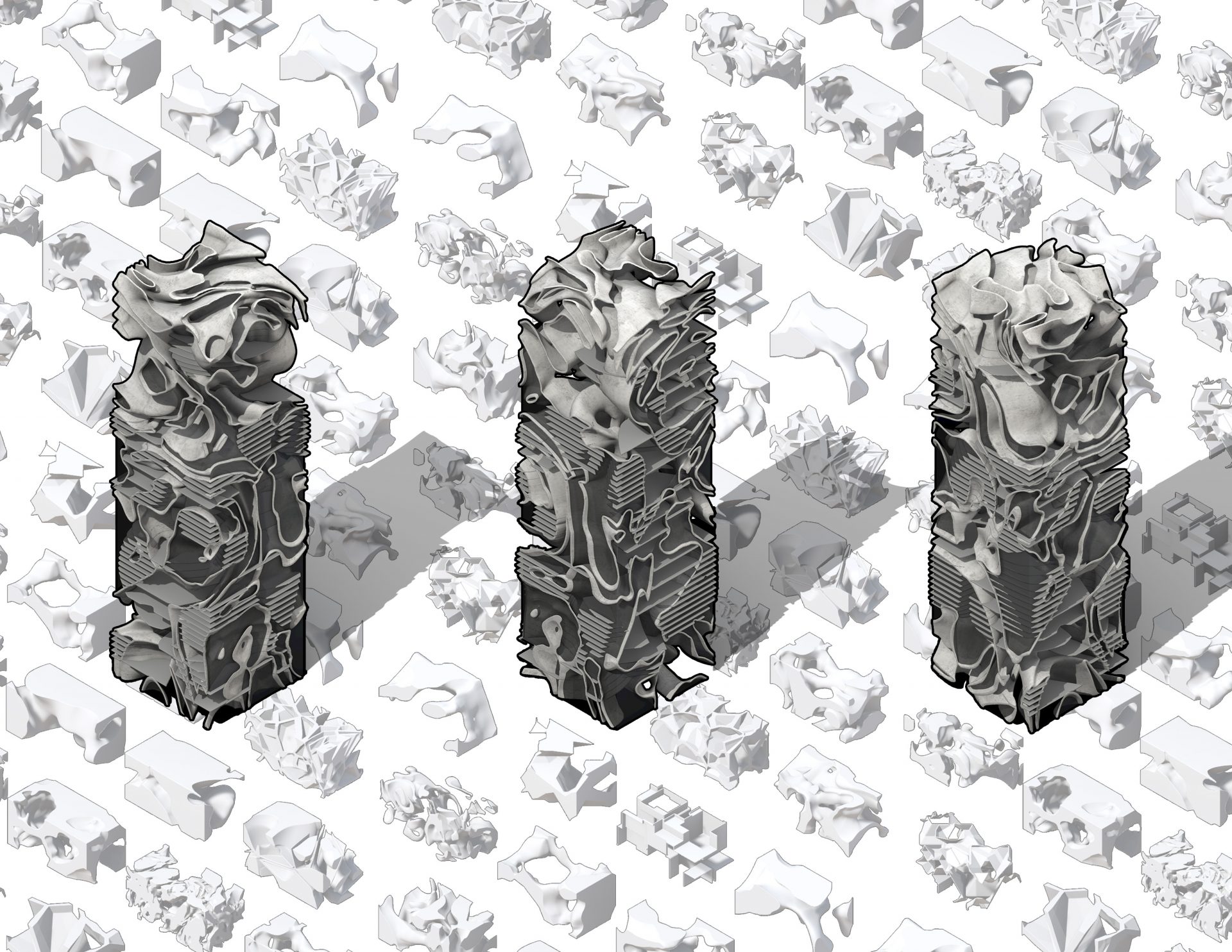
This thesis investigates architecture as a process of discovery through the generation and curation of form. A large body of geometries is produced through systematic exploration, creating a field of spatial possibilities rather than a single predetermined outcome. From this collection, selected forms are translated into architectural contexts across multiple scales. Small-scale elements operate as furniture and objects that engage the body directly; medium-scale interventions become installations and spatial frameworks that shape experience; large-scale applications inform architectural systems and building form. Each translation tests how geometry can influence structure, material articulation, spatial organization, and perception.
Pattern Recognition
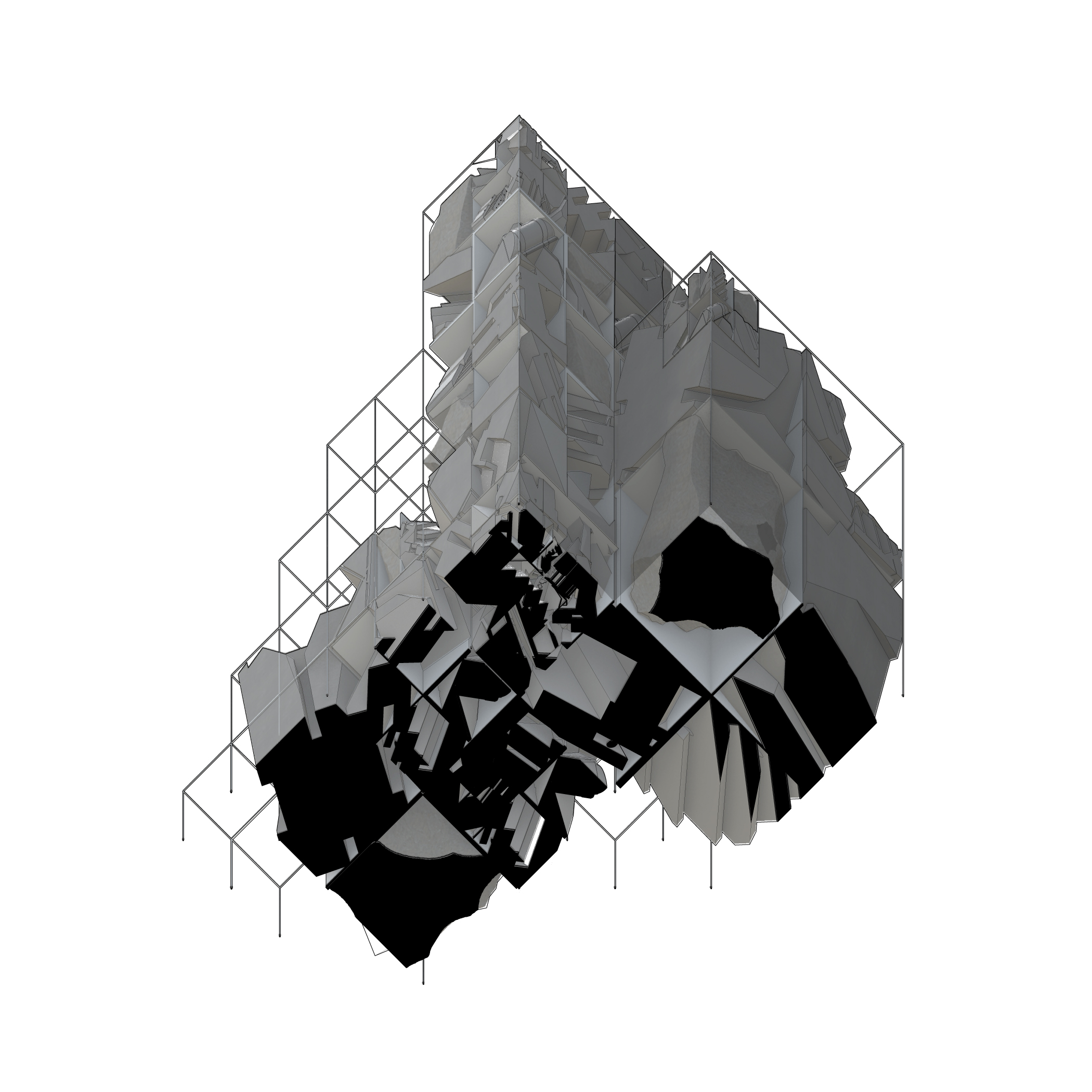
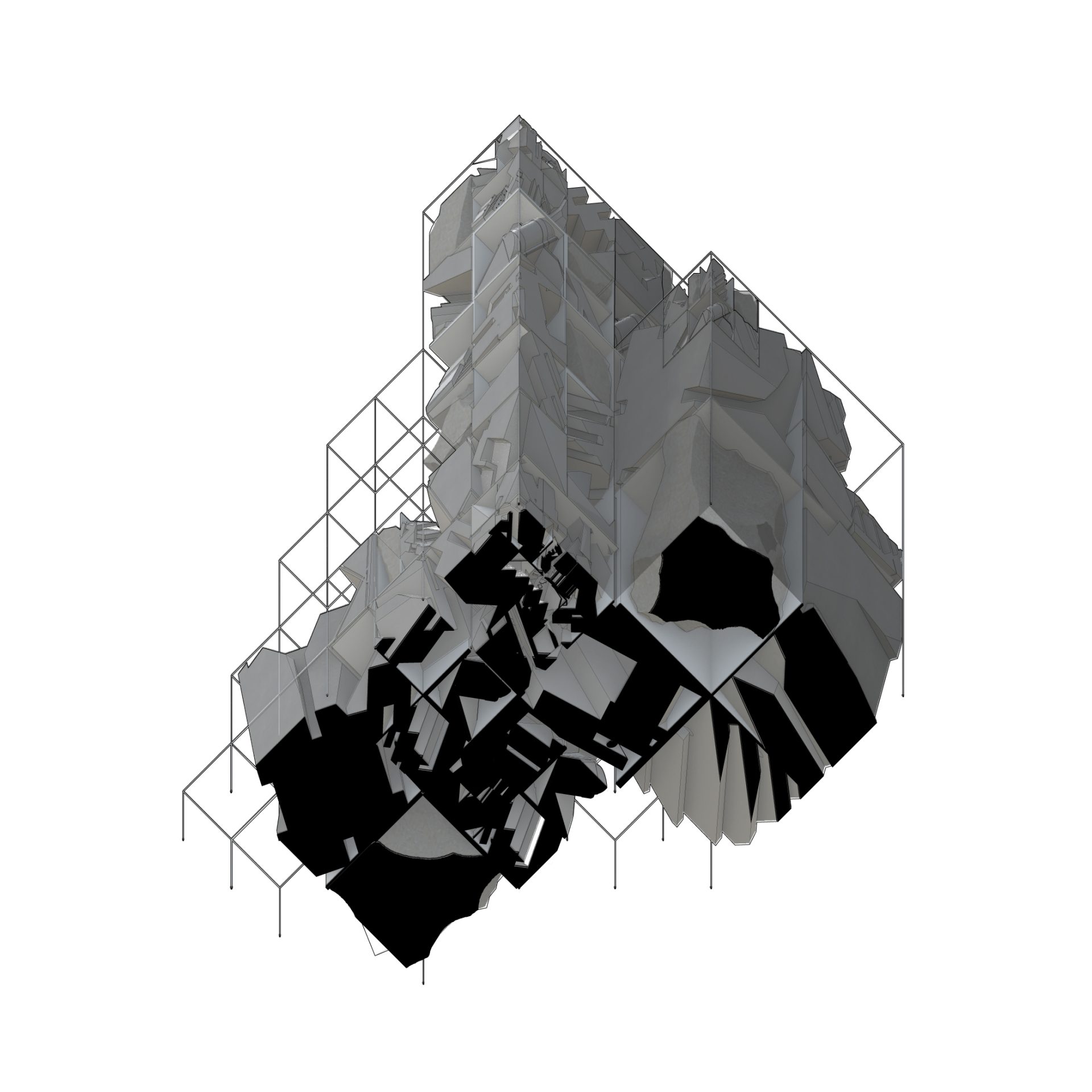
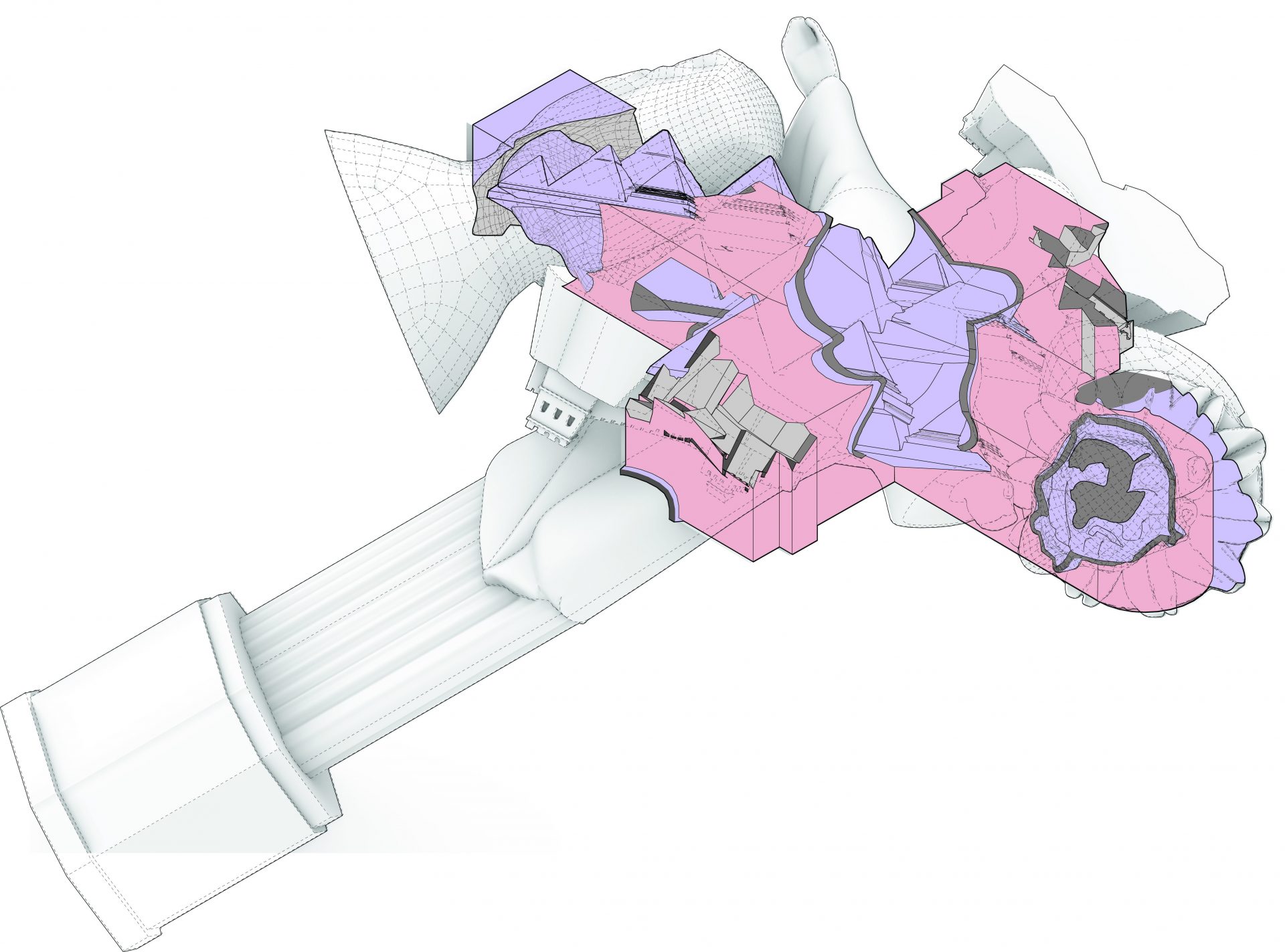
Studying the coexistence of architecture and the land, this thesis examines the tension between two systems of building—implicit patterns found in nature and the patterns of manmade grid—and translates that into a way of designing geometry from the bottom up. A cube is used as a neutral container, subdivided into smaller cubes within itself, where the grid forms something rigid. But through subdivision, the grid starts to behave almost like a natural pattern found in fractals. Within this system, fragments of architectural elements and blocks of stone are nested, cut up by the bounding cube and re-scaled, re-oriented, to become new objects each with its new identity decontextualized from past forms. When the two systems collide, interstitial spaces carved in-between the rough edges of the stone and the sharp cuts of architectural parts produce new pochés and voids, newfound experiential spaces made of existing structures.
Digital_Skin
An exploration of digital interactions, primarily between software and website, as well as envelope and content. A proposal for a new definition and experience of digital architecture.
The software is the framework within which the website is viewed. While the current content of the website is personal architecture work, it is merely a placeholder. The grid of images could be developed into anything to experiment with.
“Windows” within the software are what the website is viewed through, the form of which can be stretched, distorted, merged, cut, and reshaped by the user. These windows act as digital envelopes; with every distortion of form, the contents of the website shift and fill the window in unique ways.
This grid begins to act as a composition of pixels, shifting at different scales and crafting new relationships between each other, as well as with the envelope the user crafts through the software’s operations.
The exploration of transforming an object’s skin and the implications of what that means for internal transformation in this way present new digital potentials of form exploration, composition, and even programming.

Condensed City for Nomads
This thesis proposes a multi-building urban prototype for nomadic life, in which residential, office, and cultural-commercial programs are organized as distinct architectural volumes rather than merged into a single mixed-use form. The project is unified through shared commons and infrastructure that support arrival, mobility, work, social interaction, and recovery. These collective spaces operate as the connective tissue between buildings, enabling fluid movement and overlap between daily activities without dissolving programmatic clarity. Instead of prioritizing permanence, ownership, or fixed occupancy, the architecture emphasizes access, adaptability, and shared use as fundamental principles. By treating architecture as a framework of relationships rather than isolated objects, the project explores how future urban environments can accommodate mobility-driven lifestyles while still fostering community, productivity, and cultural identity. The thesis argues that separating programs while systemically integrating them offers a more resilient and flexible model for nomadic urban living.
Reconstructing Meaning: Mass Timber at Notre Dame
The reconstruction of Notre-Dame following the Notre-Dame Cathedral fire privileged historical fidelity over innovation, preserving identity but foregoing an opportunity to engage contemporary cultural, environmental, and philosophical shifts. A speculative approach could reinterpret the cathedral as a living institution—embedding sustainability, transparency, and technological expression within its sacred legacy. Mass timber, through advanced Cross-Laminated Timber systems, offers a compelling strategy to resolve bespoke structural geometries—enabling lightweight, prefabricated, and reversible assemblies that reconcile craft with computation. This synthesis positions architecture as both a custodian of history and an agent of future transformation.
Beyond the Shore
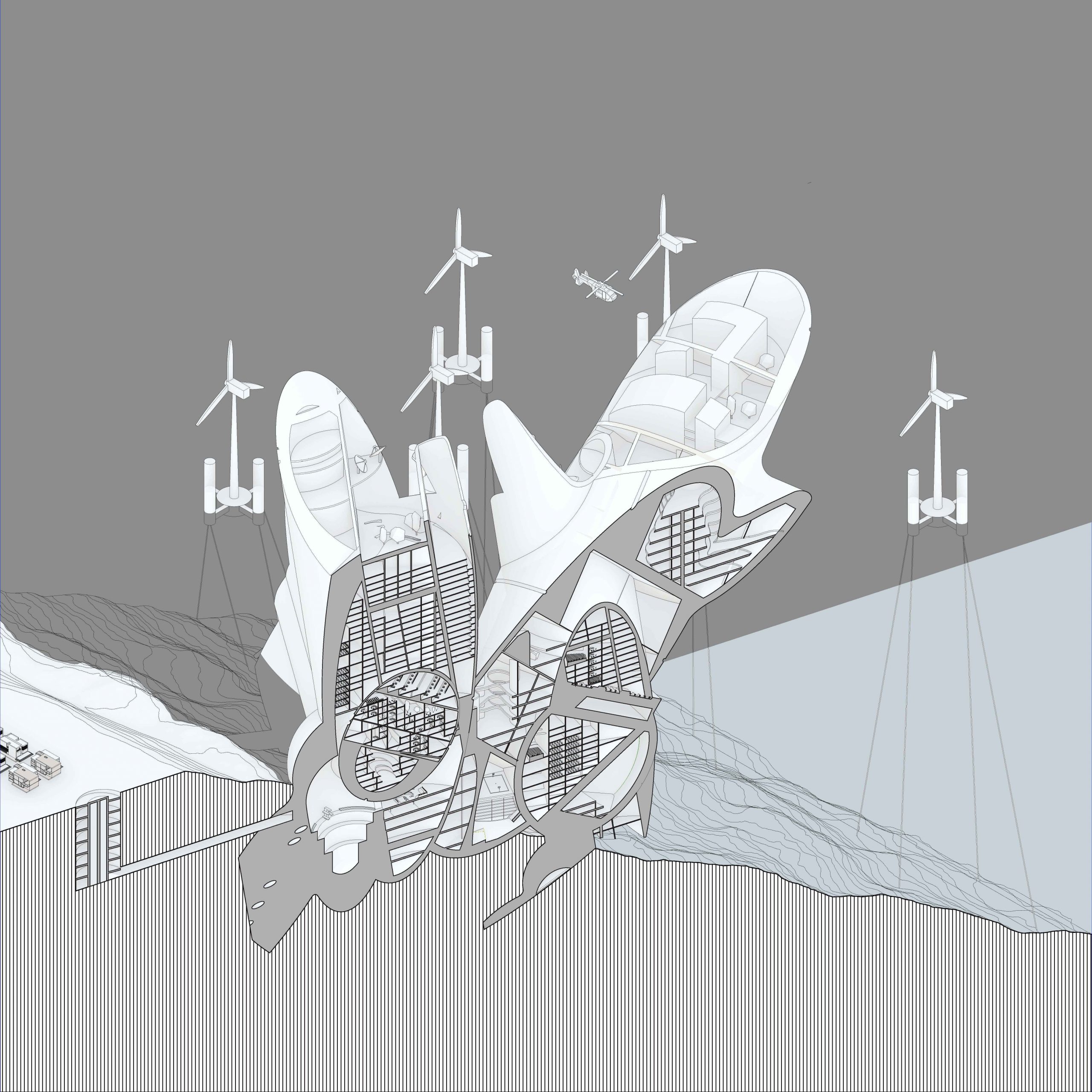
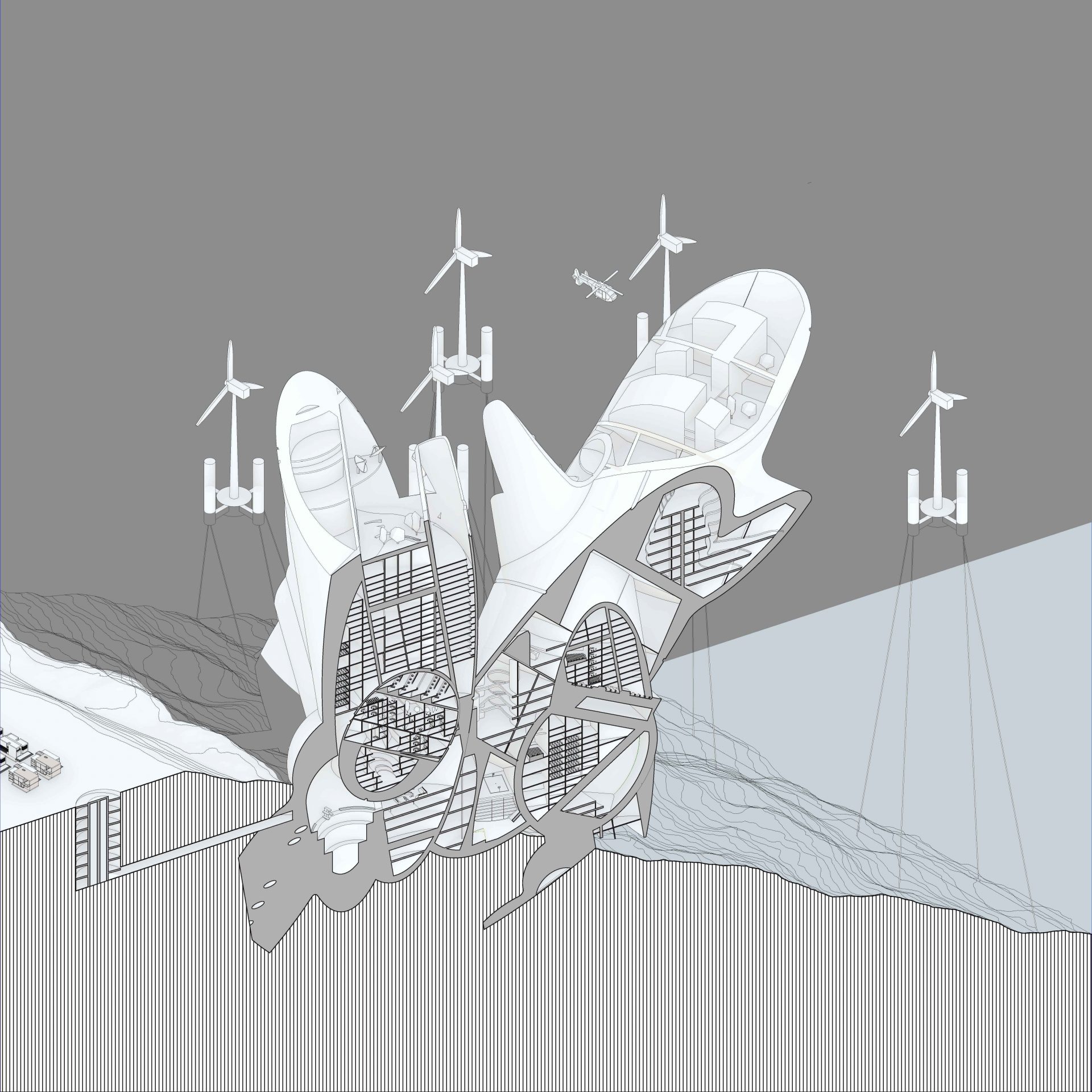
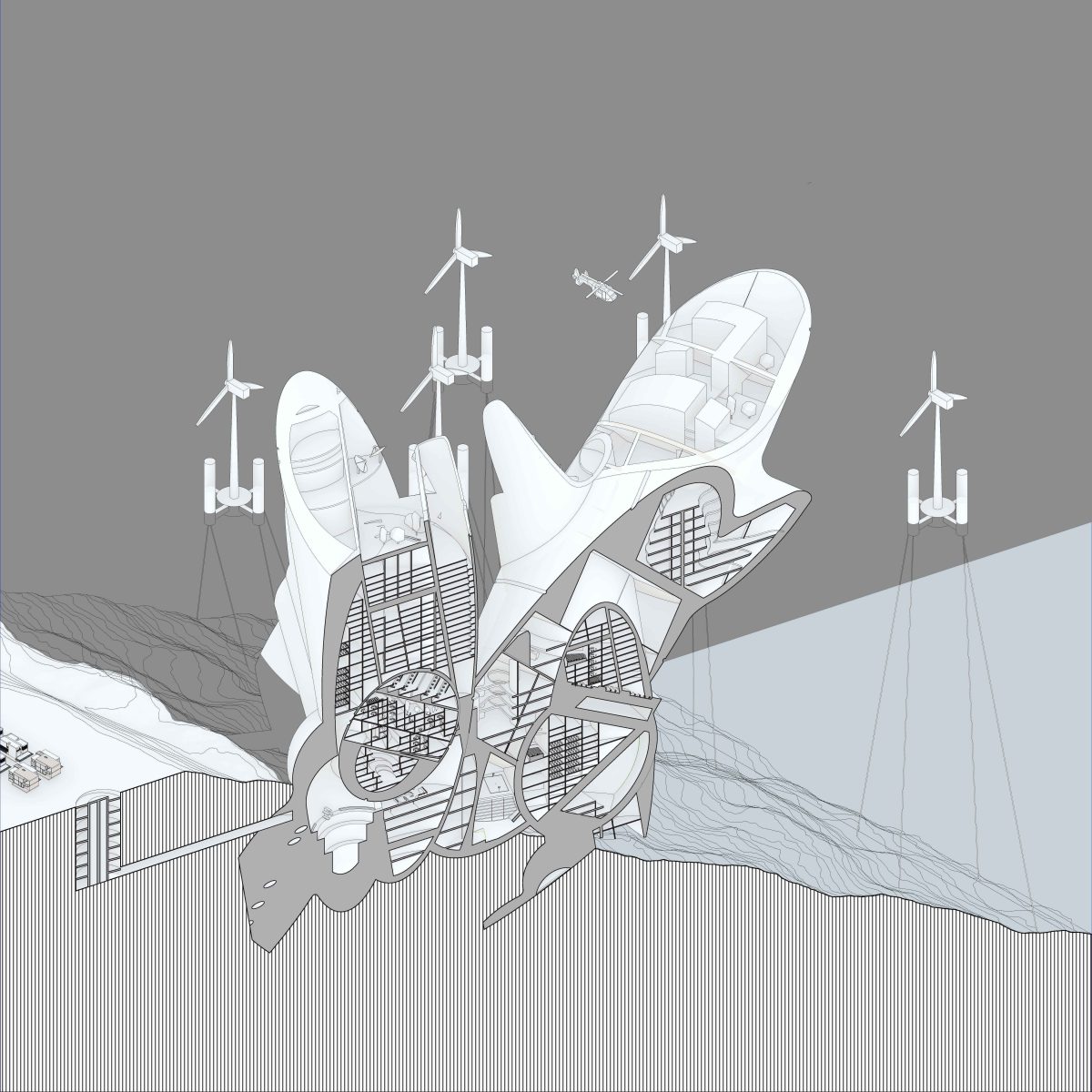
Rising sea levels and coastal instability invalidate static, land-based architecture. This thesis proposes an adaptive, amphibious system: a continuous architectural interface deployed along sinuous shorelines. Drawing from submarine interiors—optimized for pressure, enclosure, and operational continuity—the project develops a framework of nested, layered, and interdependent spatial assemblies. These are transformed into hybrid programs combining residential, commercial, educational, and recreational uses to sustain daily life under fluctuating conditions.
Situated within the littoral zone, the system extends vertically above sea level, horizontally along the shoreline, and sub-surface into the shallow seabed, forming a thickened architectural interface between land and ocean. Rejecting rigid typologies, the project reconfigures compartmentalized logic into a continuous, adaptable spatial field, positioning architecture as a performative system that absorbs and operates within environmental instability.