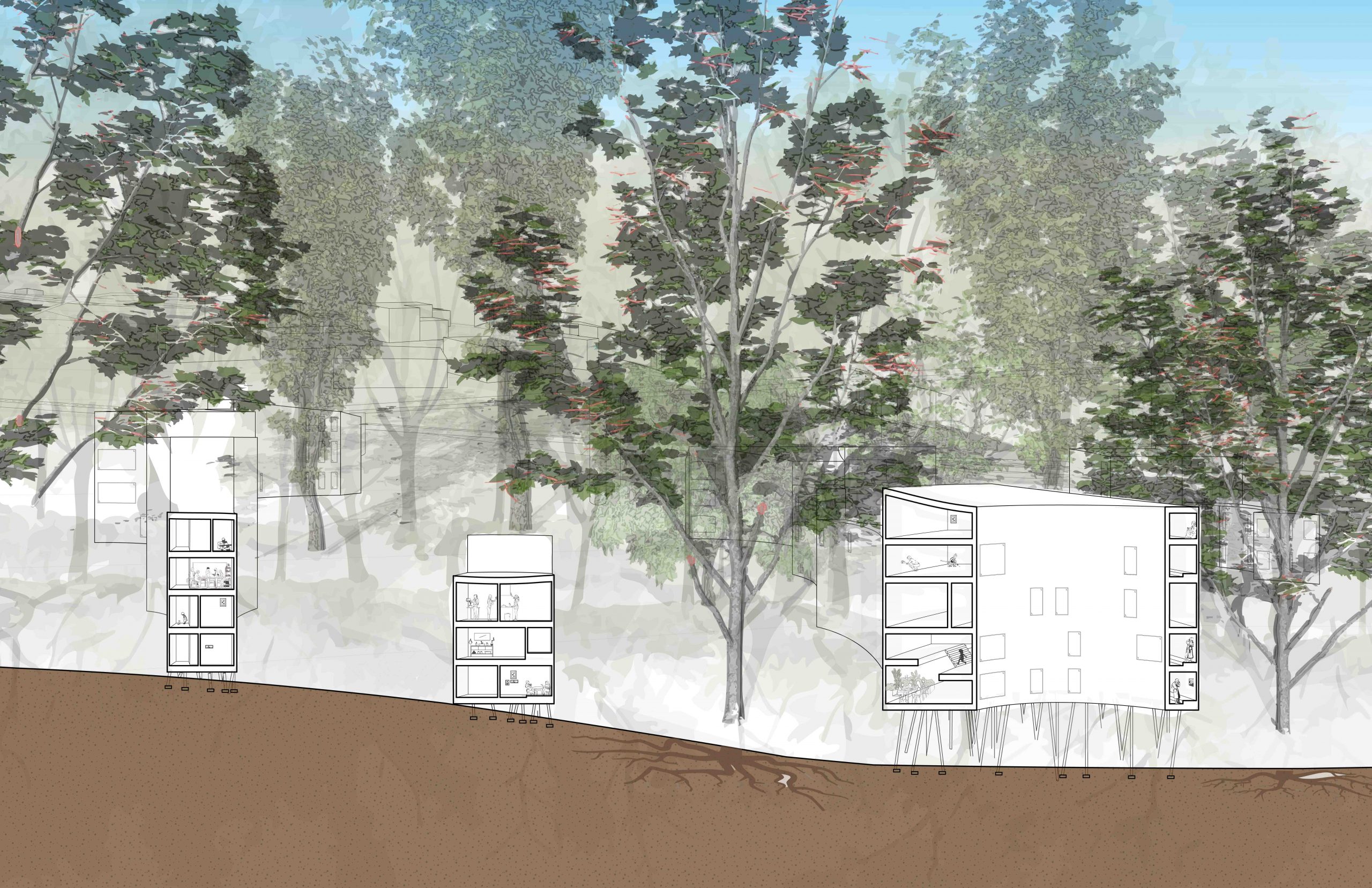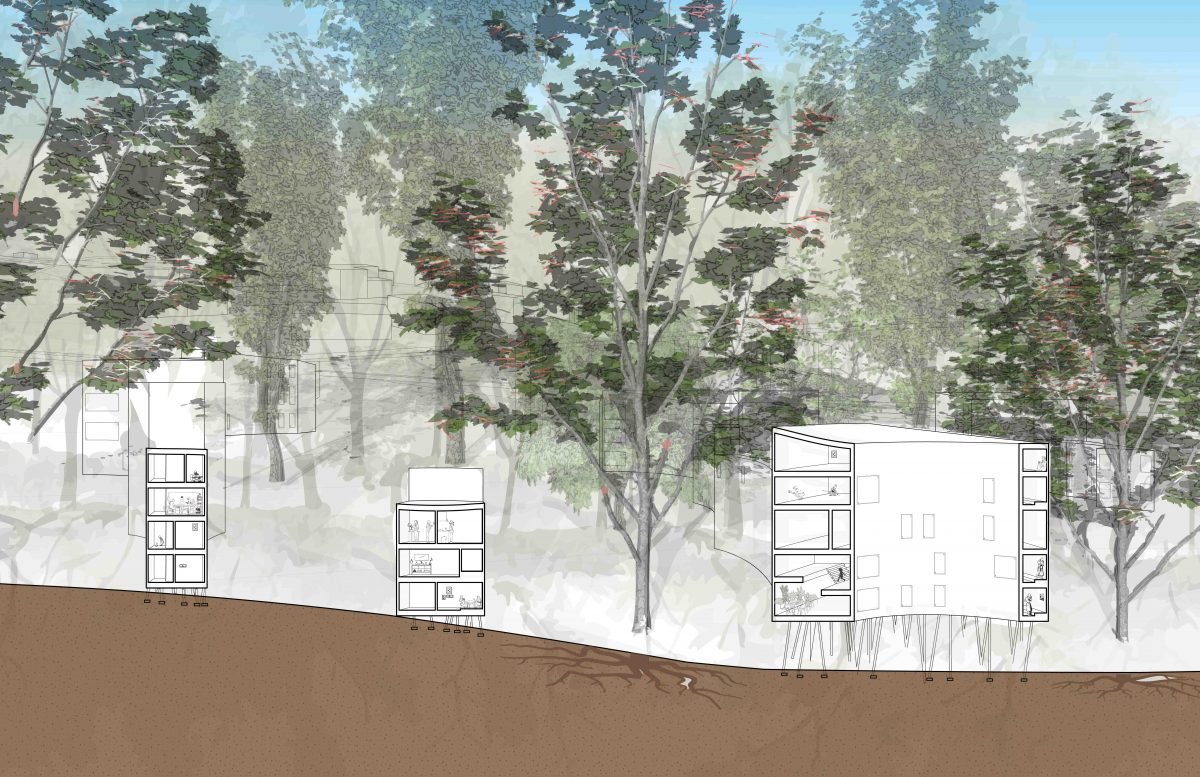
Forests cover ⅓ of all land on Earth, yet we often treat them as obstacles rather than infrastructure. Integrating urban development directly into forest ecosystems allows us to utilize the collective intelligence of trees, which is essential as 13 million hectares are lost annually to urban demands. This mass deforestation destroys a vital defense against climate change, yet trees continue to survive as a collective by adapting their biological systems over centuries. By adopting these natural phenomena as a foundation for a symbiotic relationship, we can transform urban life into an ecosystem of proximity, shared structure, and collective growth. This thesis combines the urban directly into the forest system by forcing architecture to fit into the existing forest environment. Inspired by the Urban Tree Interface, this design eliminates the need for cutting down trees and instead prioritizes the lifespan of the trees, adjusting architectural strategies around the surrounding forest to blend the boundary between the city and nature.