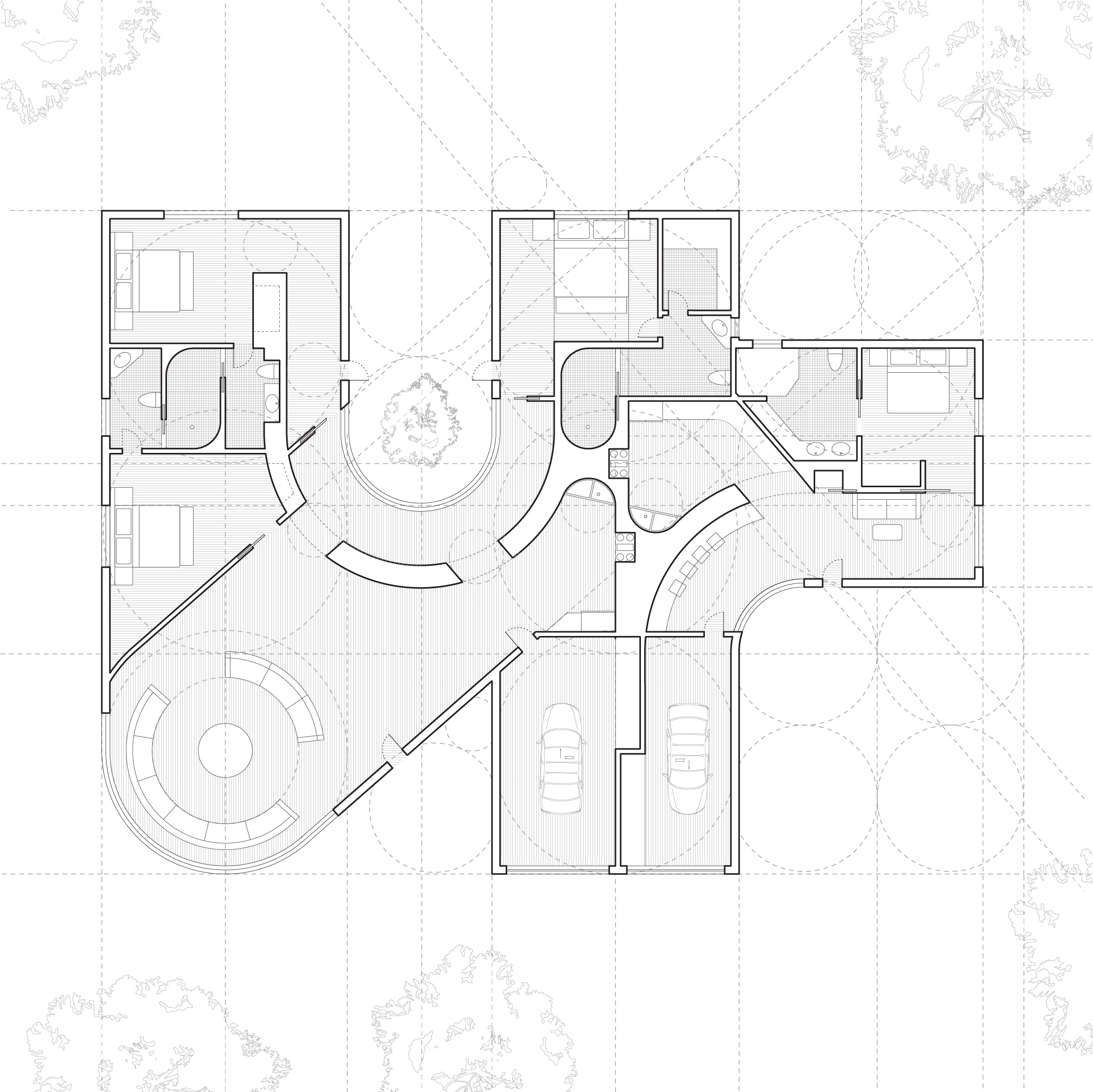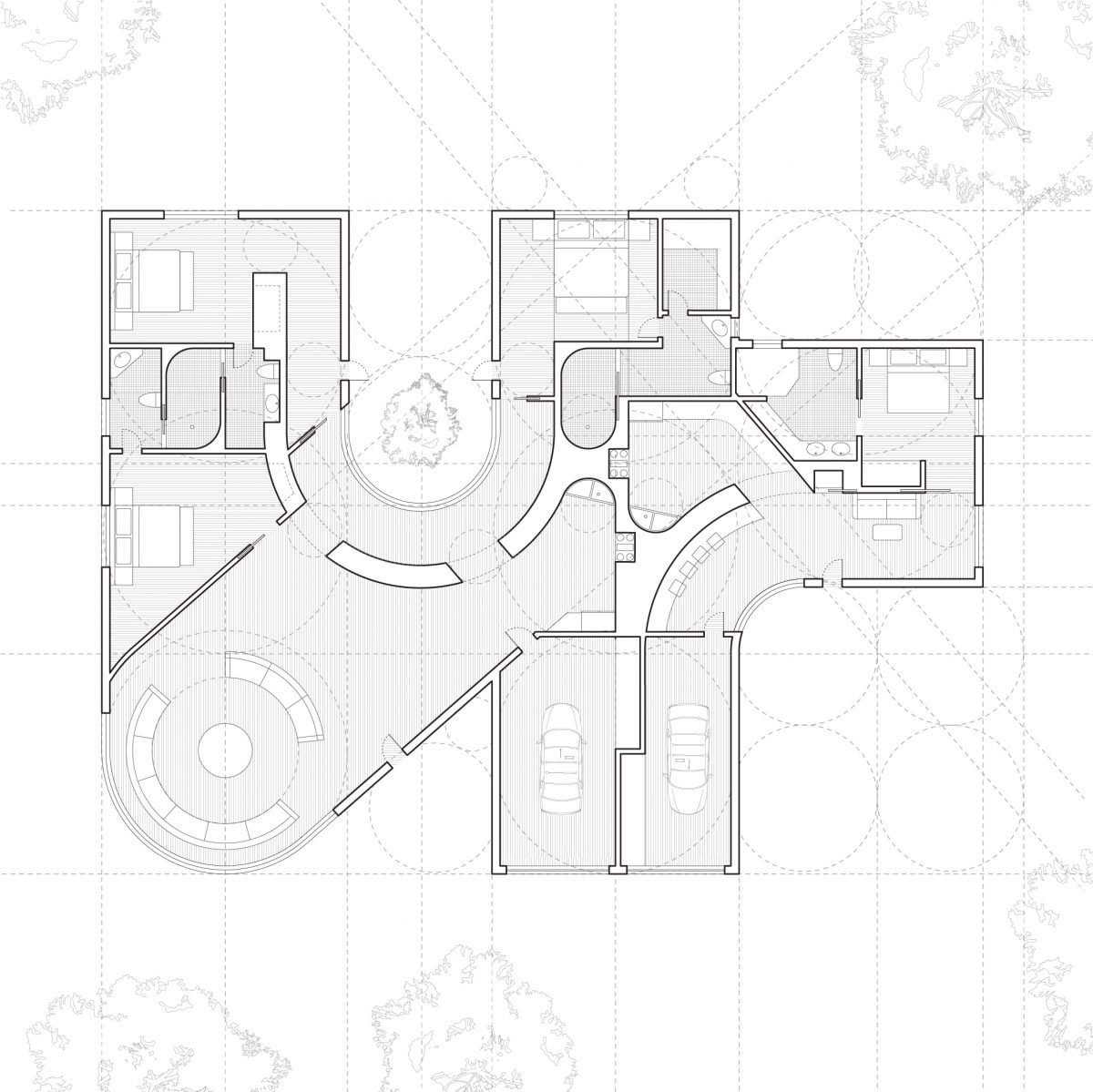
The American suburban house was built for the nuclear family, and its spatial logic has rarely been revised for other ways of living. A house is fundamentally about boundary negotiation yet the suburban house has one answer to all of these boundaries: a wall and a property line. My thesis argues otherwise. Drawing from the formal logic of typography — the micro-decisions of type design that give a letterform its specific character, how a stroke ends, how two forms negotiate adjacency —it proposes a system of spatial operations that transform the suburb's neutral volume into a home with character, calibrated not to a demographic average but to the actual life of the person living inside it.