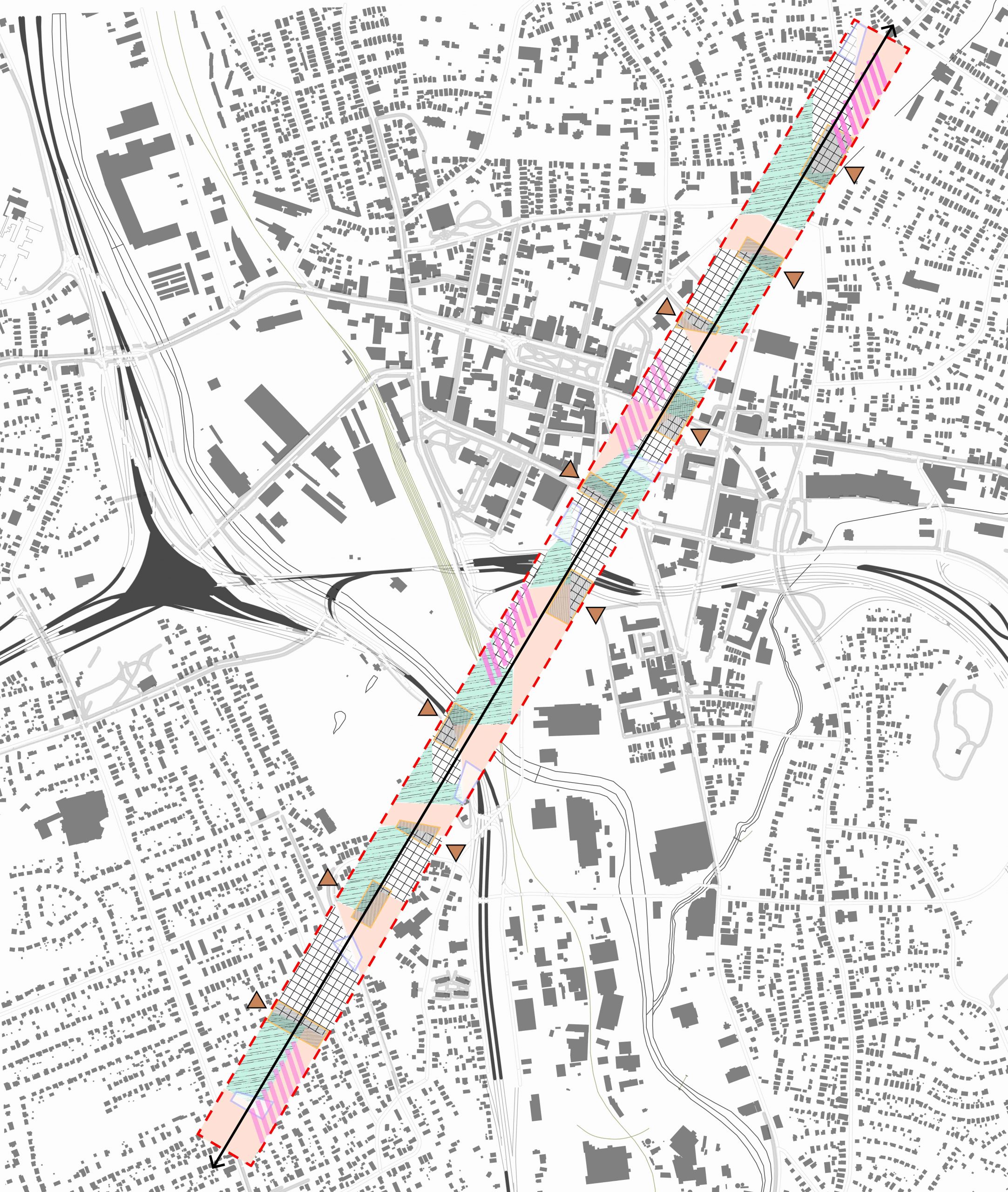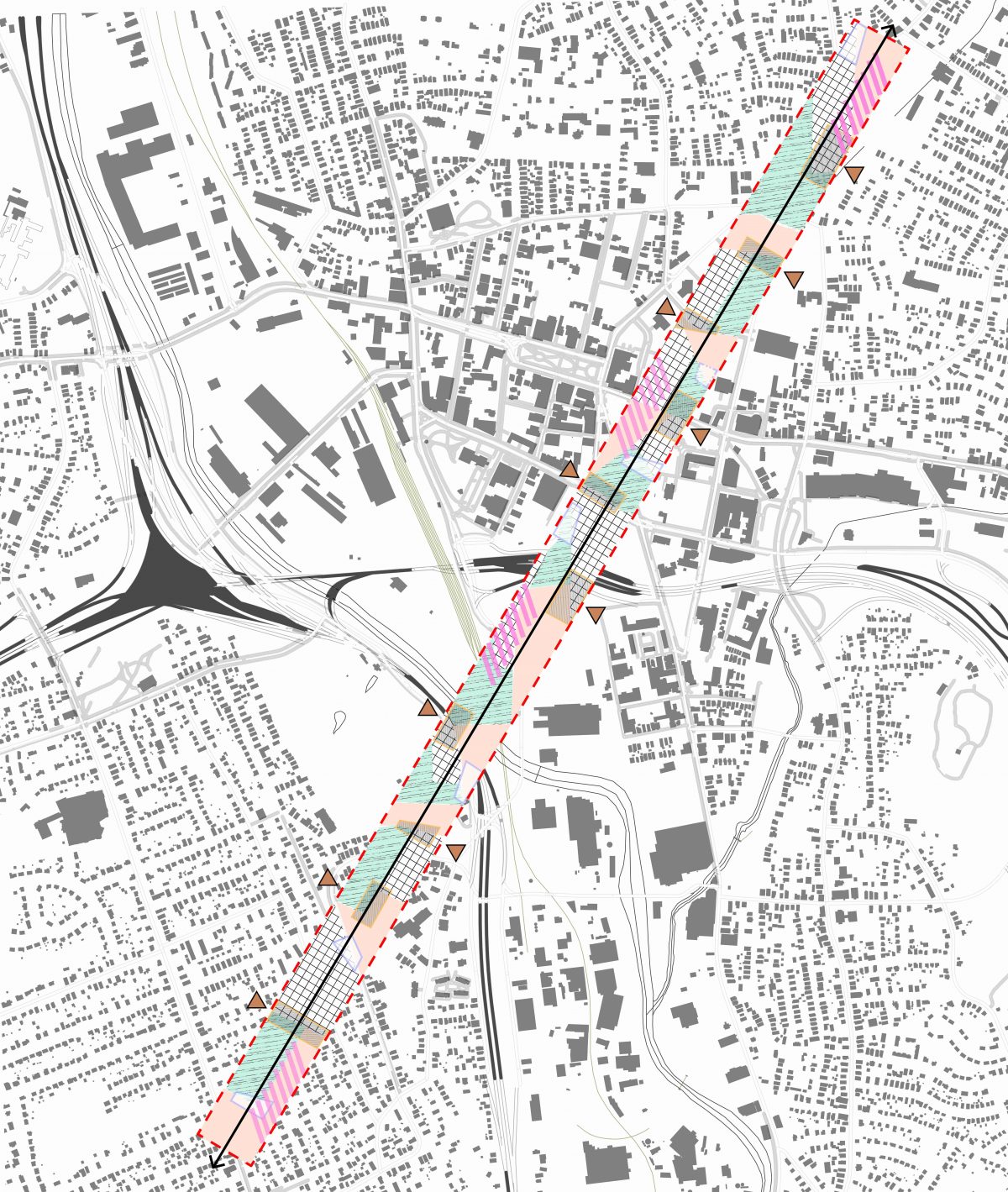
In their current interpretation, malls are known for the movement of users through retail structures, but the mall as a concept has existed as a form of play, a series of landscape typologies, and as forms of urban development and growth throughout history. In this iteration, the mall is reimagined as a legible figure of programmatic continuity, proposing the growth of communities in urban centers and residential neighborhoods alike through shared resources. By establishing the mall as not a singular building but a living infrastructure, accessibility and necessity are not confined but made available along a unifying axis of open mobility.