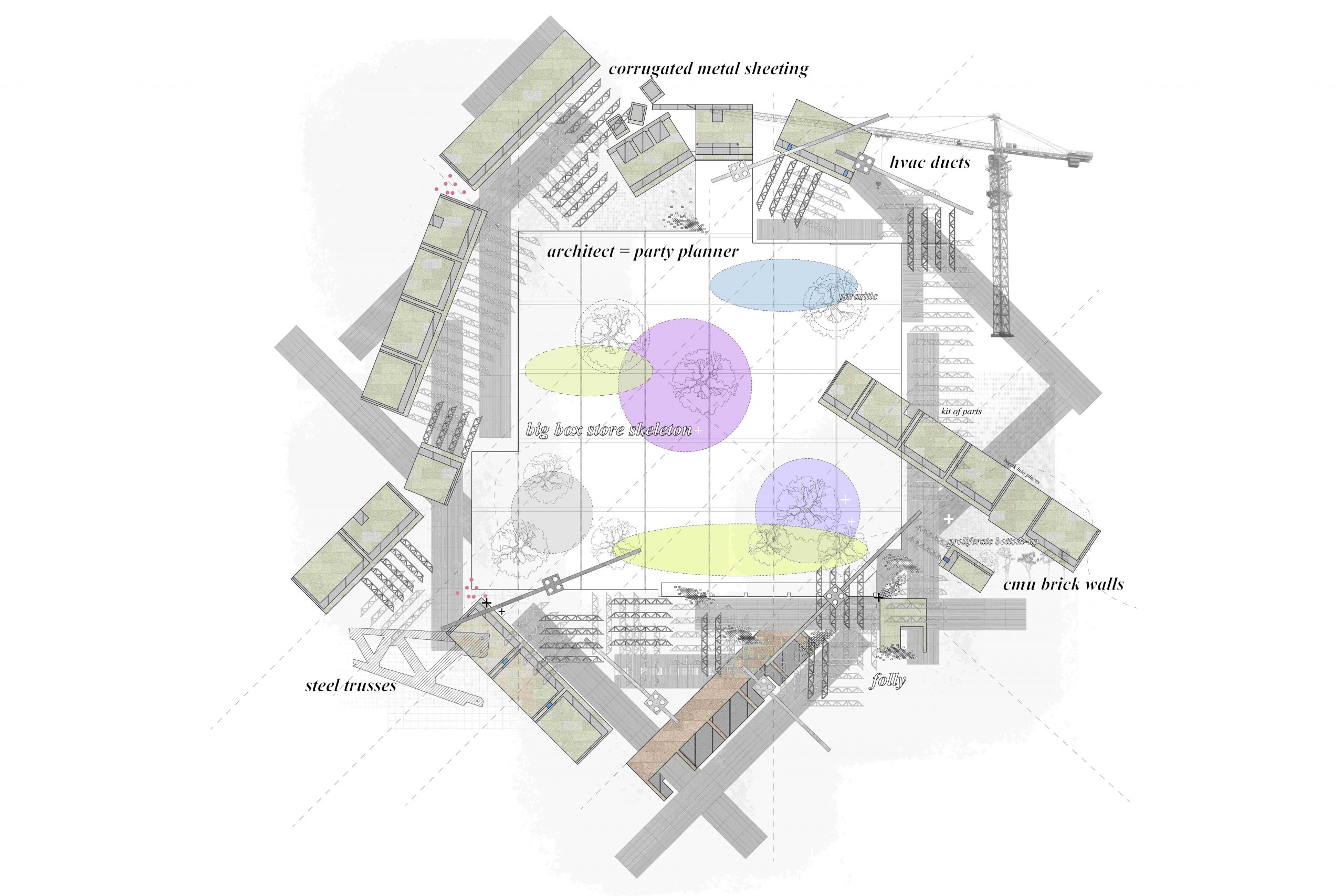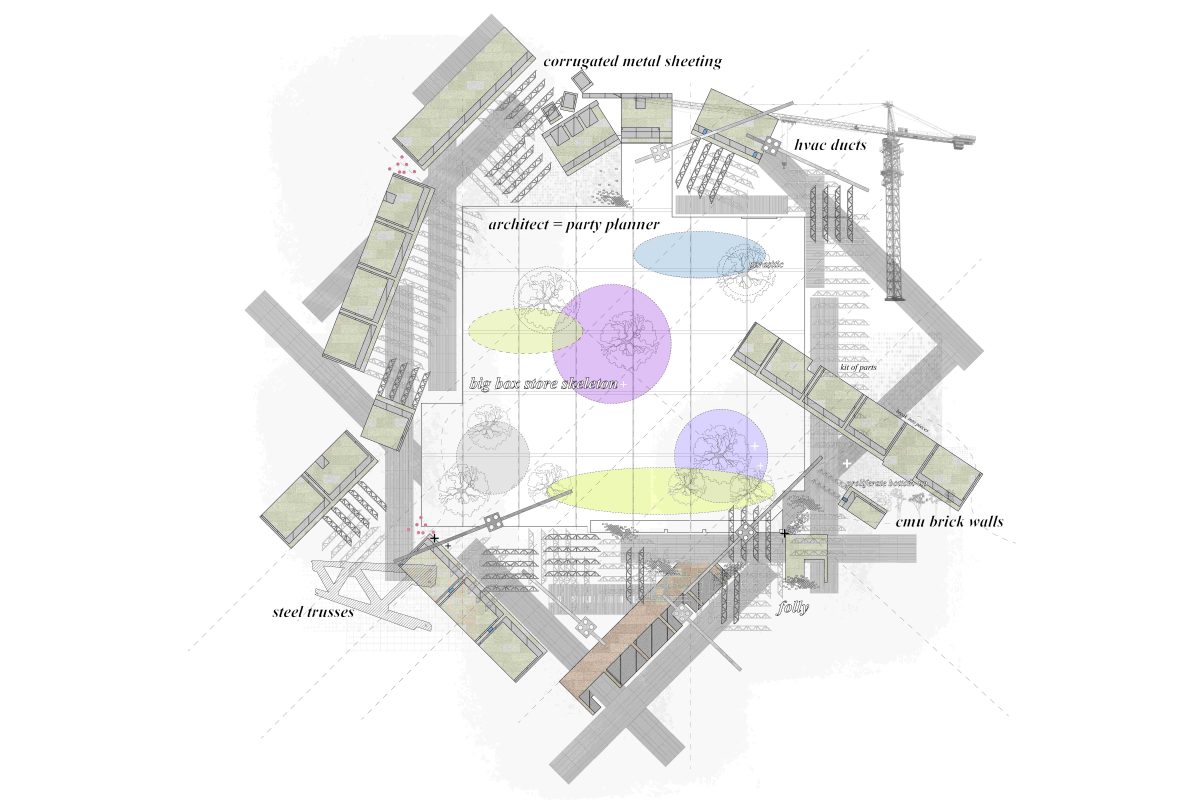
A defunct retail container is reimagined as a site of controlled disassembly, where architecture emerges through the redistribution of its own components. The architect plans parties that choreograph interactions between new programs and existing systems. CMU walls, steel trusses, and HVAC components are extracted, misaligned, and reassembled into new spatial arrangements.
The skeletal frame scaffolds a forest, giving way to a central landscape ringed by perimeter programming. Through this process, the project un-develops a site of consumption, transforming it into a field of communal life—recalling what existed before the store, while projecting new forms of occupation after it.