In its brief history in architecture, AI has been used exclusively as an agent of novelty. Architects have seen it as a form finder and fantasy generator, and this has prevented it from being considered a tool for serious architecture. This thesis section investigated the possibilities for AI within the field as such a tool. Students attempted to use AI to flesh out their own history of projects to provide a catalog of precedents that could then be analyzed to discover a thesis within them and then use AI to figure out what’s next, as their thesis project.

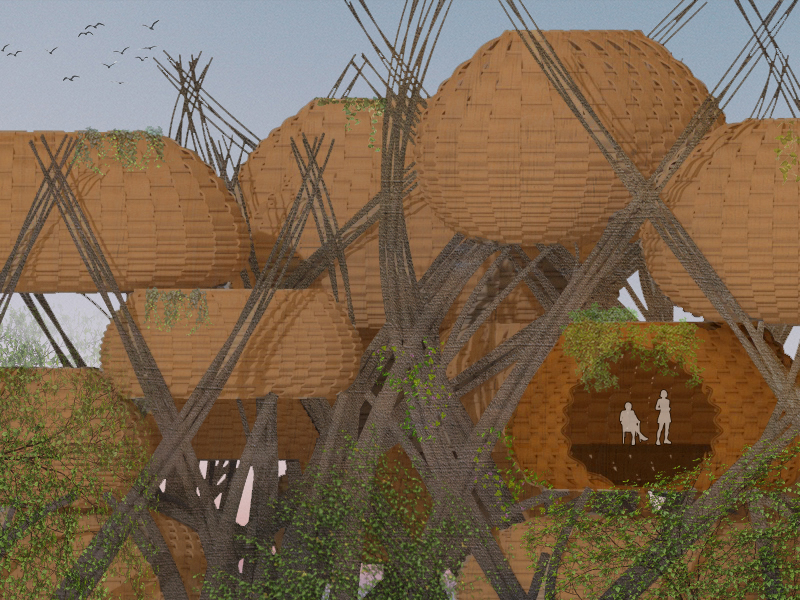
EVOLVING URBAN LANDSCAPE: LIVING ARCHITECTURE
This thesis project proposes the concept of Living Architecture, where structures emerge organically over time, evolving rather than being built in a fixed state. Inspired by Baubotanik principles, it fuses living trees with structural frameworks, allowing architecture to adapt, strengthen, and self-sustain as it matures. Spaces are not designed—they are cultivated, shaped by natural growth into fluid, evolving environments.
By embracing slow construction and long-term development, this project challenges rigid architectural conventions and envisions cities that grow like forests—buildings that are not just occupied, but alive. Designed for future generations, this architecture prioritizes sustainability, resilience, and a deeper relationship between humans and nature.

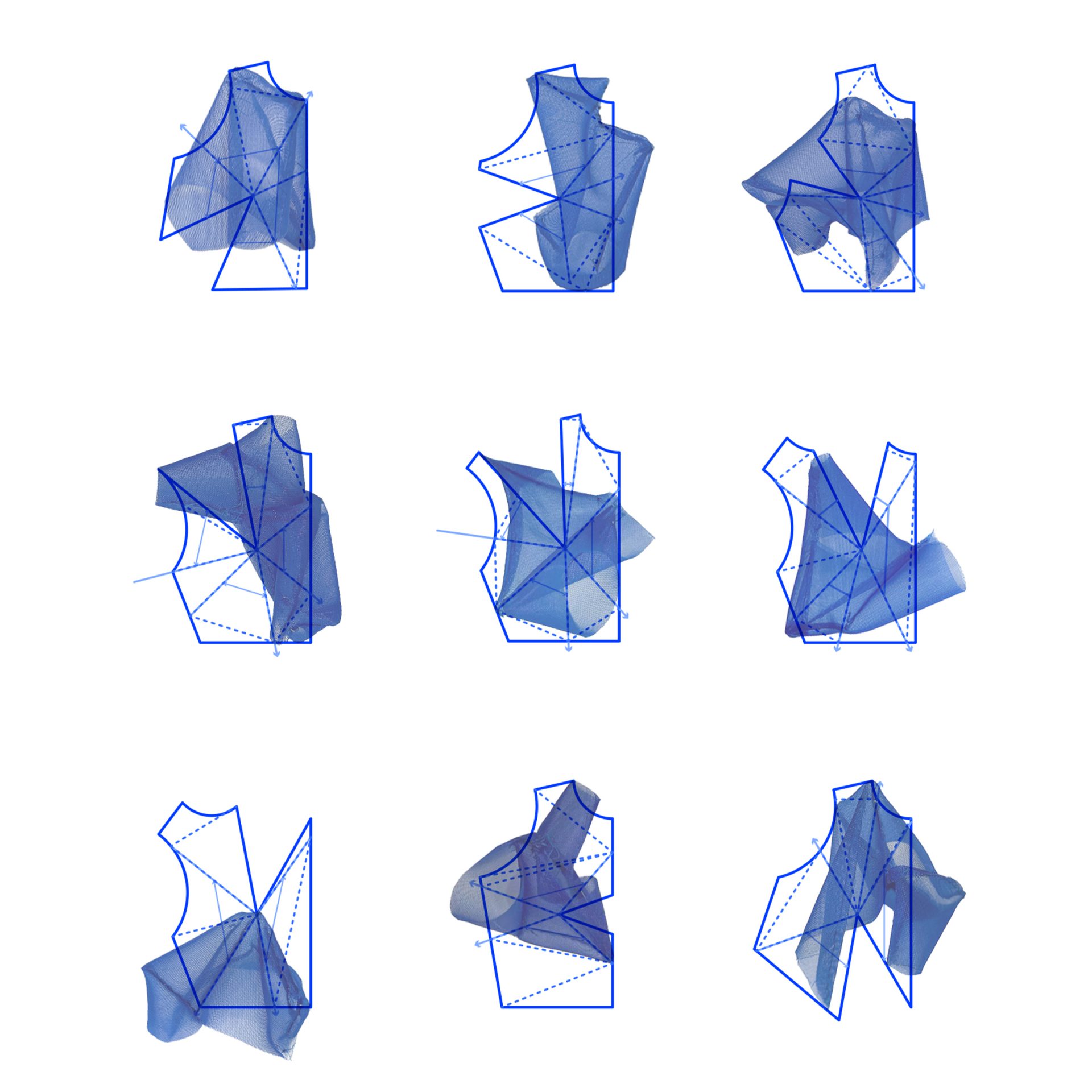
Fabric of Space: Reimagine Architectural Space Through Fashion
This thesis explores how AI can be a transformative tool to reinterpret architectural forms by utilizing fashion design as prototypes. Although architecture and fashion differ in scale and function, they share similar design and fabrication techniques. By integrating garment deconstruction techniques with architectural form analysis, this research investigates how AI can identify and abstract geometric rules, enabling the transition from flat surfaces to architectural forms. Through a combination of digital and physical prototyping, this research aims to establish a rule for scaling fashion-inspired geometries into architecture, promoting sustainability by optimizing material usage and enabling adaptive design strategies. Following experiments in pattern and geometry analysis, AI demonstrates the potential to transform skin-contact textiles into architectural materials with comparable functionalities, envisioning new possibilities for spatial qualities and redefining the relationship between materiality and architectural space

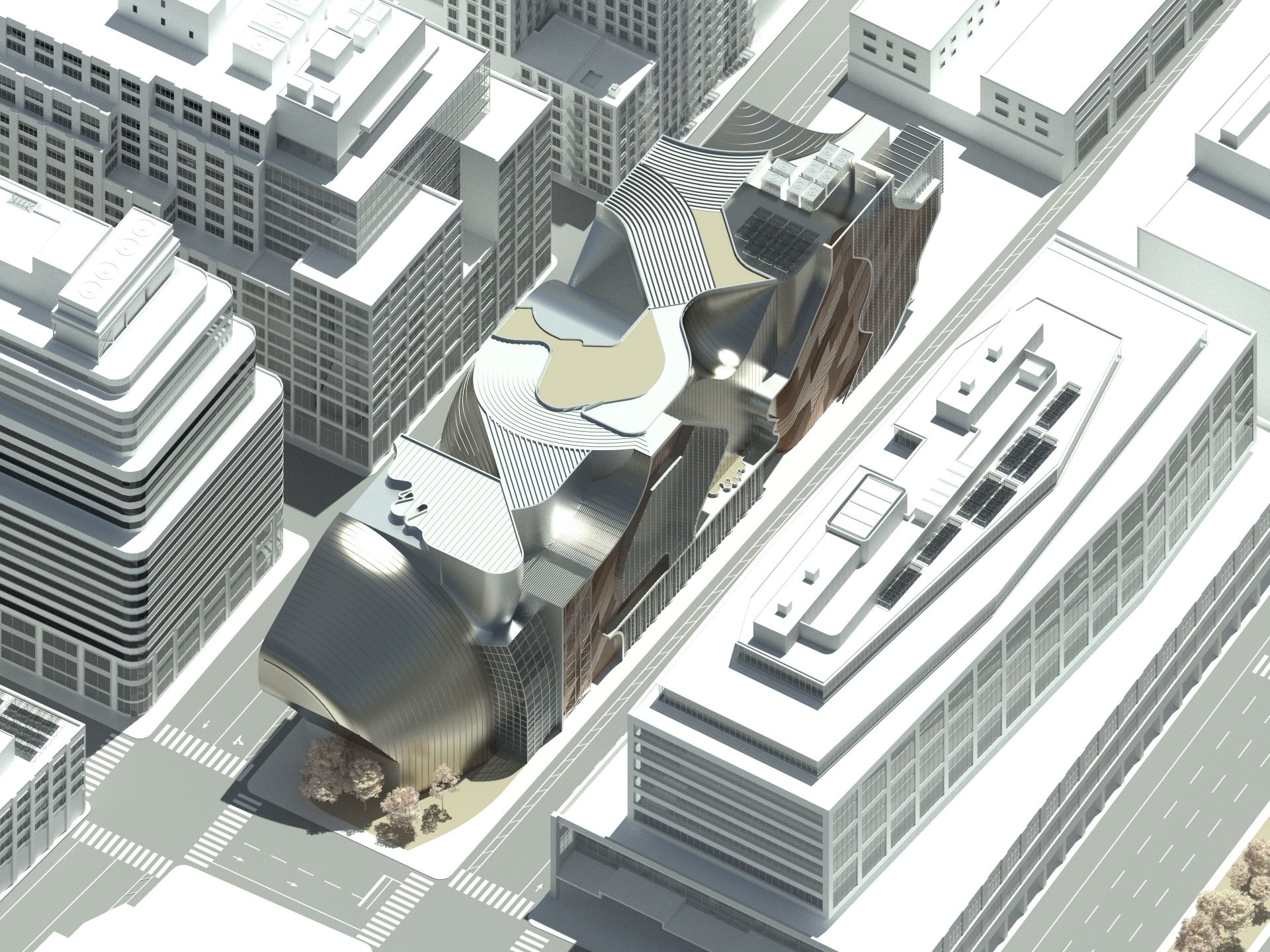
Modern Chinese Vertical Garden: A Study of the Transition from Tradition to Modern in Chinese Garden Style
This research explores how to integrate traditional Chinese garden principles into contemporary vertical garden skyscrapers, merging cultural heritage with modern sustainability. By applying concepts like borrowed scenery (借景), yin-yang balance, and symbolic plant use, these vertical gardens become urban sanctuaries that reflect harmony between built and natural environments. Utilizing materials such as steel, glass, and concrete, the design reinterprets spatial layering and natural aesthetics in a modern context. These structures not only enhance ecological balance and urban biodiversity but also preserve cultural identity, creating green spaces that foster continuity, environmental responsibility, and a renewed sense of place in dense urban settings.


Fonts Figures Facades: Towards a New Formalism of Architecture
A new formalism challenges modern value systems and a world engineered for order and efficiency. This thesis posits a new mode of contemporary design through the translation of typography’s syntactical elements into architectural tectonics. Similar to how architecture can be understood through tectonics and design language, typography is distinct by its anatomies and how these contribute to a known language. There are large parallels between the way typography is read and how architecture is experienced. Thus, typography becomes the vehicle through which a new formalism operates. This design language places emphasis on aesthetic and gestural moves that shape a deeper narrative. It also challenges classical means of extrusion and explores alternative modeling techniques to produce architectural form. In an increasingly automated world, a new formalism celebrates an interest towards craftsmanship, identity, and narrative. Typography, as a deeply human form of communication, becomes an expressive medium for reclaiming intentionality and creativity.
Architecture in Motion: Interactive Learning Through Digital Worldbuilding
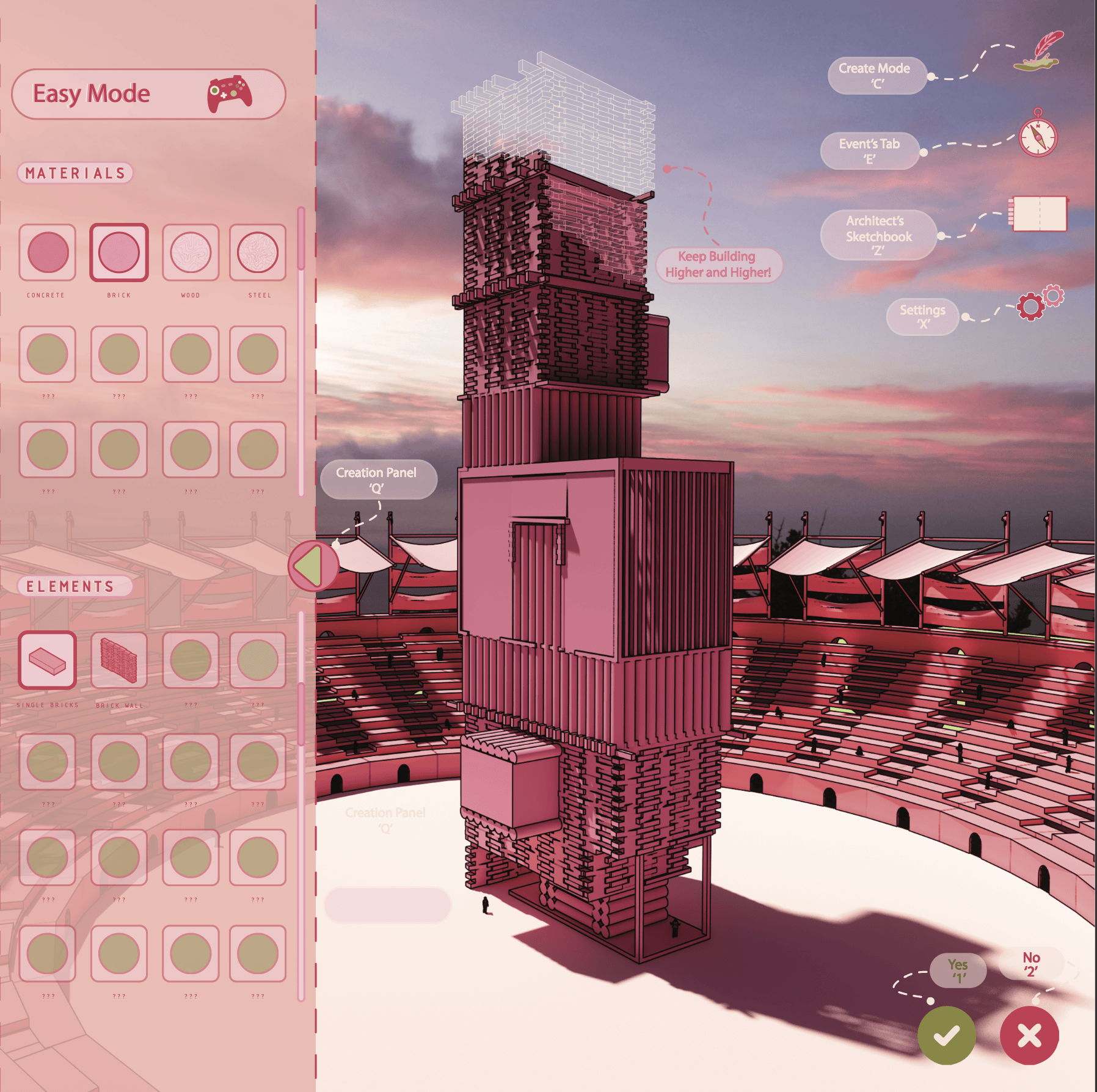
This thesis, embodied in the video game “Blueprints of Destiny: Architects of Eldoria,” presents a novel digital design tool for architectural education and exploration.
By integrating core design principles into an engaging and interactive experience, the game cultivates critical thinking, problem-solving, and resource management skills while offering a unique platform for experimentation and iterative design processes unavailable in traditional methods.
The dynamic simulation of environmental factors, material properties, and construction challenges within the game’s virtual environment provides a powerful pedagogical approach that surpasses the limitations of traditional architectural training.
Neo-Metabolic Urbanism
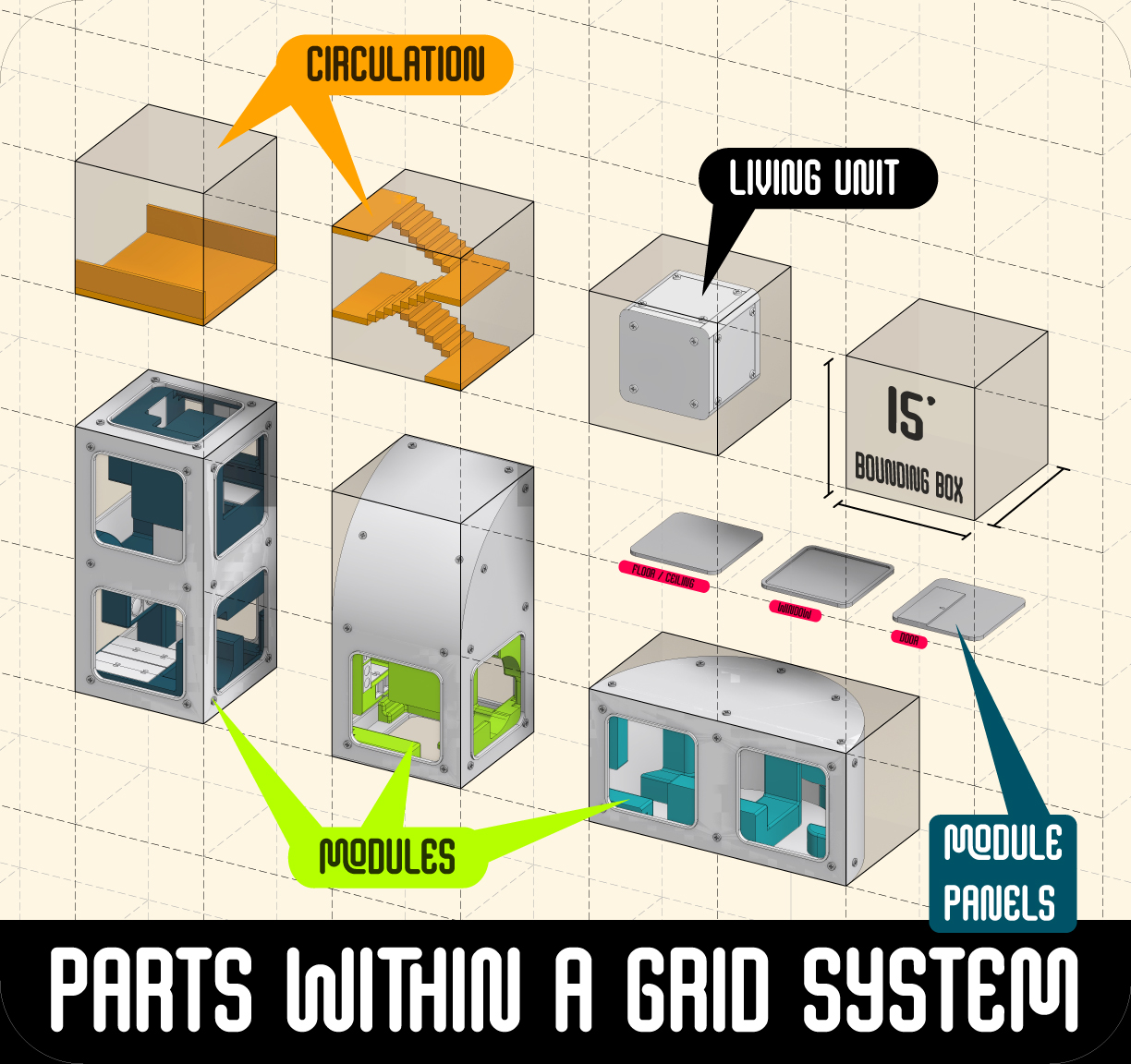
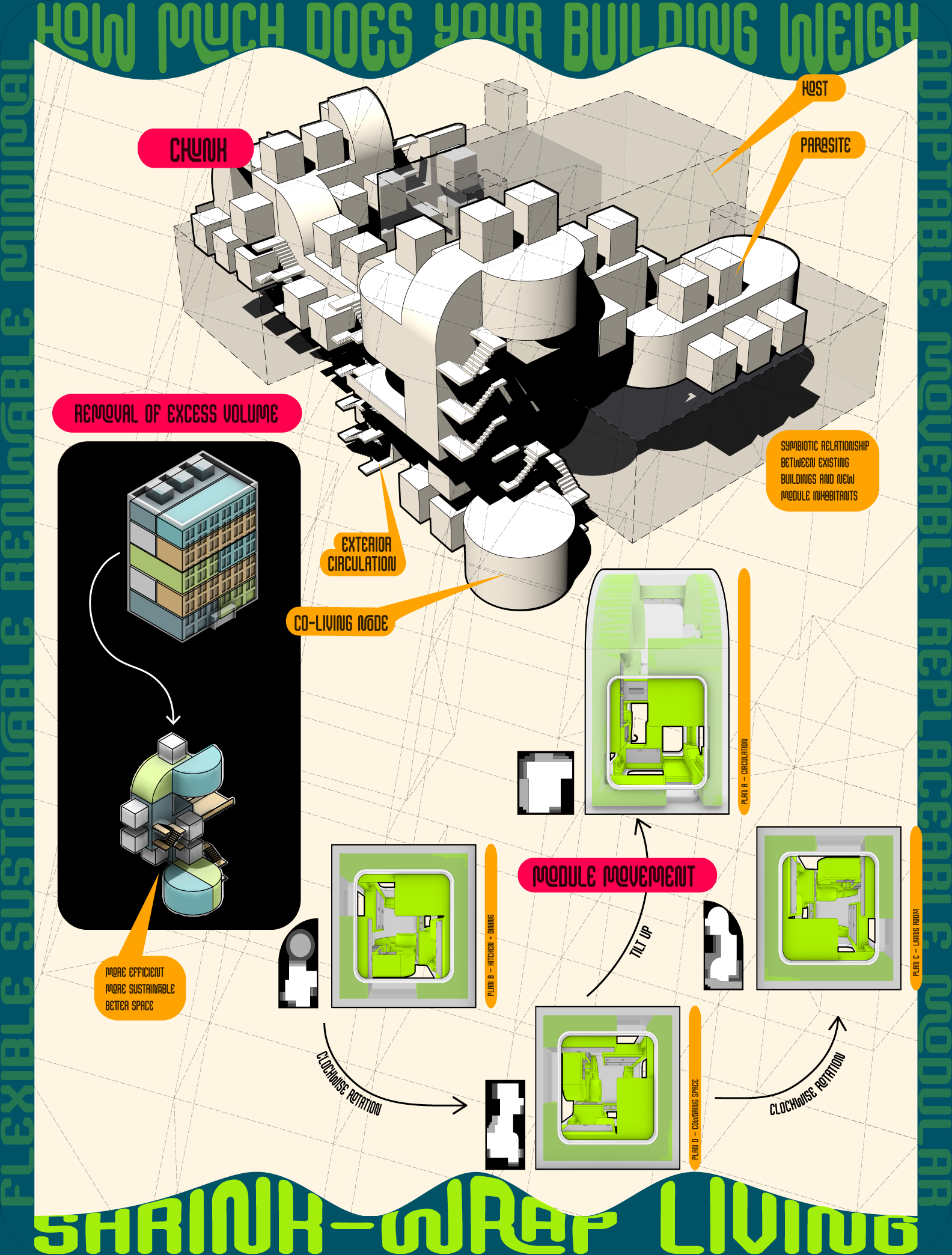
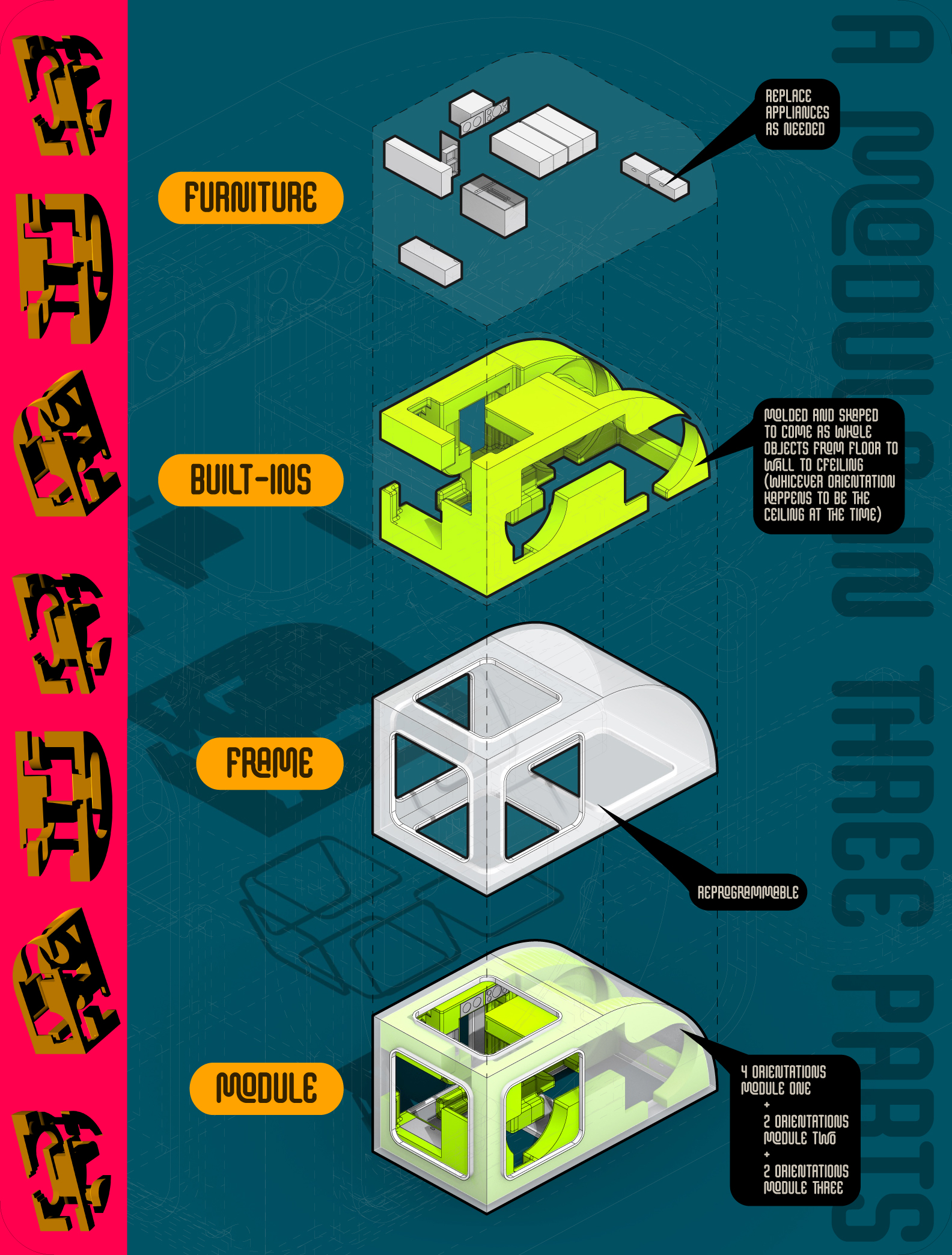
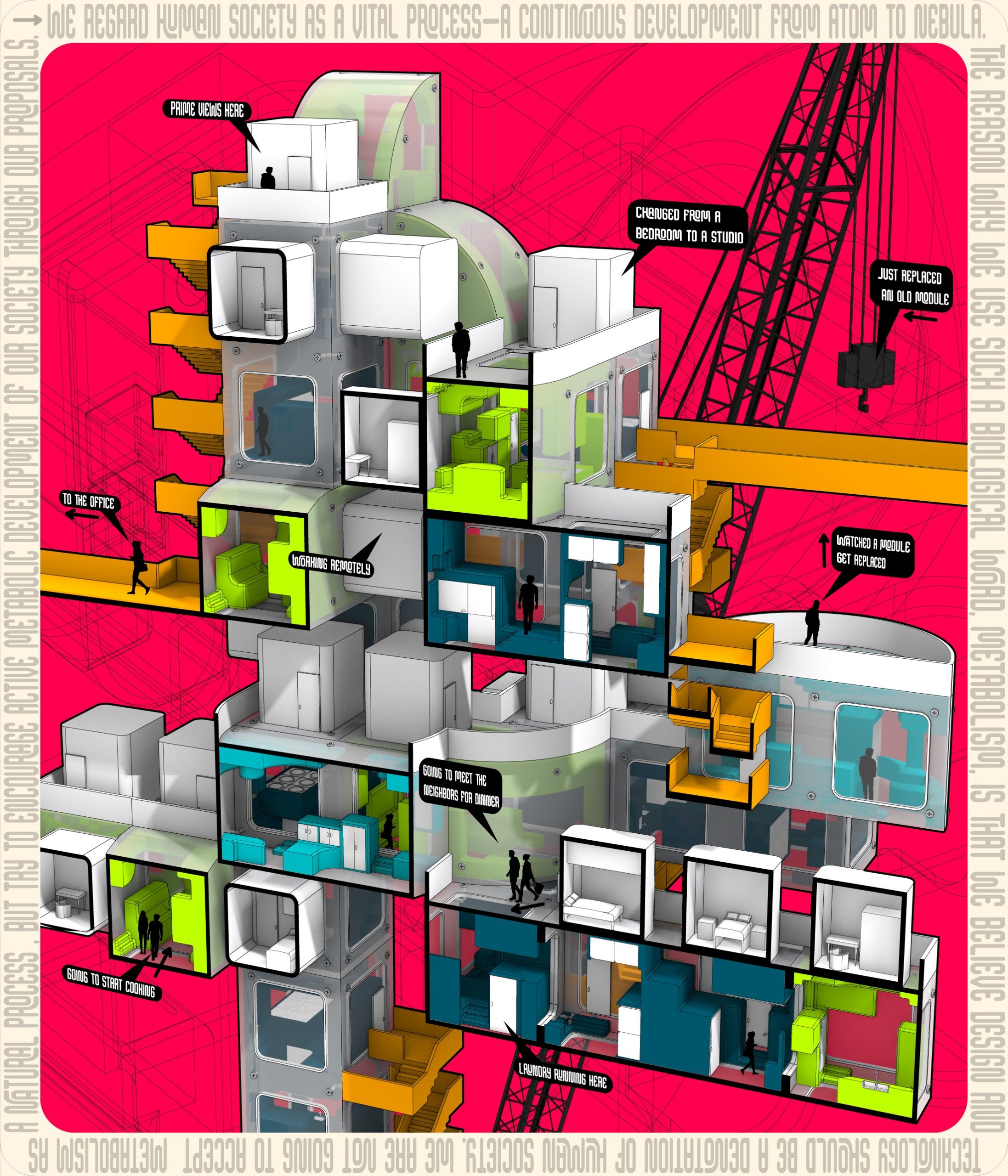
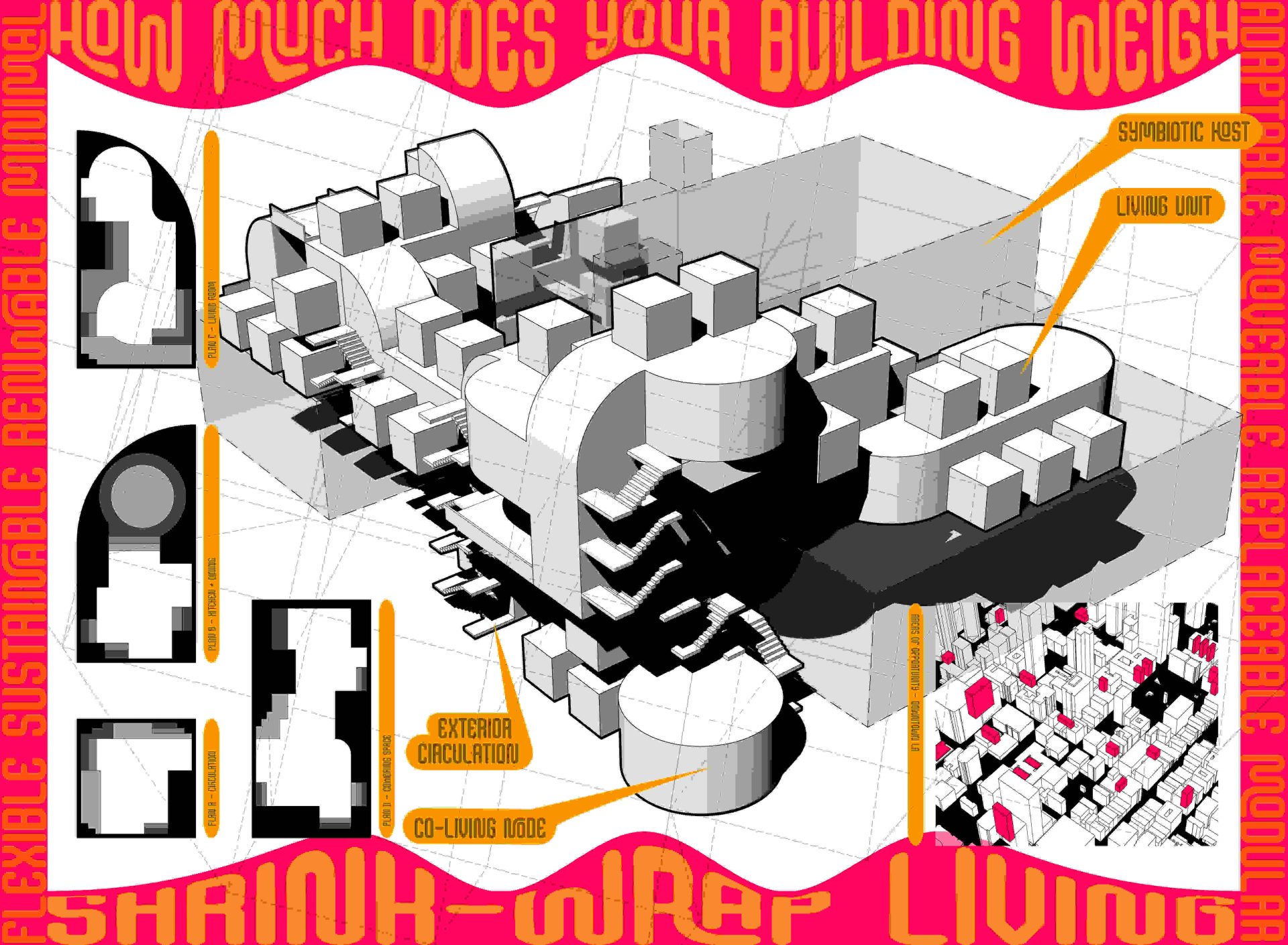
This project is a contemporary evolution of Metabolist architecture, reimagined at the scale of the individual and rooted in ideas of adaptability, growth, and change. Unlike the vast urban megastructures of the original Metabolist vision, this project focuses on small, flexible modules that can be added, removed, and replaced over time – reflecting a more human-scaled, sustainable approach to architecture. Designed to fit within challenging or irregular sites, the system thrives in spatial constraints, offering a scalable solution for urban densification without sacrificing quality of life. Each module is moveable and interchangeable, allowing for personalized configurations and future reprogramming as needs evolve. The architecture embraces impermanence and renewal rather than permanence and monumentality. Spatially, the modules are intentionally minimal – eliminating excess volume and focusing on essential living needs. In doing so, this project advances the spirit of the Metabolist movement while responding to contemporary ecological, social, and urban challenges with an architecture that is flexible, regenerative, and deeply embedded in the cycles of everyday life.
What We Do In The Shadows
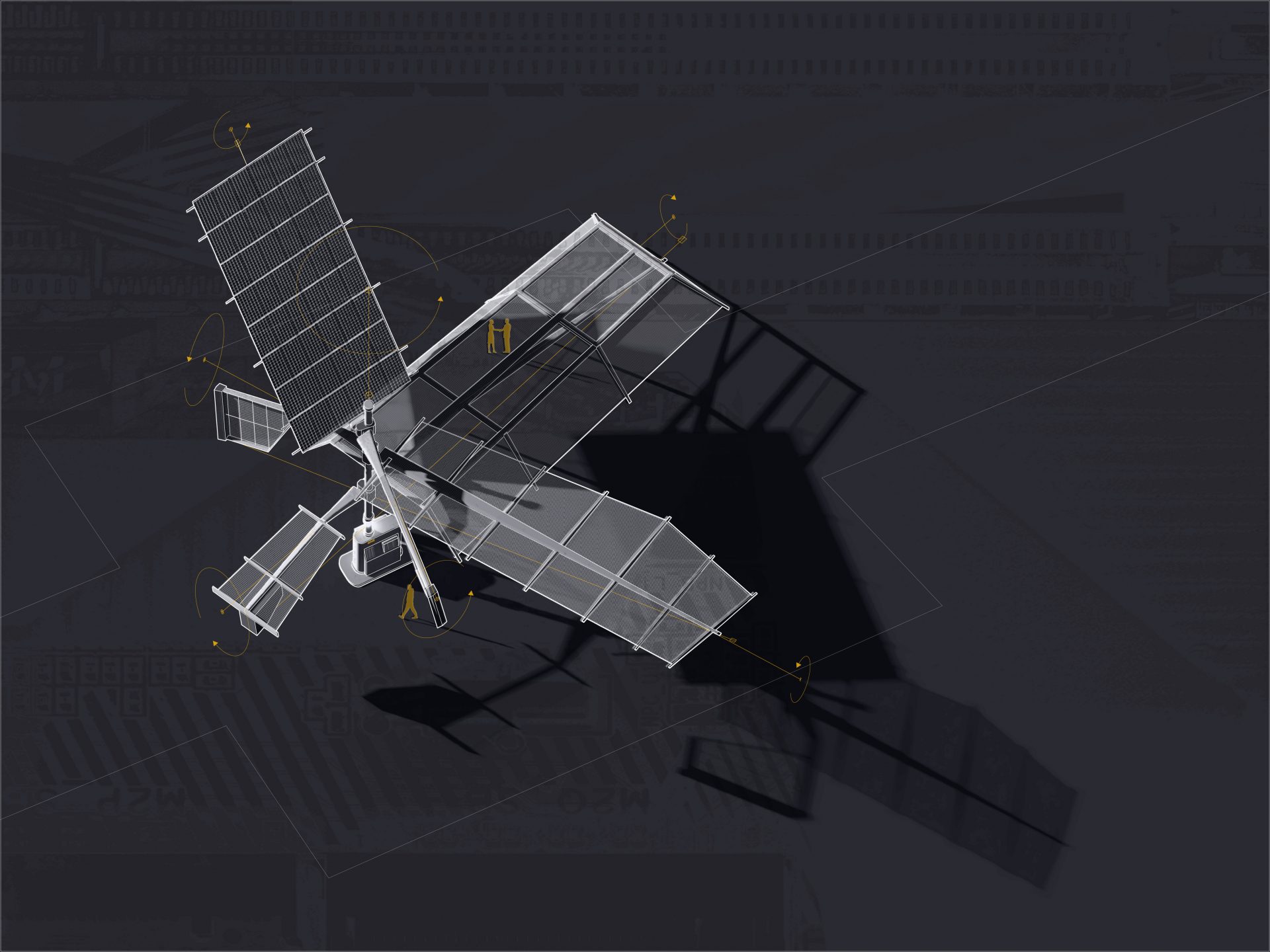
The 21st century has witnessed an explosion in wireless communications. Increases in their variety, capacity and usage show no end. Cellular networks, ubiquitous wi-fi and satellites mean that wherever we go we can be tracked. Surveillance capitalism hijacks our attention, harvests our behavior and sells them back to us as personalized products.
There is no escape from these wireless communications in an urban setting. This thesis proposes that we build such a place: a place without wi-fi; with limited cellphone reception; shielded from surveillance satellites. A refuge, a haven, a place to visit when we want to be anonymous and free from digital distraction.
Like light, these technologies rely on a form of electromagnetic radiation. Unlike light, the lower frequency waves of wireless communication are not necessarily blocked by opaque objects. Instead, they can be attenuated, reflected or refracted through use of different materials and forms. Building on the rich history of light and shade management in architecture, the project will include a range of structures providing different levels of digital and visual shade.
Post-carbon Form
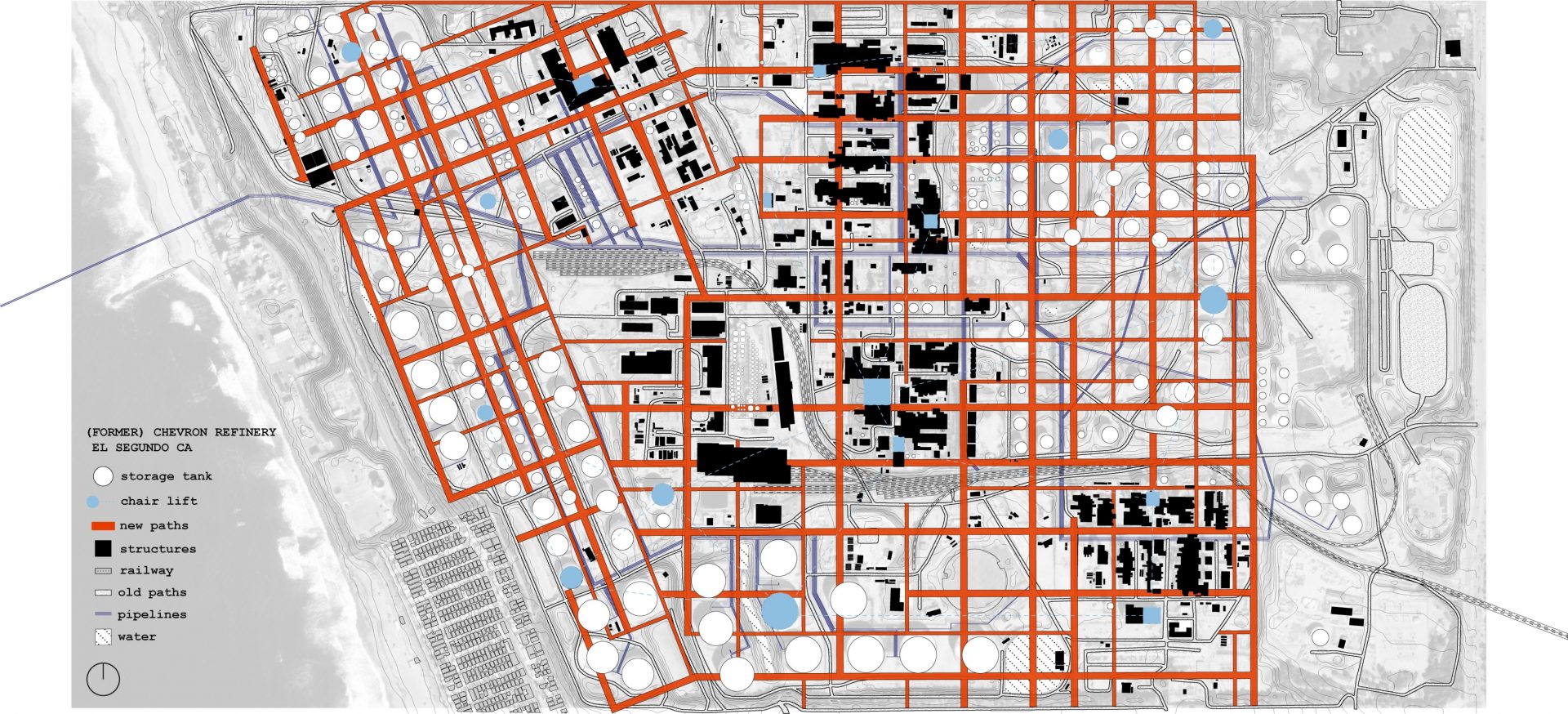
Modern architecture and urbanism have been shaped by carbon form- structures, materials, and spatial systems rooted in fossil-fuel capitalism and growth-driven metrics. This thesis proposes a radical decoupling from that paradigm through the concept of post-carbon form: an architecture no longer determined by extractive logics and instead operates within a regenerative logic that produces a new formal, material, and spatial language aligned with planetary limits. Set within the decommissioned El Segundo Refinery, the project reimagines the site as a cultural park that unfolds over time through phases of remediation, informal activation, and long-term transformation. At its core is the adaptive reuse of oil storage tanks- iconic remnants of the carbon landscape- reimagined as vessels for post-carbon form. This project critiques the legacy of carbon form while speculating on ways of inhabiting the built environment in an era of decarbonization and ecological regeneration.
An Investigation of American Vernacular Style: Leveraging AI in the Redesign of a Family Farm
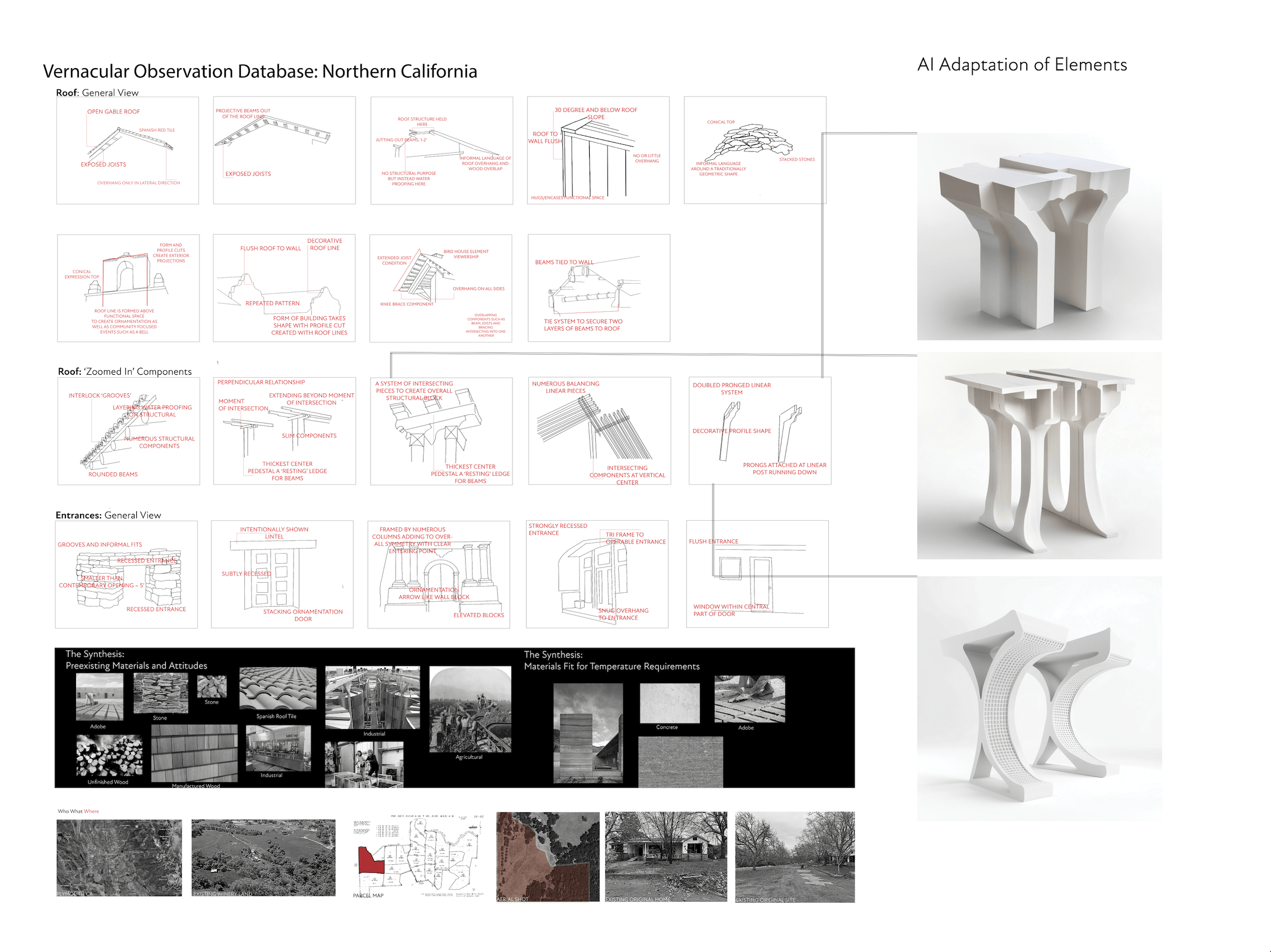
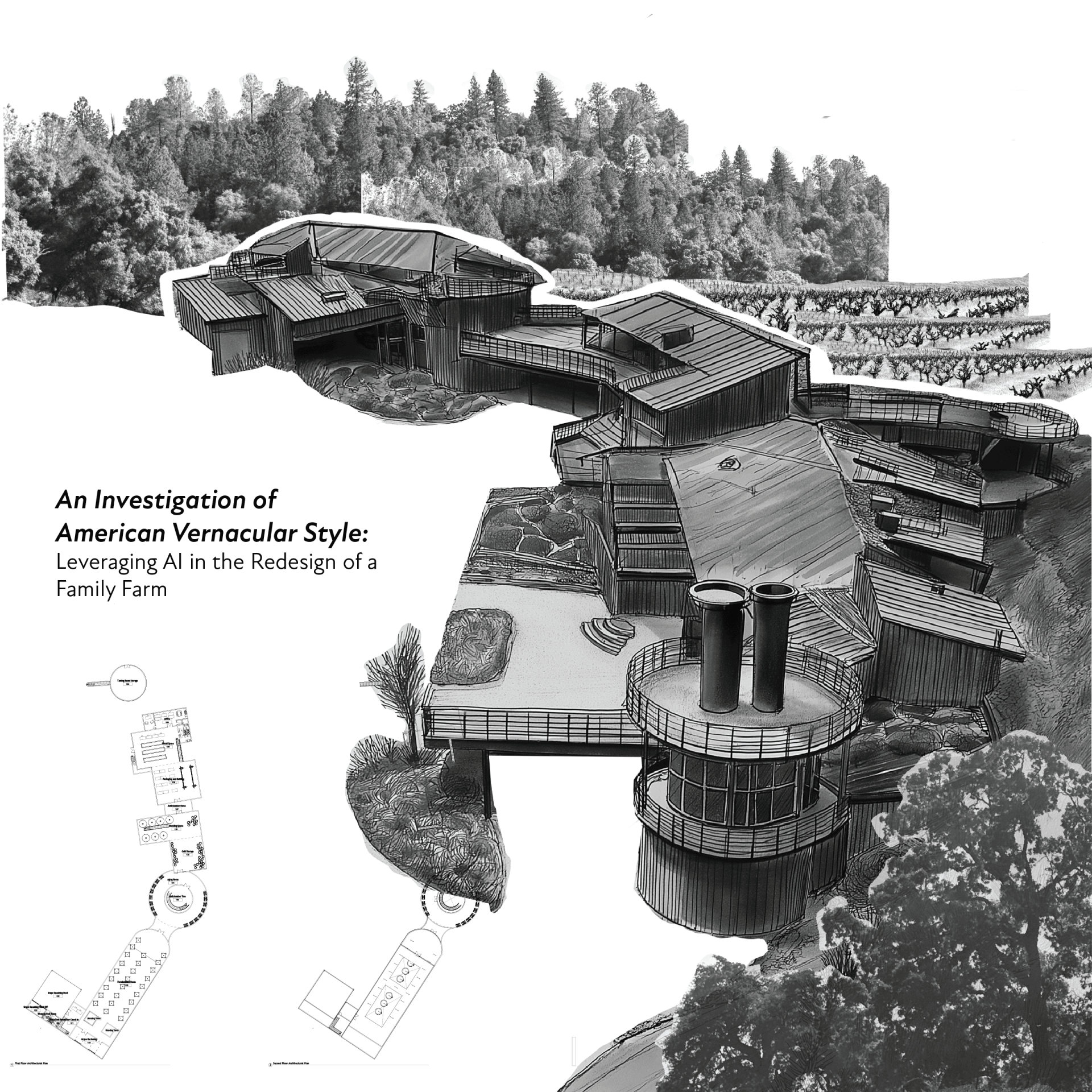
This prescriptive method, which integrates vernacular details and historical context with AI-driven design methodologies, produces a novel pattern language for architectural assembly that merges traditional wisdom with advanced technology, resulting in trend-resilient architecture that is culturally resonant, contextually aware, and repeatable.
This exploration also serves as a case study for my future work, work that prioritizes bringing historical context into the modern world through a series of intentional adaptations and thoughtful placements; considerate of previous contexts while continuing to create novel projects.
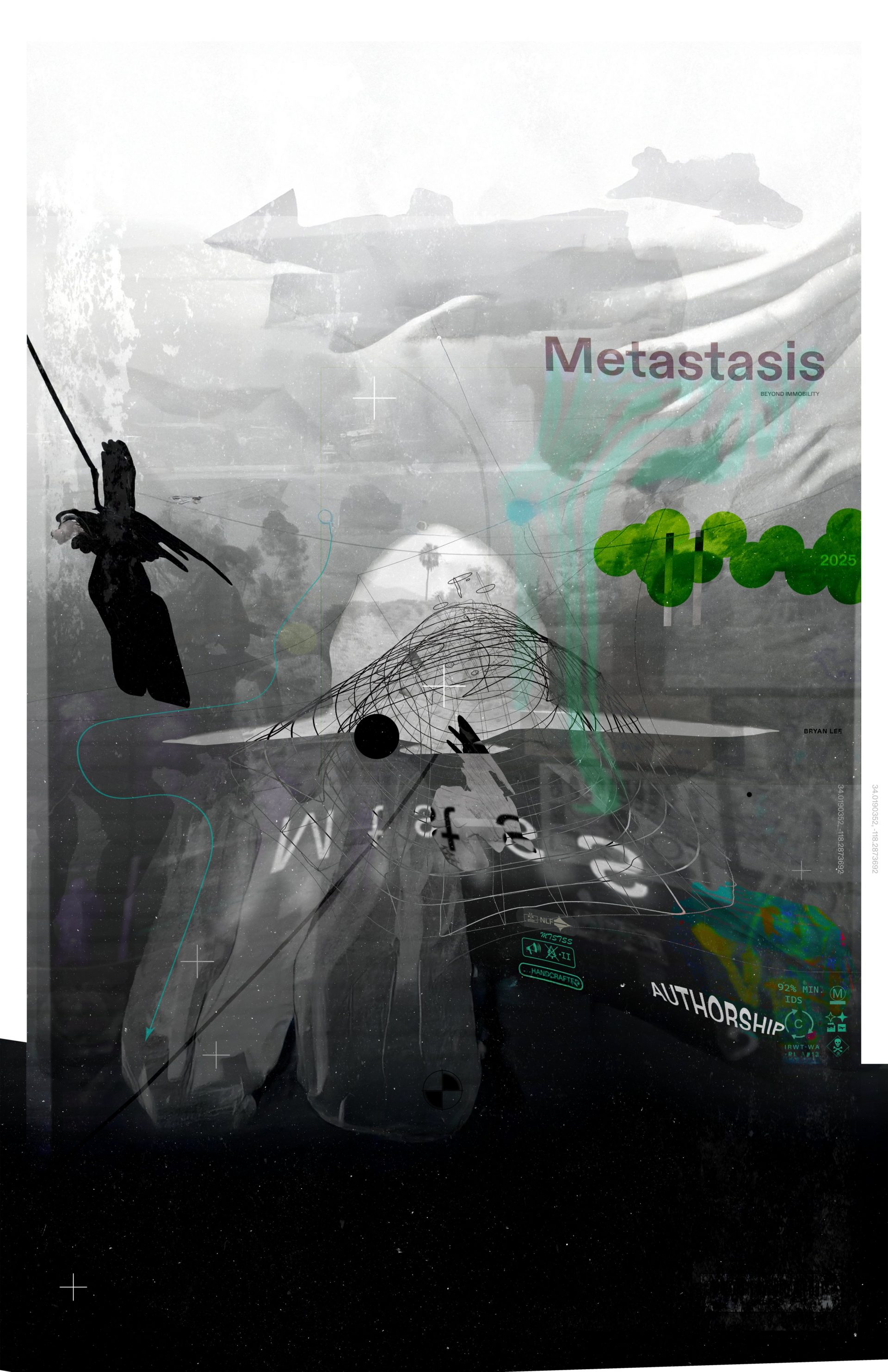
Metastasis: Beyond Immobility
This thesis redefines architectural authorship in the age of AI—not as the vision of singular auteurs, but as a collective, collaborative, and even anonymous. Using Étude-Based Research Methodology (EBRM) and Transdisciplinary Architectural Thinking, it explores architecture through open-ended études that expand the discipline and extend beyond it. Authorship is not established in isolation; it is shaped by the socio-political, economic, and cultural conditions that frame our work. To claim authorship is to acknowledge one’s place in this continuum—both as an agent of change and a subject of influence.