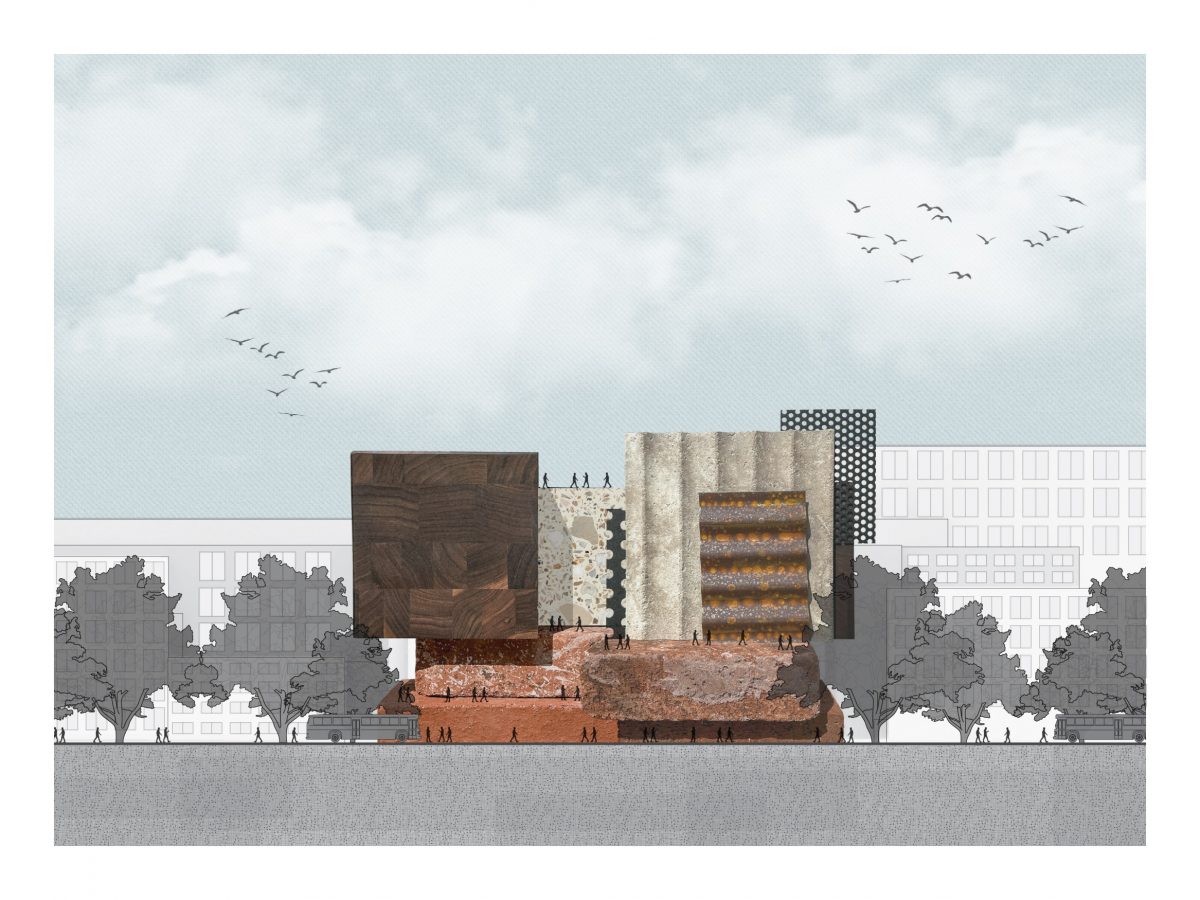
Building with Bricolage reimagines adaptive reuse as an active, regenerative process – one that is as much about creative material transformation as it is about collective social empowerment. This thesis proposes a framework where architecture is built not from scratch, but from what already exists: disassembled, deteriorated, and often overlooked structures are carefully taken apart, salvaged, and reassembled into new spatial forms. The resulting architecture is a collage—layered, expressive, and materially honest—where imperfections are not concealed, but celebrated. The visible seams, textures, and traces of former lives become part of the building’s identity, allowing it to tell a rich story of transformation. Rather than limiting adaptive reuse to historically conserved buildings, Building with Bricolage embraces the potential of “non-conservable” structures, reclaiming their materials for renewed construction on the same site. This process not only reduces waste and promotes sustainability, but also fosters hands-on skill-building in deconstruction, reassembly, and low-carbon construction practices. In partnership with the adjacent LA Trade and Technical College (LATTC), the project becomes a living classroom—integrating vocational training, experimentation, and community workshops to expand educational curricula and empower local labor. At its core, this framework positions architecture as a participatory act—shaped not only by materials, but by the people who inhabit, maintain, and co-create it. The proposed BRICO co-operative mirrors the material logic of bricolage: a diverse collective of residents and stakeholders, much like the varied components of the building itself, come together to form a unified, resilient whole. In doing so, Building with Bricolage regenerates more than buildings – it rebuilds the social fabric of the city through shared authorship, mutual care, and spatial storytelling.
BUILDING WITH BRICOLAGE: BRICO and the Art of Reassembly: Building from What Remains – Reuse, Recovery, and Reimagination