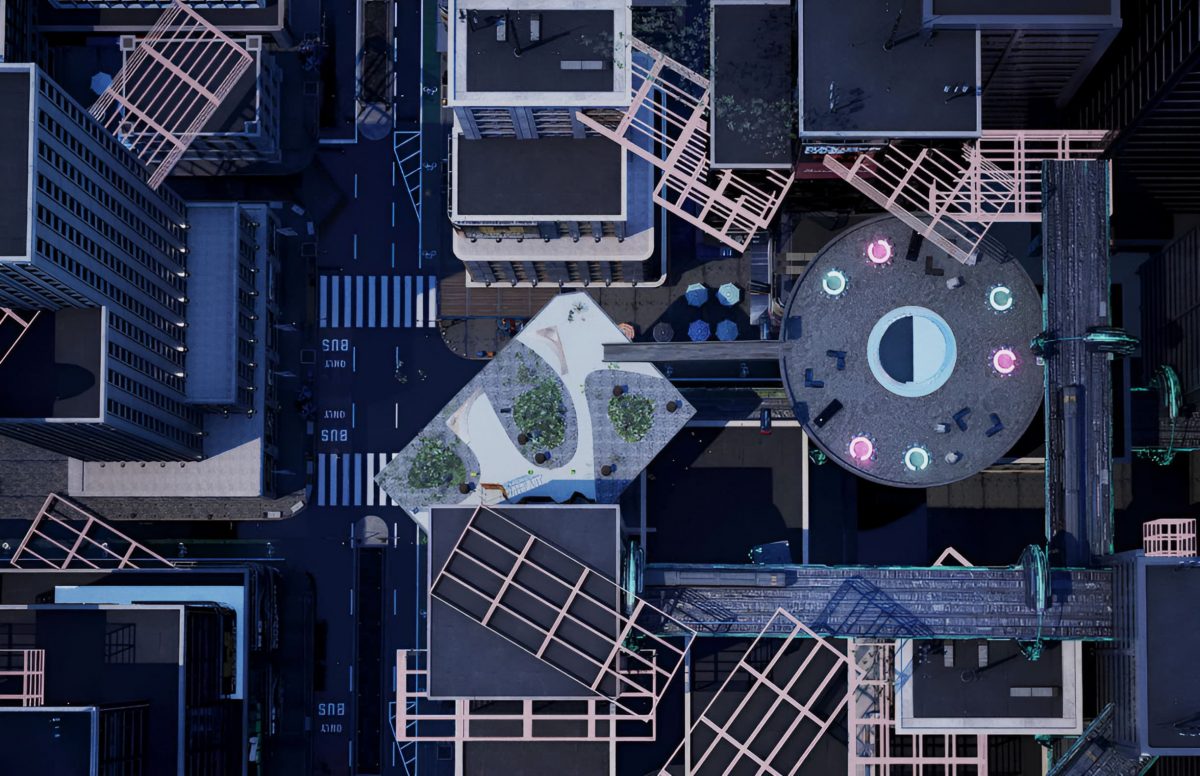
Manhattanism endures not as a relic, but as an evolving paradigm through which capitalism’s spatial, economic, and ideological intensities are made physical. Its vertical ambition, speculative logics, and infrastructural congestion constitute not a crisis, but a blueprint for urban desire. Projected into the next century, this paradigm transforms into a recursive megastructure—fragmenting the singular extrusion of value into a dense matrix of competing systems, where architecture operates simultaneously as artifact, interface, and agent of political speculation. In this hypermodern construct, verticality becomes a site of negotiation: between labor and automation, visibility and opacity, private capital and collective need. Urban form no longer reflects static zoning or market dictates, but performs as a dynamic script shaped by digital economies, ecological constraints, and emerging sovereignties. What emerges is not a city of infinite growth, but one of infinite complexity—where architecture reclaims its agency as a critical medium for staging contradictions and rehearsing the social imaginaries of what comes next.
Darting through the City, Manhattan Rhapsody