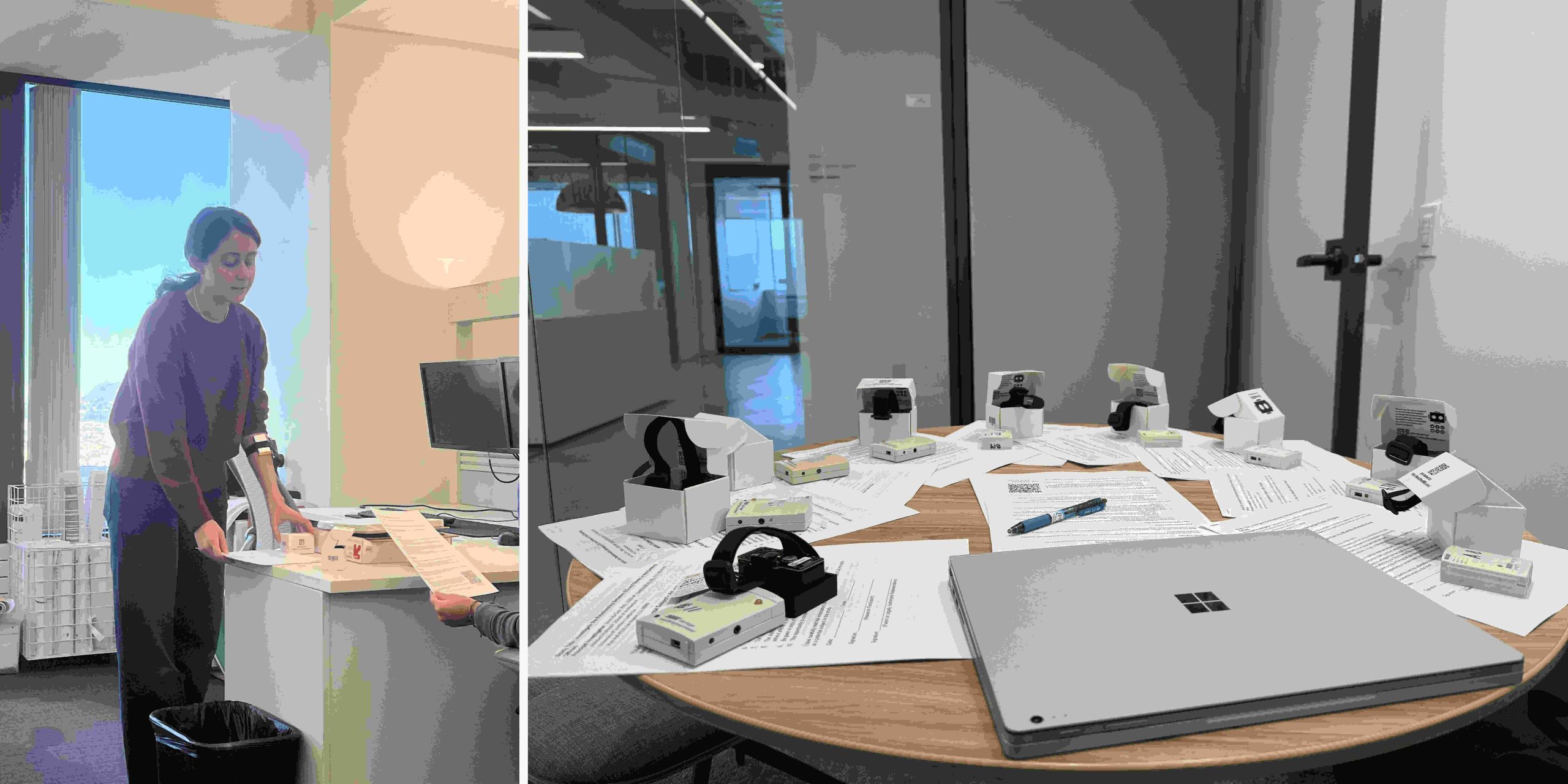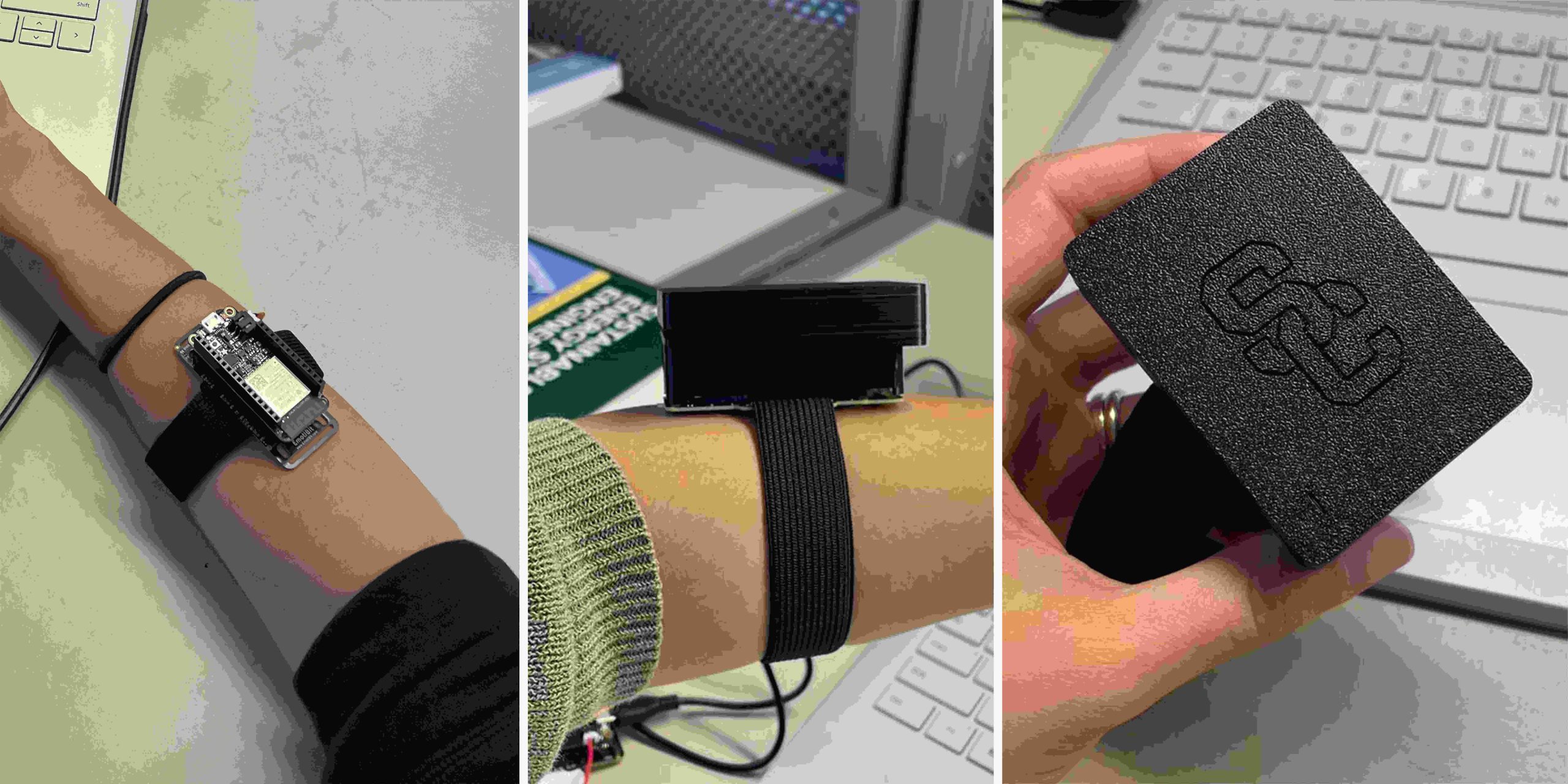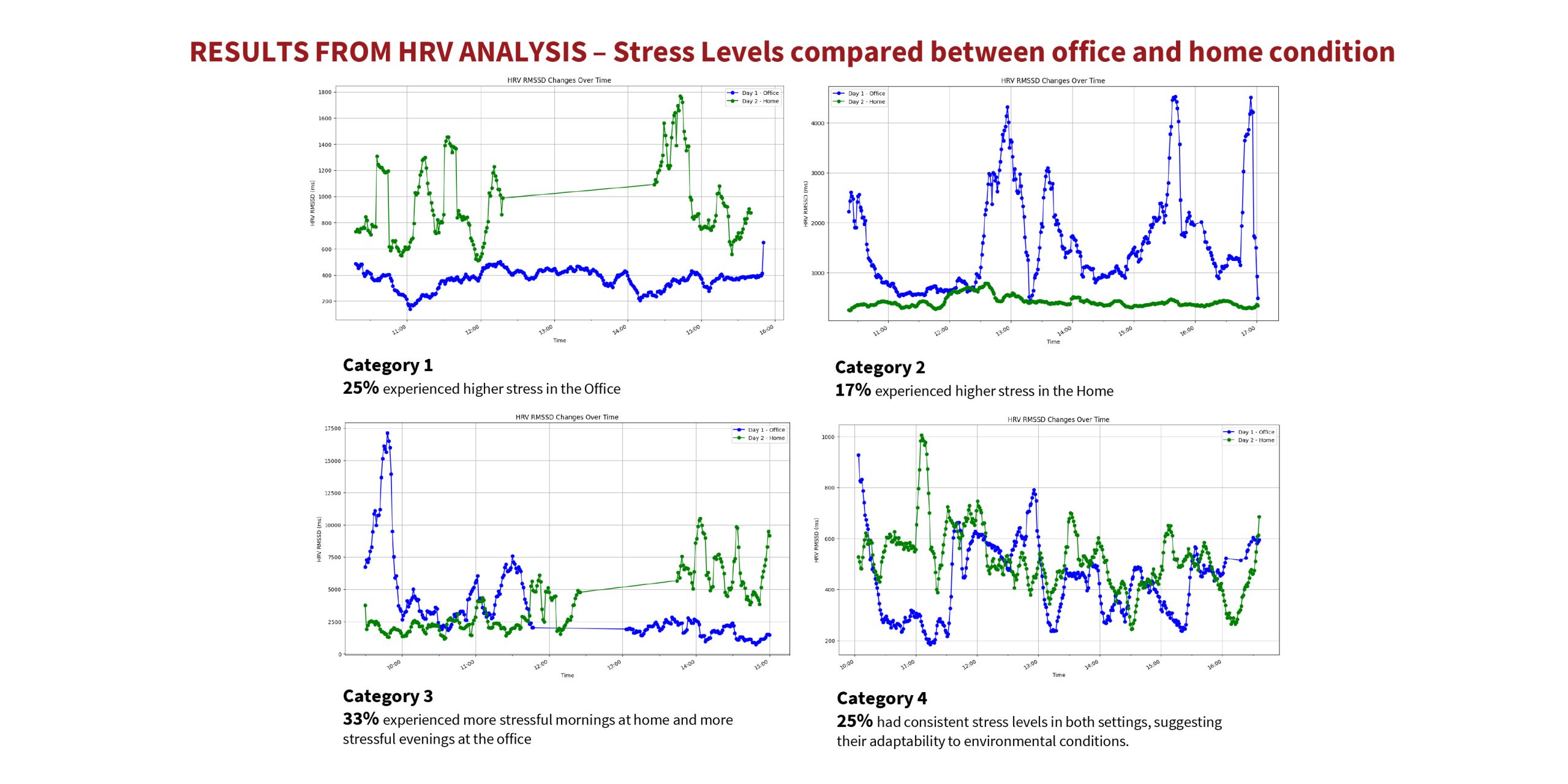
This thesis investigates the impact of Indoor Environmental Quality (IEQ) on employee well-being in hot-desking office environments using physiological data. The data were measured by wearable Heart Rate Variability (HRV) and Electrodermal Activity (EDA) sensors, as well as ambient temperature monitoring tools. It aims to assess how flexible workspaces influence stress and productivity by comparing physiological responses in home and office work settings. Results revealed that 25% of participants experienced higher stress in the office, 17% experienced higher stress at home, and 33% experienced more stressful mornings at home and more stressful evenings at the office. The remaining 25% of participants had consistent stress levels in both settings, suggesting their adaptability to environmental conditions. These results suggest that flexibility in work settings can benefit employees based on their individual conditions, and that neither setting is necessarily better for stress management and productivity.