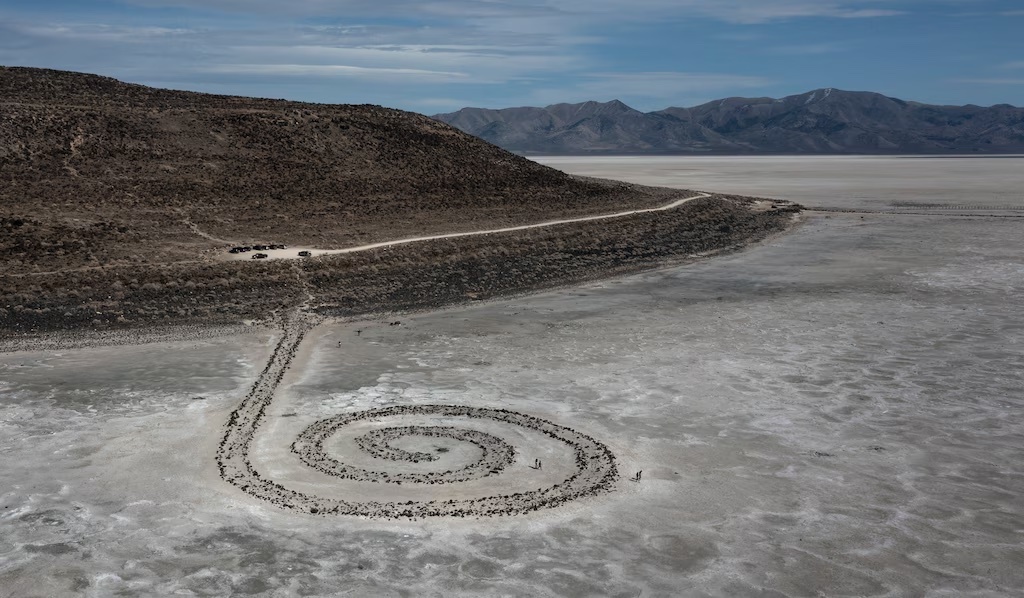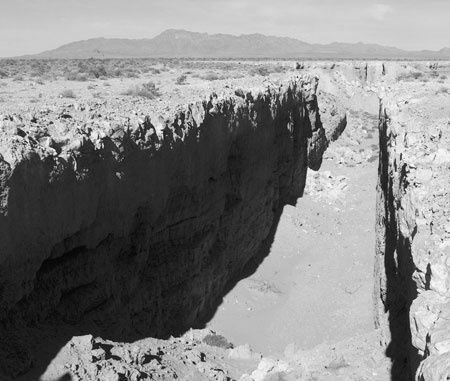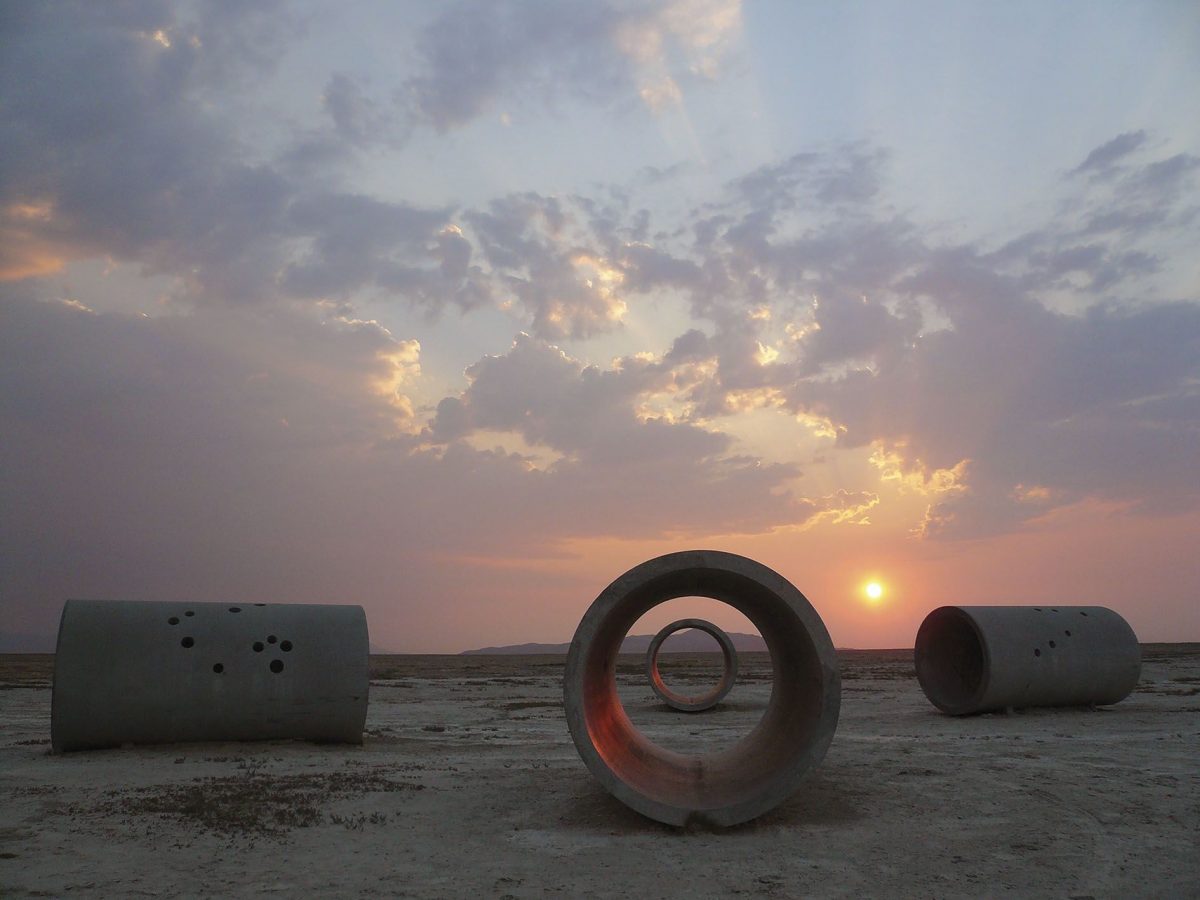
The Earthworks movement of the 1970s was a pivotal moment in contemporary art that merged sculpture with the natural landscape. Created to break out of the confines of the commercial art world and redirect focus away from gallery-based art, Earthworks were created at a large scale, using natural materials located on remote sites. Earthworks pose unique conservation dilemmas due to their exposure to natural elements, evolving ecosystems, and the artists’ often intentional embrace of change and decay.
Robert Smithson’s Spiral Jetty, which is perhaps the most widely recognized earthwork, was placed on the National Register of Historic Places in December of 2024 as a “cultural landscape.” The National Parks Service defines a cultural landscape as “a geographic area, including both cultural and natural resources…, associated with a historic event, activity, or person, or exhibiting other cultural or aesthetic values.” By considering earthworks as cultural landscapes rather than simply works of art, they are eligible to be protected and plans can be put in place for their conservation.
Through site visits and surveys of key Earthworks by artists Robert Smithson, Michael Heizer, and Nancy Holt, this project examines the philosophical, material, and environmental factors that shape their preservation. I explore the conservation strategies that have already been put in place while identifying strategies that could be adopted. I aim to ensure that Earthworks remain accessible for future generations while balancing the original artistic intent of ephemerality.
Spiral Jetty Photo Source: https://www.sltrib.com/artsliving/2024/12/21/spiral-jetty-joins-national/
Sun Tunnels Photo Source: https://spruethmagers.com/artists/nancy-holt/
Double Negative Photo Source: https://doublenegative.tarasen.net/double-negative