Studio Circular addresses the perpetual housing crisis by challenging the status quo through circular concepts and non-speculative ownership models, claiming that enough is enough – both in that the crisis has to end, and in that there are enough ideas and resources to do so! Non-speculative models are seen as catalysts to explore forgotten, transform existing, envision new, as well as develop collective, shared, democratic, communal, public, and hybrid forms of construction, ownership, and housing strategies. In tandem, the studio strives for implementing circularity at various levels: circular design (adaptive, flexible, incremental designs and programs etc.); circular construction (reuse, repurpose, recycle, upcycle materials and buildings, etc.); circular economies (supporting local skills, businesses, knowledge, etc.); circular resources (sustainable energy concepts, shared utilities, supply chains, etc.). While every student started by identifying a specific housing challenge, Studio Circular sees the resulting projects as a complementary set of proposals that can address the housing crisis from multiple perspectives and scales: from unit design to neighborhood design strategies, from sustainable building materials to incremental construction, from individual participation to community engagement, from democratized ownership to collective stewardship.

Housing Beyond Extraction – Securing Land, Use-Rights, and Material Stewardship for Long-Term Affordable Housing
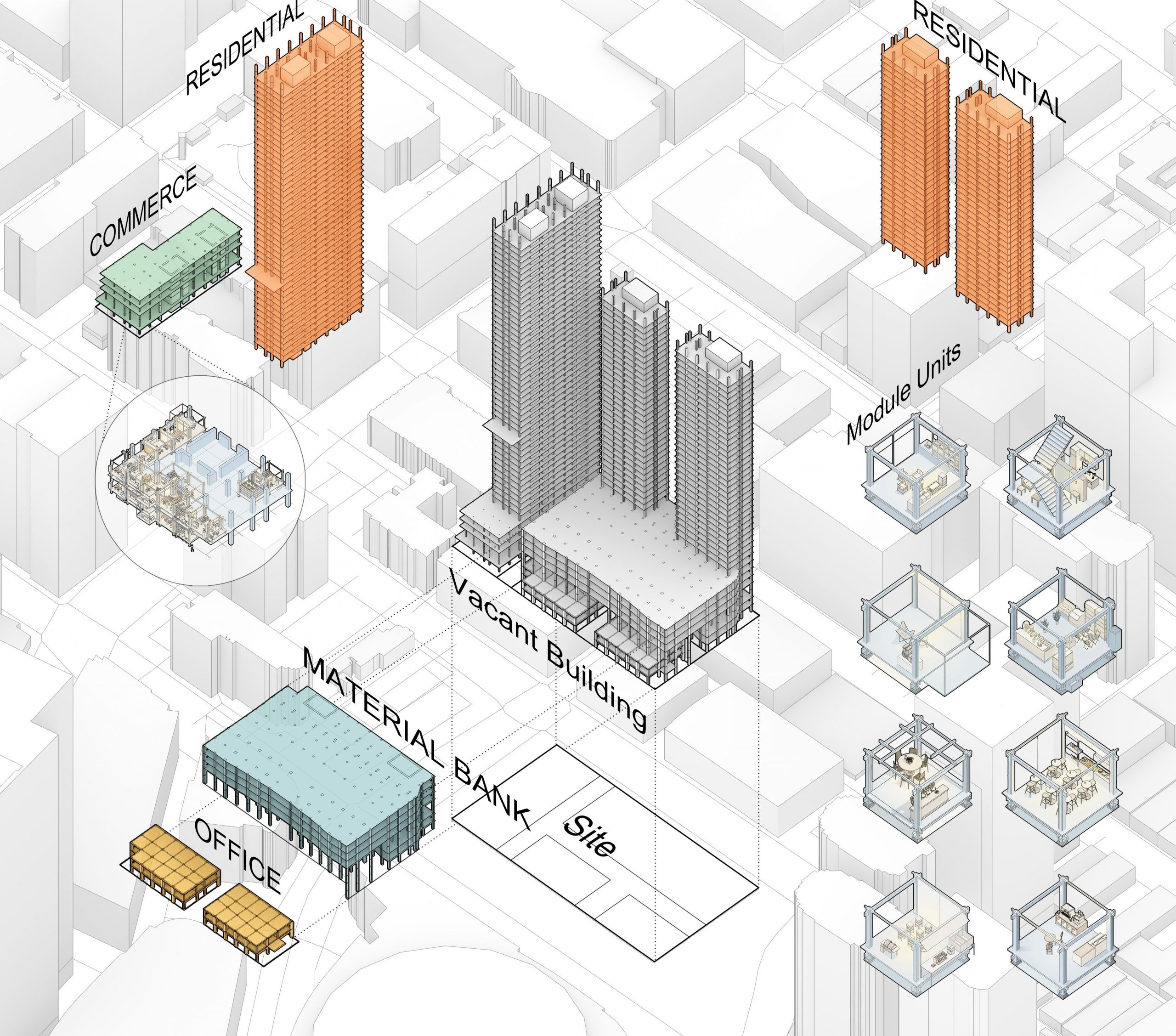
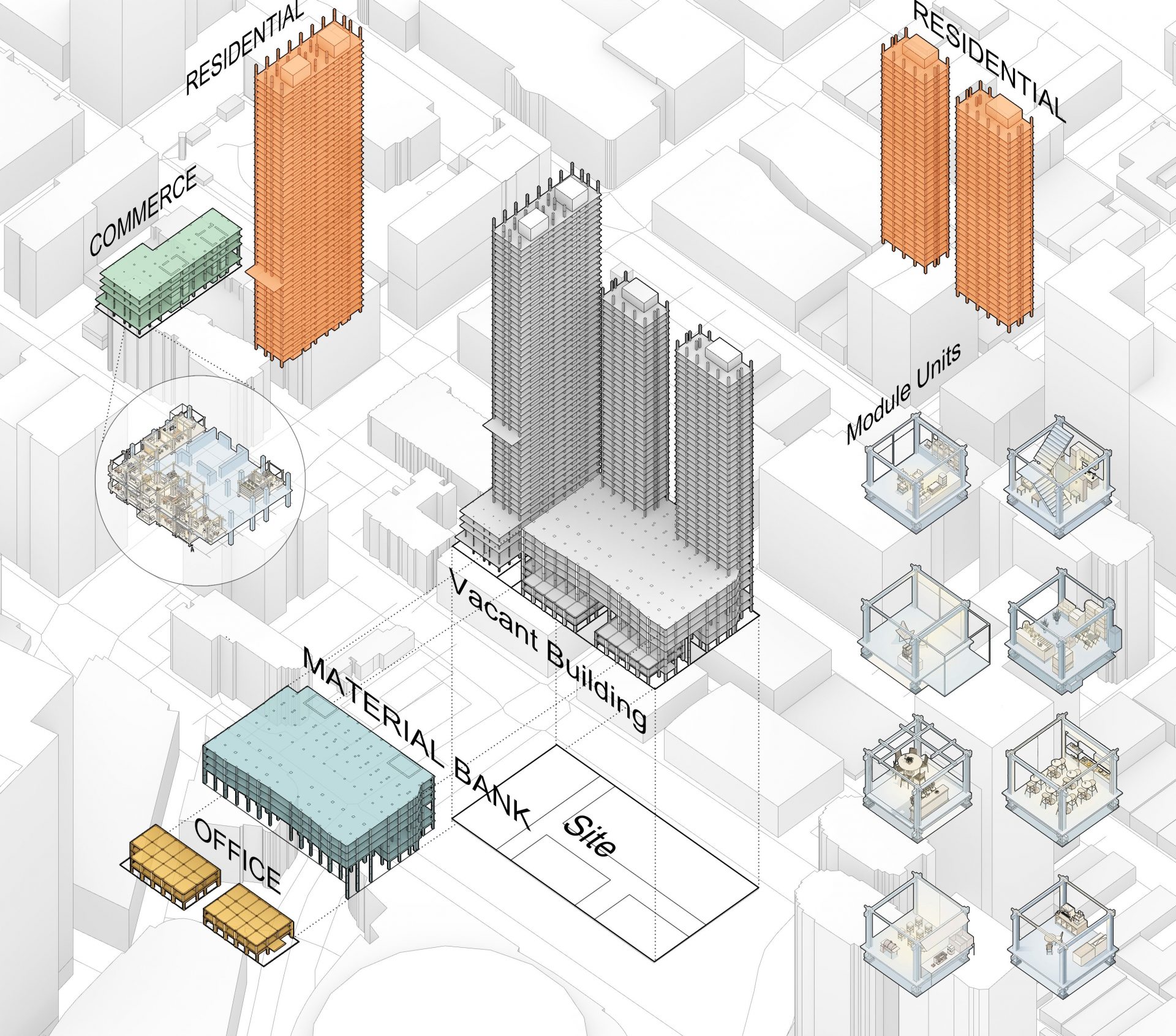
Housing beyond Extraction explores how vacant buildings can be repurposed for affordable housing beyond speculative development. Informed by real policy precedents, such as São Paulo’s social function of property framework, the project treats vacant or underused property not simply as idle real estate, but as an urban resource that can be redirected toward social use. Building on this logic, the project proposes a framework organized around three interdependent, non-speculative entities: a Land Bank, which secures access to underused urban sites; a Housing Bank, which manages spaces within vacant buildings for long-term affordable co-operative housing; and a Material Bank, which stewards reclaimed building materials for the retrofitting of such structures in the buildings. Using the vacant Oceanwide Plaza development in DTLA as a testing ground, the project shows how the open building space(Housing Bank) can be transformed into flexible housing through a modular system built with reclaimed components (Material Bank), linking circular governance, design, and construction to the production of long-term affordable housing beyond extraction.

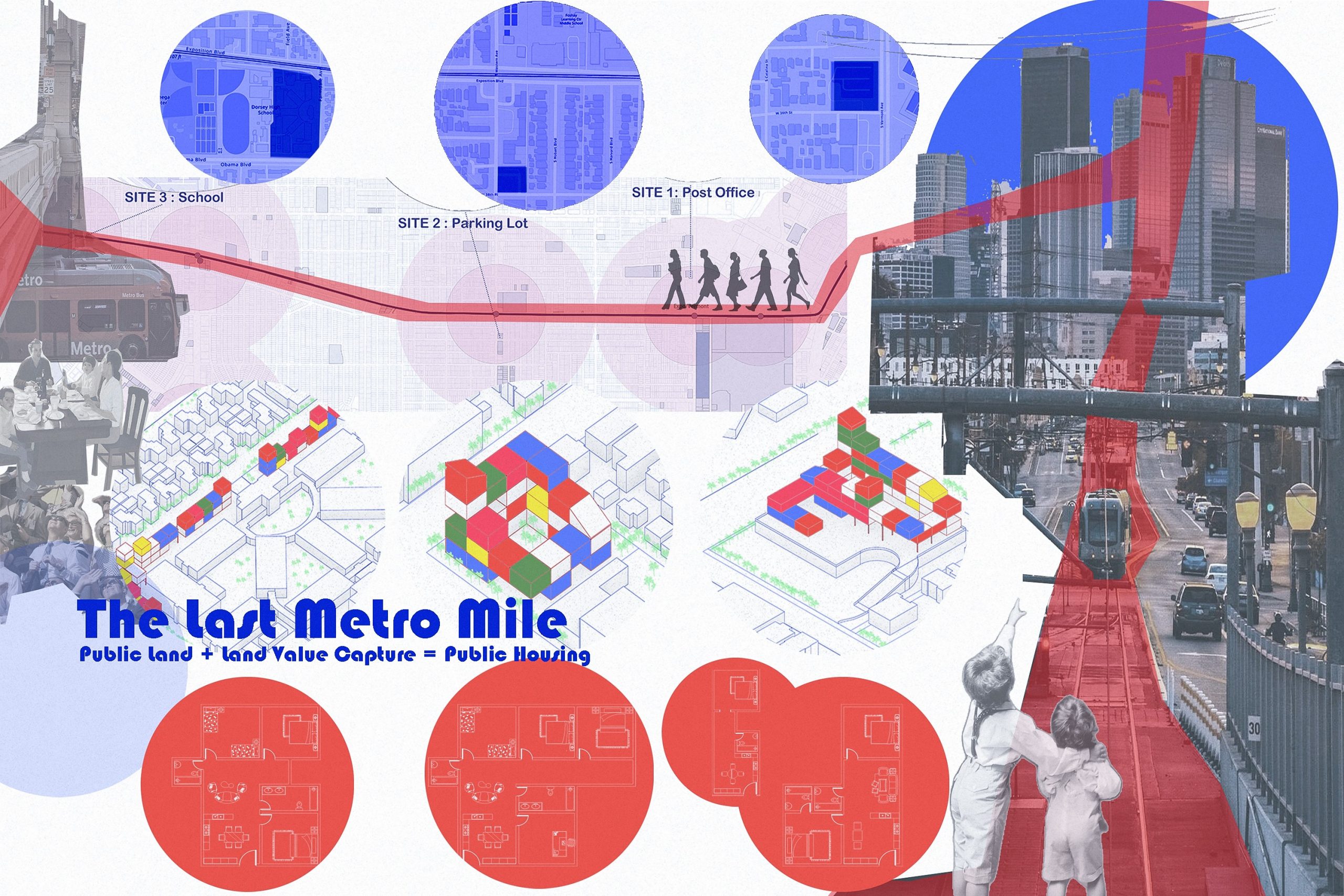
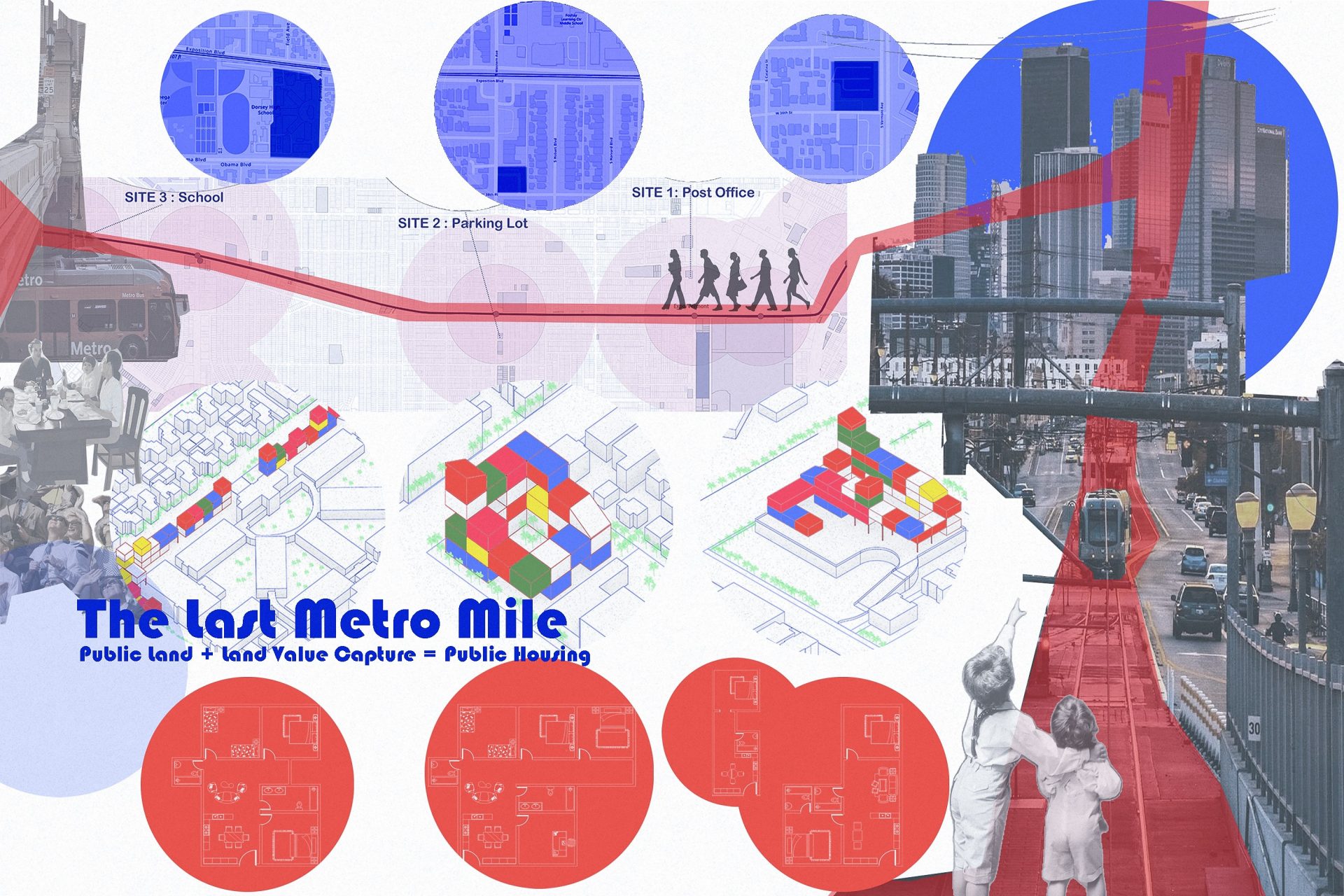
The Last Metro Mile: Public Land + Land Value Capture = Public Housing
The Last Metro Mile claims that publicly owned land and increased land values along Los Angeles’ Metro lines can be leveraged to deliver space and funds for a new wave of public housing. While public transit investments have significantly increased surrounding land values, resulting gains are commonly privatized. Simultaneously, the city owns a lot of properties in the vicinity of metro lines, which are seldom used for affordable housing. This project aims at combining these two aspects: installing a system of Land Value Capture (LVC) within defined zones next to Metro lines, and unlocking properties owned by public institutions, the capital gained through LVC will be used to fund public housing on these properties. To control design and planning costs, The Last Metro Mile develops a prototypical, modular and flexible housing type, which is able to adapt to a variety of existing contexts. Focusing on three sites along the South Central and West Adams corridor, this project shows how these prototypes could become the face of a new generation of public housing in Los Angeles.
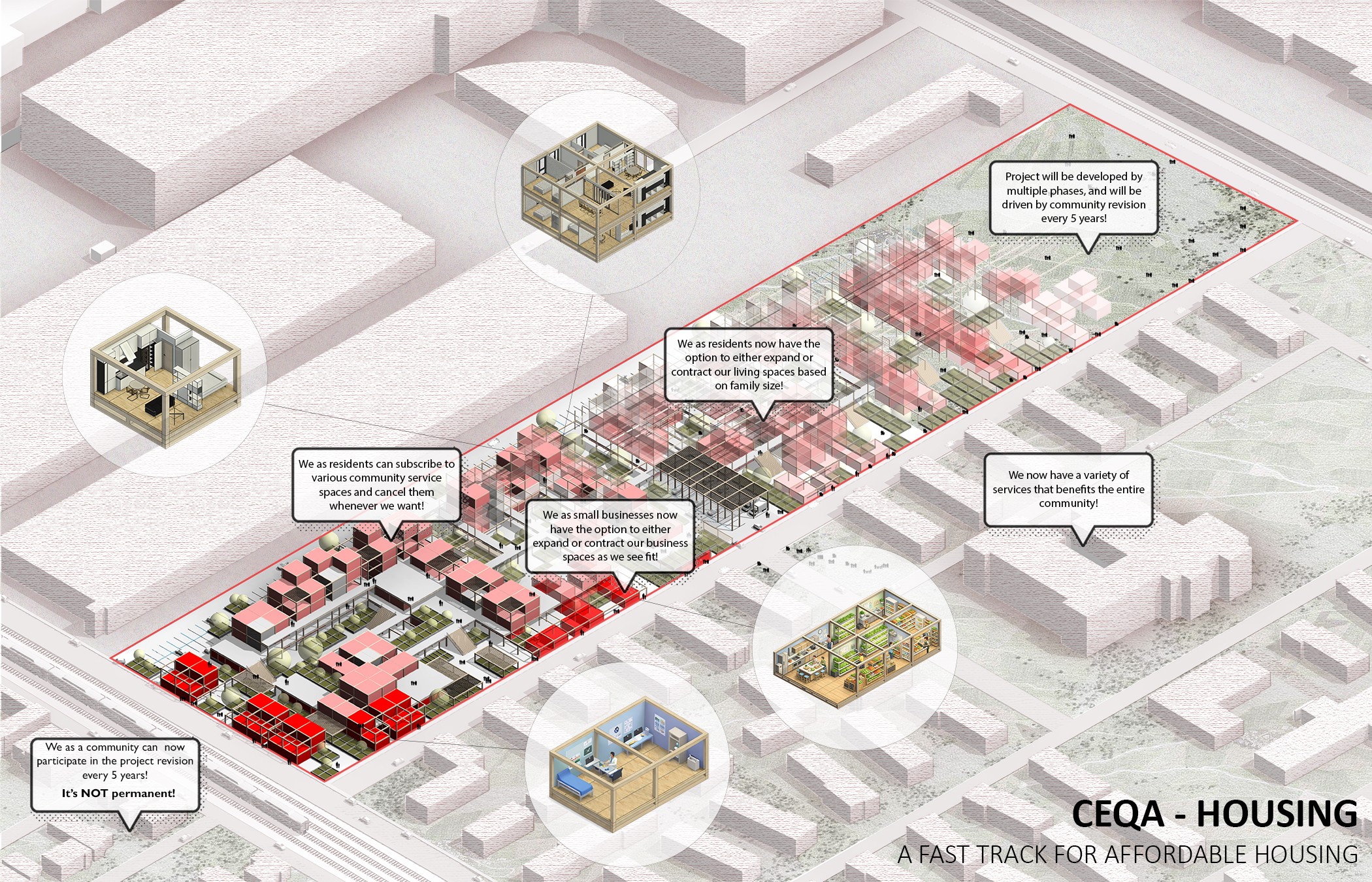
CEQA–H: Leveraging Environmental Law to Support, Not Inhibit Affordable Housing
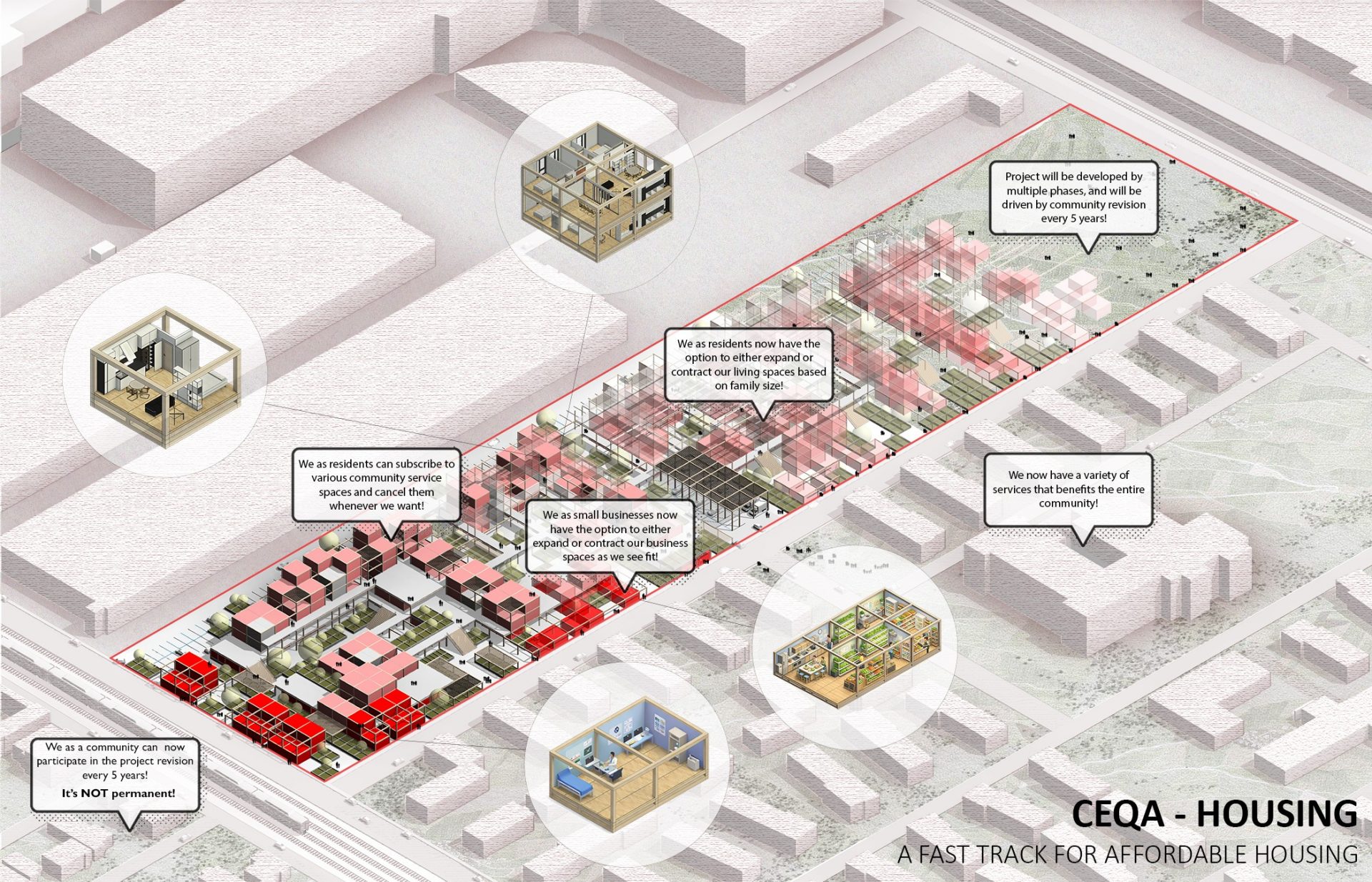
CEQA-Housing [CEQA-H] proposes a planning and design process for affordable housing that repositions architectural and procedural design at the center of environmental review. It proclaims that inserting affordable housing into existing urban contexts creates environmental and social benefits and counters potential local resistance through direct community participation, community stakeholdership, incremental transformation and implementation, and the provision of public services and spaces. By shifting environmental accountability from discretionary review to measurable performance in participation and design, CEQA-H thus seeks to promote affordable housing production by incorporating, rather than alienating, existing communities. CEQA-H operates through an architectural, competition-based process, which enforces CEQA-H guidelines to be included in the proposals. Among other things, projects must use flexible operational and construction models to fulfill CEQA-H’s core mission to allow for periodic community review, future phasing, improvements, and updates. Employing a subscription-based rental system and modular construction, this project is a first attempt at such a proposal in California.
Tierra Es Vida – Community Land Trust as Collective Resistance
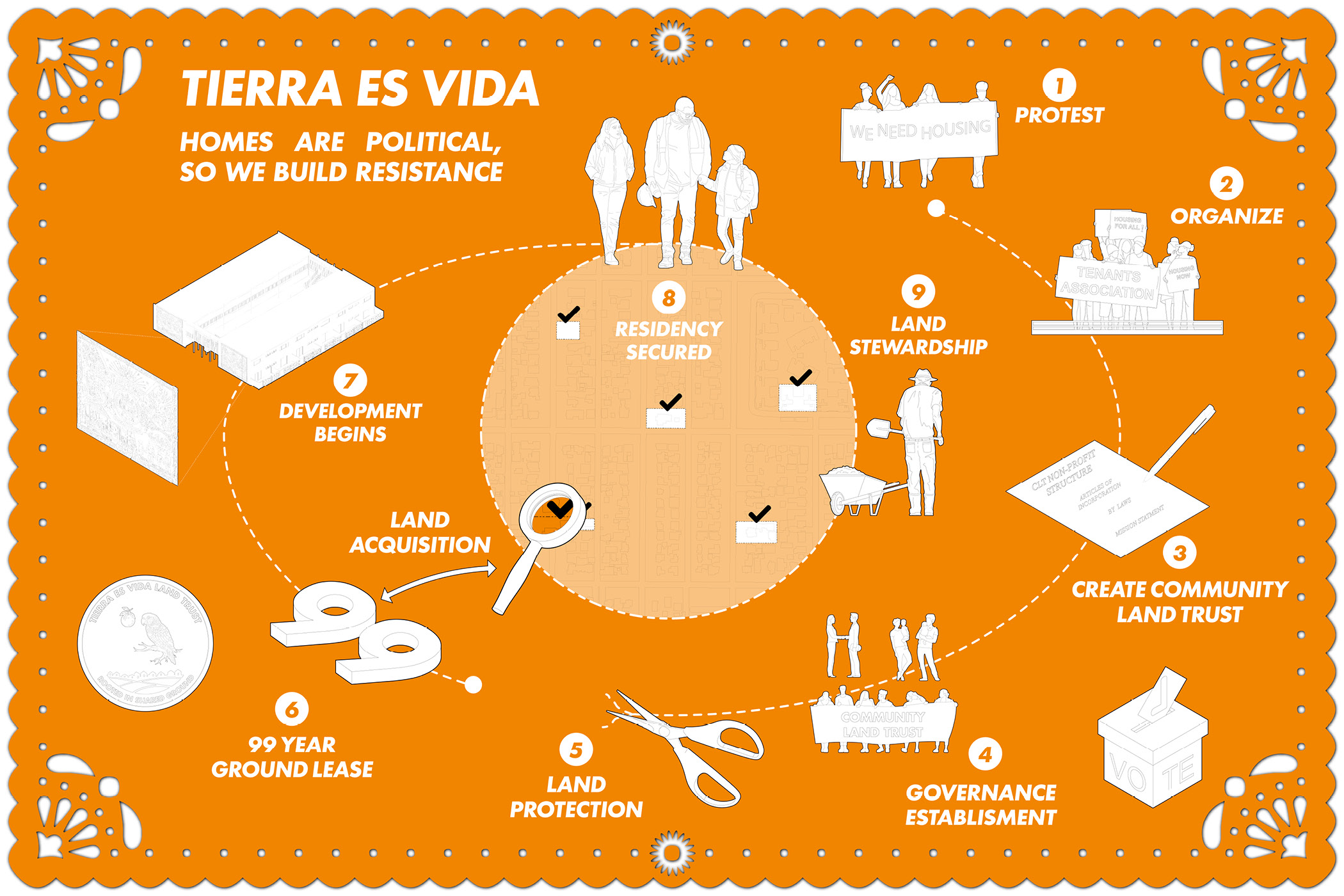
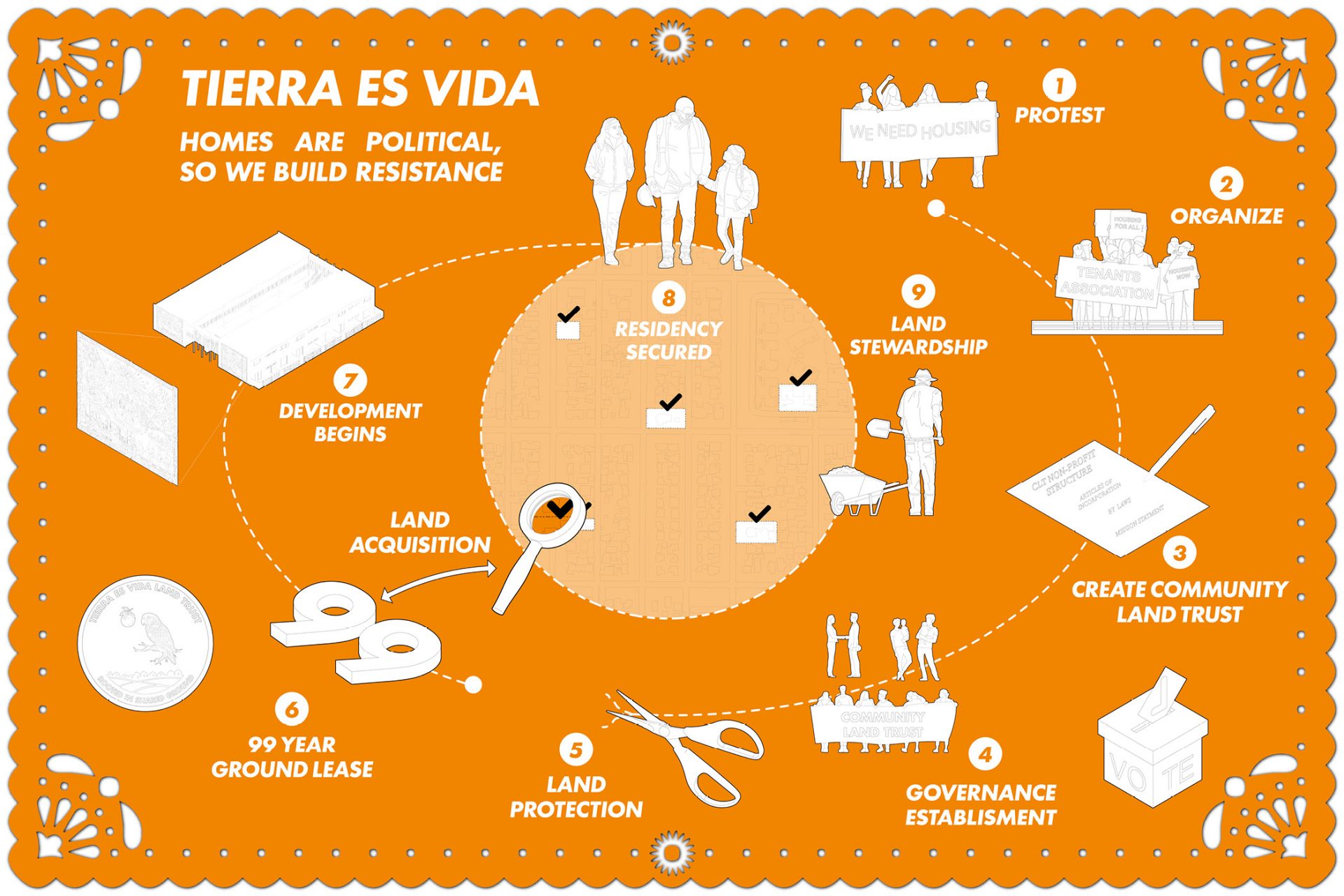
In anticipation of gentrification processes triggered by new metro lines, large-scale developments, and other urban displacement dynamics, this project proposes to use Community Land Trusts (CLTs) as a tactical tool of resistance. Deploying comprehensive, yet playful advocacy by using grassroots organizing, popular education, cultural engagement, as well as architectural and artistic expression., the goal is to secure long-term affordability, strengthen community governance, and preserve affordable housing threatened by displacement. Grounded in the Southeast Gateway Line expansion through Paramount, California – a working-class, predominantly Hispanic city – the Tierra es Vida Land Trust advances culturally rooted outreach through signage, crafts, food, and collective expression to build CLT literacy. For properties incorporated into the CLT, Tierra es Vida develops an architectural language drawn from Chicano traditions – muralism, color, courtyard typologies, and symbolic form – positioning architecture not only as an expressive, legible and community-driven practice, but ultimately as a form of resistance as well.
PLAY BALL! Leveraging Abandoned Sports Facilities for Affordable Housing Provision
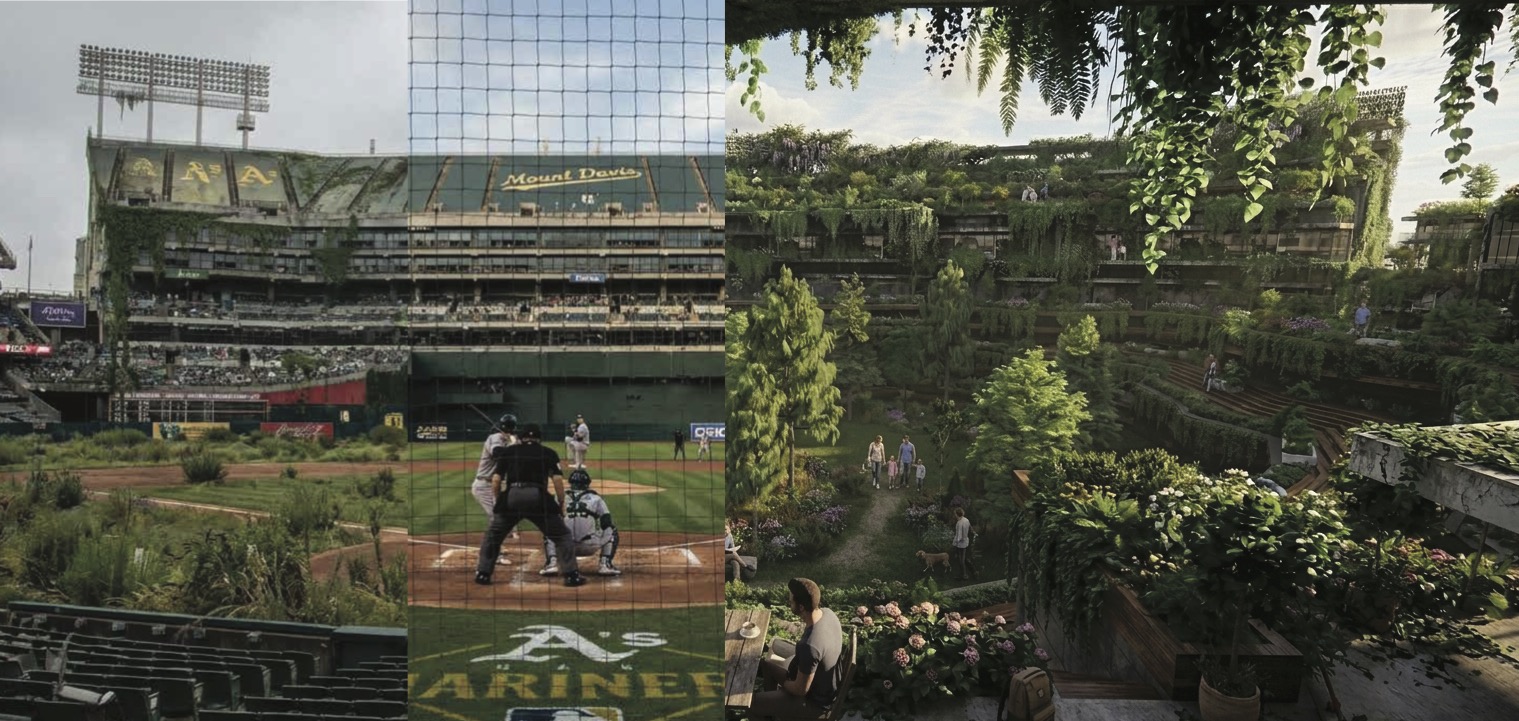
Many cities in the U.S. face a structural imbalance in public resource allocation: stadiums and mega-event venues receive substantial public investment and incentives, while affordable housing remains underfunded and constrained. PLAY BALL! addresses this disparity by repurposing abandoned, underutilized sports infrastructure as long-term civic assets capable of supporting housing. Focusing on the Oakland Coliseum, the project transforms the existing stadium into a dense, mixed-use housing environment through phased redevelopment. Rather than demolition, the proposal preserves the stadium bowl as a structural armature, inserting affordable housing within its interior. Housing is carved into seating tiers and concourse layers, while the former baseball field is reimagined as a central public park that anchors the new community. As the stadium’s original program recedes, portions of the structure are opened to allow landscape and ecology to gradually occupy the Coliseum’s site, as well as it’s adjacent parking surfaces, resulting in a hybrid landscape where housing, public space, and rewilded landscape coexist as reclaimed common resources.
The Co-Operative Housing Starter Kit – Learning from and Designing with the Los Angeles Eco-Village
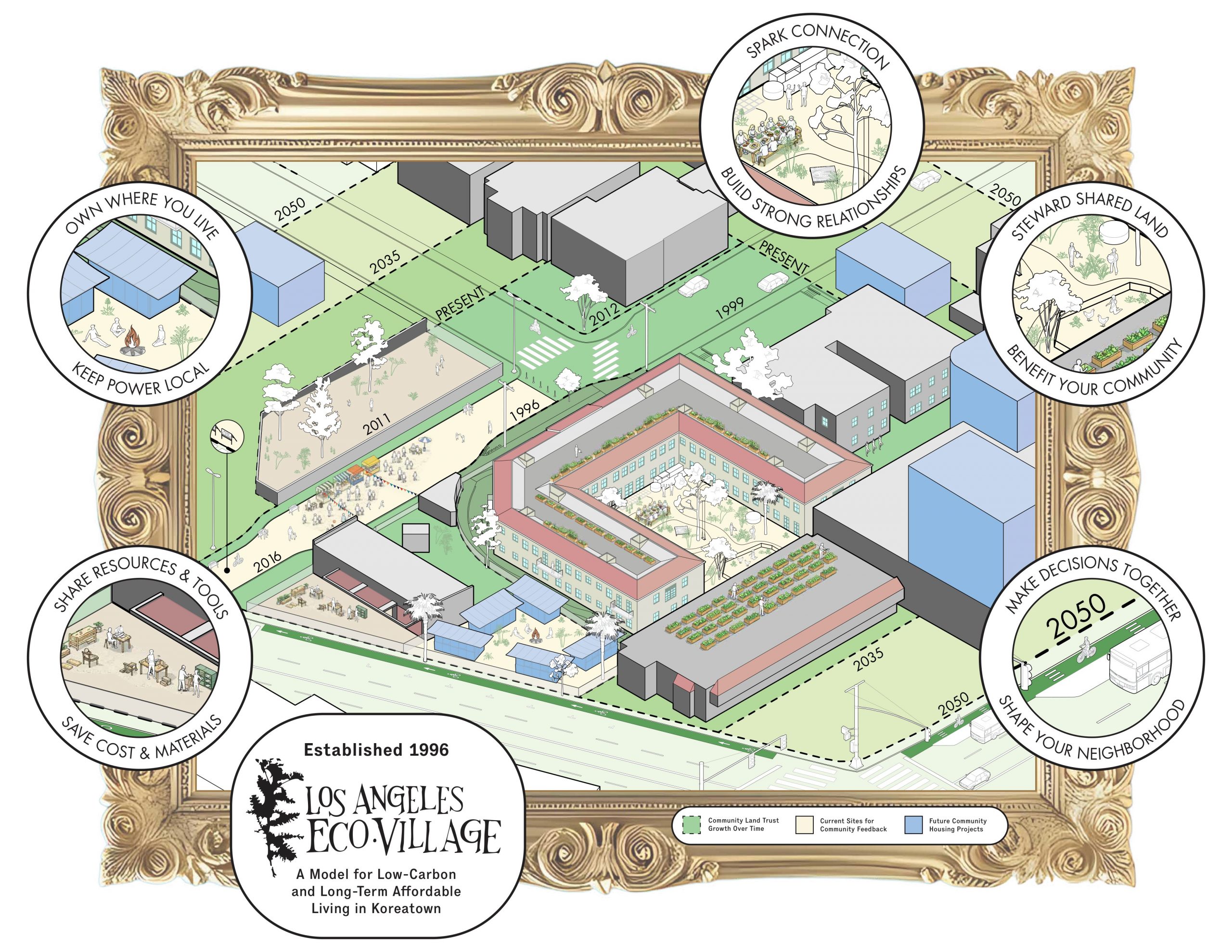
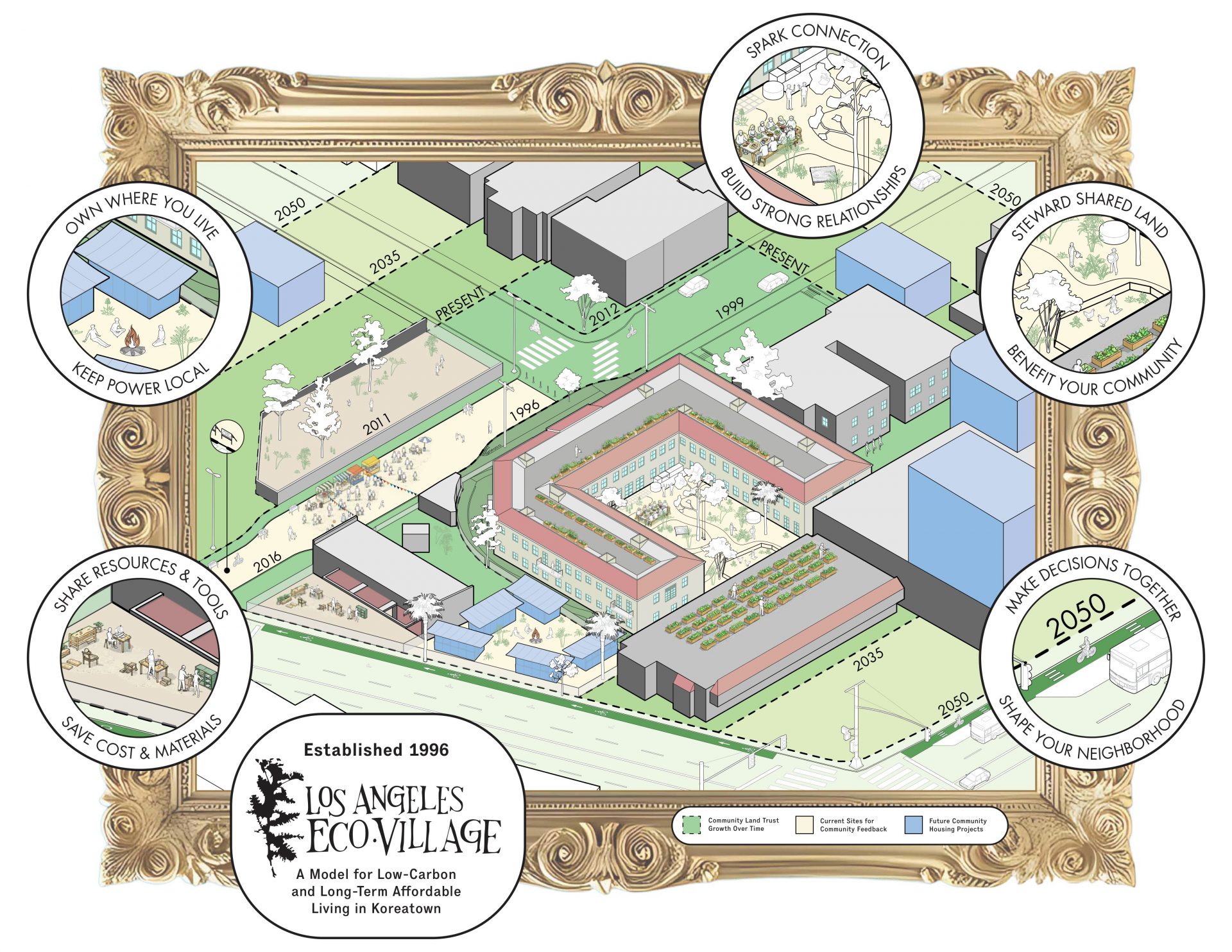
Housing in the United States is viewed as a financial asset rather than a foundation for a stable life, leaving many residents cost-burdened, displaced, and disconnected from their communities. This project explores an alternative: co-operative housing as a way to build stability together. My work is grounded in ongoing participation at the Los Angeles Eco-Village – a community land trust and a limited equity housing co-operative – where I have gotten to know residents and support their community with my skills and personal engagement to envision future design interventions for the Eco-Village’s outdoor spaces in a participatory manner. Through this experience, I have observed the importance of shared labor, collective decision-making, and resource-sharing, concluding that these are not just social values – they are the systems that keep housing affordable, resilient, and rooted in place. My project translates these lessons into The Co-operative Housing Starter Kit, a set of tools that support shared ownership, collective care, and co-operative practice. By doing so, I claim that rather than inventing a new housing framework from scratch, Los Angeles should recognize, support, and scale the existing, already working model of co-operative housing.
Cooperative Dwelling Unit – A Framework for Affordable Micro-Housing Development
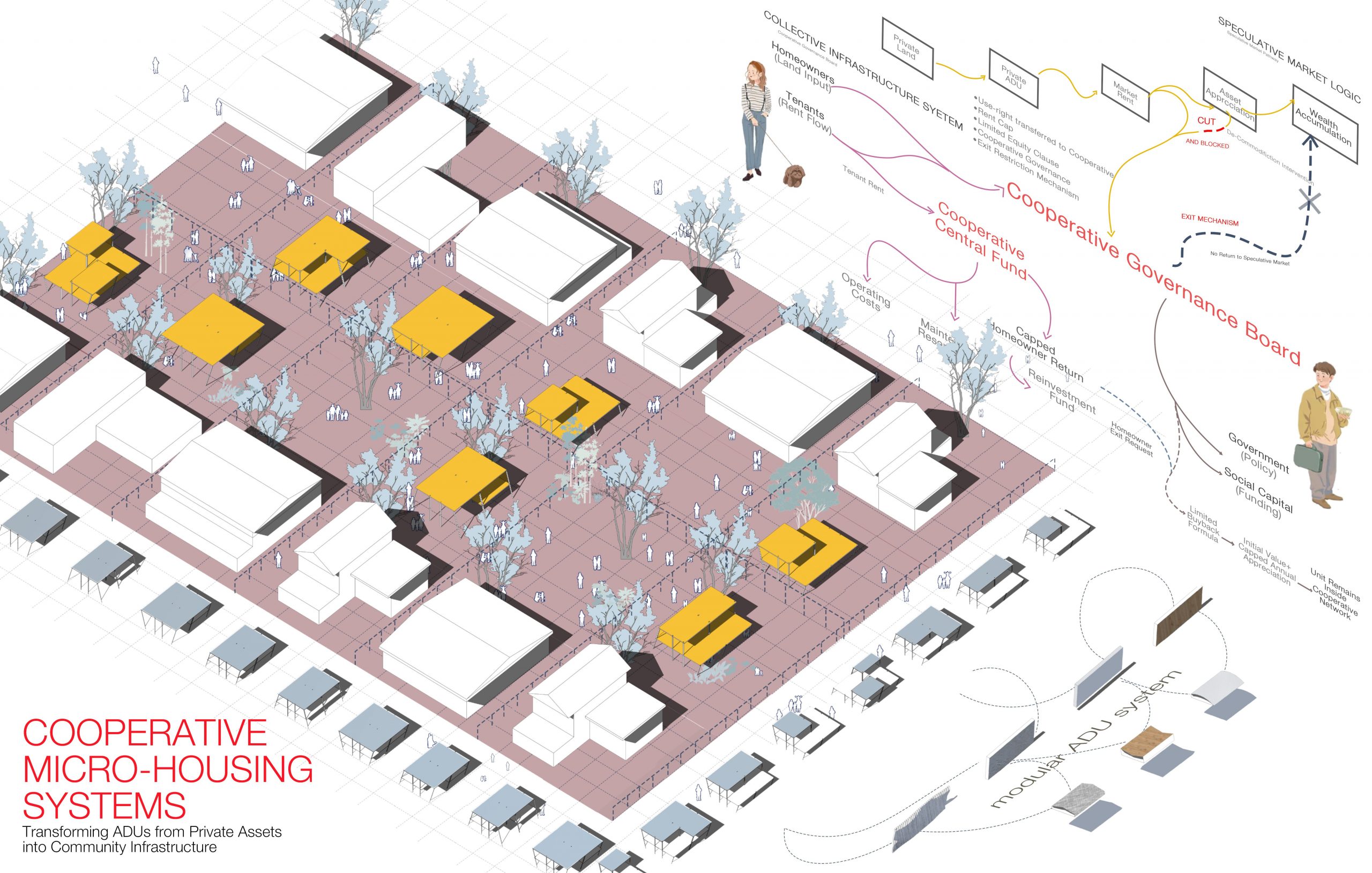
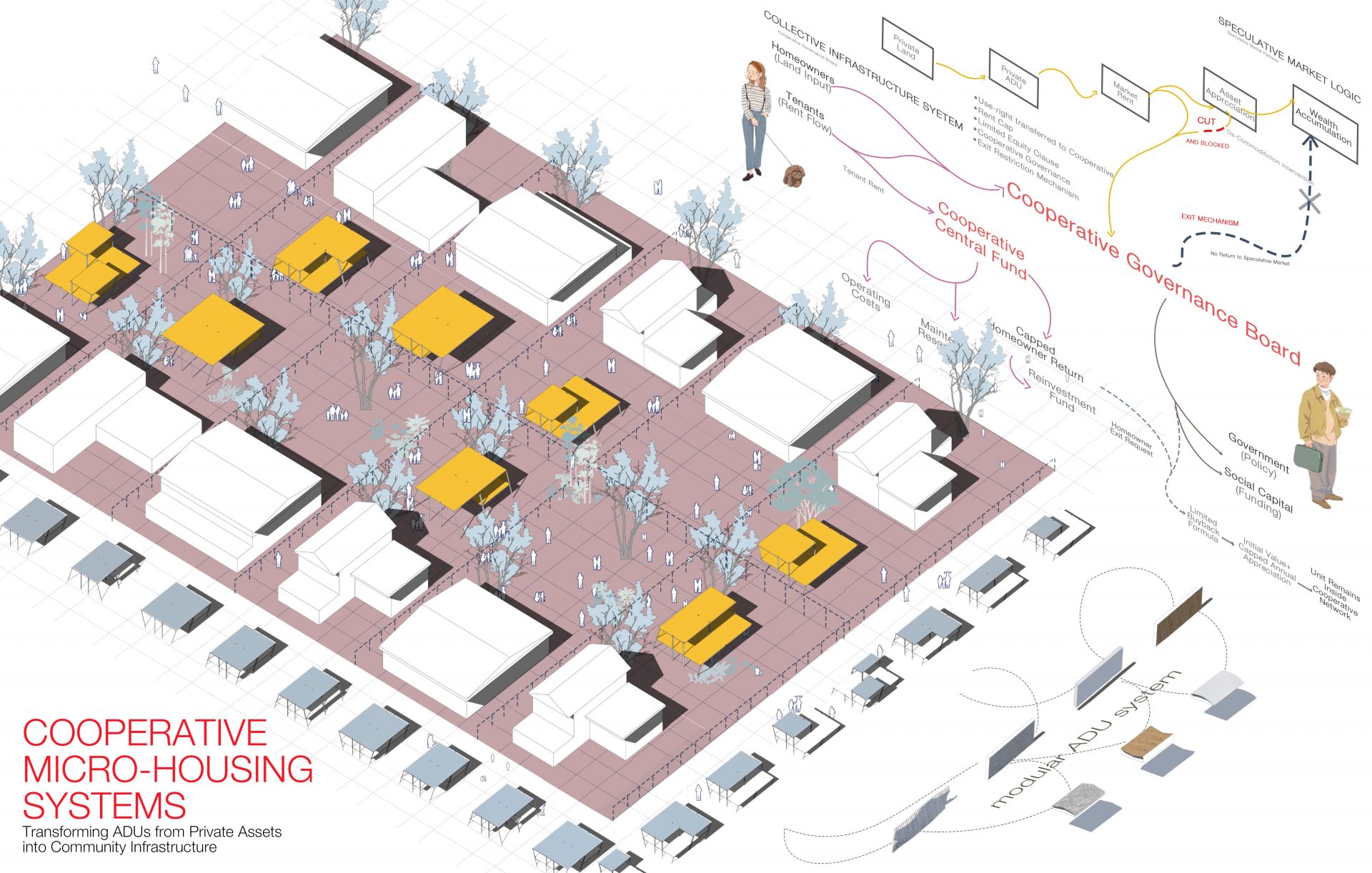
Los Angeles promotes ADUs as a solution to increase housing supply and thus counter the housing crisis. Yet many ADUs reinforce the speculative housing markets, rather than enabling affordability: High construction costs, complex permitting, and limited, financial resources prevent many homeowners from building ADUs in the first place, while those ADUs built are often used by their owners for market-rate or short-term rentals. The project Cooperative Dwelling Unit proposes a framework for ADU production that restructures ownership, financing, and governance. Homeowners who can’t afford to build an ADU, lease their backyard to the cooperative while the cooperative builds and owns the CDU, which has to be strictly affordable. The cooperative contributes to construction, while rent flows are redistributed to cover maintenance, reinvestment, and generate a capped income for the homeowner. To lower costs and increase implementation speed, the cooperative offers a standardized, flexible design and construction system, where homeowners can create their CDU with a catalog of different elements, materials, and configurations.
Along the Nushagak: Reclaiming Indigenous Rights to Home
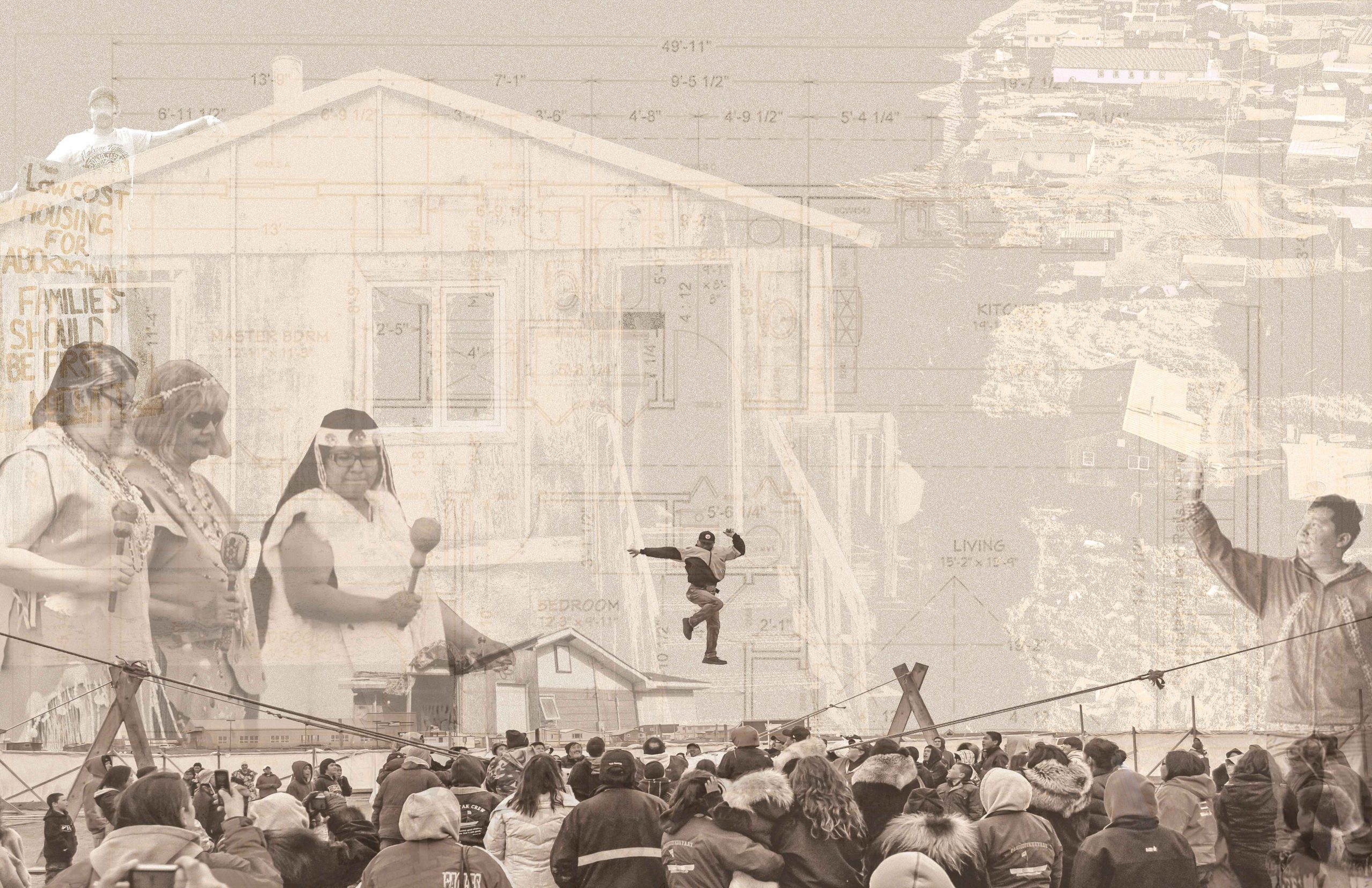
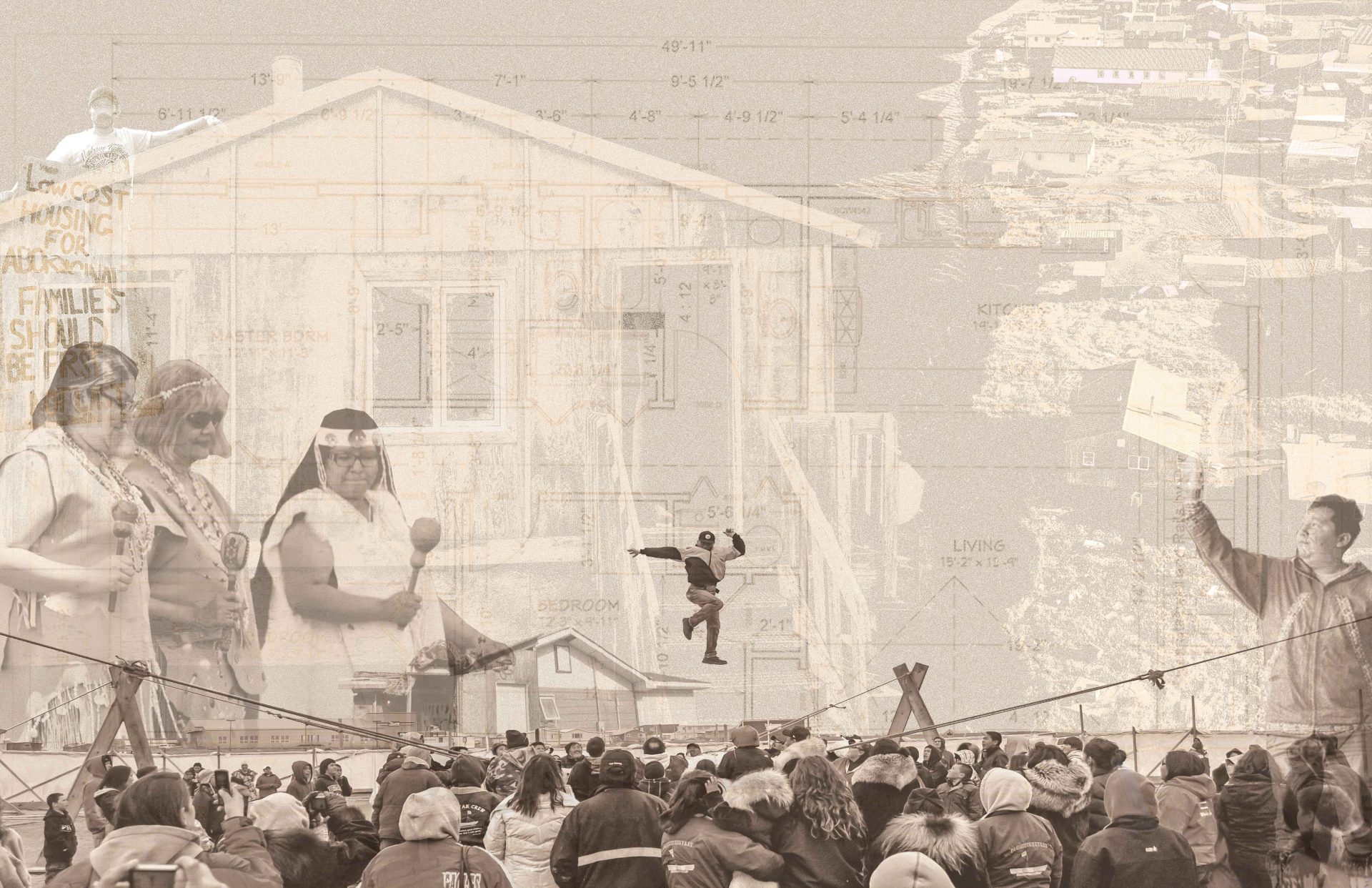
American Indian and Alaska Native households face heightened housing insecurity across the United States. Respective HUD housing projects remain largely prescriptive, favoring standardized, cost-driven solutions that ignore cultural practices, environmental conditions, and Indigenous ways of life. These frameworks often impose rigid designs and ownership structures that undermine community governance and limit self-determination. Along the Nushagak proposes a decolonized design approach grounded in traditional knowledge, environmental responsiveness, and collective stewardship. It examines the cultural, economic, and political forces shaping housing in both rural Alaska Native villages and urban Indigenous communities, where restrictive Western policies persist. The project reimagines housing not as static shelter, but as a living system that supports cultural continuity, shared gathering, ecological care, and long-term community control. By integrating ancestral practices with contemporary technologies through tribal land trusts, indigenous cooperative practices, local fabrication, and circular material strategies, it envisions resilient housing futures defined, built, and sustained by Indigenous communities.
Domestic Abundance: Reimagining Aging in Place in Los Angeles
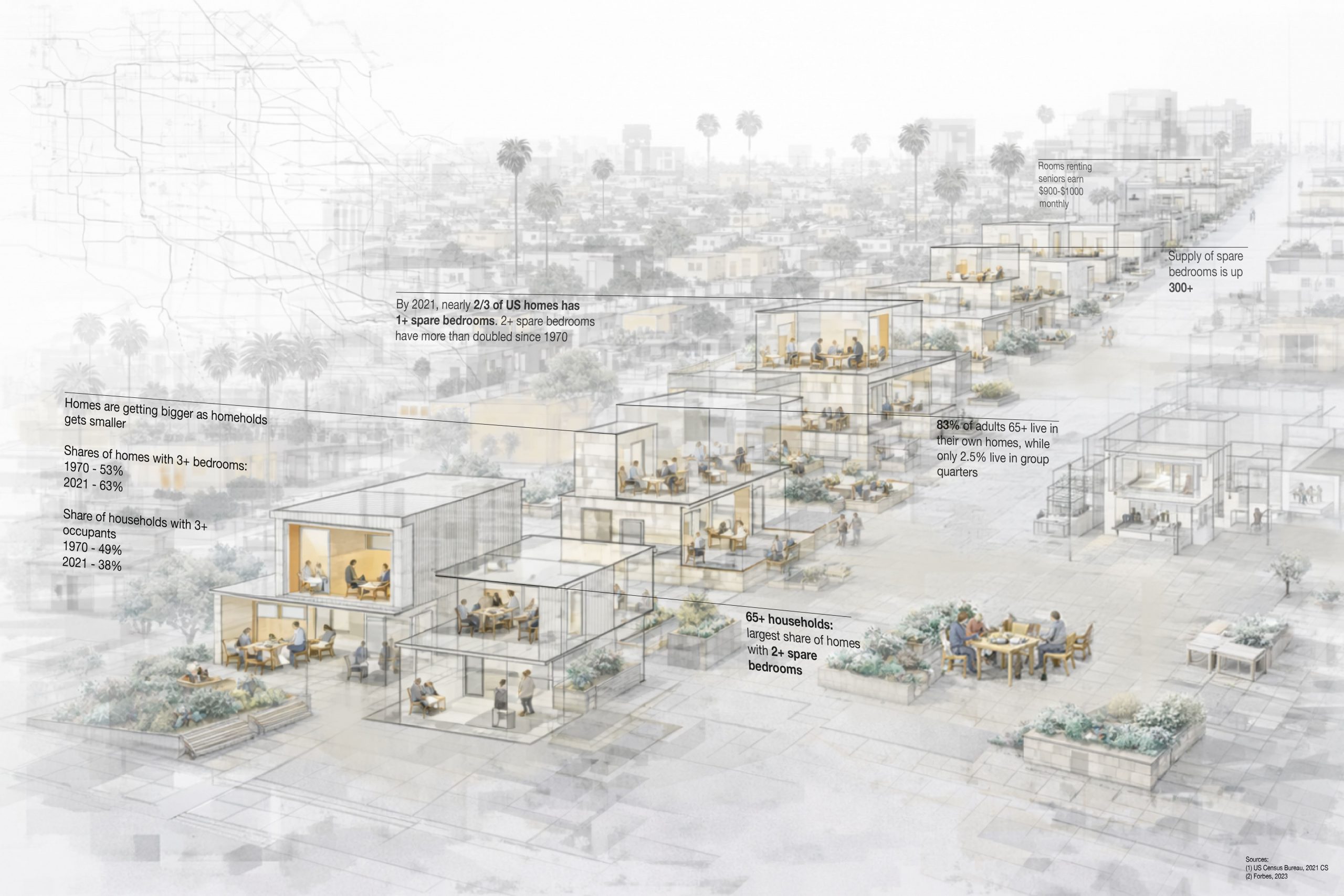
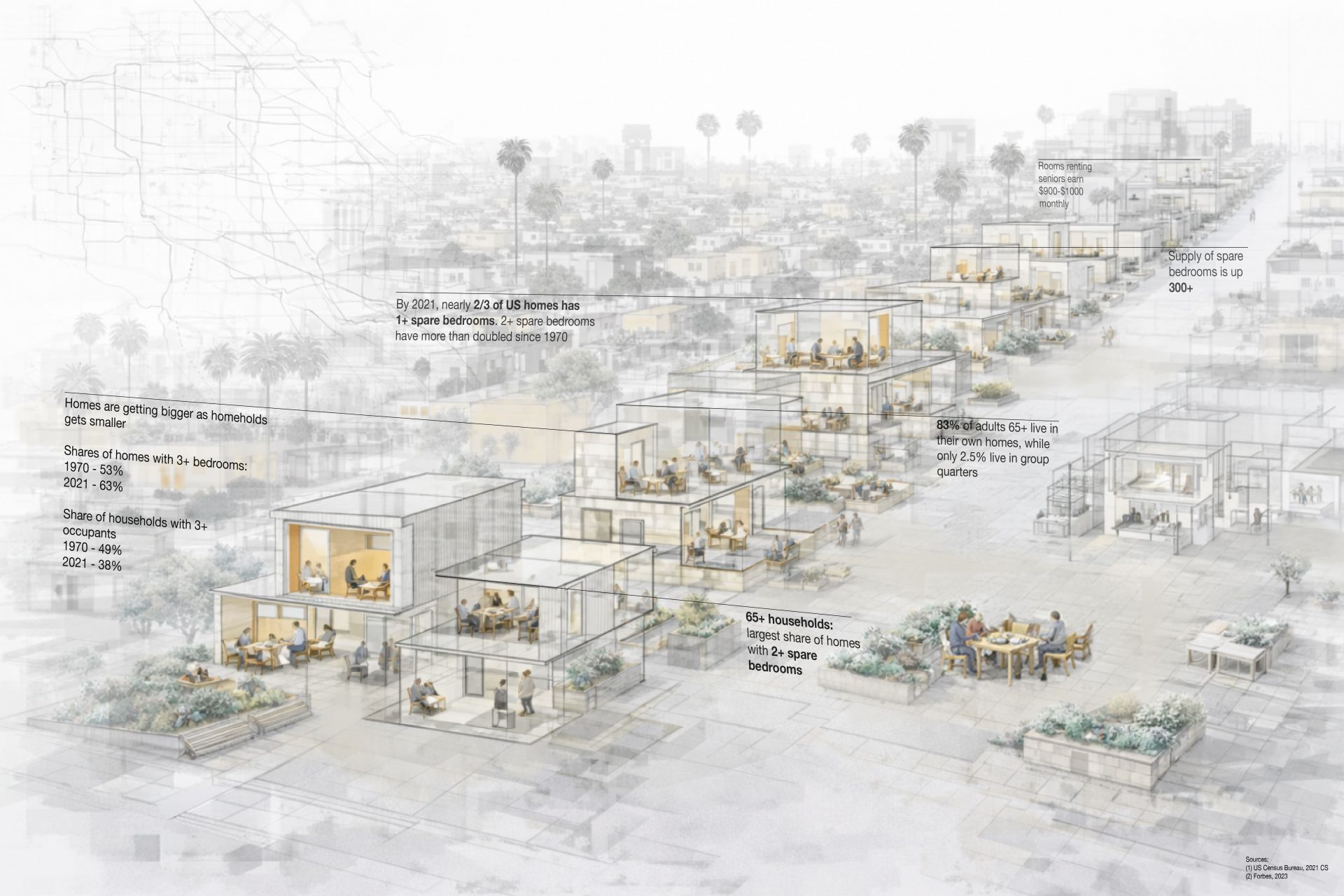
Los Angeles faces a growing housing challenge as seniors confront unaffordable rents, isolation, and car-dependent neighborhoods. Domestic Abundance reimagines aging in place through a distributed cooperative model that transforms single-family and multi-family homes into a network of shared care infrastructure. Aging homeowners can transfer their property to a community land trust, ensuring long-term affordable land stewardship. At the same time, they join the Care Cooperative, which manages the growing network of participating homes and oversees a time-based credit system inspired by Japan’s Fureai Kippu, where caregiving and maintenance generate equity. Instead of new construction, the project employs adaptive reuse and incremental retrofits to link existing homes into interdependent clusters of shared amenities and accessible pathways. This framework establishes a circular economy of care that recycles both built fabric and social value, where ownership is defined by stewardship rather than speculation, where community emerges through integrated aging in place, rather than through separated enclaves.
Break the Cycle: Architectures of Safety, Visibility, and Power After Abuse
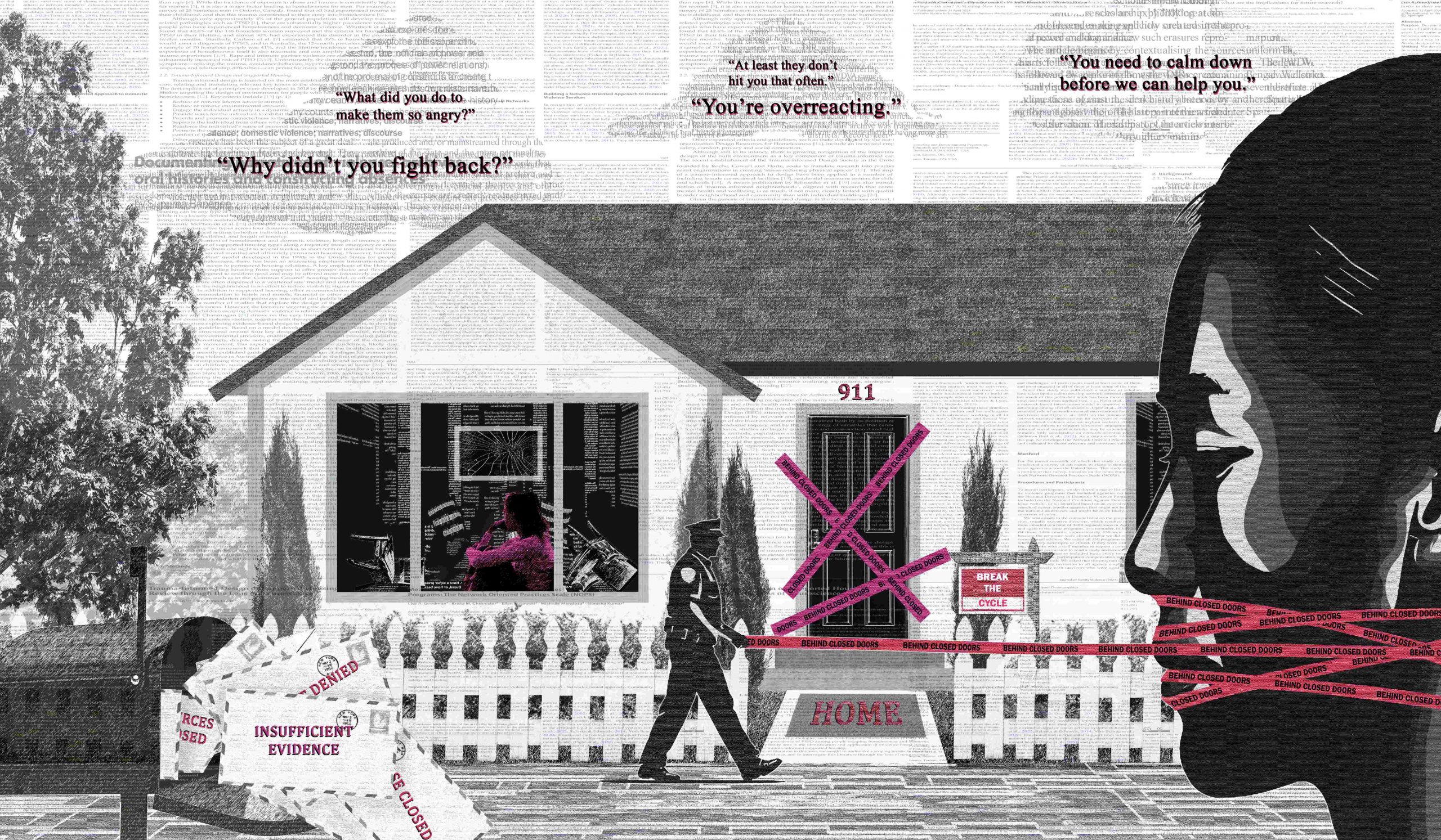
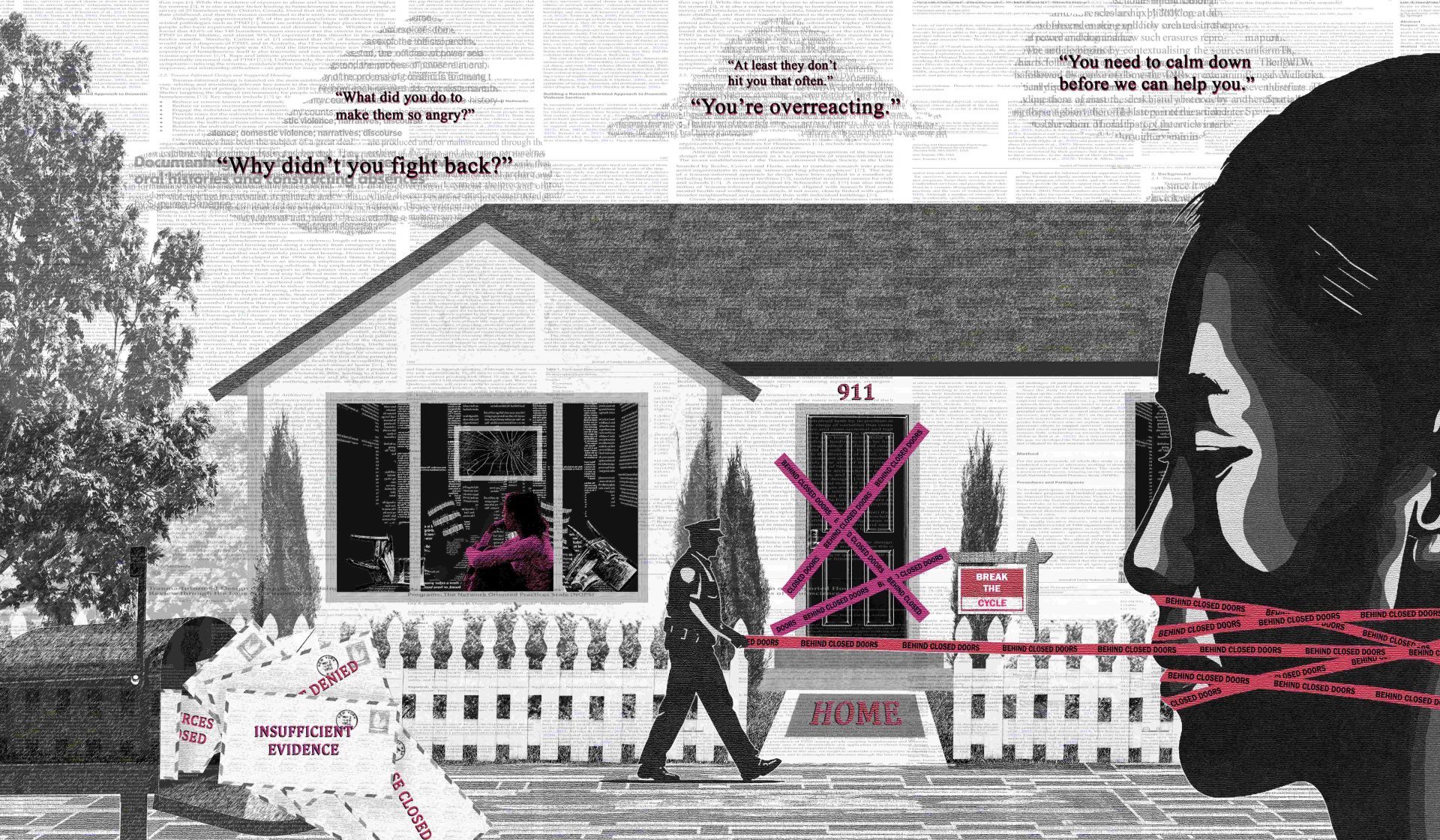
Break the Cycle addresses the post-abuse environment for survivors of domestic violence, confronting housing models that reduce survivors to temporary occupants while reproducing conditions of control, surveillance, and instability. While shelter networks have historically operated as emergency refuge, they rarely support transition from crisis to long-term autonomy or stability. In response, this project proposes a trauma-informed housing continuum defined not as a linear progression, but as a set of conditions negotiating the tension between the need to be safe and the need to be seen. Recovery is contextual, cultural, and deeply personal, unfolding as both healing and empowerment. The continuum operates through discreet access within civic spaces, immediate urban refuge, supportive courtyard environments, and cooperative housing rooted in shared ownership and governance. Situated in Historic Filipinotown, Los Angeles, as a culturally specific testing ground, the project advances a spatial, policy, and stakeholder-informed framework centering agency, continuity, and collective power.
ATOPIA: Antifragile Planning
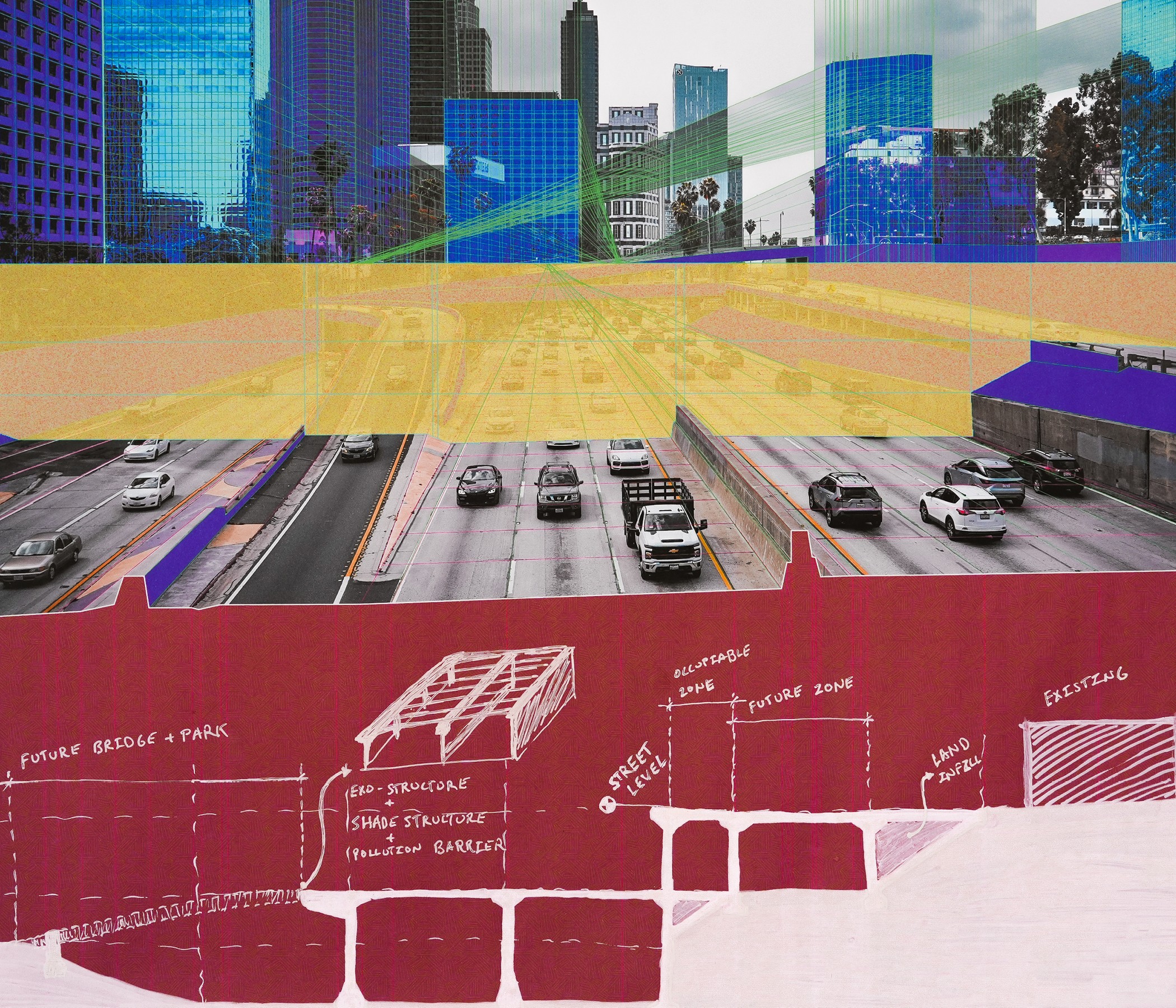
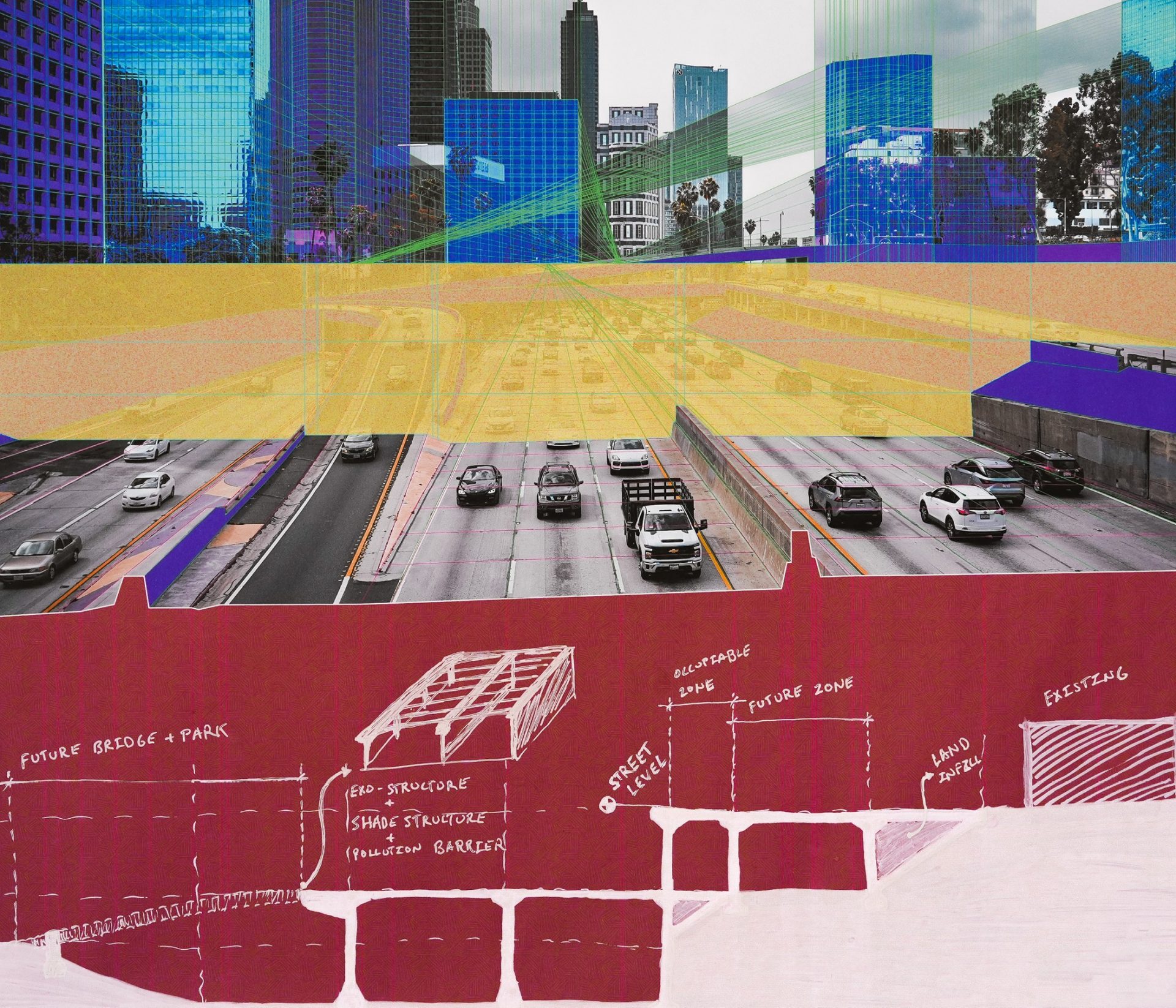
Atopia rejects the static and reactive nature of resilience, advancing antifragility as a proactive and adaptive framework to address systemic challenges. This shift directly confronts two of Los Angeles’s most damaging and fragile systems: its speculation-driven housing market and its monofunctional highway infrastructure. Both persist as enduring scars on the urban fabric, producing division, inequity, and environmental strain while remaining incapable of adapting or evolving. As an alternative to static resilience, Atopia proposes housing and urban systems that not only absorb stress, uncertainty, and time, but improve through them, reframing housing as long-term, multifunctional civic infrastructure rather than a financial asset. Grounded in the framework named EXCESS, the project establishes a holistic, non-speculative framework integrating governance, ownership, and design. As a case study, it constructs publicly owned land along and over select highway segments, reclaiming space for equitable housing and adapting sites of division into platforms for antifragile transformation.
Resilient Public Housing Catalog: A Circular Strategy for Pre- and Post-Disaster Dwelling in Myanmar
The Resilient Public Housing Catalog proposes a framework for how to rehouse low-income and working-class citizens of Myanmar after, in the event of, and in anticipation of natural disasters such as earthquakes. Building on public investments, proactive community agency, and high-level material circularity, the project aims to integrate local, vernacular knowledge and practices to address seismic, climatic, material, and social realities. At its core is a scalable and generative public housing catalog that leverages public assets and volunteer labor to implement a dual-scale circular process of resource recovery and participation. After and during a crisis, the government provides citizens with standardized emergency housing kits consisting of bamboo and timber connectors for rapid assembly without specialized tools. Simultaneously, the public housing authority starts building permanent high-density housing structures. Conceived as flexible, open frameworks, these public structures can later accommodate the disassembled components of the emergency shelters, giving each family space and material to start their own permanent home and allowing them to flexibly grow and adapt to their needs.
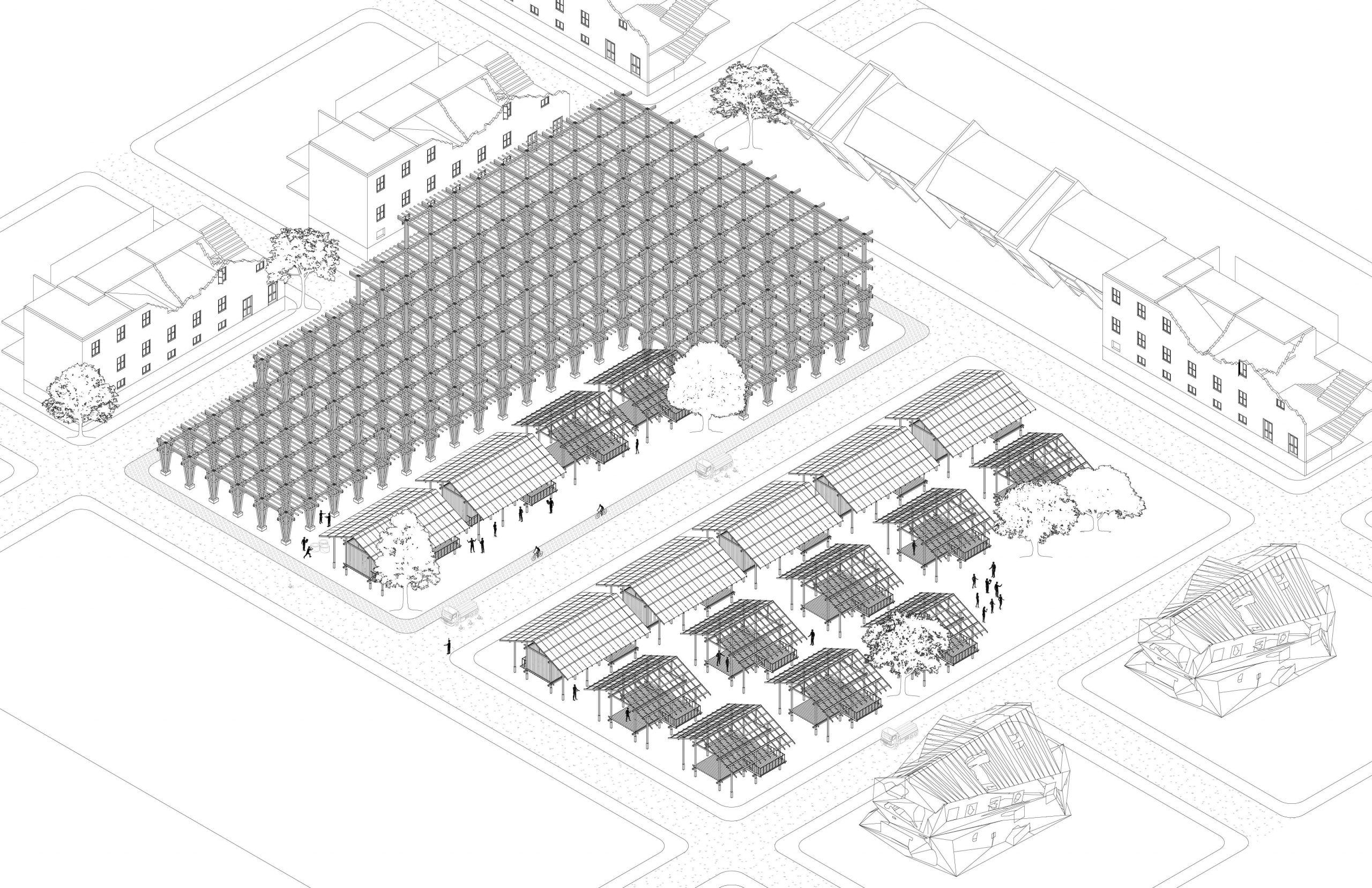
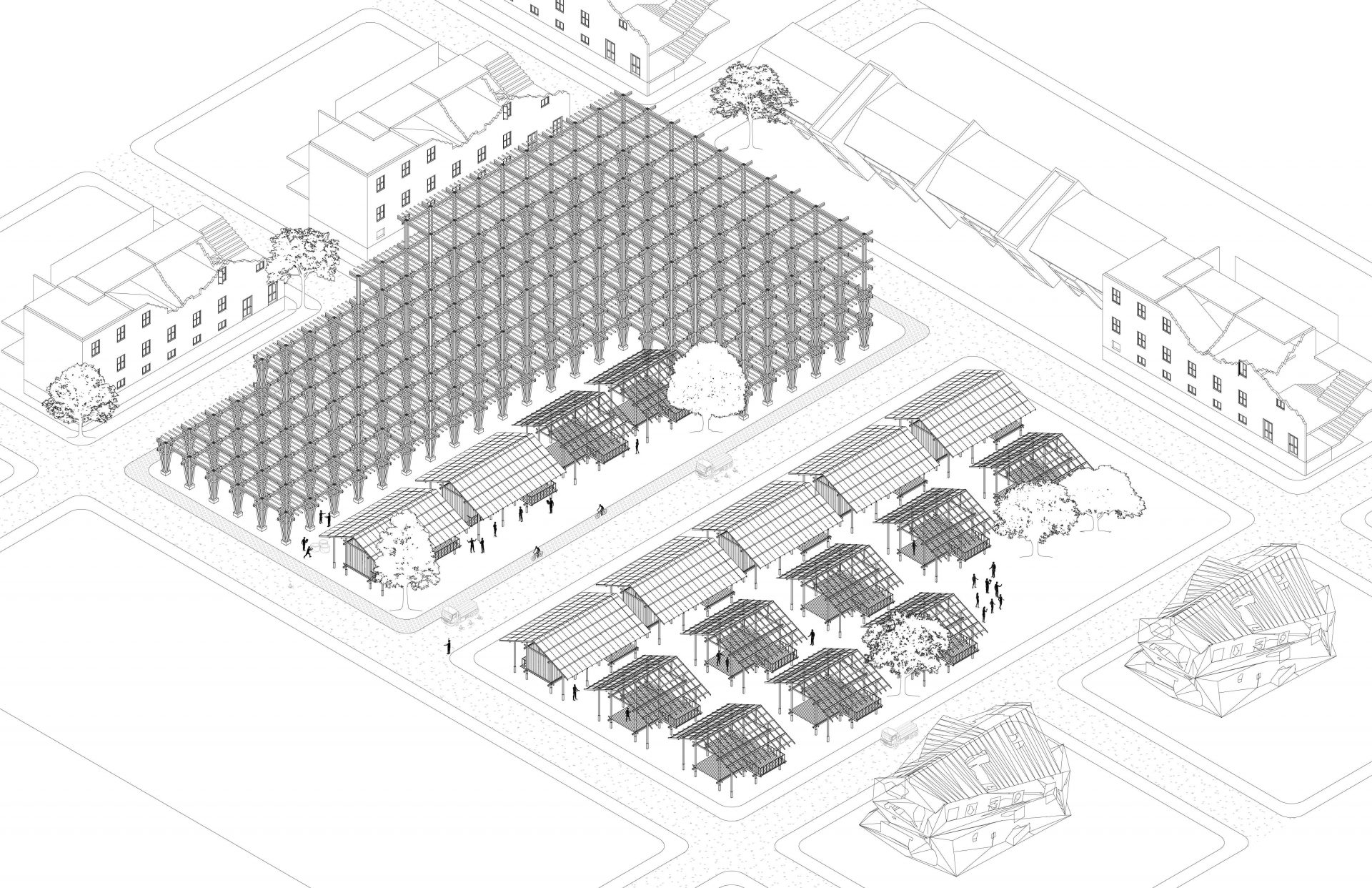
Transit-Oriented Co-Operative: Housing as Collective Infrastructure
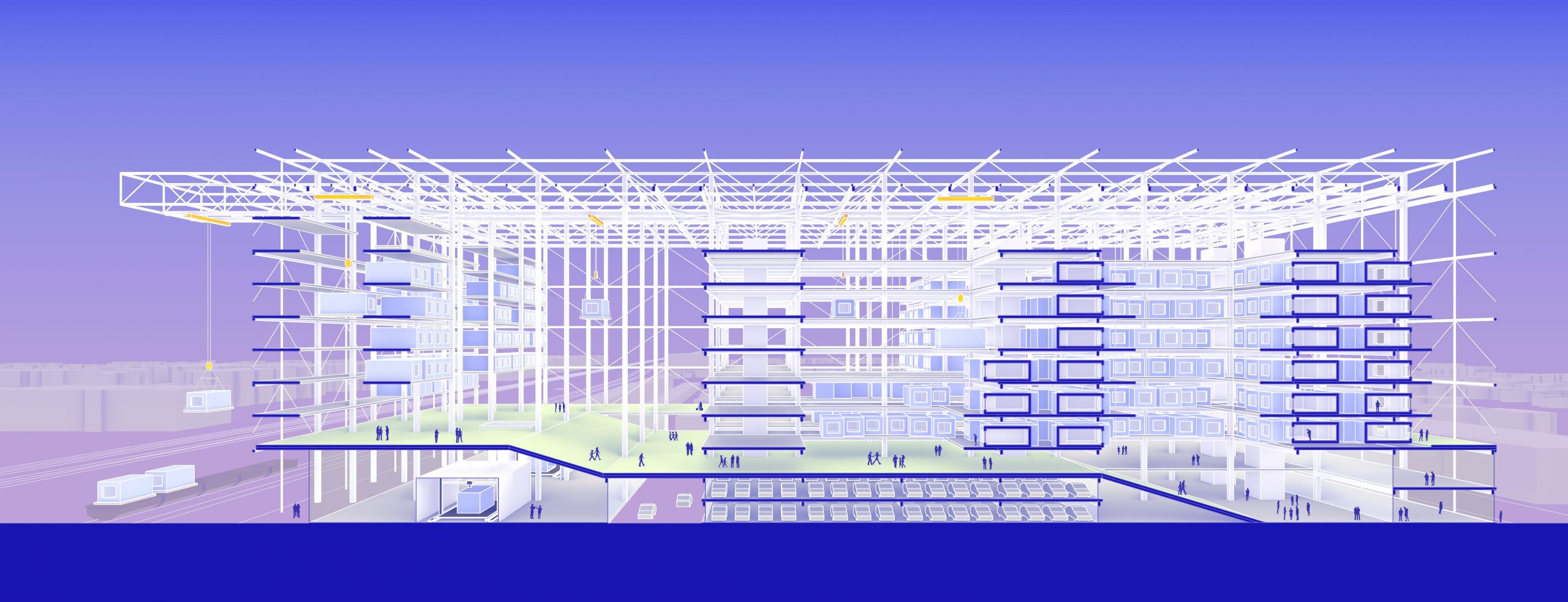
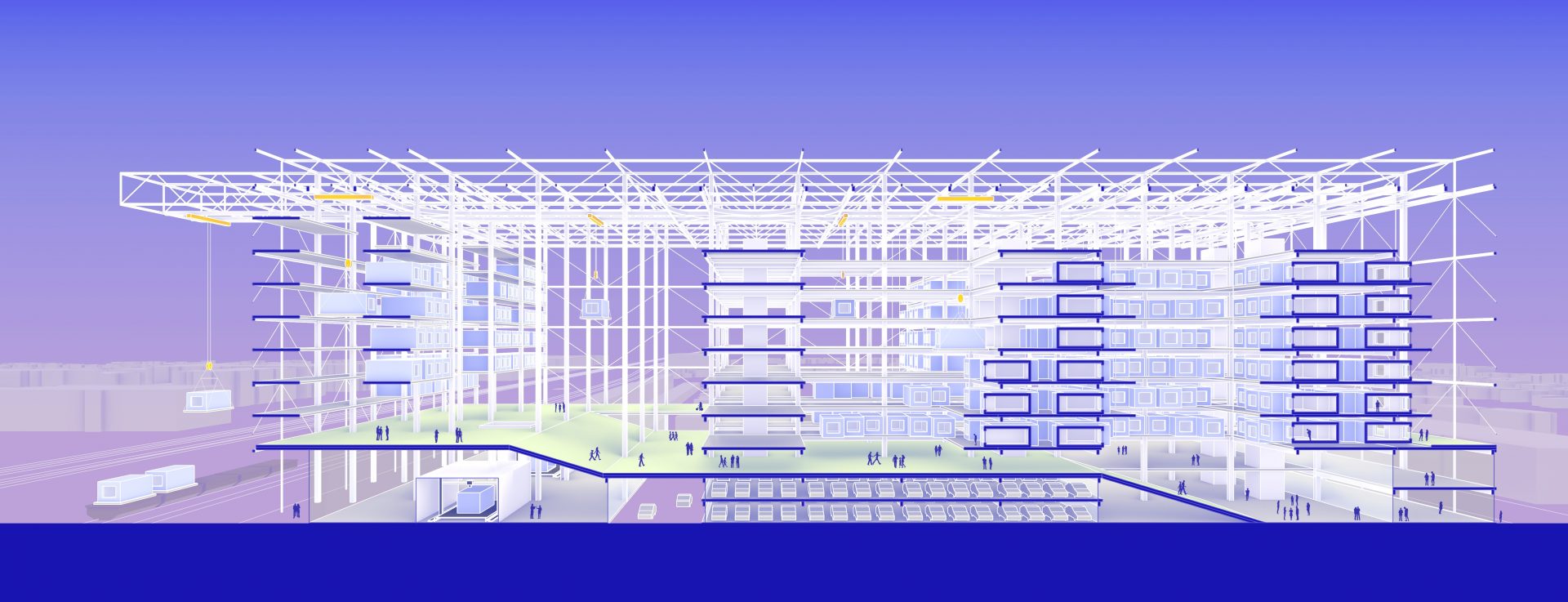
Transit-oriented developments in Los Angeles are currently driven by quantitative metrics that prioritize unit counts and development capacity over long-term affordability. As a result, these developments often place pressure on existing communities, contributing to gentrification and displacement. To counter these trends, the Transit-Oriented Co-operative framework proposes using LA Metro’s Joint Development Program to advance large-scale limited equity housing cooperatives and innovative construction techniques in tandem. Demonstrating one potential outcome of this framework, this project envisions on-site 3D printing of a range of housing modules that can be used by housing co-operatives and distributed across the proposed Pomona North Transit Hub and throughout the city. Through this integration of production, mobility, collective governance, and non-speculative ownership, housing begins to operate at the scale of the unit, the building, and the urban network, redefining transit-oriented development as an adaptive, innovative system of long-term affordable housing rather than a formulaic vehicle for profit-seeking investment.
Groundwork Collective Trust
Residents of Los Angeles County face deep financial, social and structural inequities in housing. Groundwork Collective Trust (GCT) proposes breaking the extractive cycle of private profit and single-family production and increasing density, starting with Altadena as a catalyst. In the wake of the Eaton Fire many Altadena residents are left with limited options: daunting costs of a standard rebuild or selling their lot and leaving the neighborhood. This project proposes an alternative ownership model and architectural framework that would allow residents to rebuild and stay in their communities. While transferring one’s property into a new community-governed trust ensures long-term affordability without speculation and across various AMI’s, joining the GCT also enables moderate densification and diversification. Building on and reimagining the historic LA typology of the bungalow court, members of the GCT can construct their new homes as an independent, yet interconnected system of buildings with shared courtyards and mixed-use facilities, and thus reinvigorate the neighborhood across scales, properties, and incomes.
The Patch Commons: What Do We Build When We Build Together?
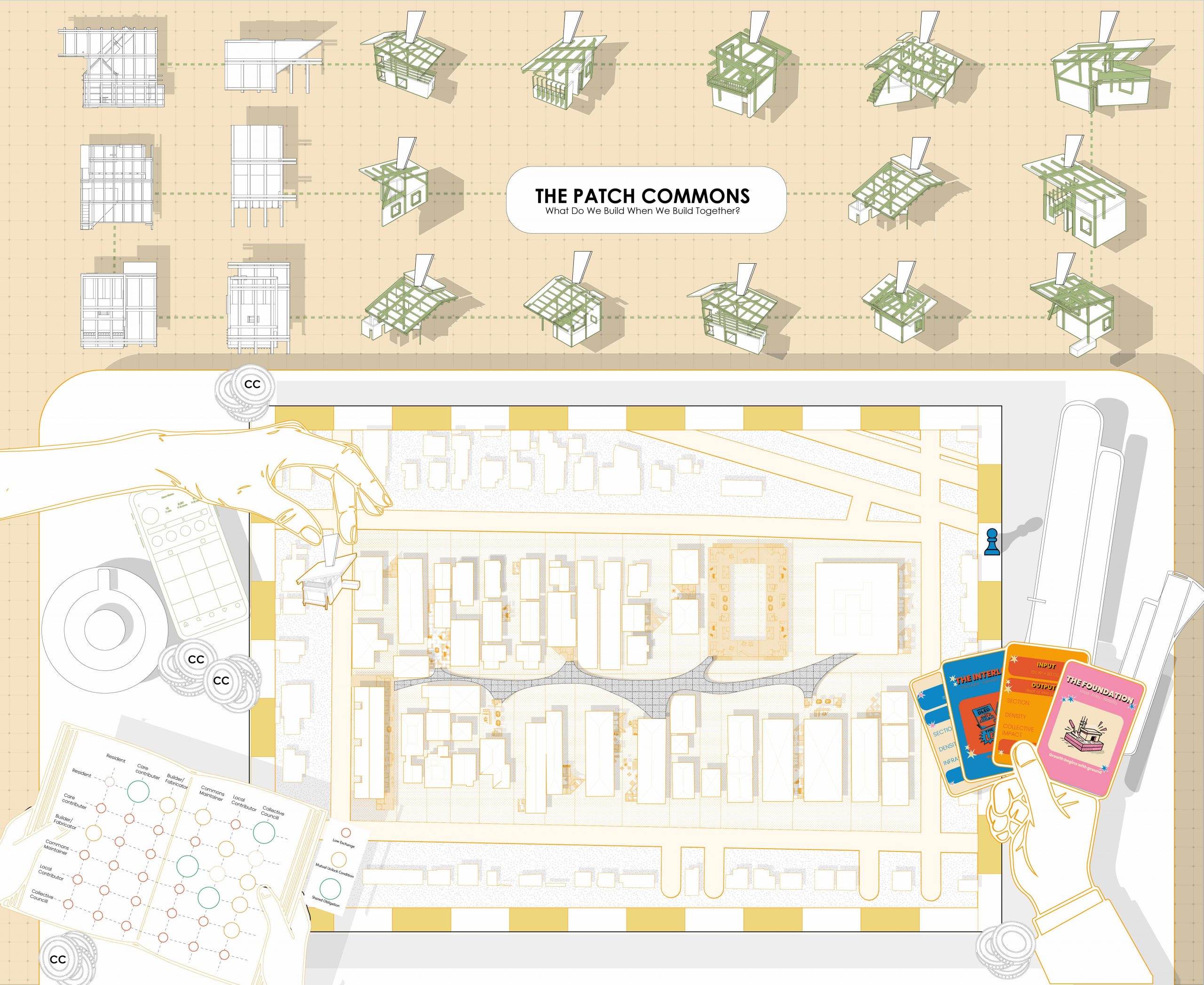
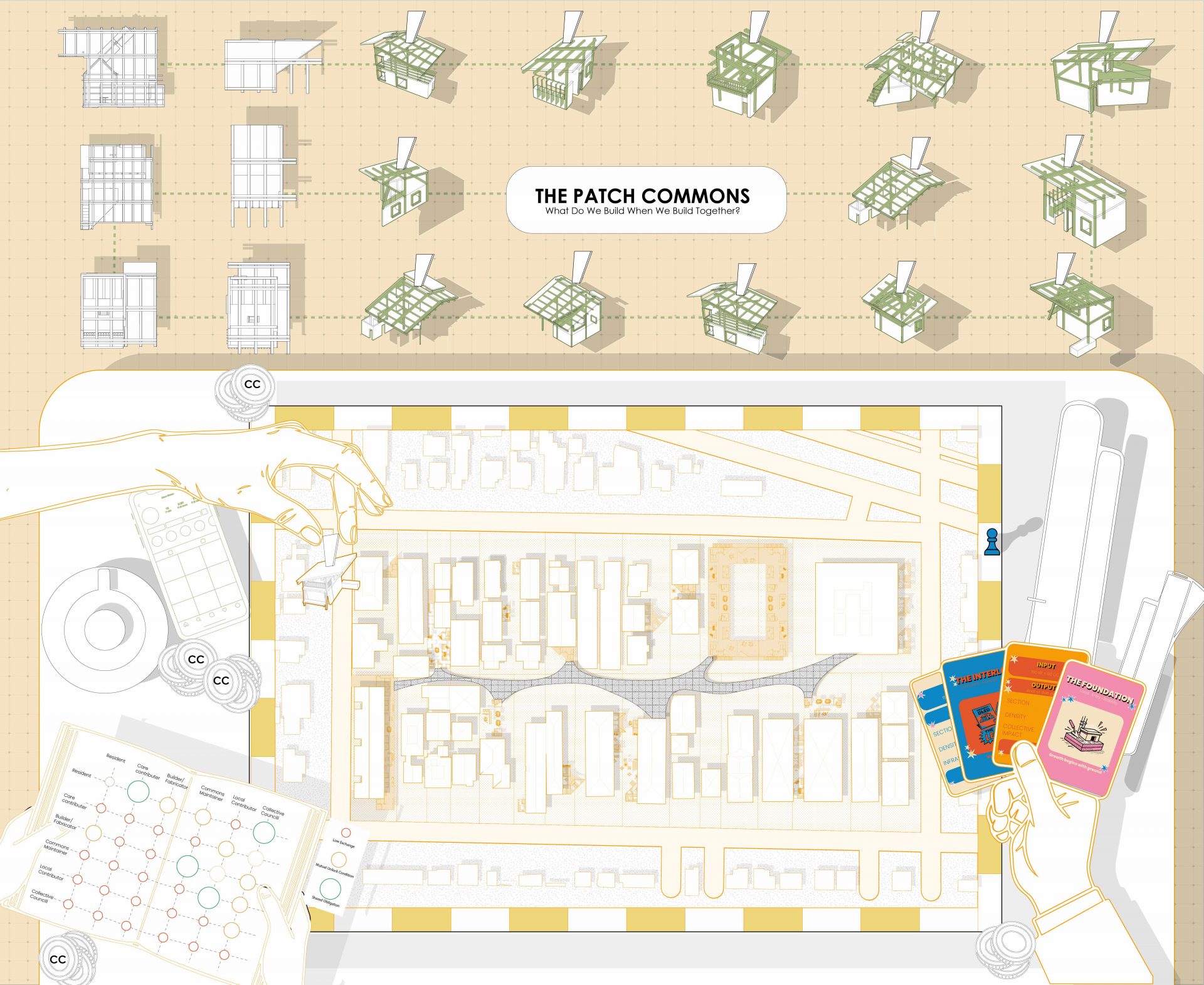
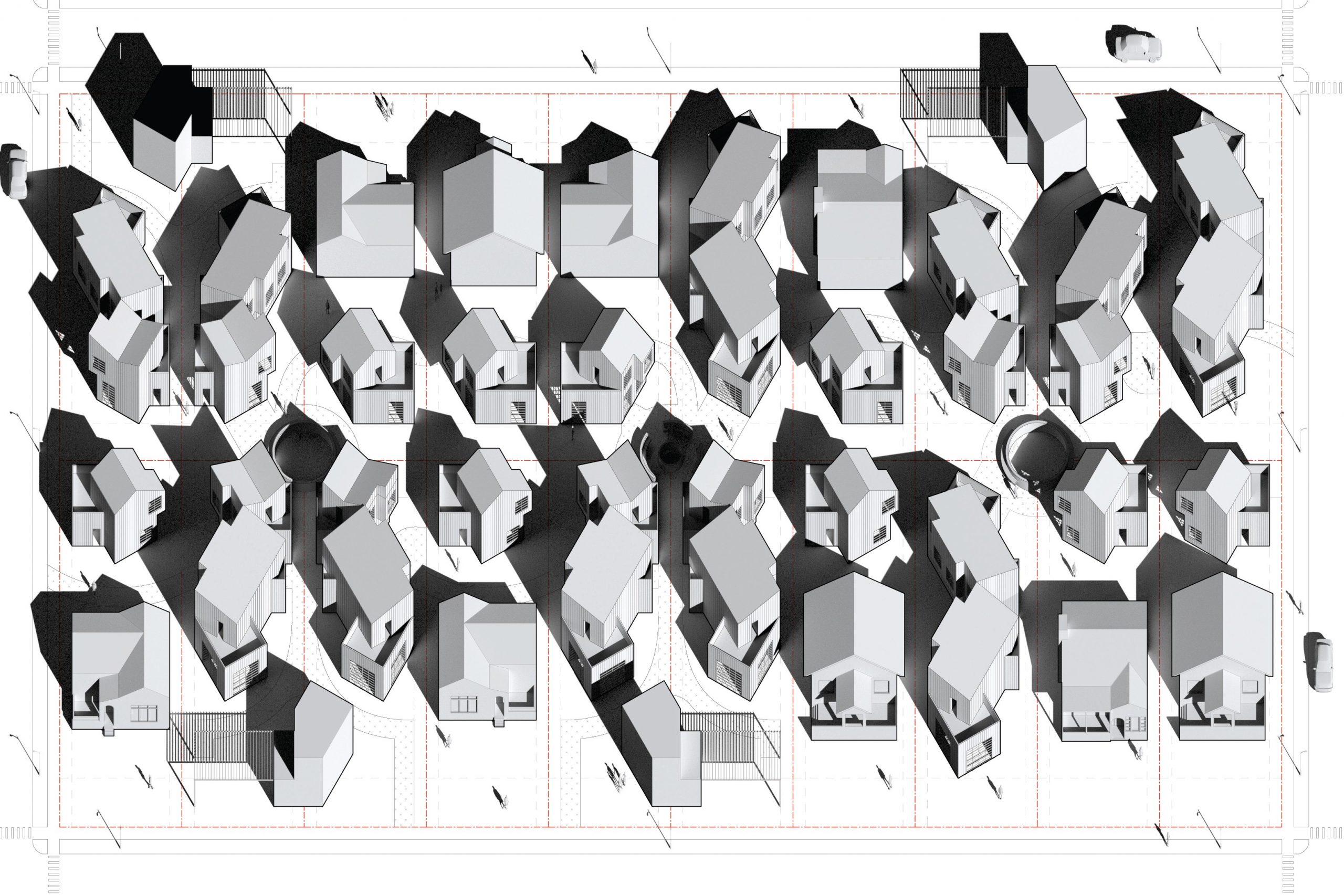
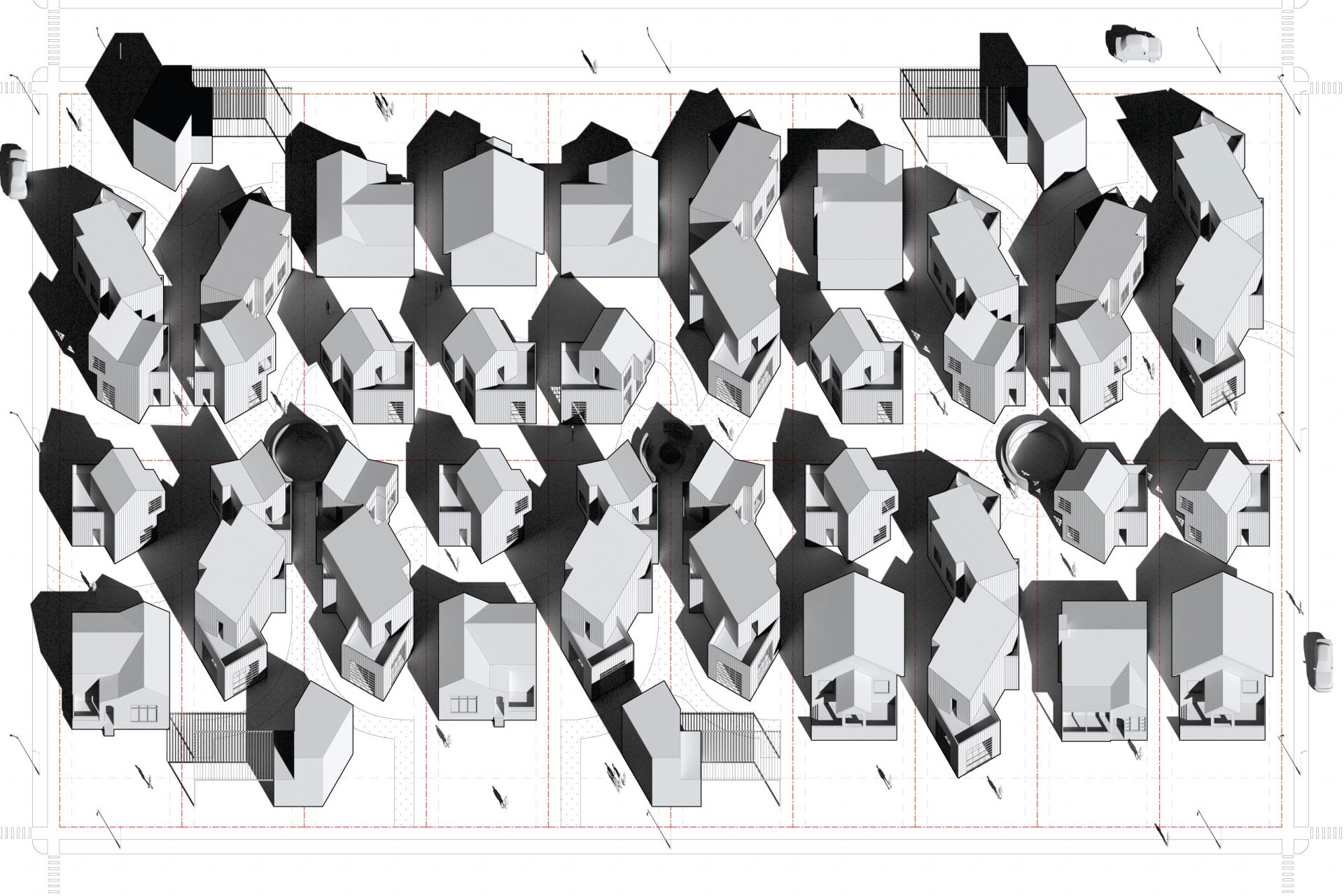
The Patch Commons reimagines how housing can transform neighborhoods through community participation rather than by external forces of speculation. Introducing an alternative community currency based on SCCs (Social Contribution Credits) and CCCs (Commons Contribution Credits), value is measured not through commodified ownership but through personal contribution and collective stewardship. With earned SCCs and CCCs, residents are empowered to expand, densify, and reshape their buildings and surroundings, reinvesting directly into their neighborhood rather than extracting social and spatial resources. Countering Tabula Rasa approach and inflexible building designs, Residents can use the new community currency to fund a variety of architectural patches that enable transformation and adaptation when everyday life exceeds its limits, or needs evolve, new stories are added, Walls thicken, Rooms spill outward, and thresholds become shared spaces. In the patch commons architecture is constantly and incrementally negotiated, built, and rebuilt by those who inhabit it. Nothing is ever finished, only continuously becoming.