

Cultural engagement enhances social, spiritual, and leisure activities. It involves assembling events, happenings, and spaces to bring people together. Cultural participation is a shared experience that promotes a sense of belonging and connection with others. This Directed Design Research course studies architecture and design approaches that support cultural vitality and practice – concentrating on developing design goals to strengthen the community and individual well-being. Building such an assembly requires diligence for cultural care and social awareness. Examining and collecting model observations of cultural experiences and phenomena initiates a direction and concerns for advancing design research.

Beyond the Board
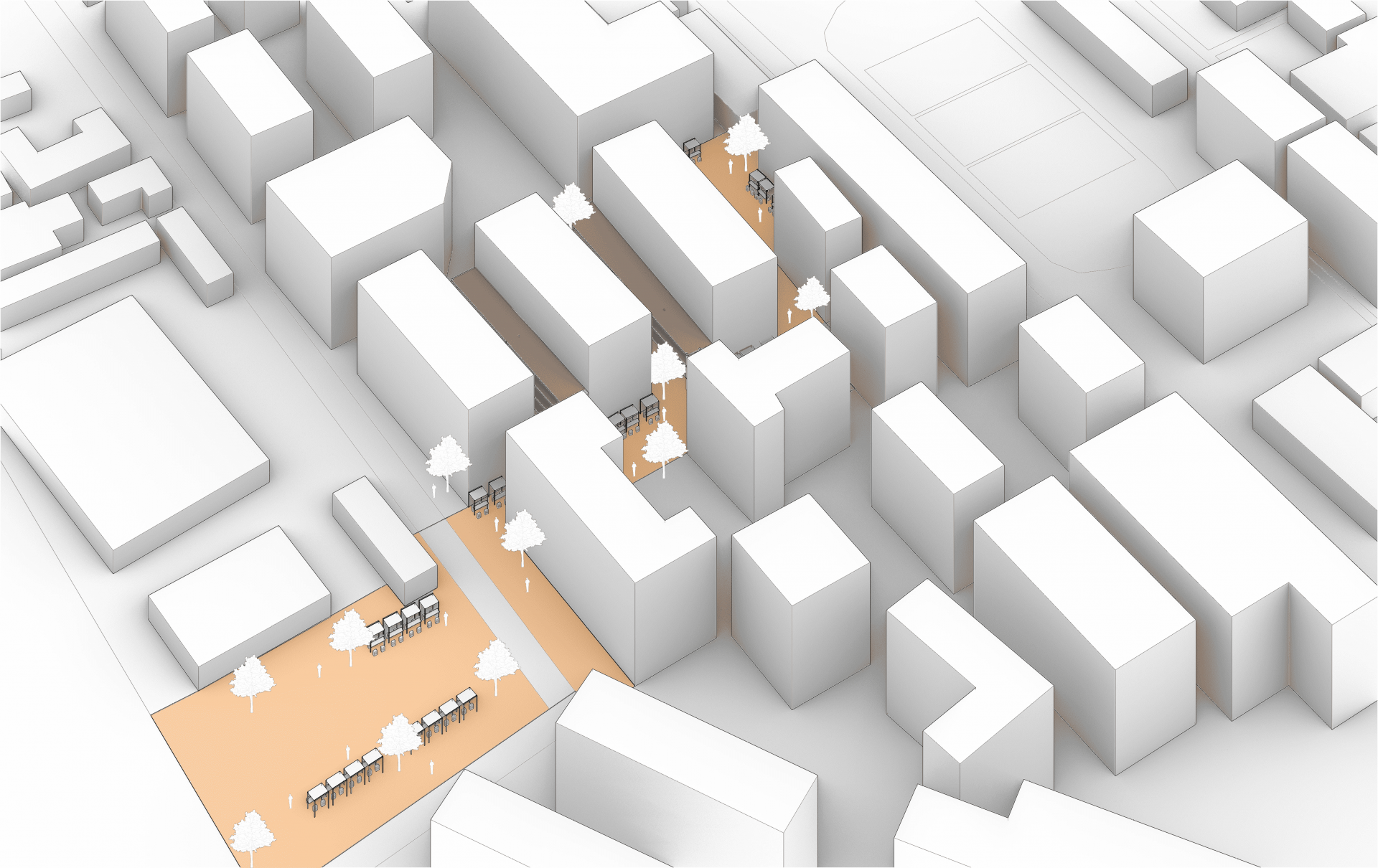
My thesis explores how modular design can transform overlooked urban gaps into a dynamic network of third spaces—flexible platforms for social and cultural exchange that evolve with time and community needs.
The project reactivates underused paths and spaces by clearing informal enclosures, restoring pedestrian flow, and introducing a multi-layered system organized as points, lines, and planes:
- Points: Functional hubs like tea houses, shared kitchens, or temporary markets;
- Lines: Pathways and elevated walkways that reconnect fragmented communities;
- Planes: Courtyards and open grounds for collective events and long-term engagement.
In smaller or more peripheral residential areas, I propose lightweight devices that blend into facades using local materials, taking no space when idle but unfolding into usable third spaces when needed. These installations act as spatial clues dispersed throughout the city.
Their materials and design language are reassembled and expressed in the larger functional nodes, creating a spatial rhythm: the small devices hint at a larger system, pathways serve as connective threads, and each node becomes a convergence point that gathers and amplifies interaction.
This strategy uses local, low-tech, and replicable components, encouraging participation while embedding cultural continuity. It offers a light, adaptable, and human-scaled approach to urban regeneration—where third spaces act as connective tissue, bridging people, neighborhoods, and eras.

Rooted In Wellness: Redesigning Black Health Through Culture, Community, and Sports
The built environment in America has long been designed in ways that neglect—if not actively harm—Black health, reinforcing systemic disparities that leave Black Americans with fewer opportunities for physical activity, evoke generational trauma, and increase exposure to stress-inducing, unhealthy conditions. These environments offer no space for Black Americans to self-actualize and connect with their divine presence. My thesis aims to solve this problem by creating spaces that foster a holistic, healthy lifestyle for Black Americans by integrating physical fitness, mental well-being, and community engagement through culturally responsive design and biophilic elements. Addressing health disparities like hypertension and diabetes, this research envisions a “lifestyle club” that merges a multisport fitness complex with an outdoor fitness park, ensuring access to both indoor and outdoor wellness amenities.

Retrofitting Urban Play
The unregulated rise of privatized open space in urban high-rises has deepened economic inequality, pushing communities away from opportunities. This exclusionary model calls for urban renewal through a new framework, one that fosters a balance of cultural identity with advanced infrastructure. My thesis addresses this problem by exploring how modern stadiums provide more than just an iconic presence, serving as an economic, cultural, and communal engagement that blossoms neighborhoods. By understanding the beneficial aspects of such a fruitful groundscape and imprinting it onto the vertical urban landscape between 400-500 ft, my thesis proposes a secondary urban horizon that offers amenities directly enhancing the community at the condensed groundscape below, alleviating stress for humans to play the game of life again.
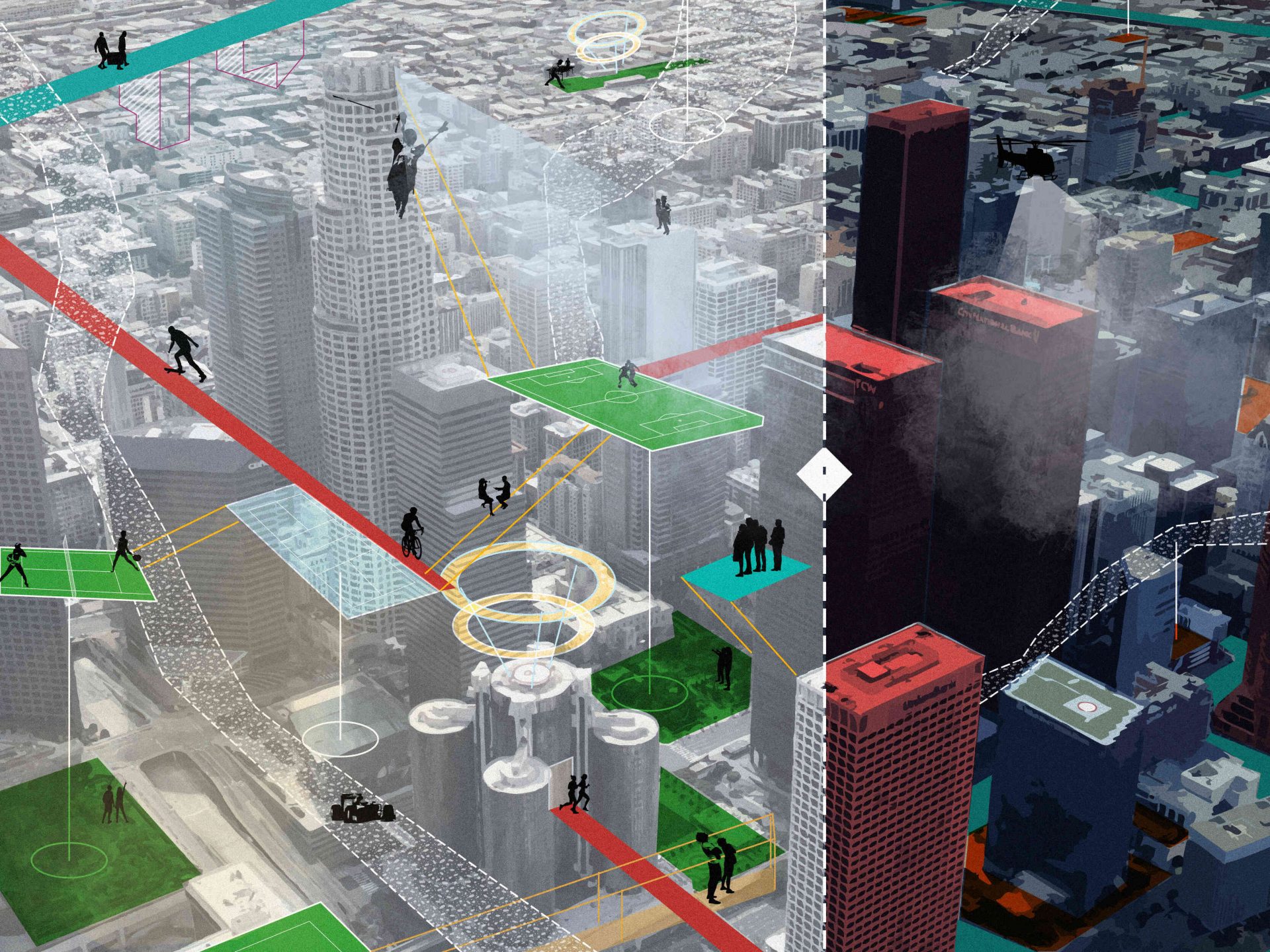
Sports Mixed-use
“Sports Mixed-use” focuses on providing physical health and active social space that adapts and improves the current LA Lifestyle. The LA city planning caused the car-dependent commute mode. People sit for hours in their cars to travel between each bubble. Having the space for home and work fixed, people need the third spaces and physical activity spaces to be more accessible and convenient. The “Sports Mixed-use” proposes a solution that combines daily sports programs and demanded third space with typical building typologies such as housing, workplace, and infrastructure to make the physical activity space more accessible and welcoming.
Reflected Curve
In the effect of climate change across the world, each city near the coast has to account for sea level rise, and how humans will evolve around it. The proposal is looking to create dynamic, multi-functional hubs that have sports facilities, retails, housing, and that could be raised as the water rises.
The flexibility of the design allows it to be more adaptive. It will evolve through time to something different that addresses the new issues and contributes to a more sustainable and liveable city. The project will utilize the coasts to create a new city that is vibrant and community-focused. It promotes social interactions, physical activities, and environmental responsibility. Ultimately the proposal will blend adaptive elements with self-sustainability strategies to create a cohesive and future-oriented community.

Sport & Cultural Densities: Using Sport for Intruding Formations to create a Cultural Unifier
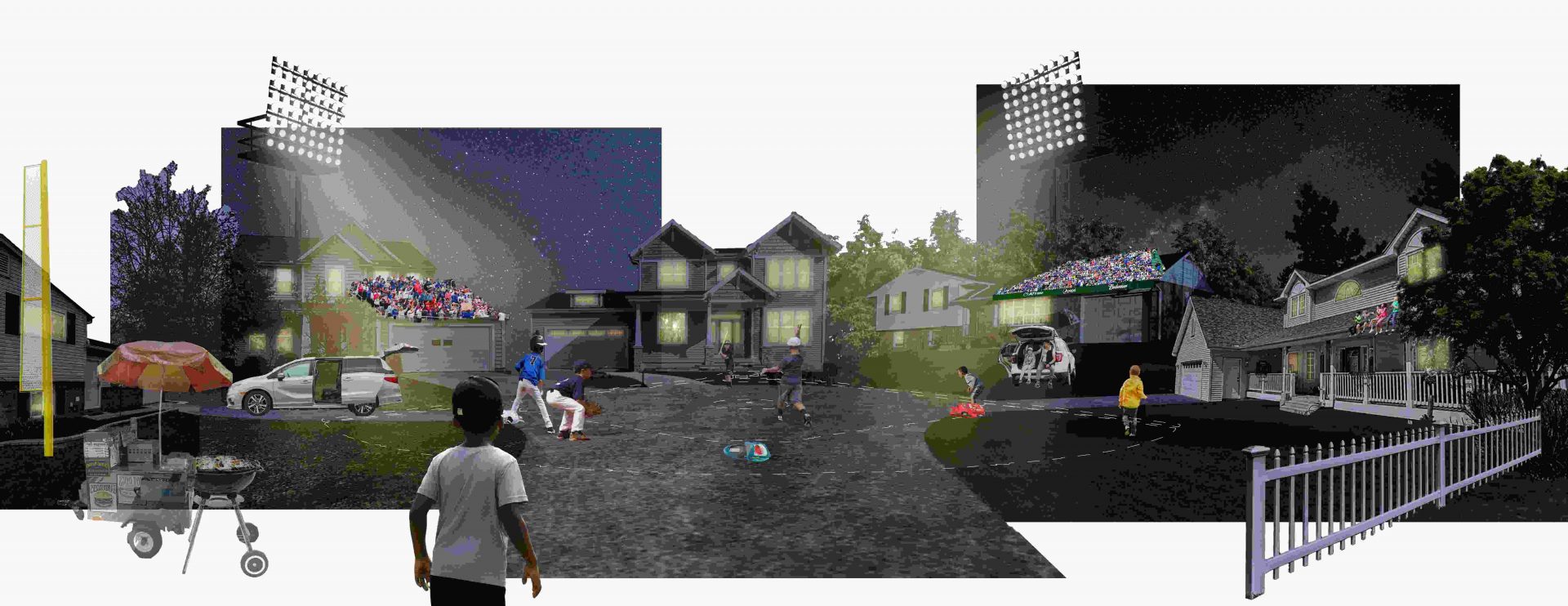
Sports have become a manifestation of values and traditions in modern American culture. Looking at the relationship between sports and culture, this thesis explores how this relationship realizes itself in the different cultural densities of urban, campus, suburban and rural. Understanding sports as both formal and informal spatial assembly, the relationship between Architecture and culture is explored in the techniques of intruding piercings and tentacles, breaking the dichotomy created by traditional spatial boundaries.
Extending Gay Asian American Culture in West Hollywood
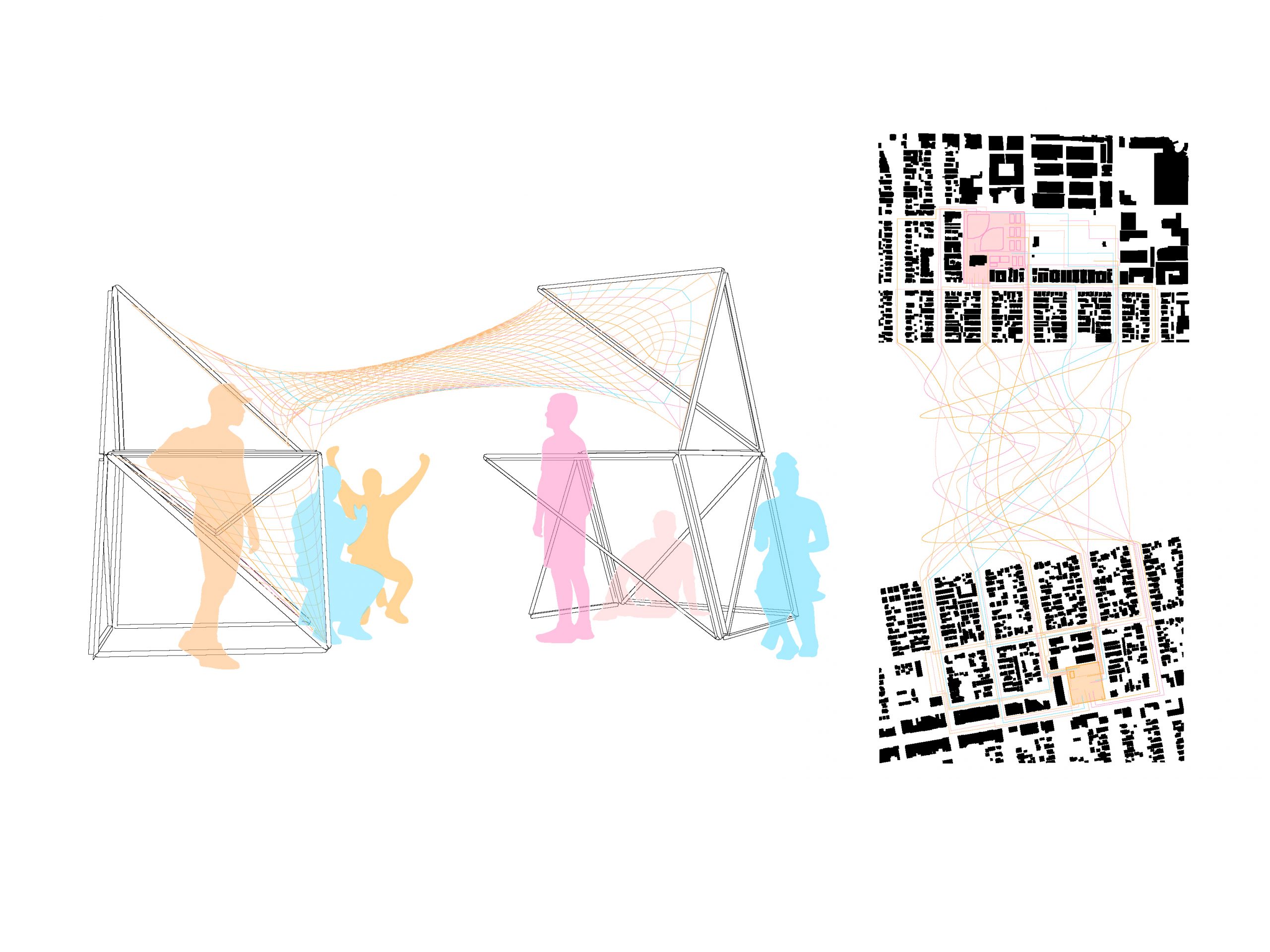
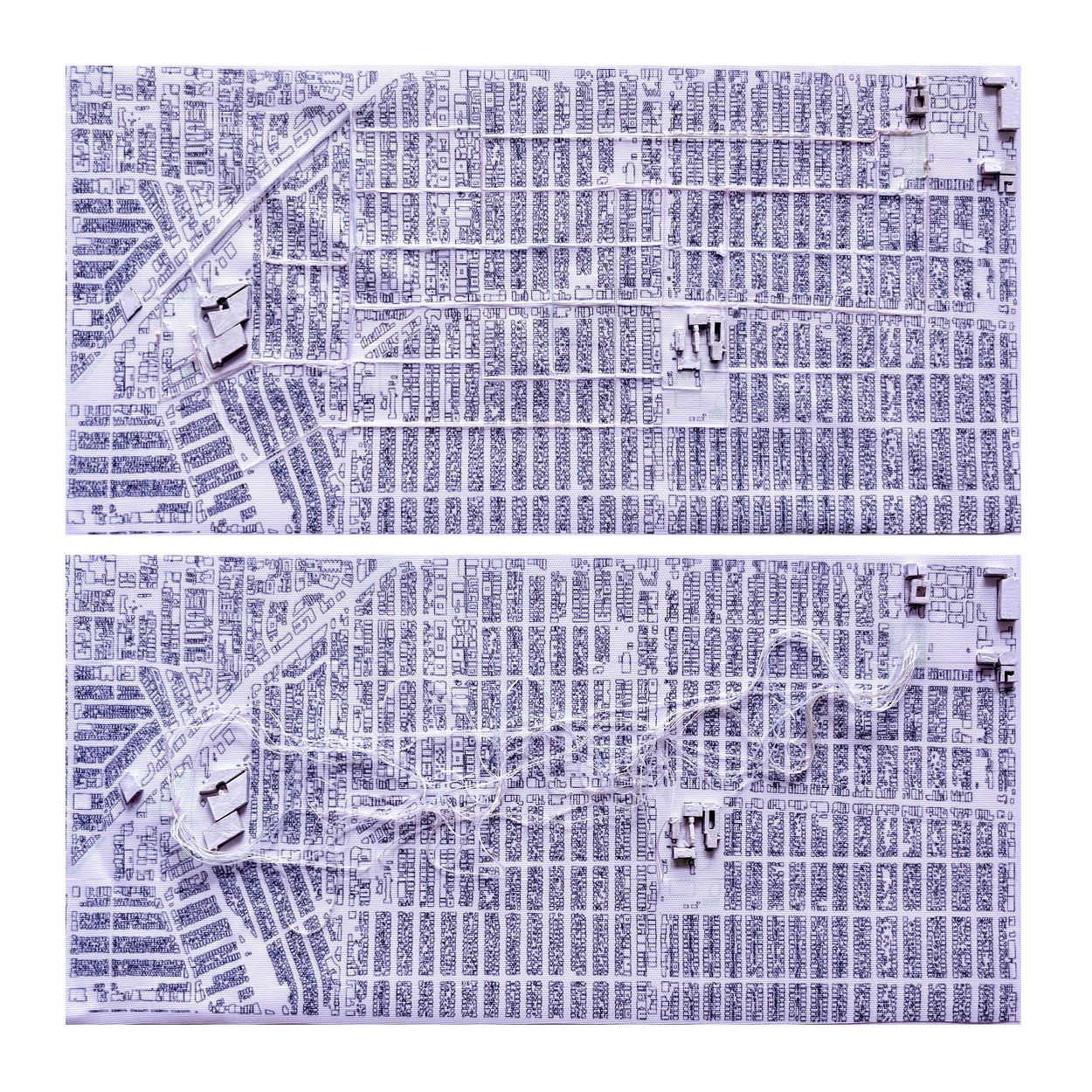
While John Chase’s design contributions have helped establish West Hollywood as a haven for queer identity through its inclusive, flexible mixed-use outdoor spaces, the built environment still lacks meaningful representation of people of color. By incorporating Yona Friedman’s principles of flexible, adaptable structures and José Muñoz’s vision of queer futurism, a tensile canopy inspired by gay Asian American aesthetics—designed to support a queer Asian American kickball team participating in OutLoud Sports—can serve as a critical design intervention. Whether situated in Poinsettia Park or Temple City Park, this ephemeral structure would promote intersectional inclusion and affirm shared values of diversity within the urban queer landscape.
Choreographed Spaces: Capturing the Ephemeral
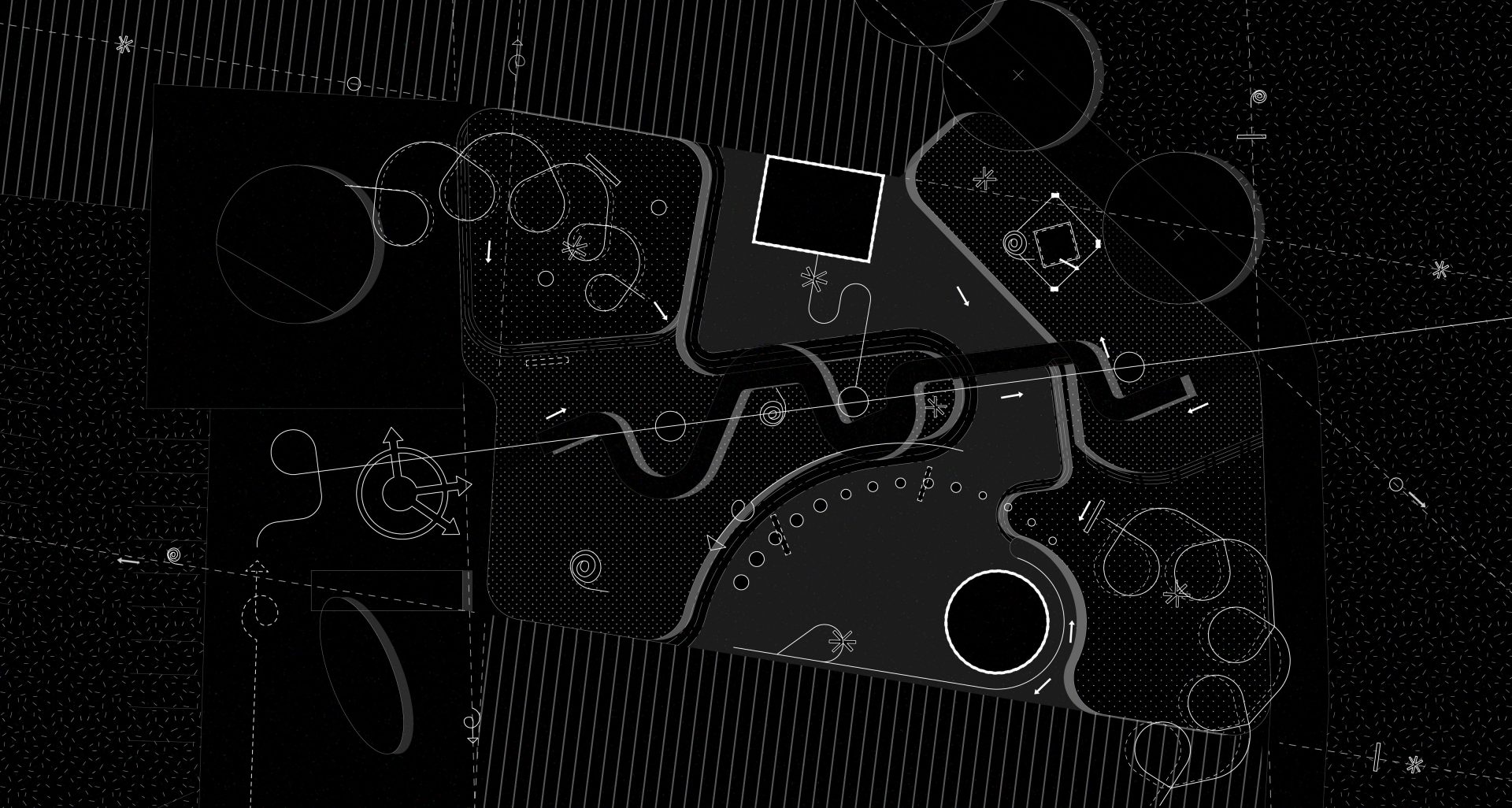
Both dance and architecture serve as spatial arts that shape and define human movement, with dance embodying fluid, ephemeral structures in motion and architecture providing the physical framework within which movement occurs. This thesis explores the symbiotic relationship between the two disciplines, examining how architectural design influences choreography and how dance, in turn, informs spatial perception, dynamic form, and the experiential qualities of built environments. Choreographed Spaces aims to use dance and performance as a medium to generate architectural form and design.
The Cracked Egg
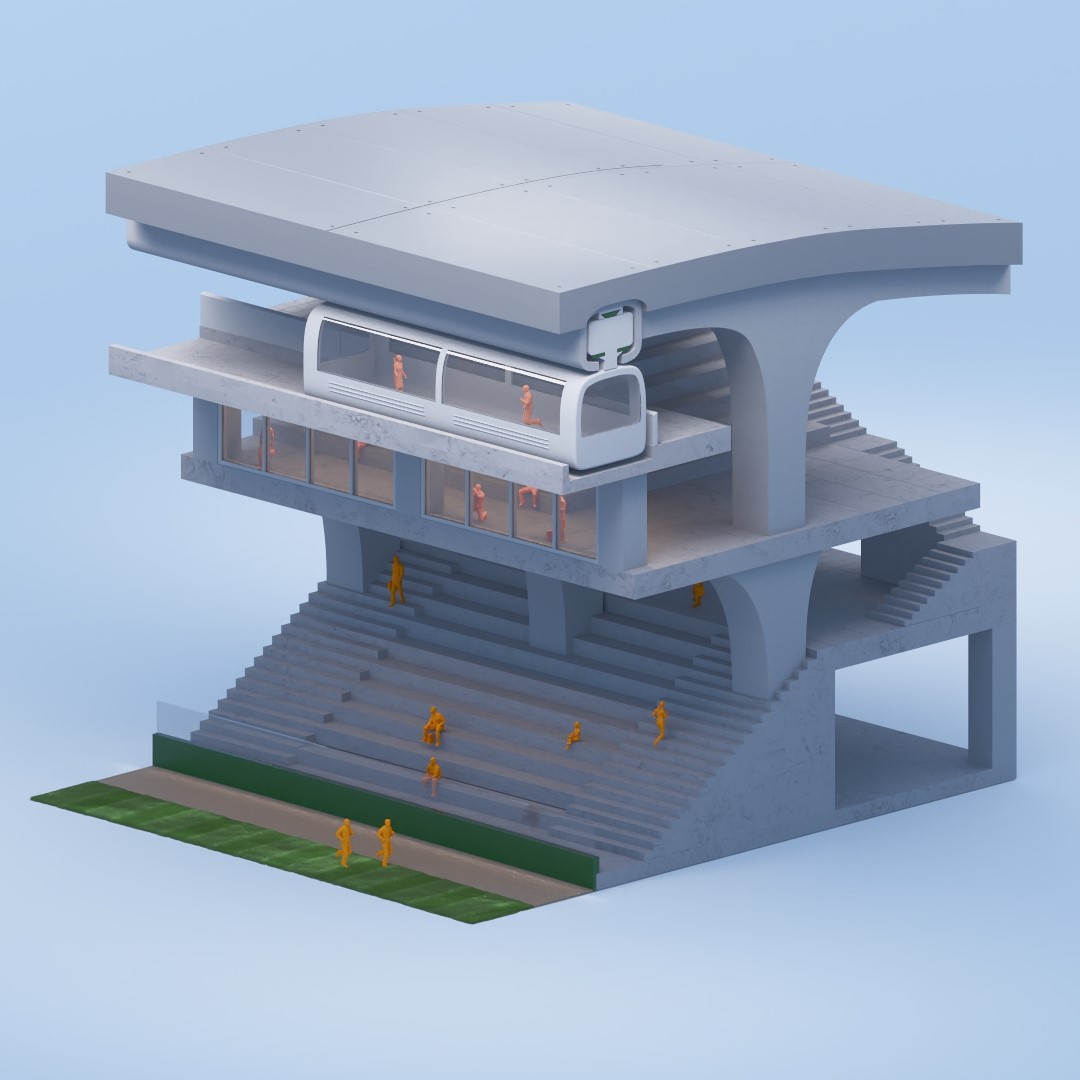
Contemporary sports arenas in Asian cities remain introverted, bounded by orthodoxal stereotypes and limited in function beyond primary purpose. Much like an unhatched egg, domes have the tendency to distinguish clear boundaries, mirroring cultural tendencies to wander within familiar comfort zones. Much like an unhatched egg, domes delineate rigid boundaries—symbols of containment that reflect a broader cultural typology of introversion,
predictability, and safety. These structures embody a reluctance to disrupt the familiar, often reinforcing societal patterns of inward orientation, where the potential for dynamic, multifunctional use remains dormant, waiting to be cracked open.
The Osmosis Dome challenges the traditional dome typology by proposing a dome embraces urban catalyst, cracking the shell of orthodoxal sports typology in Japan. The egg yolk symbolizes the vibrant heart of play, whilst the fluid egg white acts as the connective tissue to peripheral cultural, urban and infrastructural programs – including waterfront access, hotel viewership, and transit integration. Transforming the stadium into a multi-nodal, accessible frontier that emphasises on uniqueness in immersive ballpark experiences.

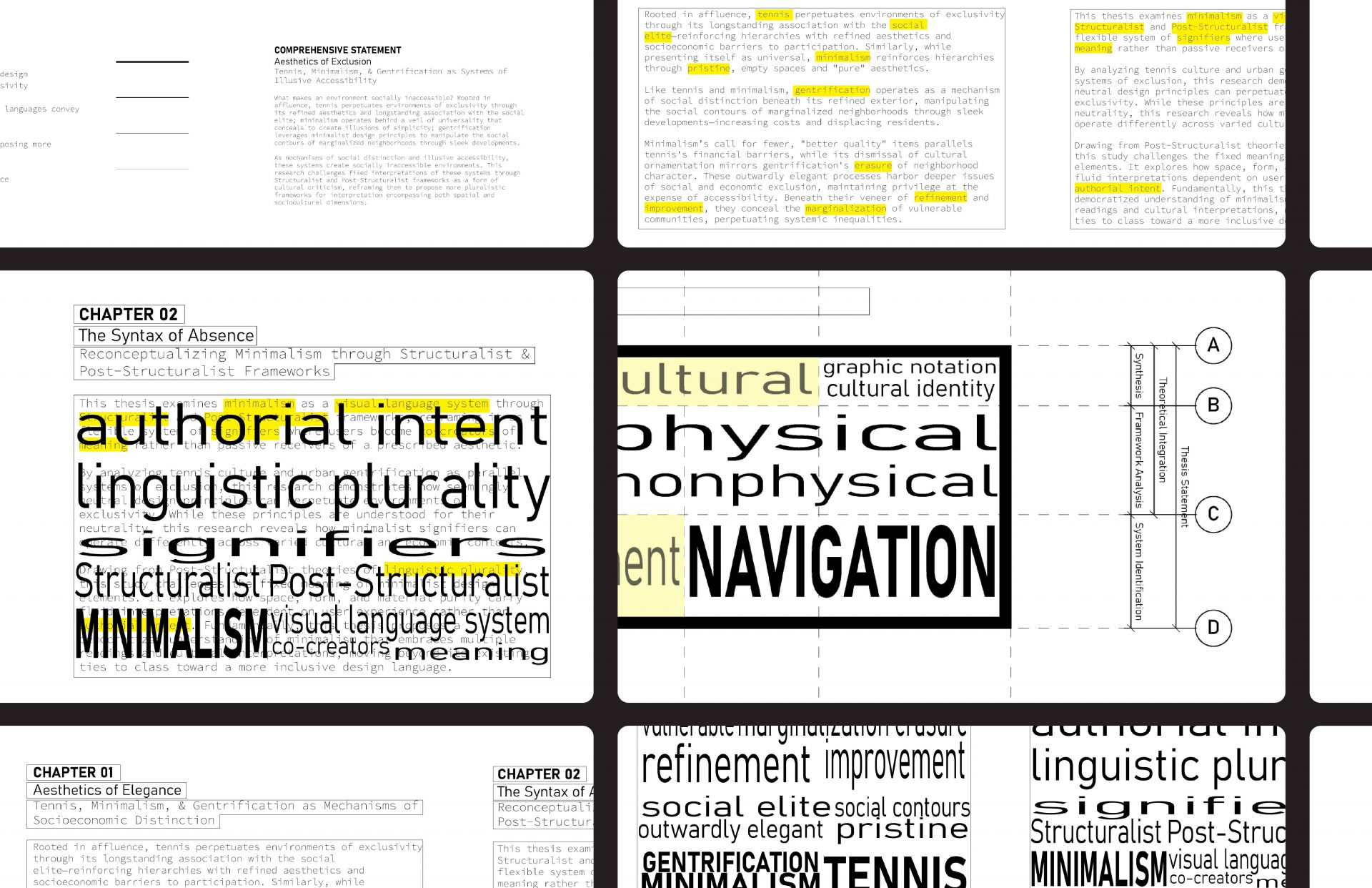
Aesthetics of Exclusion: Tennis, Minimalism, & Gentrification as Systems of Illusive Accessibility
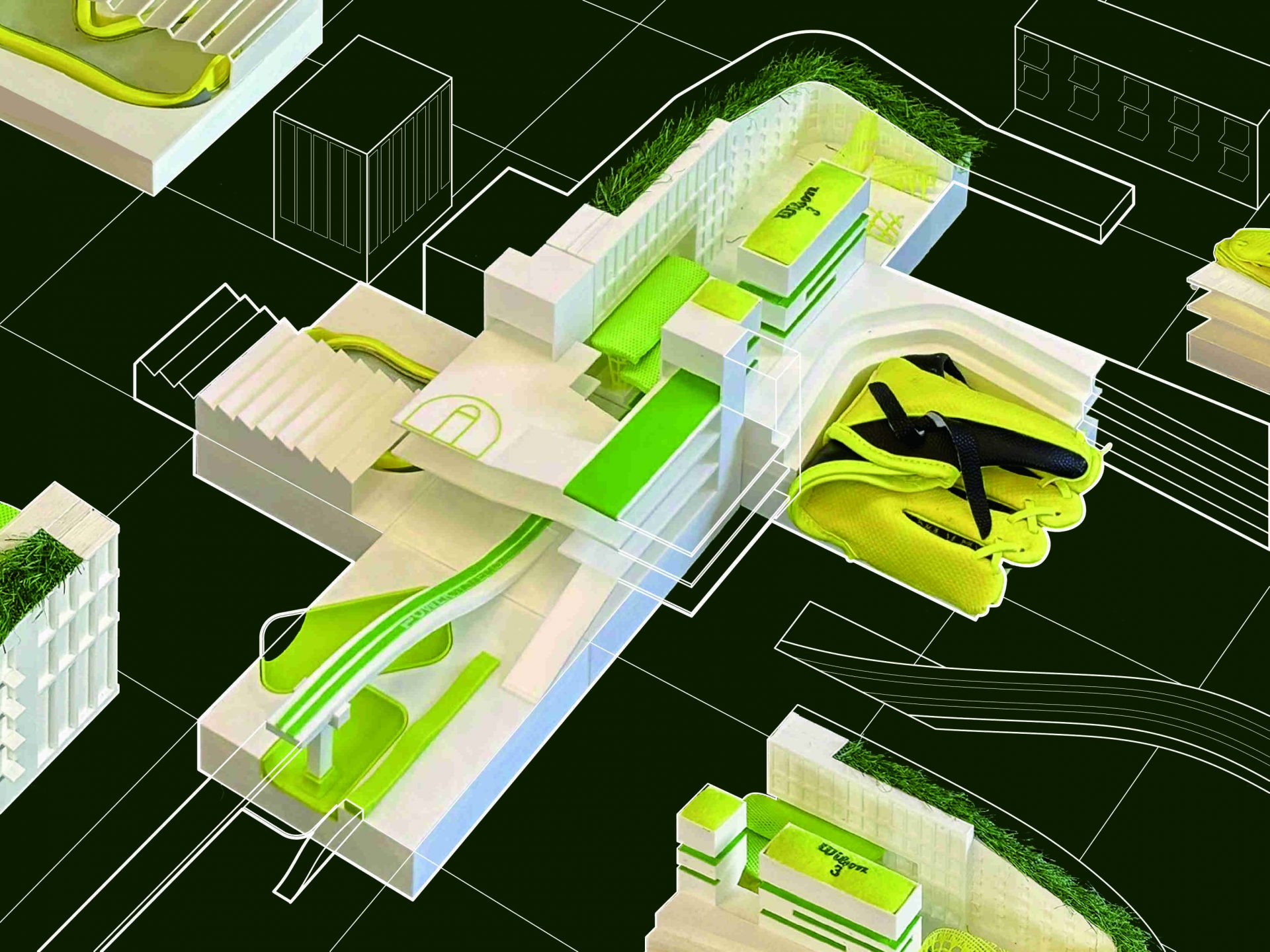
What makes an environment socially inaccessible? Rooted in affluence, tennis perpetuates environments of exclusivity through its refined aesthetics and longstanding association with the social elite; minimalism operates behind a veil of universality that conceals to create illusions of simplicity; gentrification leverages minimalist design principles to manipulate the social contours of marginalized neighborhoods through sleek developments.
As mechanisms of social distinction and illusive accessibility, these systems create socially inaccessible environments. This research challenges fixed interpretations of these systems through Structuralist and Post-Structuralist frameworks as a form of cultural criticism, reframing them to propose more pluralistic frameworks for interpretation encompassing both spatial and sociocultural dimensions.
Reimagine Chinatown
This thesis repositions storytelling as a critical tool for decoding the cultural, historical, and community narratives embedded in Los Angeles’ Chinatown, reimagining its spaces as thresholds where collective memory and speculative futures intersect. By transcending conventional urban design frameworks, it constructs a dreamscape that merges reality and fantasy, transforming the neighborhood into an abstract, visitor-centric narrative shaped by desire, perception, and imagination. Through speculative architectural cons, the project interrogates how altered spatial identities challenge preconceived noons of place, culture, and belonging, while advocating for design practices that harness fantasy to reveal layered histories. Ultimately, it calls for architects to re-envision their agency in scripting urban environments as dynamic palimpsests, fostering inclusive dialogues between past, present, and speculative possibility.
