
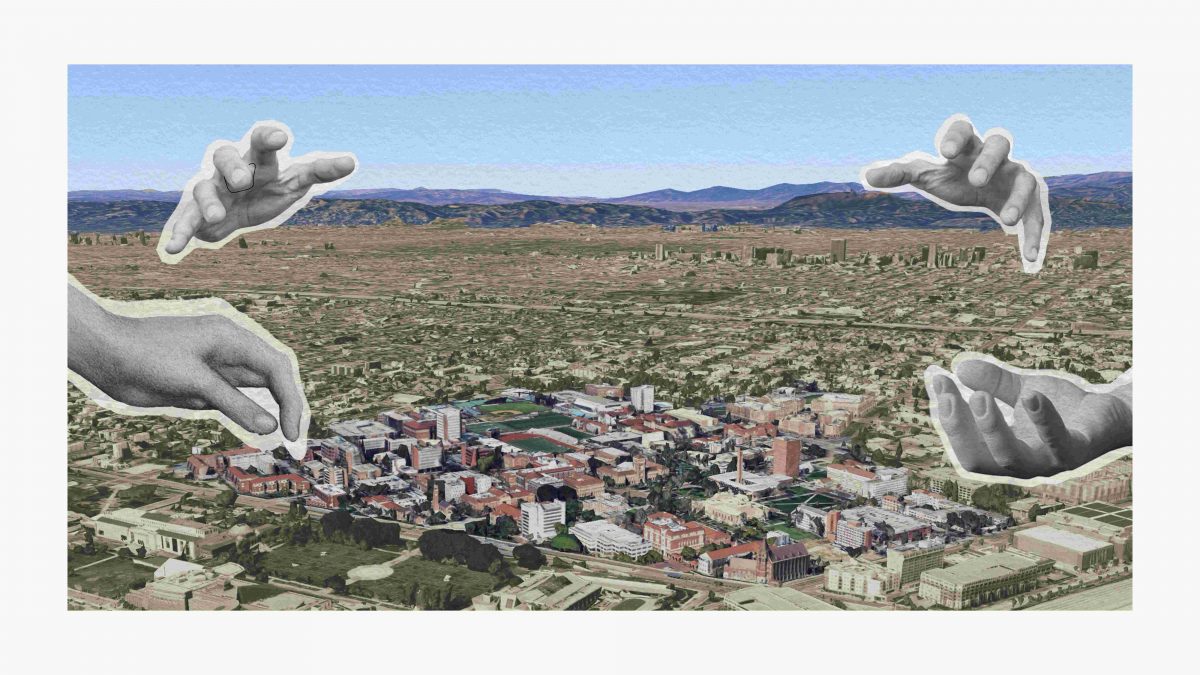
At USC, nearly 10,000 commuter students, almost a fifth of the university population, navigate campus without access to true third spaces—places to pause, rest, eat, or connect between classes. These students move through what Marc Augé calls “non-places,” suspended in transition, academically integrated but infrastructurally excluded. With over 20 percent of students experiencing food insecurity, the absence of lived space intersects with the absence of nourishment. Architecture, in this case, becomes both the problem and the possibility.
This thesis proposes a modular network of spatial agents that grow, feed, and respond to those who engage with them. Each node integrates a vending-based access system, a responsive canopy that cools and glows with collective use, an inverted ceiling garden maintained by a robotic harvesting arm, and a feedback loop where actions like composting, studying, and caregiving translate into meals and shared rewards.
These are not traditional buildings, but civic agents. Designed to reclaim the overlooked edges and in-between moments of campus, the nodes transform architecture into a system of reciprocity. Local vendors and student chefs rotate through compact vending platforms, distributing surplus meals, repurposed ingredients, and seasonal produce, contributing to a campus-scale food recovery system that reduces waste while expanding equitable access to nourishment. The environment grows in response to care. The more students contribute, the more the structure gives back.
While piloted at USC, the system is designed to scale. It can extend to transit stops, public libraries, and food deserts across Los Angeles. By transforming vending into civic infrastructure and embedding food access into the physical fabric of the city, the project reframes nourishment not as a commodity, but as a shared architectural right.