
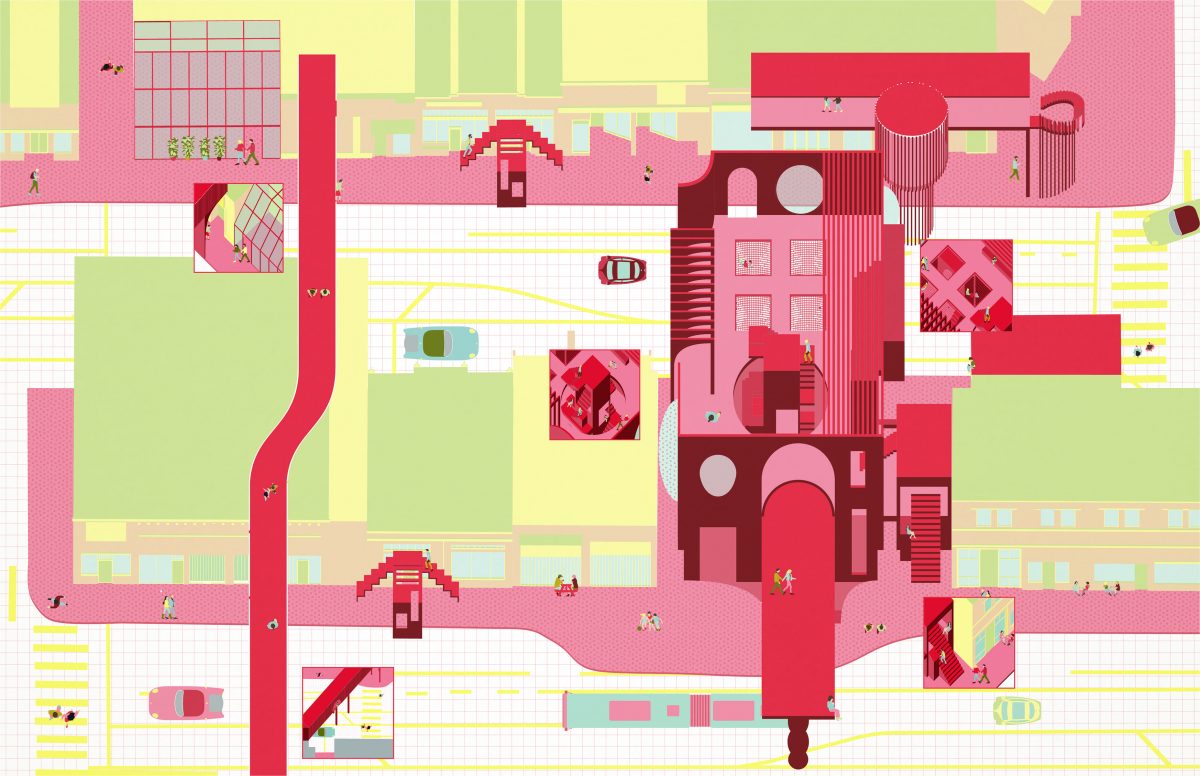
Streets increasingly have become edge conditions—fractures in the urban fabric that privilege movement over interaction, functioning more as corridors of separation than spaces of connection. Yet public space is fundamentally about relationships—between people, programs, and places—and the street must reclaim its role as an active field of engagement. Here, movement becomes more than just passage; it becomes an opportunity to pause, gather, and re-stitch the fragmented city.
Within this reimagining, play emerges as a vital design strategy—introducing loosely programmed spaces that invite curiosity, foster exploration, and transform the everyday into the unexpected.