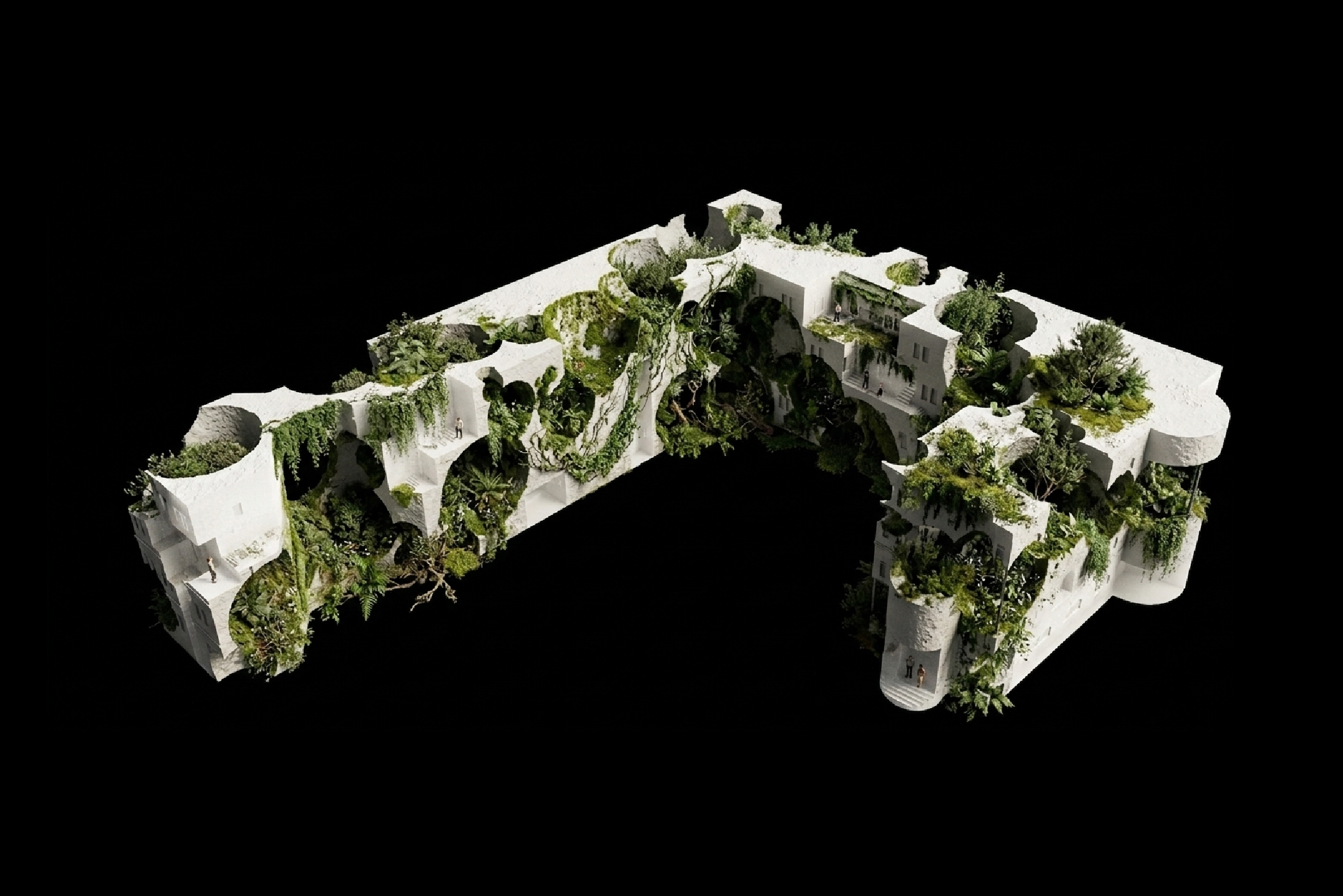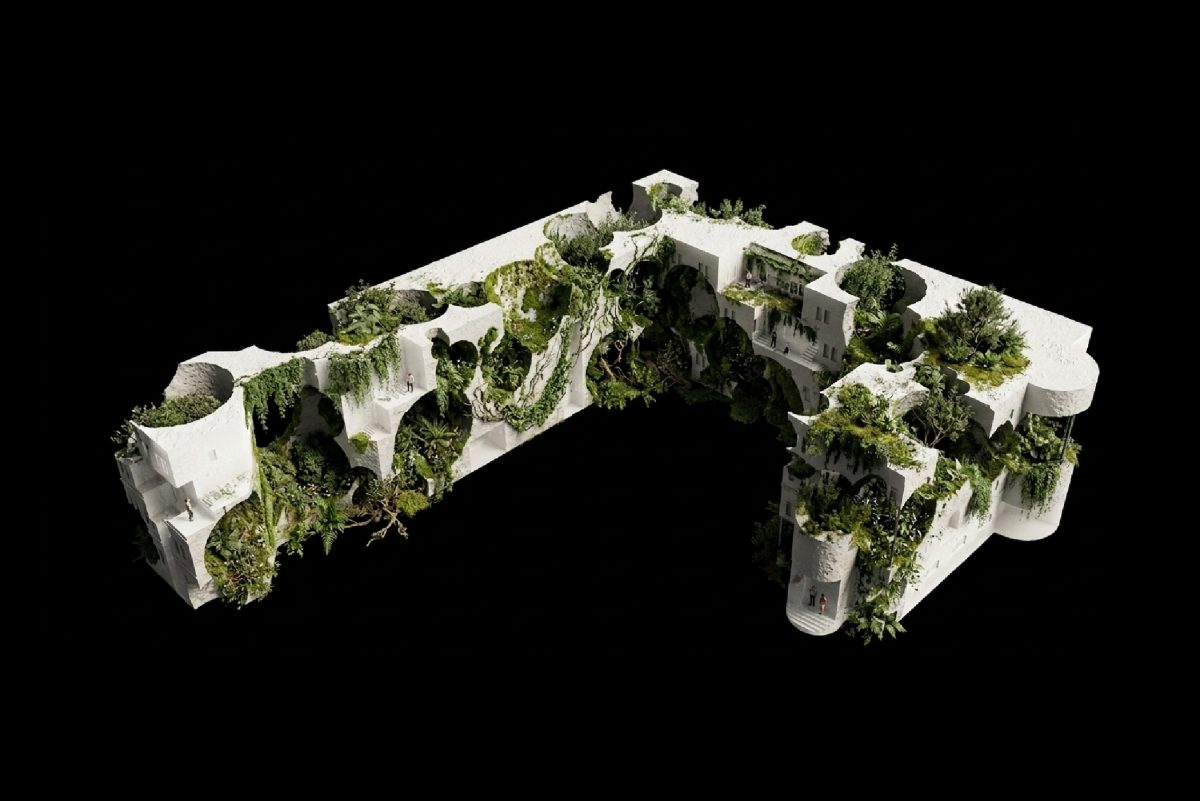
This thesis proposes a funerary architectural approach to post-industrial sites, framing the disappearance of industry as a collective death requiring spatial and cultural recognition. Rather than demolition or static preservation, fragments of factories are encased in glass as archival chambers of memory, while other portions are opened to natural processes of decay, soil, and vegetation. Over time, the site evolves into a living ecological system where architecture, memory, and nature coexist. Through this ritualized transformation, the project constructs a temporal continuum in which past, present, and future converge, allowing industrial narratives to persist and be retold across generations.