The Anthropocene is often described as the epoch in which humans reshaped the planet to sustain habitation. One of its most far-reaching consequences is climate change, now evident from the deepest oceans to the highest layers of the atmosphere. It is increasingly recognized that current building strategies, despite good intentions, are not going to solve the crisis, and that the crisis is not related to a lack of technology—the necessary knowledge and systems already exist. Rather, it is a cultural and political challenge requiring a fundamental rethinking of values, practices, and priorities. Architects possess the capacity to imagine radical alternatives and to project futures that are both unexpected and generative. Given the discipline’s disproportionate contribution to climate change and its entanglement with technological, cultural, and ecological concerns, architecture is uniquely positioned to provide visionary, attitude-changing speculation. With an emphasis on questioning technology’s role, this thesis section explored new and radical relationships between humans, technology, and the built environment, proposing architectures that are not merely responsive but boldly aspirational, advancing more expansive, holistic, and planetary futures.

Living Archive: A Quarry Rewritten
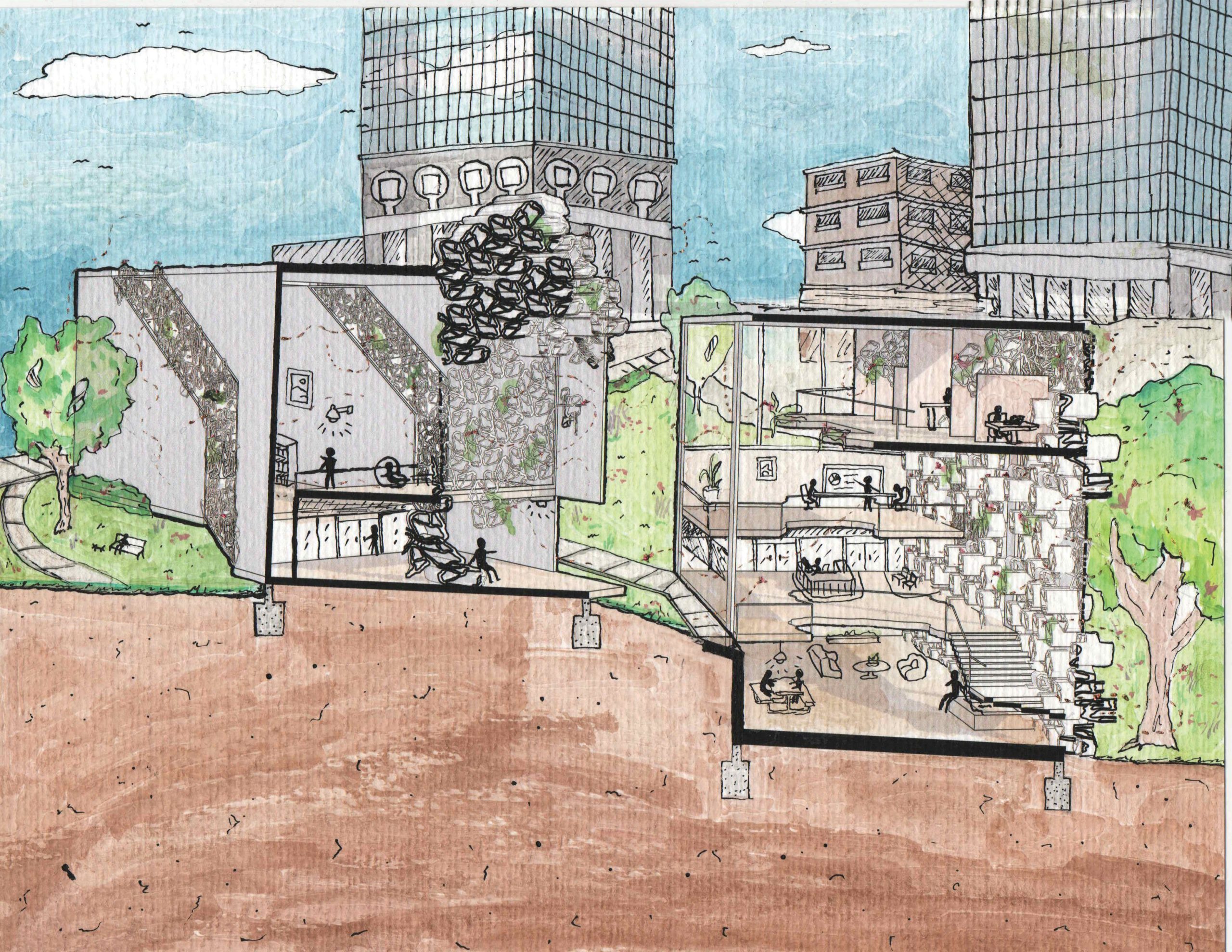
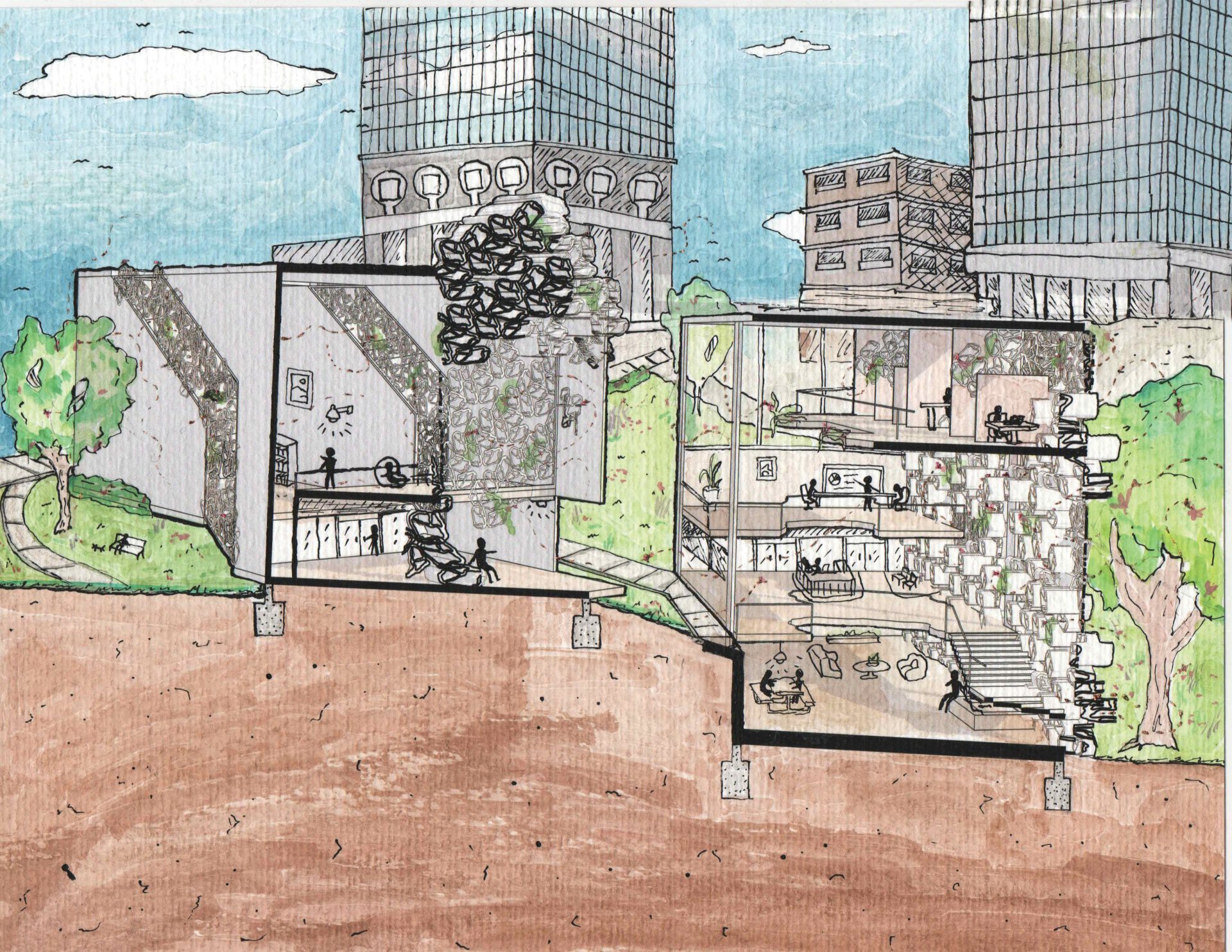
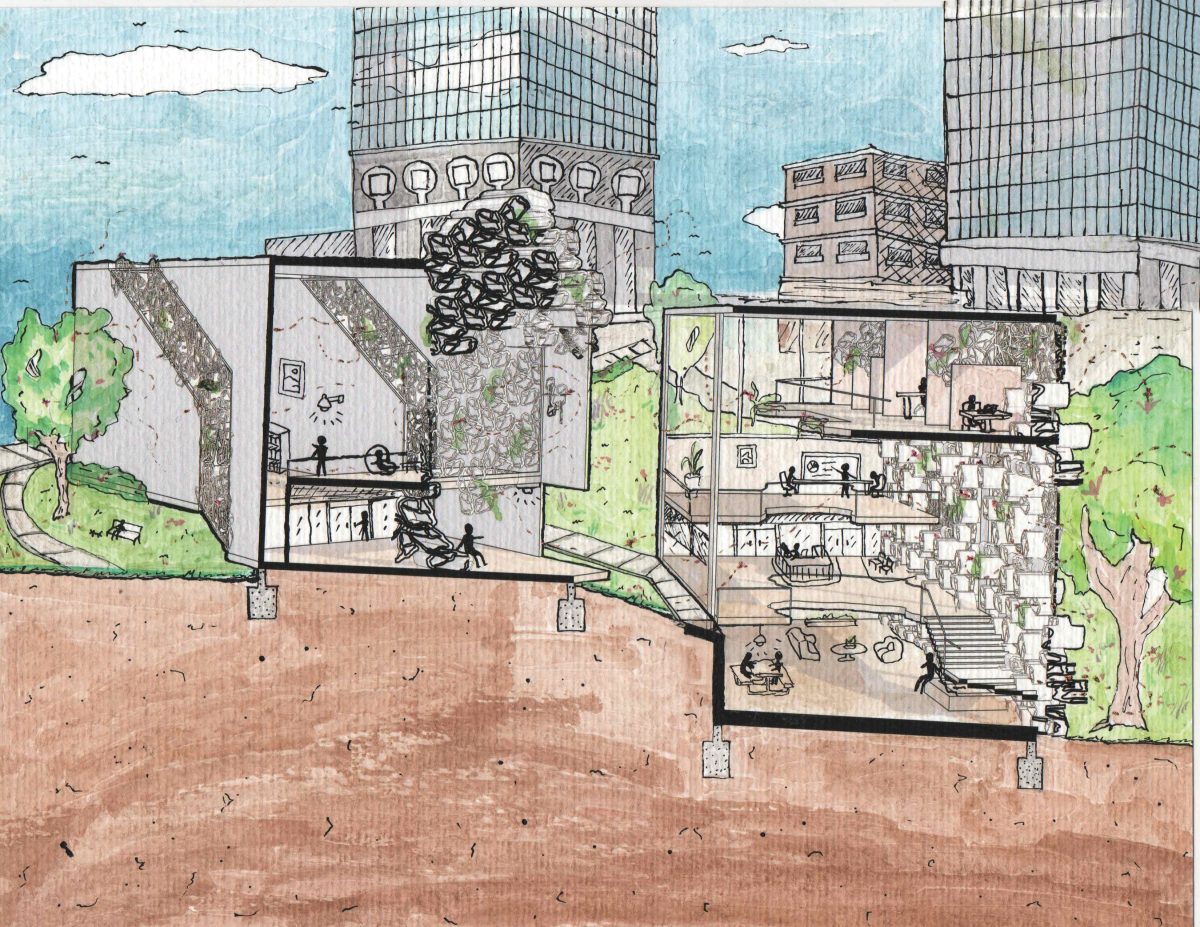
This thesis argues that the primary value of architecture lies in the layers of memory, experience, and meaning over time. It challenges the conventional notion of architecture as a complete and static object, instead proposing it as an evolving condition – a Living Archive, through which meaning emerges from the accumulation of the intangible.
The project reverses that logic through an additive system, introducing a process of continuous accumulation, where architecture grows through contributions made by people over time. The building is composed of repeated geometric elements that are gradually added to the site. Each addition represents a memory contribution, which becomes part of the architectural mass. Through this process, the quarry is slowly rewritten.
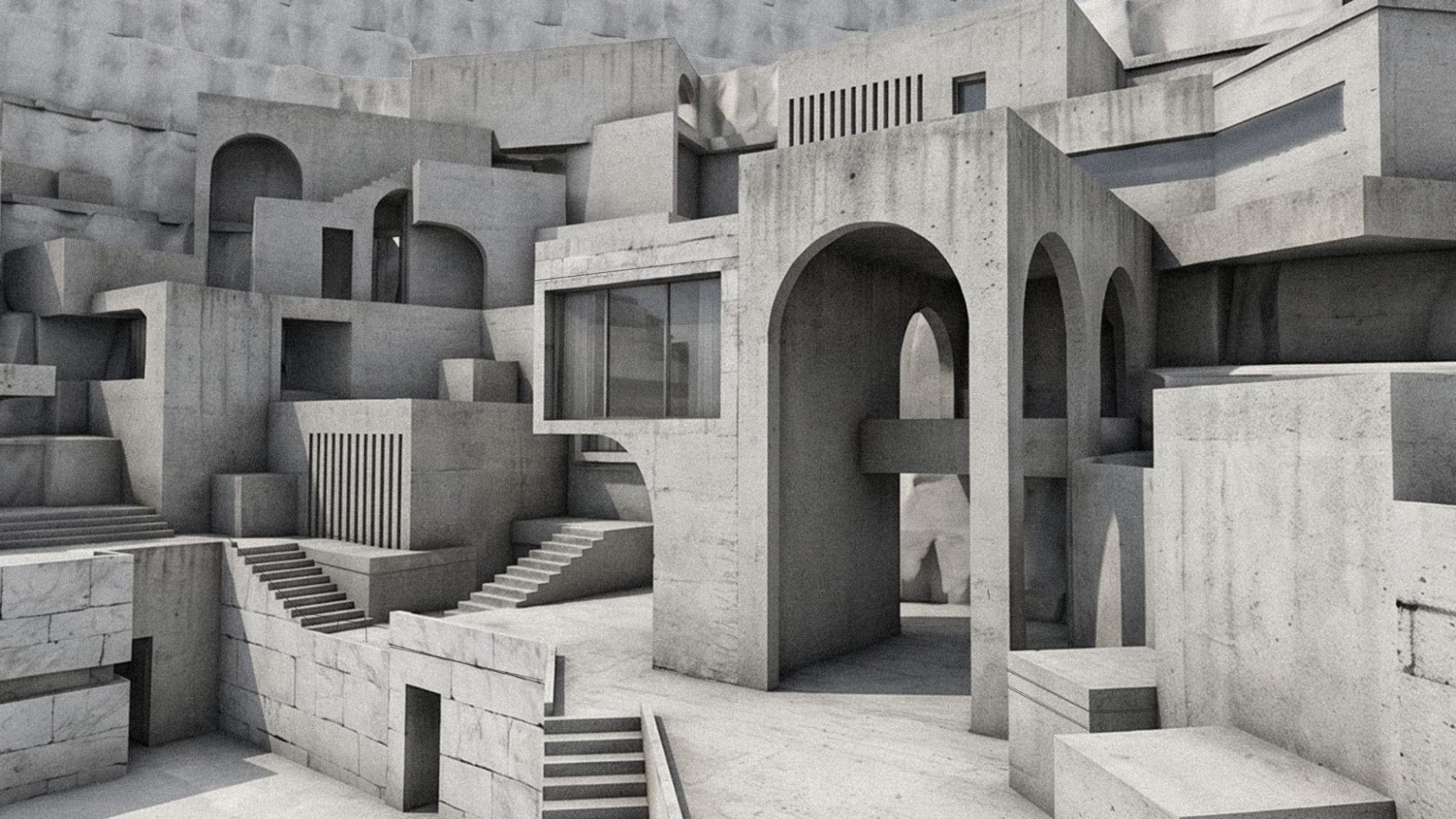

Gross Sufficiency: A Data Center Designed to Exceed Its Own Appetite
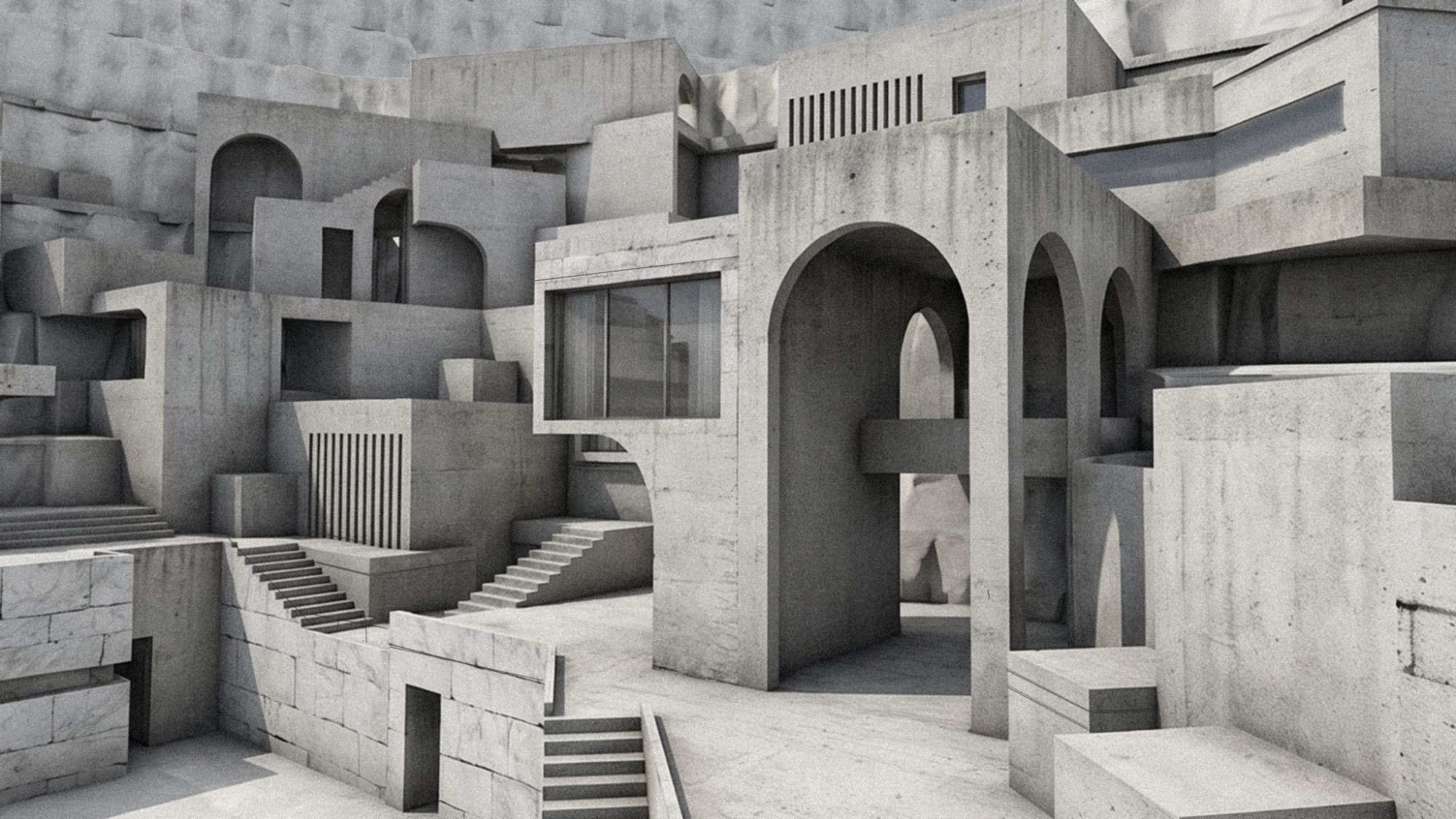
a thesis by Samuel Tung With the rise of AI, data centers have become ubiquitous, inevitable, and insatiable. Our dependence on their 24-7 operation guzzles excessive water and power to the point where existing infrastructure and natural resources are severely stressed. To compensate, data centers must operate as machines of gross self-sufficiency. Framing them as “Gross” captures three facets simultaneously: — aggregation (gross output), excess (gross overconsumption), and moral distaste (the gross reality of data center expansion). This thesis is manifested in built form as a data center that generates all of its own energy through sustainable systems. However, it is open to the public, allowing us to viscerally confront the colossal power demands of the AI boom.
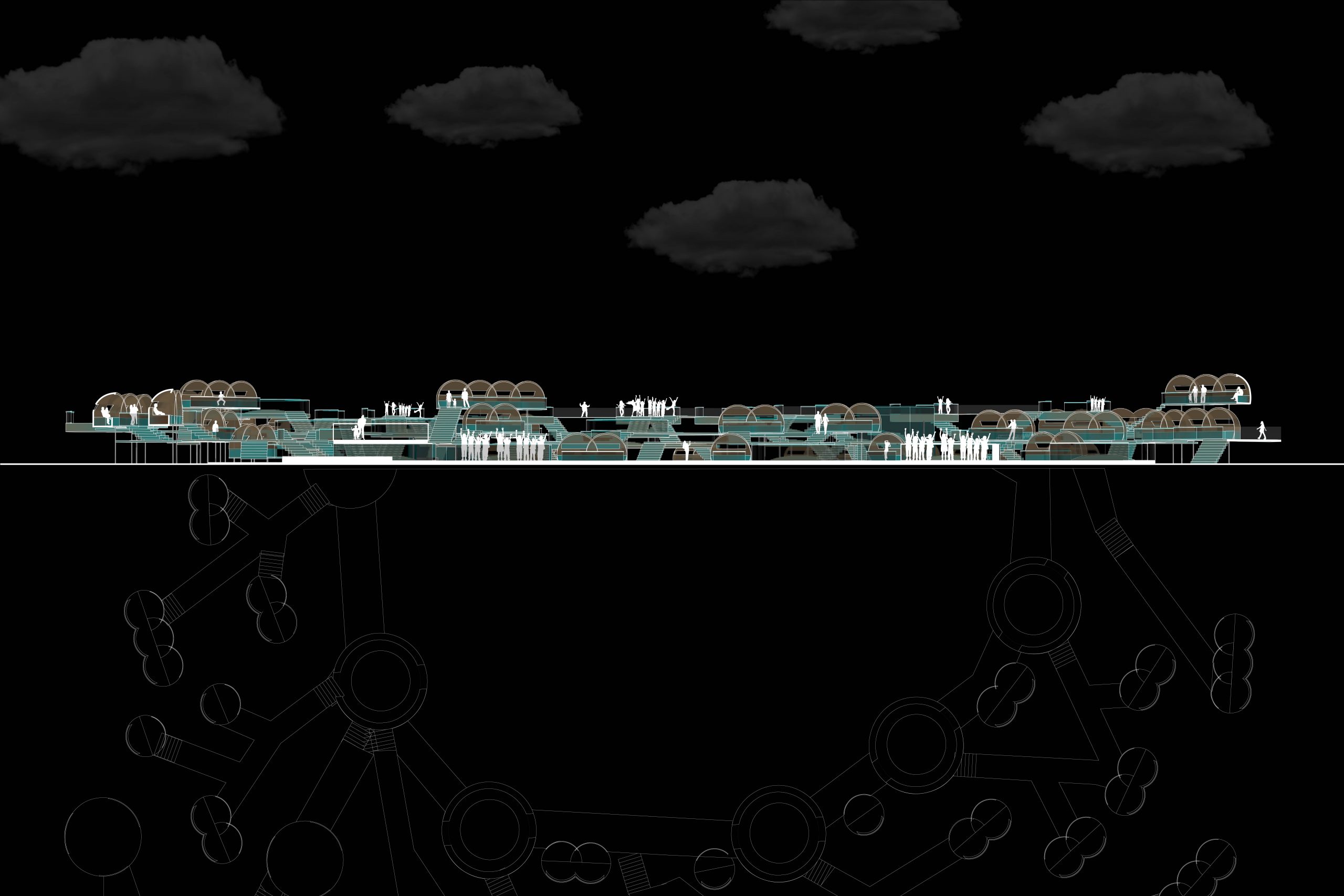
Daishalyn Satcher
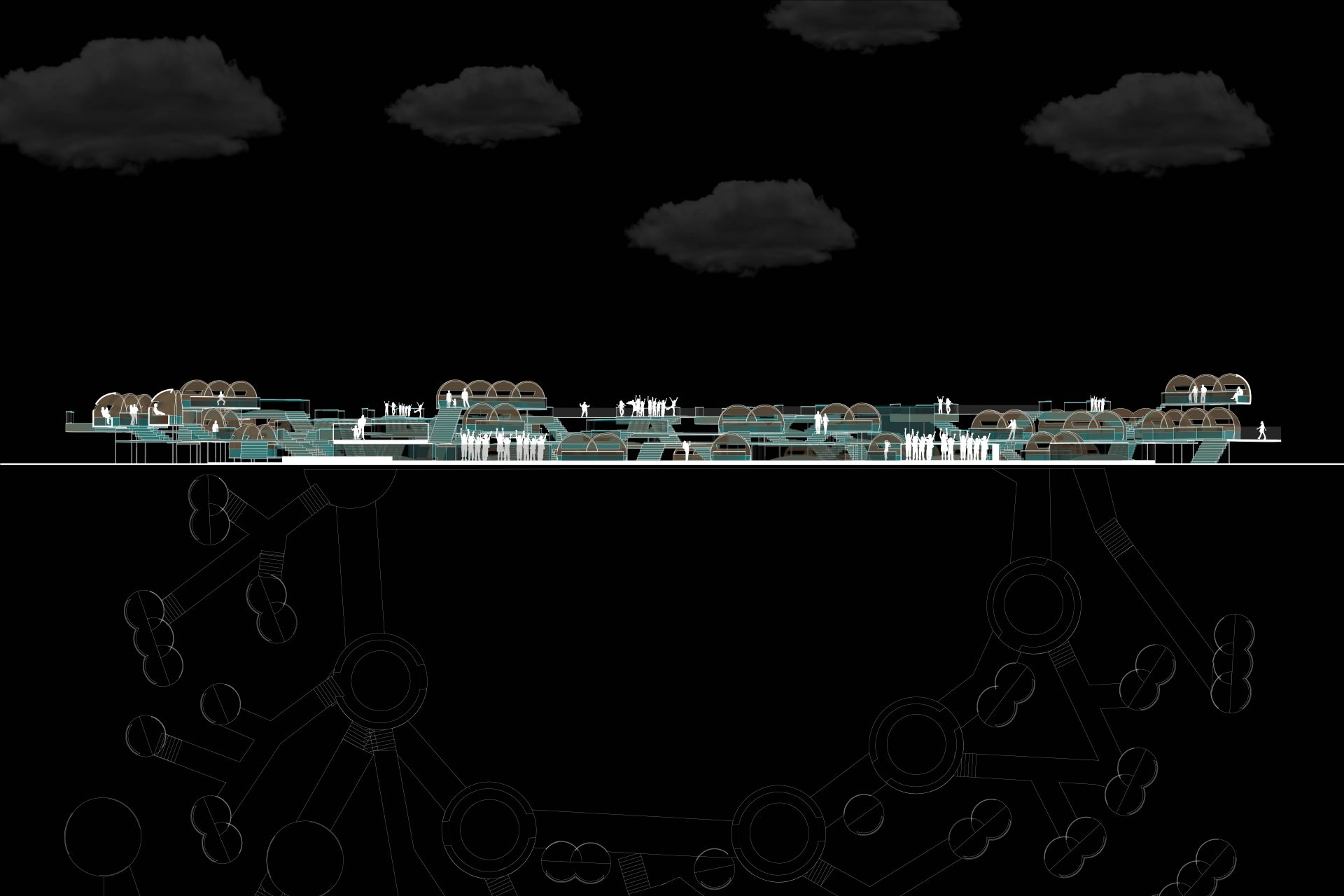
Seen from a distance, the tree appears as a singular form; seen up close, it is an intricate network of individual environments in communication with one another. This thesis proposes we learn from the framework of this natural system in order to highlight the complexities of individual systems coexisting within a larger gathering space. Located in rural Southern California, this thesis project will create a cohesive concert venue that transforms the idea of a singular event space into a social ecosystem. Through exploring branching as a spatial system, coupled with reactive technology, the venue will cultivate community through movement, encounter, and shared experience. Employing the branching logic of a tree to rethink the ways in which people gather and interact within event spaces ultimately redefines what it means to use nature as a foundation for design.
Community Above Instability
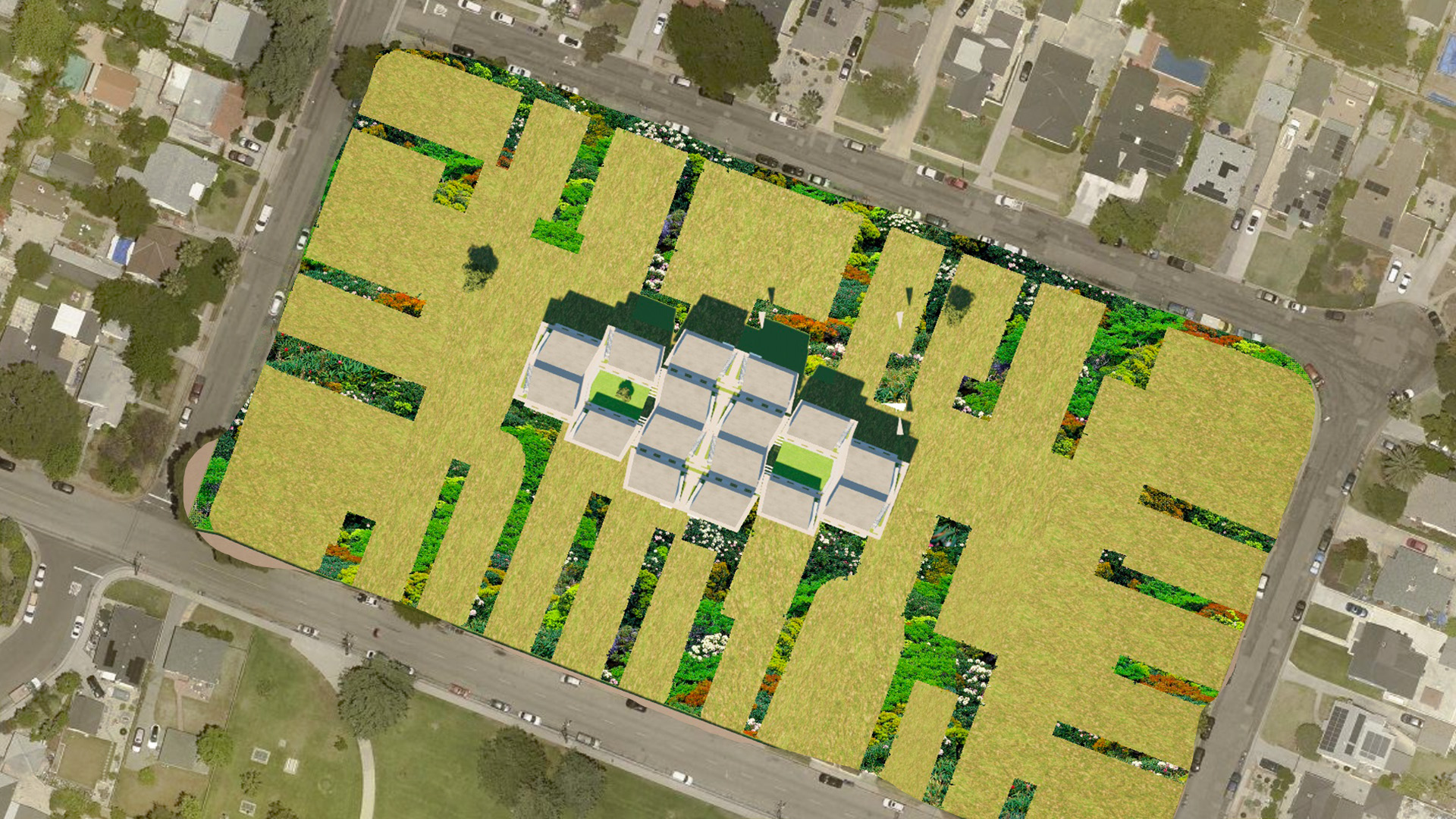
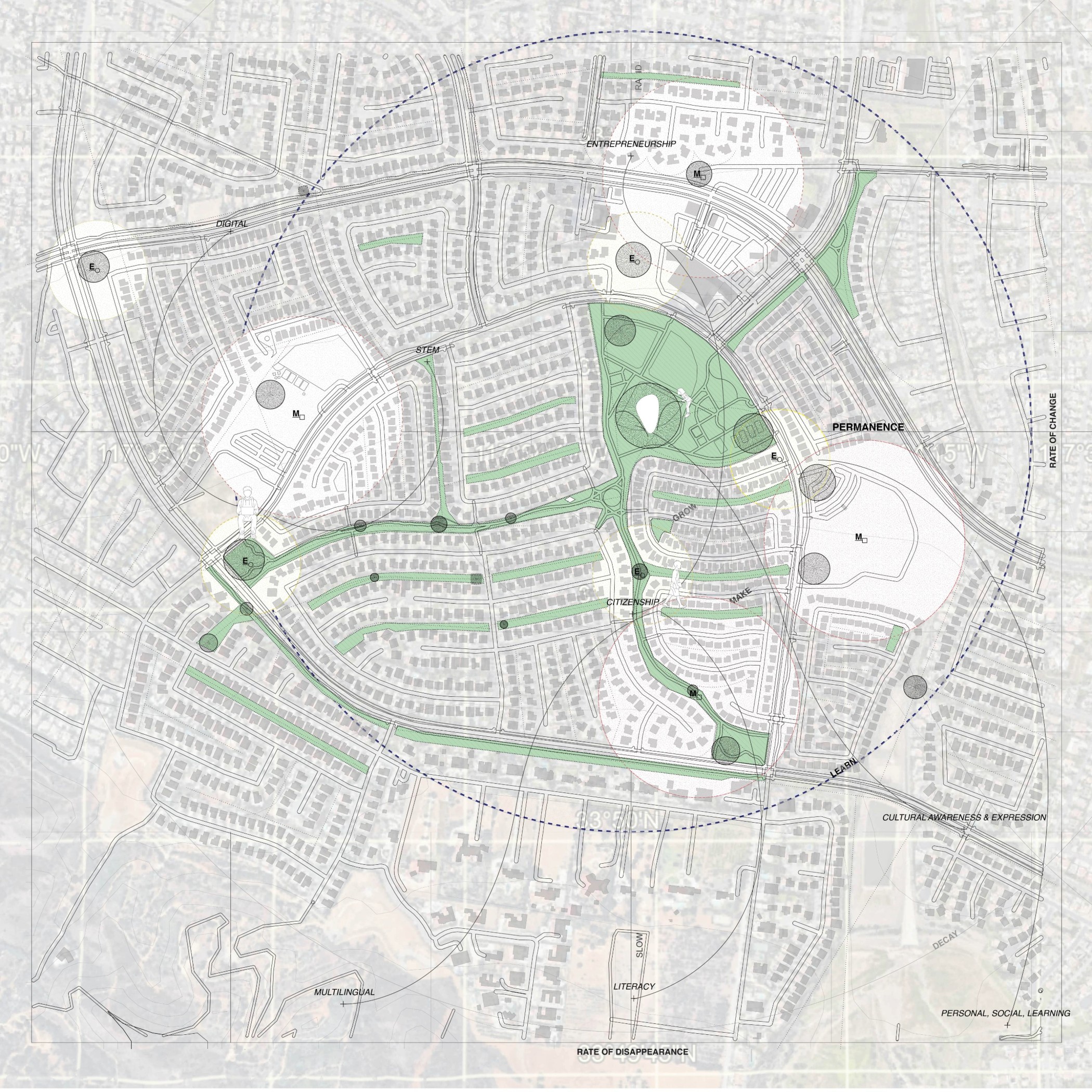
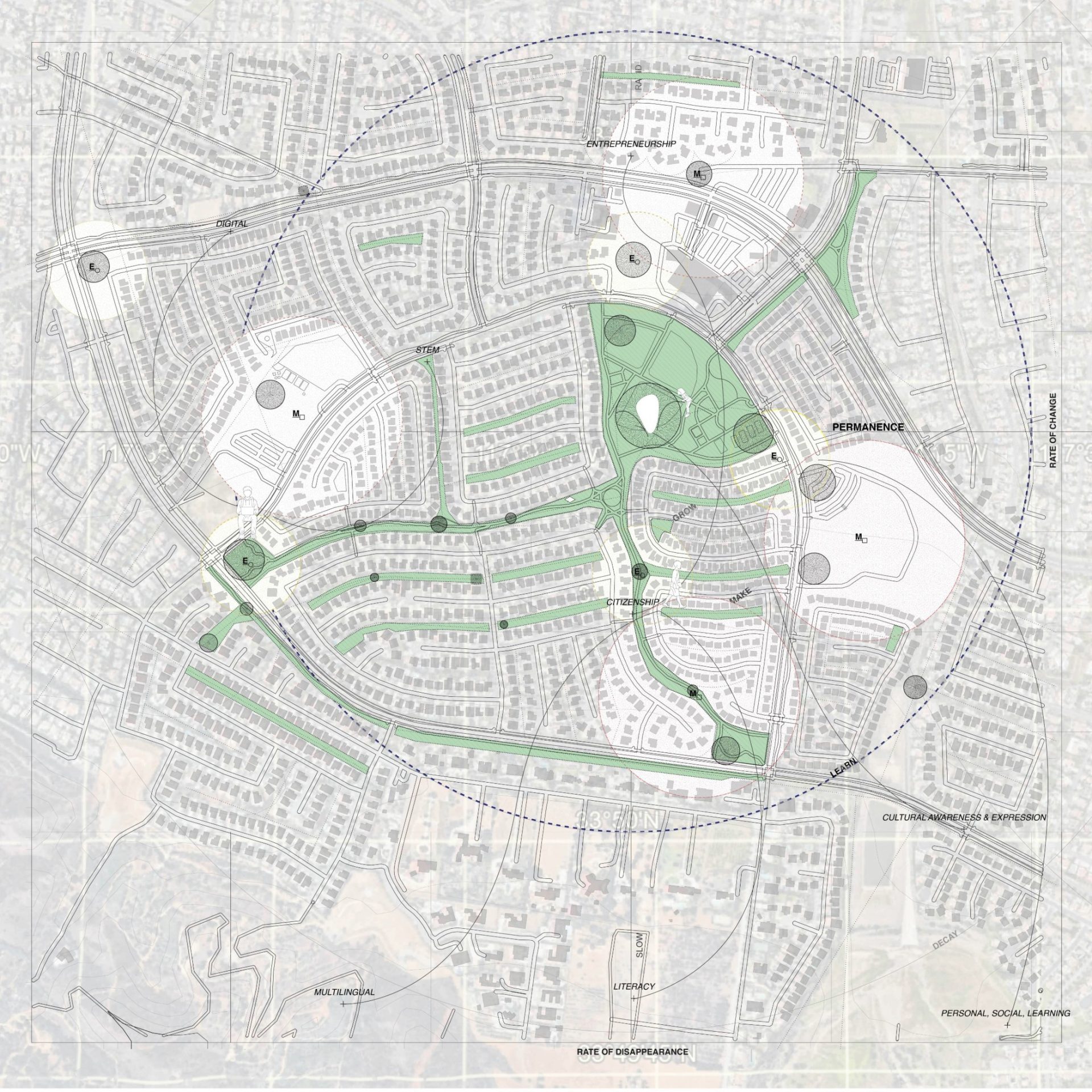
Suburban housing is organized around an assumption of permanence, where the house operates as an isolated unit. The fires in Altadena exposed this fragility. As homes burned, the networks that sustained communities began to unravel. This project proposes a shift away from a model that enables community displacement toward one that supports communities during periods of instability. It reimagines the suburban block as a collective housing system, prioritizing proximity and shared space over individual parcels. Elevation and fire-responsive strategies provide a layer of protection within the landscape. Instead of preserving the single-family house, the project sustains community relationships.
In Use, in Change: An Architectural Framework for Repeated Occupation
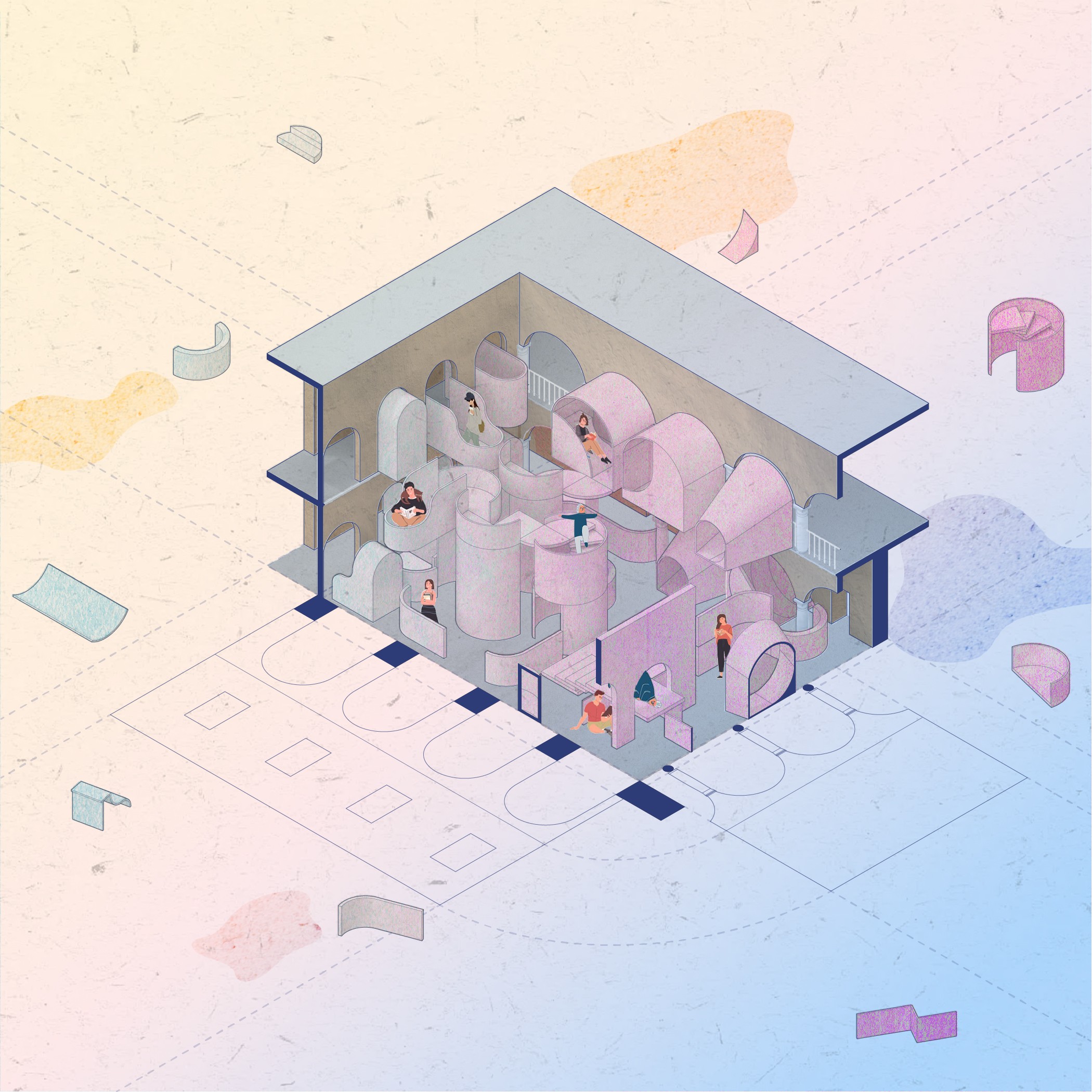
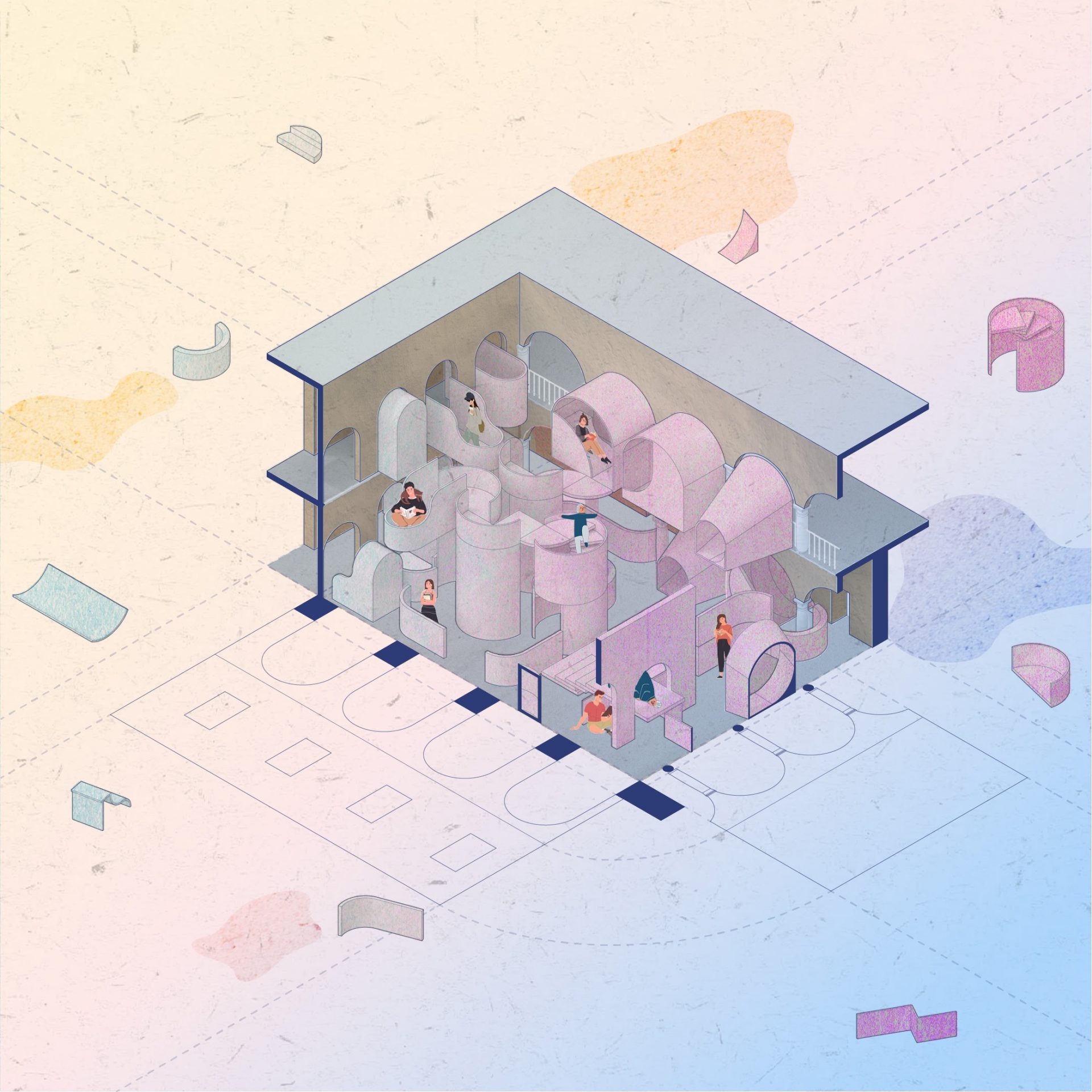
This thesis challenges the assumption that heritage architecture must preserve both its physical fabric, spatial order, and programmatic use, an approach that often results in static and underused spaces. Using the courtyard as a testing ground, the project redefines the protected void as a negotiable spatial field capable of supporting evolving forms of occupation. A lightweight, modular system of architectural elements transforms the courtyard into a reconfigurable framework that can be rearranged without permanent alteration. These shifting configurations support diverse programs over time, proposing an alternative approach to preservation that maintains physical integrity while enabling active, flexible, and collective use.
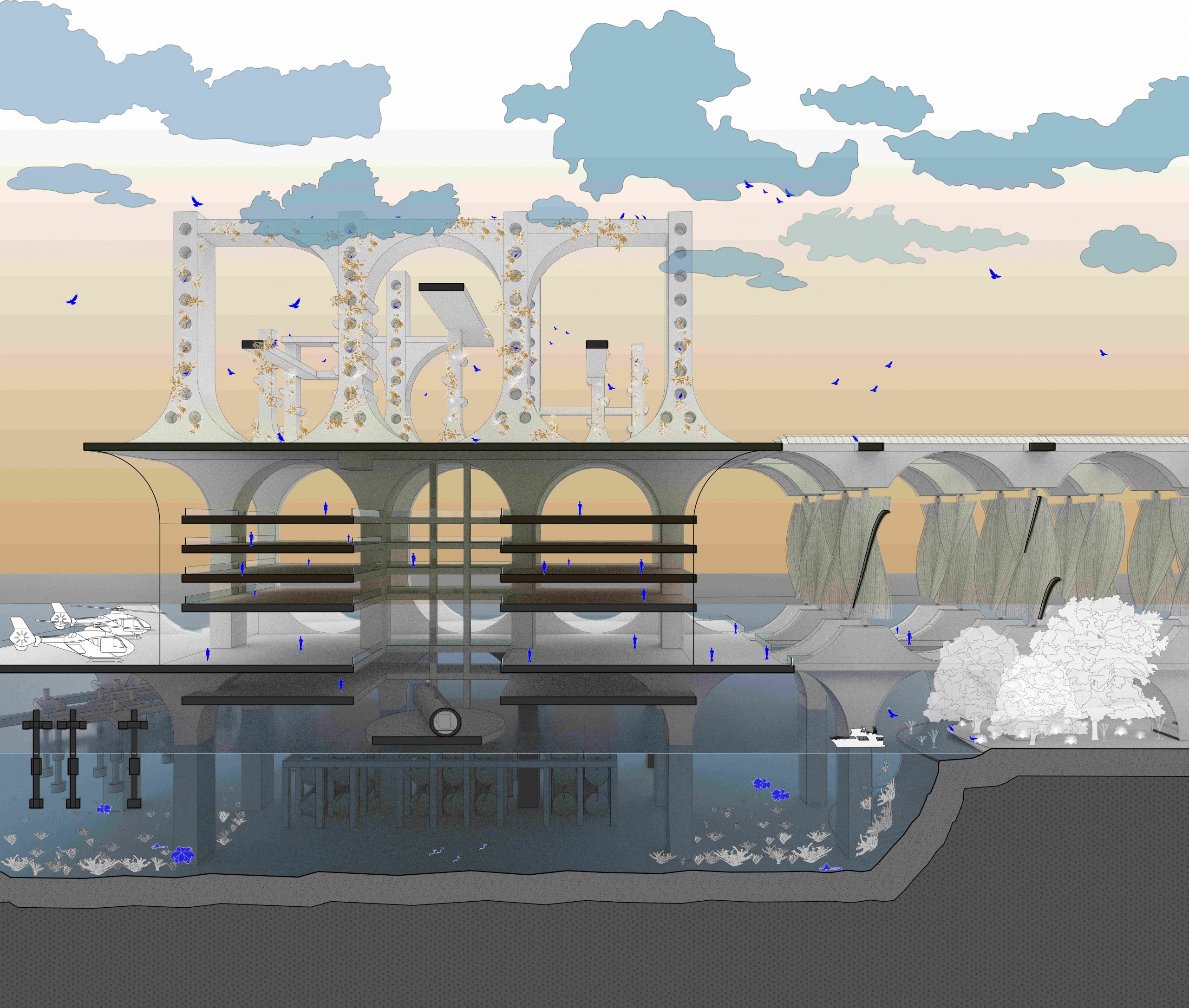
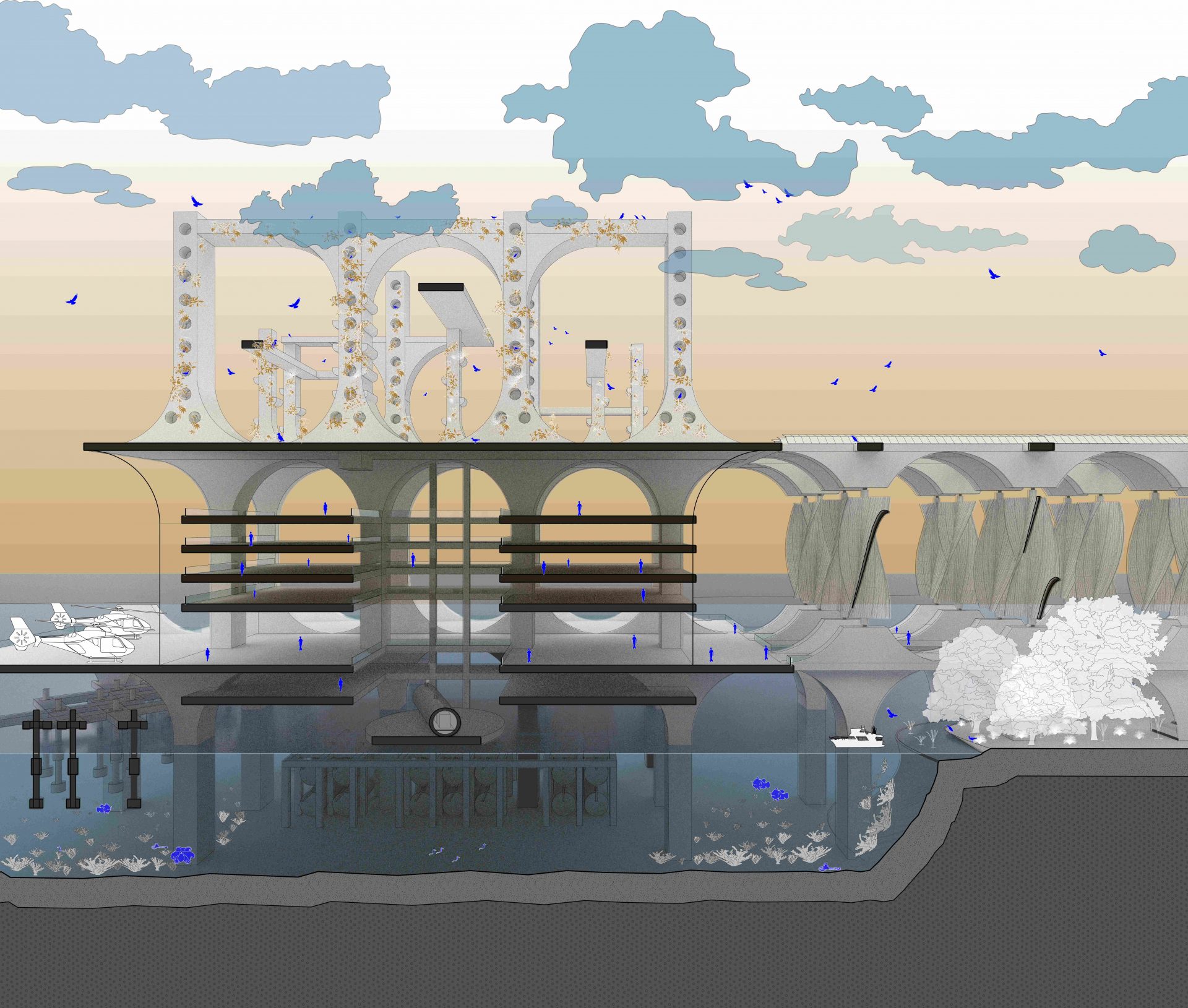
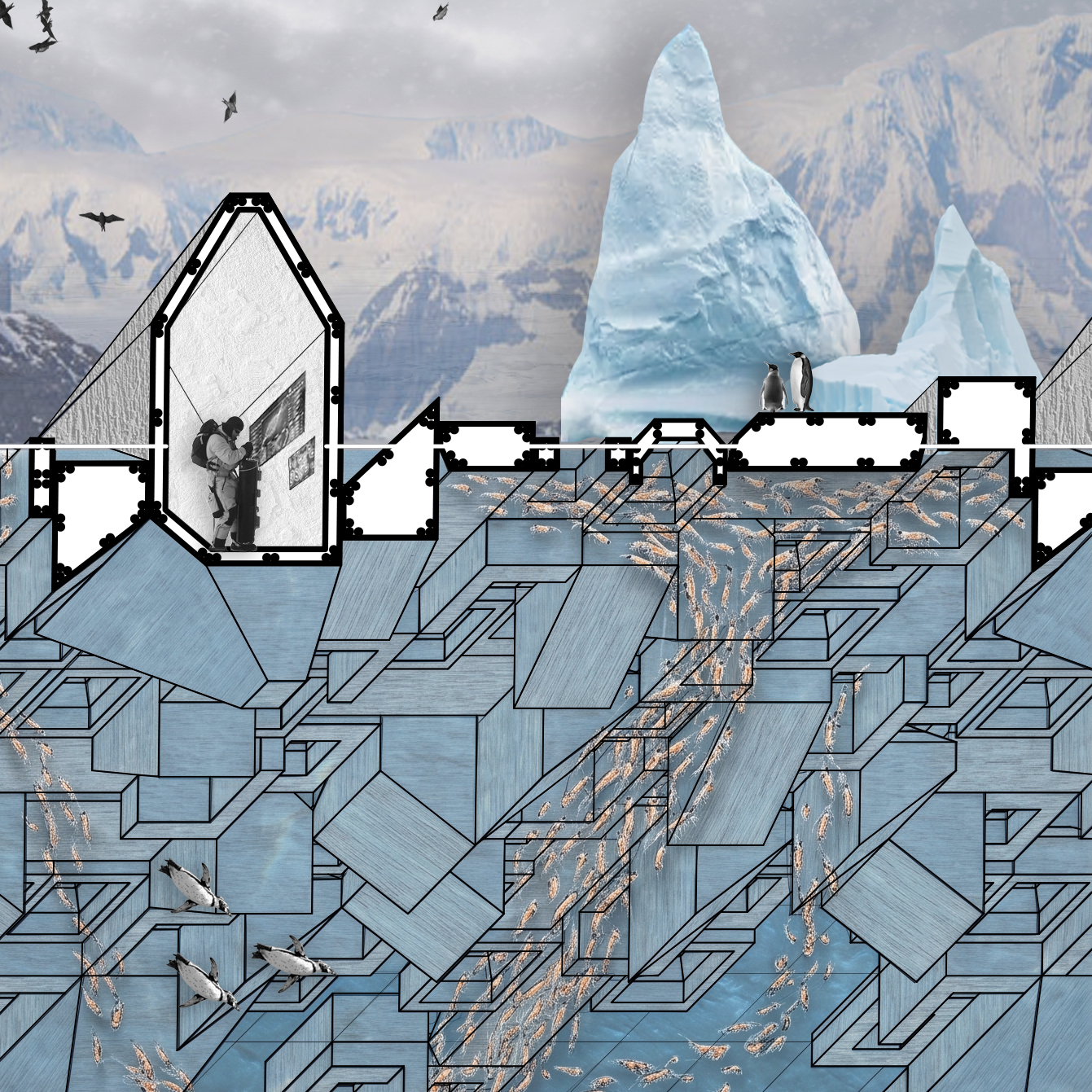
The Symbiotic Drift: — Deployable Habitats and Educational Infrastructure for Krill Regeneration
THESIS: Traditional architecture's exclusive focus on the human experience has caused devastating planetary impacts, contributing to climate change by destroying the ecosystems of keystone species. To reverse this damage, architectural design must evolve beyond anthropocentrism and prioritize regeneration. This shift is crucial in the Southern Ocean, where foundational Antarctic Krill have plummeted due to human-induced climate shifts and unsustainable tourism. To limit human interference in these vulnerable habitats, deployable krill rehabilitation modules will be paired with educational hubs in busy tourist zones. Through this, architecture transforms from a driver of environmental degradation into a powerful catalyst for marine ecosystem revival and essential public awareness.
Occupy Differently
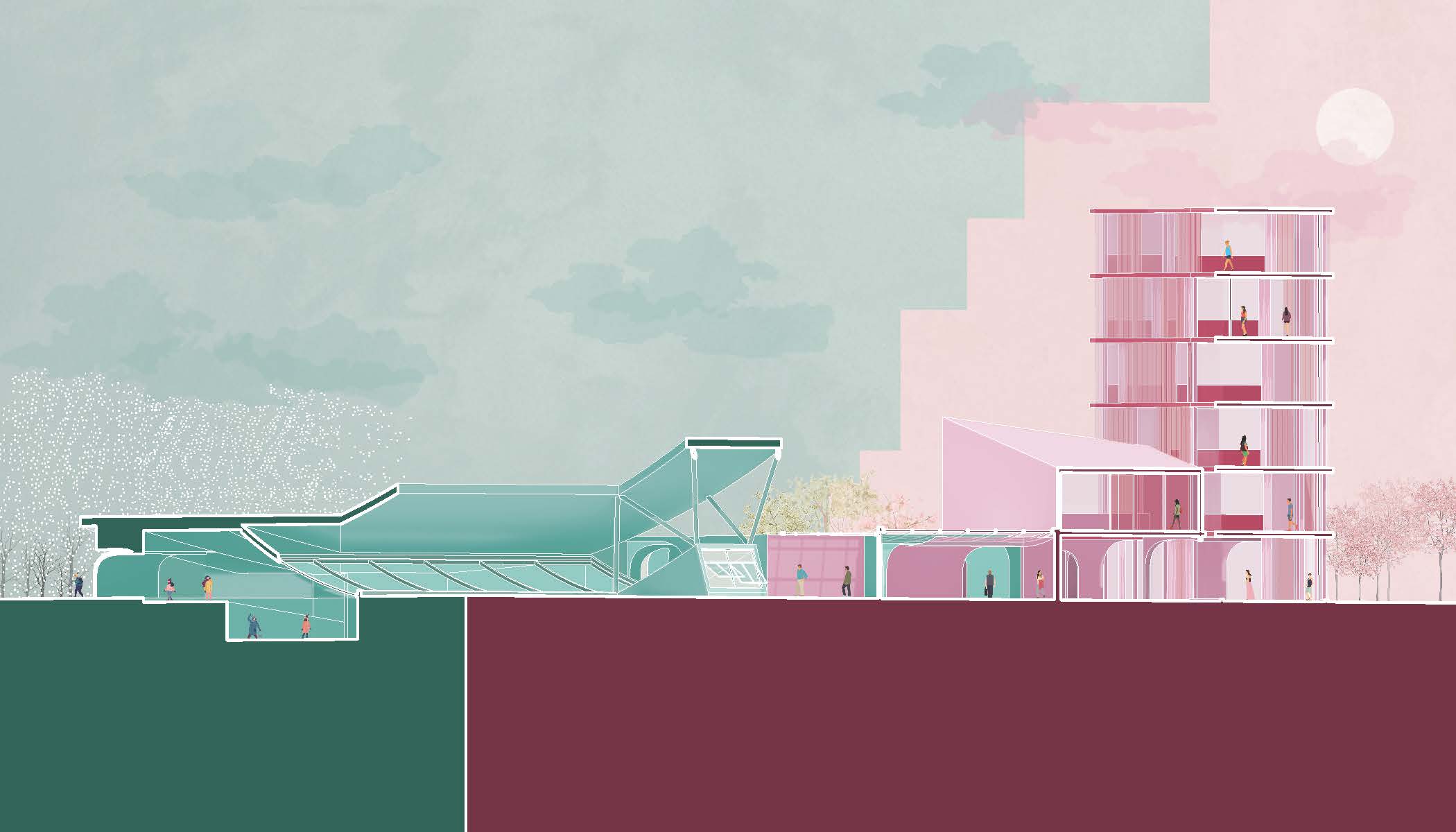
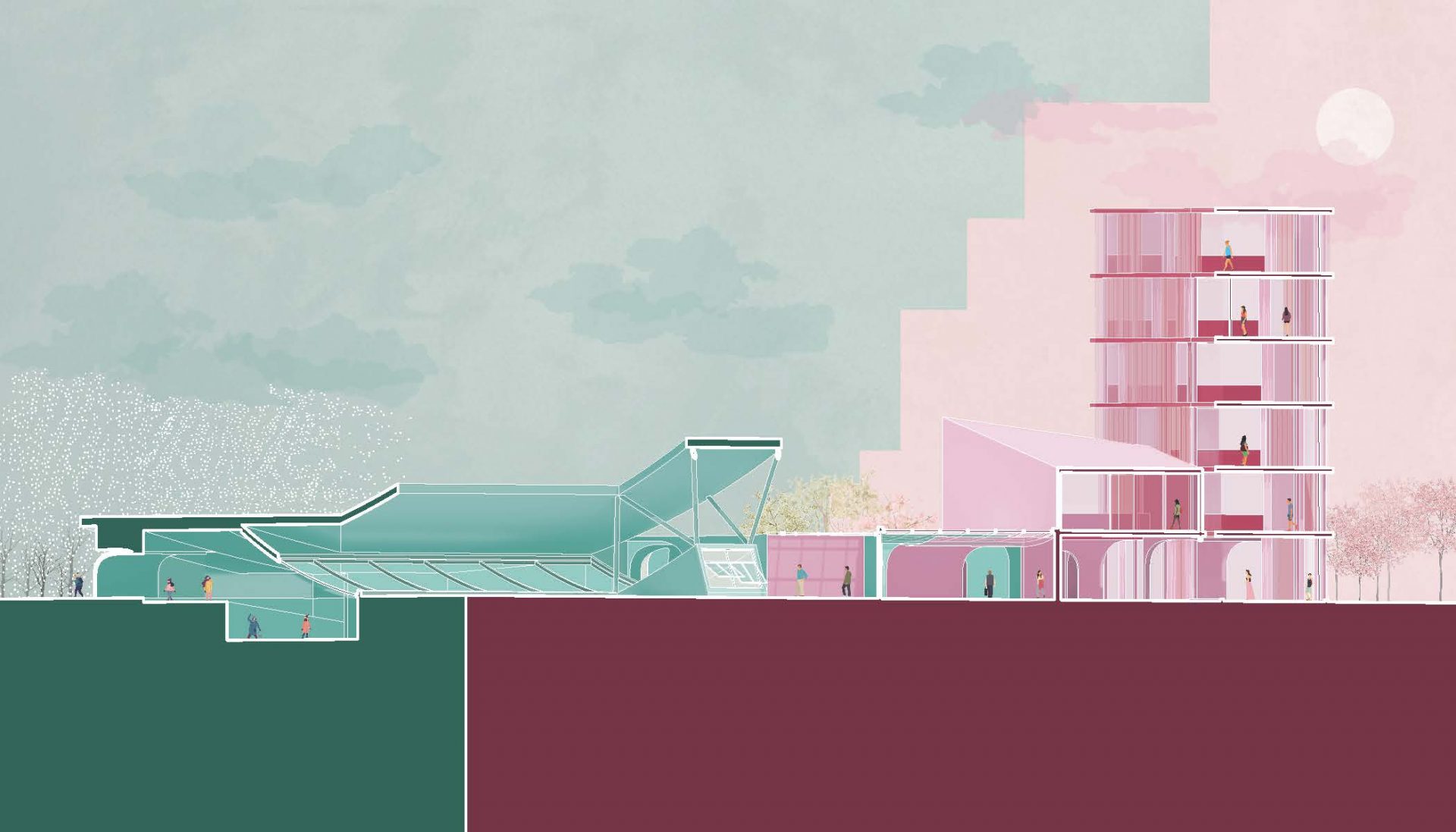
Given the increasing pressures of climate instability, urban architecture must abandon modern perceptions of comfort, reorienting its ranges from optimal to livable, creating comfort through passive environmental exchange rather than continuous technological intervention. Redefining how spaces are occupied, buildings can no longer be conceived as sealed and tightly regulated environments, instead, the design must allow for inhabitants to shift through the building as their occupiable space contracts, expands and changes depending on external climatic conditions. Human perception plays a critical role in comfort, requiring the building to incorporate layered, adjustable components that allow occupants to actively shape their experience in response to fluctuating external conditions. The building inhabits the grid as a site of refusal, present in form but operationally withdrawn, sustaining itself through systems that reject surrounding infrastructure.
The Deconstruction Protocol:
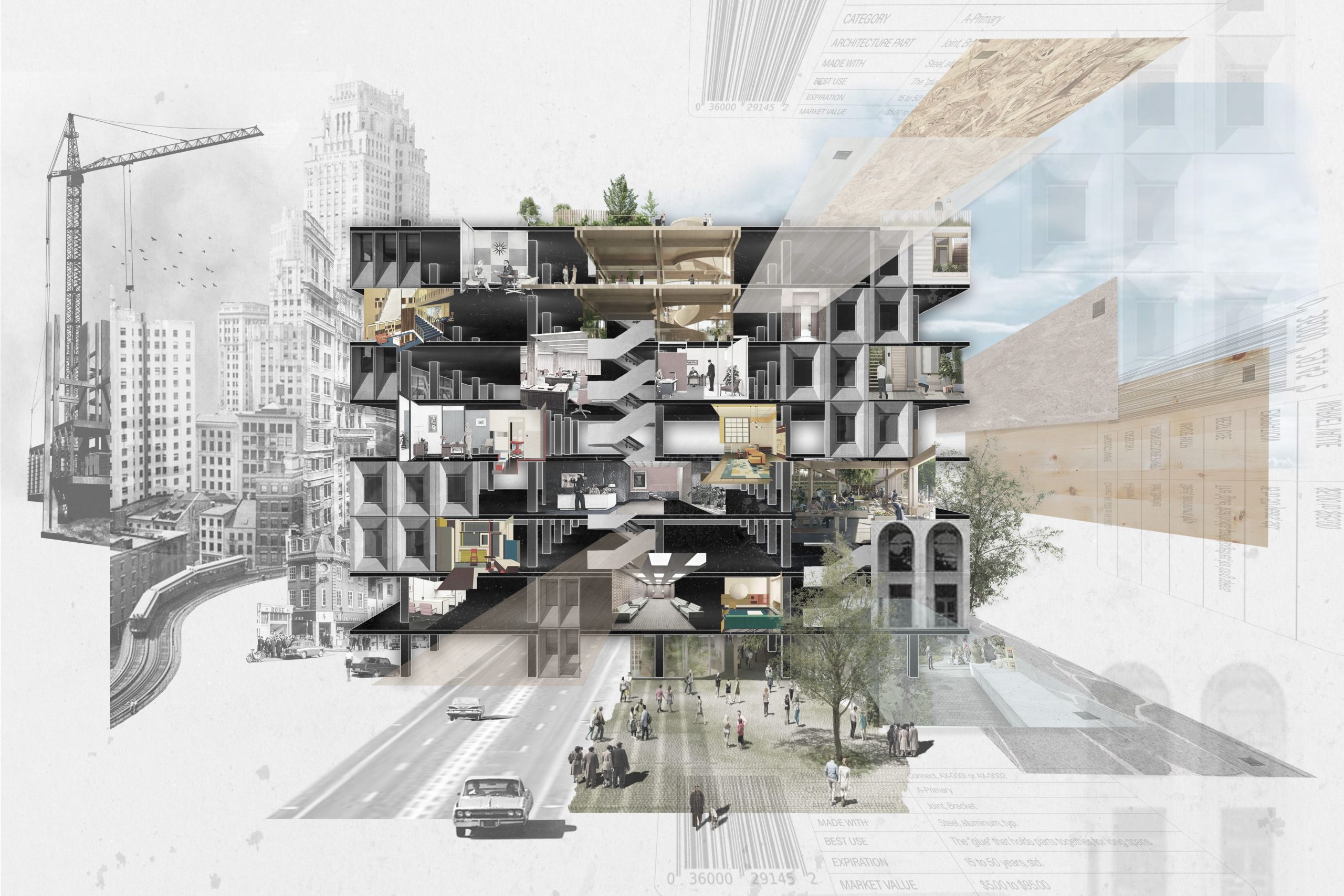
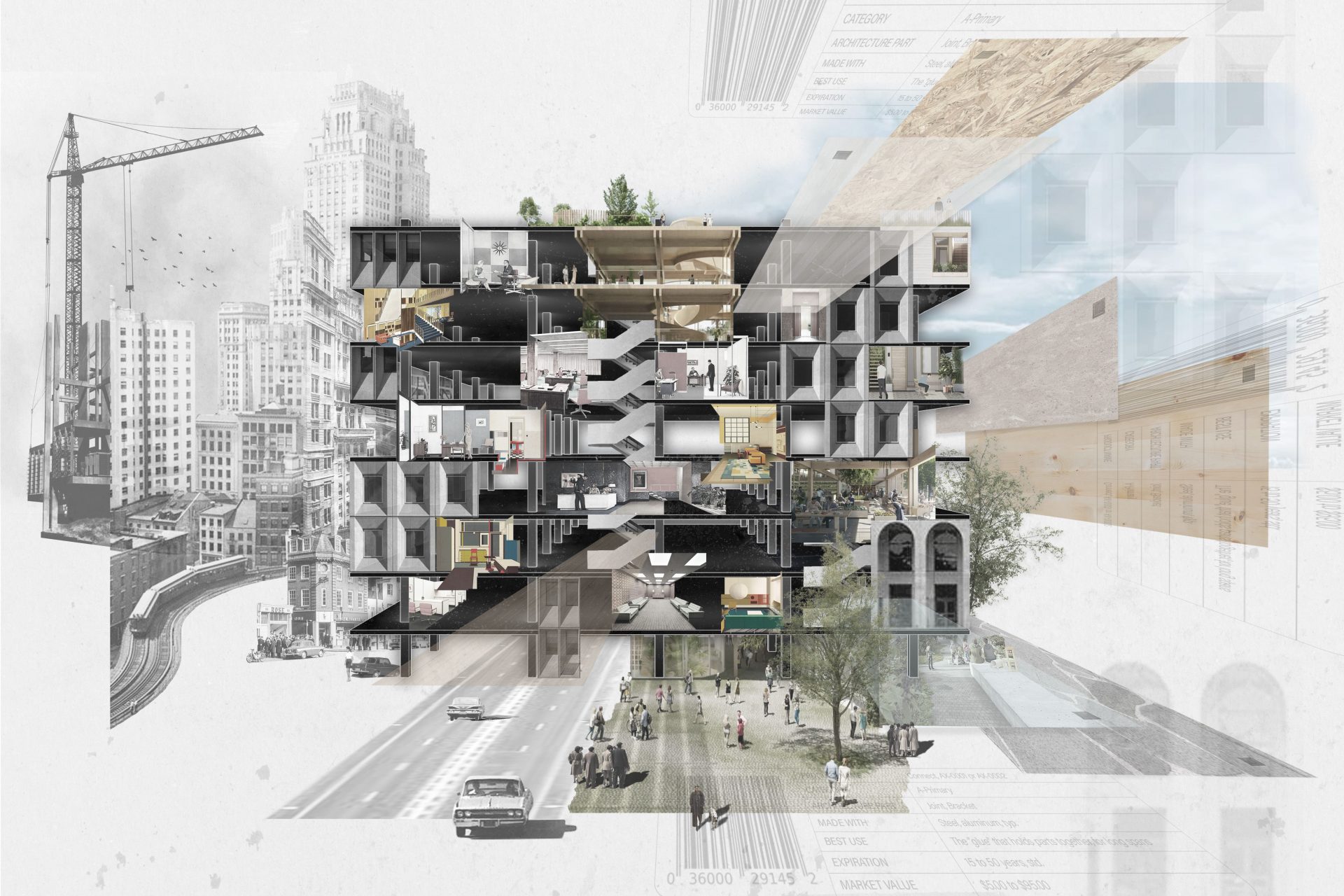
Temporal Assemblies, Embedded Technology, Trackable Lifespan, and Ephemeral Cycle We live in a paradox: we know our time is limited, yet we design with an obsession of permanence. As we convert office cores into residential towers, we accumulate skyscrapers of construction waste and dead land. The question we must ask is “how can we design for a building's certain return to the environment?” A building should only be considered complete once it has been deconstructed.
The Deconstruction Protocol proposes building with the intention of unbuilding. Using temporal assemblies and trackable lifespans, mid-century office buildings become active material inventories for residential conversions. Responsible disassembly grants creative license; the more precisely components are catalogued and calibrated for disassembly, the wider the formal vocabulary becomes available to the designer. By reimagining cities as metabolic collages where architecture is a temporary state of matter, we can responsibly design for the “end,” transforming disassembly into the most creative phase of the architectural process.
Interstitial Habitats
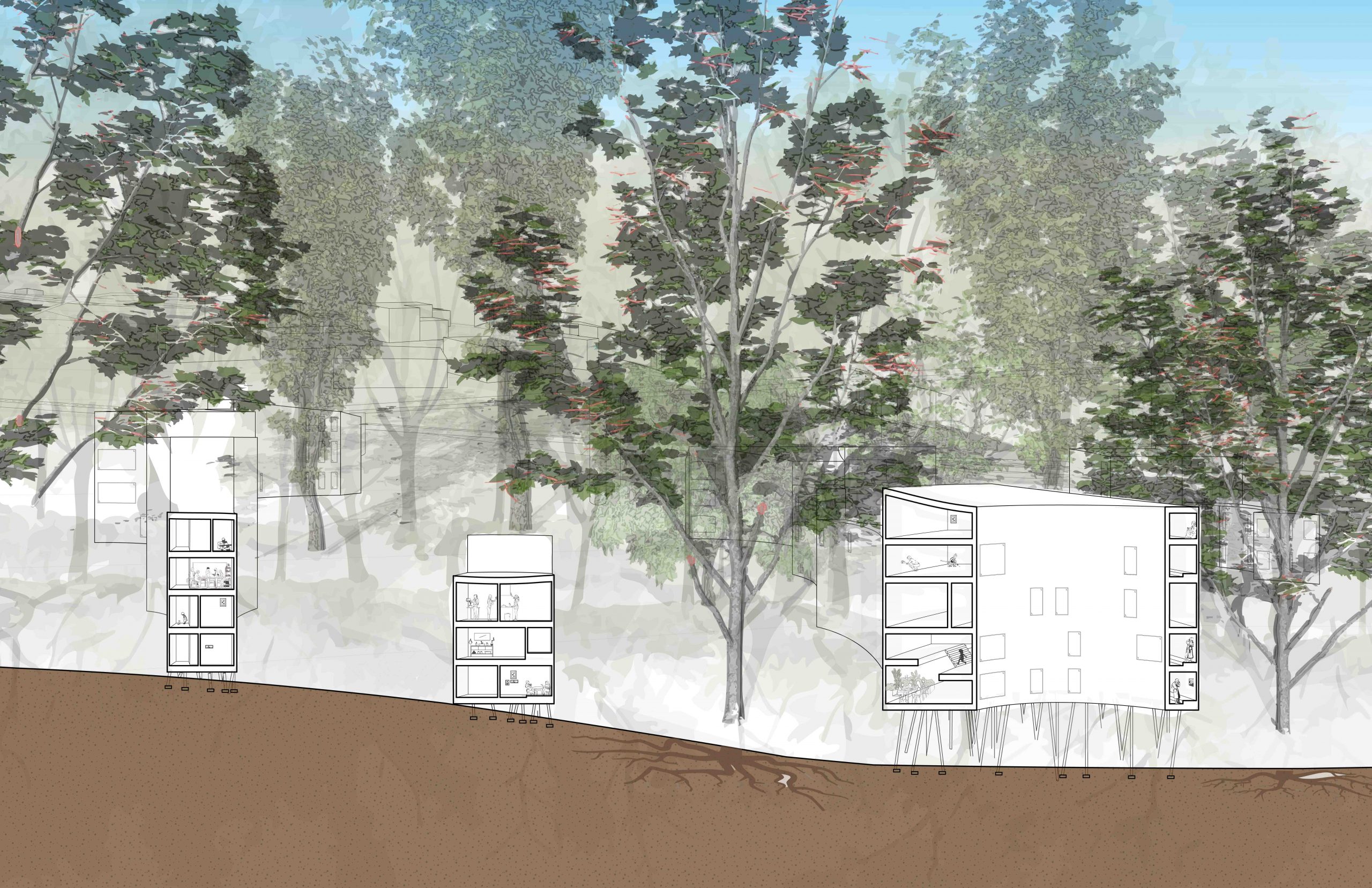
Forests cover ⅓ of all land on Earth, yet we often treat them as obstacles rather than infrastructure. Integrating urban development directly into forest ecosystems allows us to utilize the collective intelligence of trees, which is essential as 13 million hectares are lost annually to urban demands. This mass deforestation destroys a vital defense against climate change, yet trees continue to survive as a collective by adapting their biological systems over centuries. By adopting these natural phenomena as a foundation for a symbiotic relationship, we can transform urban life into an ecosystem of proximity, shared structure, and collective growth. This thesis combines the urban directly into the forest system by forcing architecture to fit into the existing forest environment. Inspired by the Urban Tree Interface, this design eliminates the need for cutting down trees and instead prioritizes the lifespan of the trees, adjusting architectural strategies around the surrounding forest to blend the boundary between the city and nature.
NeuroSkin
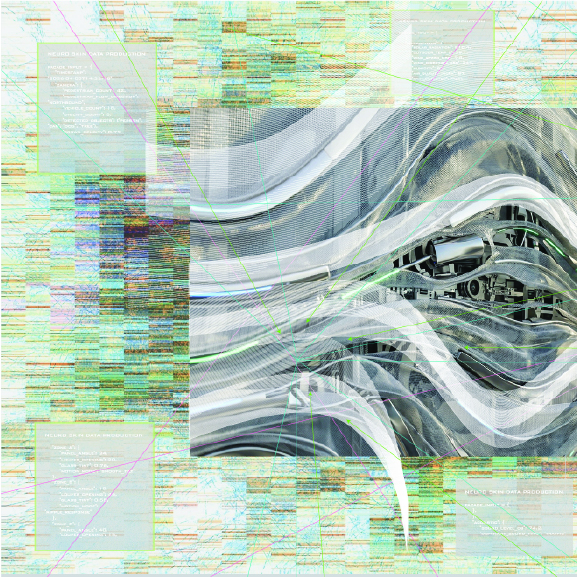
As the world shifts toward a more technologically advanced future in which systems can sense, see, learn, and move in ways unlike ever before, a new design agenda emerges. One that asks architects to uncover the possibilities of fully embedding machine learning, sensing, and vision technologies into architectural systems. This thesis argues that the facade is the most direct site for this transformation, where architecture can begin to adapt, respond, and make autonomous decisions in relation to its environment.
While this proposal is speculative, it is grounded in ongoing research in programmable matter, machine vision, sensing, and learning technologies, along with the decision-making frameworks of autonomous objects.
Yet the architect's role remains essential, because facades must still balance enclosure, threshold, light, protection, and human experience. Rather than replacing the architect, these technologies expand the discipline's responsibilities, requiring designers to shape systems that are influenced by advancements of our time. Not only for the purpose of a deeply responsive system, but also a spatially imaginative envelope.
Unlearning Permanence: A Biogenic Model for Future Schools
In this era known as the “sixth extinction,” architecture must reject the ideal of permanence and start acting as an evolving participant in ecological cycles. Our current architecture and education systems are static, ignoring our biological mortality and the weight of technology on younger generations. I propose that both systems transform into adaptive participants following the growth and decay cycles of the natural world. This thesis is founded on the technology of biogenic materials and their finite lifespans. By leveraging these mortal assemblies, this work reshapes the school typology, replacing static, technology-centered models with a cyclical framework for regenerative, project-based education.
Title brainstorm: – Unlearning Permanence: A Biogenic Model for Future Schools – From Earth to Earth: The life, death, and afterlife of biogenic buildings – – Mortal Systems: Biogenic timelines altering educational design – Mortal Grounds: Redefining the Lifespan of Learning – Reimagining – Regenerative Assemblies – Regenerative Lifespans – Regenerative Decay: DRAFTS: My thesis tests the effects of biogenic construction on the way humans live and revisits education to build habits for lifelong learning.
Our current architecture and education systems are static and built upon ideas and constraints built by humans and generations that no longer exist or understand the current state of our world.
I propose that both architecture and education should become active adaptive participants following the growth and decay cycles of the natural world. This thesis is founded on the technology of biogenic materials, derived from organic sources, which have their own timelines of growth and disappearance. My thesis tests the effects of biogenic construction on the way humans live and how we adapt to architecture that undergoes regenerative cycles. – Equally urgent is the revisiting of the way we educate that is also affected/changing due to technology
The Marvelous Cravings of Phenomena
The lack of connection between humanity and natural ecology contributes to architecture's failure to address climate adaptation. Urban growth has opted to overlook lived experiences to optimize efficacy, which leaves nature as an afterthought in design. With South LA being an example of this dilemma, the thesis proposes that environmental phenomena such as sun, plant growth, creature habitation and sound to be channeled into a marvelous experience. This will reveal the extraordinary within the ordinary, and help reframe how people will consider the existing phenomena and make perception of ecological change unavoidable.
Catherine Acosta
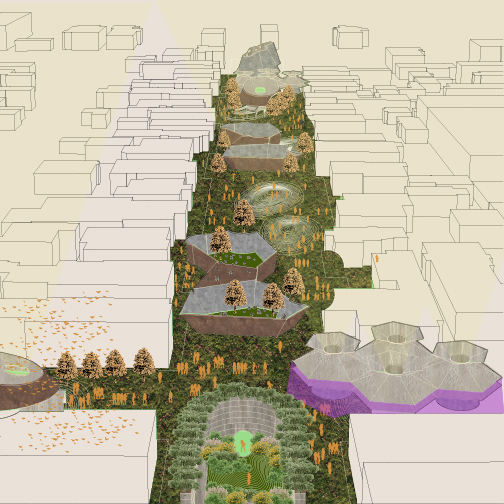
This thesis argues that architecture becomes spaces of coexistence for humans and the keystone species essential to our survival. As humans and technology grow and thrive inside architecture space, outside organisms suffer, including keystone species, such as hummingbirds.
The thesis project selects the keystone species, Anna's hummingbird (a non-migratory species popular in SoCal) and develops an office space where humans and hummingbirds coexist. By focusing in dense cities, we can implement design strategies that integrate hummingbird safe surfaces perceptible to their eyes, nectar systems, and safe nesting spaces. This system can help increase a keystone species population with the help of architecture that innovates non-human and human life.