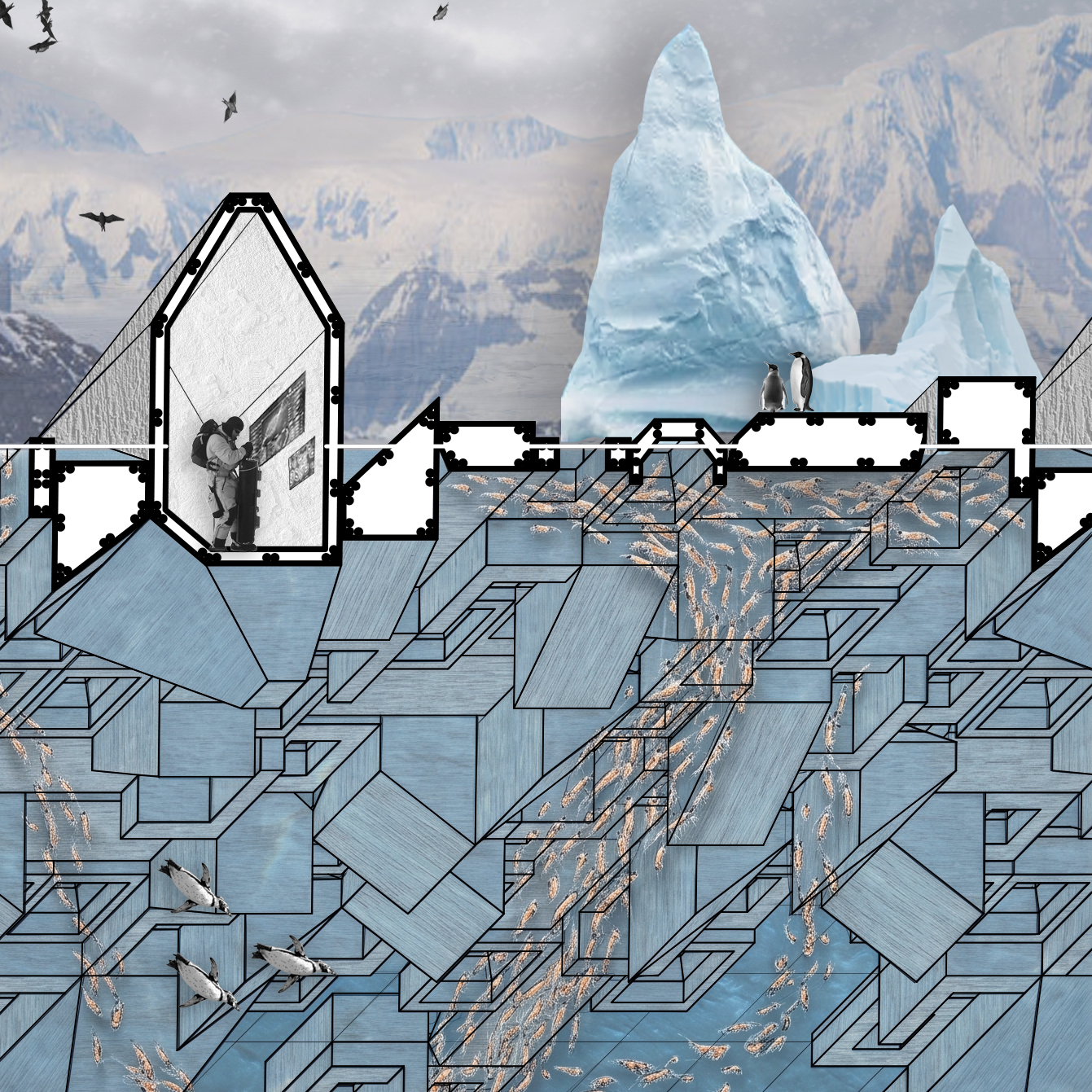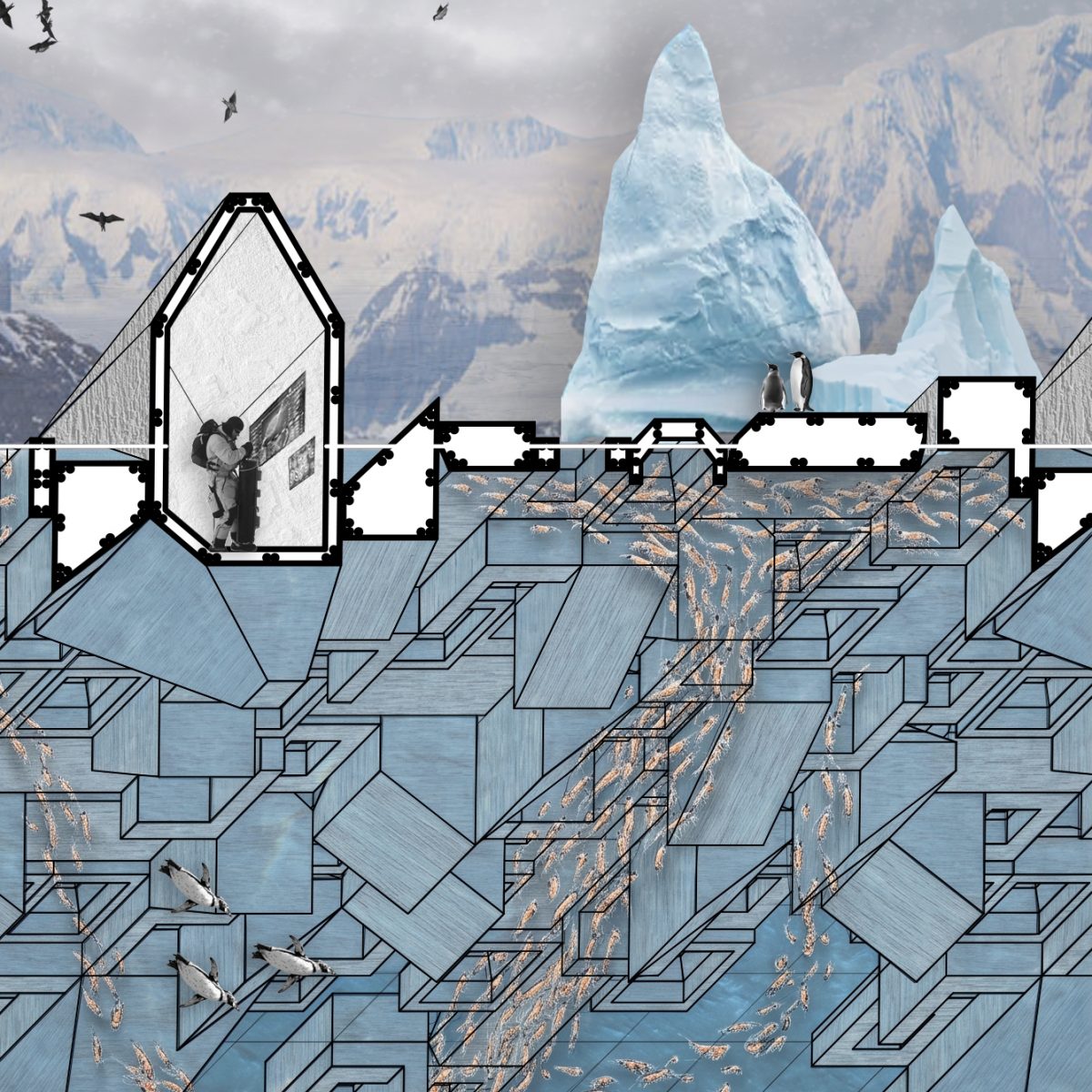
THESIS: Traditional architecture's exclusive focus on the human experience has caused devastating planetary impacts, contributing to climate change by destroying the ecosystems of keystone species. To reverse this damage, architectural design must evolve beyond anthropocentrism and prioritize regeneration. This shift is crucial in the Southern Ocean, where foundational Antarctic Krill have plummeted due to human-induced climate shifts and unsustainable tourism. To limit human interference in these vulnerable habitats, deployable krill rehabilitation modules will be paired with educational hubs in busy tourist zones. Through this, architecture transforms from a driver of environmental degradation into a powerful catalyst for marine ecosystem revival and essential public awareness.