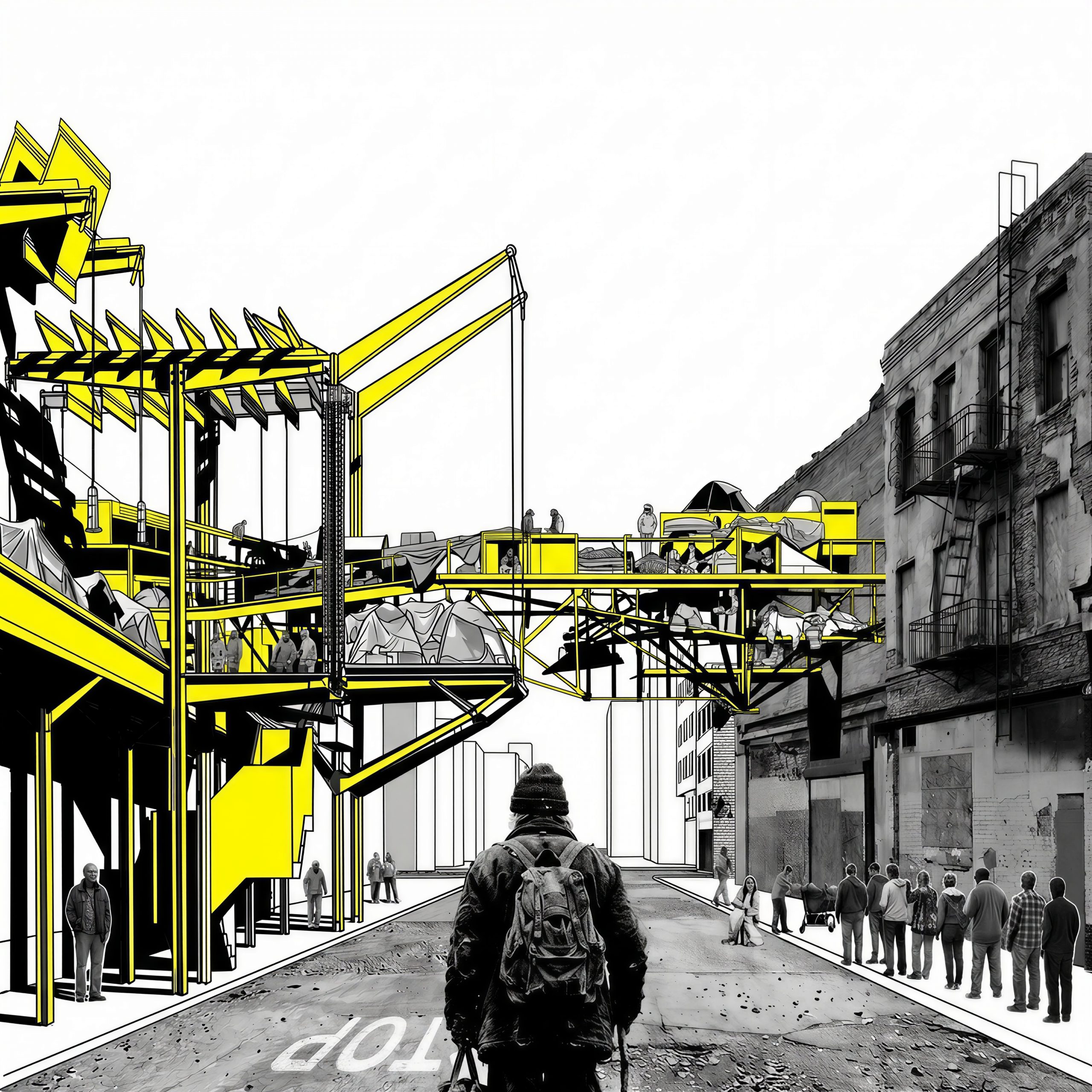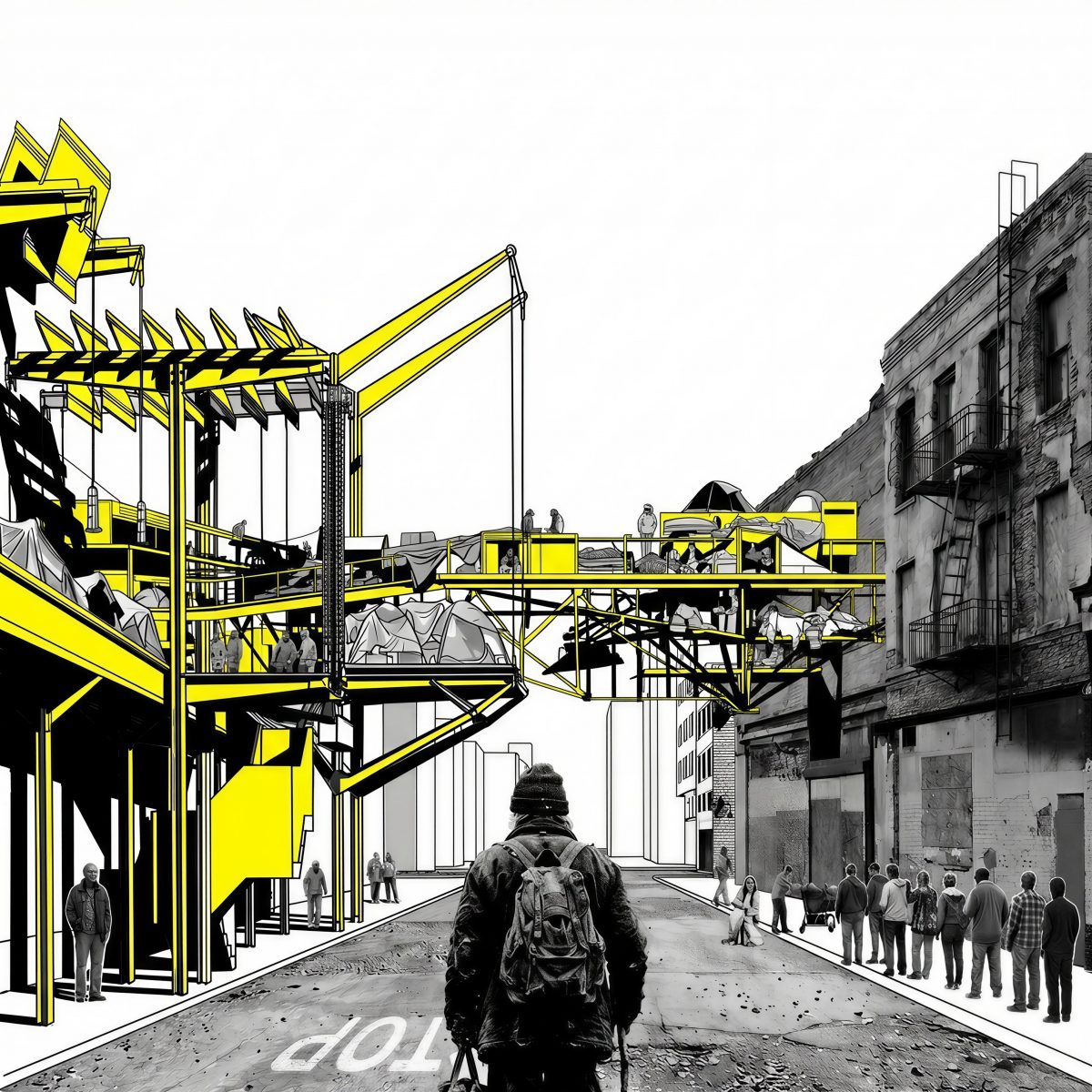
This thesis argues that homelessness in Skid Row is fundamentally a condition of spatial
compression rather than mere resource scarcity. It proposes a vertical thickening of the city
by elevating unhoused life into a semi-autonomous layer above ground, thereby relieving
congestion and reorganizing coexistence. Informed by behavioral observation, the project
introduces calibrated spatial prescription to reduce conflict while maintaining agency.
Rather than solving homelessness, architecture is positioned as a harm-reduction
mechanism that redistributes space, visibility, and survival conditions without relying on
policy change.