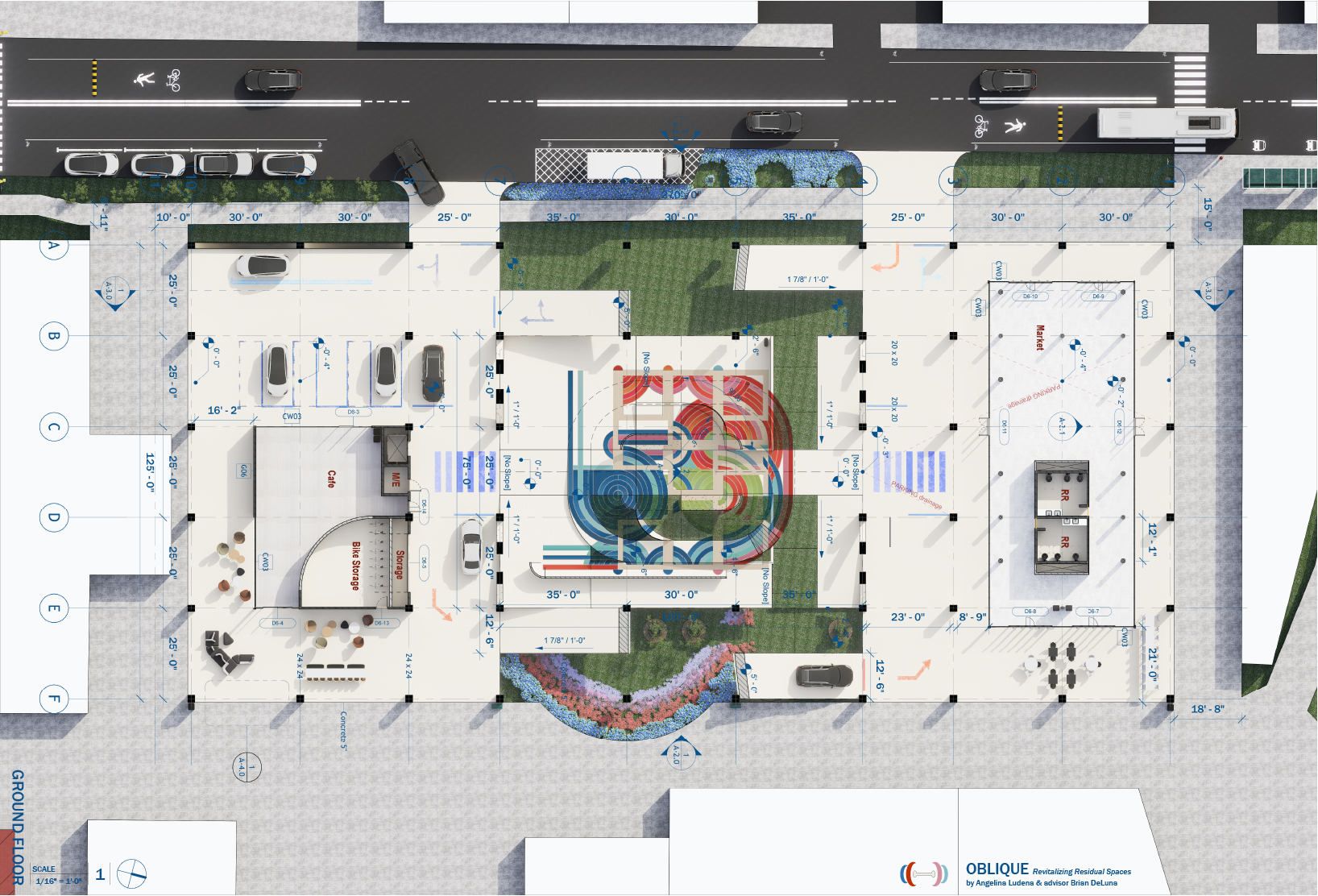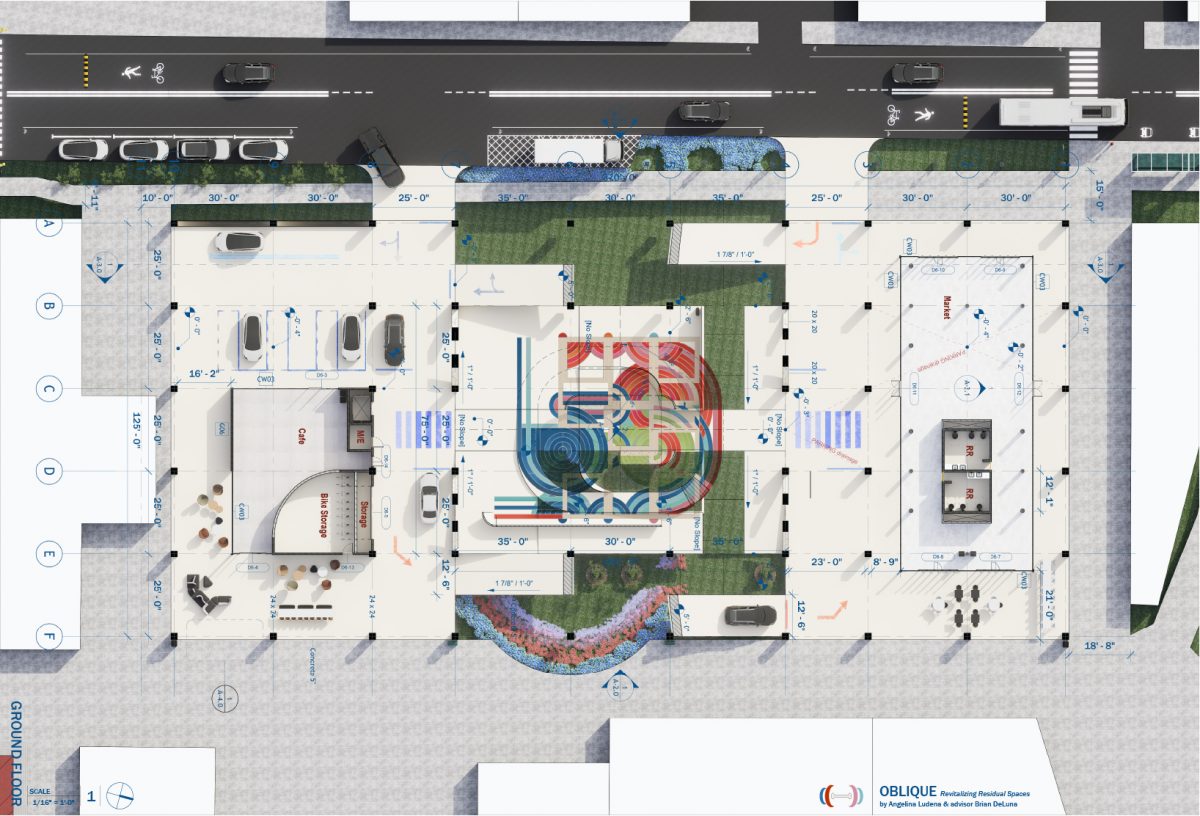
This thesis proposes a hybrid architectural system that embeds wellness-driven programs within a reimagined parking structure, transforming a typical inert typology into an active, behavior-shaping environment. Drawing inspiration from Frank Stella, the project uses graphic systems as a primary organizational and wayfinding tool where color, pattern, and visual identity act as the connective tissue between programs. Fitness, retail, and social spaces are distributed vertically, creating a sequence of experiences similar to a shopping mall, but centered on health and collective activity. The introduction of oblique surfaces, inspired by Claude Parent, challenges the dominance of flat ground. It utilizes continuous sloped circulation and spatial transitions. At the core, the parking structure is carved out to expose this structural logic creating a central oblique system: Flat -> Slope -> Flat. This links the active and resting zones. This interplay between structure, movement, and graphic identity redefines architecture as an immersive system for living actively.