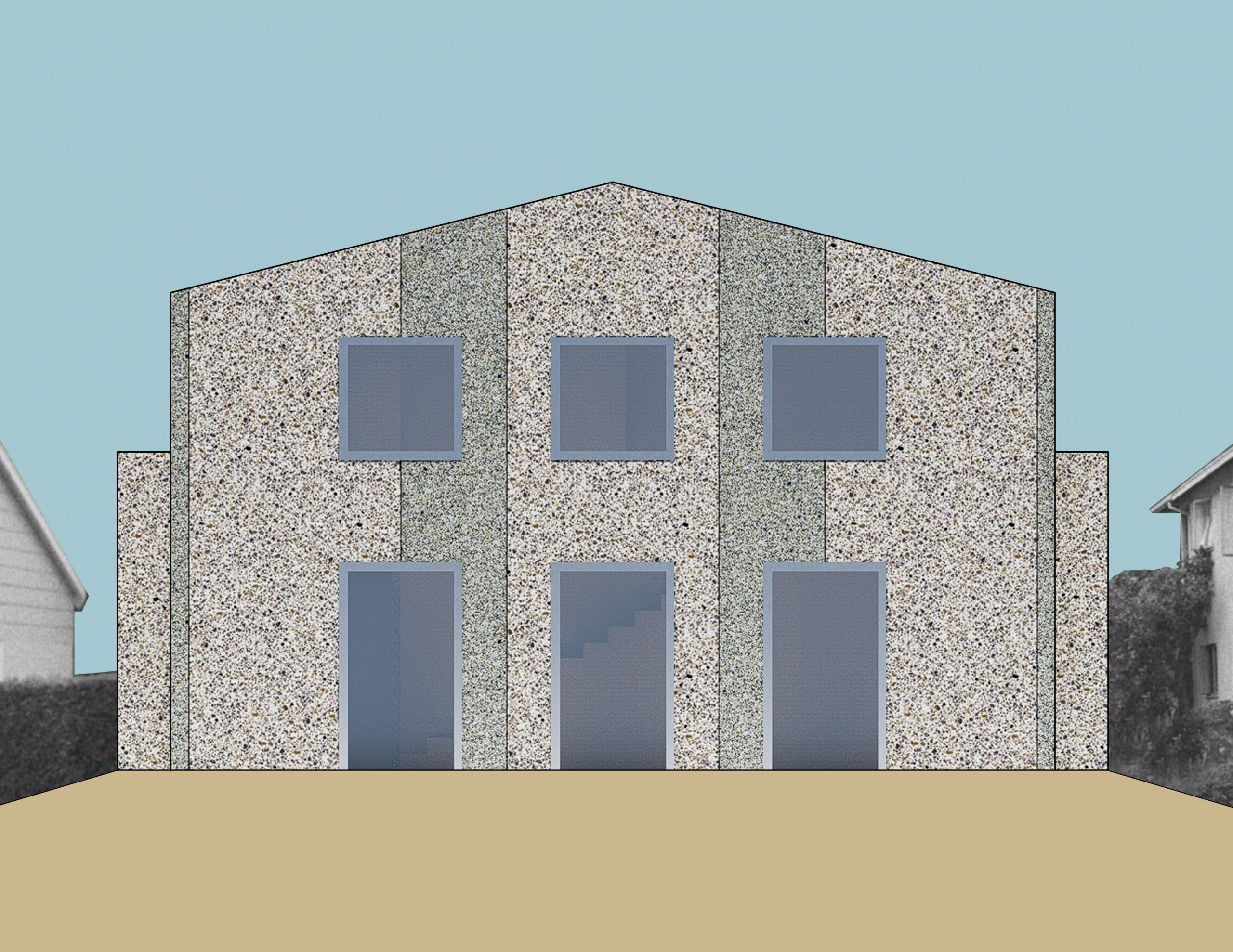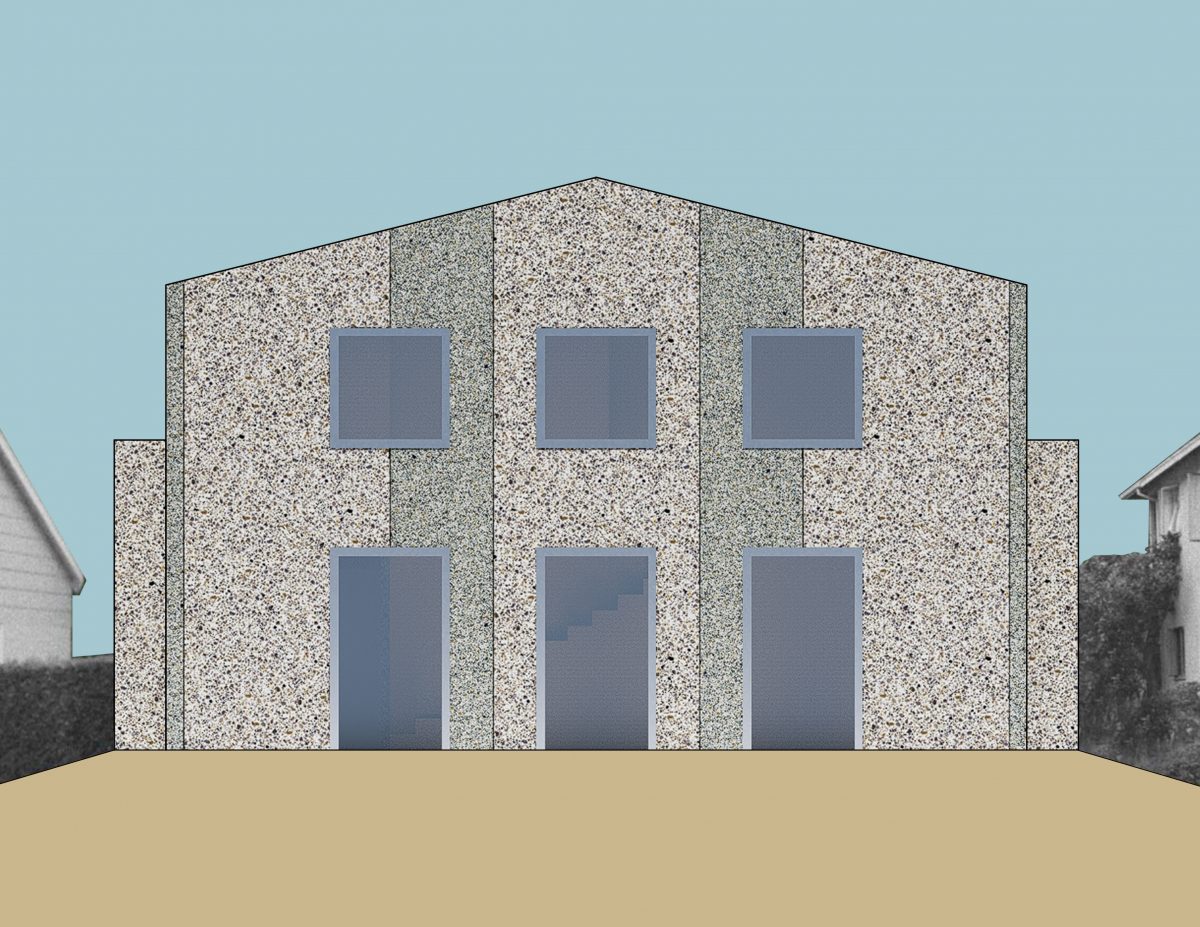
Concrete remains one of the most versatile and effective building materials, particularly suited to the climatic and geologic conditions of Los Angeles, offering fire resistance, seismic performance when reinforced, and thermal mass. Yet its environmental cost is substantial, accounting for roughly 8% of global carbon emissions, and its durability complicates repair, adaptation, and disassembly. In the context of large-scale rebuilding following the January 2025 fires, this thesis investigates concrete as both a critical constraint and a tool for future construction in high-risk burn areas.
The project proposes using an alternative construction system that leverages concrete’s performance while limiting its application. RSG 3-D is a prefabricated composite panel system consisting of an expanded polystyrene (EPS) core and a steel wire truss encapsulated within a thin concrete shell. While this integration of structure, insulation, and enclosure offers clear advantages in Southern California burn zones, it also produces ethical and aesthetic tensions. This project positions concrete as a material to be selectively deployed and deliberately expressed to determine where its use is justified and how its presence can be made legible. As a final deliverable, these questions and positions are tested on a site in the Pacific Palisades through the design of a single-family residence.