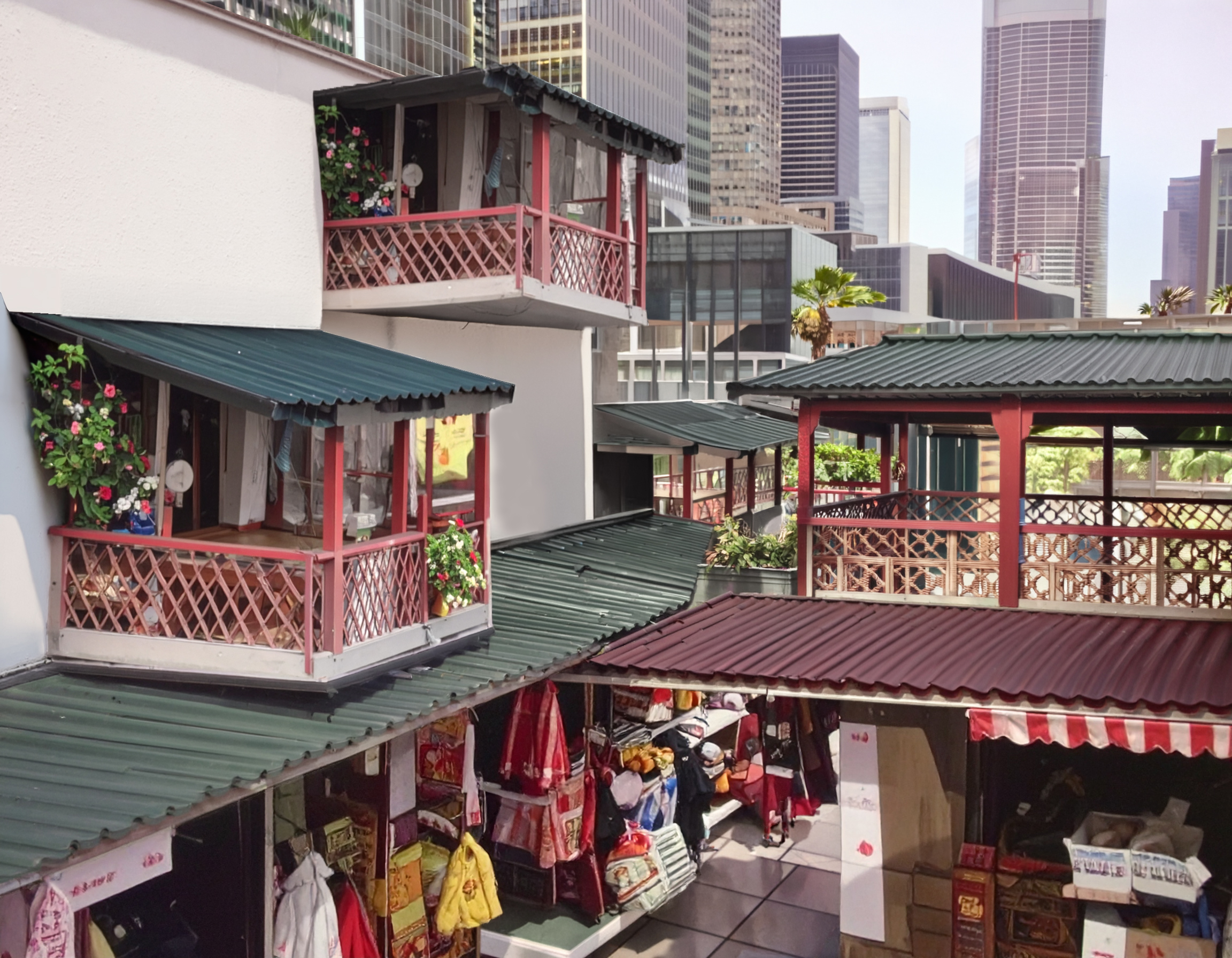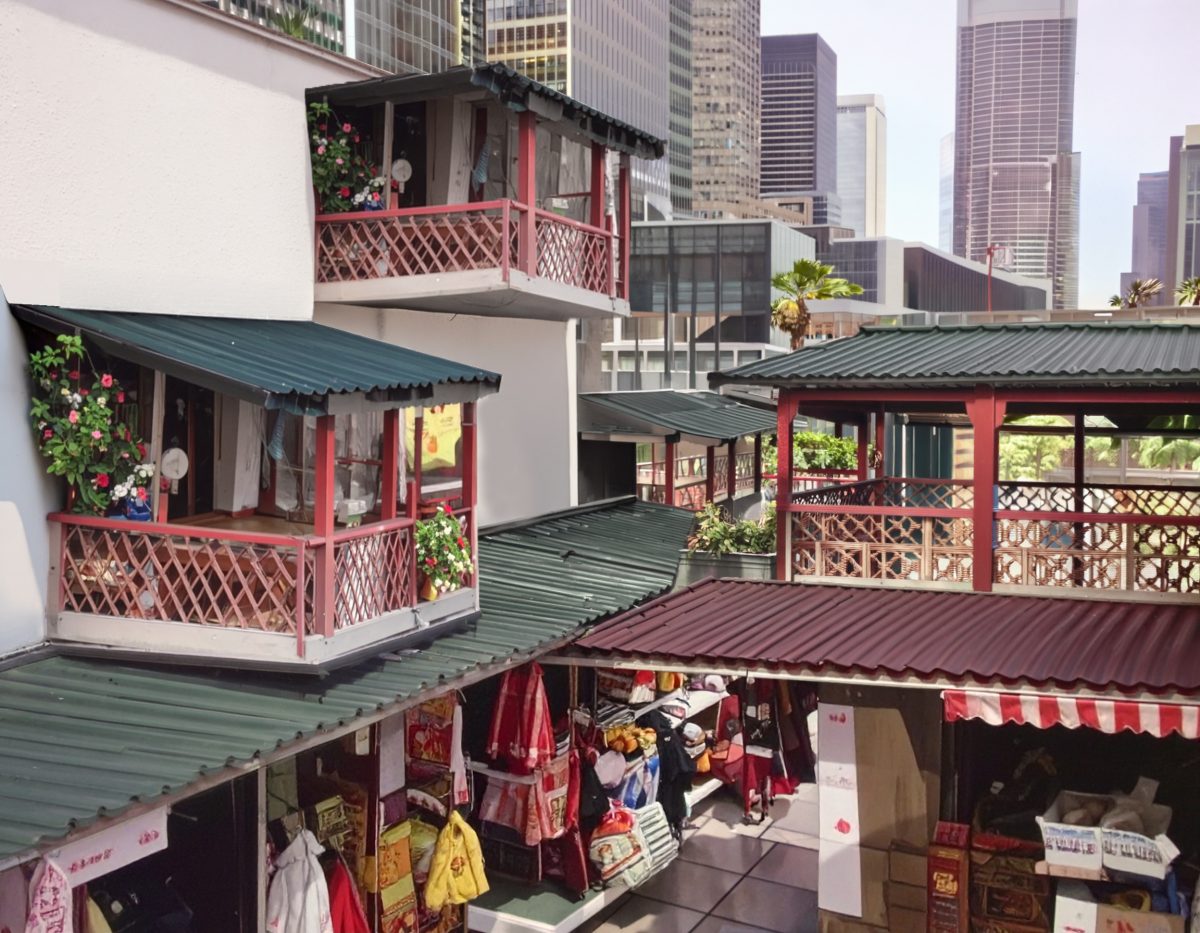
Situated along the gentrified Spring Street corridor in Los Angeles Chinatown, this intervention transforms a high-value parking lot into a community-first marketplace. As displacement threatens the small businesses serving low-income residents, the design redefines the architect’s role as a cultural advocate. By translating architectural heritage into financially viable propositions, the project establishes permanent economic space within a vulnerable historic district.
The design revives the traditional shophouse model, integrating affordable housing directly above a marketplace. This layered live-work approach addresses the housing crisis while restoring the intimate "mom and pop" scale essential to the district’s identity.
Grounded in deep research into Chinatown’s history and current politics, the intentional design understands the issues the community faces. The programming is designed for long-term sustainability, a space where the older generation can thrive and the new generation is invited to help sustain cultural significance. This ensures that we uplift the community without leaving anyone behind.