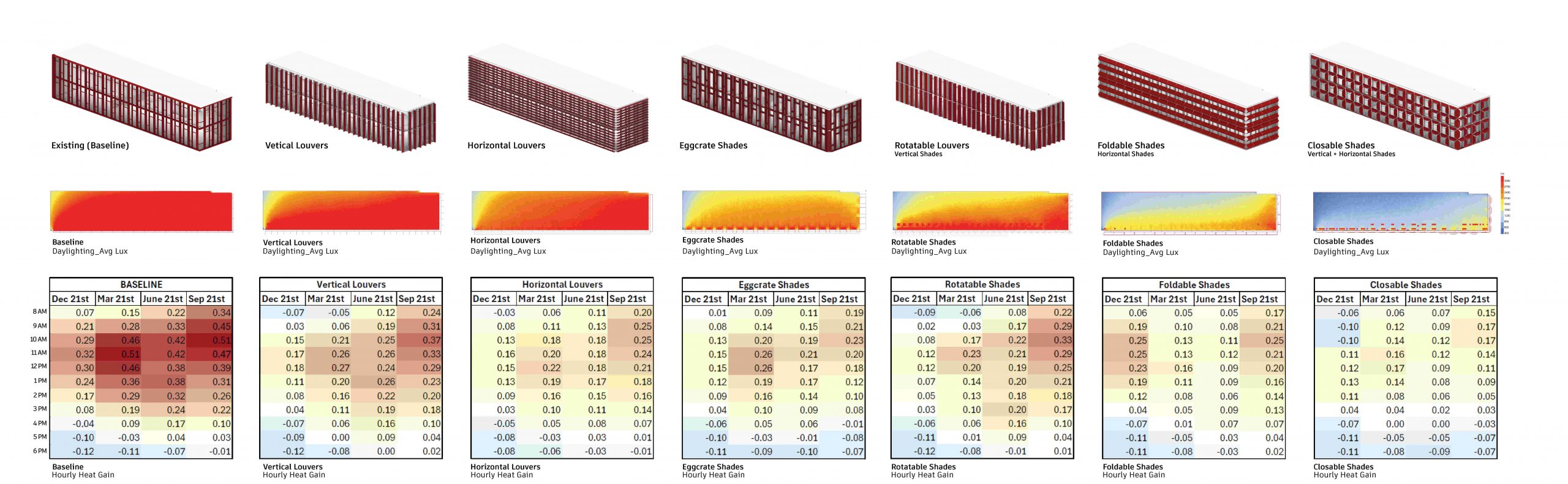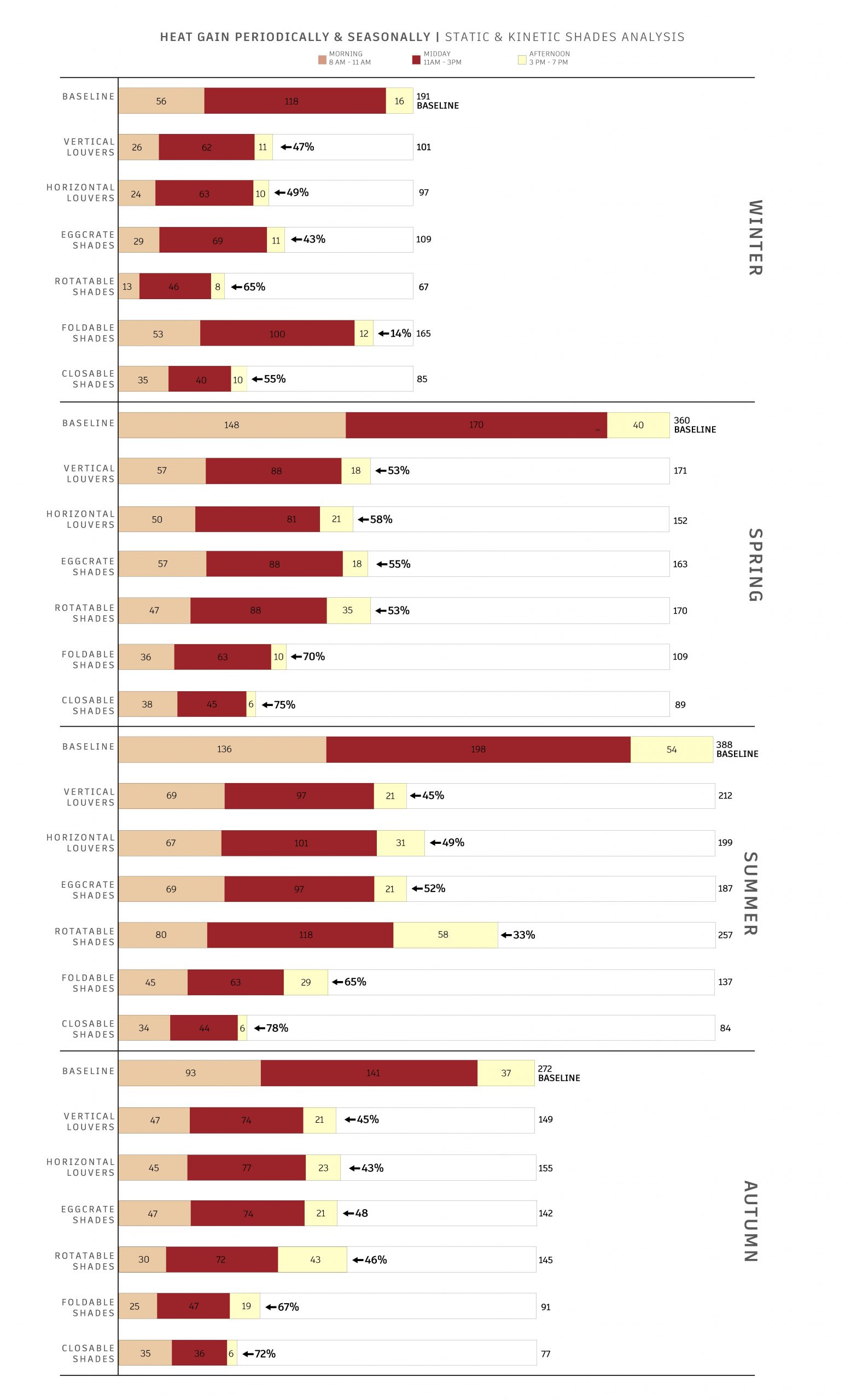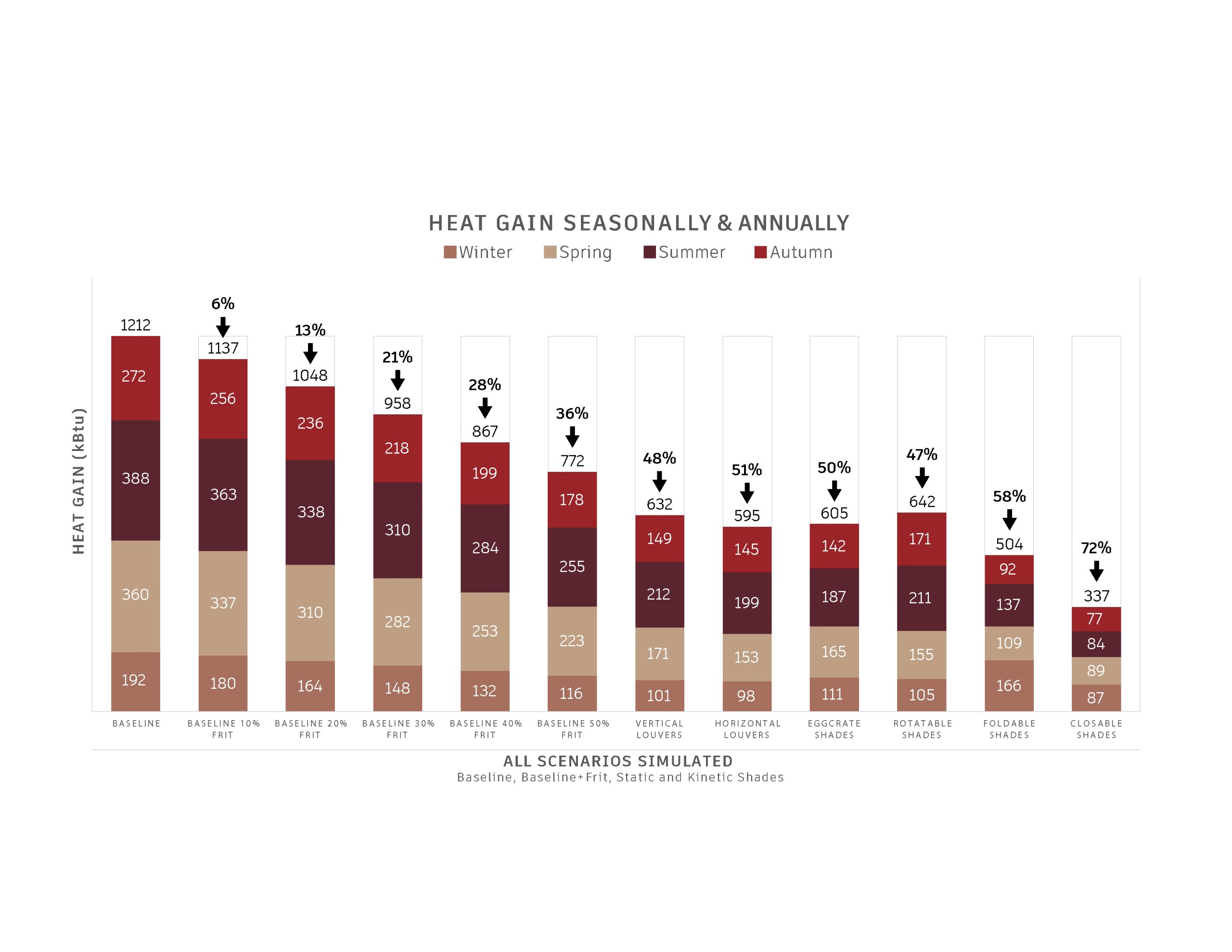
Ginsburg Hall at USC, with its expansive glazed atriums, served as the site for a study exploring advanced shading strategies to address heat gain and cooling demands. Using Grasshopper and Honeybee, both static and kinetic shading systems—such as louvers, eggcrate shades, fritted glazing, and foldable and closable dynamic elements—were simulated and analyzed periodically and seasonally.
Kinetic systems consistently outperformed static ones, except for the vertical louvers. With foldable shades reducing heat gain through apertures by over 54% while preserving daylight. Closable shades showed the greatest reduction—up to 74% at midday—but risked increasing heating loads in cooler periods and artificial lighting needs. Rotatable shades offered better daylight access but were less effective at limiting peak heat.
Overall, kinetic shading can reduce cooling demand by up to 30% compared to an unshaded scenario and by around 10% relative to static shading. These findings highlight the potential of dynamic façades to improve energy efficiency and comfort in highly glazed spaces.