Architectural models, traditionally understood through their representational or aesthetic roles, can also be conceptualized as generative instruments within broader cultural and epistemological frameworks. As Kersten Geers observes, a model is capable—like a plan—of producing other models, objects, and ideas. Reframing model making as a cultural technique reveals its capacity to participate in the circulation of images and the construction of knowledge. Through practices such as digital manipulation, photographic abstraction, and parallax documentation, models operate at the intersection of reality and representation. Within this mediated condition, architectural models serve as critical tools for engaging the complexities of contemporary urbanism—where questions of climate, geopolitics, cultural identity, and technological transformation intersect with the spatial and discursive production of the city.

The Space Between Us
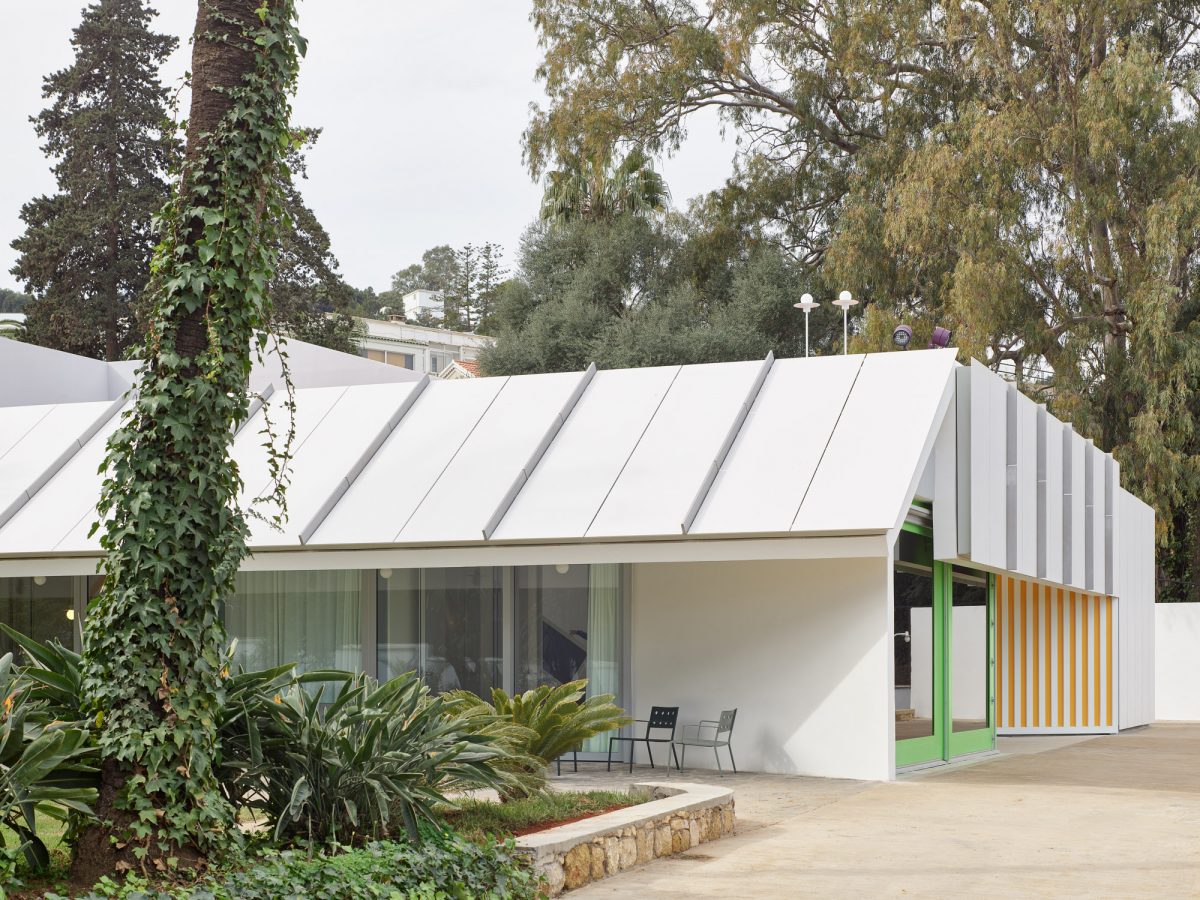
Cities are not static but relational constructs that are continuously shaped by the evolving interplay of social practices, collective perceptions of place, and material conditions. As needs, values, and routines shift, the urban landscape transforms leaving behind neglected spaces and fractured traces of past systems. Yet in this accumulation, many of the informal public spaces that once supported everyday sociability have been erased or displaced. These abandoned industrial remnants, often dismissed as obsolete, interrupt the city’s spatial coherence but also contain latent capacities for reactivation and reintegration. This project engages these residual spaces as sites of potential—not through erasure or totalizing redevelopment, but through calibrated interventions that operate within and alongside existing urban rhythms. Drawing from theories of relational urbanism, urban acupuncture, and third place design, The Space Between Us proposes a scalable framework for micro-transformations that refract, rather than overwrite, the logics of the surrounding city; foregrounding the co-production of space as a process of negotiation, encounter, and continual becoming.


(Re)Constructing Memory: Architectural Translations Through Fragments and Ruins
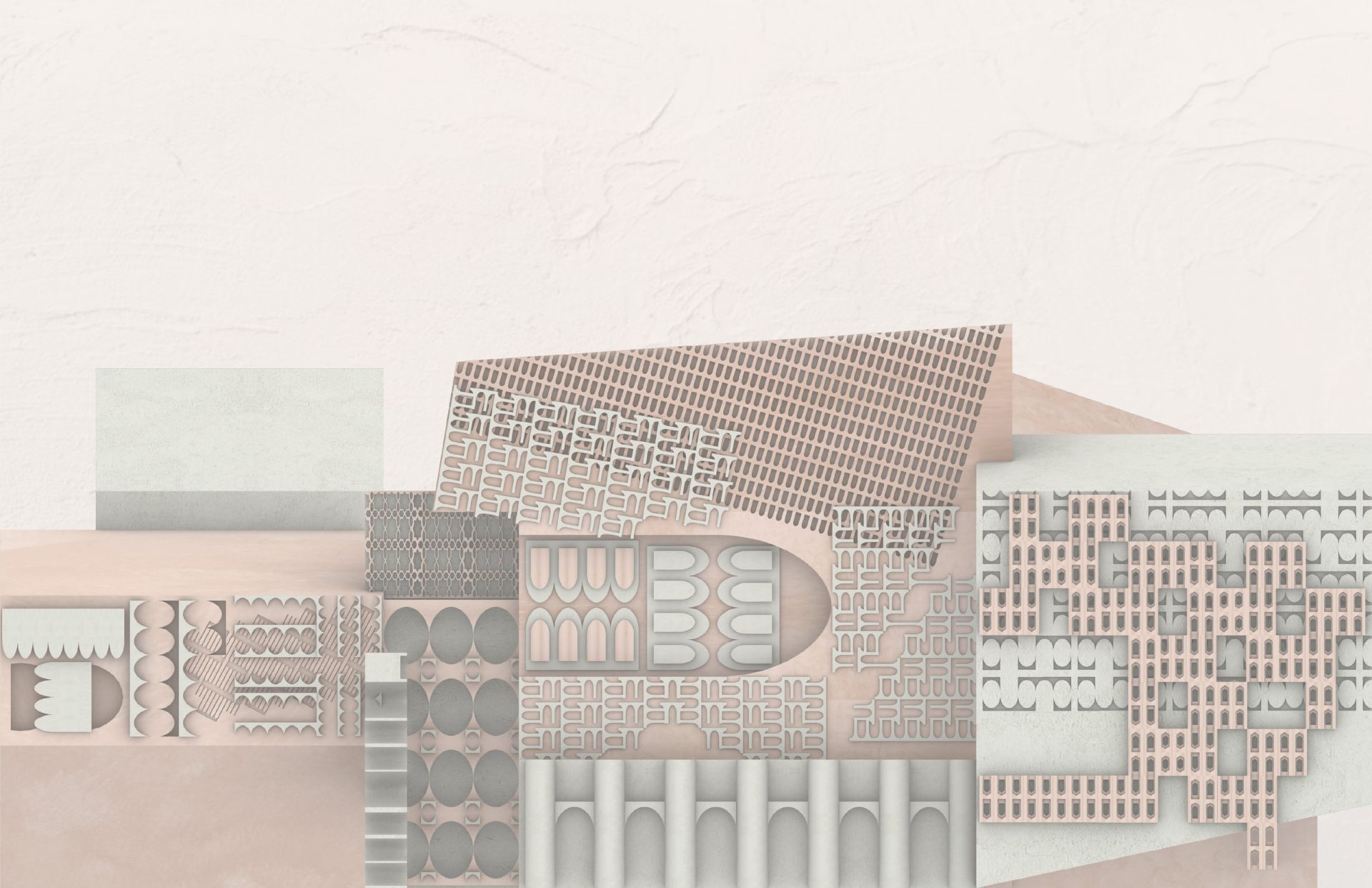
In an era defined by displacement, migration, and transnational flows, architecture must operate as a medium of cultural translation—capable of holding the layered identities of those who inhabit multiple worlds. This project explores how the built environment can serve as a connective tissue between cultures, fostering belonging, continuity, and shared meaning across difference. By incorporating fragments of ruins—material, symbolic, and spatial—the design draws on historical memory not as nostalgia, but as an active framework for imagining futures rooted in cultural resilience. These elements become tools for reassembly, carrying the weight of loss while enabling transformation. Through inclusive, evolving spaces that reflect and respond to community life, the architecture becomes embedded in the urban fabric while anchoring identity in place. Ultimately, the work repositions architecture not as a static form but as a living archive and social catalyst—a sanctuary for diasporic experience and a platform for intercultural dialogue in the context of global citizenship.
Resilient Tides: Spatial Frameworks for Political Autonomy and Climate Adaptation
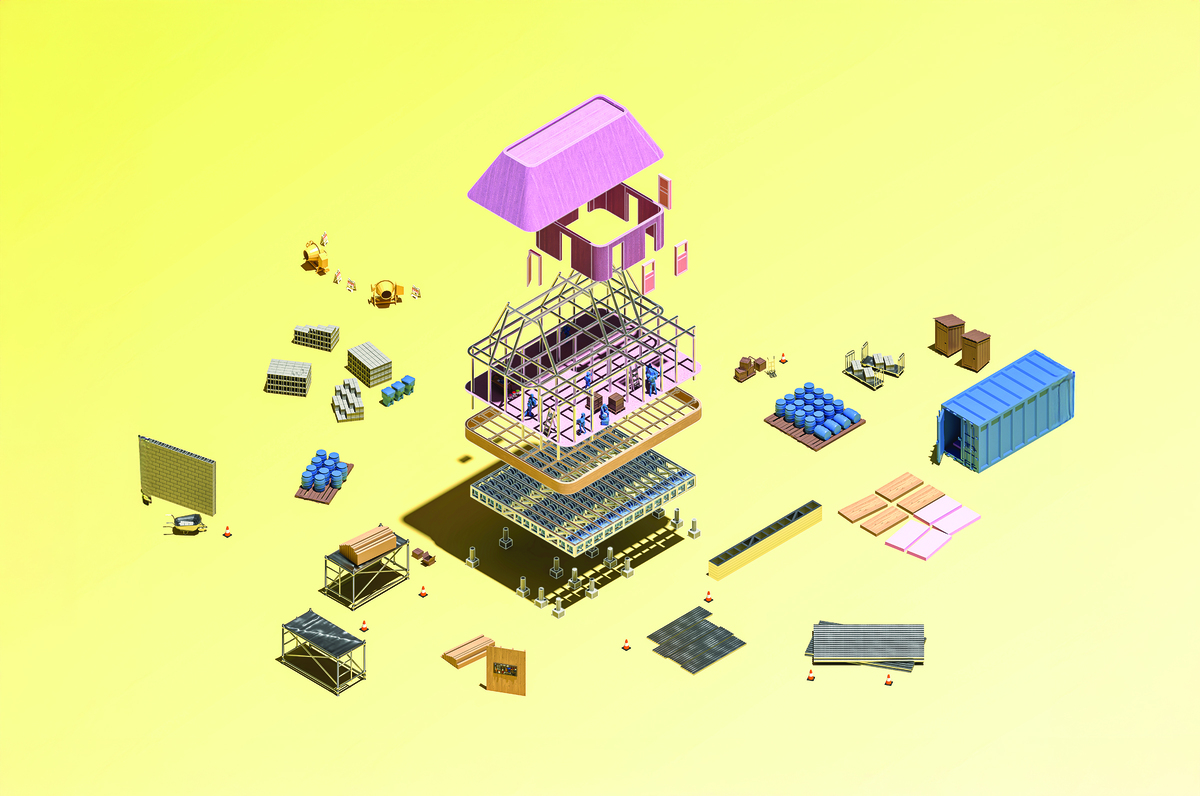
The design of adaptable, self-built neighborhoods in Puerto Rico presents a critical opportunity to reframe architecture as a collective resilience system rooted in cultural continuity, environmental responsiveness, and the historically informal practices that have long-defined communities like La Perla. In the face of climatic volatility and systemic neglect, this project proposes a kit-of-parts framework that supports incremental housing, modular infrastructure, and ecological restoration across the coastal amphibious and terrestrial terrains. Grounded in Puerto Rican vernacular traditions and informed by the material improvisation and participatory construction methods of informal settlements, the design resists homogenizing models of recovery by enabling residents to shape, grow, and adapt their environments over time. The work positions architecture as a medium of self-determination, climate adaptation, and collective authorship. By embedding local materials, shared labor, and spatial rituals into the built fabric, the neighborhood becomes more than a typology; it becomes a living platform for resilience; rooted in tradition and capable of transformation.
A Place Not Flat
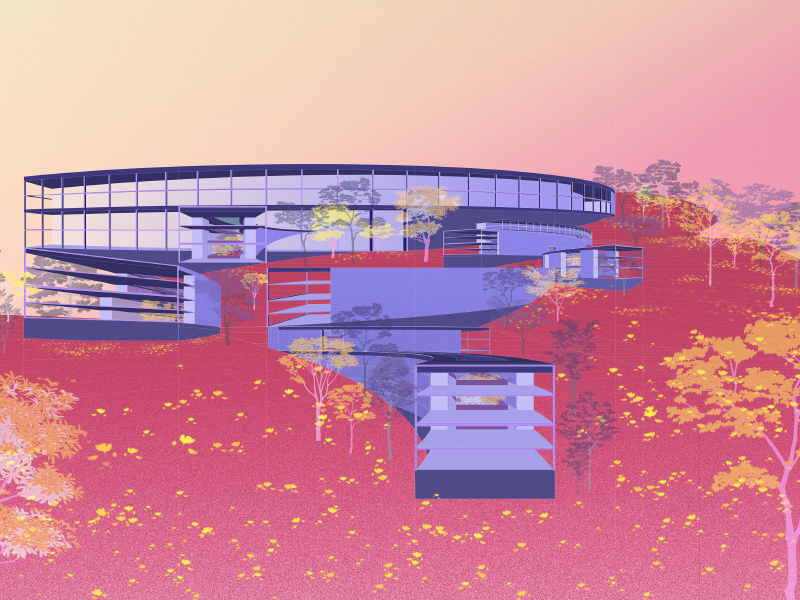
In architecture, natural and artificial are not opposites but intertwined conditions—experienced simultaneously through sight, sound, touch, smell, and taste. Architecture, as a mediator of these sensory encounters, holds the capacity to shape emotional and psychological states. Through the design of a wellness campus, this thesis investigates how design can support healing for individuals with PTSD, anxiety, and depression by crafting environments that are immersive, responsive, and restorative. By employing terrain fabrication, biophilic integration, and patient-centered design, it envisions landform buildings embedded within the Pacific Palisades hillsides—structures that cultivate safety, reflection, and reconnection through embodied experience. These spaces foster stability, integration, and personal growth through richly sensory spatial experiences. Embracing cycles of decay and revitalization, the work redefines architecture as more than form or function: it becomes a living system attuned to ecological rhythms, human vulnerability, care, and the evolving possibilities of architecture and landscape.
Edge Ecologies: Architecture and the Everyday Border
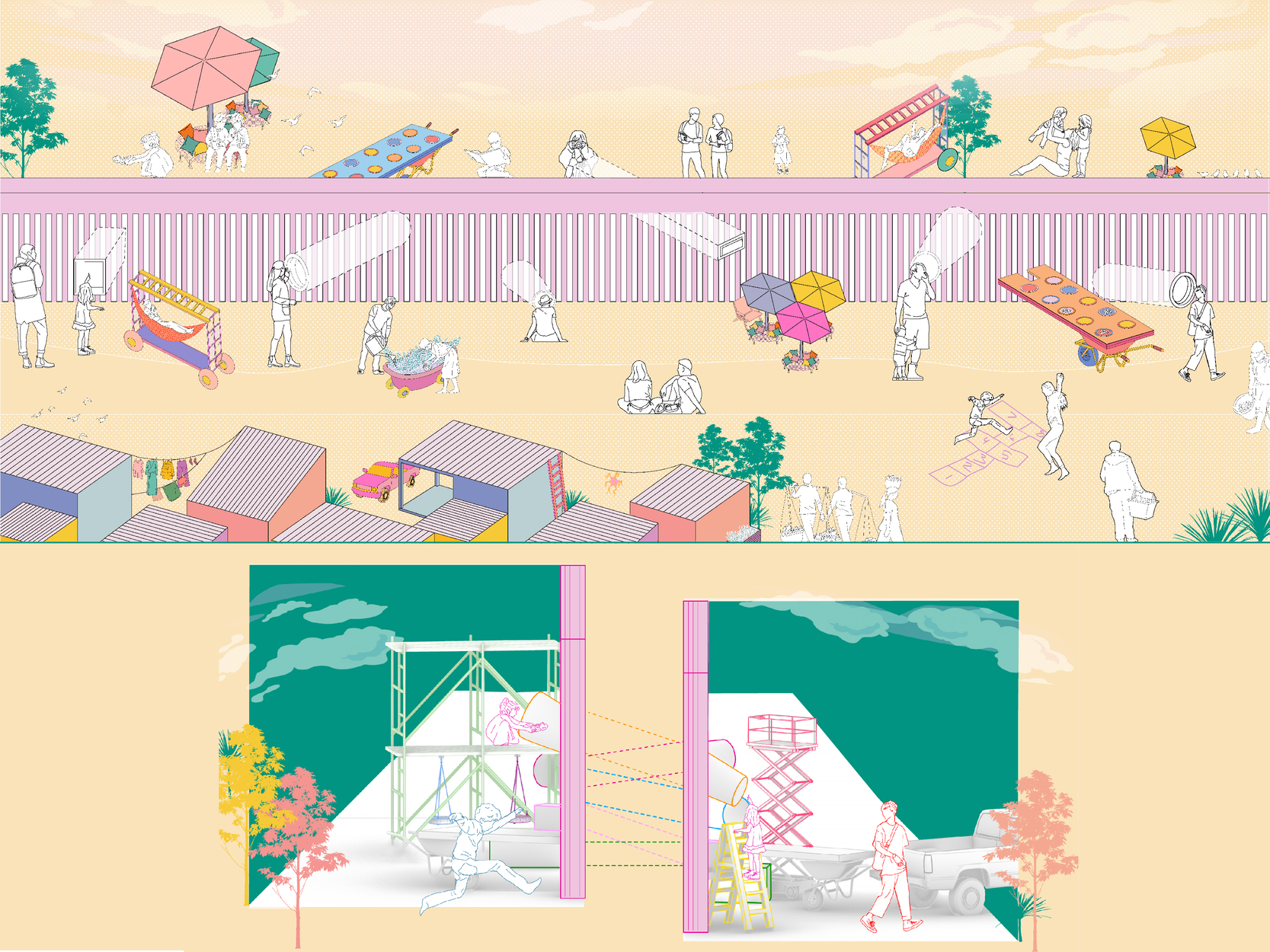
Spatial boundaries are not merely drawn, they are enacted, contested, and continuously reconfigured through everyday practices. The U.S.–Mexico border, long framed as a site of division and control, is an active space shaped by daily movement, resilience, routine, and performances that produce a layered terrain of social connectivity. This thesis examines how representation and design can expose and intervene in the infrastructures, regulatory mechanisms, and embodied routines that constitute the border as a lived space. Through a process of spatial translation and reinterpretation by design, I propose architectural strategies that engage the border not as a singular object but as an evolving ecology of actions, agencies, and collective gestures, where architecture becomes both witness and agent in the reimagining of geopolitical identities.
Generational Materials: An Economy of Recycling, Reuse and Renewal
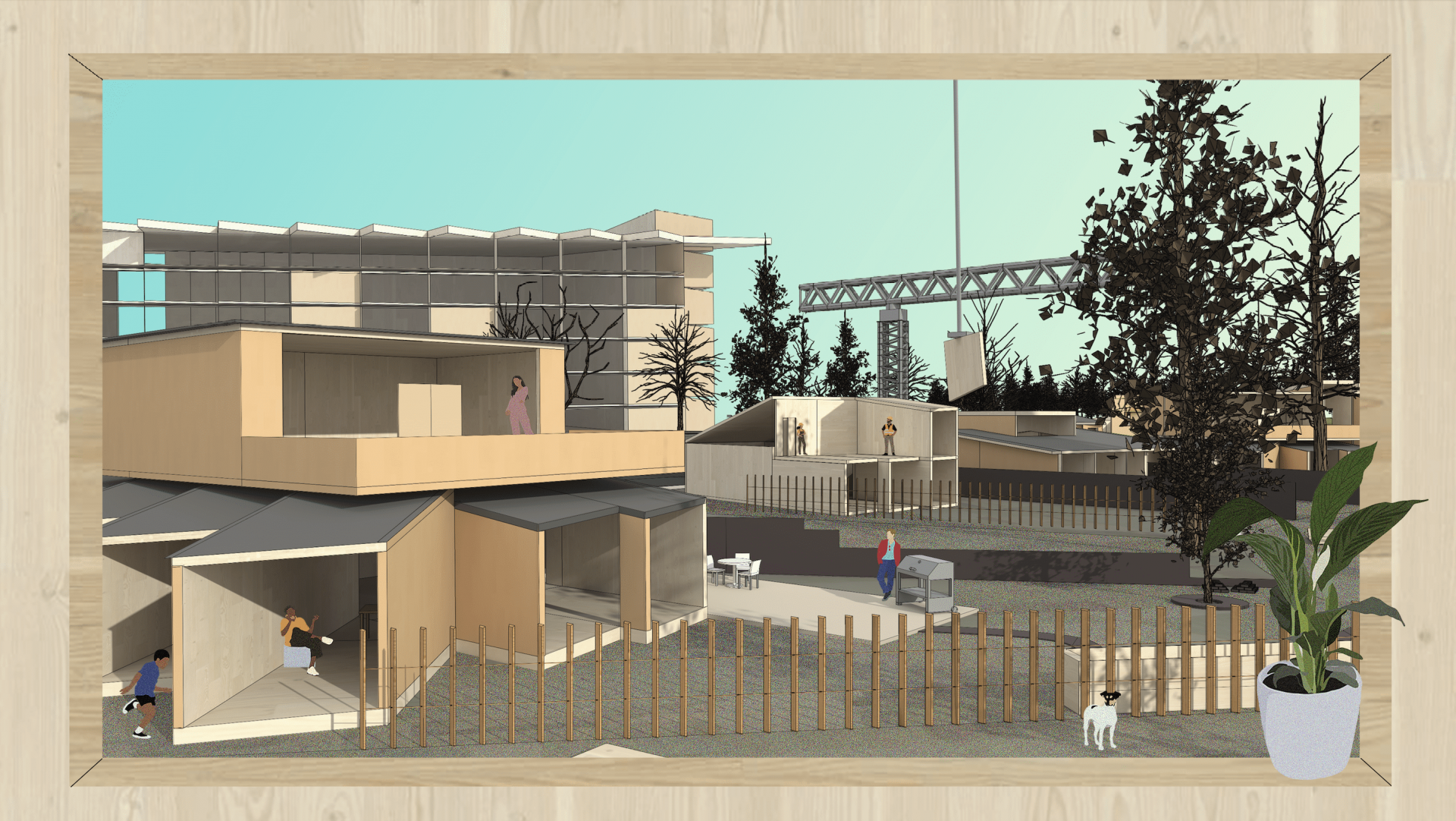
The suburban housing crisis demands a radical reimagining of residential development through a Circular Economy framework—one that prioritizes longevity, adaptability, and regenerative material practices. By integrating hyper-local production methods, Design for Disassembly (DFD) principles, and Cross-Laminated Timber (CLT) technologies, this approach proposes a new paradigm for suburban housing that actively reduces dependence on non-renewable resources and minimizes construction waste over time. Rather than viewing buildings as static end-products, this model treats housing as a dynamic system—capable of being repaired, remanufactured, and transformed in response to changing social and environmental conditions. These circular strategies not only address immediate housing shortages, but also deliver lasting economic, environmental, and social value across a wide range of stakeholder communities. In doing so, the approach aims to challenge conventional development practices and establish a more customizable, equitable, and ecologically integrated future for living.
Green Bytes: Designing for a Post-Extractive Internet
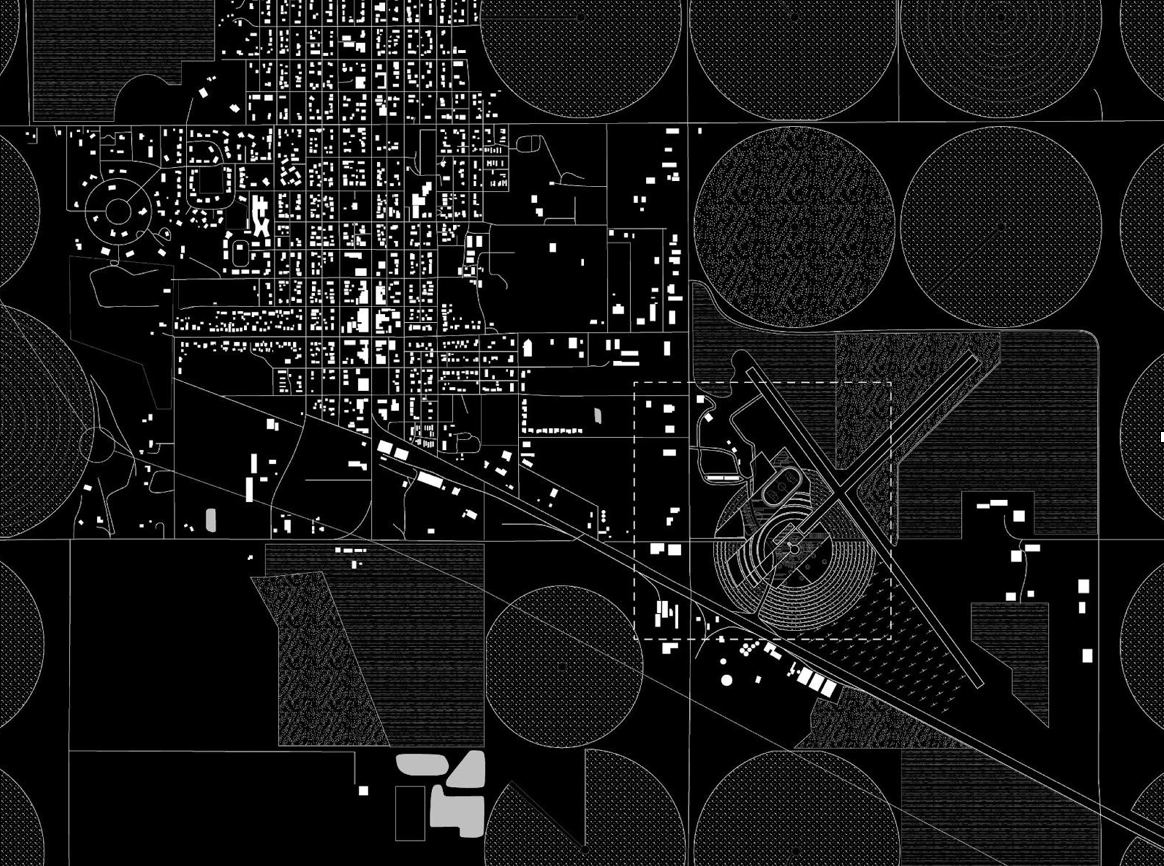
As society’s dependence on data intensifies, data centers, often hidden from view, have emerged as critical yet environmentally taxing infrastructures, consuming vast energy, generating carbon emissions, depleting water resources, and contributing to mounting e-waste. Green Bytes reimagines the data center not as an isolated industrial artifact, but as a self-sustaining, site-responsive ecosystem embedded within rural landscapes and aligned with existing agricultural and infrastructural networks. By integrating digital infrastructure with regenerative agriculture, circular material systems, and decentralized energy strategies, the proposal defines a new typology—one where computation and cultivation co-exist within a performative landscape. In doing so, Green Bytes positions data infrastructure as an active agent of ecological repair, blurring the boundaries between technology and terrain, and reframing digital growth as a catalyst for environmental justice, rural resilience, and a radically decarbonized future.
Darting through the City, Manhattan Rhapsody
Manhattanism endures not as a relic, but as an evolving paradigm through which capitalism’s spatial, economic, and ideological intensities are made physical. Its vertical ambition, speculative logics, and infrastructural congestion constitute not a crisis, but a blueprint for urban desire. Projected into the next century, this paradigm transforms into a recursive megastructure—fragmenting the singular extrusion of value into a dense matrix of competing systems, where architecture operates simultaneously as artifact, interface, and agent of political speculation. In this hypermodern construct, verticality becomes a site of negotiation: between labor and automation, visibility and opacity, private capital and collective need. Urban form no longer reflects static zoning or market dictates, but performs as a dynamic script shaped by digital economies, ecological constraints, and emerging sovereignties. What emerges is not a city of infinite growth, but one of infinite complexity—where architecture reclaims its agency as a critical medium for staging contradictions and rehearsing the social imaginaries of what comes next.
Built-to-Care: A New Urban Model for Aging Populations
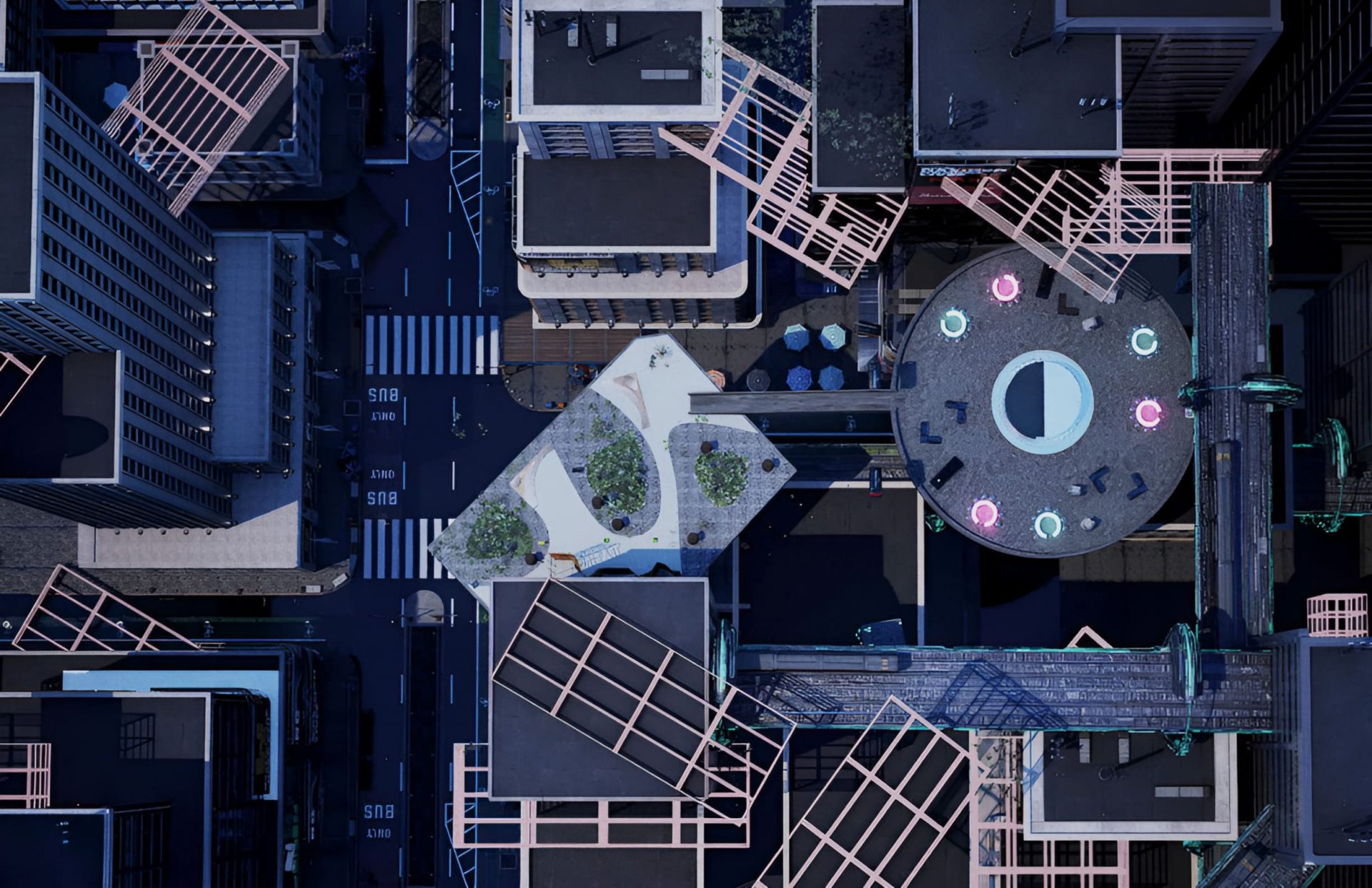
In the face of accelerating demographic transitions—particularly in regions shaped by policies like the one-child policy—urban environments must reconceive their spatial, ecological, and social infrastructures to accommodate aging populations and shrinking generational cohorts. This research proposes the development of Slow Metabolic Health Communities as a new urban paradigm—one that reimagines the built environment, as well as building technologies, as a responsive, living system. Drawing from principles of modularity, biophilic design, and ecological sustainability, the project treats architecture not as static form but as metabolically adaptable structure—capable of evolving alongside its inhabitants over time. By integrating Transit-Oriented Development between dense urban nodes and peripheral aging landscapes, the proposal creates connective tissue that supports both care networks and environmental resilience. These communities offer more than accommodation; they articulate a vision for longevity, continuity, and urban vitality—where health, ecology, and adaptability are central to rethinking how cities age.
Adaptive Micro-Architecture: A Tool for the Urban Commons
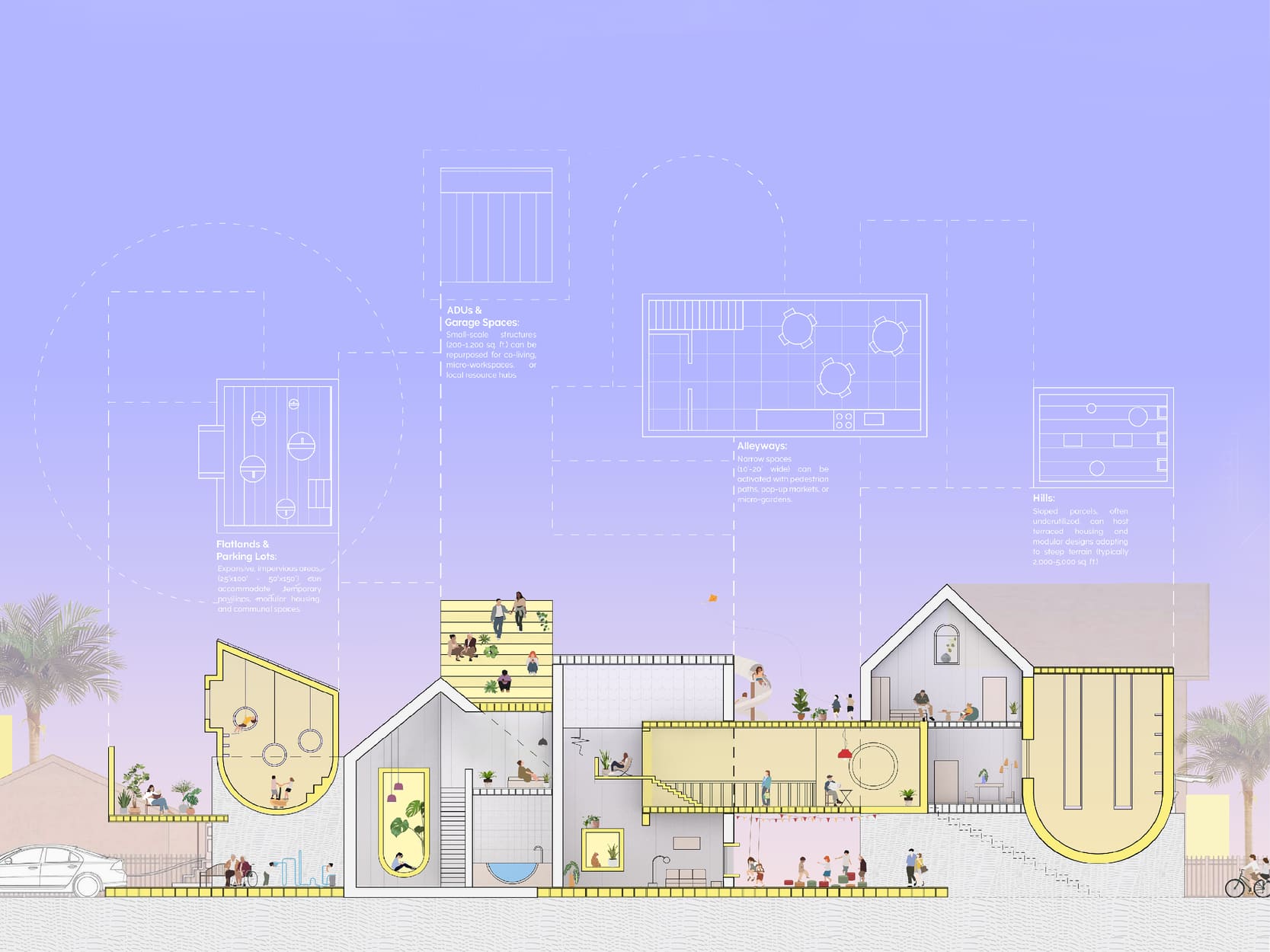
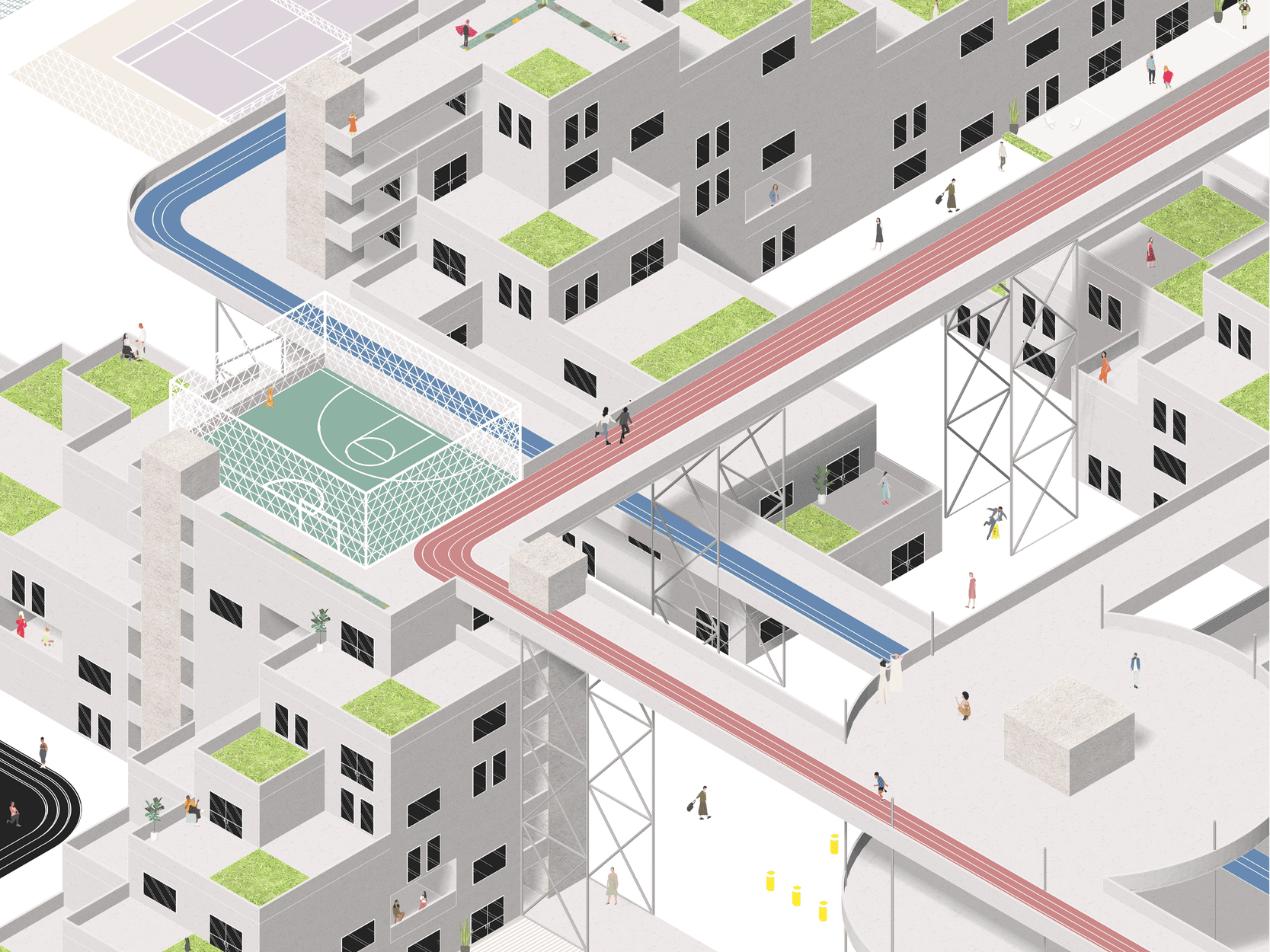
Adaptive micro-architecture operates as a spatial counter-strategy to the rigid and exclusionary logics of single-zoned urbanism, particularly within the fragmented terrain of Los Angeles. Through small-scale, mobile, and modular interventions, it reclaims latent spaces—flatlands, alleyways, freeway edges, parking voids—not as overlooked remnants but as fertile grounds for collective life. These architectures reject the architectural object as an autonomous end, functioning instead as open systems: temporal, negotiable, and embedded in the social dynamics of place. They challenge dominant paradigms of static planning, commodified land, and private ownership by foregrounding the urban commons as both a spatial condition and an ideological project. In doing so, governance becomes participatory, and occupation becomes an act of resistance. As cities face intensifying ecological volatility, housing insecurity, and infrastructural decay, adaptive micro-architecture proposes a bottom-up, care-centered form of re-densification—one rooted in reciprocity, shared authorship, and the continuous renegotiation of space as a common resource.