Strictly speaking, homelessness is not an architectural problem, it is a social problem. And Architecture is not about solving problems, anyway. Architecture can and has been used for that purpose—its buildings and affects can provide shelter and comfort, for example, but what makes those buildings and effects architecture has nothing to do with problems and solutions.
But when architecture is asked to engage with a problem of such importance as homelessness this expectation must be set aside. The homeless situation is so dire it would be practically immoral to focus the assessment of our efforts on their architectural quality rather than their effectiveness for the subject population. Yet this doesn’t mean the architectural intelligence cannot be brought to bear. In fact, the architectural intelligence is particularly well suited to sorting out and thinking through such wicked dilemmas, outside of any relationship to architecture proper. And even then it is not impossible to imagine that architecture results from the application of such thinking.

Yibo Peng
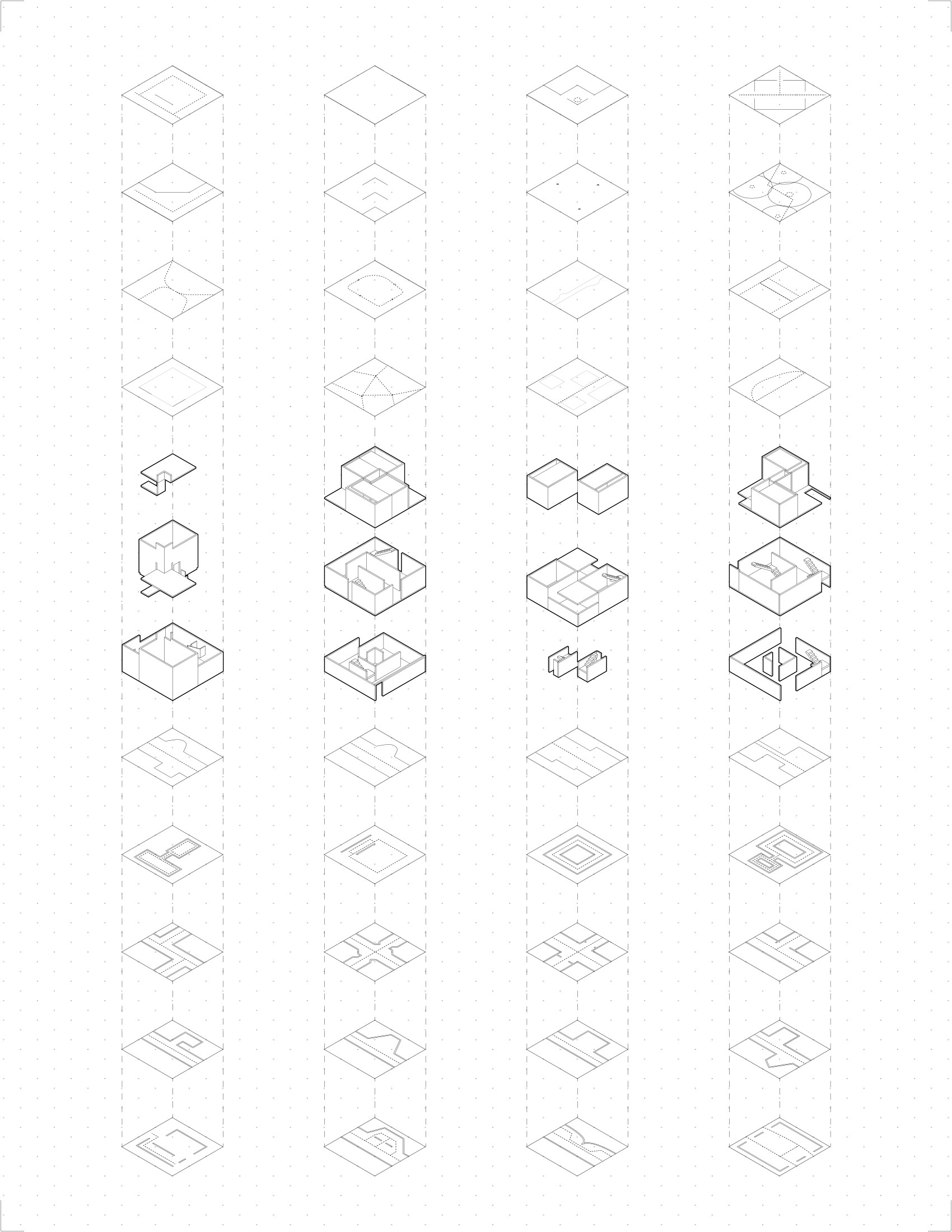
This project develops a modular housing system for people experiencing homelessness through four spatial principles of dignity: privacy, safety, belonging, and autonomy. Rather than treating these principles as abstract values, the proposal investigates how they can generate form, circulation, and relationships between adjacent units. Each shelter is designed not only as an individual space, but also as part of a larger collective system where spatial conflict, negotiation, and connection take place. The project focuses on the threshold between personal territory and shared circulation, proposing a thickened filter zone that mediates entry, interaction, and separation. Through combinations of units, openings, and layered movement, the design studies how dignity can be translated into a clear spatial logic. The aim is to create an emergency housing prototype that is compact, adaptable, and socially legible, while demonstrating how individual shelter and collective life can be organized through a coherent architectural system.

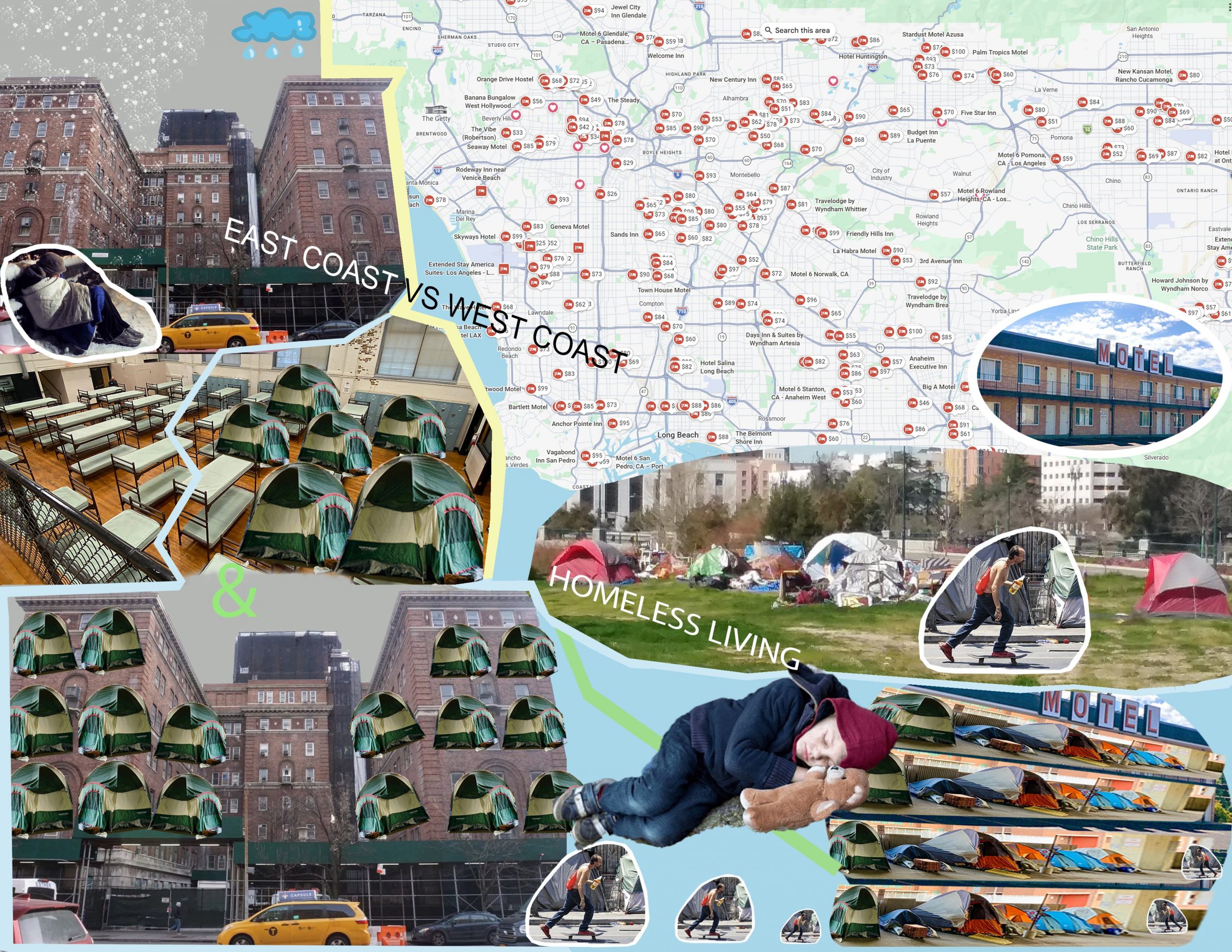
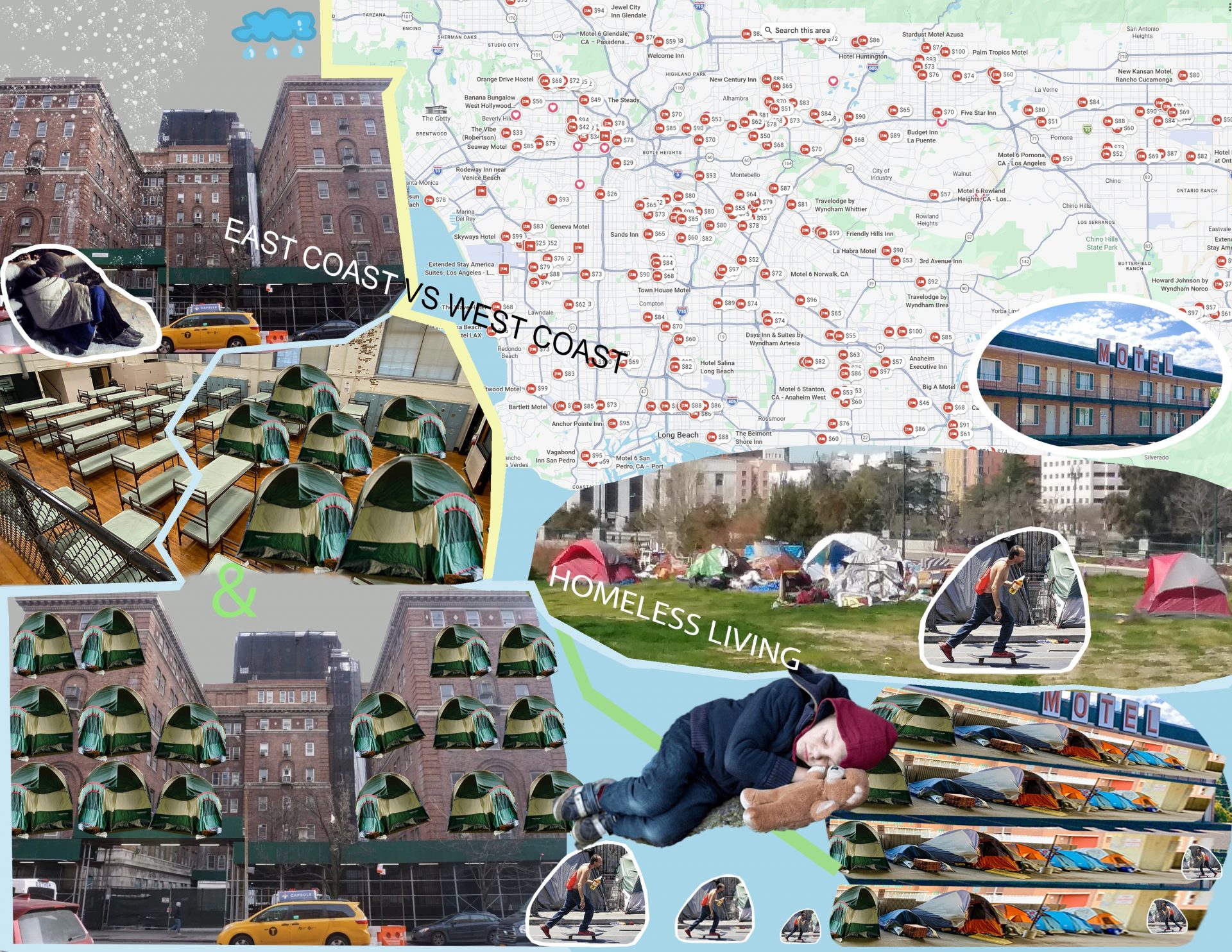
Homeless+Living (The Difference Between West Coast and East Coast Homeless People)
This project investigates the systemic roots and spatial expressions of homelessness in the United States through a comparative analysis of the West and East Coasts. By investigating historical trends, policy frameworks, urban environments, and climate conditions, the research reveals how regional differences shape the distinct challenges faced by unhoused populations. In response, the study proposes a hybrid housing model that integrates adaptive strategies from the West Coast with the spatial logic of East Coast shelter typologies. This approach reimagines the combination of a motel and a temporary shelter for homeless people, aiming to provide safer, more flexible, and responsive living environments. An effective shelter must address circulation, isolation, privacy, and safety—four critical factors that ultimately shape the success of such interventions.
Temporary Shelter Units Within Urban Seams
Student Name: Weican Xue
Instructor: Wes Jones
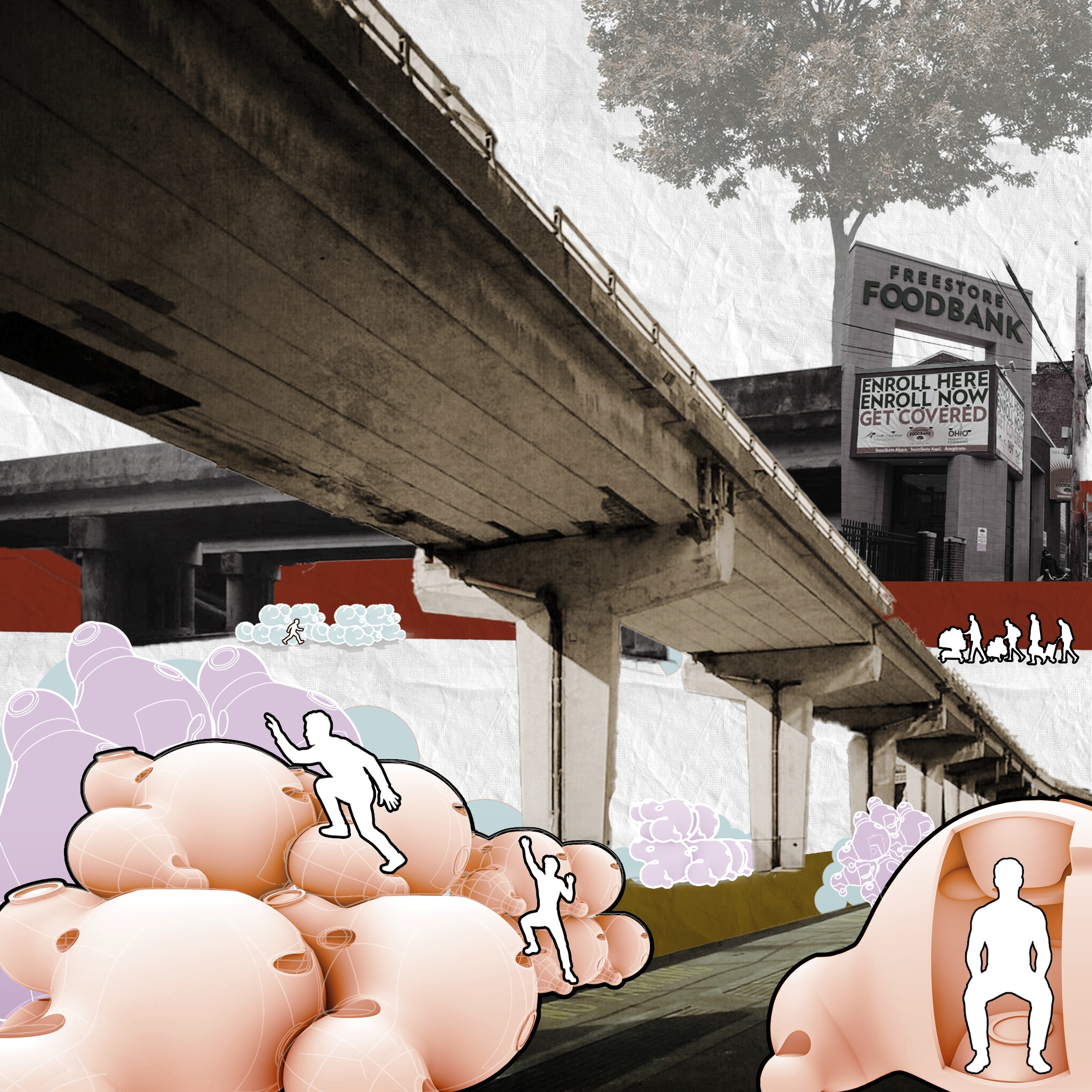
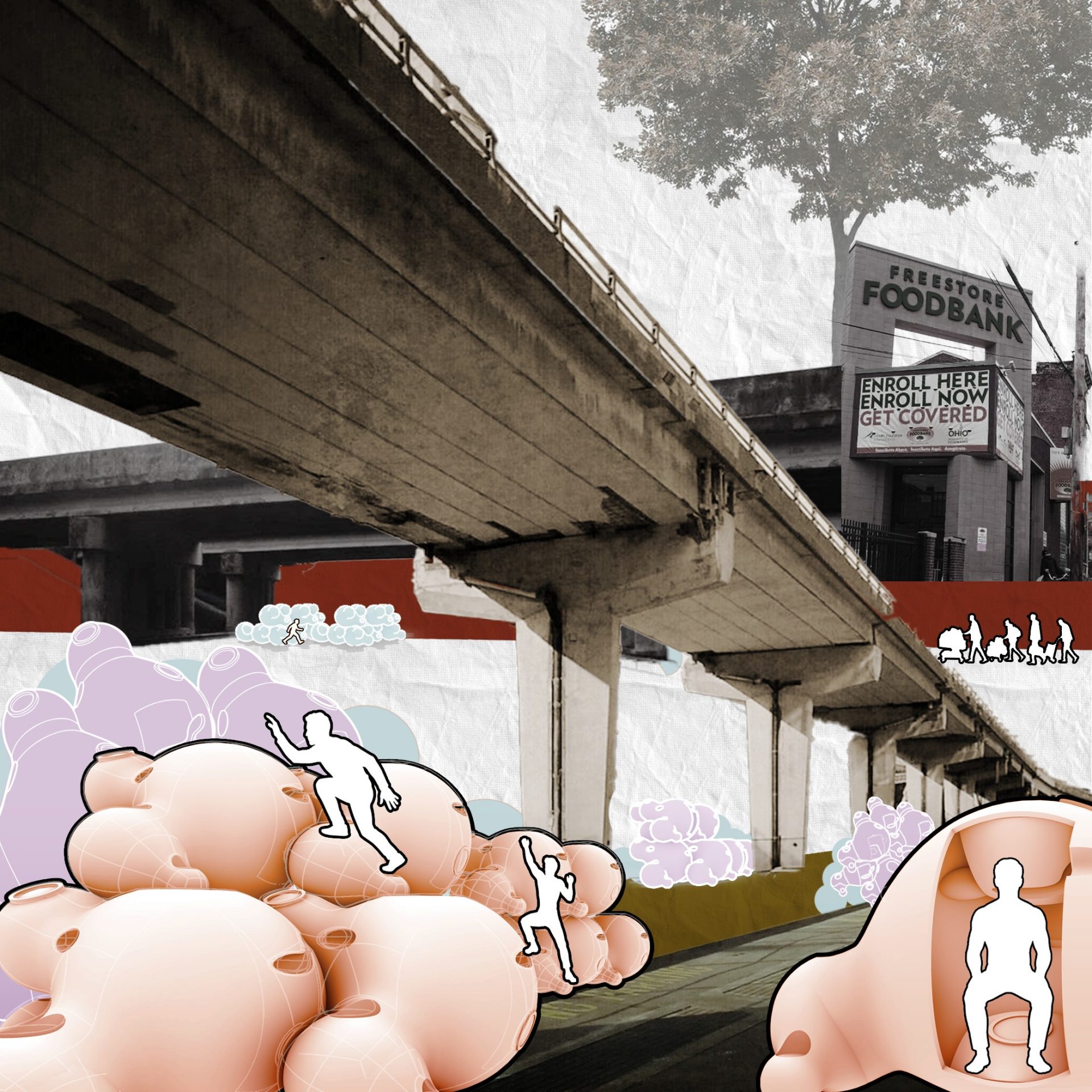
Current homeless aid systems are largely premised on relocation, requiring individuals to leave their existing territories and enter centralized shelters. Such systems creates exclusion in practice, discouraging participation—particularly for those with limited mobility or established survival routines tied to specific locations.
Meanwhile, cities contain numerous underutilized residual spaces, or “urban seams,” especially along highway infrastructures. These areas, often adjacent to existing service networks, remain overlooked despite their spatial potential.
This project proposes transforming such seams into a distributed network of shelter nodes. By embedding small-scale, highly accessible temporary units within existing infrastructures, homeless individuals can access support locally without displacement.
Designed as night-priority shelters, these units provide immediate rest after dark, while users rely on surrounding urban systems for daytime resources. Modular, prefabricated, and adaptable, the shelters can be combined and dispersed across urban seams, forming a scalable and inclusive support system.
Embroidering the Edge: Housing Within the Commercial Fabric
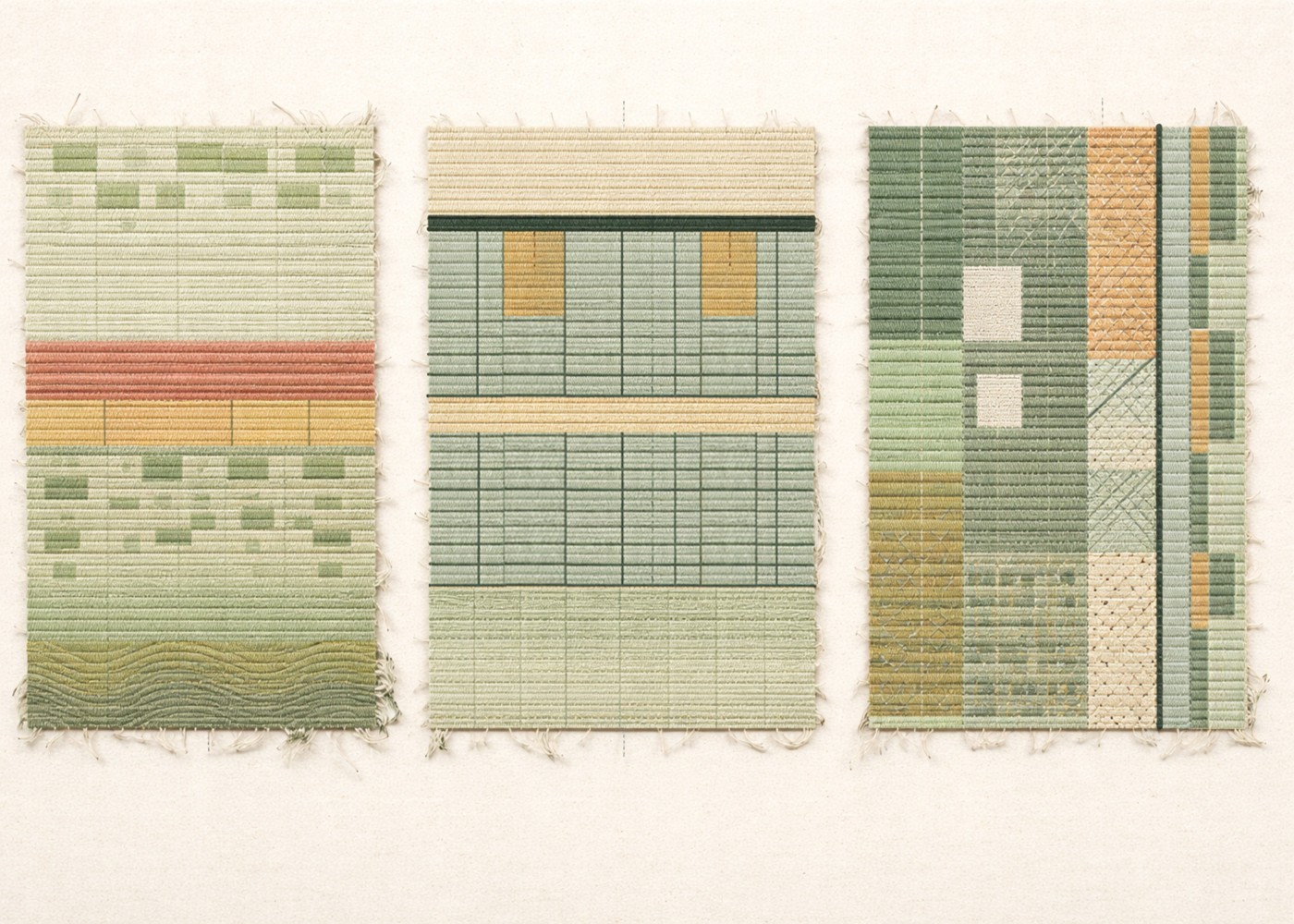
Embroidering the Edge is a housing method for the commercial edge — the shallow, under-occupied strip corridor found across American cities. It uses embroidery's operational logic, not its aesthetic, to densify without erasure.
The condition is specific and repeatable: single-story retail on a narrow lot, a parking field behind it, a residential neighborhood beyond. The geometry is always the same. So is the problem — too thin for conventional housing, too embedded to demolish, too present to ignore.
The method treats the existing strip as a fabric and the new housing as the thread. Units pass through the commercial structure — between the bays, behind the storefronts, above the commercial datum — changing what the fabric does without destroying what it is. The strip survives. The housing is added. Once the work is done, the two are inseparable.
Elevated Field: Harm-Reductive Vertical Architecture for Unhoused Residents in Skid Row
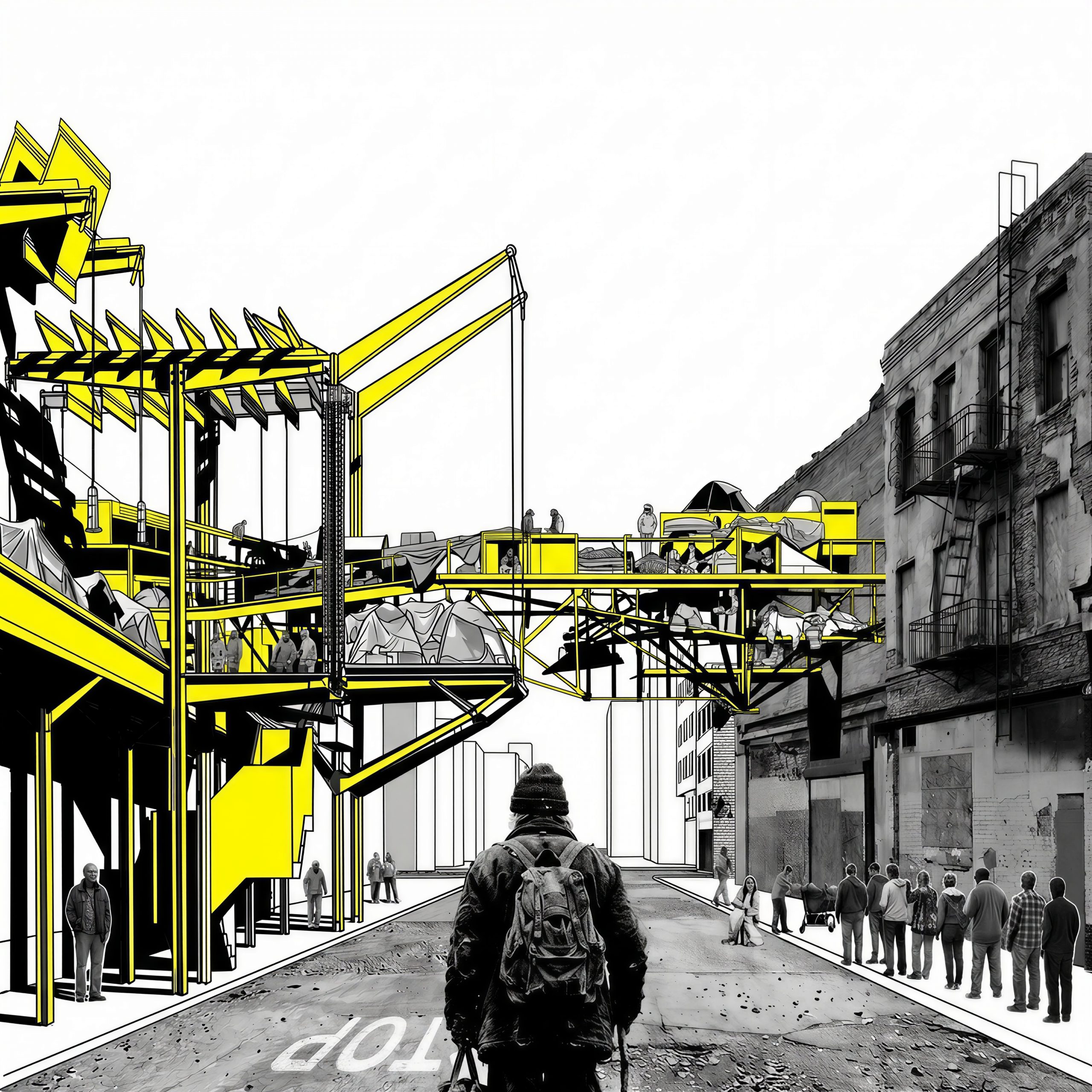
This thesis argues that homelessness in Skid Row is fundamentally a condition of spatial
compression rather than mere resource scarcity. It proposes a vertical thickening of the city
by elevating unhoused life into a semi-autonomous layer above ground, thereby relieving
congestion and reorganizing coexistence. Informed by behavioral observation, the project
introduces calibrated spatial prescription to reduce conflict while maintaining agency.
Rather than solving homelessness, architecture is positioned as a harm-reduction
mechanism that redistributes space, visibility, and survival conditions without relying on
policy change.
Skid Row Suburbia
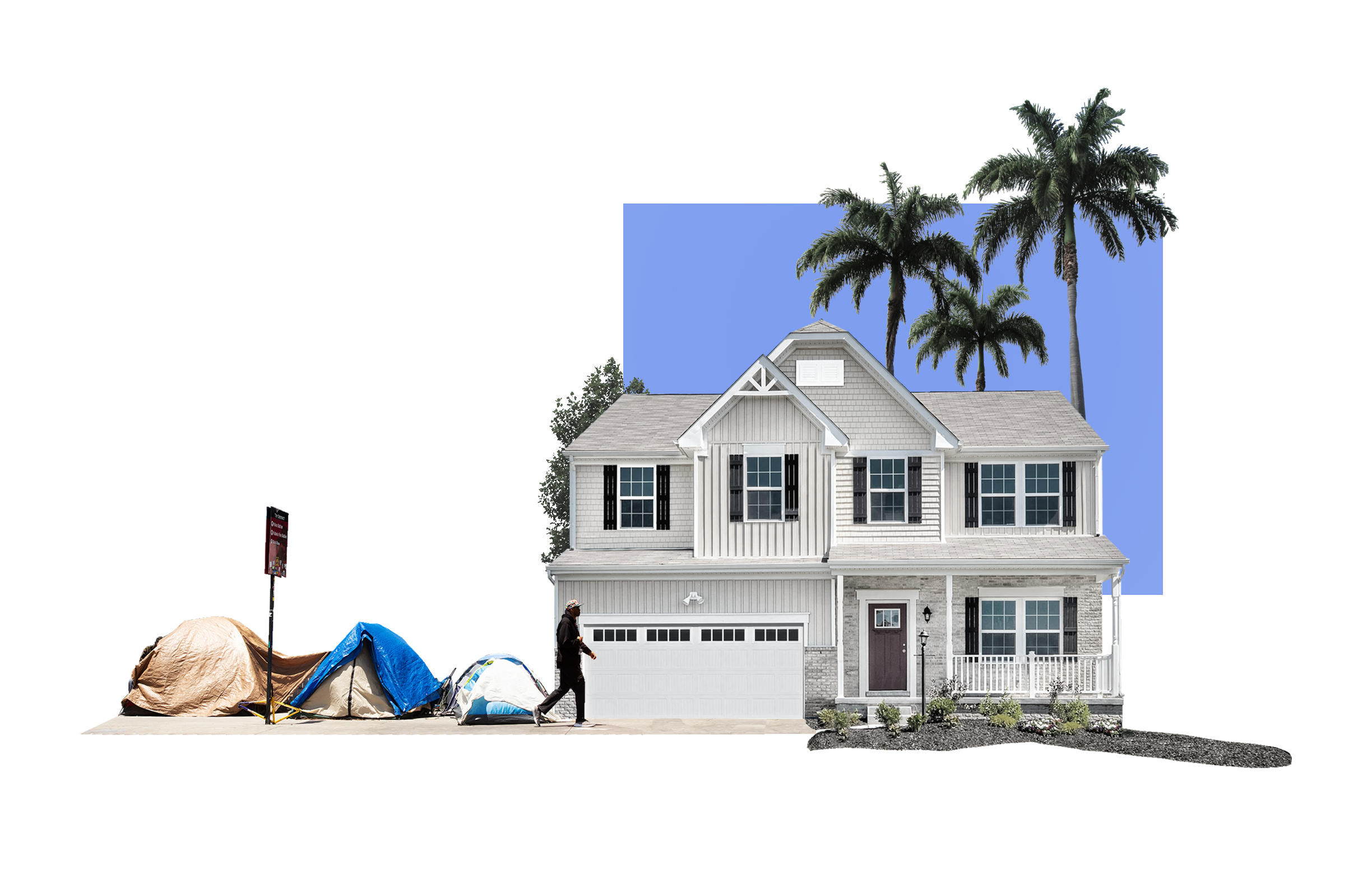
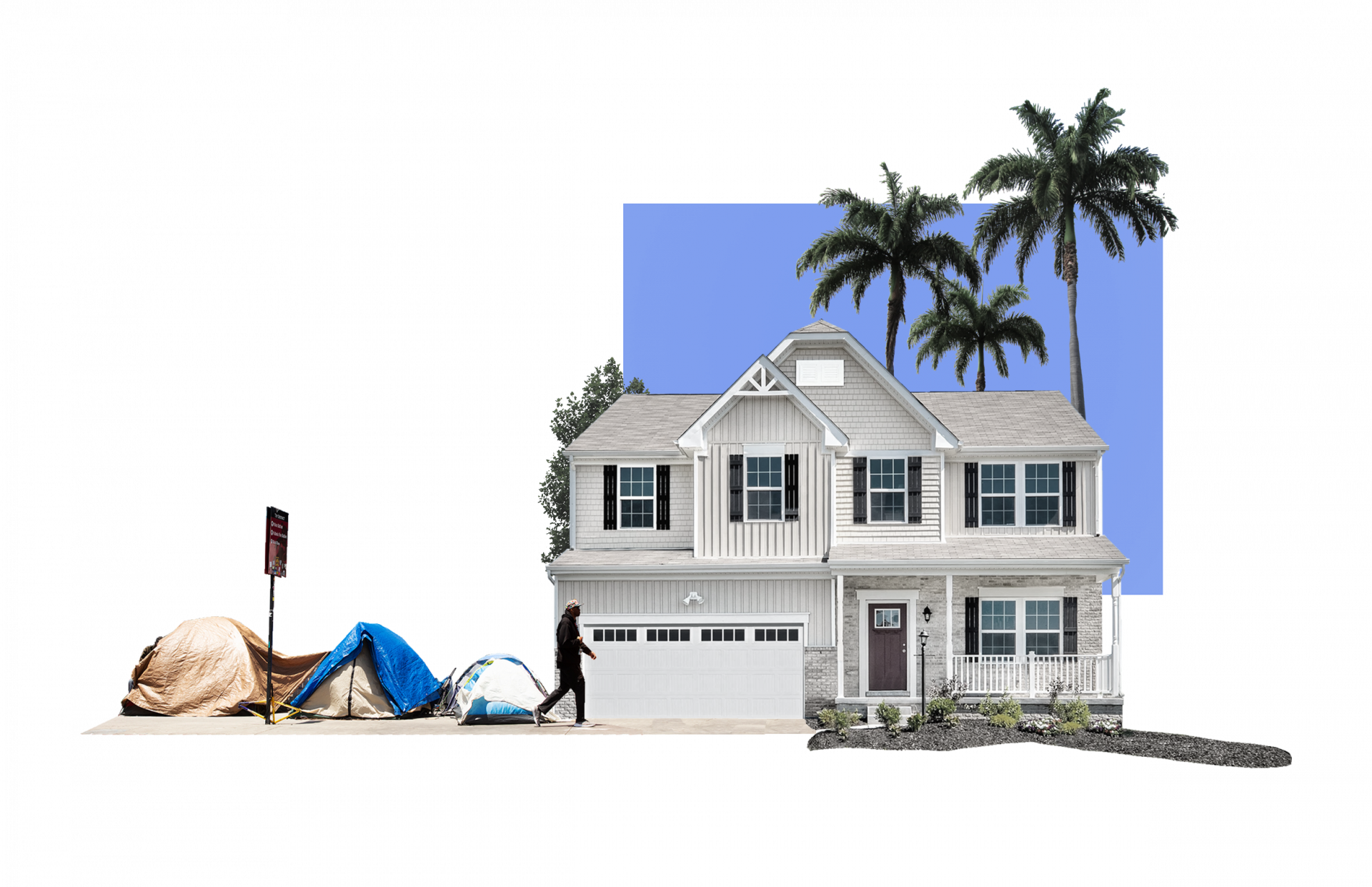
Suburbs and the single-family house comprise the principal means through which both ideas of home and the good life have been conceived in the US. Together, they constitute the ideal against which homelessness is defined and understood. This thesis asks, then: what can suburbia teach us about homelessness? How does it operate, grow, and endure? To what extent does it offer clues to solving homelessness? In asking these questions, this thesis reserves judgement on suburbia, and instead examines what Robert Venturi and Denise Scott Brown would term its “method”. To do so, a new sub-urban zone is proposed, beginning within Skid Row. Adorned with greenery and mimicking the proliferation of suburbs and typified homes, houses sit alongside the area’s existing warehouse fabric and occupy reclaimed territory on its streets. This effort to suburbanise Skid Row aims to rebuild the dignity of its residents in the legible imagery of the American Dream. Ultimately, what happens when the processes of suburban sprawl are inverted, originating instead from the heart of an urban core?
System Before Shelter: Modular Urban Infill Strategies for Scalable Transitional Housing in Los Angeles
By Jainish Patel,
Guided By Wesley Jones.
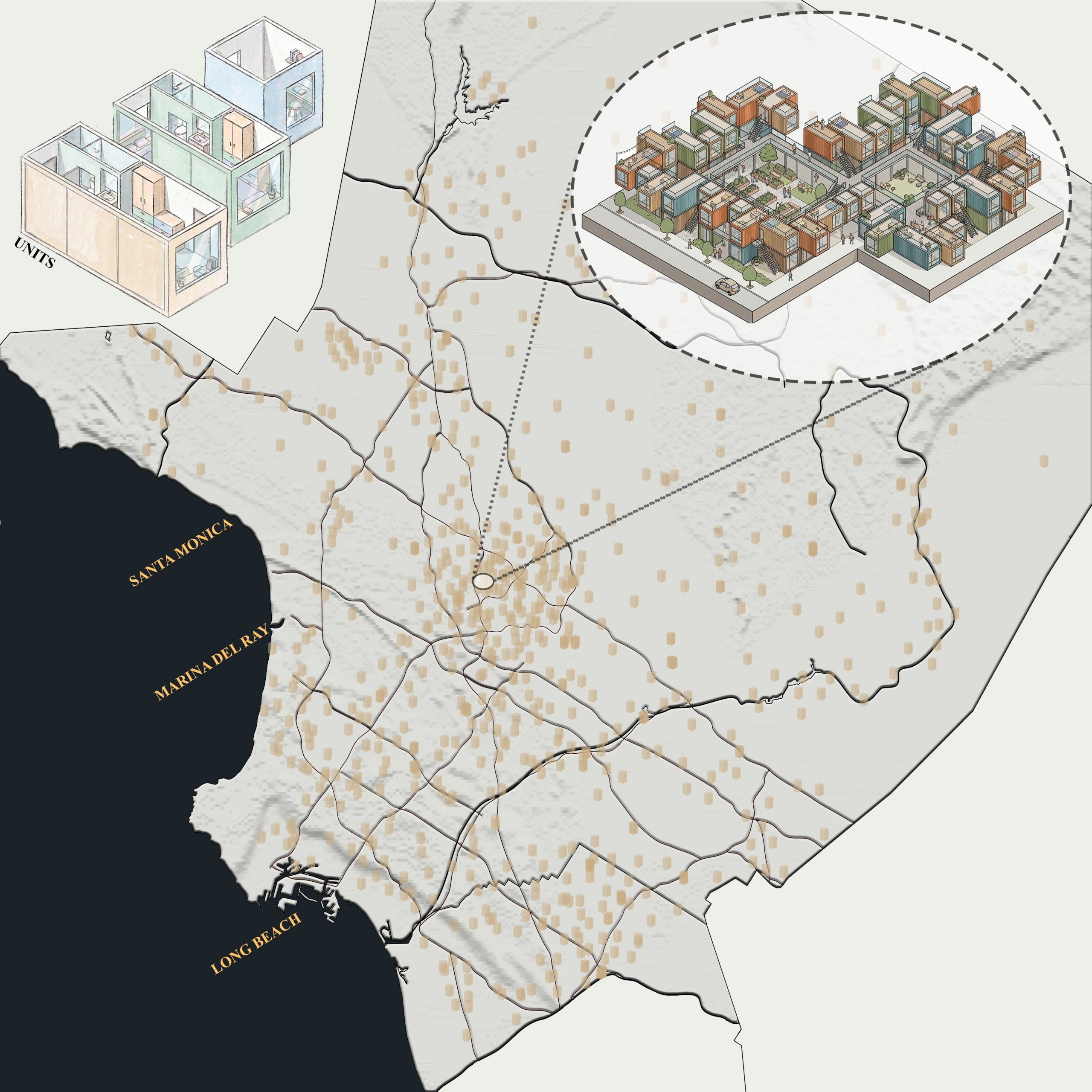
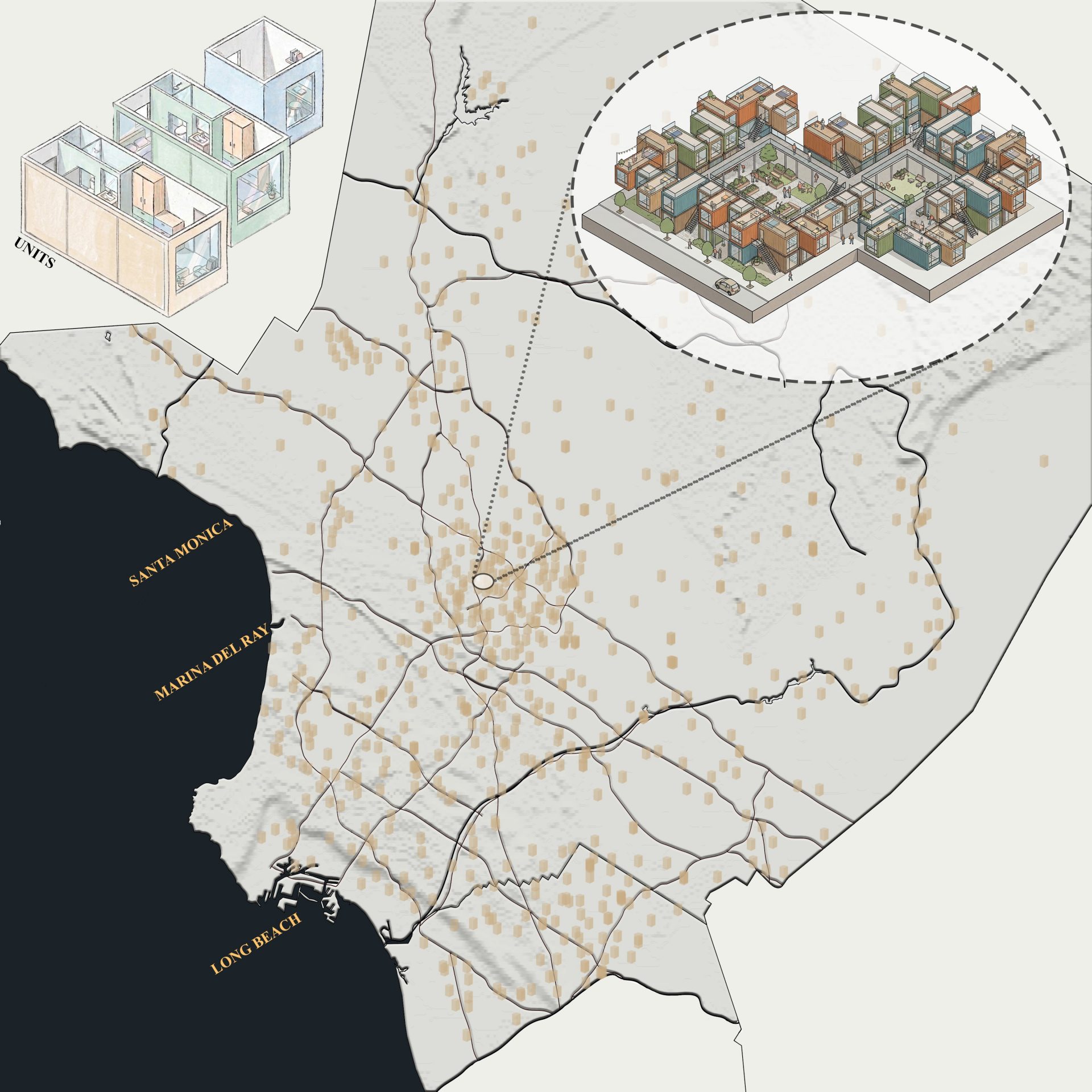
Los Angeles County’s homelessness crisis is not merely a deficit of housing, but a failure of deployment, scalability and urban integration. This thesis proposes a system driven architectural framework that prioritizes modular logic over formal expression to deliver rapidly deployable, cost efficient, and socially integrative housing. Using a base module, the project develops a flexible unit matrix capable of accommodating diverse household types while optimizing shared infrastructure through stacking and service spines. The system is designed for adaptive reuse and infill across underutilized parcels, vacant lots, and warehouse typologies, enabling distributed deployment at scale of 72000 units. By incorporating communal and liminal spaces, as well as mixed use programmatic element, the proposal positions transitional housing as an embedded and continuous layer within the existing urban fabric, rather than an isolated intervention. Ultimately, the thesis argues that systemic architectural strategies can reconcile speed, dignity, and urban continuity in addressing homelessness.
Self Reliance
Solutions to large scale problems, such as homelessness, are most often addressed by leveraging the power of large-scale modern tools. These tools include XXXL machines of automation, mass efficiency, and production, which work in concert to produce XL infrastructures of order (buildings) as solutions. They may address short term critical human need, but do not include a long-lasting means to build the individual in their processes. Through shifting away from industrialized XL solutions, systems of personal ordering, meaning, and empowerment can be developed at a human scale through progressions of skill acquisition to insight systemic change. Instead of proposing an infrastructural solution to the problem of homeless, this project explores methods of becoming and belonging through vocation on an individual level.


Adaptive Shelter, Emergent Lives
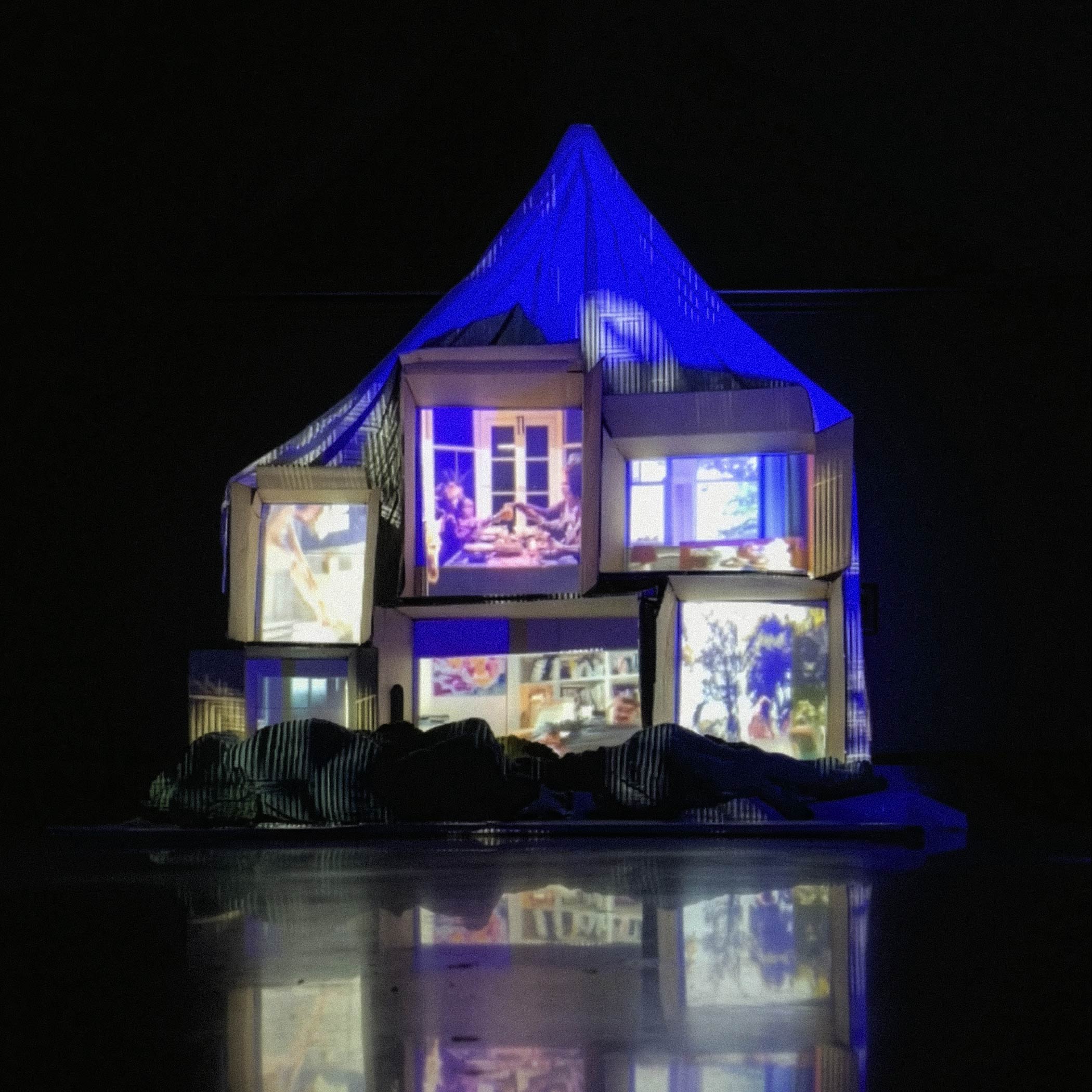
In the absence of the support and self-esteem typically provided by a stable home environment, teens and young adults exiting the foster care system are vulnerable to cycles of homelessness and disconnection in adulthood. This thesis proposes a transitional housing system that exists in constant development, housing the lives, memories, and potential of youth facing homelessness as they grow into self-sufficient adults.
Beginning as a soft place to land, the program emphasizes safety, structure, and emotional grounding by providing a space residents can control and customize to fit their evolving identities. Spaces, walls, and furniture act as vessels, changing over time with the evolution and emergence of resident’s identities and potential, and supporting the development of identity, autonomy, and connections. Architecture is both a container and catalyst, driving the transformations of the youth facing homelessness as they move towards a life of dignity, agency, and hope.
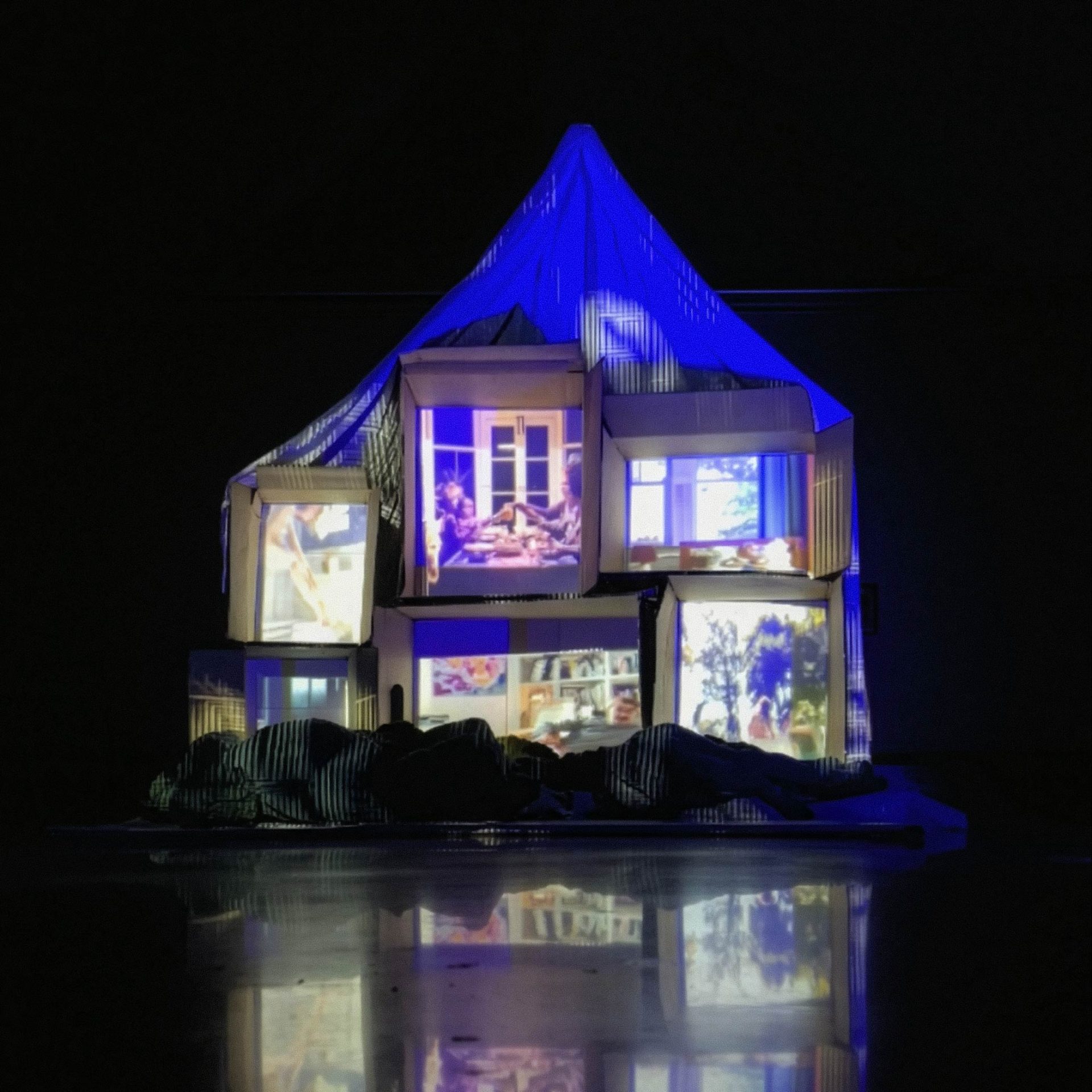
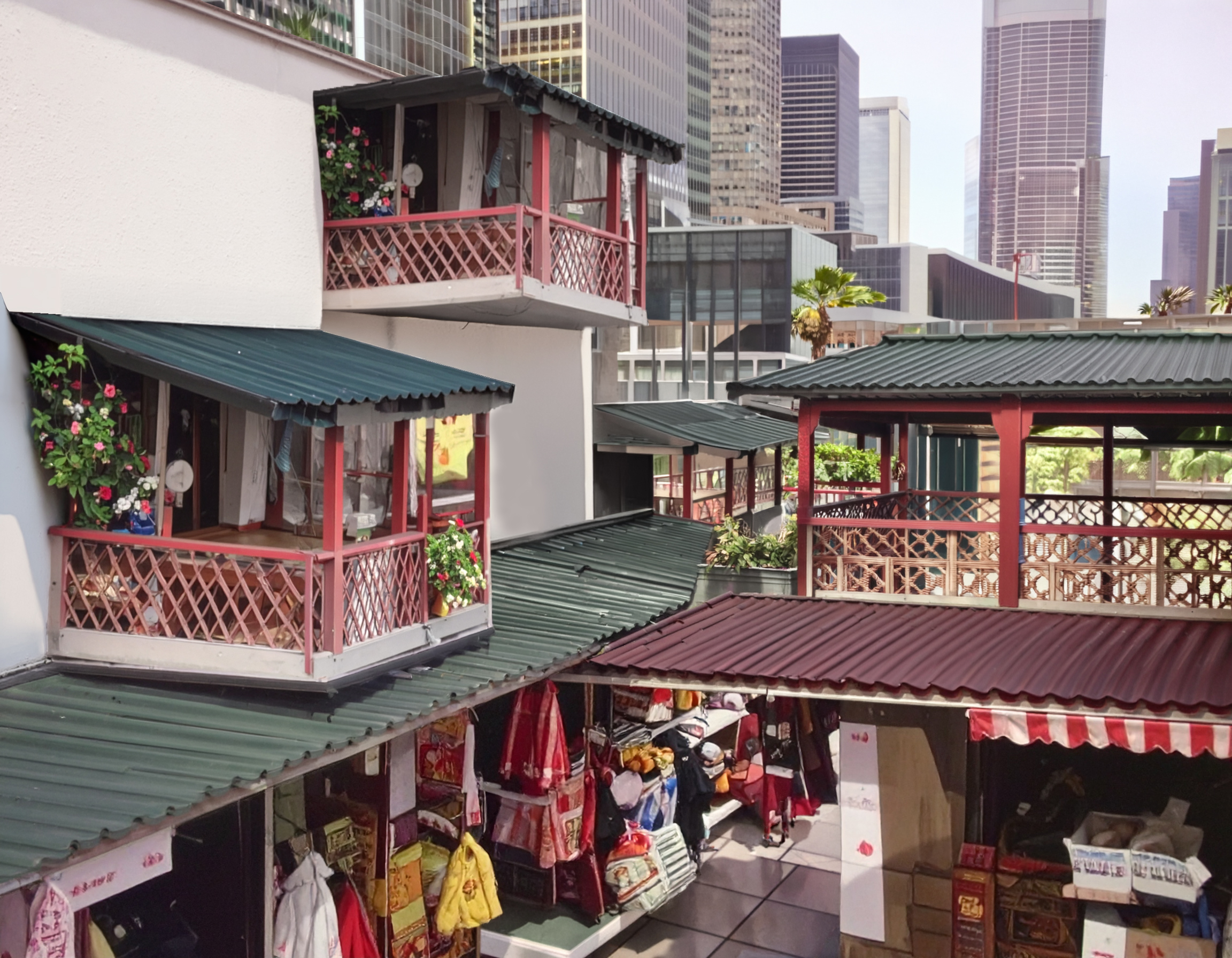
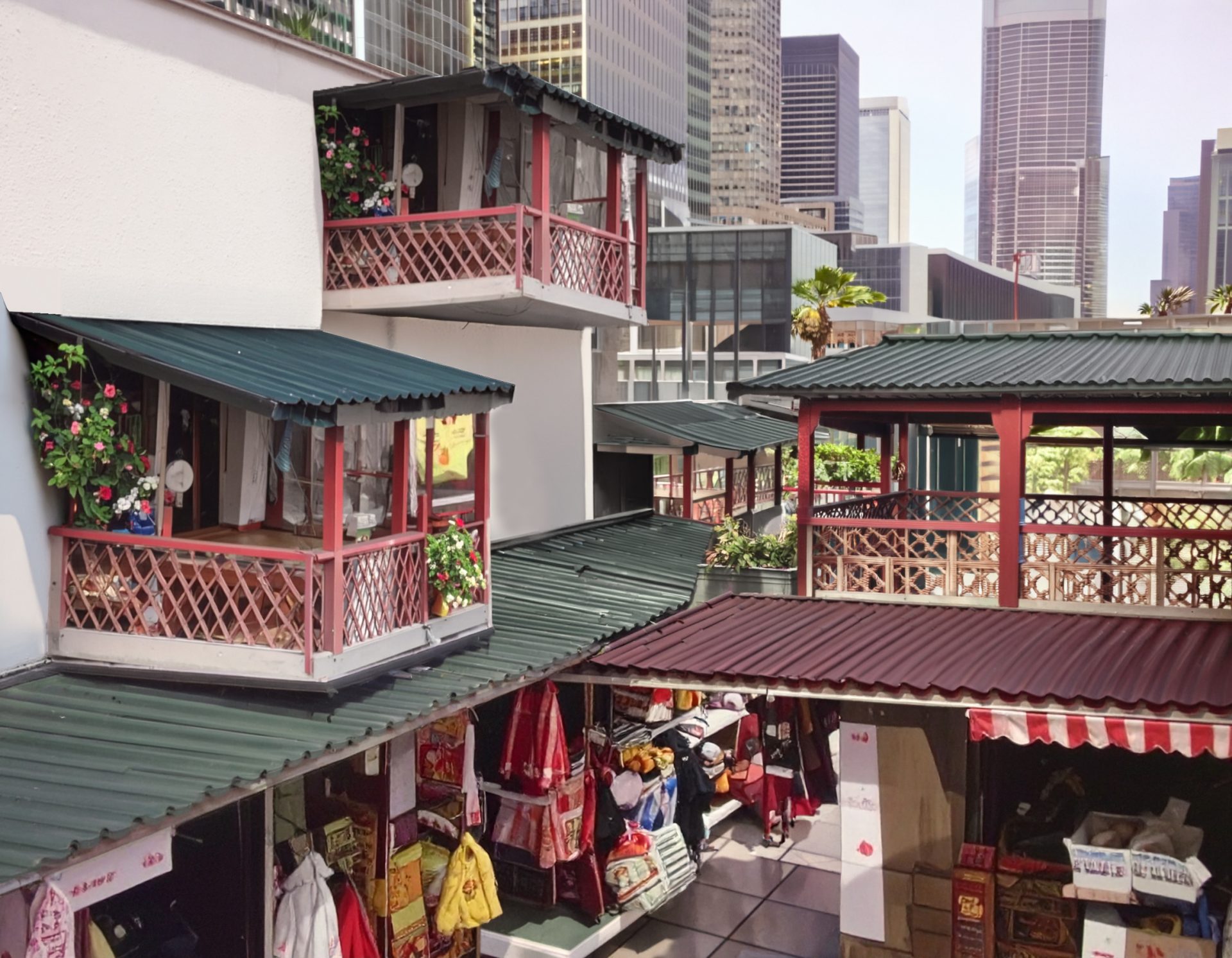
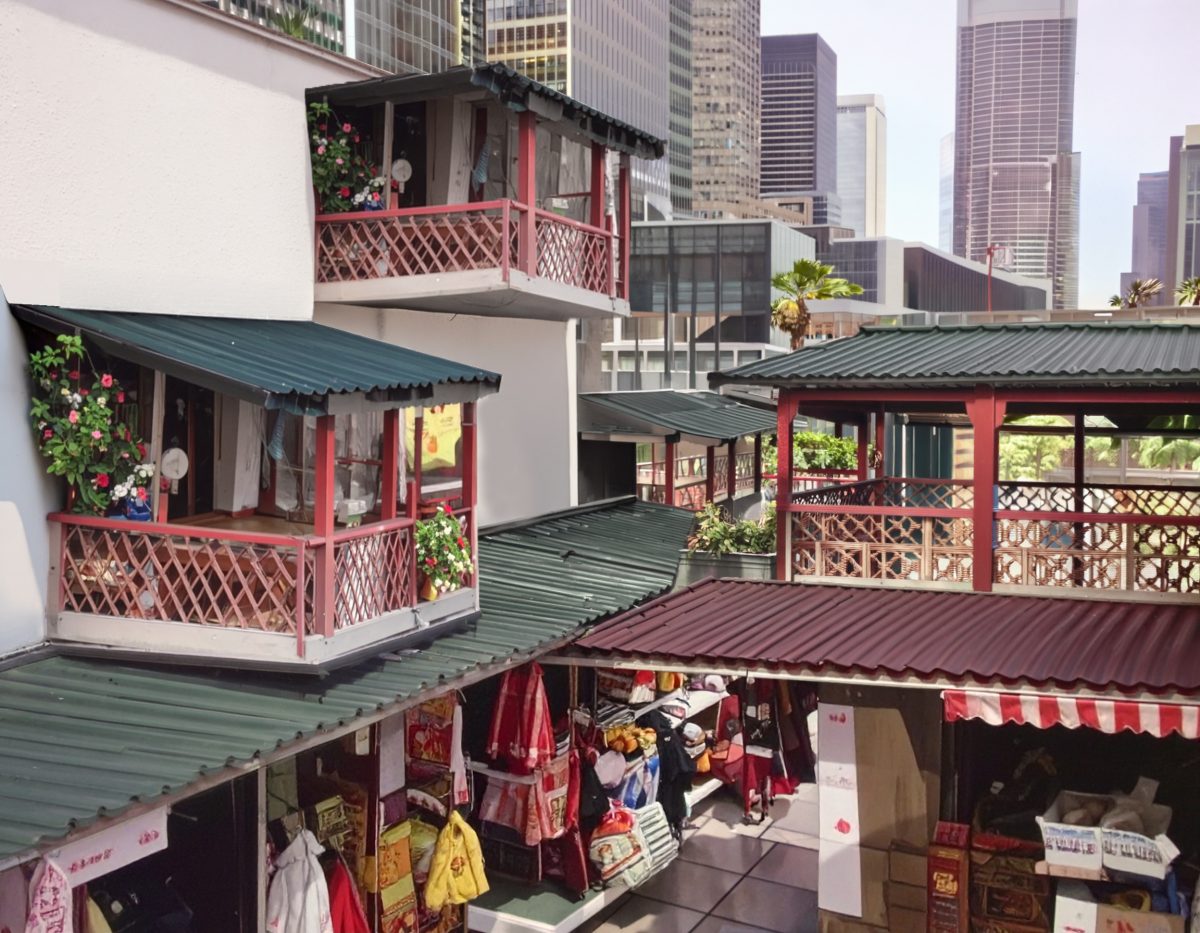
The Spring Street Shophouses: Preserving the Unique Marketplaces of Los Angeles Chinatown
Situated along the gentrified Spring Street corridor in Los Angeles Chinatown, this intervention transforms a high-value parking lot into a community-first marketplace. As displacement threatens the small businesses serving low-income residents, the design redefines the architect’s role as a cultural advocate. By translating architectural heritage into financially viable propositions, the project establishes permanent economic space within a vulnerable historic district.
The design revives the traditional shophouse model, integrating affordable housing directly above a marketplace. This layered live-work approach addresses the housing crisis while restoring the intimate "mom and pop" scale essential to the district’s identity.
Grounded in deep research into Chinatown’s history and current politics, the intentional design understands the issues the community faces. The programming is designed for long-term sustainability, a space where the older generation can thrive and the new generation is invited to help sustain cultural significance. This ensures that we uplift the community without leaving anyone behind.