In this section, we discussed “S – M – L – XL” as a framework for the thesis. We evaluated this through four topics: Problem (What), Context (Where), Technique (How), and Theory (Why). The aim of the thesis was to create a body of work that operated in parallel with traditional architectural contingencies such as site, program, precedents, codes, politics, and social engagement, while also focusing on individual authorship, form, representation, and theory. Students worked independently to develop their own thesis and research throughout the semester.
The studio addressed architectural problems at multiple scales. At the start of the semester, students collectively researched graphic standards, theoretical frameworks, exhibitions, oversized mediums, mockups, pavilions, buildings, and cities, as well as more contemporary, scale-less topics such as BIM, augmented reality, and artificial intelligence. Students used this research to position their own thesis interests throughout the fall and spring semesters. The ultimate goal was for students to develop a body of work that supported the formulation of their thesis project and extended beyond their time at USC. Whether the work was a small-scale project with large implications, or a representational project that challenged our understanding of scale, students were encouraged to take a critical position and produce a range of outputs, tangents, and research that could inform a rigorous and insightful thesis project.

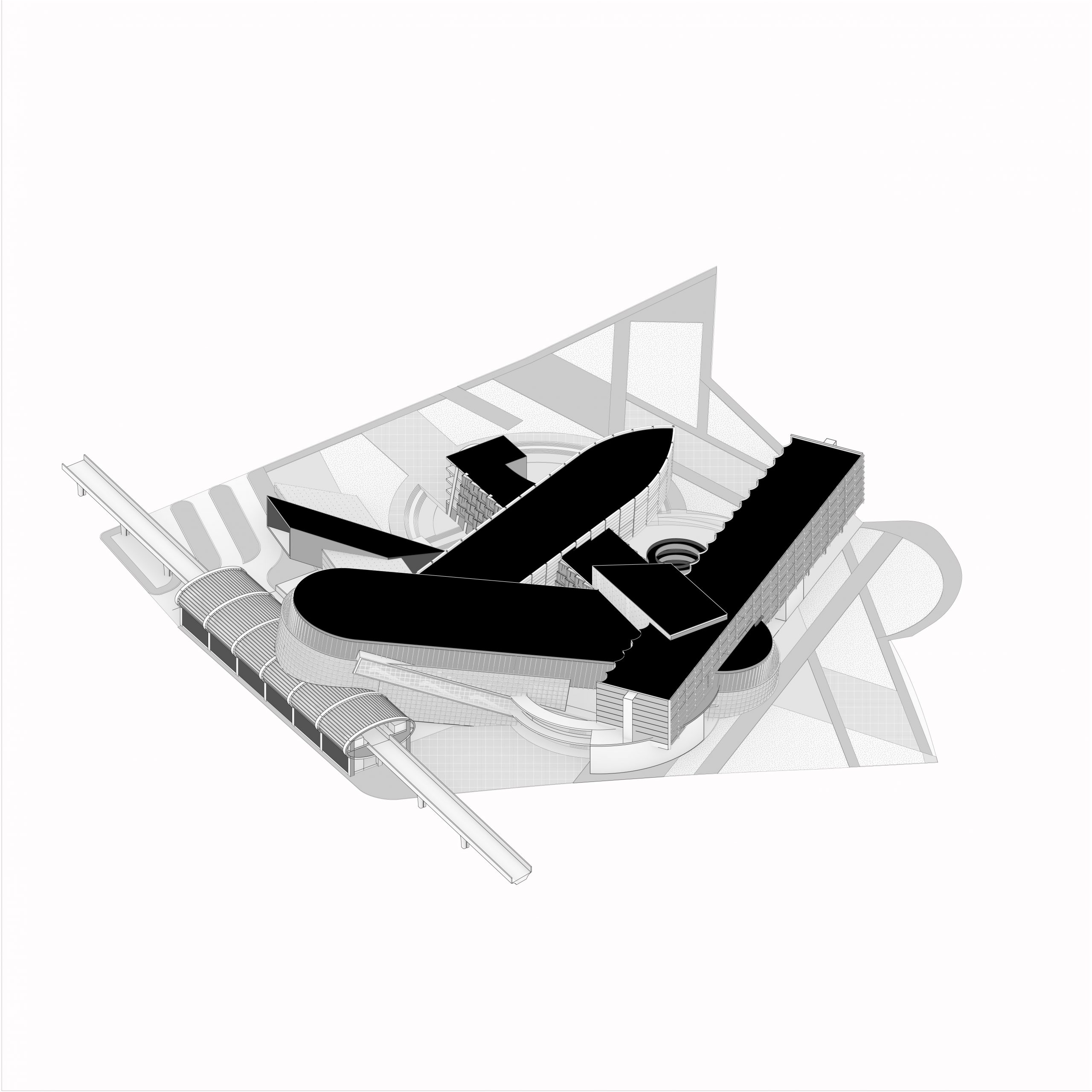
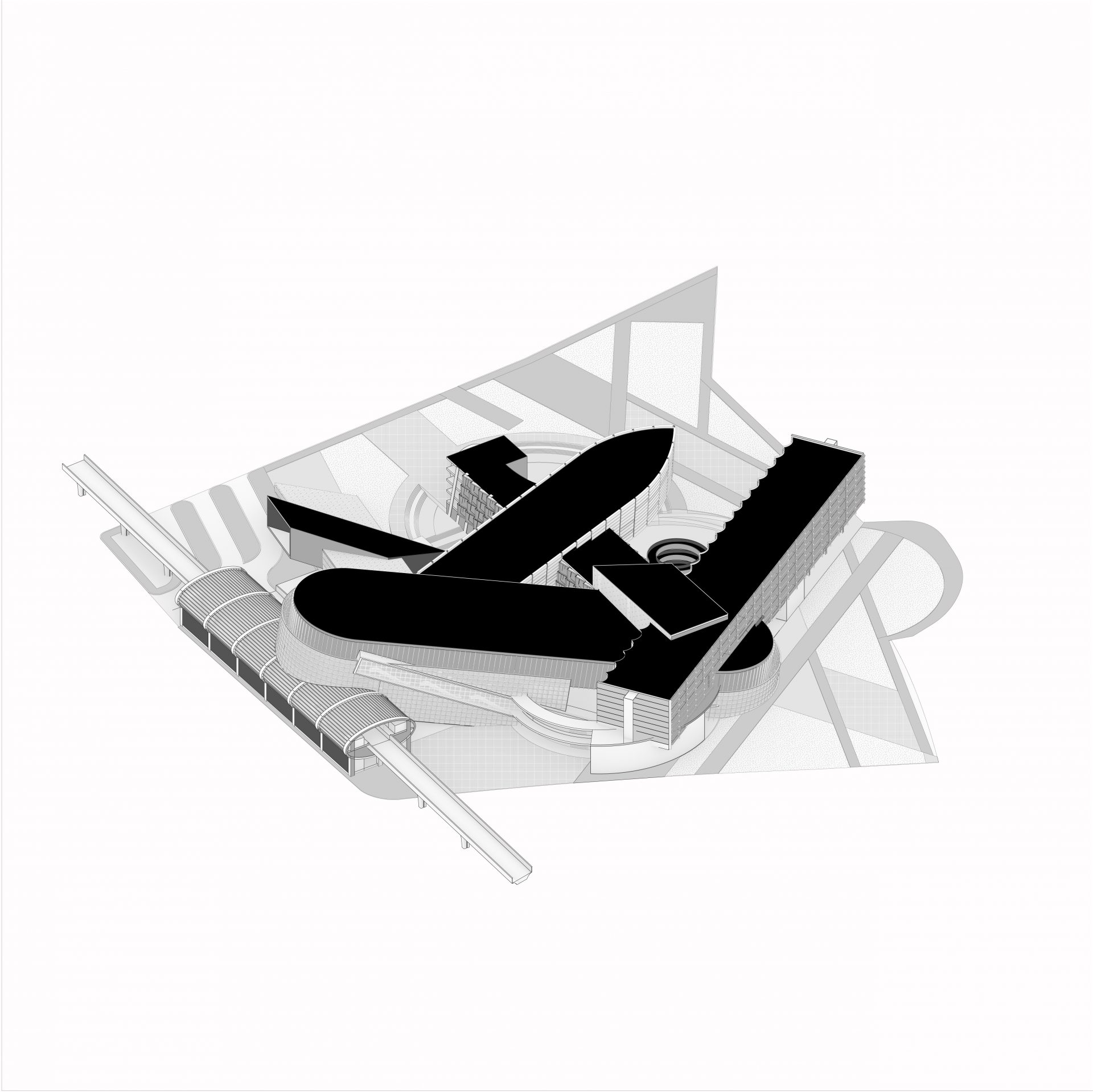
Piled Intersections of Infrastructure
Piled Intersections of Infrastructure proposes a new architectural condition for contemporary transit infrastructure, replacing the modern logic of stacked floor plates with a piled arrangement of interlocking volumes. Rather than treating the station as a linear conduct of movement, the thesis understands it as a civic and tectonic condenser where mobility, housing, and collective space intersect. By allowing multiple programs, temporalities, and spatial systems to coexist in parallel, the project creates a continuous field of overlap, adjacency, and public encounter. This thesis argues for transit architecture as an active framework of convergence, capable of supporting layered urban life within one differentiated whole.

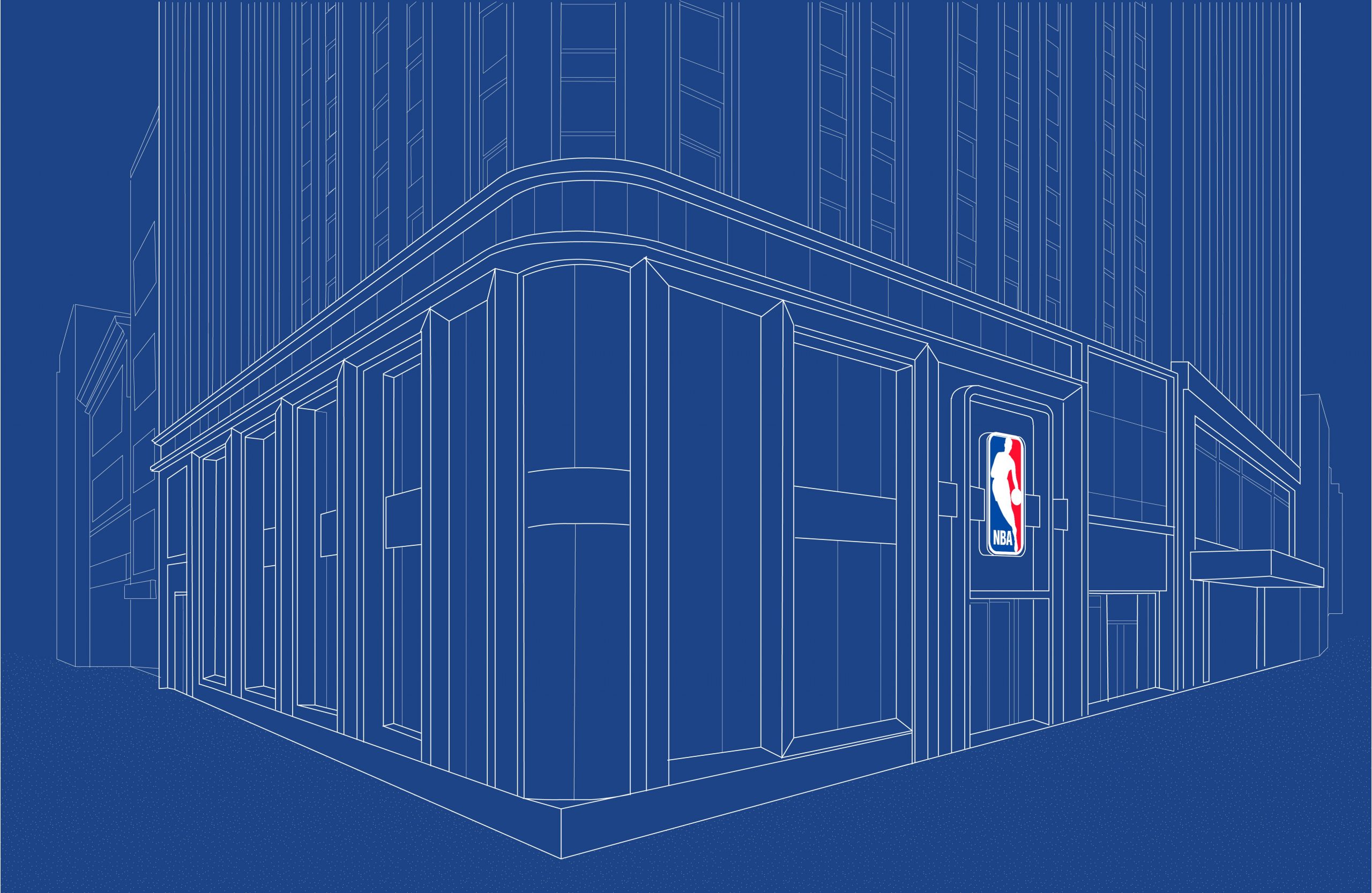
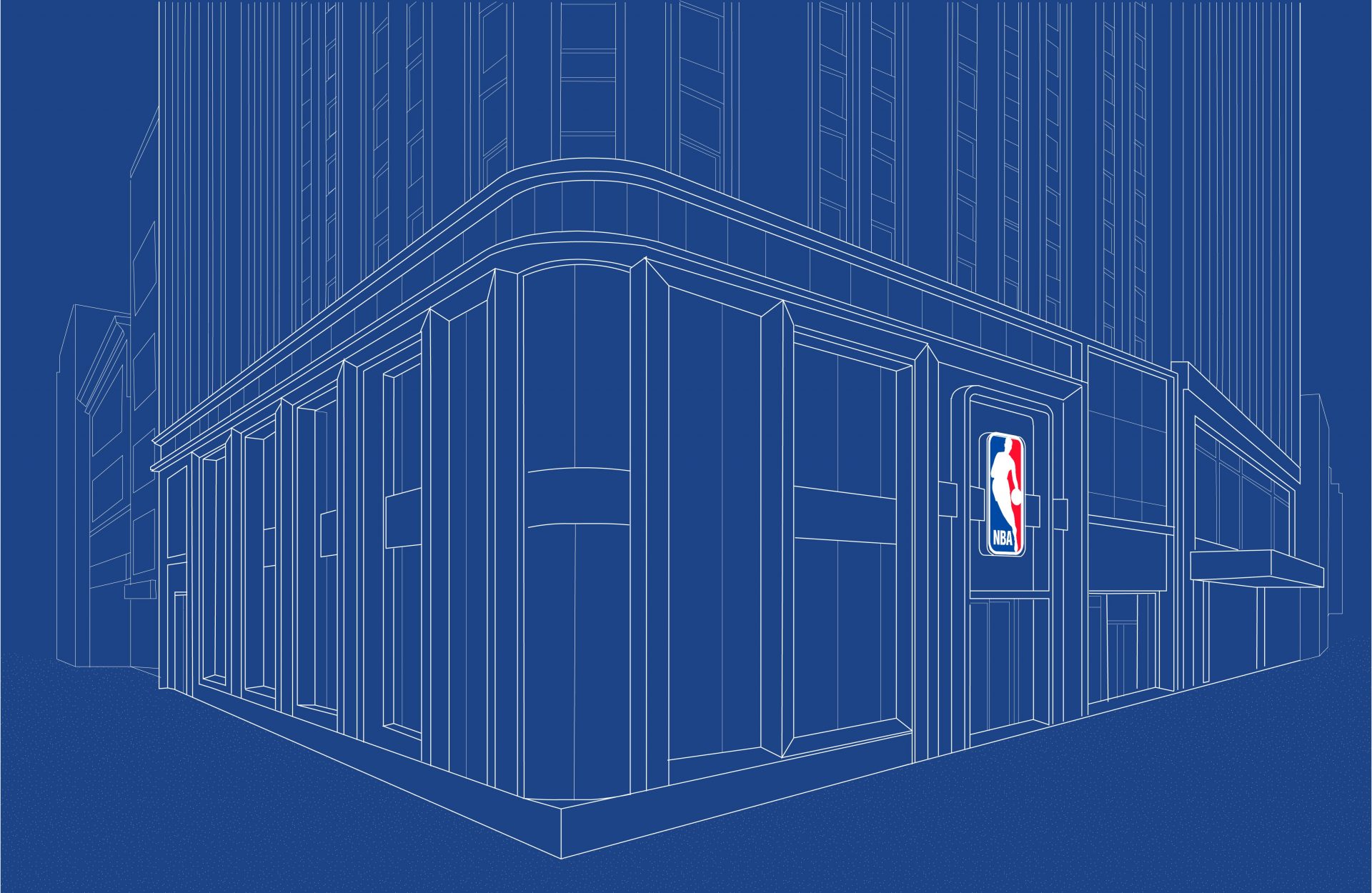
The Architecture of Experience
A methodology for designing human experience informed by roller coaster design
Contemporary retail architecture is often conceived as a neutral container that remains
disconnected from the culture and intensity of the experiences it houses. This thesis challenges
that model by proposing a methodology in which architecture is generated through the
integration of movement and material constraint. This methodology is tested through the design
of the NBA Flagship Store in New York City, transforming retail into an active, legible
expression of cultural performance. Drawing from roller coaster design, circulation is organized
as a continuous, linear sequence that translates the kinematic phases of an NBA slam dunk into
spatial experience. Simultaneously, the project establishes a generative system in which space is
produced from the fixed scale, geometry, and physical behavior of cultural artifacts. By
maintaining the true scale of objects and arranging them without intersection, architecture
emerges through the spaces formed between, within, and around these objects.
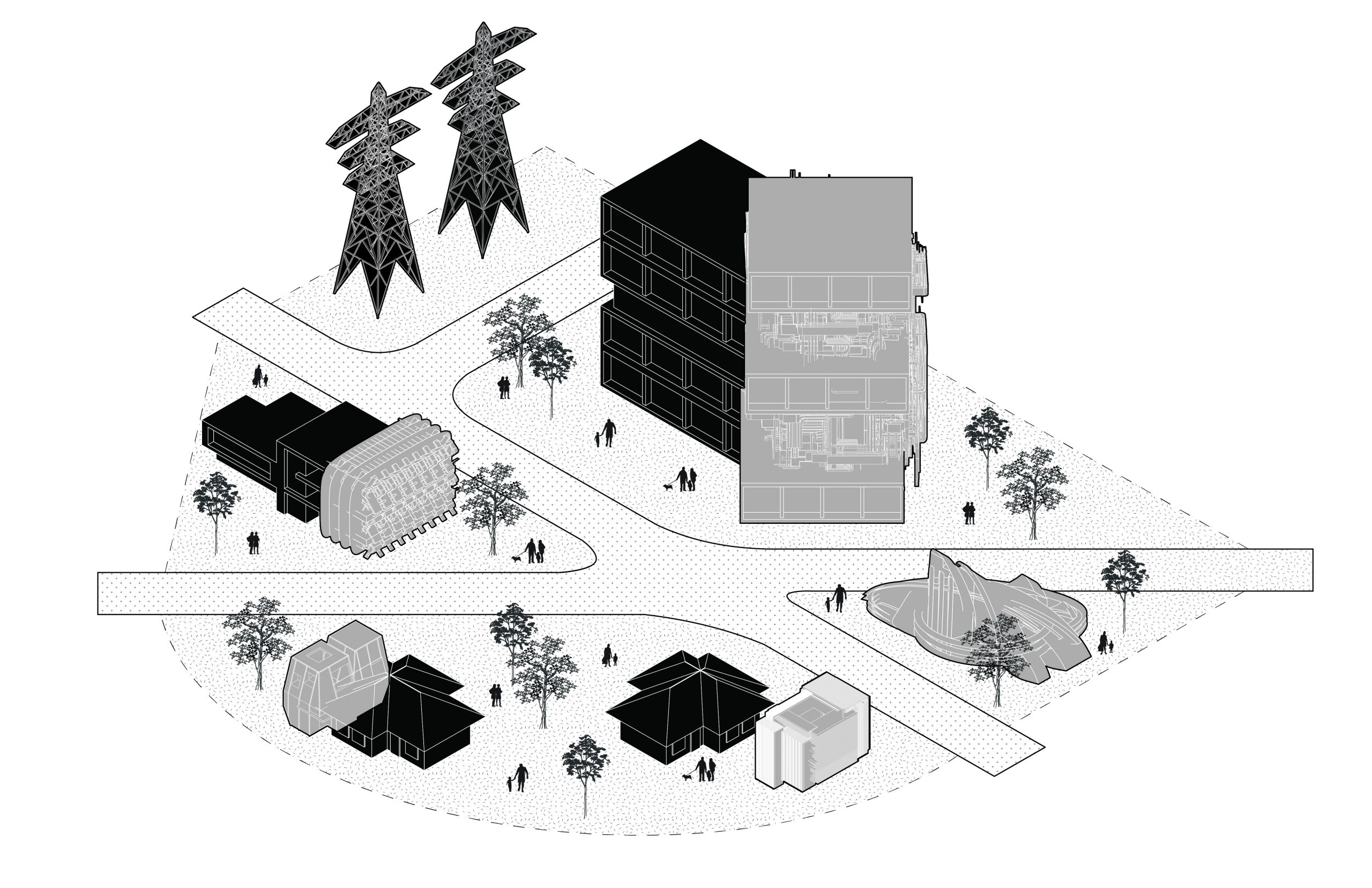
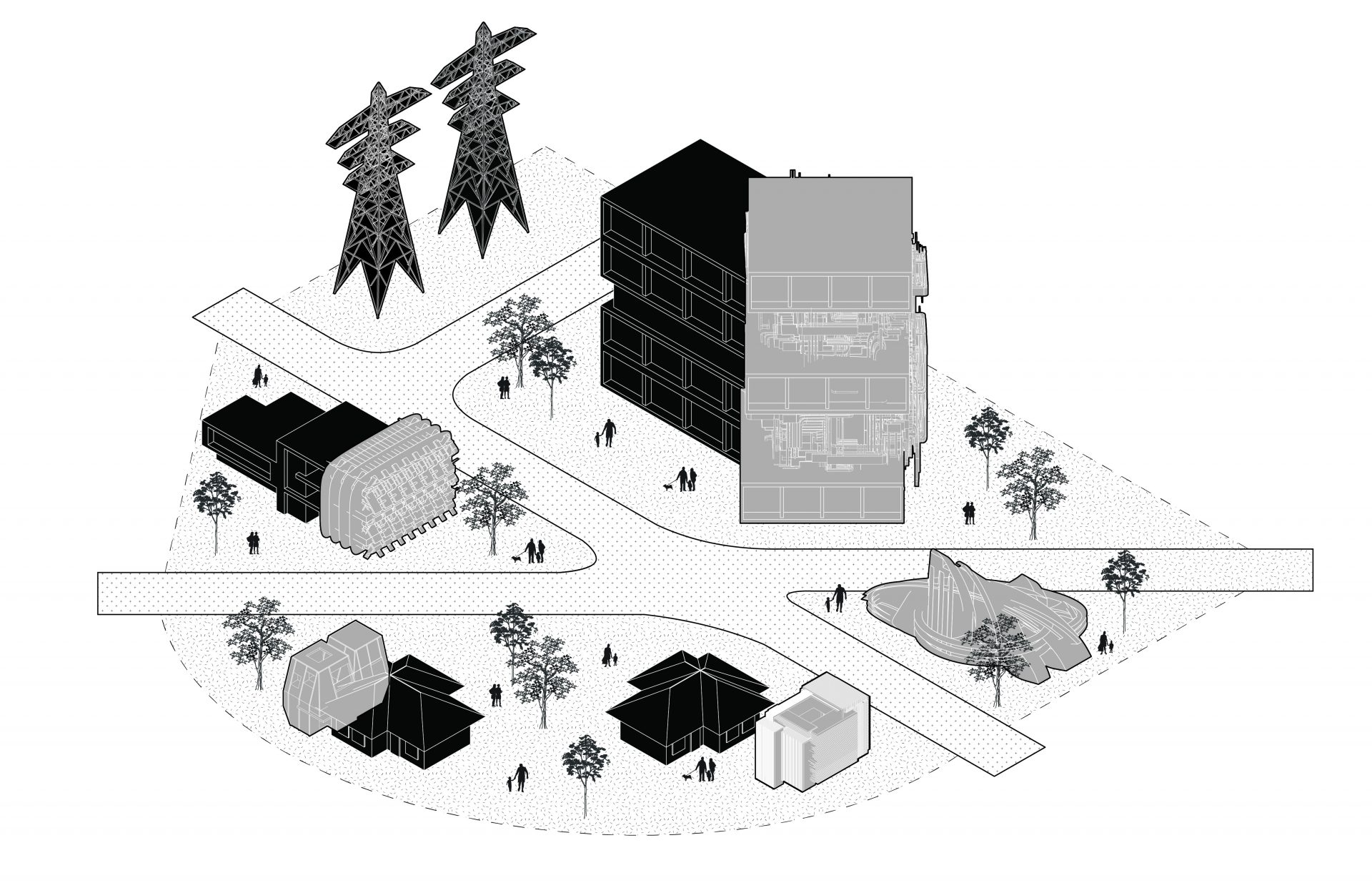
DATA URBANISM: Decentralizing Digital Infrastructure
This thesis imagines a future in which data infrastructure is no longer centralized in remote or monumental facilities, but distributed across homes, neighborhoods, and communities. As Web3 technologies shift control of data from corporate platforms to individuals, architecture must adapt to support smaller-scale, locally owned, and domestically integrated computing systems. Rather than proposing vertical data towers, this project develops architectural prototypes and a regulatory framework that embeds data infrastructure within housing, mixed-use buildings, and civic space. Over the next 25-year timeline, the thesis envisions a decentralized and participatory digital ecosystem in which communities directly host, govern, and engage with the infrastructure that powers the internet.
Choreographic Tectonics
Choreographic Tectonics proposes architecture as a performed and time-based construct, where movement, not static form, generates space. This thesis treats program as pose, in which discrete programmatic volumes are arranged in states of balance, counterbalance, and lift, forming a choreographed system of forces. Drawing from dance notation, motion capture, and iterative 3D modeling, each program element operates as a body whose position, rotation, and compression generate spatial relationships, circulation, and structure. The dancer is no longer an occupant but the origin of architecture, producing geometries derived from temporal sequences. These movement-based configurations are materialized through tectonic systems, joints, skins, and assemblies, transforming abstract motion into buildable form. Through this process, architecture emerges from pose to diagram to construction, where movement becomes structure and program is not arranged, but performed.


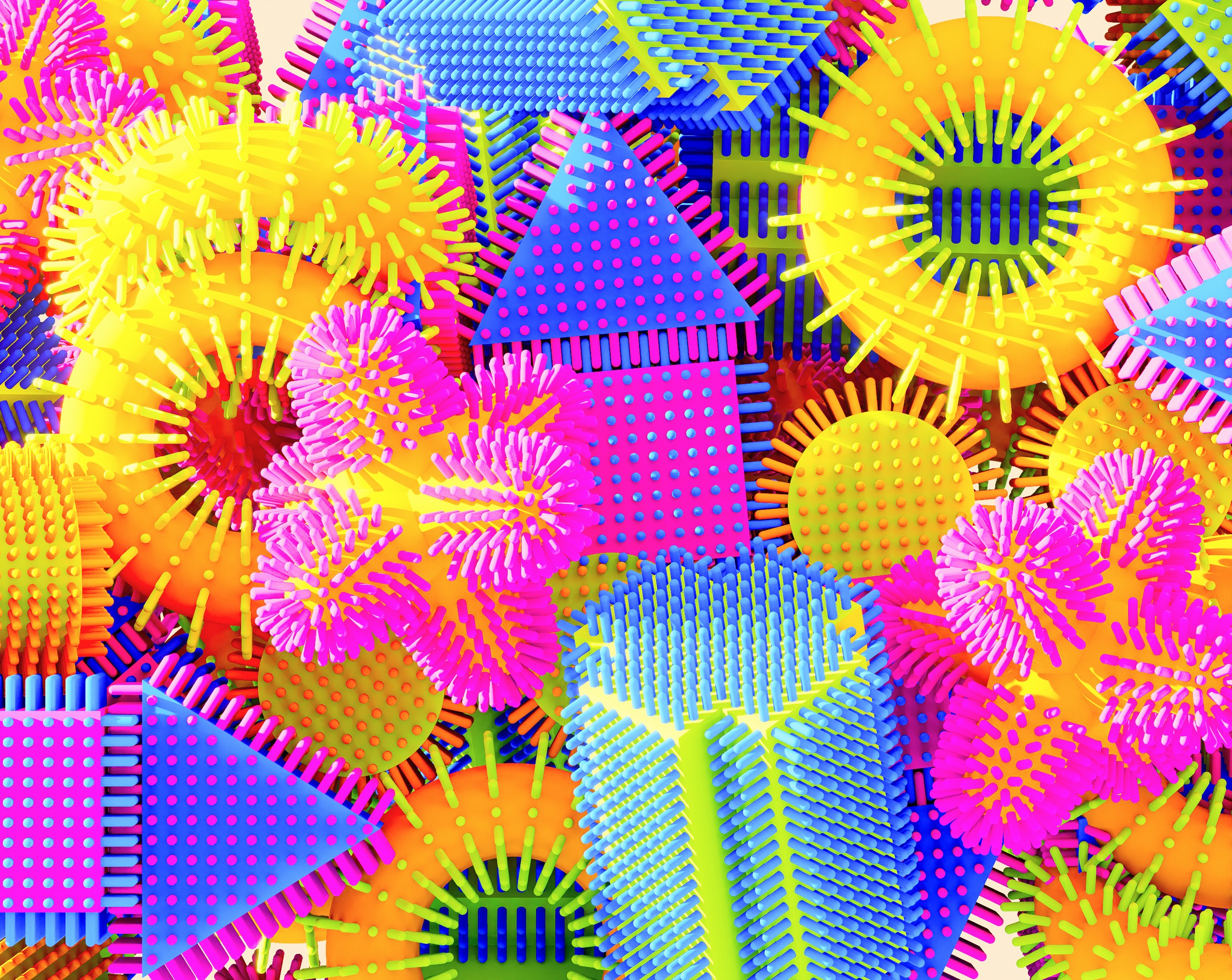
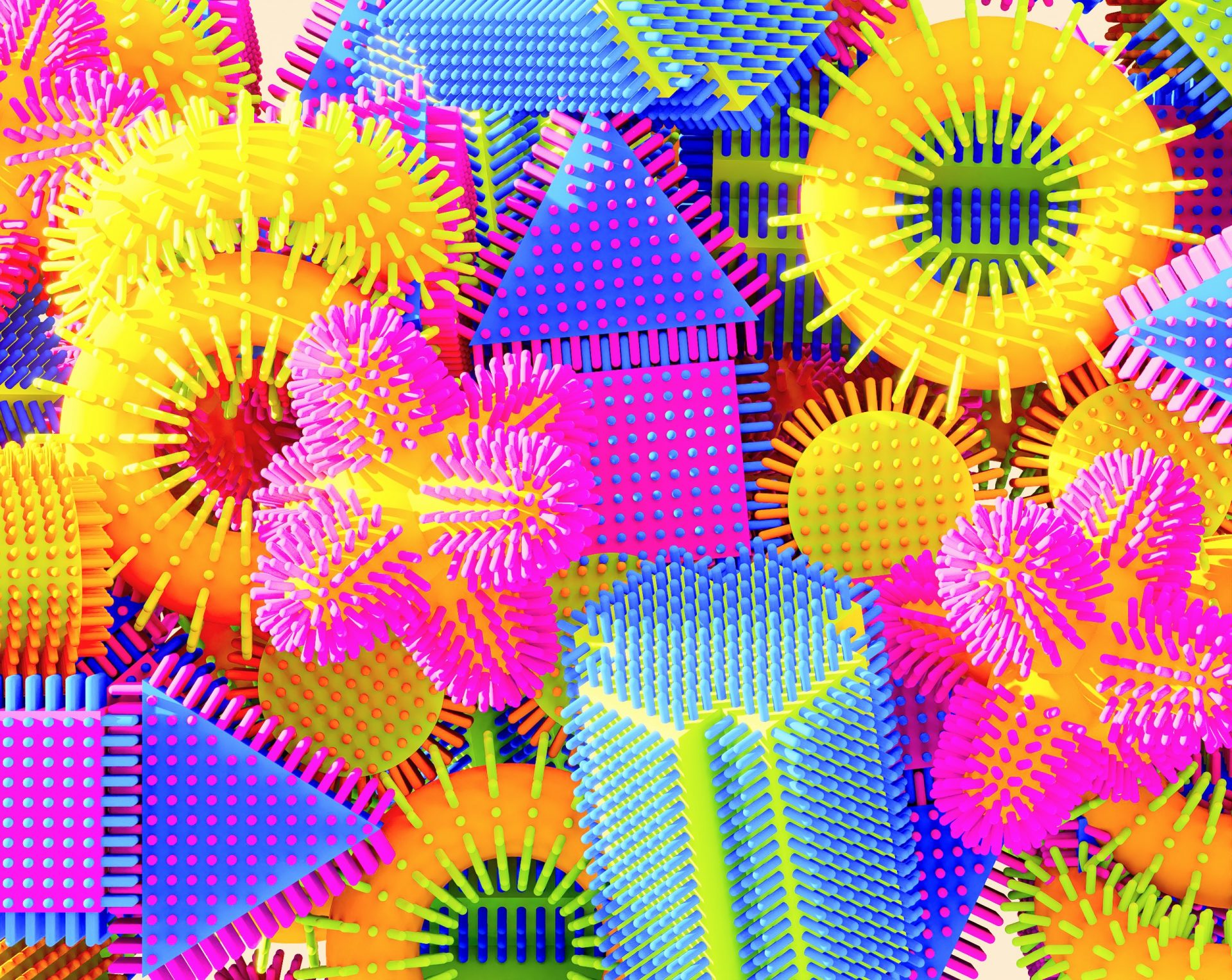
Salt the Earth: Spicy Architectures of Resistance
Scale is not neutral – it’s the difference between a kitchen table and a city block, between a family and a target. This thesis frames the architectural scale through the lens of spiciness, where it crosses categories, resists definition and refuses erasure. Tracing defensive architecture from the intimate to the territorial for communities whose presence is politicized and whose belonging is contested. Moving through thresholds of increasing heat, architecture ceases to shelter and begins to fight. This thesis argues that architecture is most powerful not through scale, but in its willingness to salt the earth.
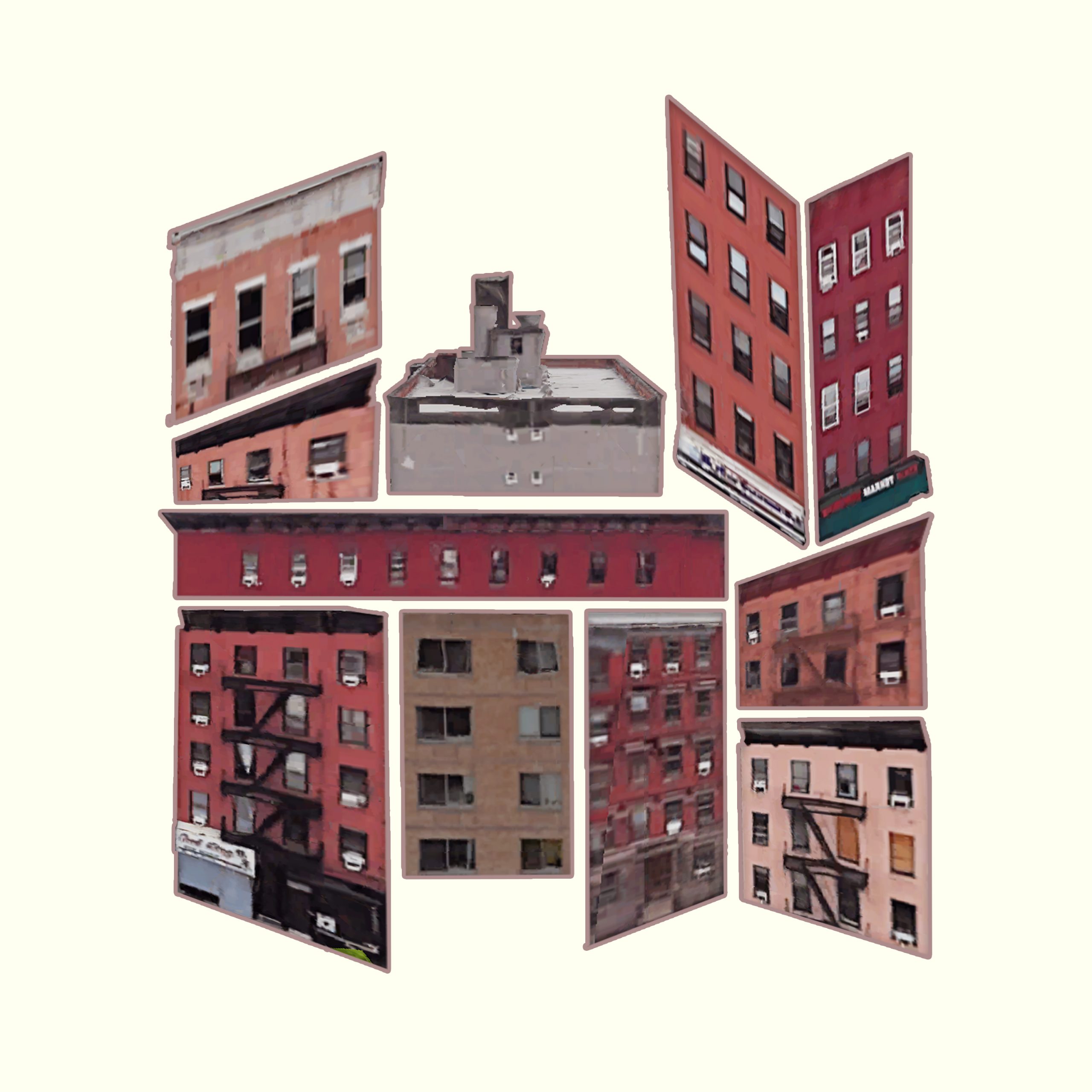
Rooted in Context
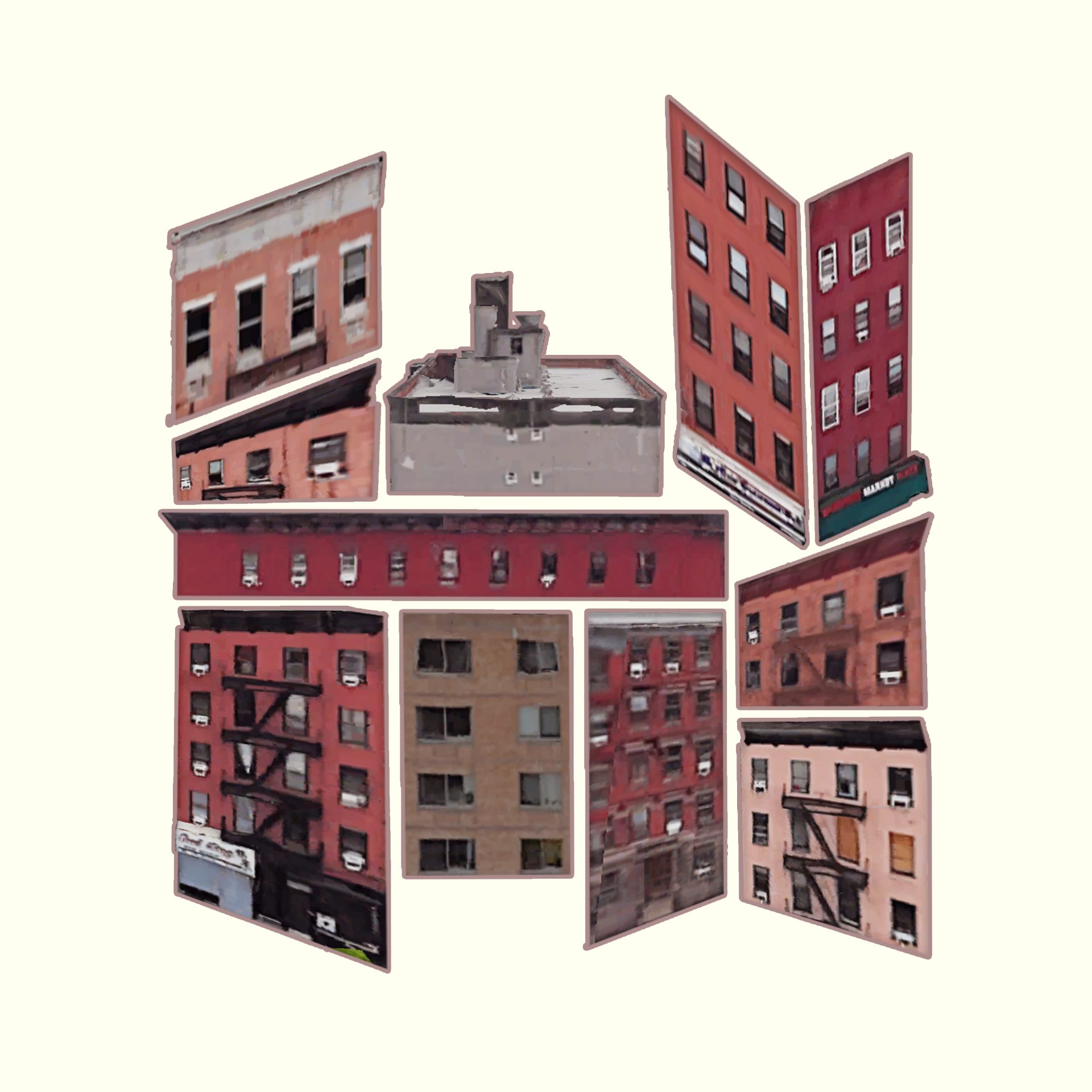
This thesis positions context as a primary driver of architectural design. Located in Hell’s Kitchen, New York City, the project draws extensively from its urban and neighborhood conditions. New York City’s culture, density, and environment inform the program and user experience. The design emerges from a layering of contextual influences, allowing these conditions to guide formal choices. Relationships between adjacent structures and community needs shape the space’s organization and usage. The proposal takes form in a community center, an extension of its context – designed to be responsive and rooted in place – reflecting both the identity of Hell’s Kitchen and the needs of the users.
Scenes from a House
Matthew Brandon Mejia | Ryan Tyler Martinez
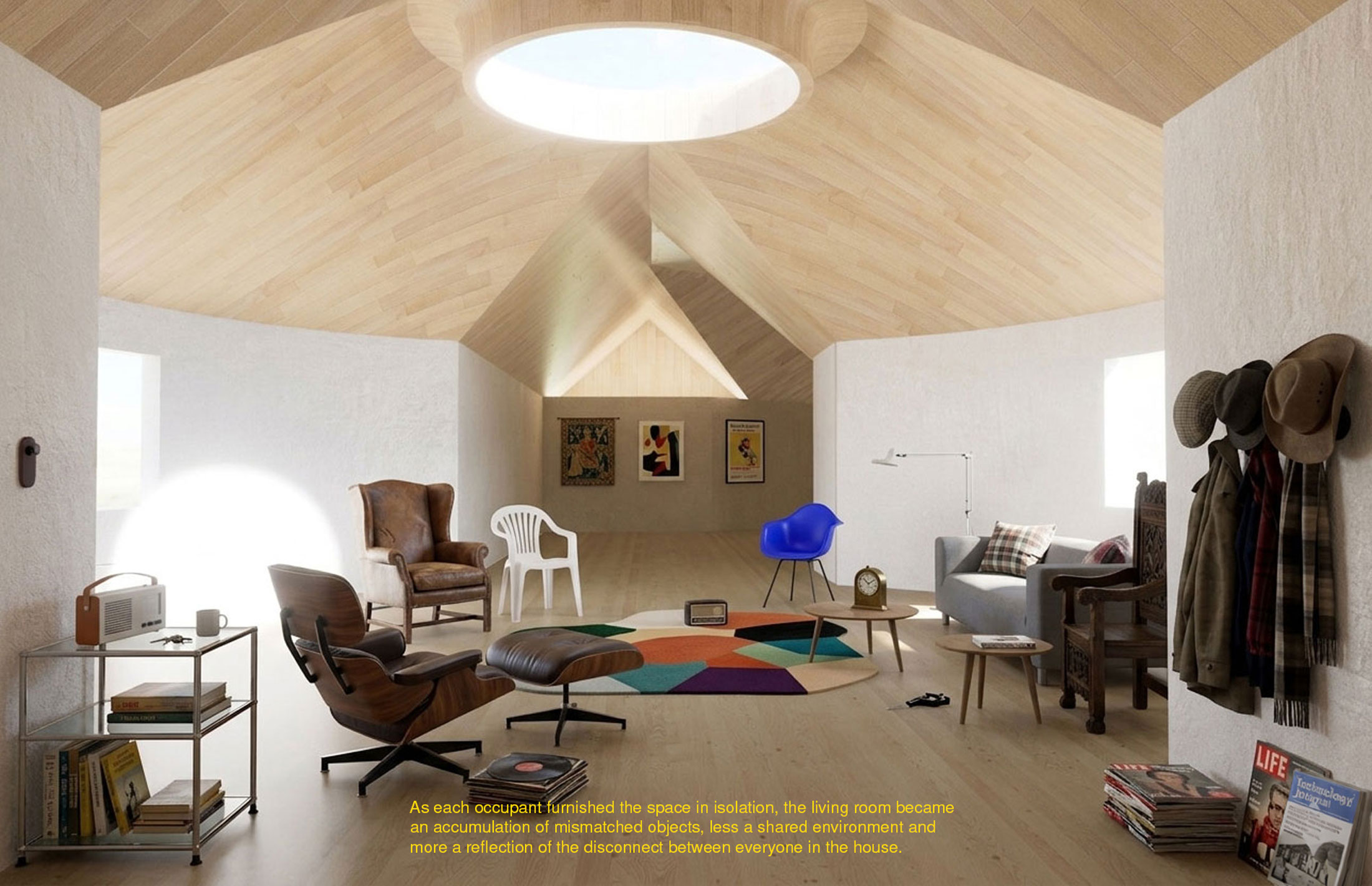
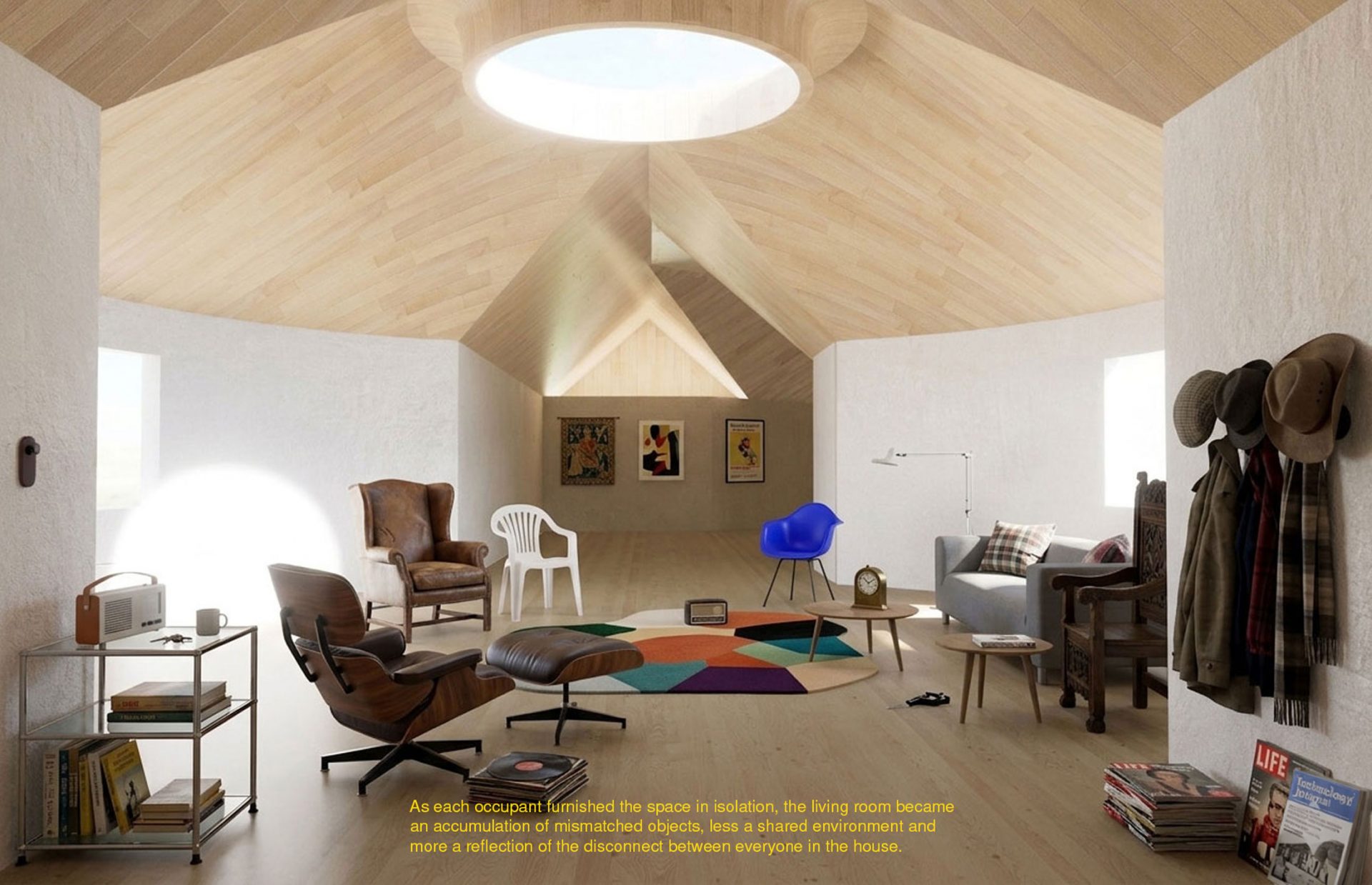
The contemporary house operates as an idealized exterior image, appearing stable, symmetrical, and culturally coded as a site of domestic harmony. Yet interior life is fragmented. Multiple interior worlds coexist within a single structure, shaped by different occupants, relationships, and emotional conditions.
This thesis reexamines the archetypal one-story gabled house as a collection of conflicting interior realities rather than a unified domestic space. Each inhabitant produces their own spatial logic, resulting in disjunction, misalignment, and tension within the house.
As these interior worlds intensify, they begin to register externally. The architecture allows the interior to bleed into the exterior, transforming the envelope and roof. The house becomes a visible record of its occupants, revealing the differences and conflicts that domestic architecture typically conceals.
Inside Out: The Blurring of Interior and Exterior
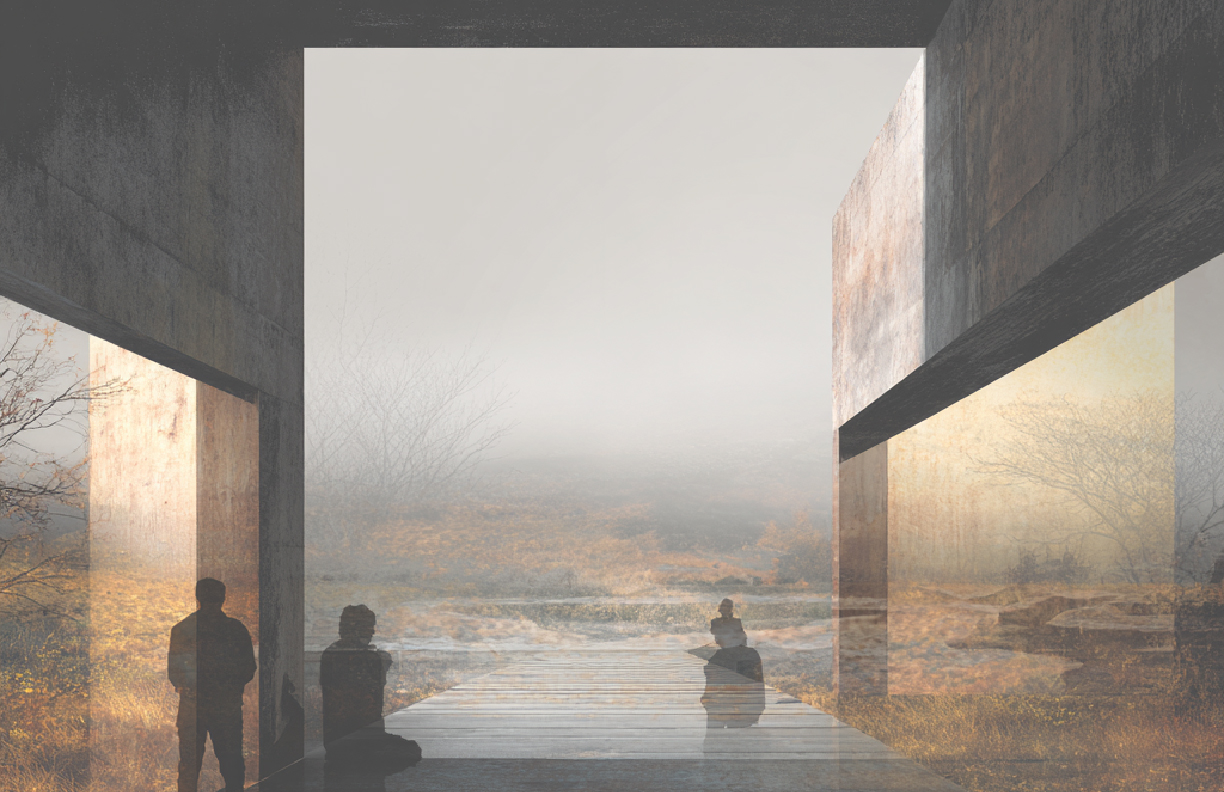
This thesis investigates the interior as an architectural lens mediating between body and landscape, articulated through the blue zone: a spatial gradient where interior and exterior conditions overlap. Through the orchestration of apertures, thresholds, and atmospheres, it positions the interior not as a subordinate enclosure but as a primary site of architectural meaning. Framed views, dissolving boundaries, and material articulations extend the exterior inward, transforming windows, walls, and surfaces into active devices of mediation within this blue zone. Through these strategies, interiors situate occupants within cultural narratives, environmental contexts, and sensory experience. The project ultimately seeks to reposition the interior as central to architecture, capable of shaping dwelling and public space with depth, resonance, and clarity.
Unfolding
architecture
Jenn Burke
Ryan Tyler Martinez
This thesis reimagines the architectural form through the mechanics of the pop-up book – a medium where movement, narrative and geometry converge to reveal unexpected transformations.
Through iterative experiments in paper architecture and kinetic structure, the research investigates how architectural representation might unfold as an event rather than exist as a fixed drawing or object.


Stadium Without Walls
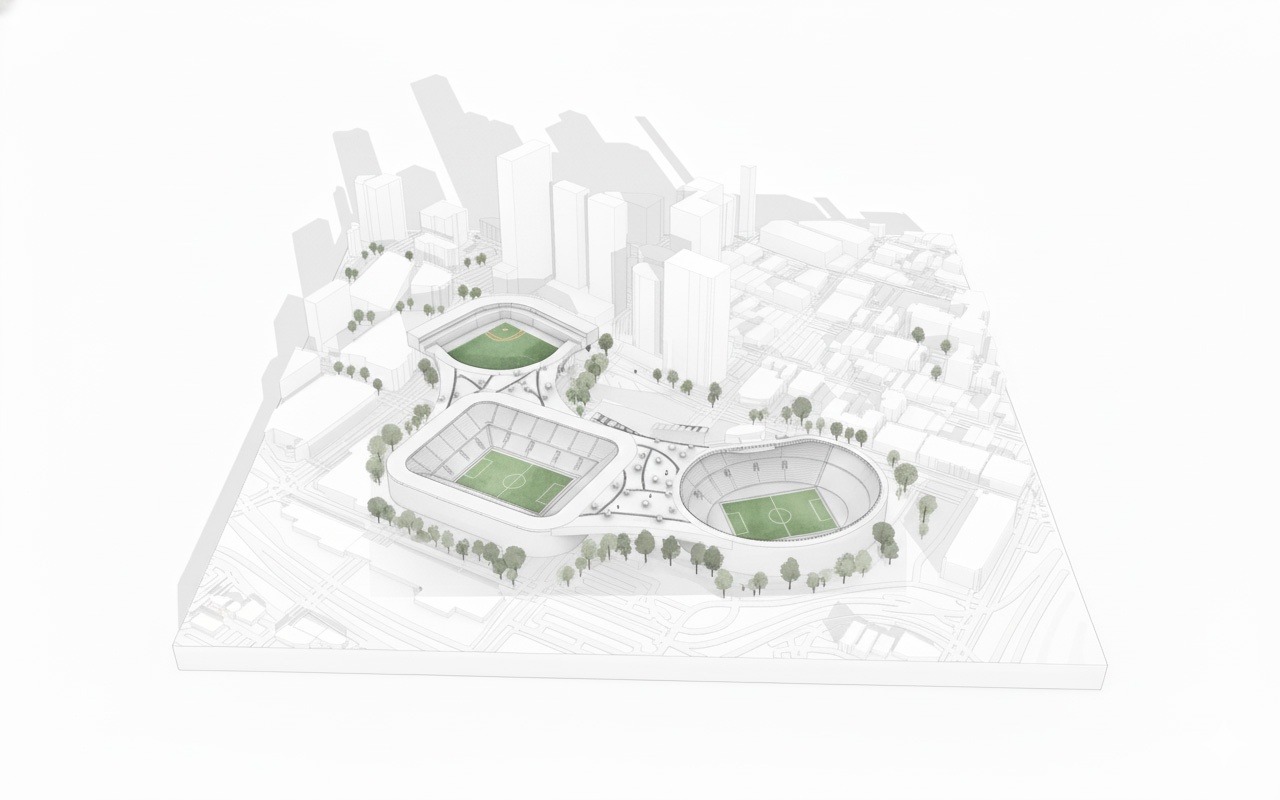
This thesis reconceptualizes the stadium as a continuous urban system rather than a singular, event-driven object. Conventional stadiums operate at extremes, intensely occupied during events yet largely vacant in everyday conditions, resulting in spatial, economic, and social inefficiencies within the city.
This project proposes an integrated model in which stadiums are embedded within residential, commercial, and civic programs. Through this approach, athletic, cultural, and public activities coexist within a shared environment, allowing the stadium to function as part of the everyday urban fabric. Adaptable fields, layered circulation, and publicly accessible spaces transform stadium infrastructure into an open, flexible, and continuously inhabited system.
By prioritizing temporal flexibility, the stadium shifts from a periodic destination into a sustained urban condition, one that supports large-scale events while remaining active and accessible beyond them. In this model, sport becomes one of several temporal conditions, allowing the stadium to remain active beyond event-based use.
Footnotes: On the Margins of Architectural Production
In an era where architecture is increasingly consumed as image—accelerated by digital production, AI-generated renderings, and social media—the discipline privileges the polished final output while obscuring the labor, iteration, and uncertainty that produce it. This thesis challenges the authority of the final image, proposing instead a representational practice that exposes architecture as an ongoing process of making, where tools, time, and decisions are made visible rather than concealed. Through layered drawings, renderings, and diagrams, the project constructs a representational framework that foregrounds iteration and accumulation. Rather than resolving into a singular outcome, the work reveals architecture as an ongoing act of making in which process itself becomes the primary subject.


Amphibious Futures
Garett Lee | Ryan Tyler Martinez
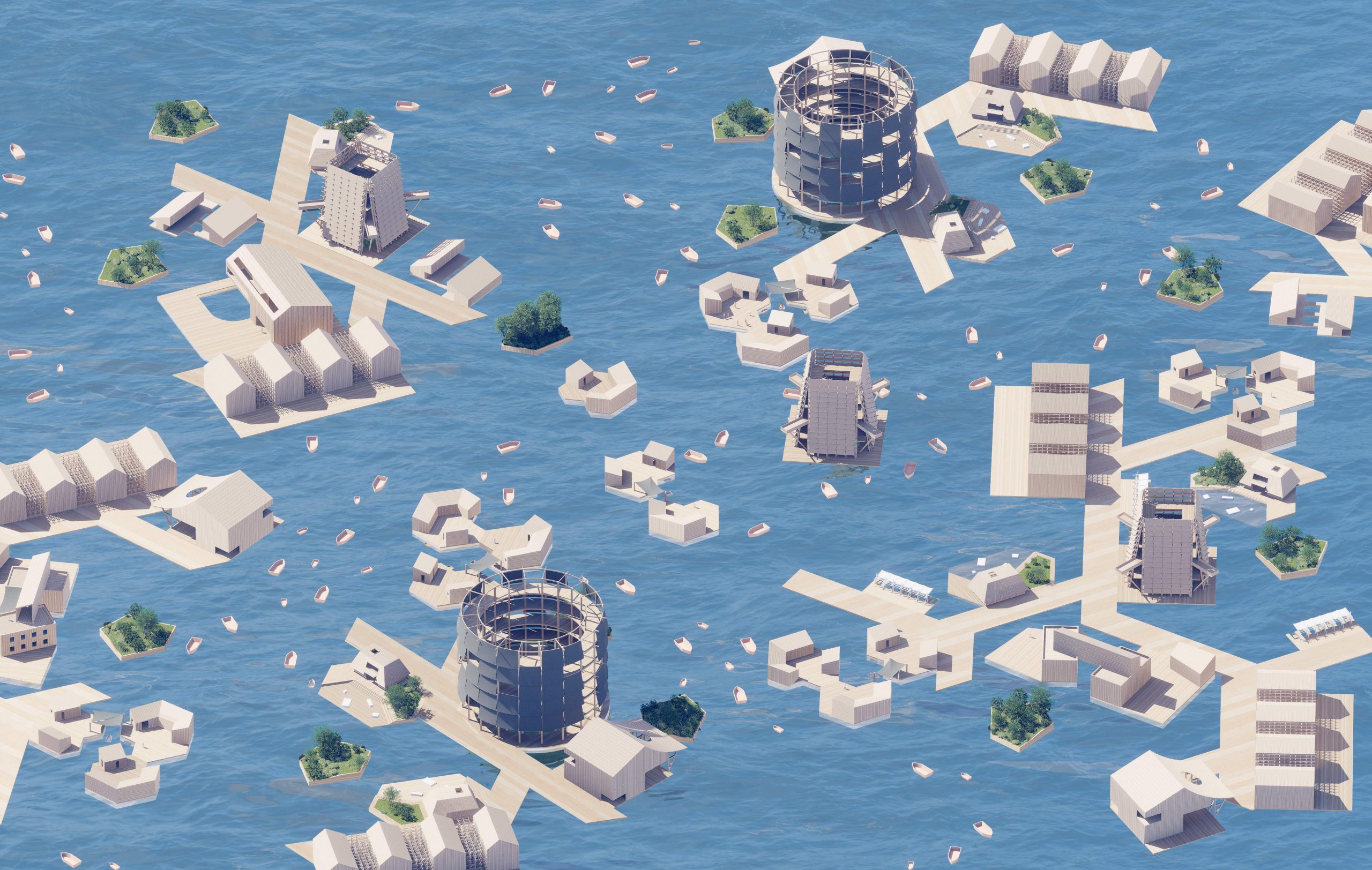
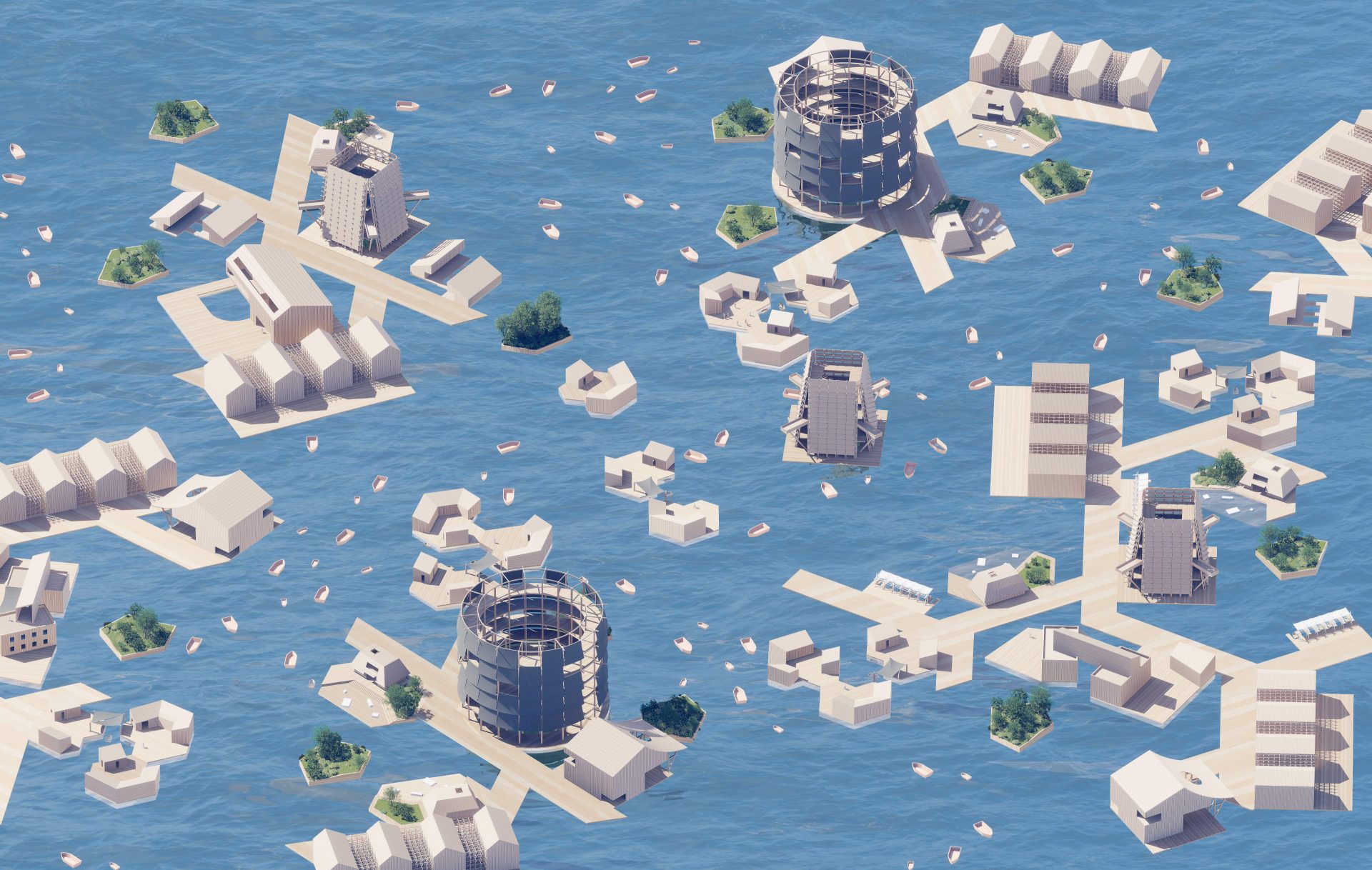
This thesis reimagines architecture’s role in a post-flood world where the city becomes both a cultural memory and ecological frontier. Moving beyond infrastructural strategies of resistance, it adopts speculative design as a method to envision how life, settlement, and ritual might evolve within an amphibious terrain. The project constructs a series of architectural components: buoyant structures, adaptable infrastructures, and collective habitats that explore how water, rather than serving as a boundary or threat, might become a connective medium through which new forms of living and belonging are articulated.
By integrating ecological, social, and speculative narratives, the research seeks to define resilience as an imaginative and collective practice, rooted in coexistence rather than control. Ultimately, the thesis positions architecture as a speculative tool, proposing that the act of designing for a submerged future is also an act of reimagining what it means to inhabit a shared, shifting planet.
Soft Architecture: Envisioning the Living City
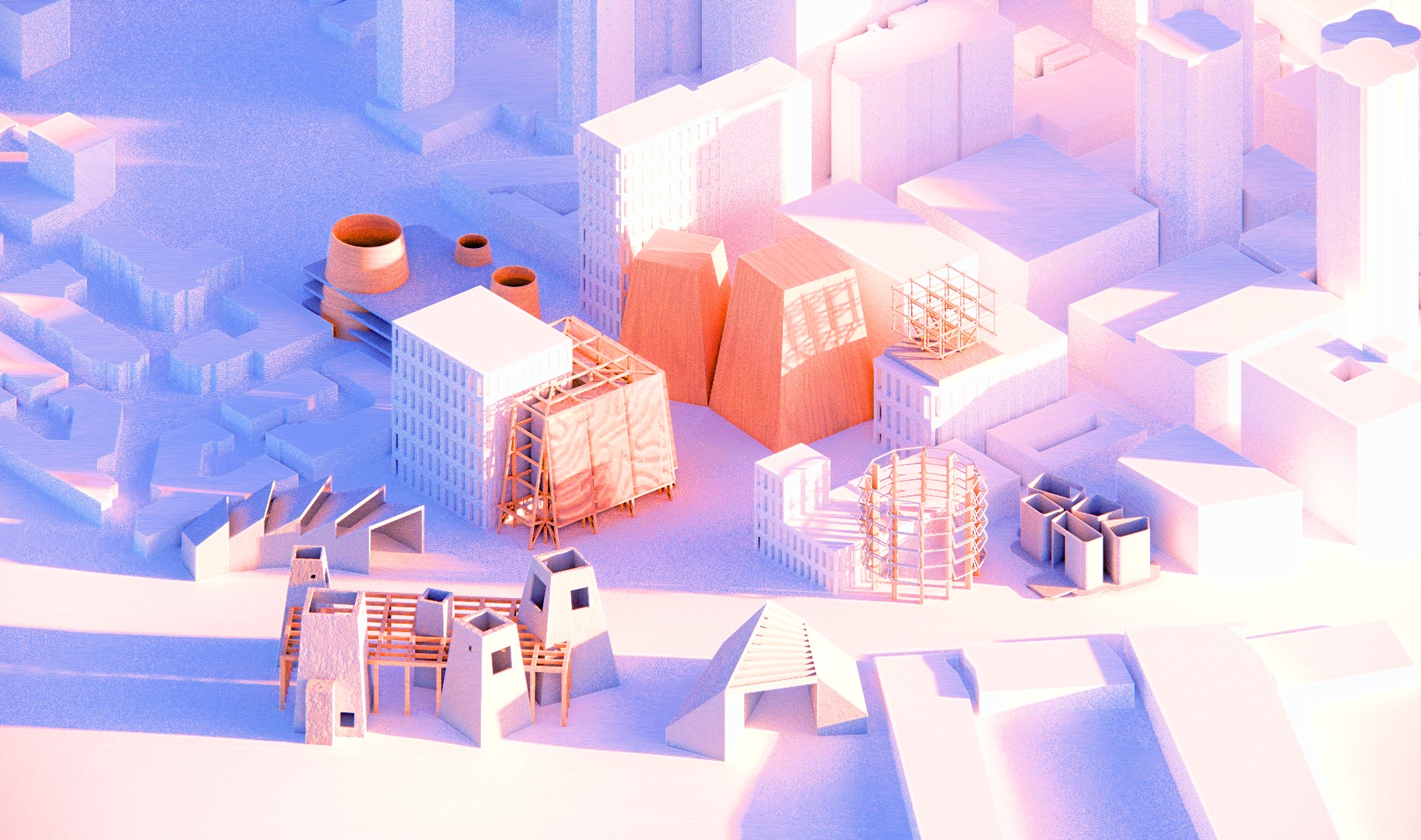
Natural order is characterized by infinite complexity, omnipresent interconnectedness, and immeasurable softness, qualities that often resist direct translation into the built environment. This thesis will investigate how the adoption of living systems into architecture, particularly across diverse scales of public life, could create more symbiotic, adaptive, and sustainable communities, ultimately imagining a built environment that coexists with, and evolves alongside, organic life. This thesis emerges from a deep engagement with the living systems that sustain a place, from cellular to biospheric, and repositions architecture as something synthesized with the natural world, rather than a solely abiotic construct. In this framework, architecture is not an isolated object but an ecosystem, softly and inextricably woven within its many ecological contexts.
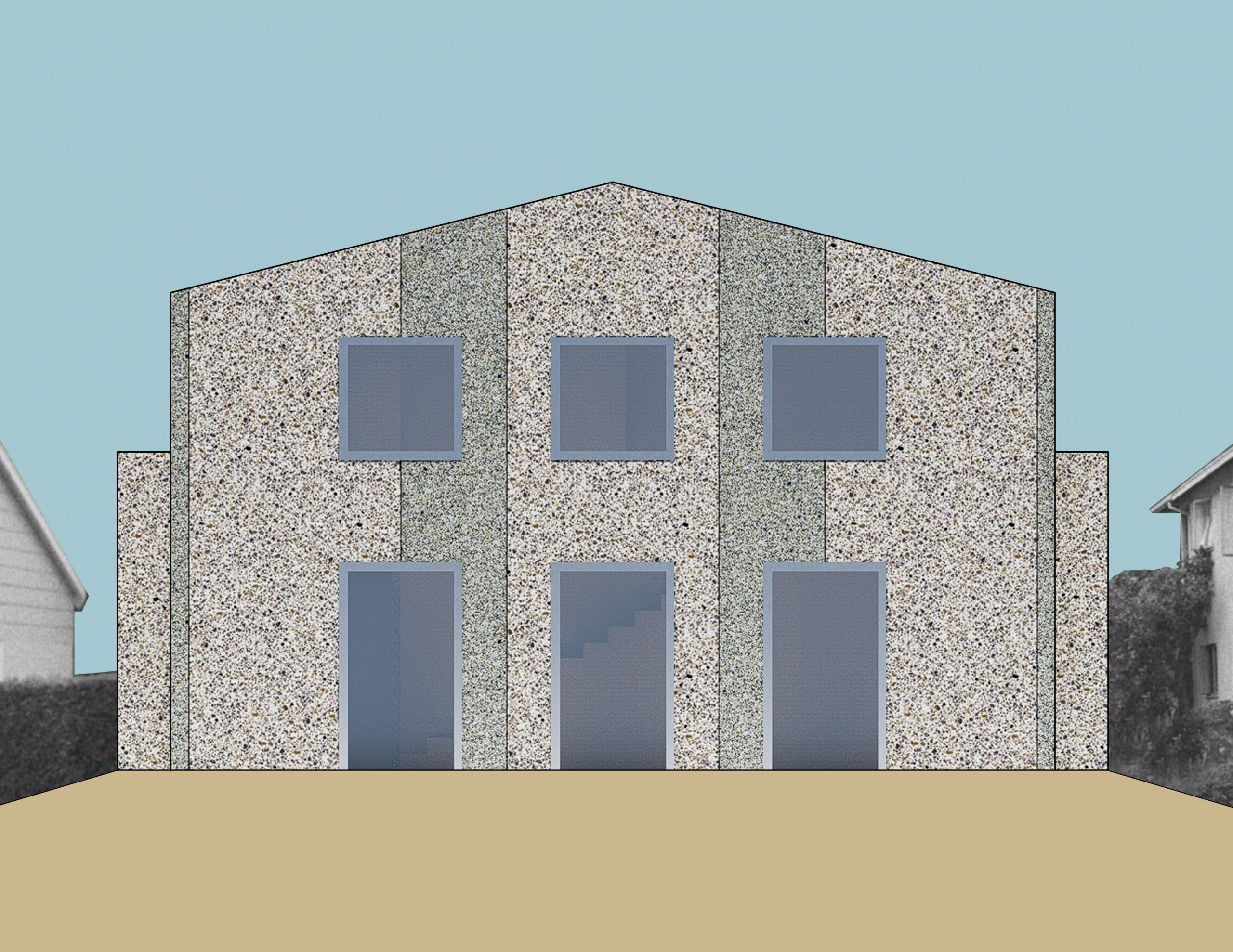
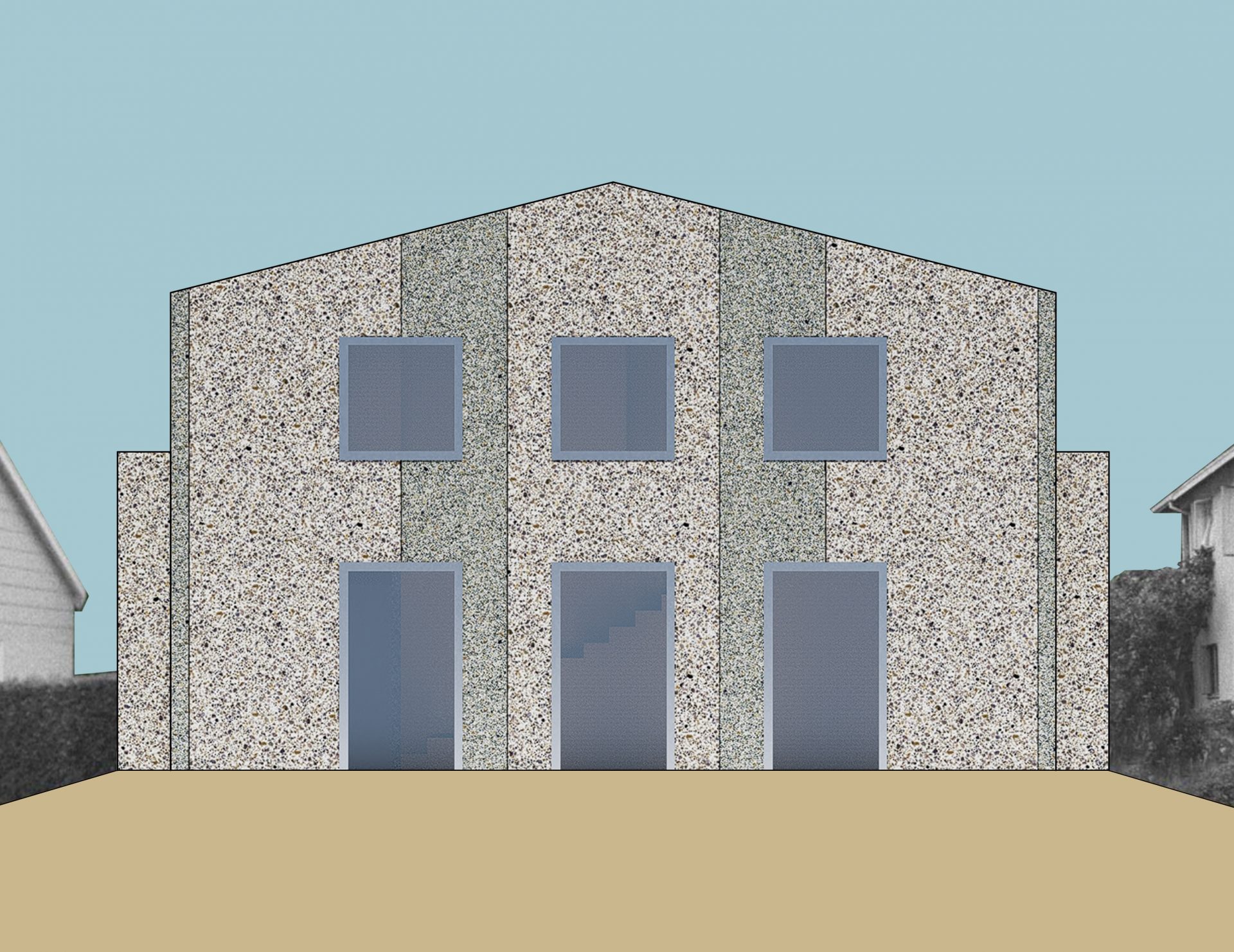
The Ethics and Aesthetics of Concrete
Concrete remains one of the most versatile and effective building materials, particularly suited to the climatic and geologic conditions of Los Angeles, offering fire resistance, seismic performance when reinforced, and thermal mass. Yet its environmental cost is substantial, accounting for roughly 8% of global carbon emissions, and its durability complicates repair, adaptation, and disassembly. In the context of large-scale rebuilding following the January 2025 fires, this thesis investigates concrete as both a critical constraint and a tool for future construction in high-risk burn areas.
The project proposes using an alternative construction system that leverages concrete’s performance while limiting its application. RSG 3-D is a prefabricated composite panel system consisting of an expanded polystyrene (EPS) core and a steel wire truss encapsulated within a thin concrete shell. While this integration of structure, insulation, and enclosure offers clear advantages in Southern California burn zones, it also produces ethical and aesthetic tensions. This project positions concrete as a material to be selectively deployed and deliberately expressed to determine where its use is justified and how its presence can be made legible. As a final deliverable, these questions and positions are tested on a site in the Pacific Palisades through the design of a single-family residence.
Dwelling in Between
Name: Chloe Kaplan Kristensen
Thesis Advisor: Ryan Tyler Martinez
Thesis Statement:
Dwelling In Between explores how architectural interventions can blur the boundary between private domestic life and the public realm. By extending the intimacy, care, and everyday life of the home into urban space, this thesis redefines dwelling as a collective condition shaped by rituals rather than enclosure. Operating between house and city, the project proposes new typologies that test how materiality, scale, and spatial organization can cultivate environments of shared belonging within an increasingly fragmented urban context. In doing so, the thesis positions home as a spatial idea that extends beyond the individual dwelling, reframing public space as a form of domestic infrastructure that supports collective health and wellbeing.
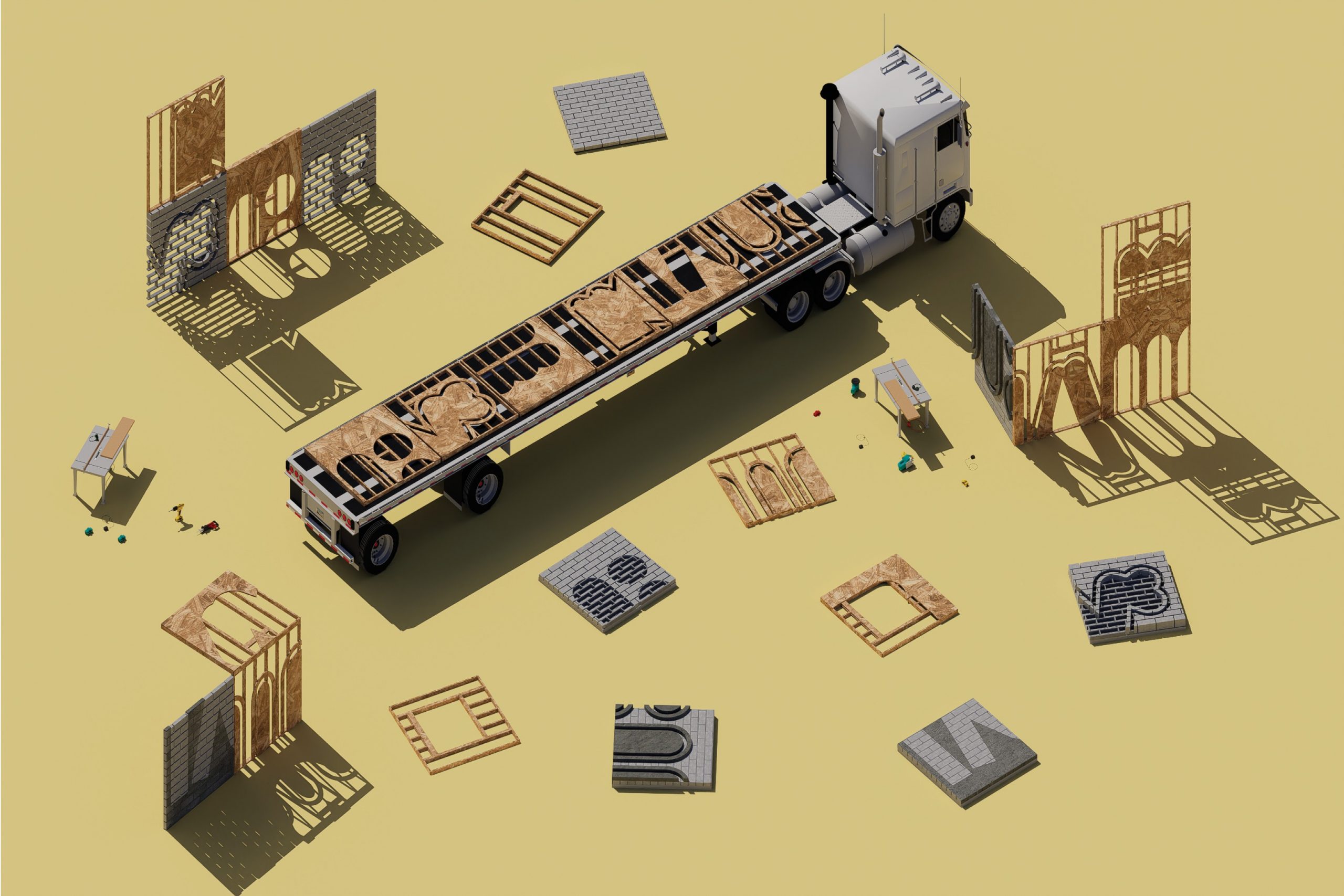
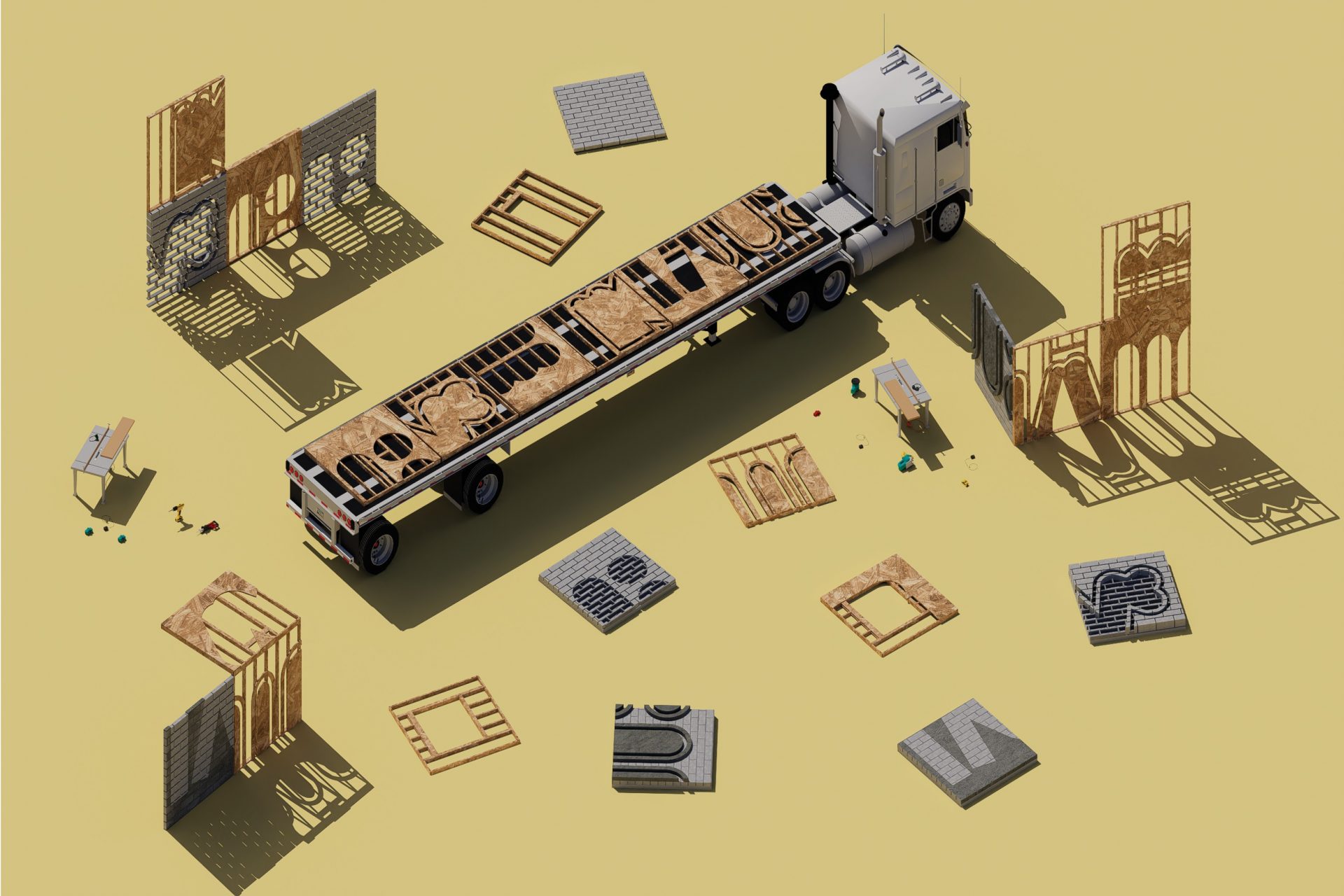
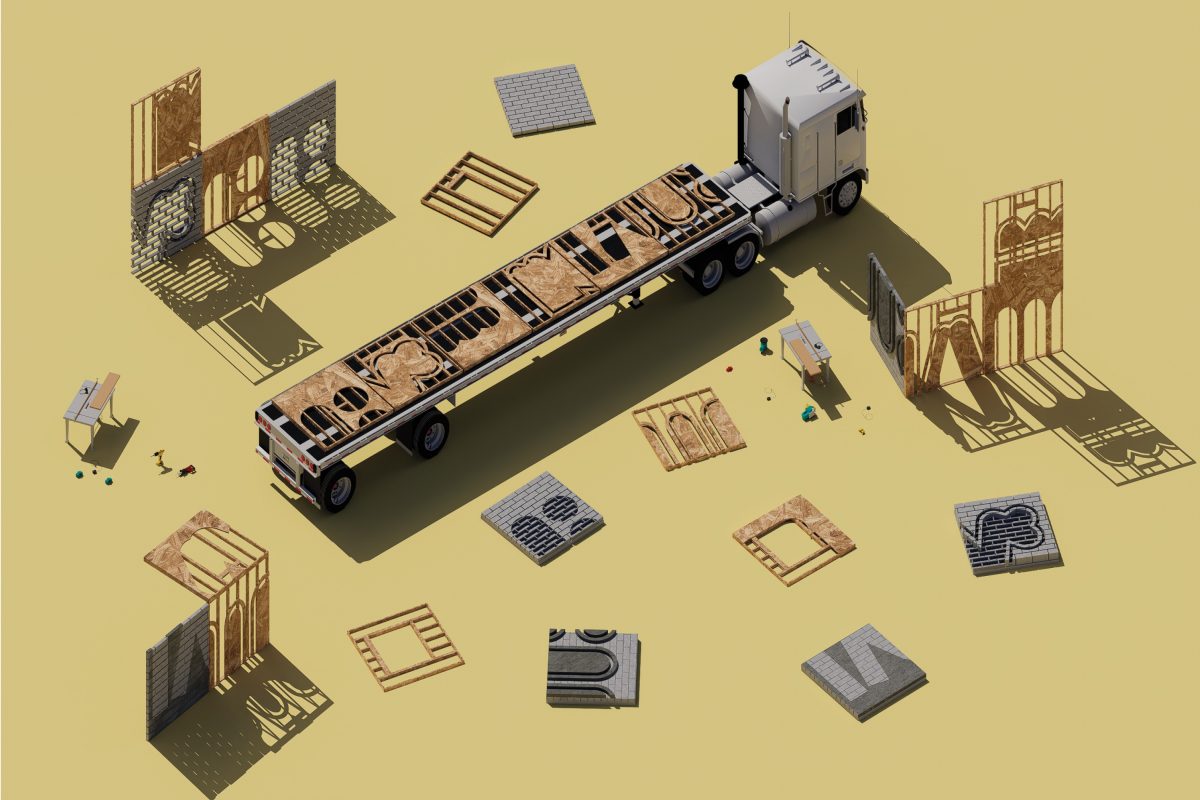
Making, Unmaking, and Remaking: Graphic Logic as an Architectural Generator
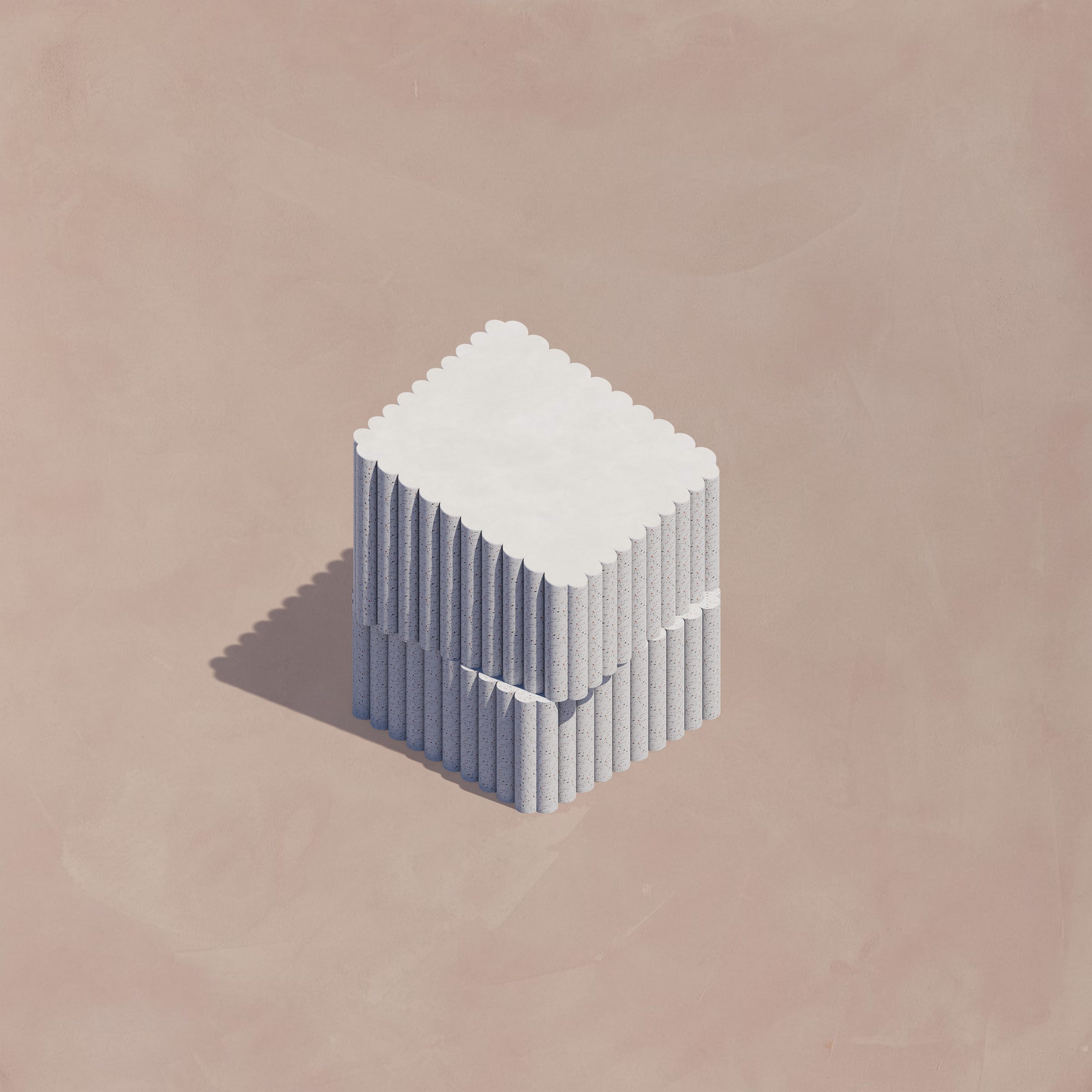
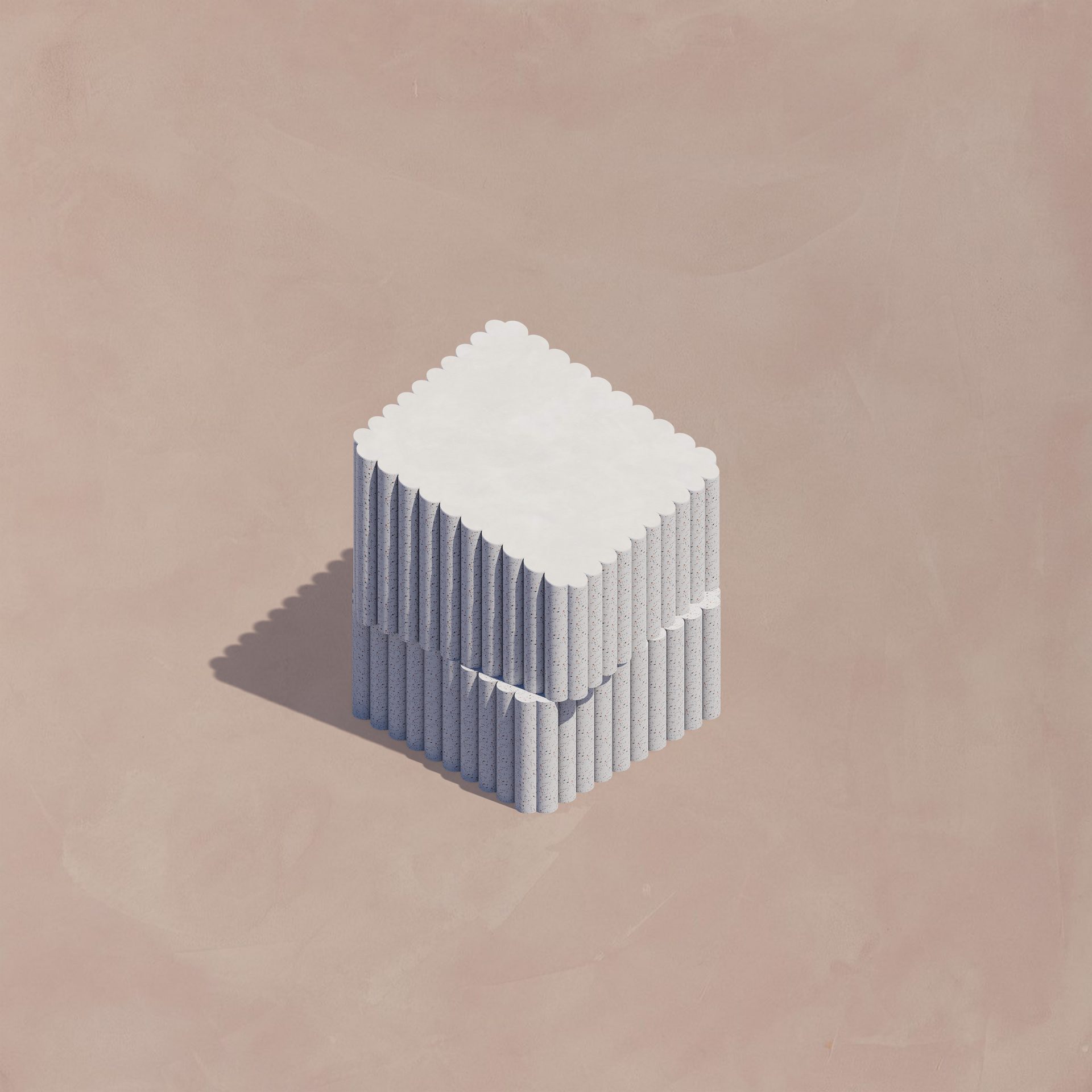
This thesis investigates how graphic systems can operate as primary generators of architectural elements. Rather than treating graphics as representational tools that describe a building after it is conceived, the project inverts the conventional sequence where graphic design becomes the origin of spatial, material, and tectonic decisions.
The project is driven by a series of individual studies that test how graphics behave when projected onto volumetric forms: texture‑mapping experiments that create zones of real and fictive materiality, projection studies that distort graphic patterns into three‑dimensional surfaces, and full‑scale material tests that evaluate how color fields, line densities, and pattern overlays can alter or expose material conditions.
By developing a translation that links graphic operations to specific constructional outcomes, the thesis positions the building as an operating artifact that moves between graphic image and material assembly. In doing so, it reframes design authorship as a process of graphic construction. Ultimately, the thesis argues that spatial and tectonic identity can emerge directly from visual systems, producing architecture defined by the coherence of its graphic origins.