
Amid the flurry of evangelical and skeptical views of the role(s) AI will play in architecture, questions about what constitutes proper management of these and other new developments, and what it will mean for the future role of the architect, regularly arise. This is the current – perhaps urgent – version of an ongoing, introspective inquiry to define effective, valued relationships of the architect to their contemporary society.
Le Corbusier reportedly said things were easier for Ledoux, 150 years his senior, because he didn’t have to deal with plumbing. He didn’t know the half of it. For today’s students, 115 years younger than Corb, the complexities of meaningfully contributing to the built environment have grown even more formidable. How does one ensure potency by finding points in the process to operate upon, or from, to maintain relevance?
We considered ways in which a degree of influence is made manifest in the world of the architect, starting with familiar, fundamental arenas (geometric, spatial, programmatic, material) and extending to those perhaps less common (political, historical, ecological, temporal). What are the points of contact chosen? Are they handles, pivots, origins, pinpricks?

INSIDE OUT
While the “typical plan” has long structured architectural thinking, the contemporary “typical façade,” particularly the reflective curtain wall, conceals interior life behind uniform surfaces, producing visual banality. This thesis argues that reintroducing the visibility of everyday interior activities restores the “body” of architecture, transforming façades from abstract envelopes into expressions of lived experience.



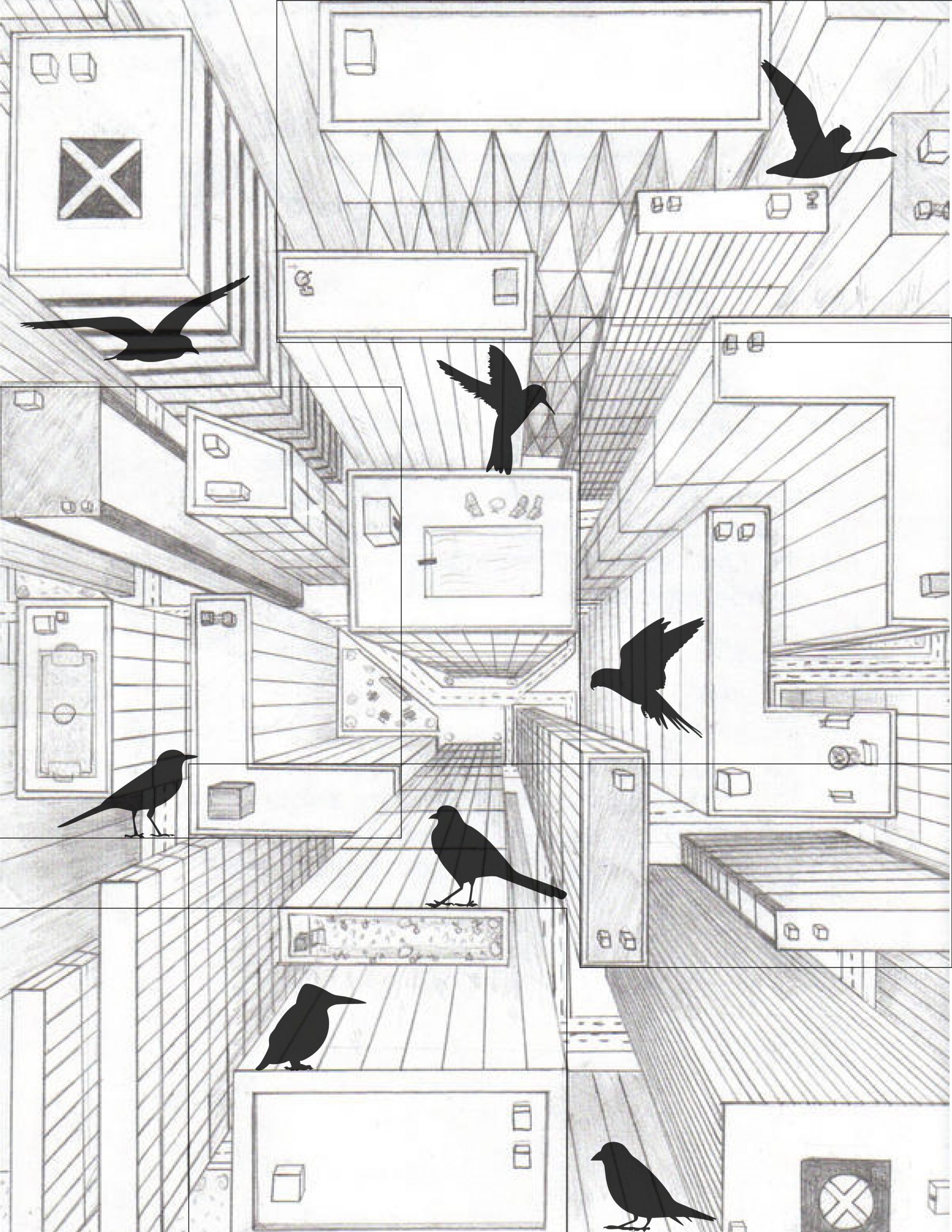
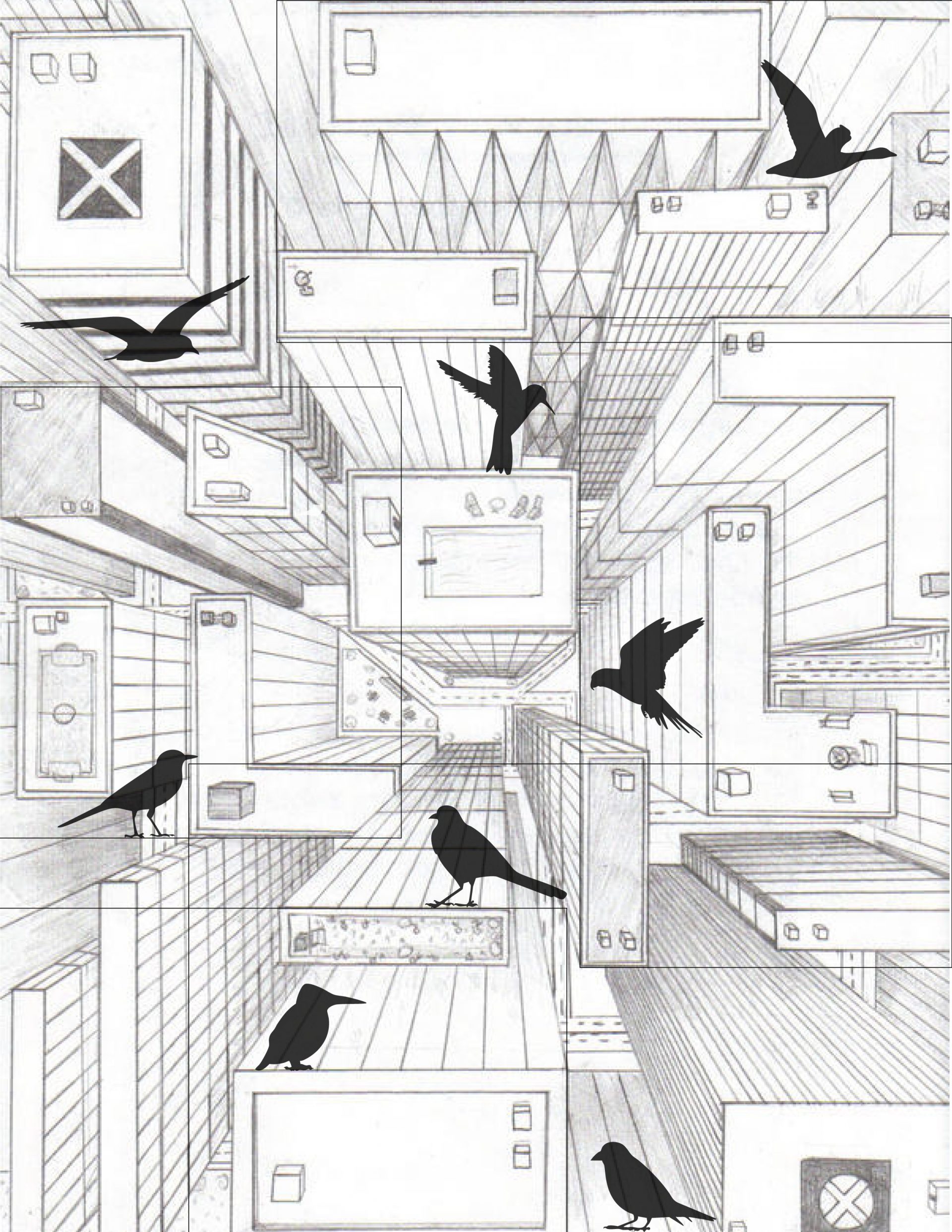
Cohabitation System: Negotiating Space Between Humans and Birds
Contemporary buildings operate as zones of exclusion, separating human space from ecological systems.
This project proposes architecture as a mediator of that separation, organizing how humans and birds occupy the same environment. It allocates space specifically for birds and reinvites them to cohabit the building, defining where they can perch, nest, and move through while sharing common spatial systems with humans.
This Counts Too
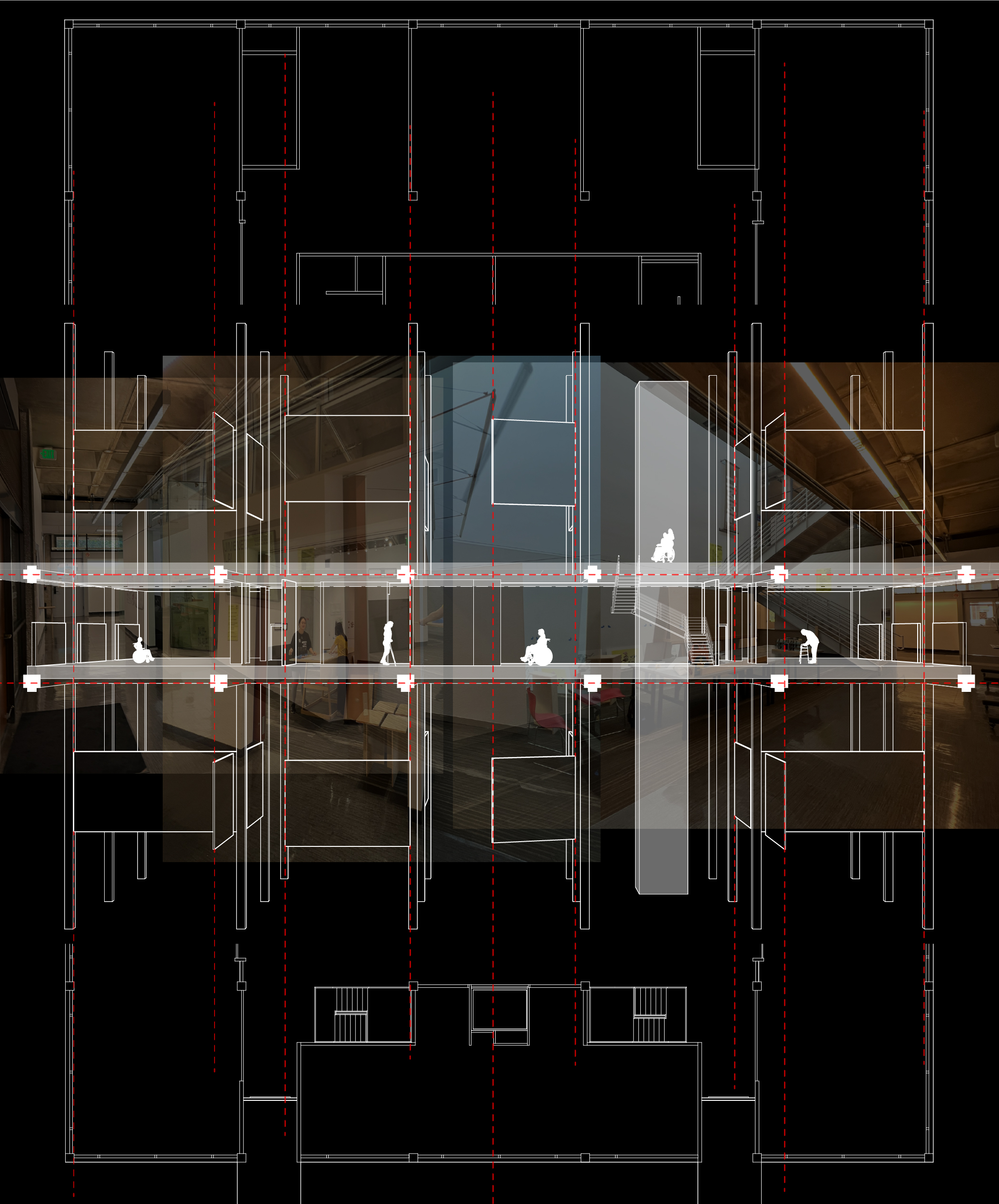
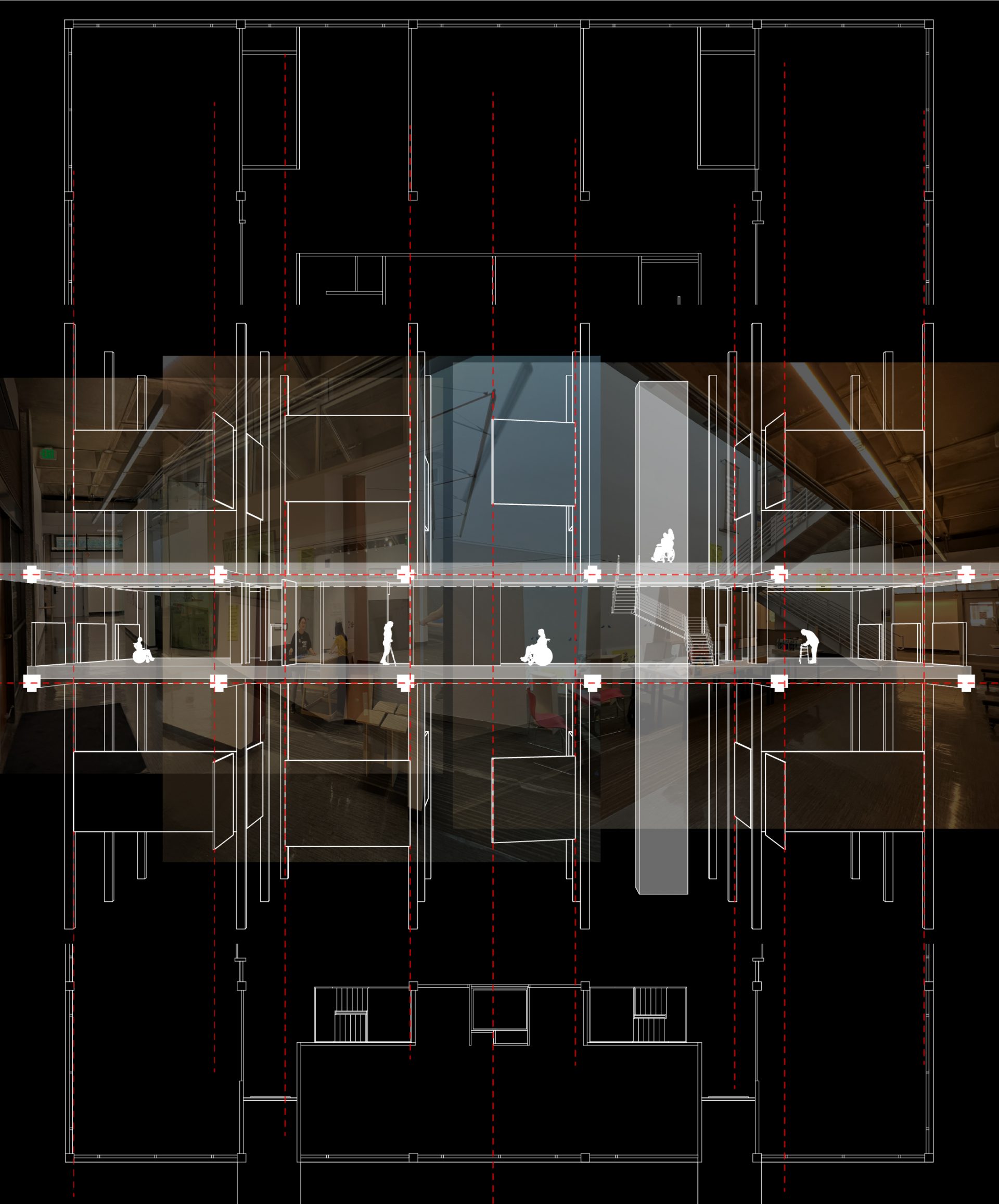
Accessibility in the built environment has, for too long, been treated as a compliance issue, with the minimum ADA standard considered 'enough'. Disabled users deserve more. This Counts Too invents a system created by the architect but modified by the expert end user. By designing an open framework of modifiable parts within the USC Architecture building, I propose a system where mobility aid users exercise their design agency in real time. The system allows users to read, change, and complete their environment to best suit their access needs while maintaining the integrity of the building.
EPISODIC SPECKLED INTERVENTIONS
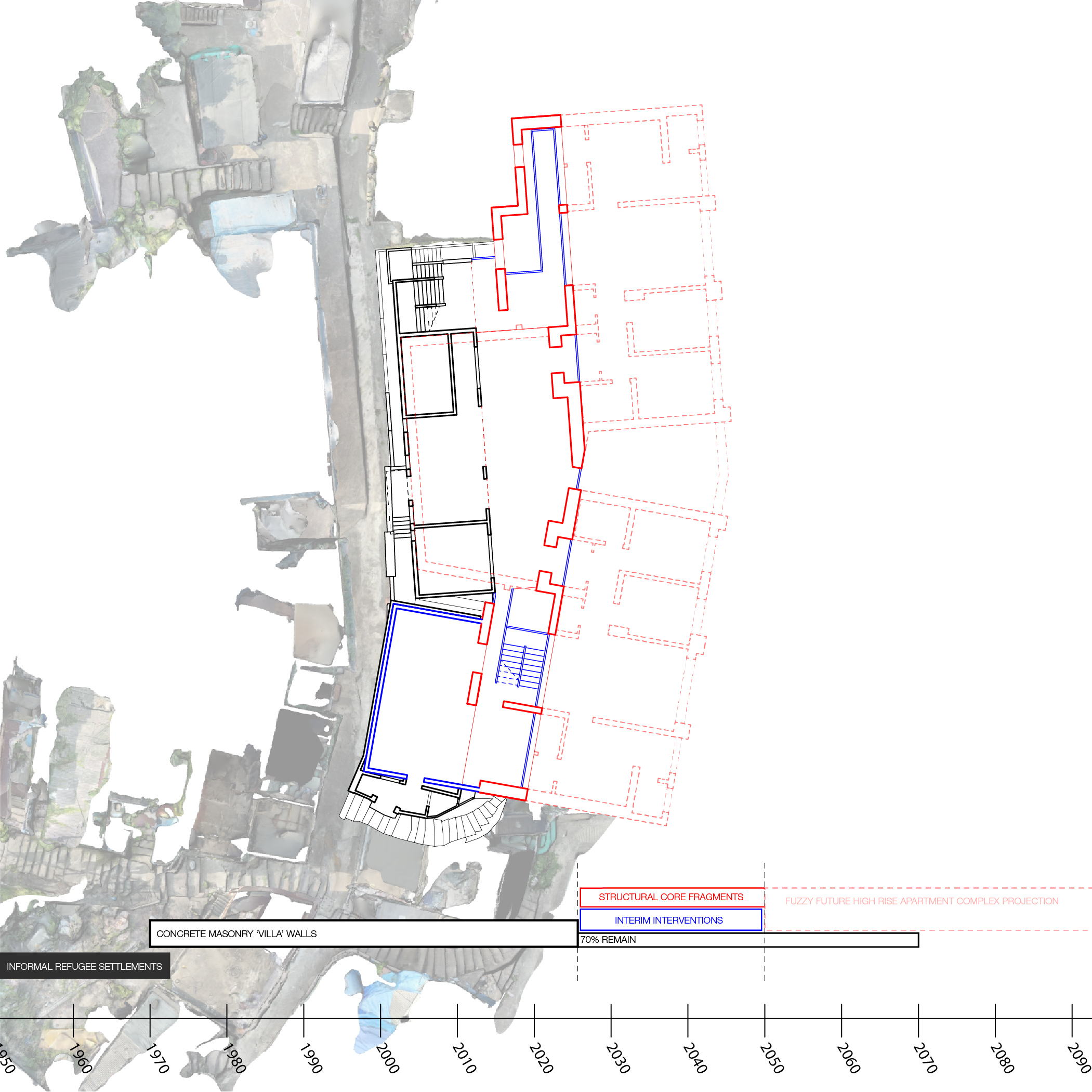
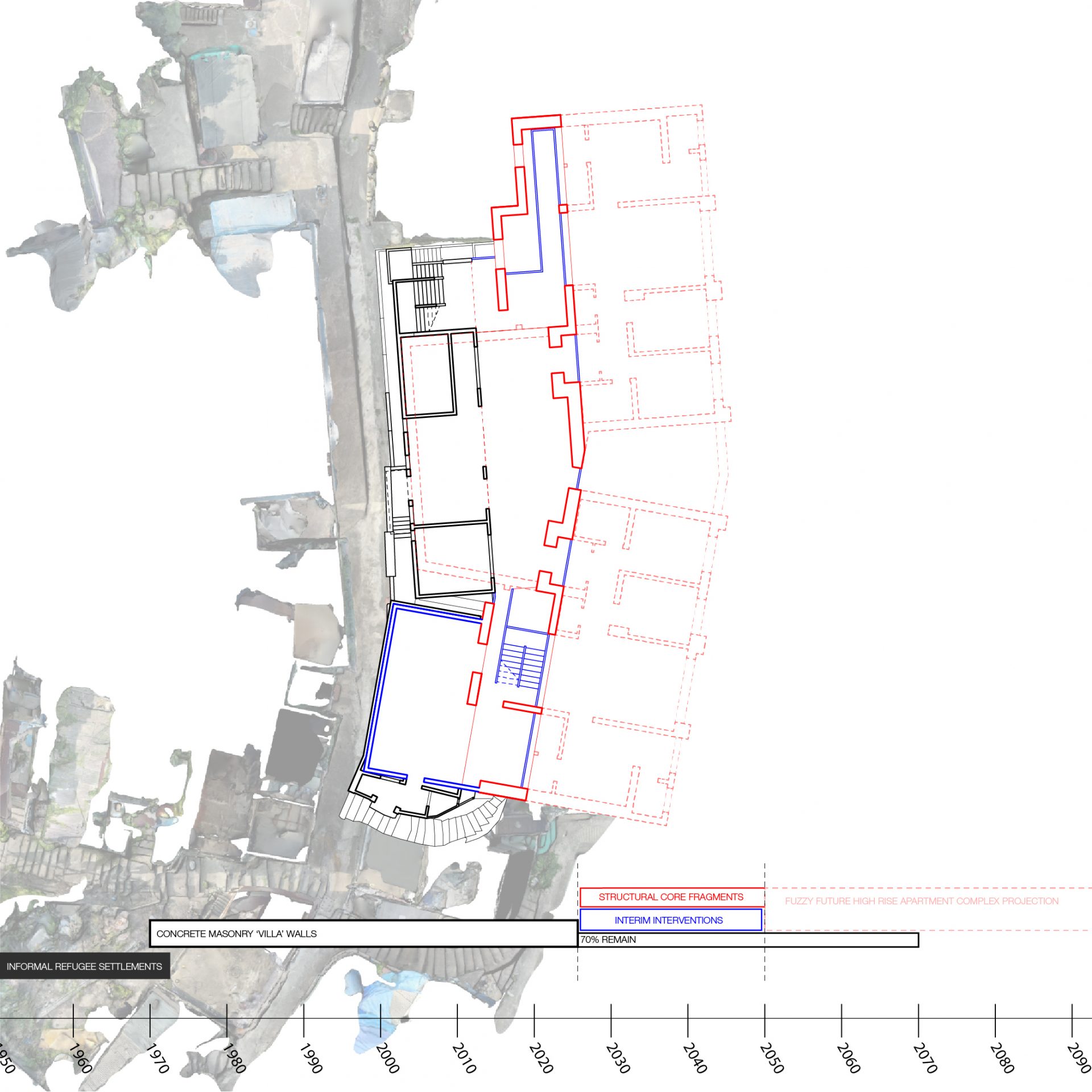
We live in a reality where we are dealing with buildings of old with short half-lives and building things that are projected to have even shorter ones. In such a condition, architects should not produce a final form, but actively choreograph the uneven persistence and expiration of building parts, assemblies, and spatial forms. The architect's potency lies in setting the lifespans, interfaces, and tectonic logics that steer future behavior, growth, and change. Architecture isn't about resisting decay. It is about staging succession, where the staggered countdowns of components allow for incremental continuation rather than total erasure.
Civic Infrastructure Through Branded Sanitation
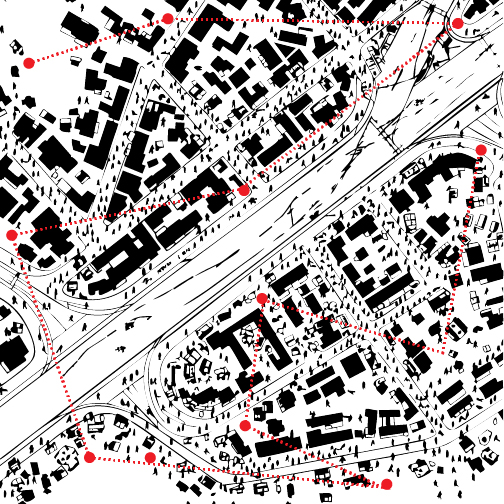
Access to dignified public restrooms is a fundamental civic right, yet Los Angeles fails to provide this basic infrastructure equitably. This project proposes a networked system of branded, movable restroom units as a new model of civic provision. Replacing fixed, scarce facilities, a distributed framework of adaptable nodes actively adjusts to pedestrian density, temporal demand, and underserved communities. By coupling public necessity with private sponsorship, the system creates a scalable, maintainable network that elevates sanitation as a visible, essential civic infrastructure embedded in the everyday life of the city.
Our Surface Earth
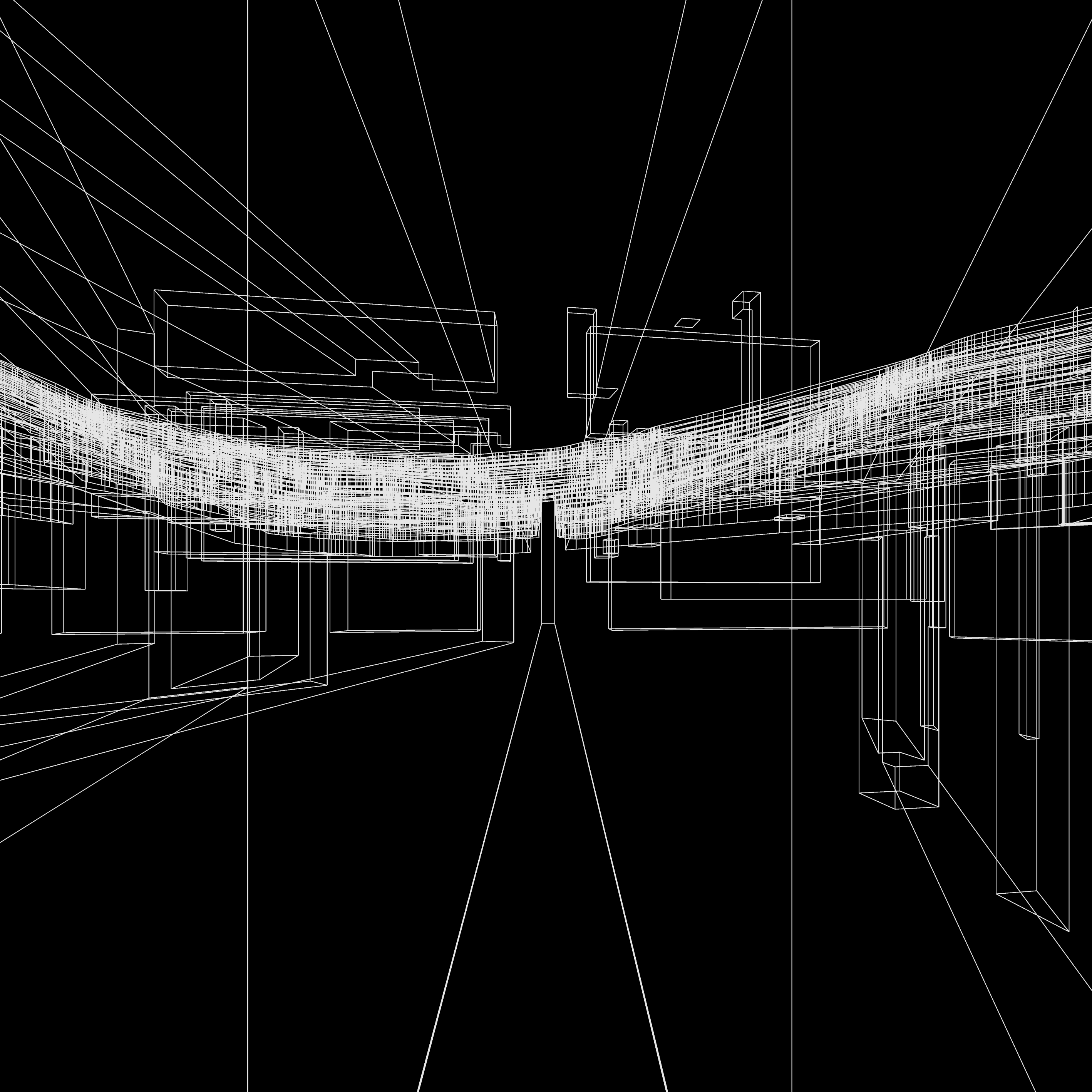
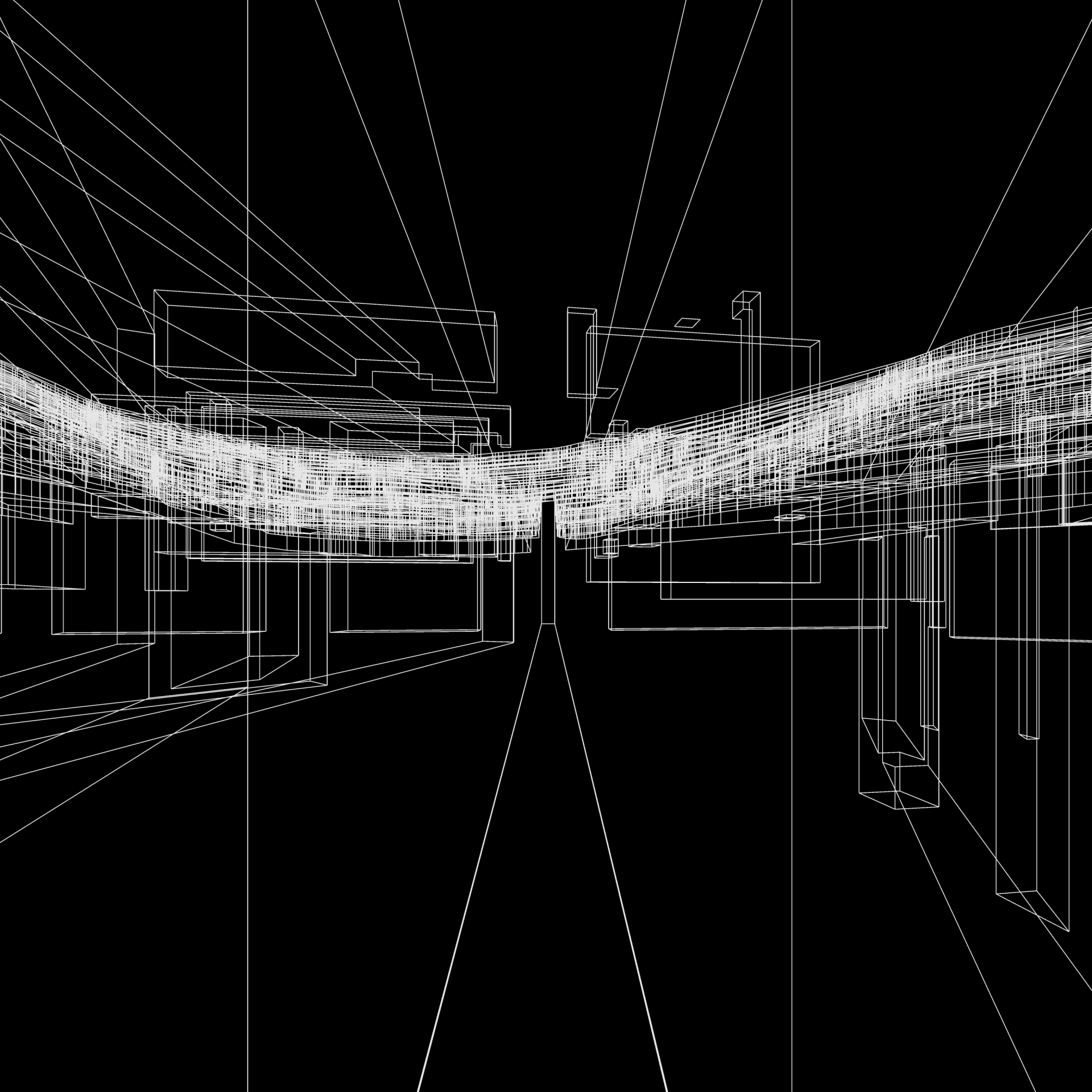
The development of civilization has directly relied on the destruction of Earth's surface to extract the materials we use to build our cities. Earth's resources are finite, and its surface is the dermal interface which we use as a normative base to build upwards from. We must preserve the Earth's remaining undeveloped land. Surfaces that have been augmented beyond natural restoration will derive a new architecture that has complete utility. The stereotomic modus operandi for excavated urbanism will act as a self-sufficient neural network for creating form-based vestiges of civilizations with a chthonic relationship to Earth's surface.
Dongze Li
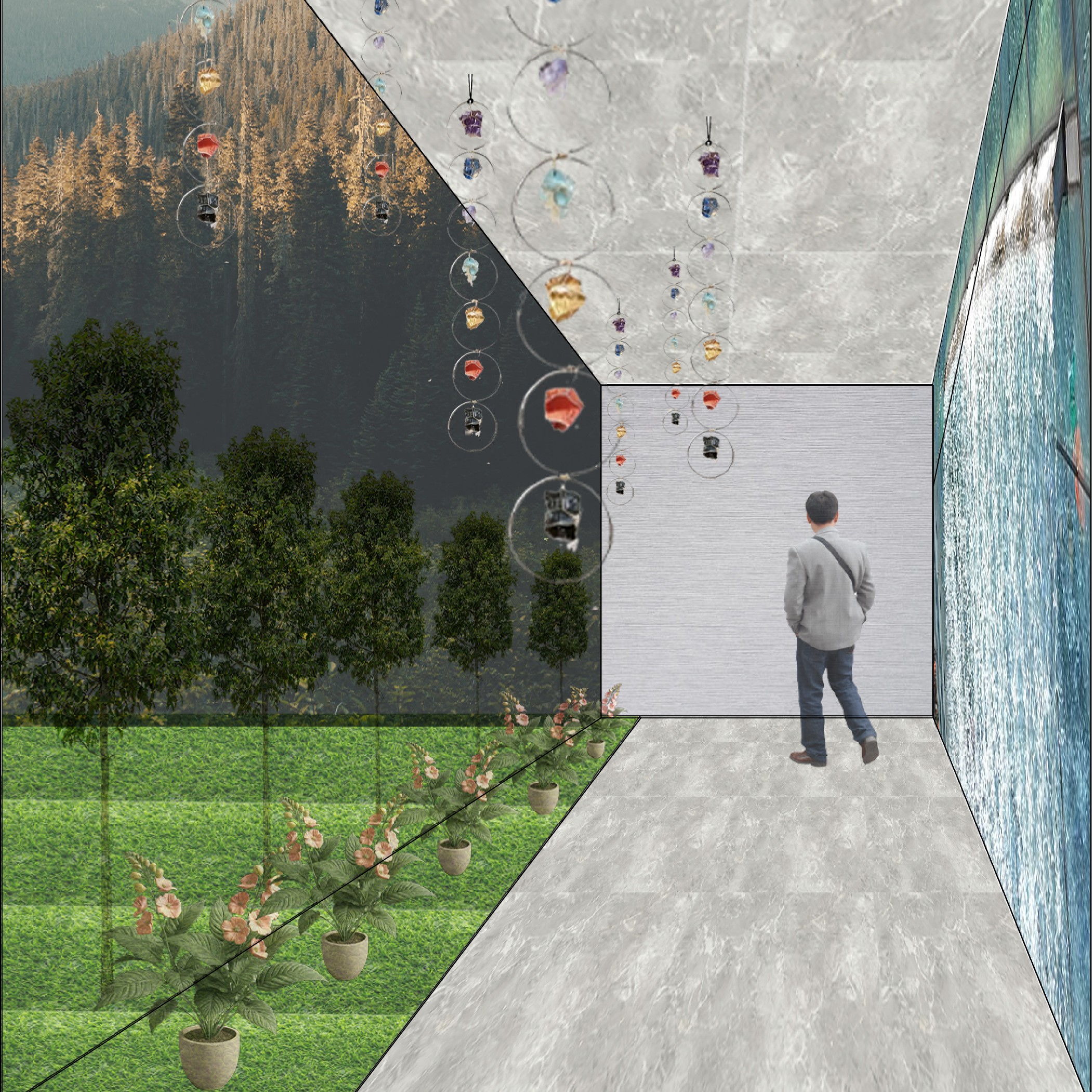
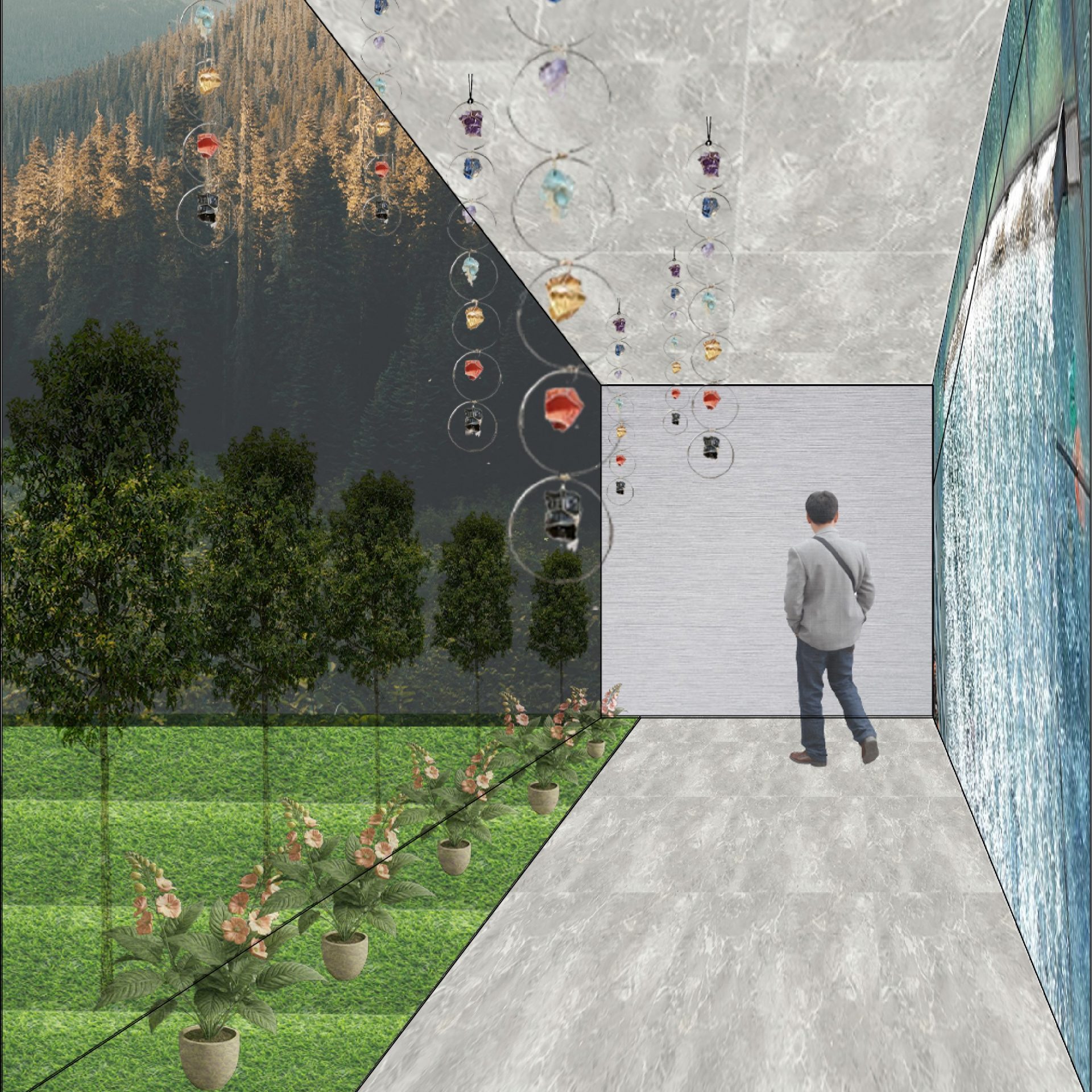
Architecture does not begin with enclosure but with edges. It constructs these edges through gradients of opportunities such as light, heat, material, and movement. It produces boundaries through physical form and interaction, shaping soft transitions that define space without sealing it. Rather than containing space, architecture engages the body in a continuous negotiation with environment and experience, where delight emerges through movement, perception, and change.
Enveloping Fragments
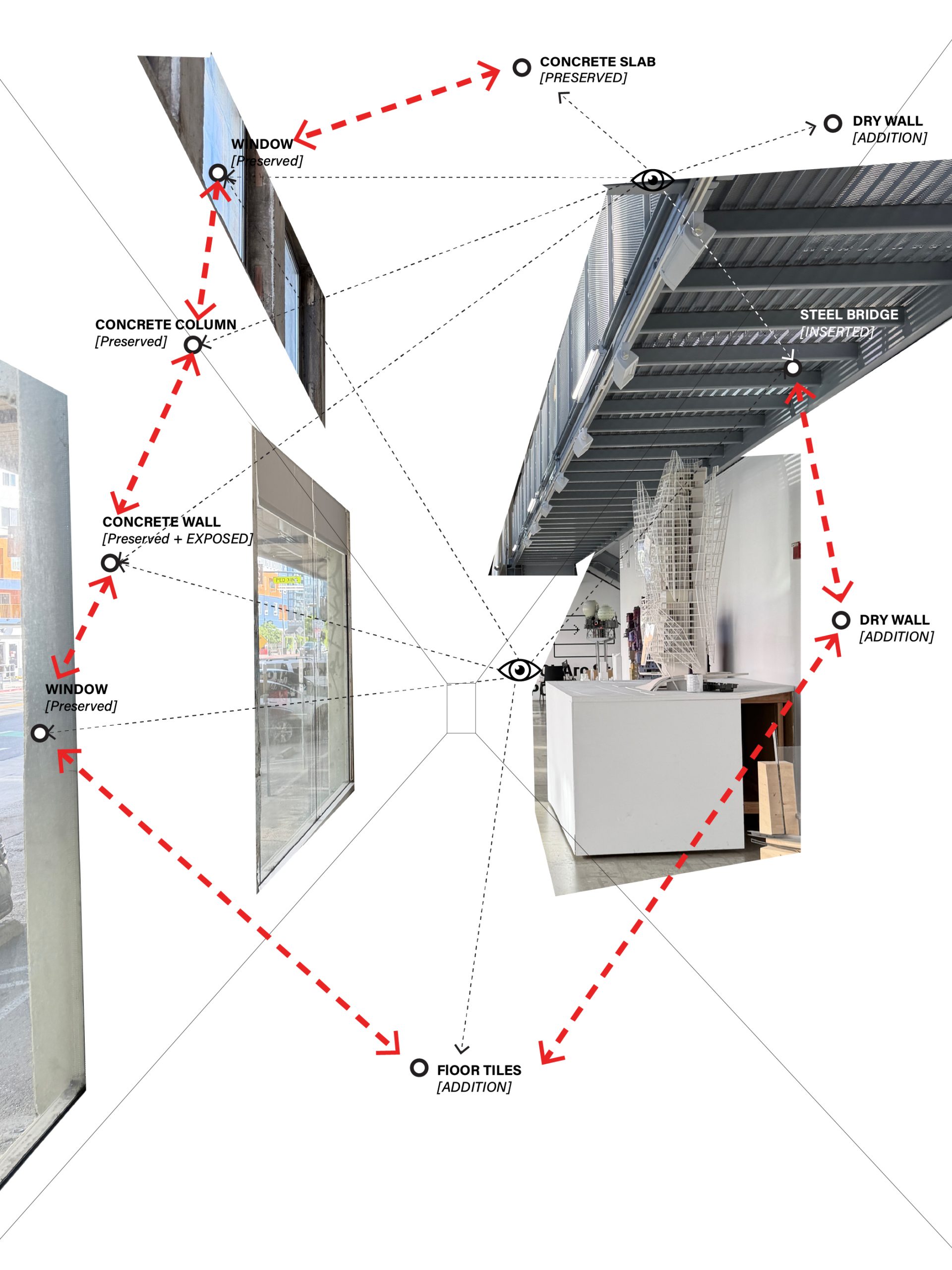
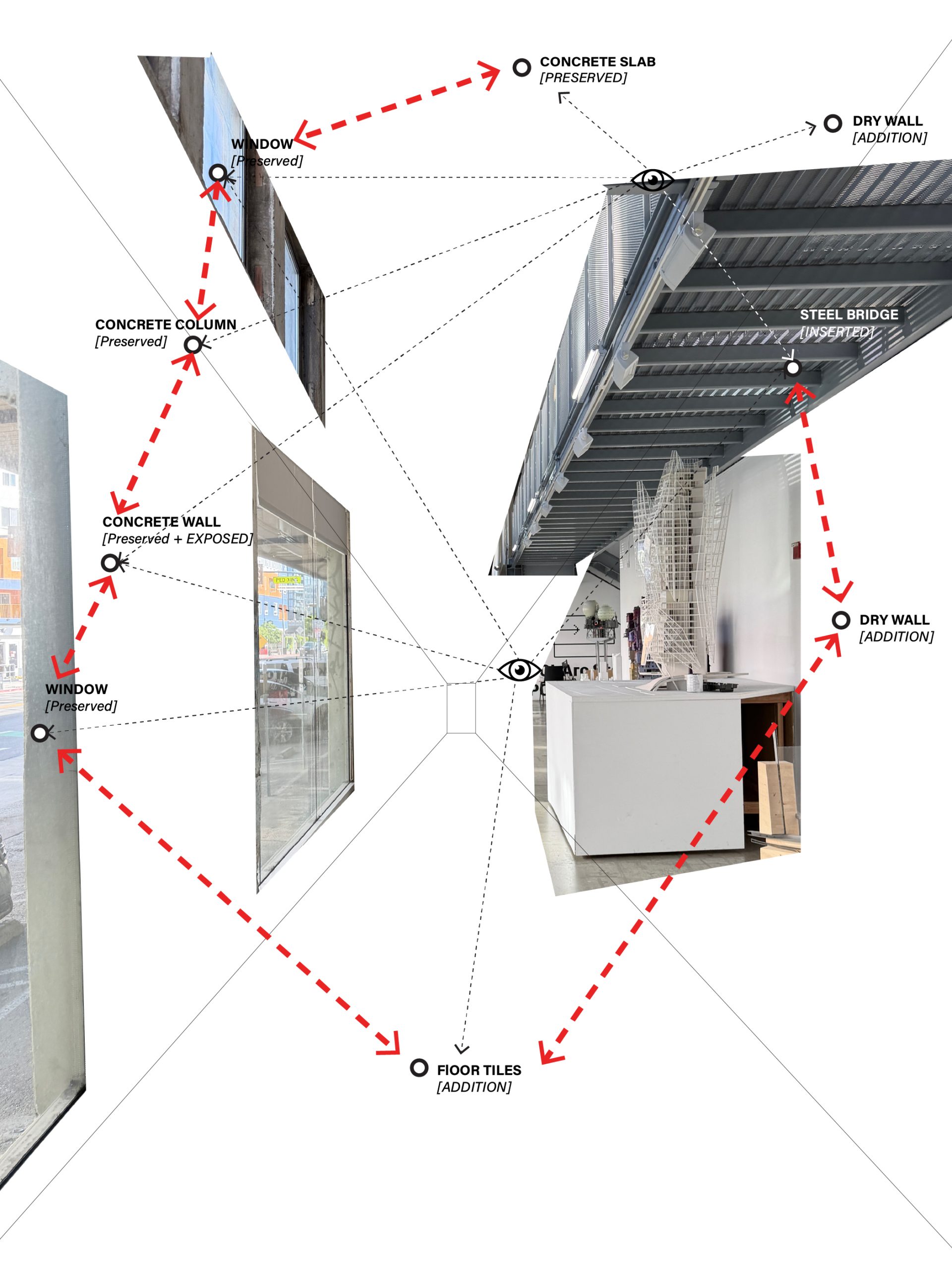
In response to adaptive reuse practices that aestheticize fragments as static artifacts, this thesis argues that scalar manipulation (enlargement, compression, and reframing) of the enveloping conditions acts as a design instrument that reorganizes fragments into spatially coherent systems. Through shifts in scale, fragments engage new spatial relationships while maintaining their formal identity and temporal autonomy, redefining reuse as an active process of spatial construction rather than passive preservation of material value itself.
Becoming Familiar
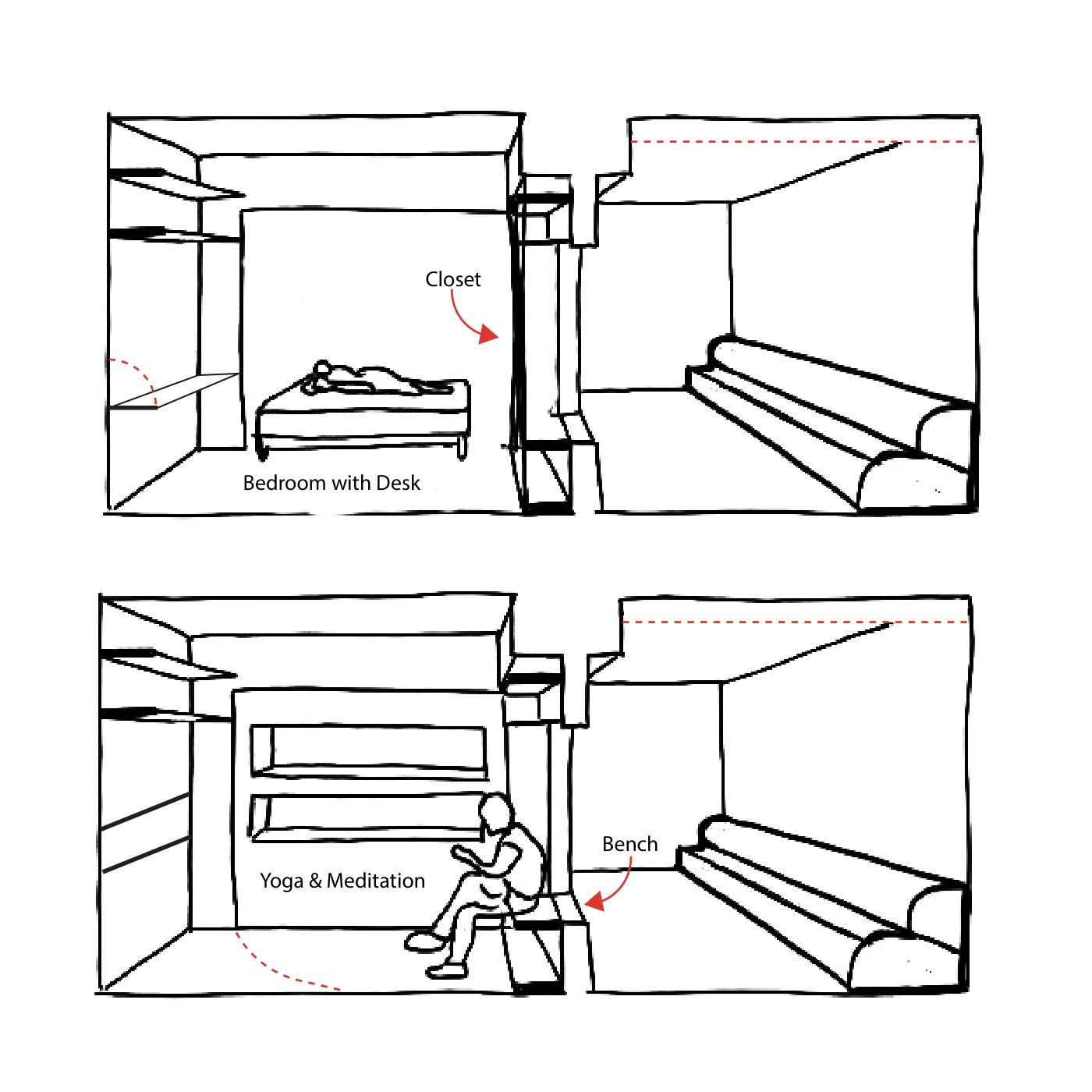
A space becomes familiar through inhabitation. This thesis constructs an urban dwelling unit through memory, sensory thresholds, time, and accumulation, operating within a fixed architectural shell. As a Lebanese living in Los Angeles, the design adapts with hyper-specificity to the occupier, shaping how one cooks, rests, arrives, and gathers daily. Framed as a gesamtkunstwerk, each element produces experience rather than representing it. The project follows a system of five rules that act on edges, thresholds, and surfaces to continuously reshape the space. The dwelling operates as a process, shifting toward an ongoing state of becoming familiar.
Architecture as Receipt: De(En)coding Commercial Typology
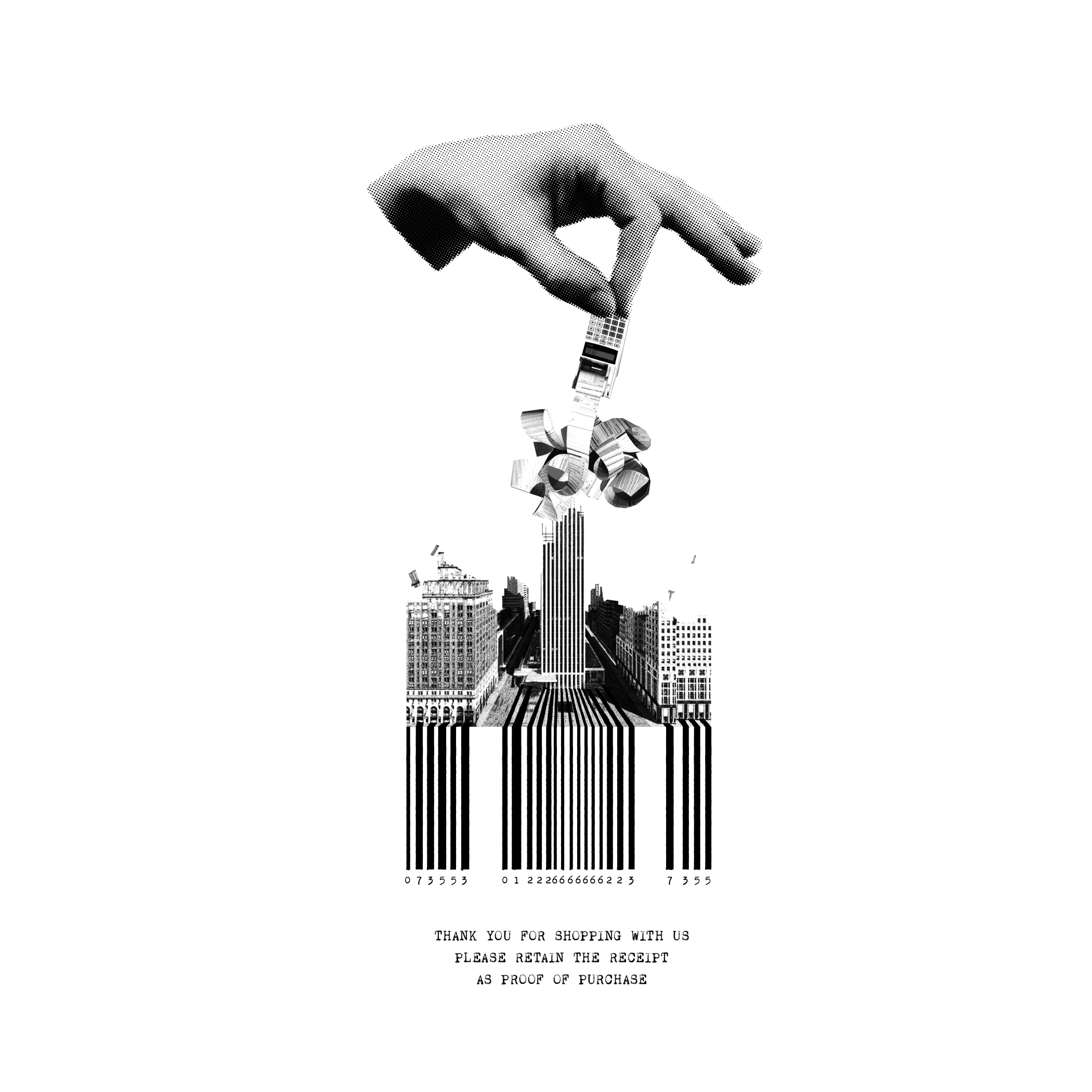
Architecture as Receipt constructs a diagrammatic grammar that translates socio-economic forces into spatial organization. Grounded in the analysis of Grand Central Market, it traces how shifts in stall-aisle patterns register broader transformations. Through decoding and re-encoding commercial typologies, it destabilizes typology by reframing architecture as a system of continuous negotiation, where spatial order is no longer determined by program but constantly reconfigured through shifting conditions.
Architecture becomes the receipt: an index that renders these forces legible and operative, transforming retrospective de(en)coding into a projective tool for speculating on future spatial change.
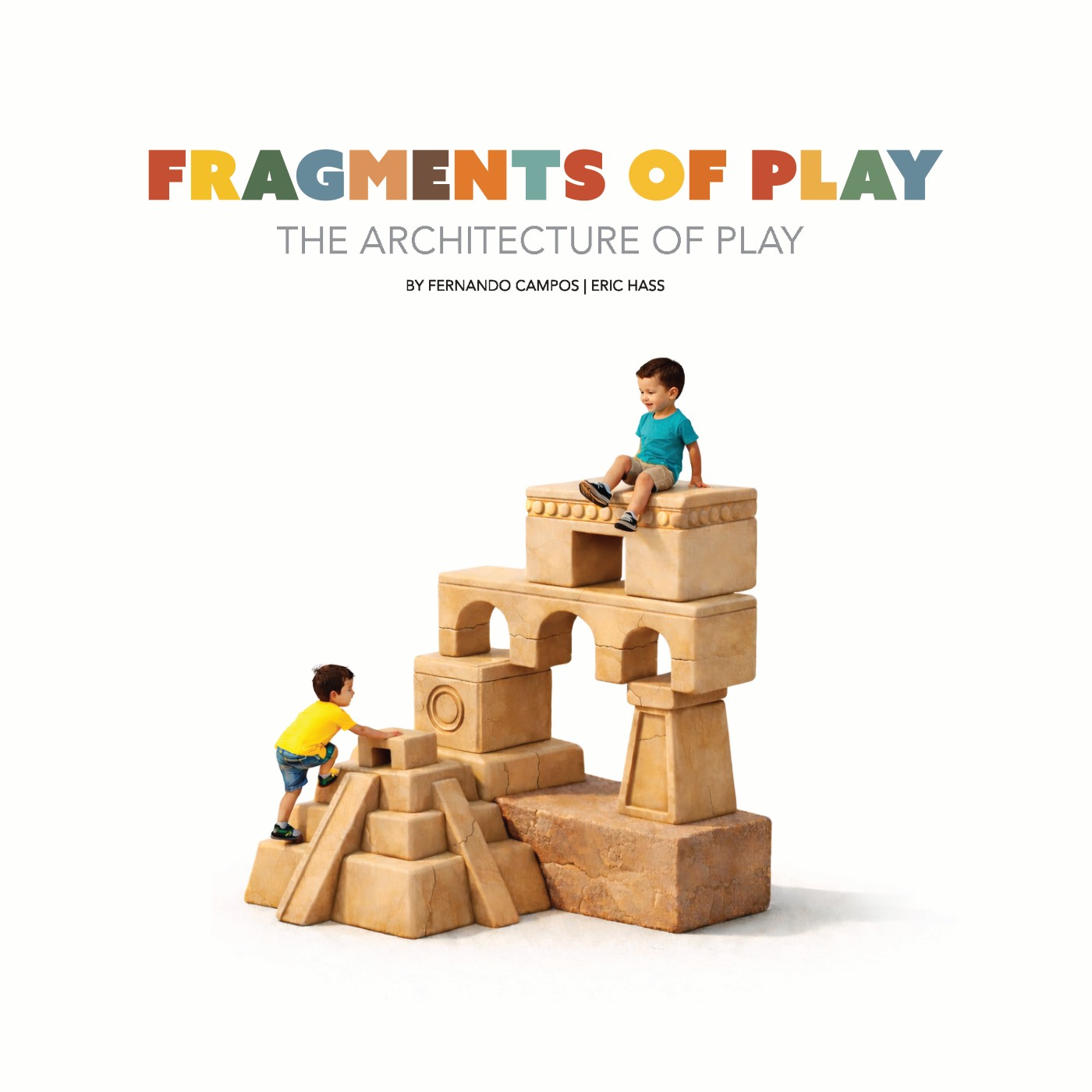
FRAGMENTS OF A CITY: THE ARCHITECTURE OF PLAY
Fernando Campos | Eric Haas What if a city could fit in your hands? This project breaks Mexico City's architecture into modular pieces you can stack, rearrange, and play with. By controlling scale, material, placement, and interaction, it tests how learning happens through touch, manipulation, and failure. As young children build and rebuild, they begin to recognize patterns and forms drawn from layered cultural histories. Play turns into memory, where fragments of the city become familiar over time.
Architecture becomes something you don't jjust see but figure out by making it.
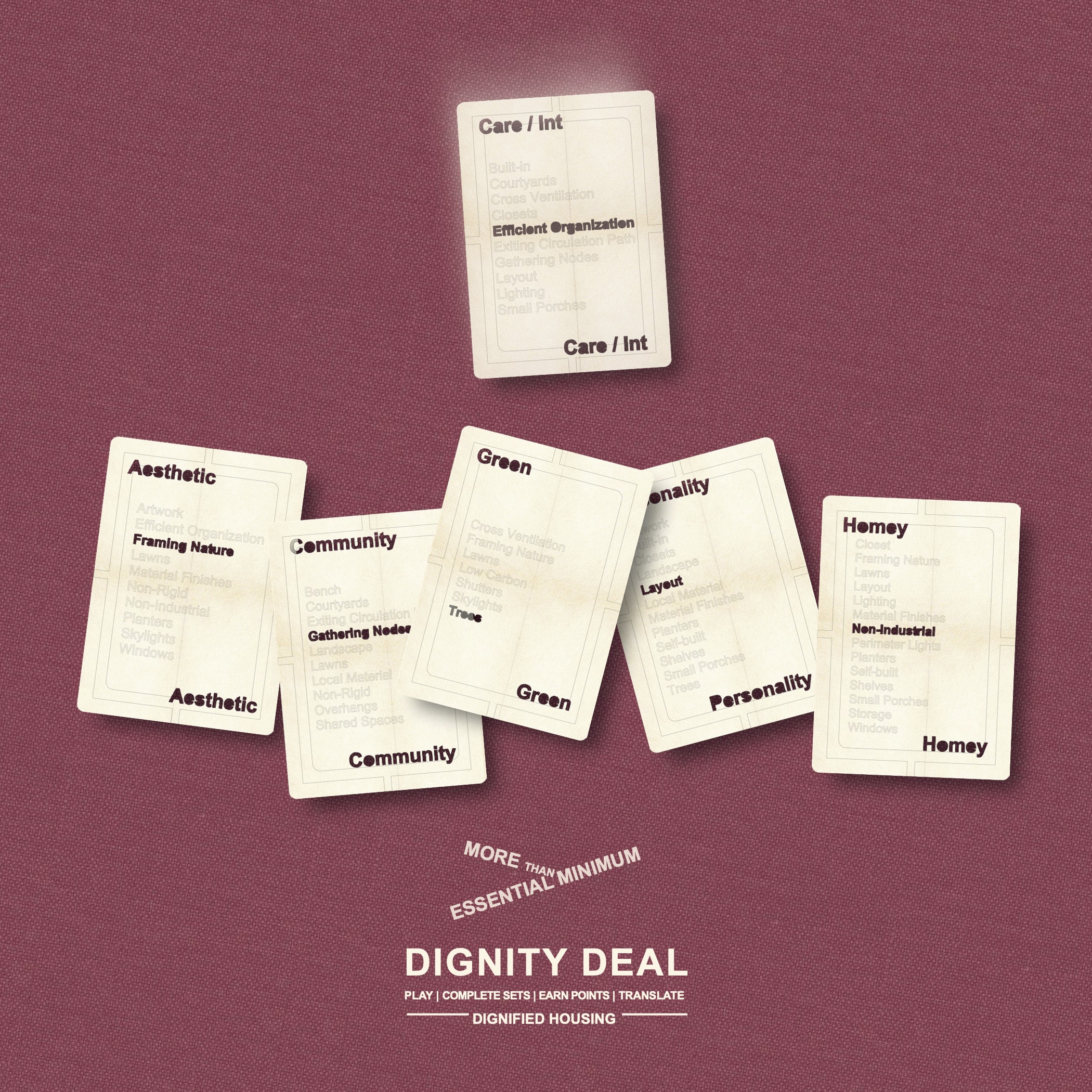
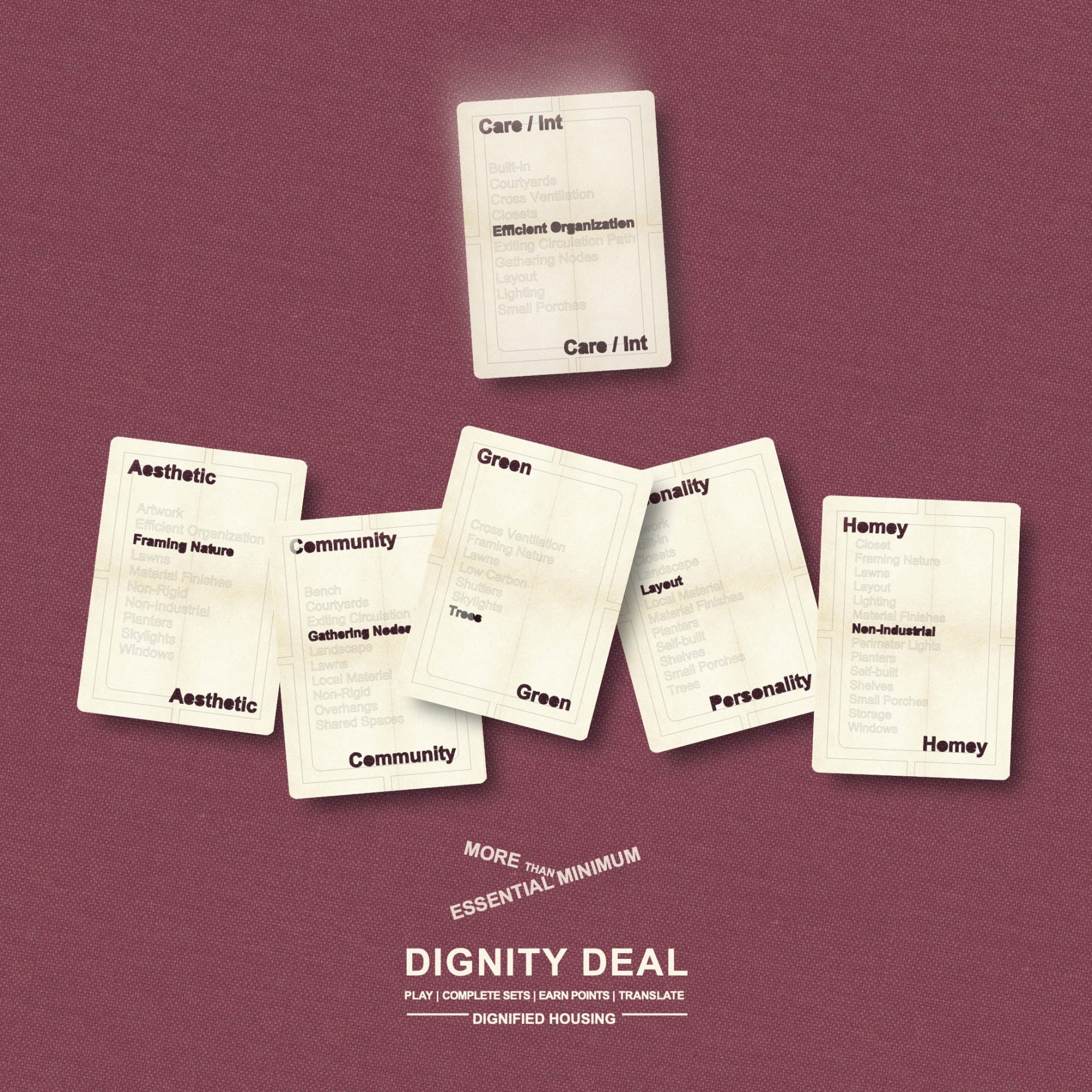
Dignity Deal
“Dignity Deal” goes beyond the “Essential Minimum” to propose a broader framework for achieving dignified housing. Through a code-like design process informed by context and narrative, the projects engage in the 'dignity deal'—translating categorized values such as aesthetics, care, community, greenness, personality, and homeyness into spatial decisions that manifest dignity into lived experience.
Choreographies of Dining
Dining is not a static space but a choreography of spatial conditions that shape how people gather, interact, and share food.
This project constructs an architectural framework by breaking the act of dining into distinct conditions and reorganizing them through design.
Rather than following a fixed sequence, these conditions are arranged in multiple ways to produce different forms of encounter, ranging from moments of closeness to situations of distance, observation, or overlap.
Through this approach, the project redefines dining as an open system in which spatial relationships are actively composed rather than predetermined.