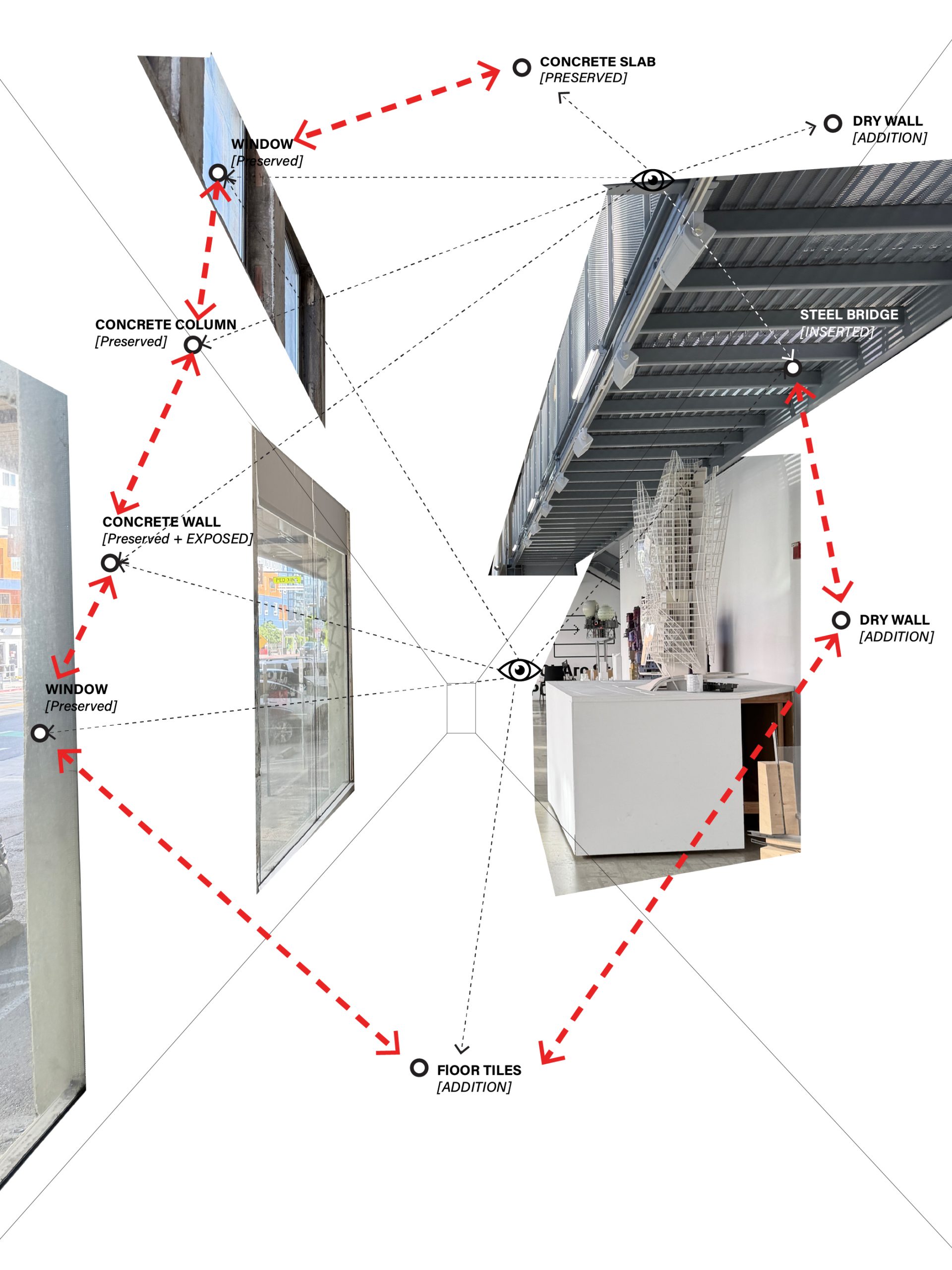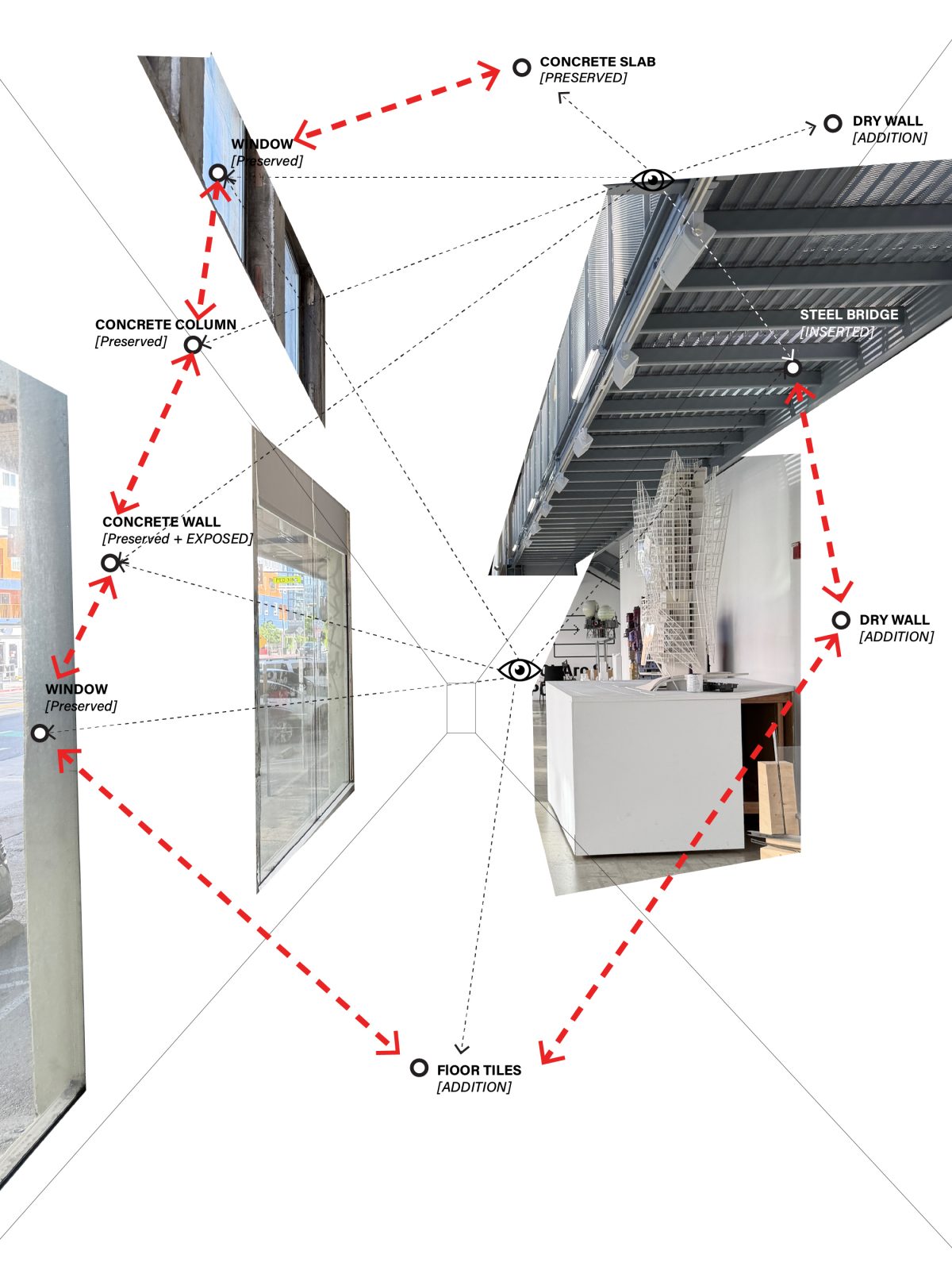
In response to adaptive reuse practices that aestheticize fragments as static artifacts, this thesis argues that scalar manipulation (enlargement, compression, and reframing) of the enveloping conditions acts as a design instrument that reorganizes fragments into spatially coherent systems. Through shifts in scale, fragments engage new spatial relationships while maintaining their formal identity and temporal autonomy, redefining reuse as an active process of spatial construction rather than passive preservation of material value itself.