
Random Access Memories
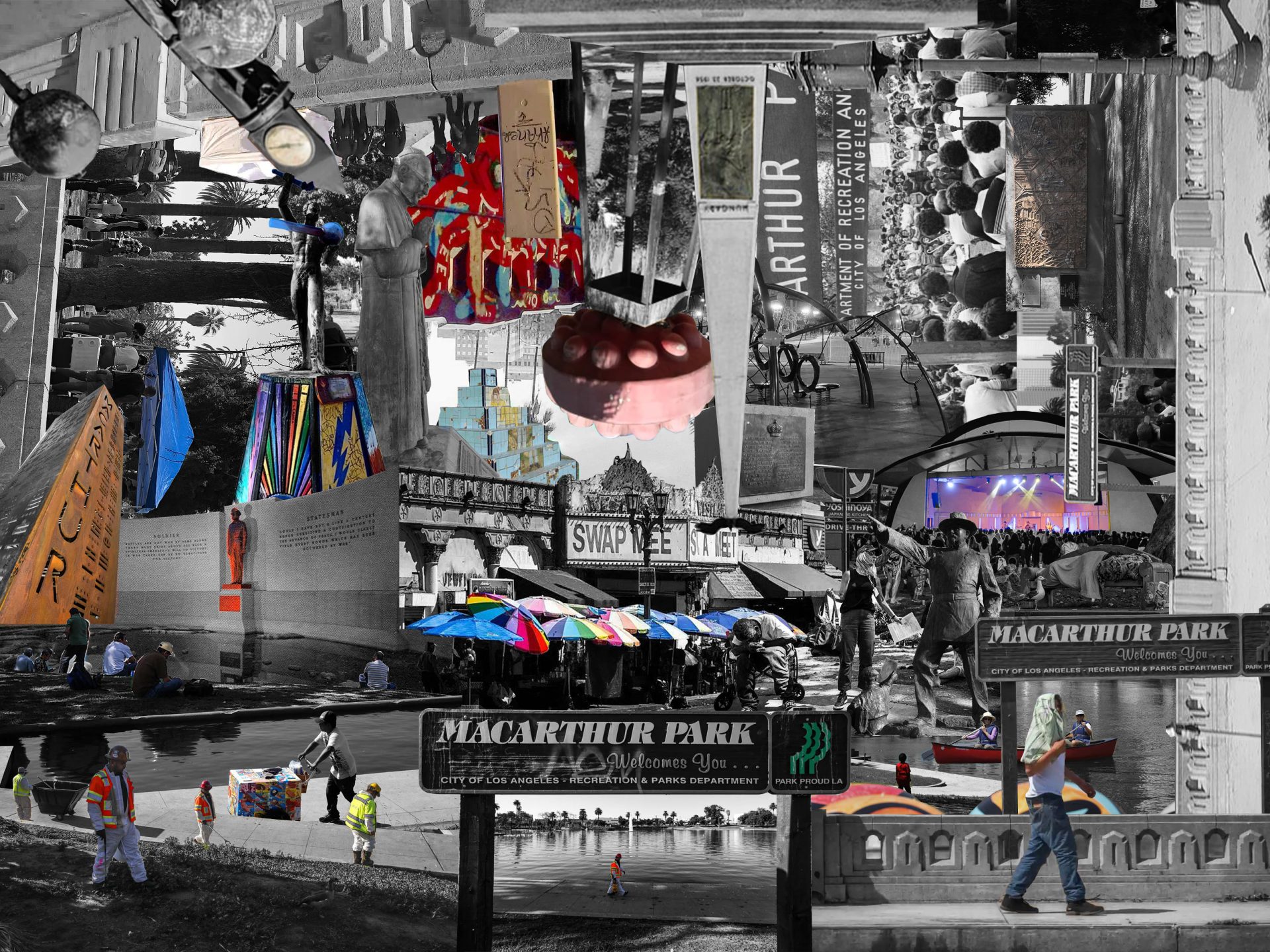
MacArthur Park is a liminal zone between place and non-place, an area of the city that oscillates between cultural identity and anonymity. Differing ideas and perceptions of the park are shaped by the range of memories of those who occupy, and move around and through, this space daily. R.A.M. leverages these random, everyday memories of MacArthur Park into a new public experience. A series of interventions—memory gathering devices—are distributed into the landscape, setting up the conditions for a social and cultural space embedded with a deeper understanding of its memory. These memory gathering devices allow old memories to reemerge and new ones to be formed, overlaying and interweaving diverse memories of the park across time.
PORCH-313
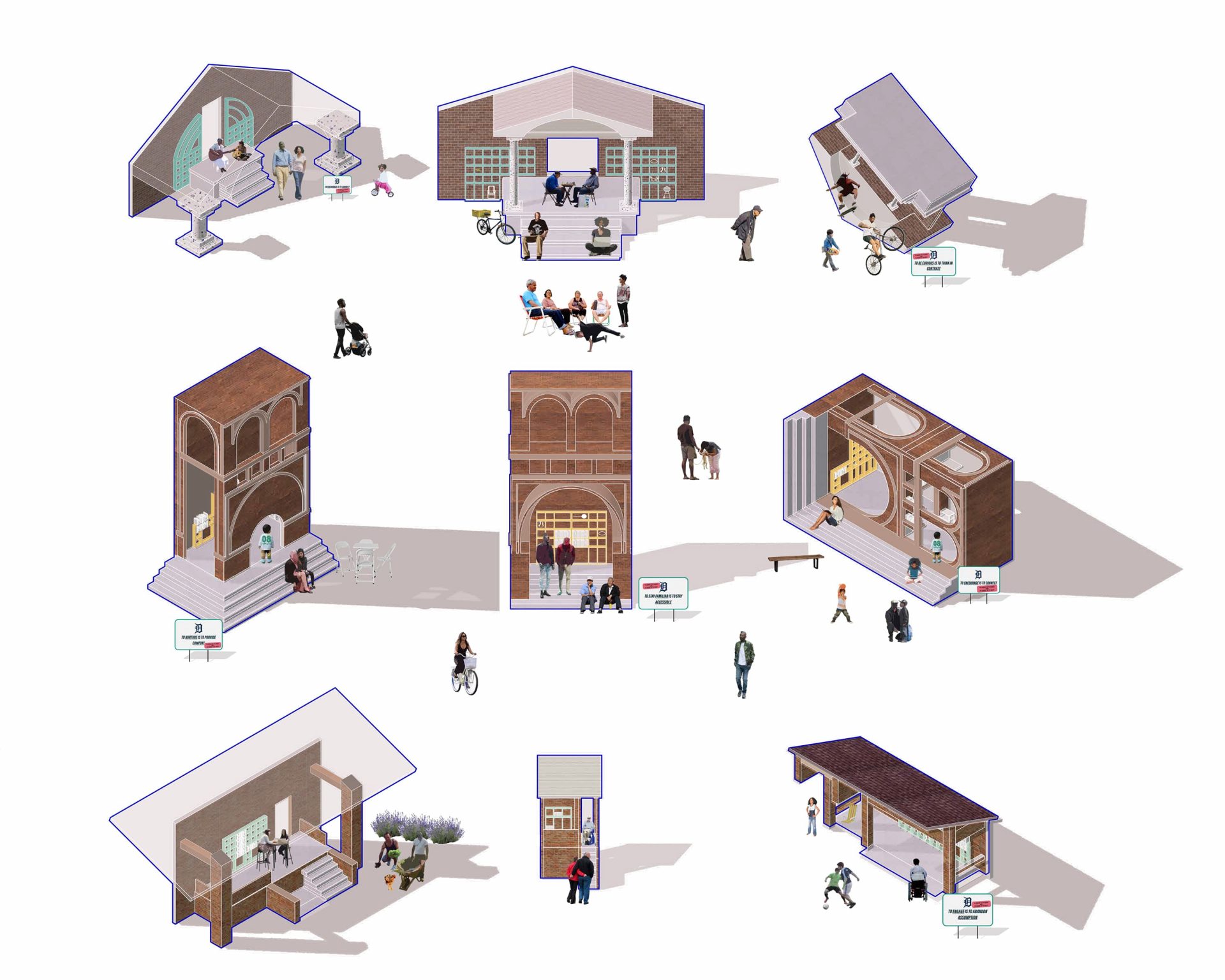
The porch is an ideal place for community engagement, offering an architectural element that is simultaneously intimate, familiar, and public. Equally, the porch, with its varied lineage, holds deep significance in African-American history as an element whose development traces back to West Africa and continues to be a marker of black domesticity within the United States. PORCH-313 leverages these qualities of the porch to connect the city of Detroit’s well-established network of co-operatives and collectives while imagining a strategy for addressing the many abandoned lots within the city. Through the project, the porch is reimagined as a public space that bridges the domestic and the communal, creating a network of spaces for community members to exchange services, ideas, and quality time.
Boundary Acts
In Los Angeles, urban boundaries, shaped by capitalist development, restrictive infrastructure, and fragmented governance practices, reinforce spatial and social divisions across the city. These conditions often lead to neglect, fragmentation, and disinvestment. However, by leveraging components of control and separation—such as jurisdictional edges, zoning lines, and infrastructural barriers—and making them visible and interactive, boundaries can be transformed into active sites of resistance. Through this process, exclusionary urban development is challenged, and a new model of public space emerges—one that prioritizes collective agency, civic engagement, and shared ownership within the urban fabric. Boundaries become catalysts for connection, not containment or exclusion.
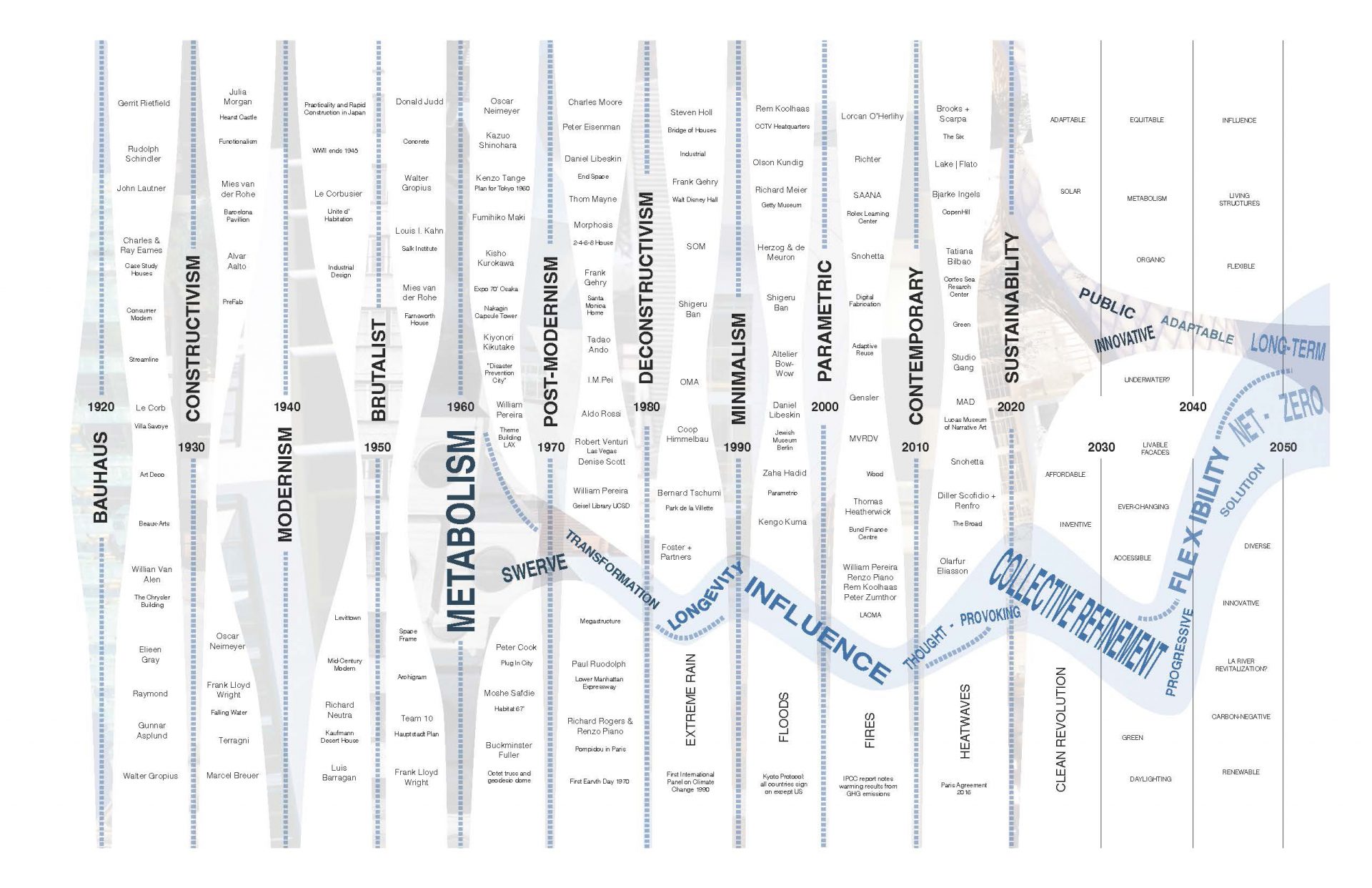
Metabolizing the LA River
Innovation in the public realm relies on acknowledging and reinterpreting the past to address urgent environmental, social, and spatial challenges. Using the LA River as a testing ground for deployable, community-driven infrastructure, this project draws from the adaptive principles of the Metabolist movement to propose a modular system of small, medium, and large-scale interventions. These combine permanent and contextual elements, tailored to the needs of each river segment. The design fosters public engagement, resilience, and cultural expression—transforming the river from purely infrastructure into a dynamic public realm that bridges communities, supports local economies, and reimagines urban waterways.
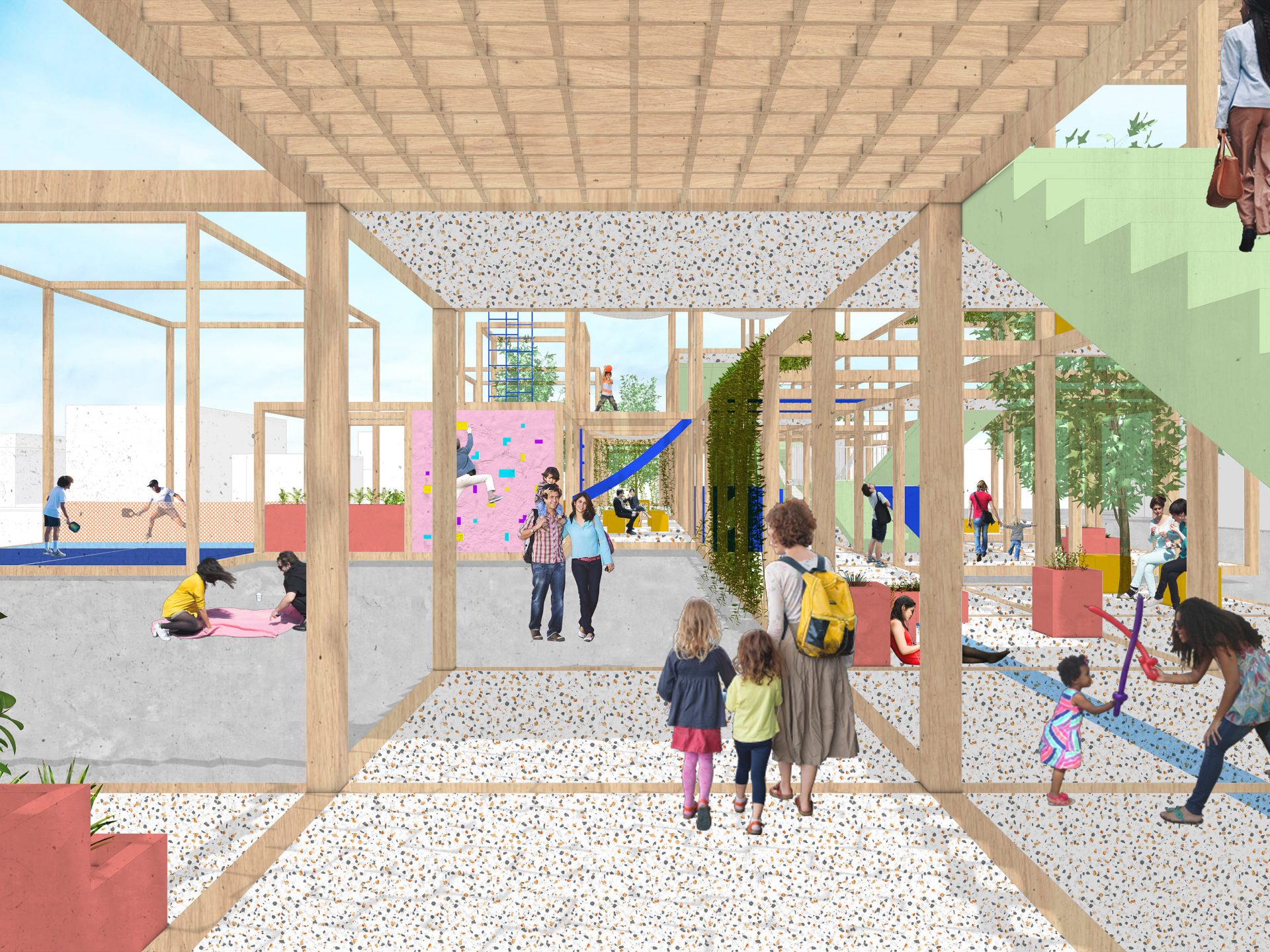
The Grounds for Play
Streets increasingly have become edge conditions—fractures in the urban fabric that privilege movement over interaction, functioning more as corridors of separation than spaces of connection. Yet public space is fundamentally about relationships—between people, programs, and places—and the street must reclaim its role as an active field of engagement. Here, movement becomes more than just passage; it becomes an opportunity to pause, gather, and re-stitch the fragmented city.
Within this reimagining, play emerges as a vital design strategy—introducing loosely programmed spaces that invite curiosity, foster exploration, and transform the everyday into the unexpected.
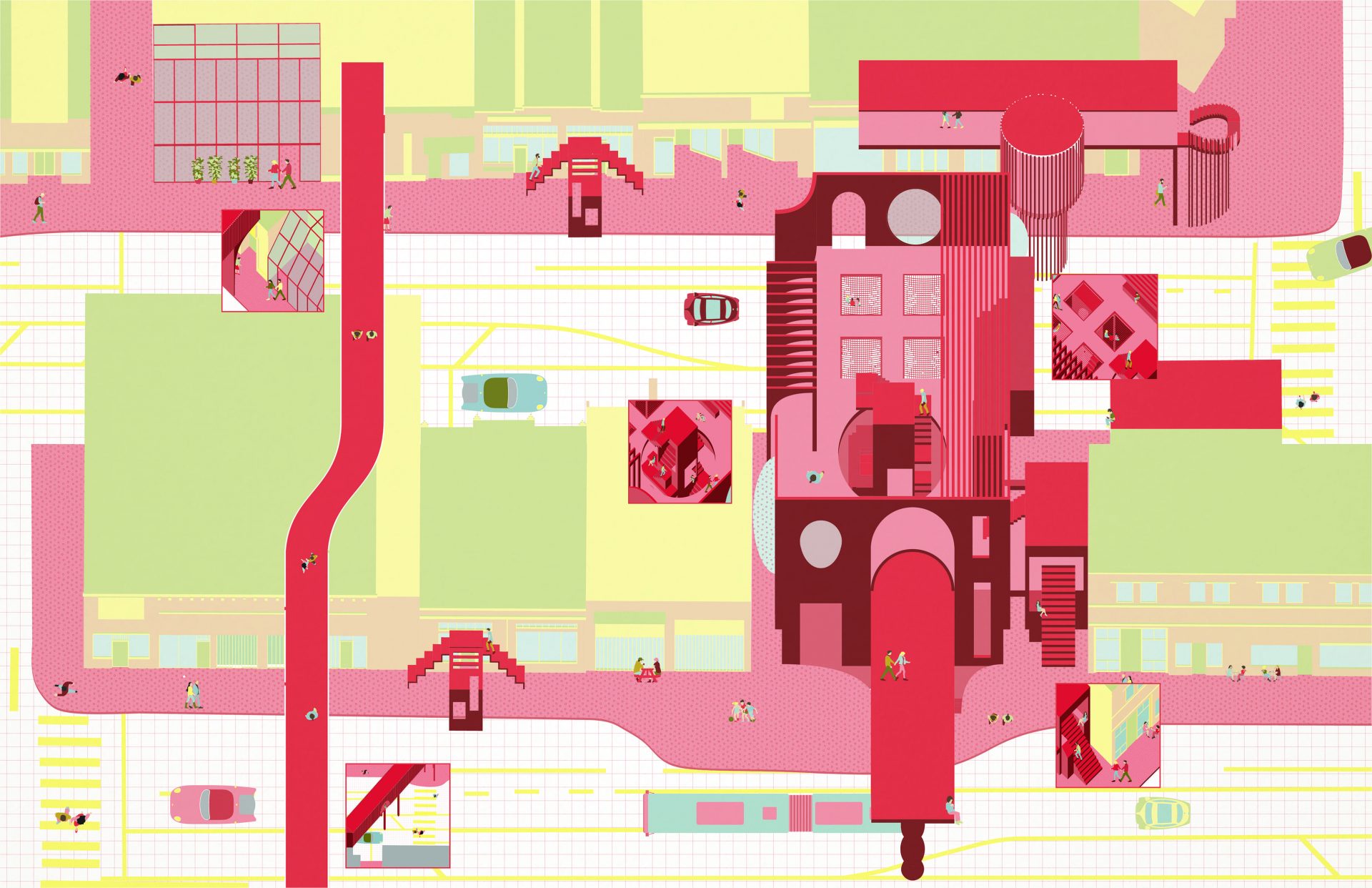
Grafted Encounters: Exchanges at the Wall
What if the fragments of the past could shape the public spaces of the future? Spolia, as a contemporary architectural strategy, leverages digital technology to reimagine fragments of existing structures, creating spaces that foster human encounters within the public realm. Through a process of extracting, transforming, and grafting these fragments, a new language is developed—one that is deeply rooted in and reminiscent of the surrounding context. As a project, spolia becomes a tool to reimagine USC’s Wall of Troy as a case study by dissolving this divisive edge and transforming traditional boundaries into zones of public exchange.
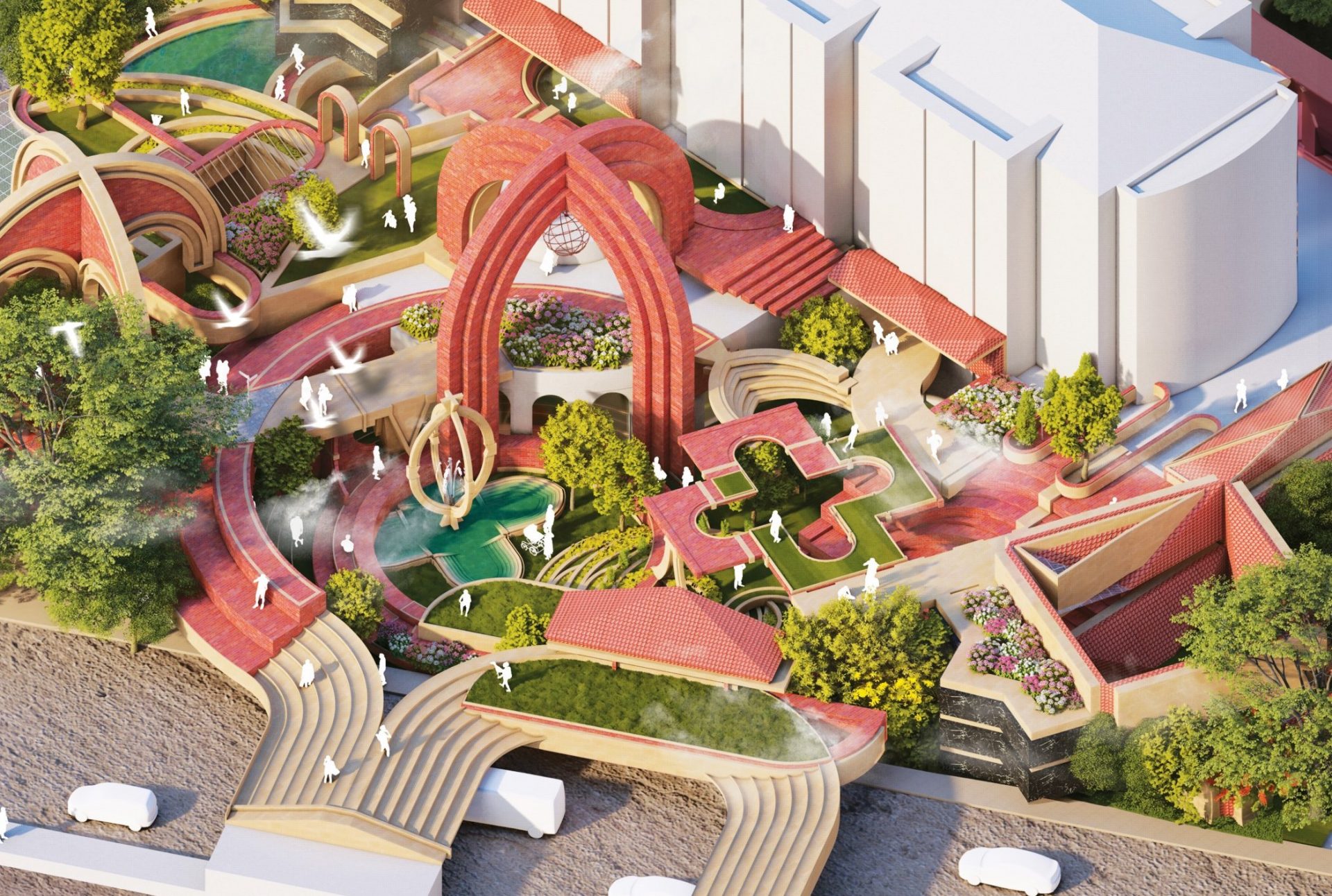
In Between
This project explores the potential of in-between space to challenge traditional architectural boundaries through ambiguity, adaptability, and dynamic transitions. It aims to create hybrid environments that promote connectivity, inclusivity, and resilience in urban design.
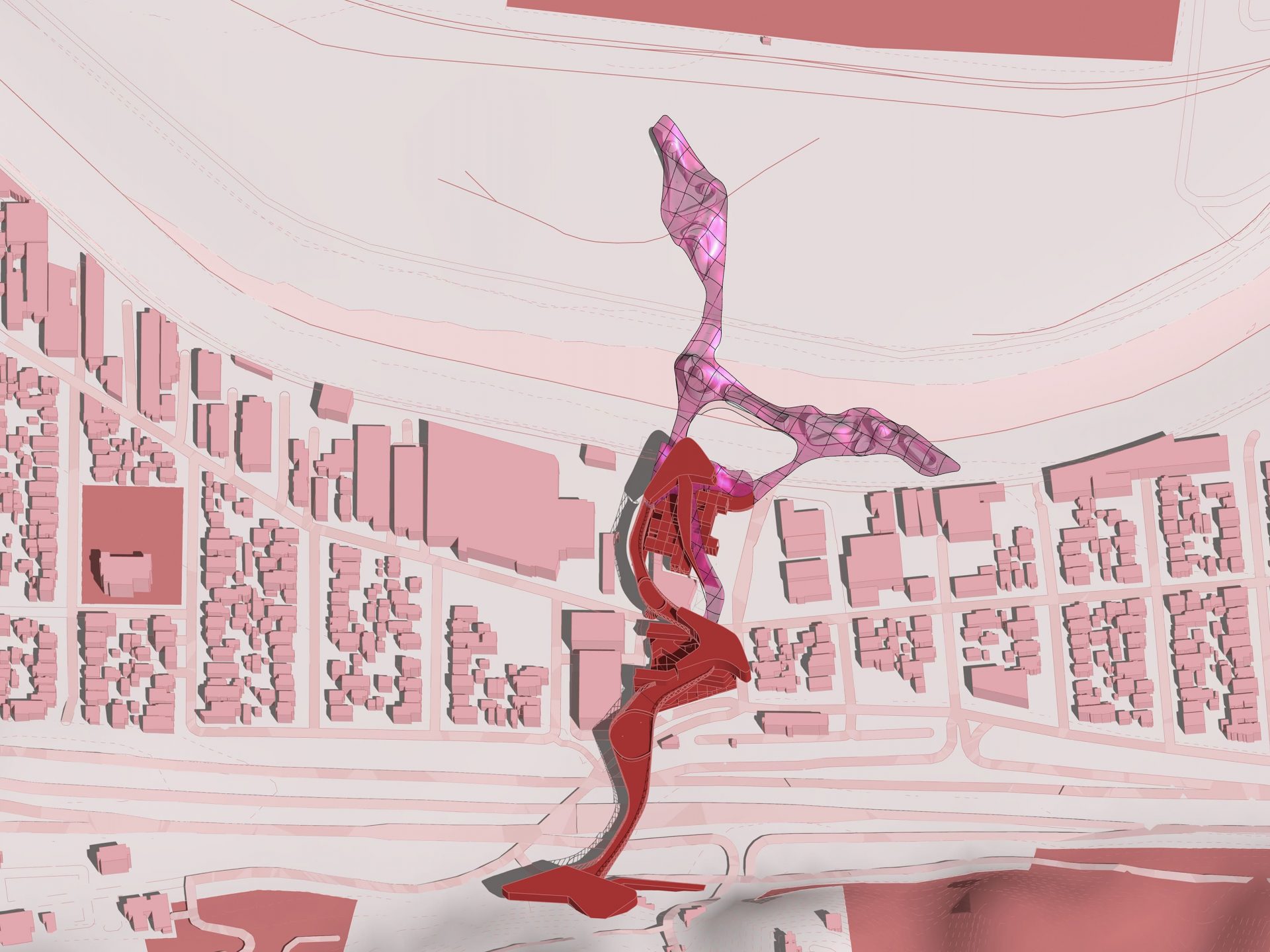
Located at Taylor Yard, where urban development meets ecological restoration, the project introduces an architectural system that operates between infrastructure, landscape, and building. Rather than defining fixed zones, it embraces fluid, layered spaces that respond to movement, interaction, and context.
The design engages three interrelated scales—urban, infrastructural, and architectural—each representing different conditions of in-between space. These are not separate, but overlapping systems that together propose a more flexible, open-ended way of designing the city.
Living Ornaments
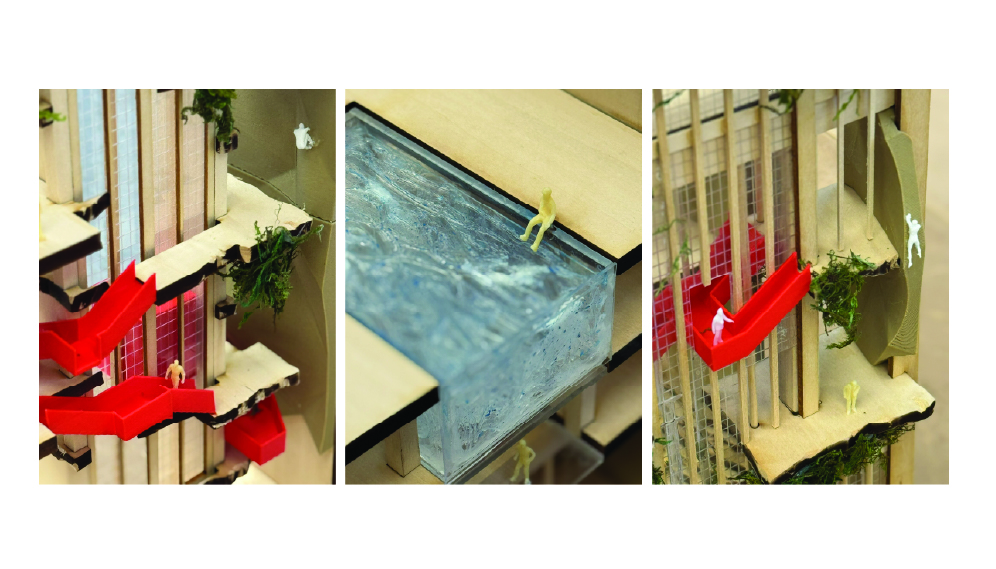
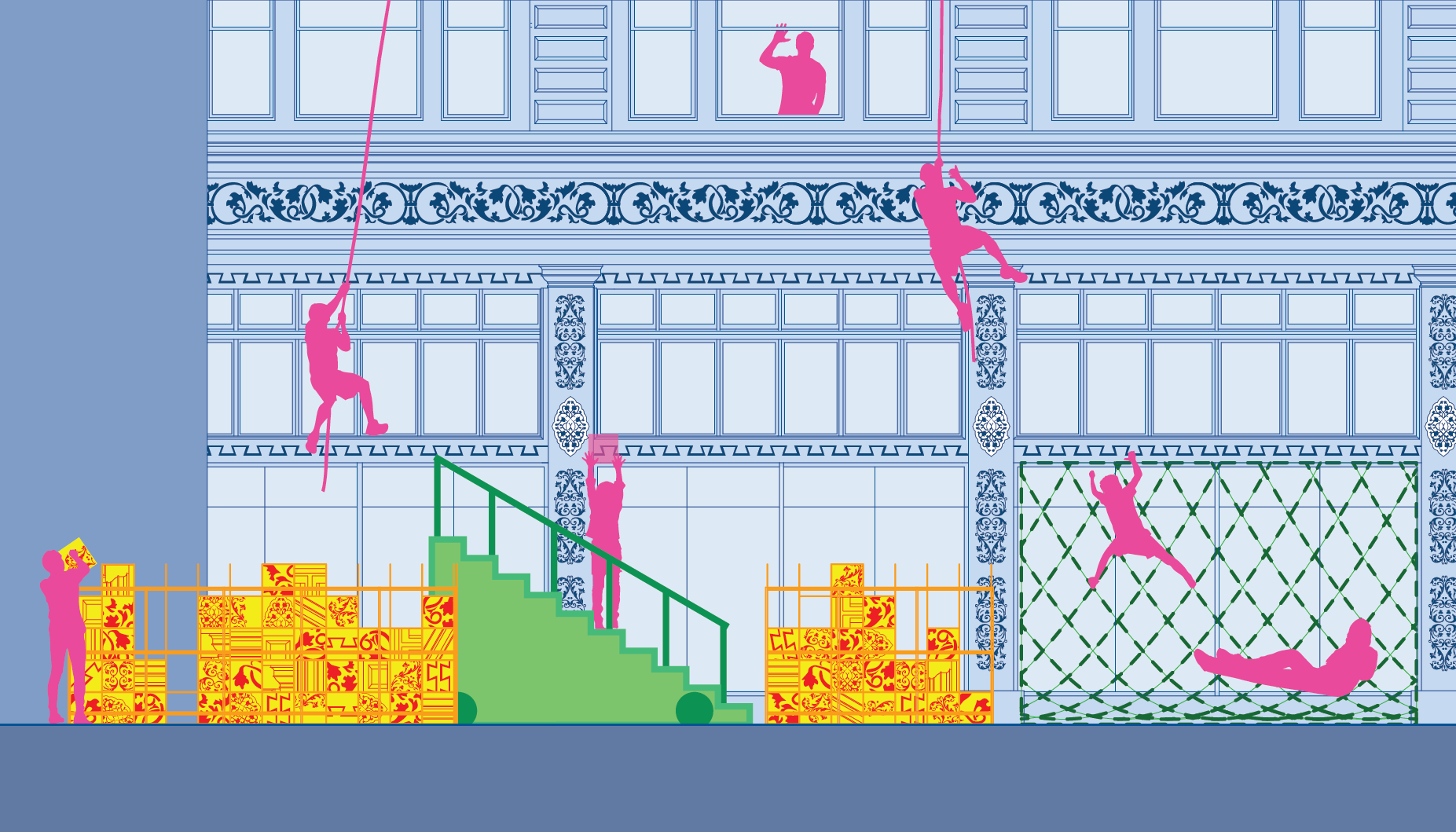
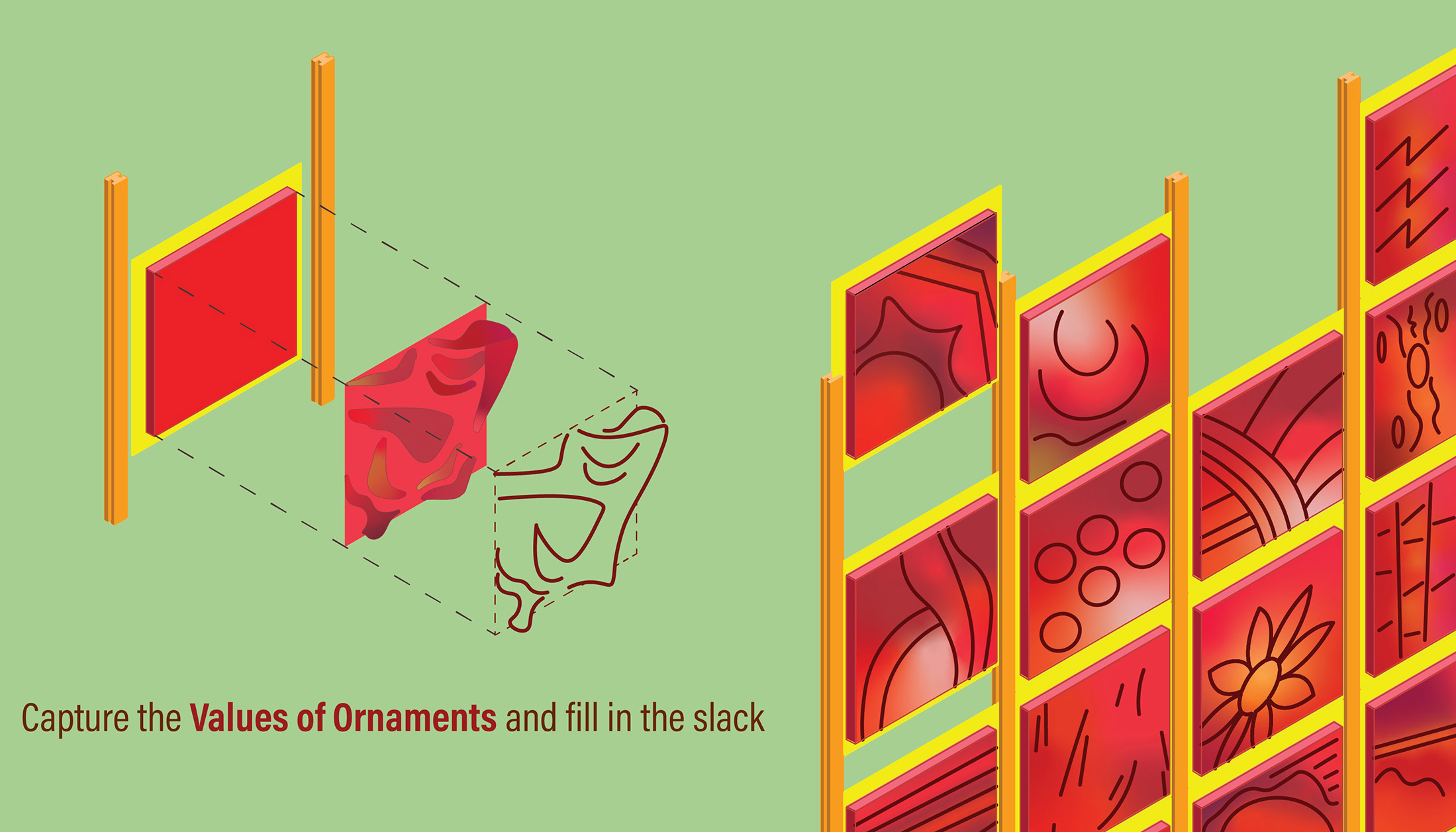
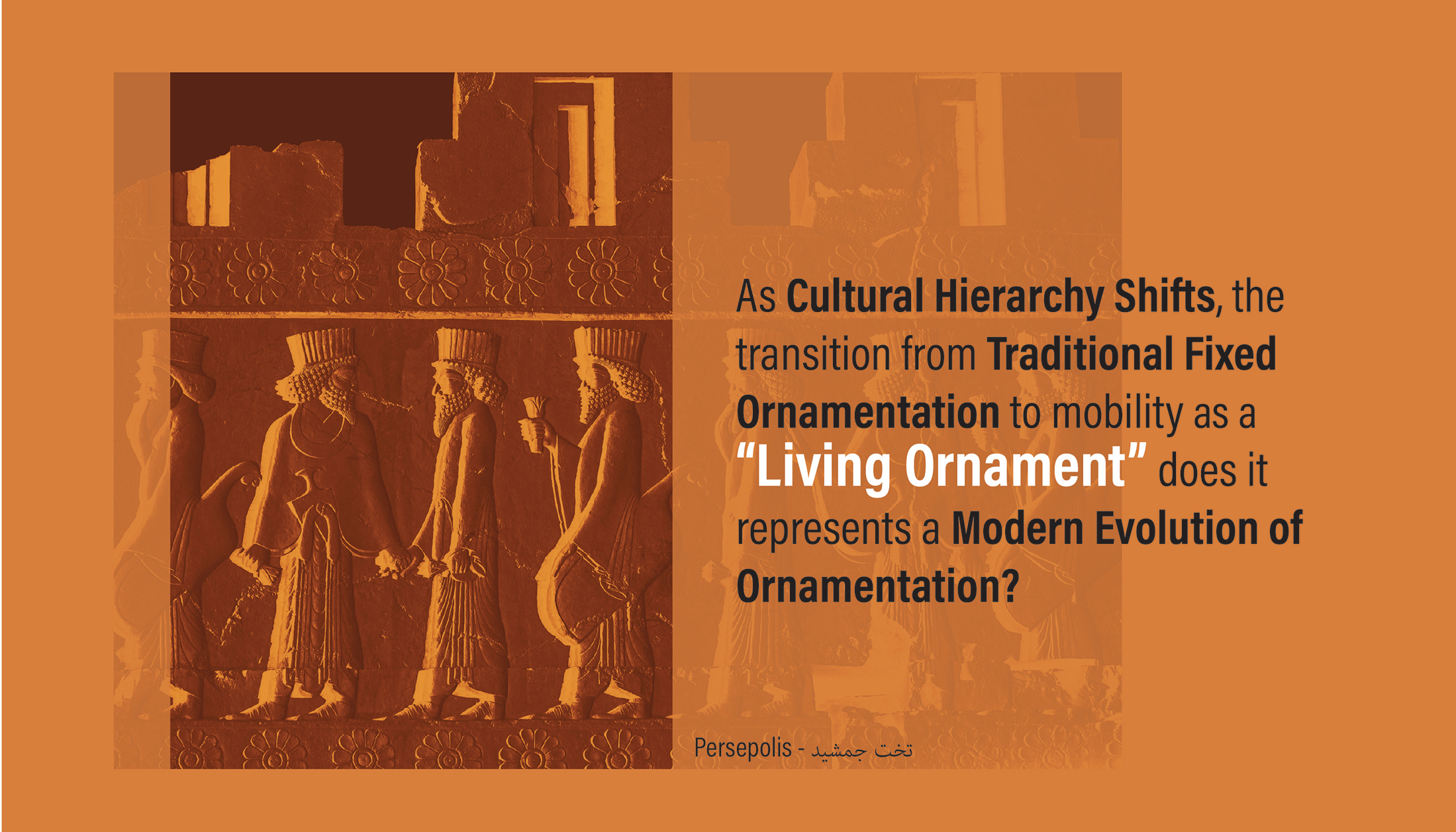
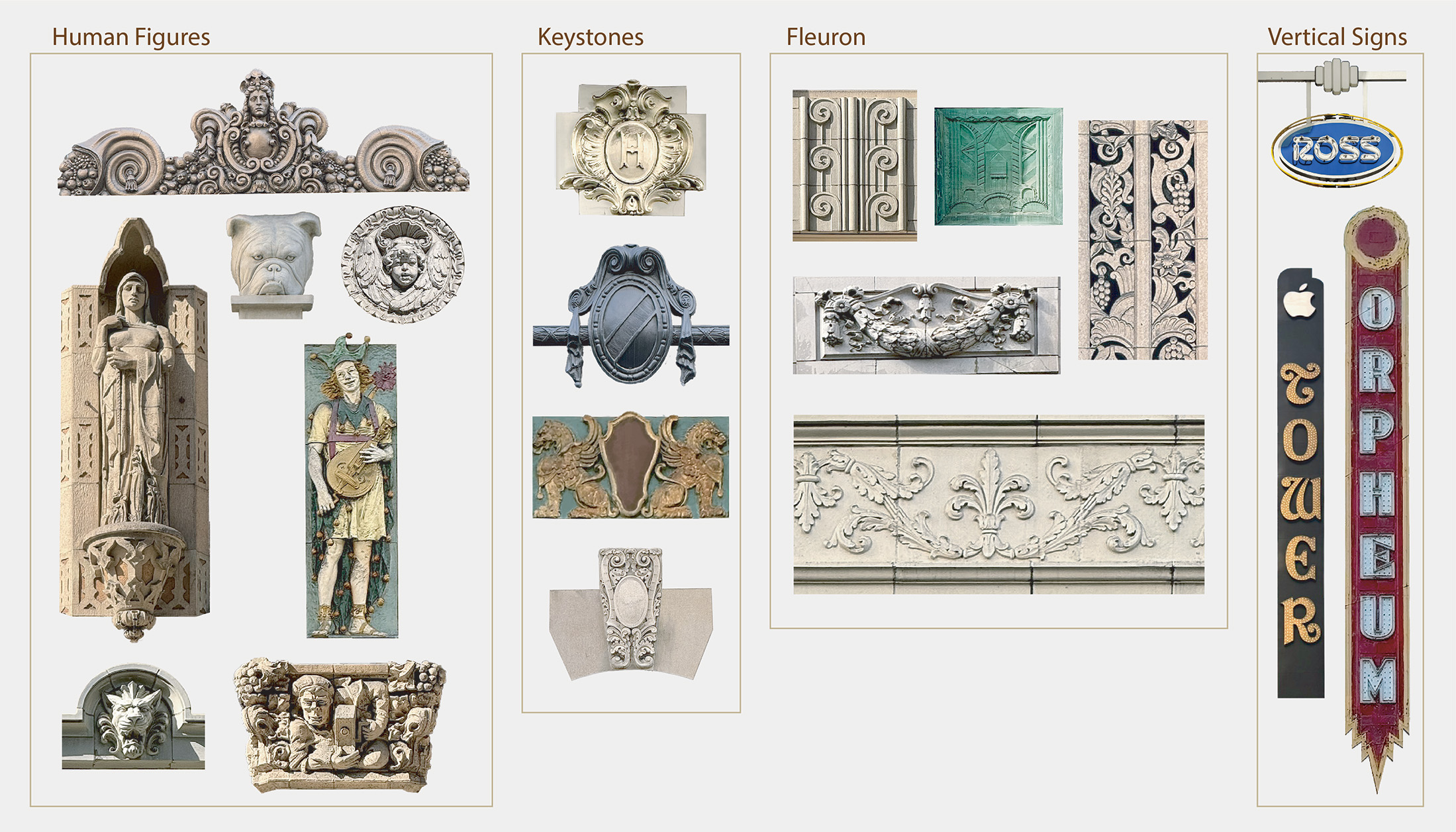
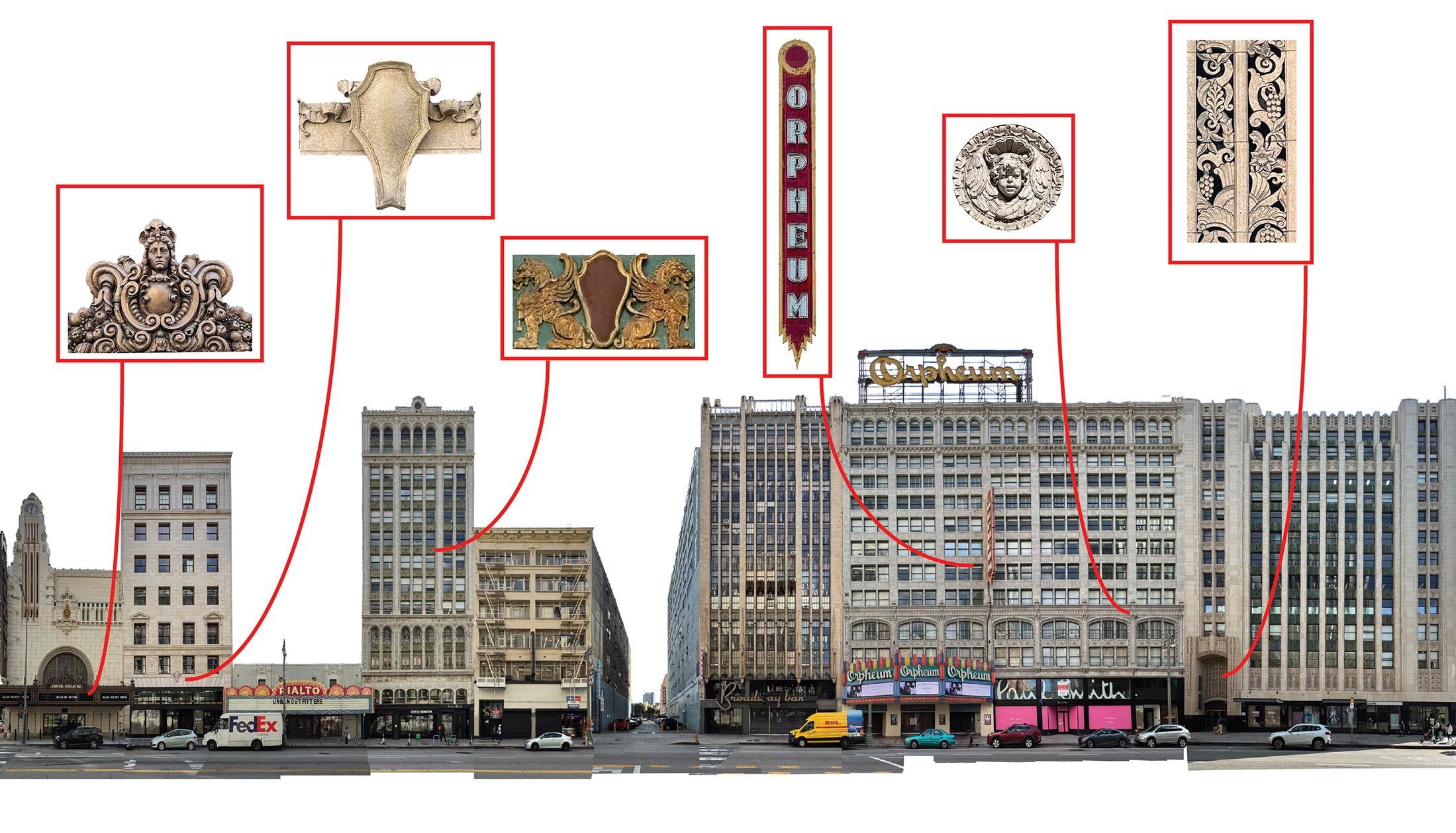
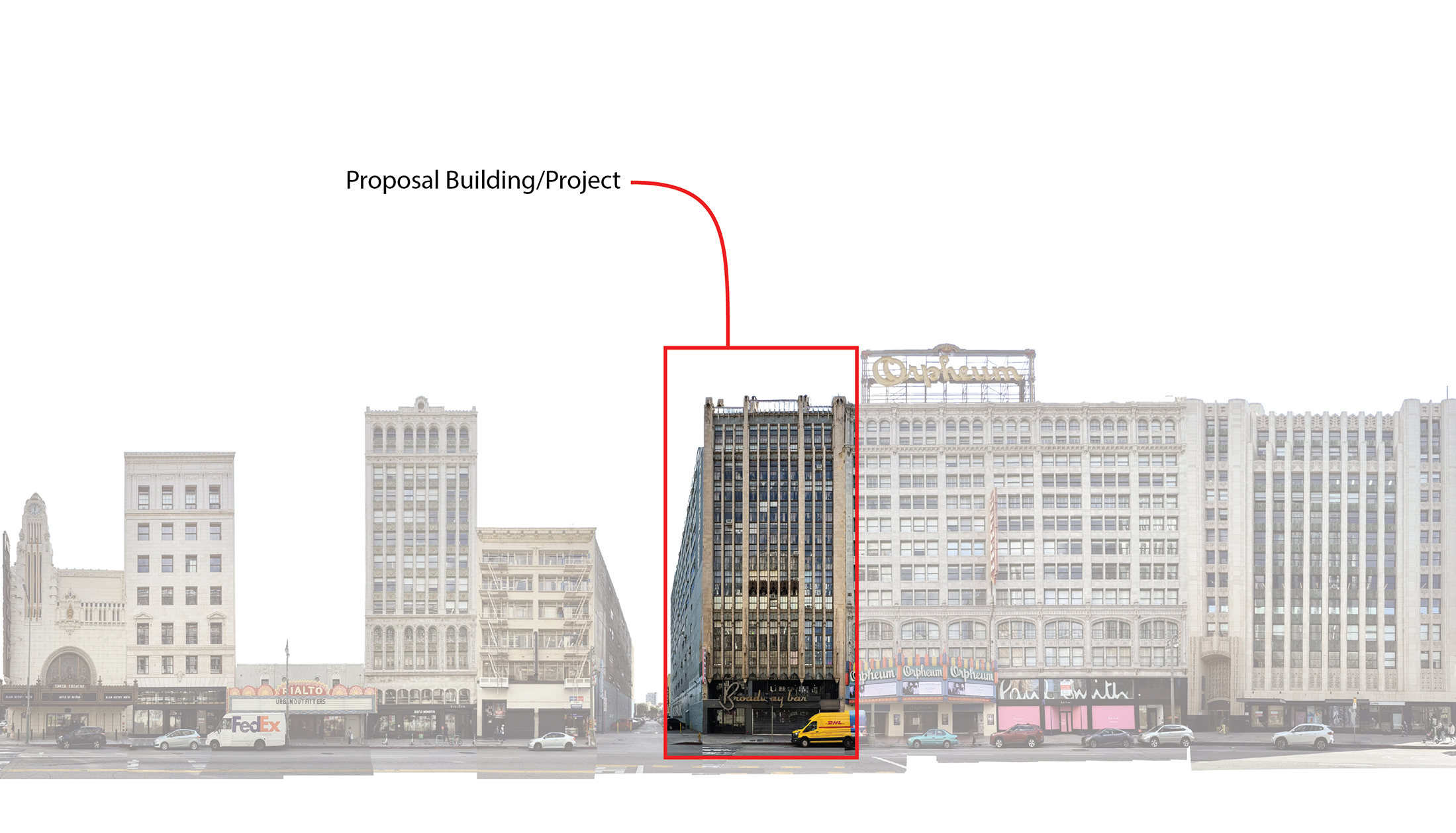
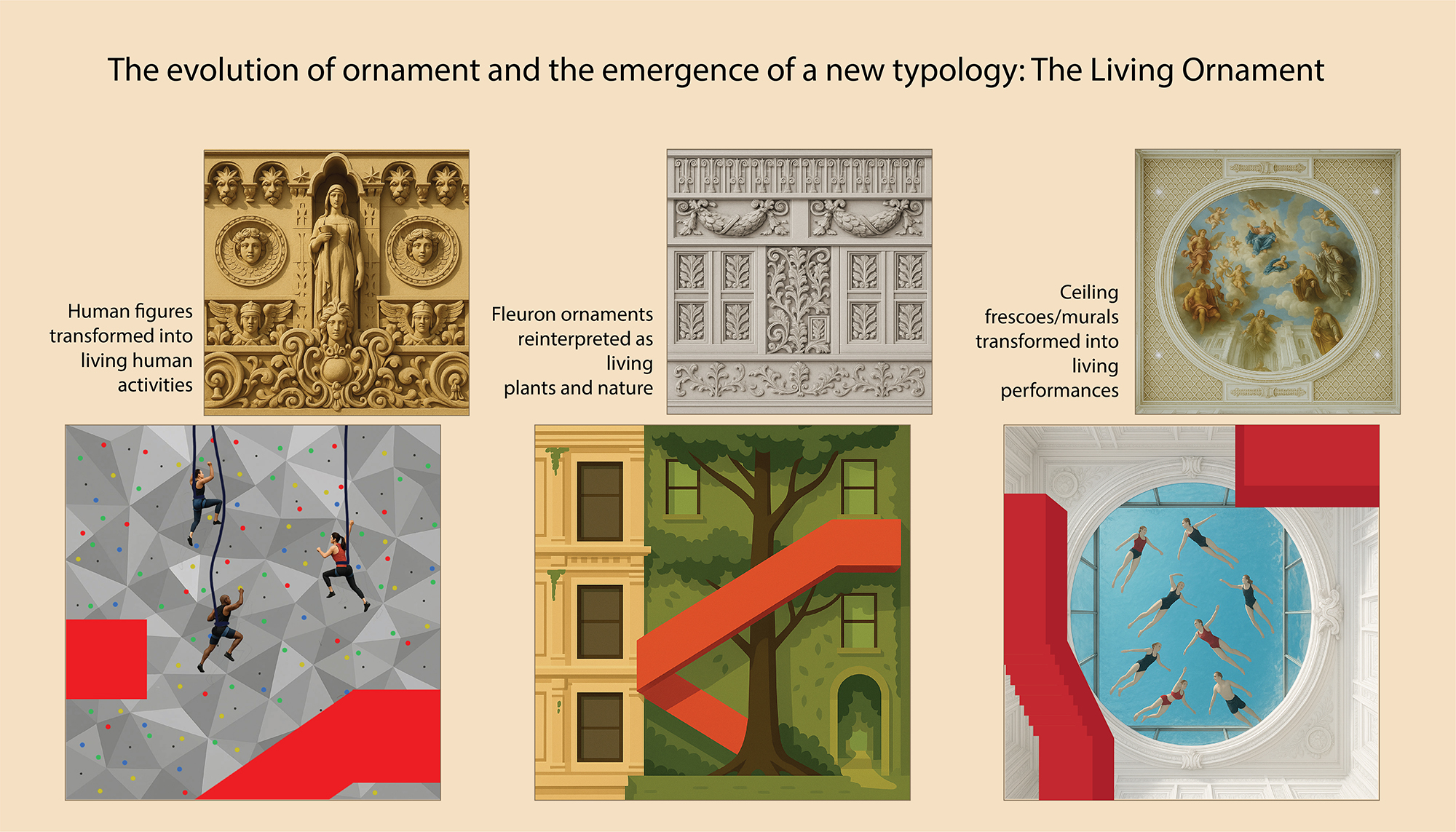
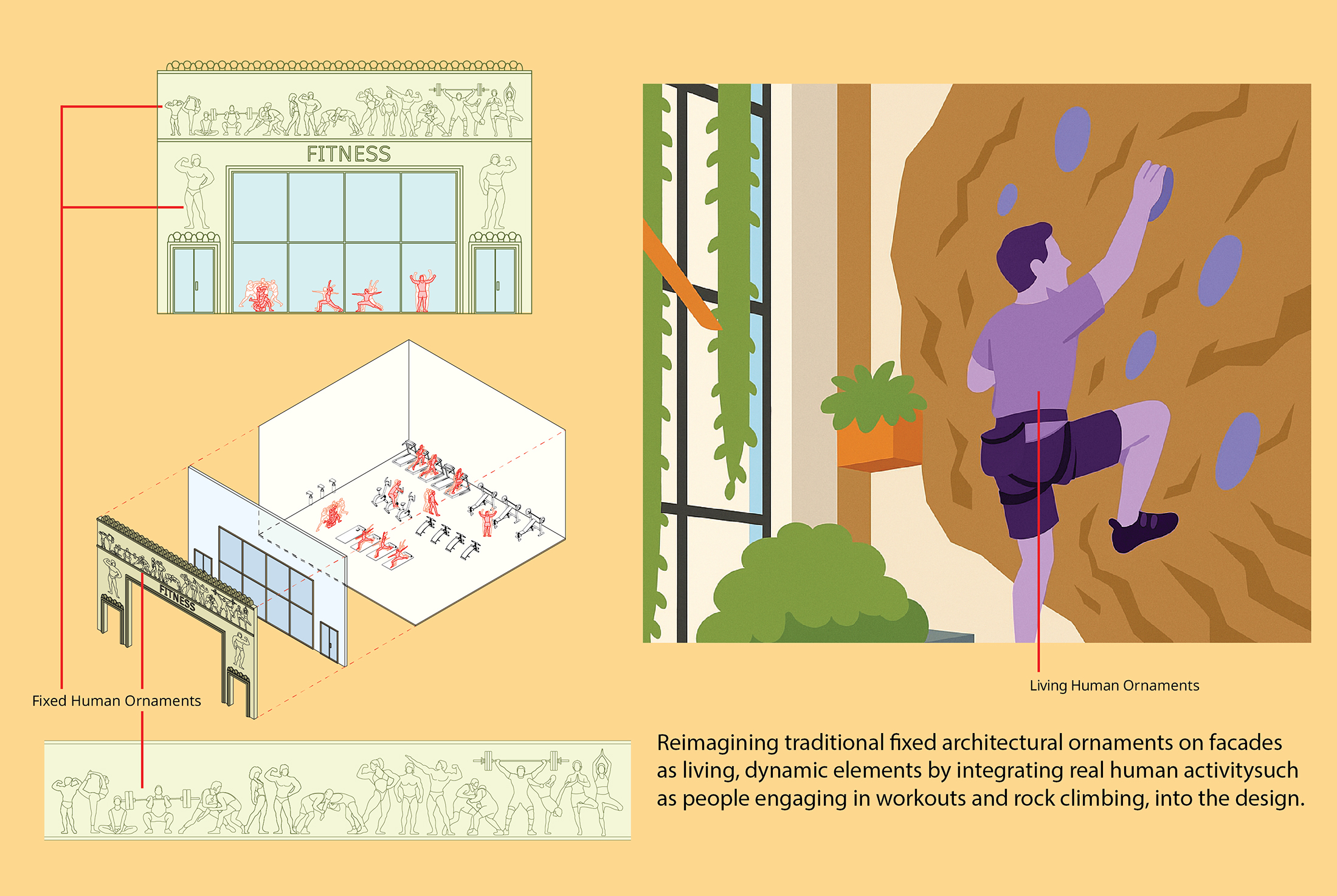
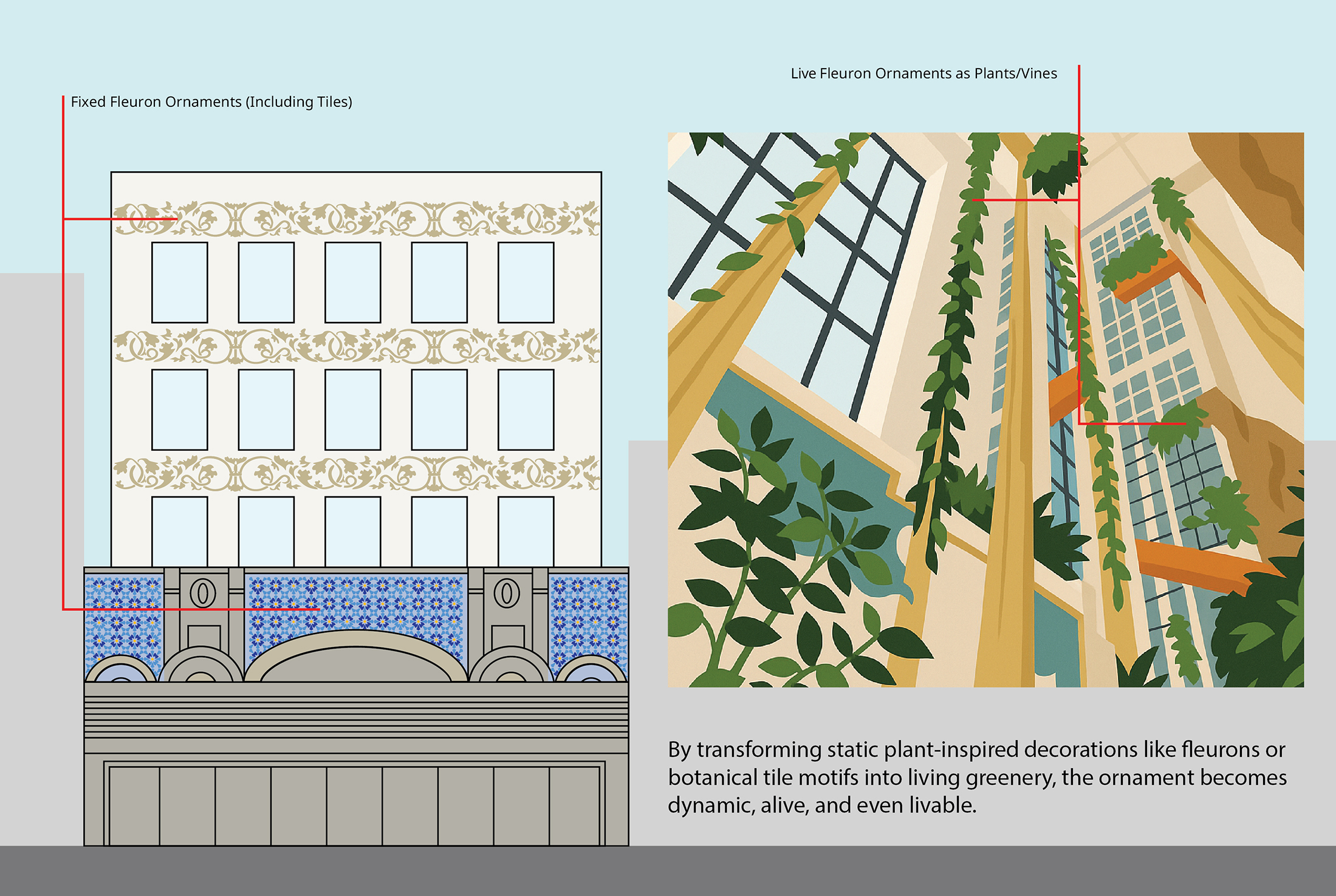
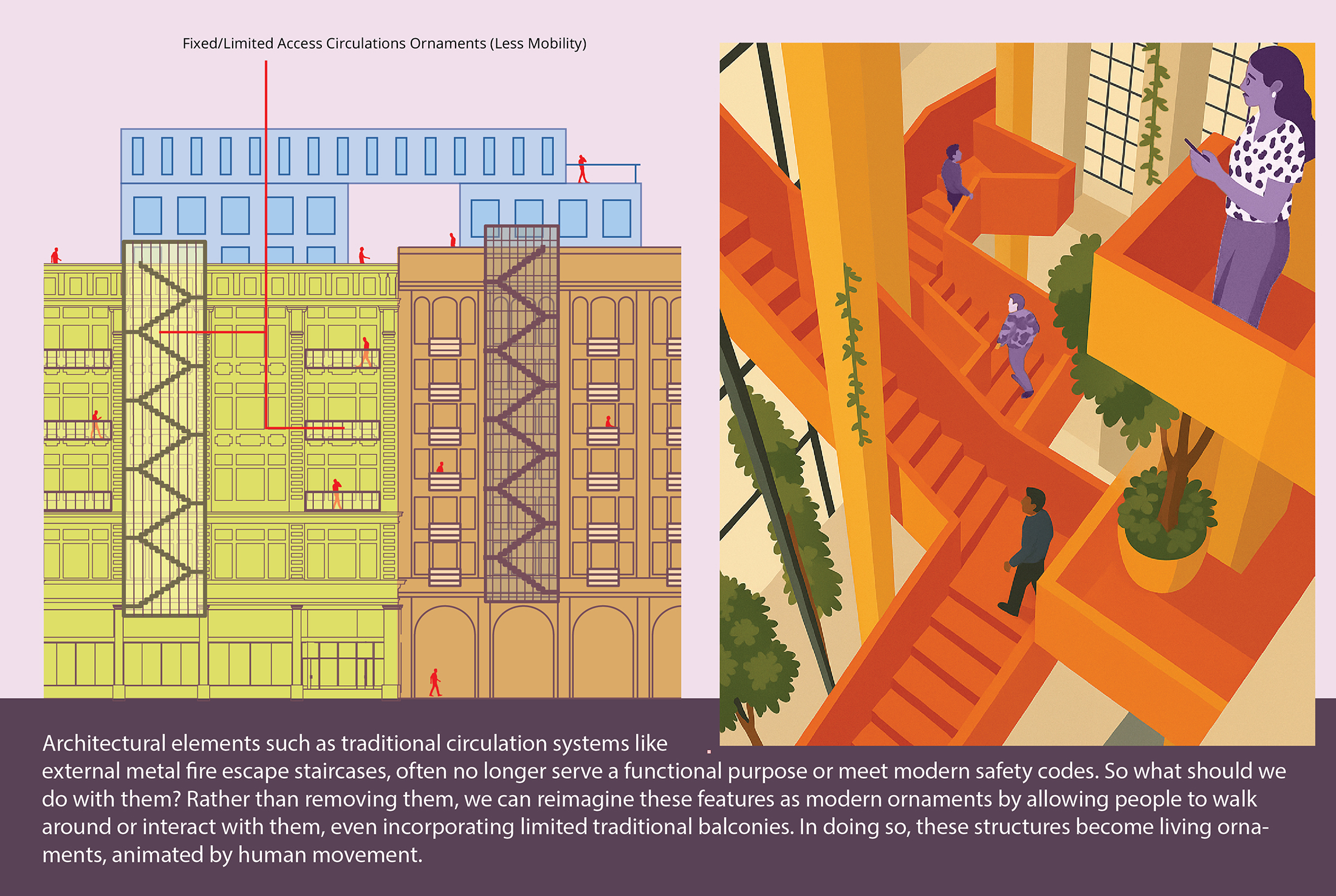
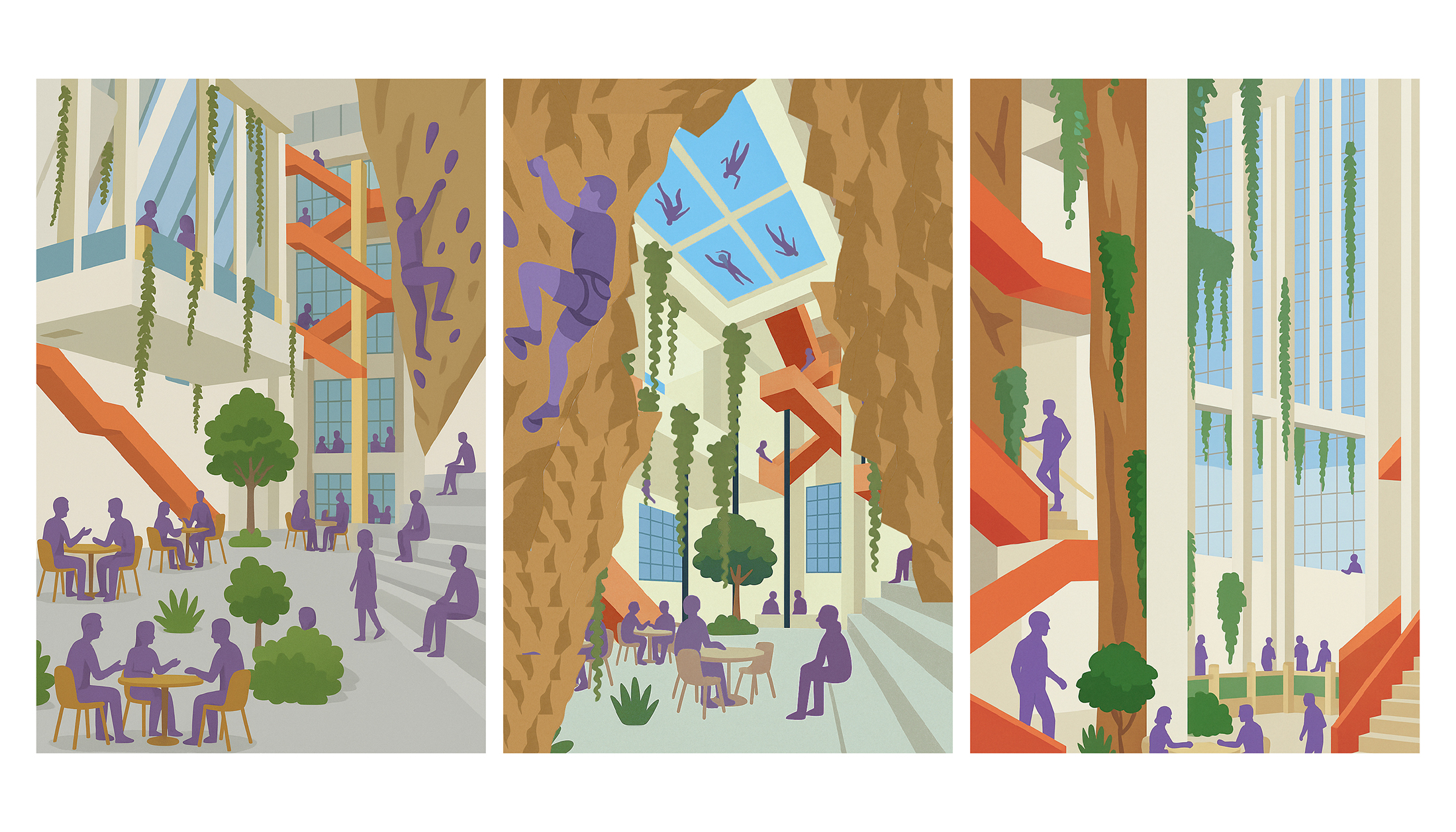
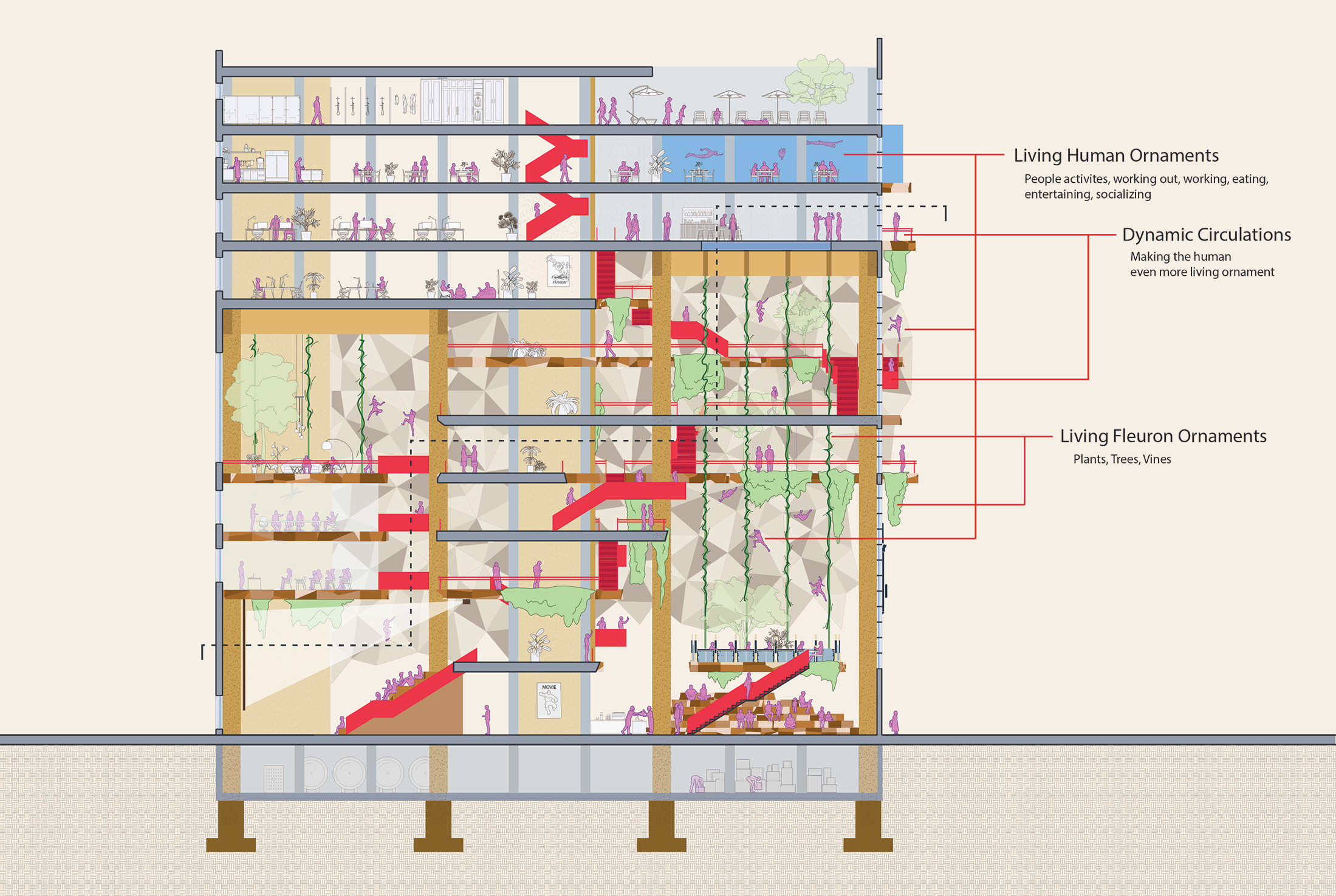
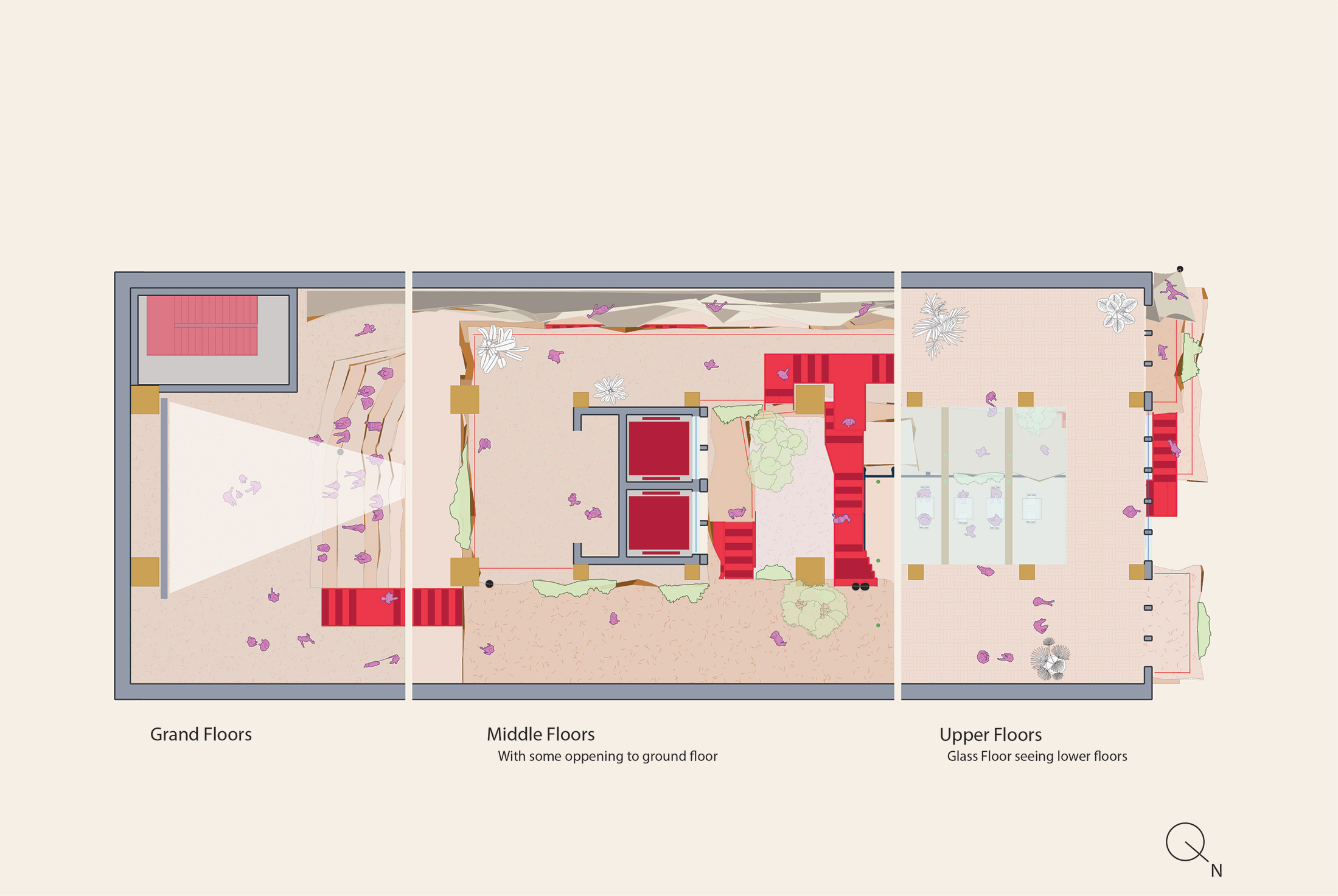
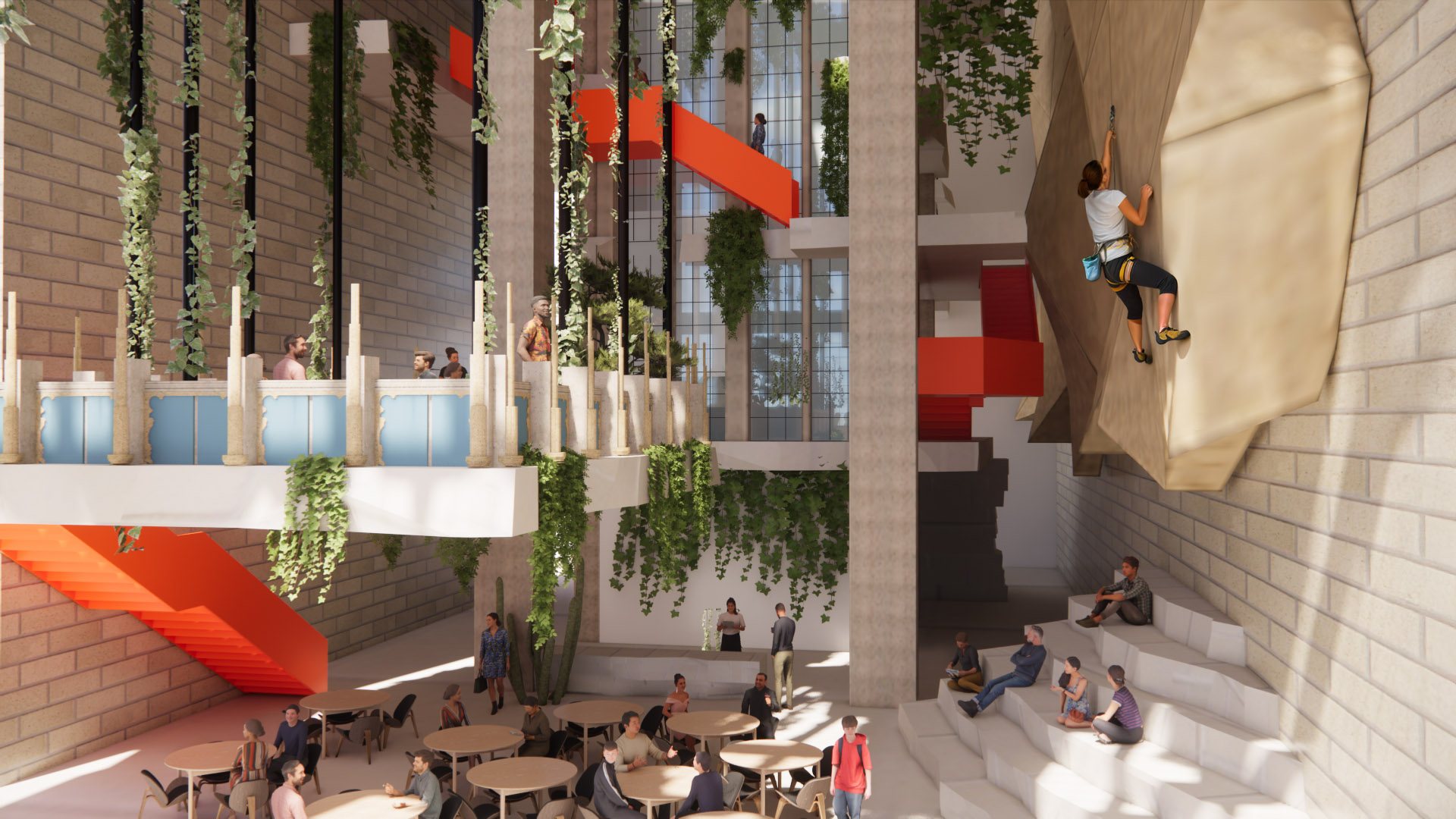
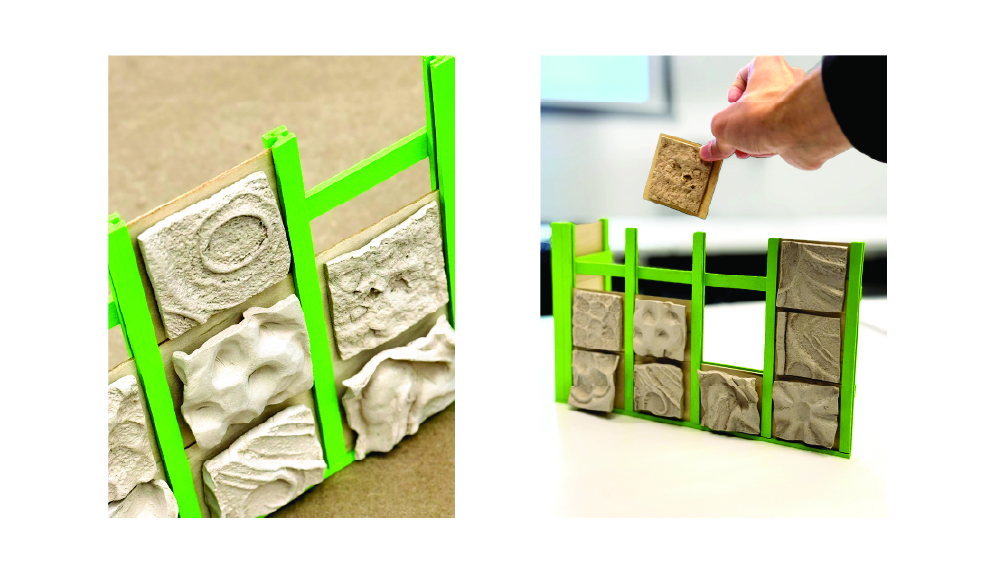
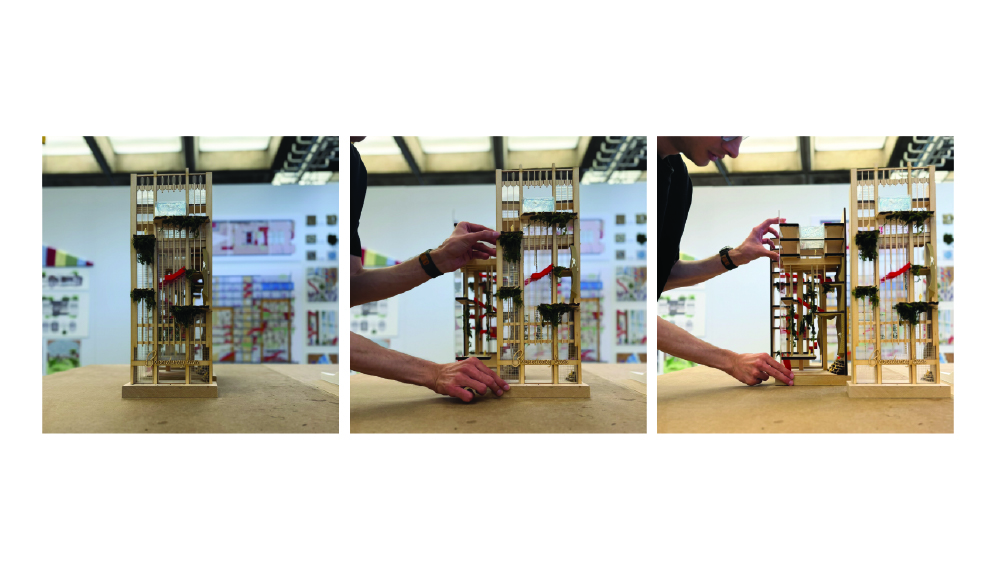
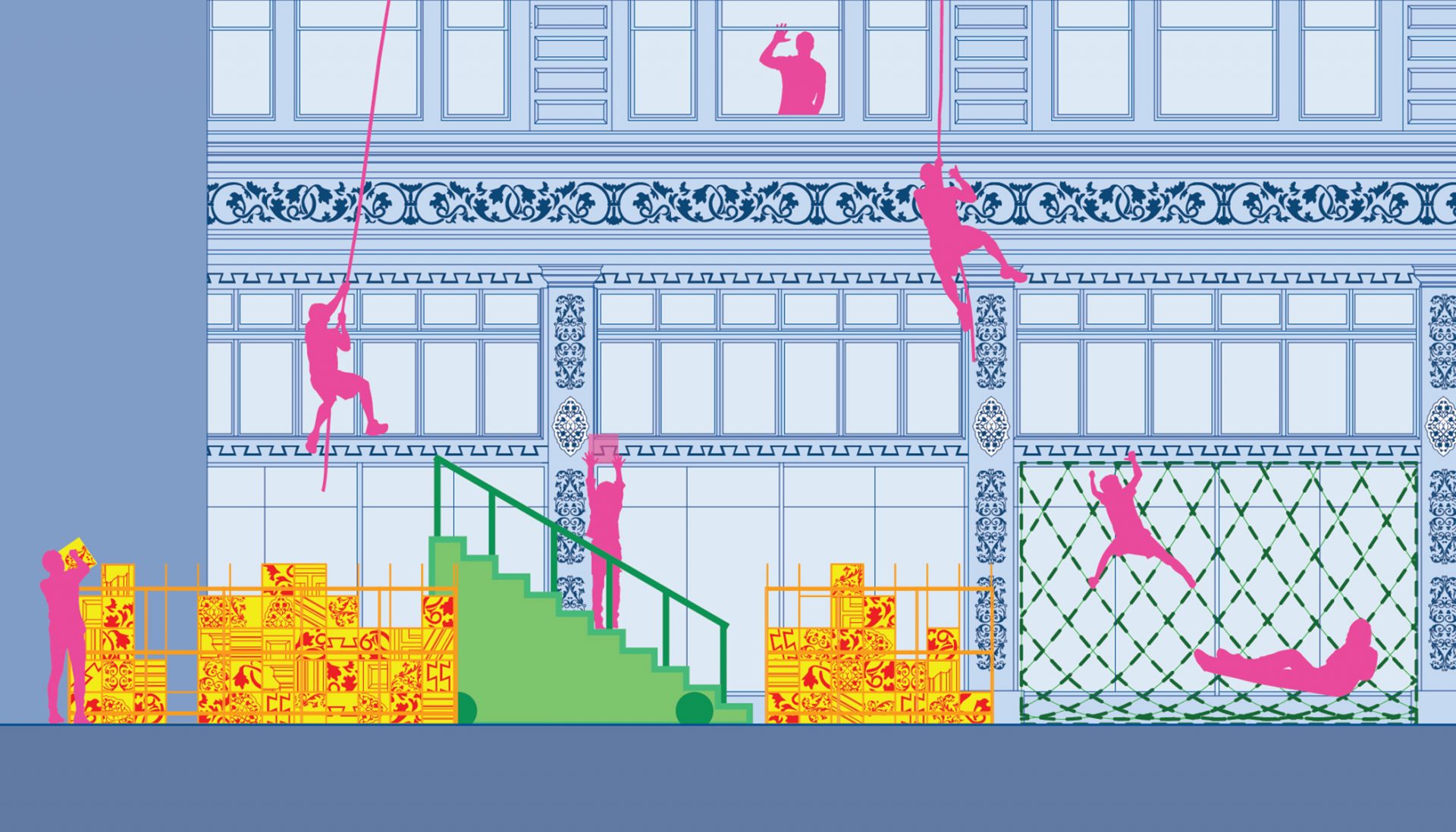
By preserving the value of architectural ornamentation—continuing its historical significance while simultaneously adding, merging, and evolving new forms—architecture can shift traditional hierarchies and give rise to a new, dynamic type of ornament. While traditional ornamentation, ranging from classical motifs like human figures and fleurons, once held deep cultural and aesthetic value, modern architecture often stripped ornament down to minimalist expressions. Living Ornaments reintroduces the vitality of ornamentation by making human presence itself an ornament through movement, activity, and expression. This approach transforms ornament from static decoration into a living, interactive element, infusing the building with life and meaning.
Detours and Loopholesf
The city is structured around function, reinforcing society’s expectations of productivity and efficiency. In Los Angeles, this is evident in the logics of the freeway system and the street grid, both designed to maximize movement and economic output.
But what if we resisted this logic and reconceived how we navigate and engage with the city?
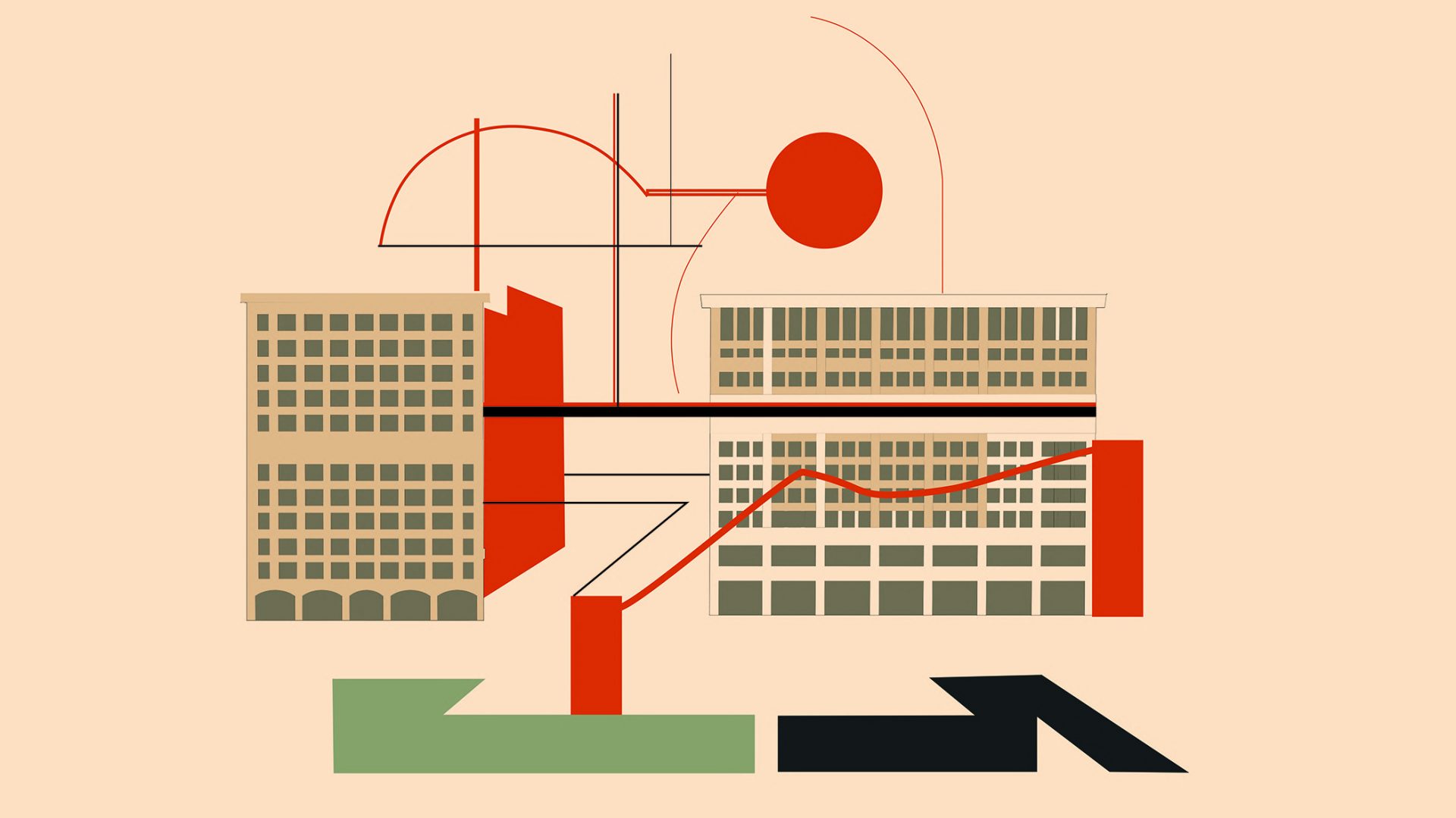
Detours and Loopholes challenges the conventions of the city by examining underutilized spaces and buildings, exploiting the systemic loopholes that produce them to reimagine new ways to explore the city within a public space beyond the city’s logic.
Distributed Warriors
The richness and complexity of the city is a direct result of meaningful interactions between its many different layers—its culture, its history, its form, and its audience. The role of public architecture is to situate events that recognize and emphasize these different layers, connecting people and celebrating public engagement.
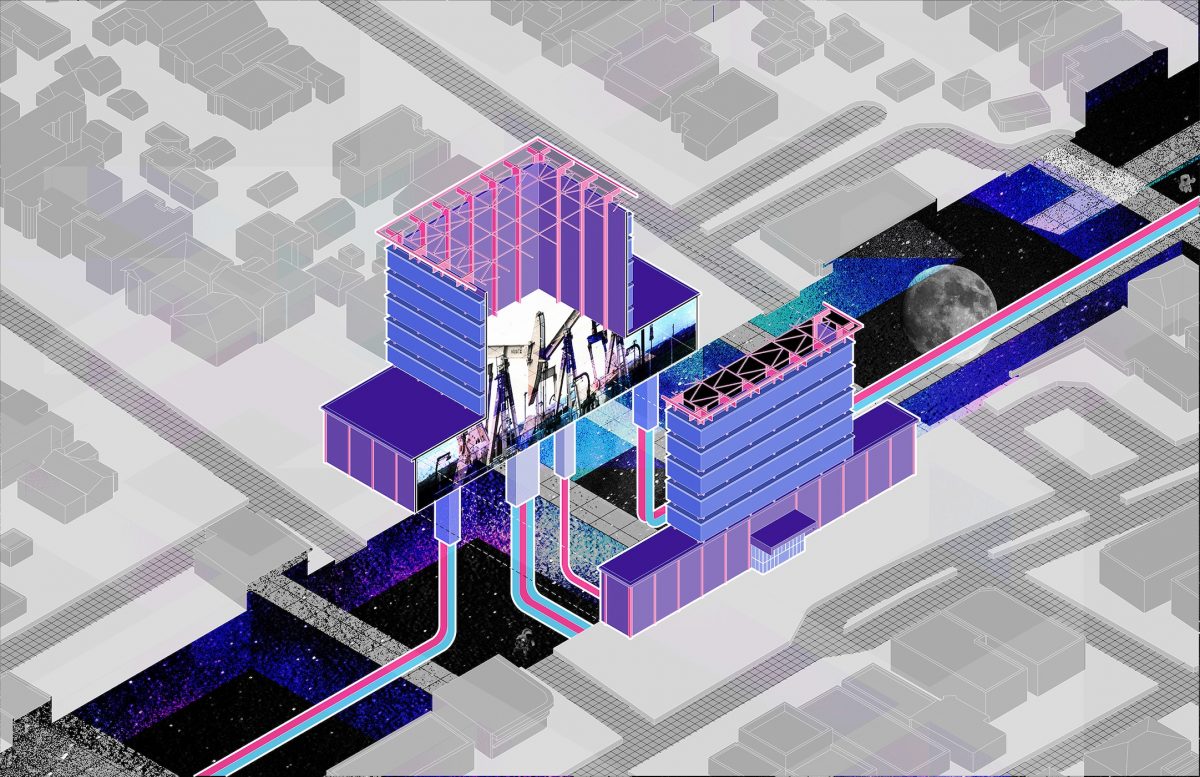
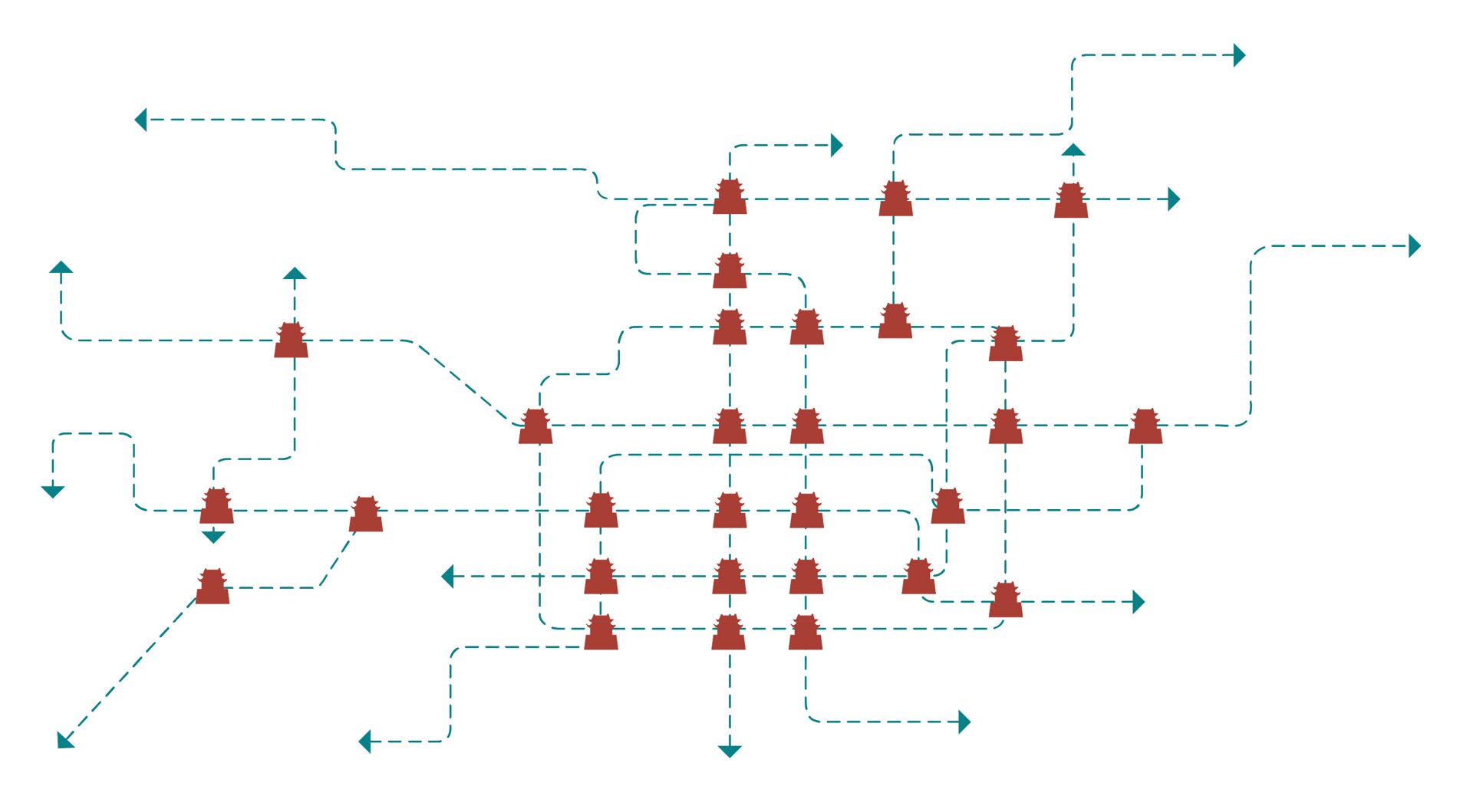
Distributed Warriors combines two of the many layers of Xi’an, China, the Metro network and the historical typology of watchtowers, to distribute a new system—a new layer—of vertical public spaces and programs across the city. These warriors each create a congestion of collective activities, offering spaces for public interaction that connect back to the layers of the city.
Public Space over Profit Space
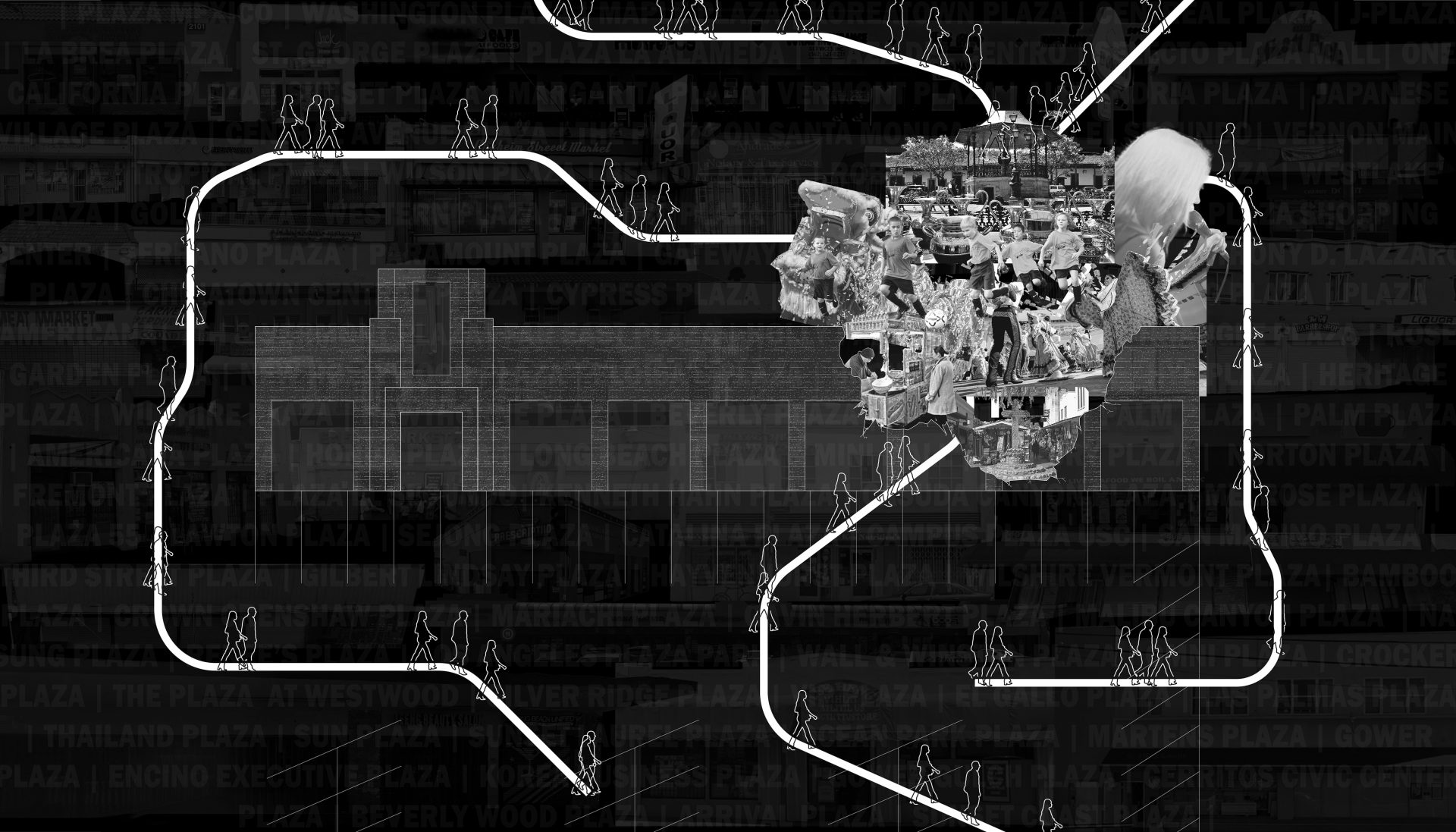
Reclaiming commercial spaces to transform them into dynamic public realms, this project repurposes three mini-malls—also known as shopping plazas—into spaces for performance, pop-ups, and contemplation. Located on Anaheim Street in Long Beach, each site is reimagined to support community interaction through flexible programming and spatial variety. By retaining traces of the existing structures, the design honors the memory of these once-commercial spaces while offering a new civic life. The project promotes accessibility by maintaining a low monetary barrier for entry, aiming to return these privatized zones to the public, fostering social engagement over consumerism.