
ⴳⴷⵍ ‘gdl’
Aguedal vient d’une racine berbère ‘gdl’ qui signifie garder, protéger, réserver.”
Justinard, L. (May 1936). Les propos du Chleuhs: Aguedal, sagesse, et poésie [Words of the Chleuhs: Aguedal, wisdom, and poetry]. Revue de l’Aguedal, 1.
This thesis explores the erasure and reclamation of Amazigh vernacular architecture—an adaptive, resilient tradition shaped by nomadism, ecological intelligence, and oral transmission. In the aftermath of the 2023 Al Haouz earthquake, which exposed both seismic fragility and the systemic marginalization of Amazigh communities, this project challenges Western, top-down models of reconstruction. It advocates instead for the revival and reimagining of lost indigenous typologies—not as static heritage, but as living, evolving frameworks for cultural continuity, spatial justice, and ecological stewardship. Through design as a political and pedagogical tool, this work repositions architecture as a vehicle for self-determination, resilience, and regenerative futures.
A Regenerative Build
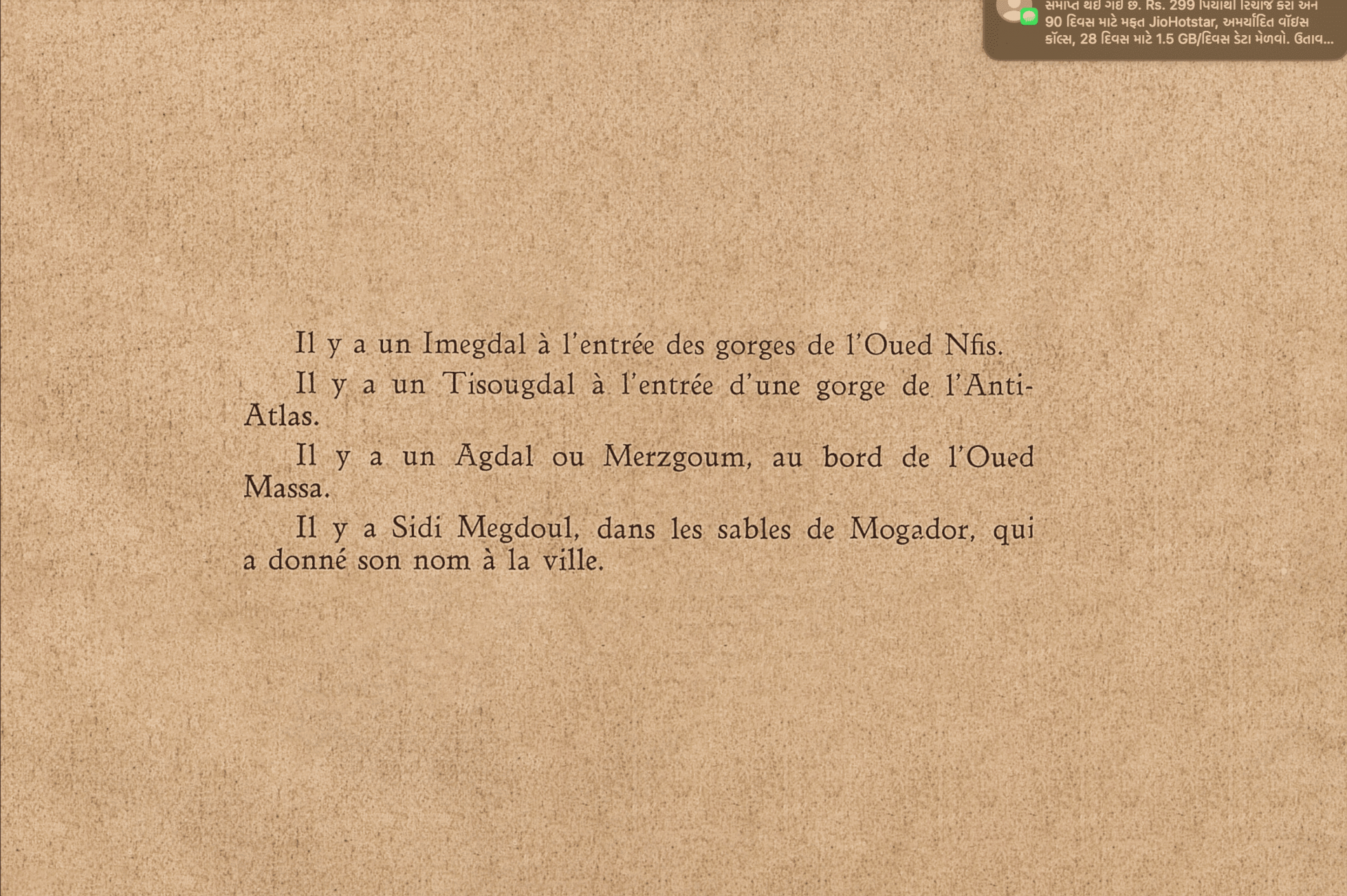
As climate change intensifies, the construction industry continues to be a major contributor to environmental degradation through excessive resource extraction and pollution. This project seeks to challenge traditional methods of material selection by encouraging designers to adopt more sustainable, localized alternatives. Focusing on marine-based resources, the initiative explores how natural processes can offer innovative solutions that occupy minimal land space while reducing ecological impact. These alternative materials not only lessen environmental harm but also open up new aesthetic and functional possibilities in design. By rethinking how we source and use materials, this project promotes a more responsible and regenerative approach.
flux // objects that make space
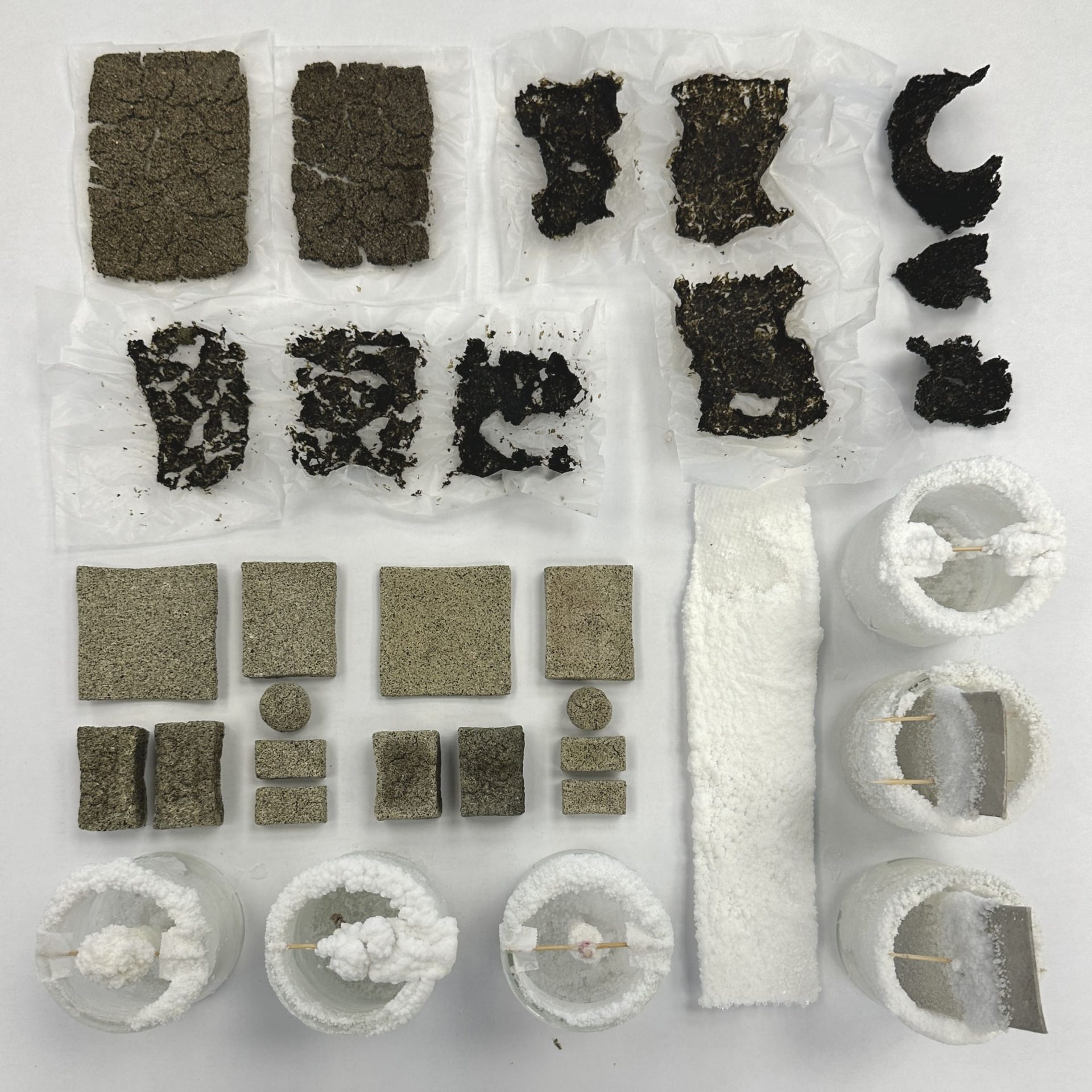
flux begins with the idea that architecture continues through the objects we live with. Personal items don’t just fill space; they shape it, imbue it with meaning, and transform it over time. This project scales that concept up, proposing eight hinge-connected modules that act as spatial generators. Each functions as a stage for daily life—supporting rest, work, storage, and circulation—while remaining flexible and reconfigurable. Designed to inhabit vacant shells like big box stores or theaters, the modules form architecture from the inside out. flux offers an open-ended system where space is built through movement, ritual, and personal expression.
Spatial Fiction:Exploring the narrative potential of architectural representation
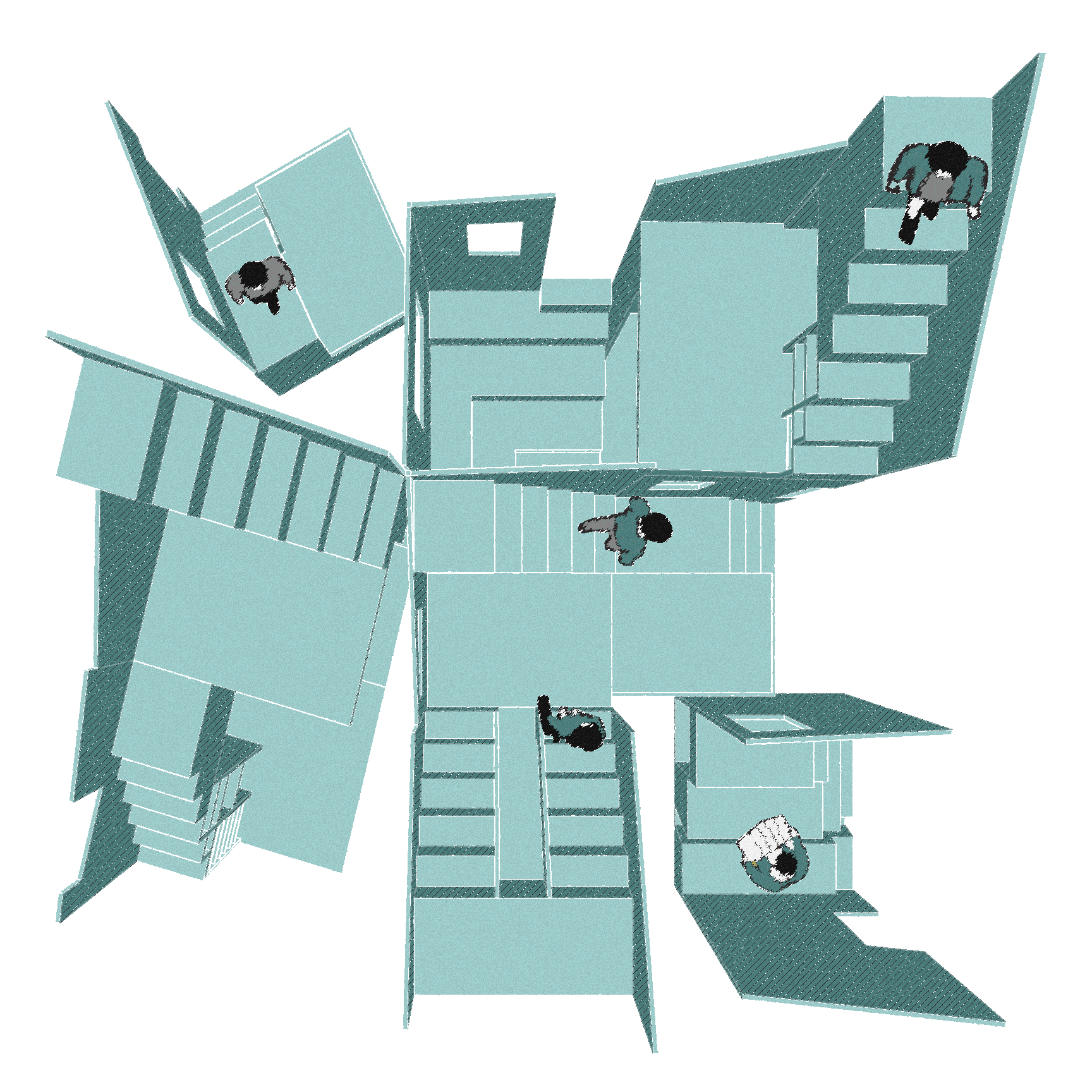
This thesis project explores how standard orthographic drawings, much like literature, communicate stories through visual and pictorial clues. By examining parallels between architectural representation and narrative techniques in literature, film, video games, and comics, the project challenges the notion that architecture is limited in its expressive capacity, demonstrating that drawings themselves can act as narrative devices that engage both practical and emotional storytelling. Using the story of Alice in Wonderland as a narrative framework, the project investigates architectural representation techniques through a series of vignettes, each exploring different levels of control over information given to the audience. These moments reveal how drawings can shape perception, obscure or reveal meaning, and guide interpretation—treating architectural representation not just as a technical tool, but as a visual language of narrative construction.
Living Shells
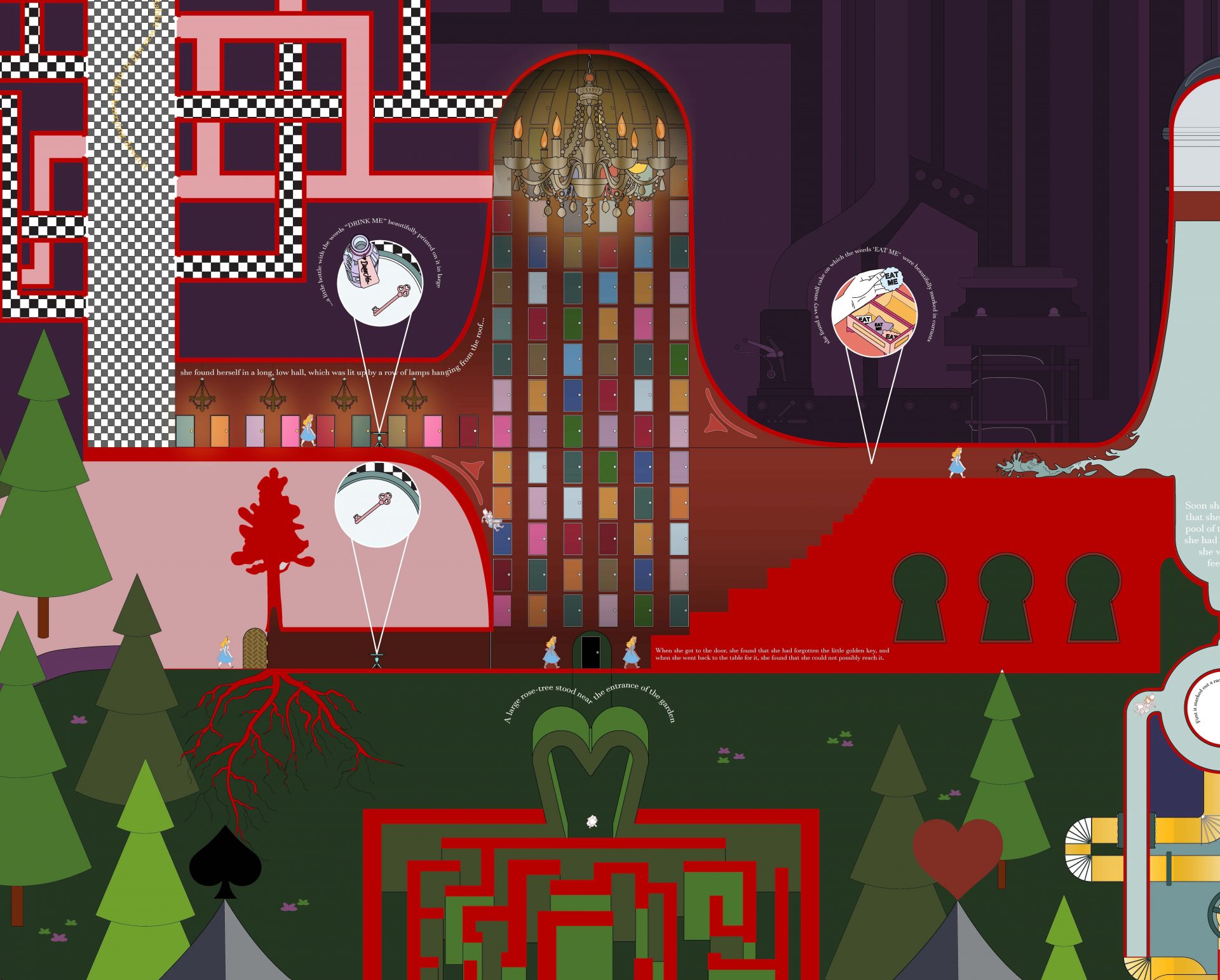
The world is constantly changing, and yet buildings remain static. As our cultural, social, and environmental landscapes shift, the spaces that we inhabit often stay underused, forgotten, or abandoned.
Core and shell construction offers an adaptable architectural solution: By building the structural/infrastructural framework (cores) and exterior enclosure (shells) the interior is left unfinished for future tenants to customize.
This thesis reimagines core and shell development as more than just a construction method, but as a collection of shells forming a megastructure, designed with spatial and formal qualities allowing for certain infilling of program, specifically commercial, office and residential. These shells are integrated and arranged within a system of cores allowing for the creation of public spaces within the adjacencies in-between the shells. This megastructure of “Living Shells” thus becomes a self-sustaining machine which can adapt and change over time, allowing people to better shape spaces to fit their needs.
ACCELERATE
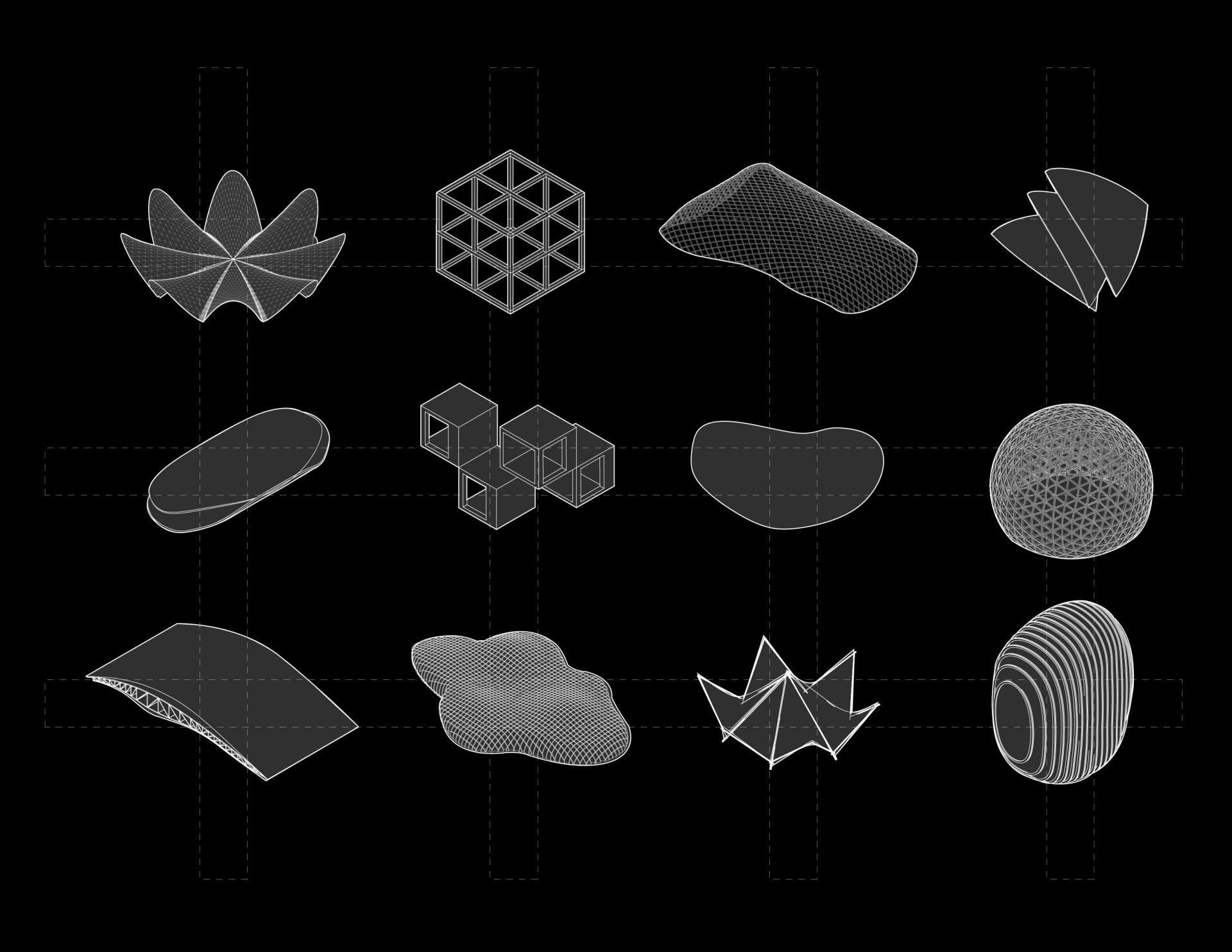
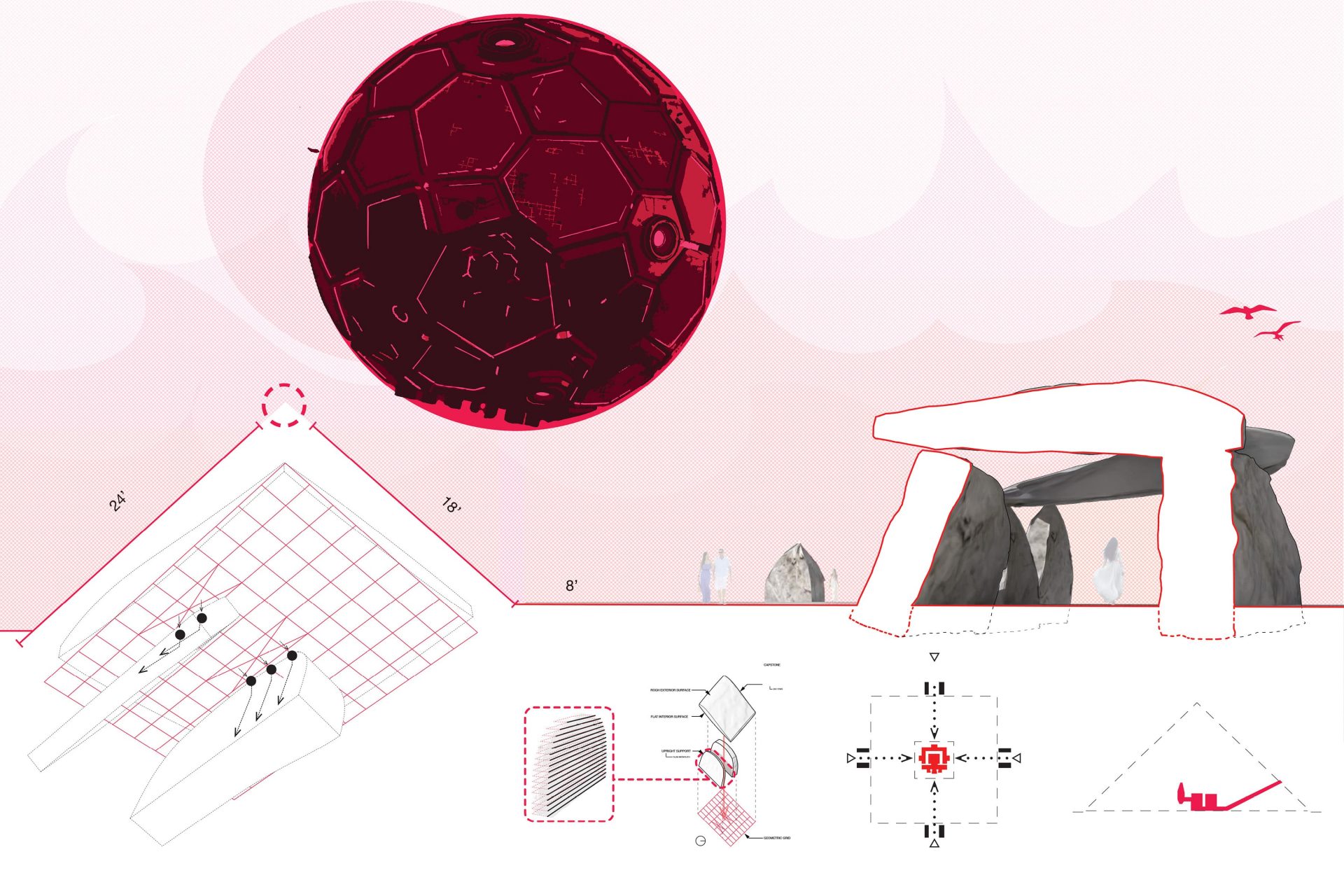
Considering we live in an advanced age of modern technology, we are still drawn to ancient megalithic structures. Humanity maintains an unresolved relationship with these structures and a connection to our past. In a world where technology is heavily integrated into our daily lives, these stone pavilions offer humanity a sanctuary and complete detachment from the Tech-World. Providing a space for imagination, wellness, and retreat.
In the Last Days of the City
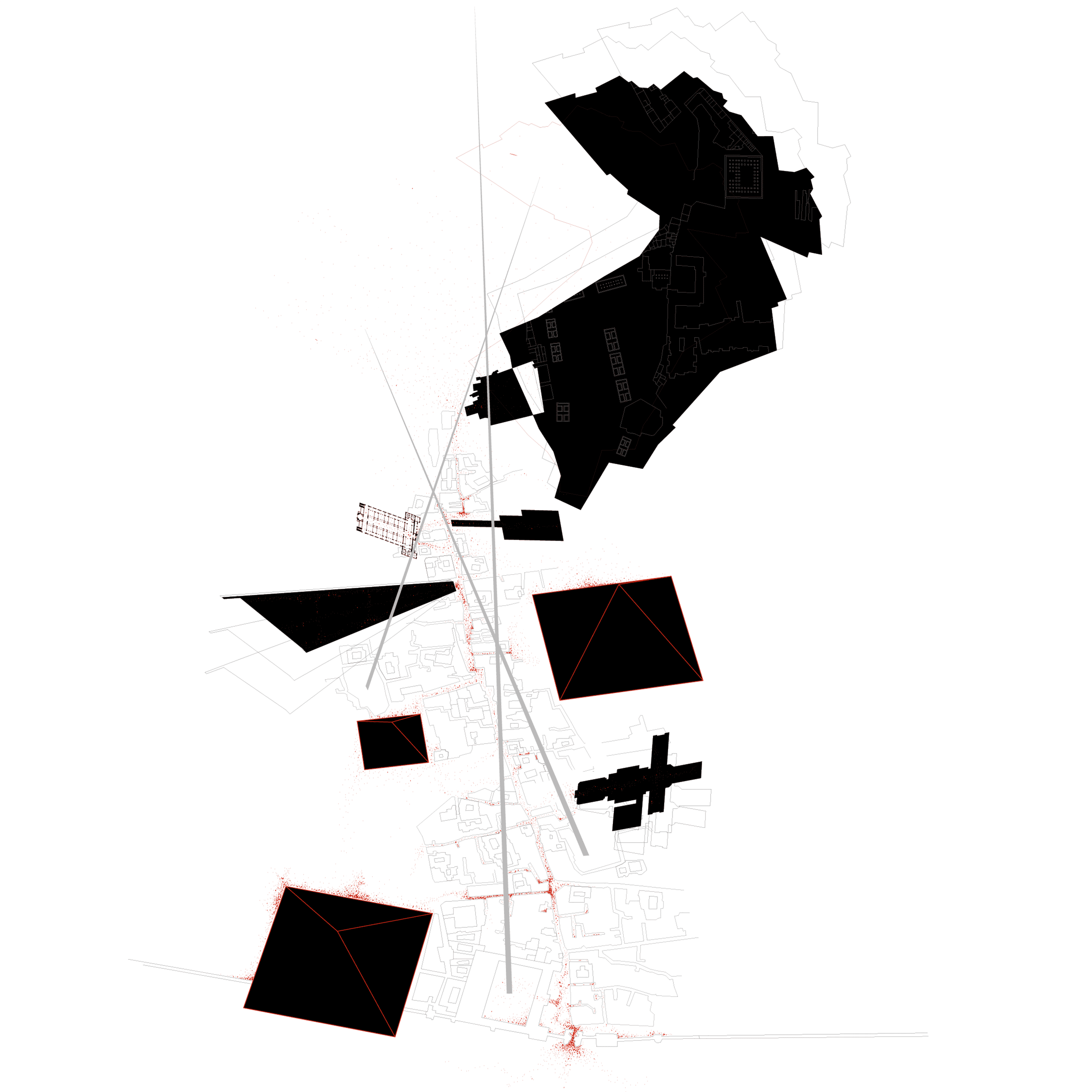
In the Last Days of the City is about how resistance defines architecture — in creation and destruction. Cairo’s political upheavals are understood first, in relation to its volatile urban growth; then through a single instance of building, the naadi on Gezirat el-Warraq.
Cairo is caught in a cyclical loop of regime and resistance. Each revolution begets more dysfunction. In the Last Days of the City asks: How can a limited urbanism be defined within a city on the brink of change? The project offers a novel other within the framework of Cairo’s informal building culture — one that resists precarity, demolition, and forced change — and formulates a space that is familiar, yet foreign. A way of working with Cairo, not in opposition to it.
Through the guise of a naadi (loosely defined as a community center), the case study conceals a midan: communally inhabiting the public square. The naadi on Gezirat el-Warraq is one possibility, on one site. But the project points to possibilities latent across Cairo. A city where the act of design suggests a model of being after its last days.
Shifting Attentions
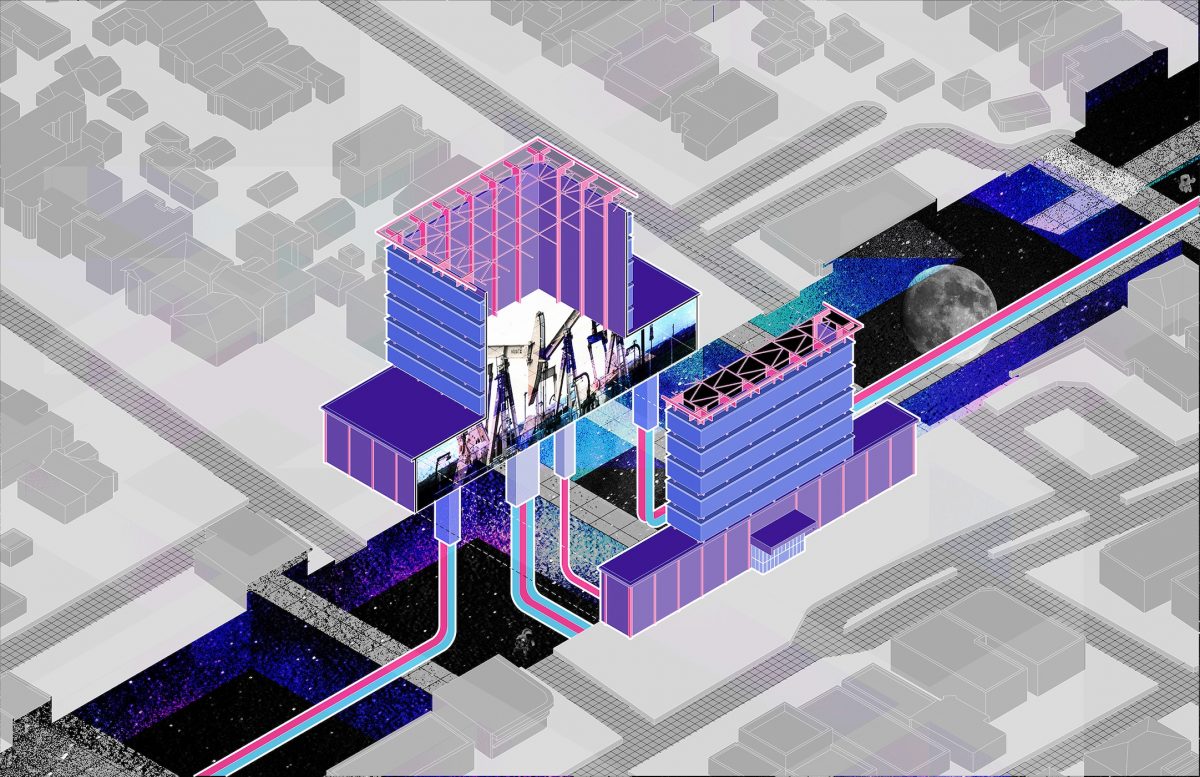
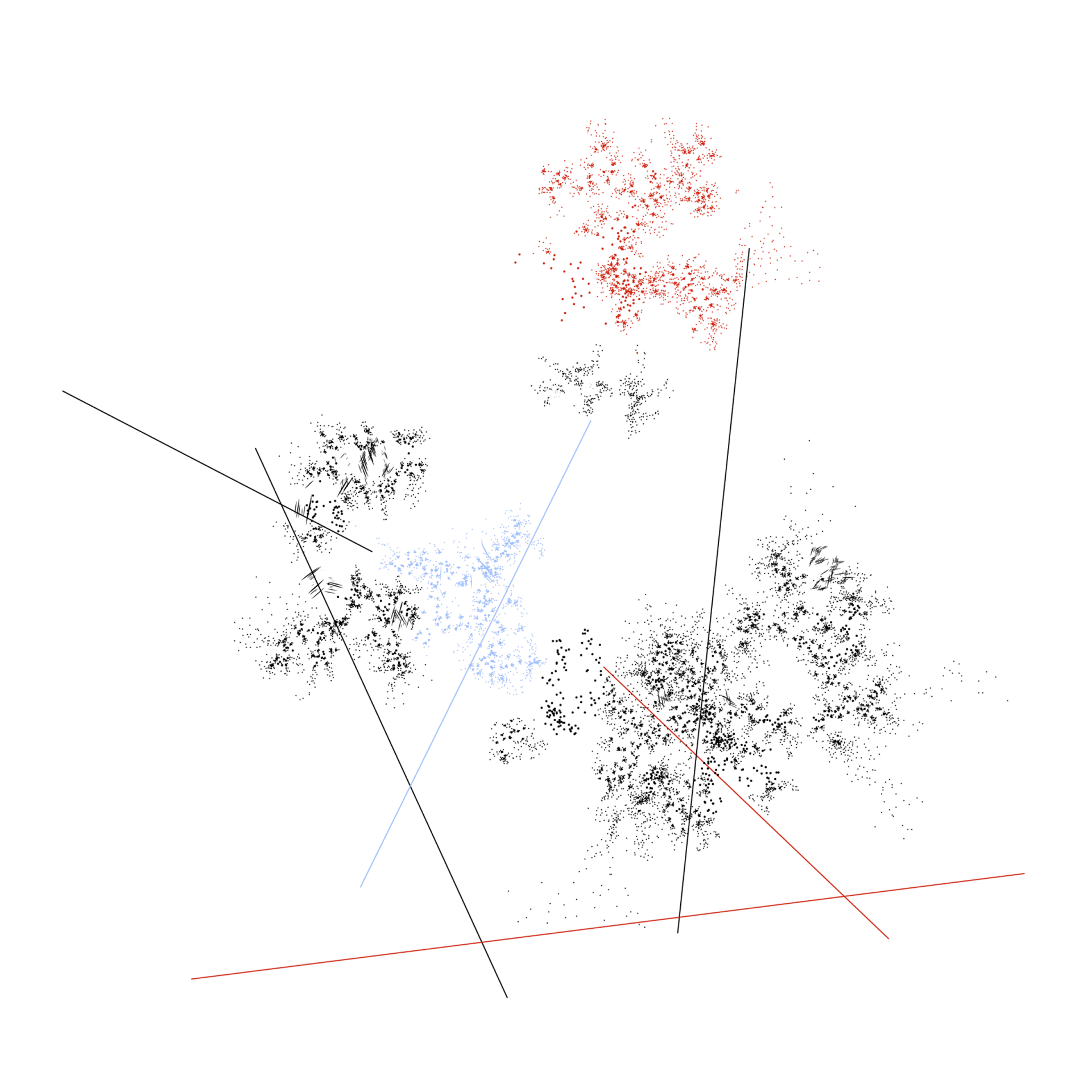
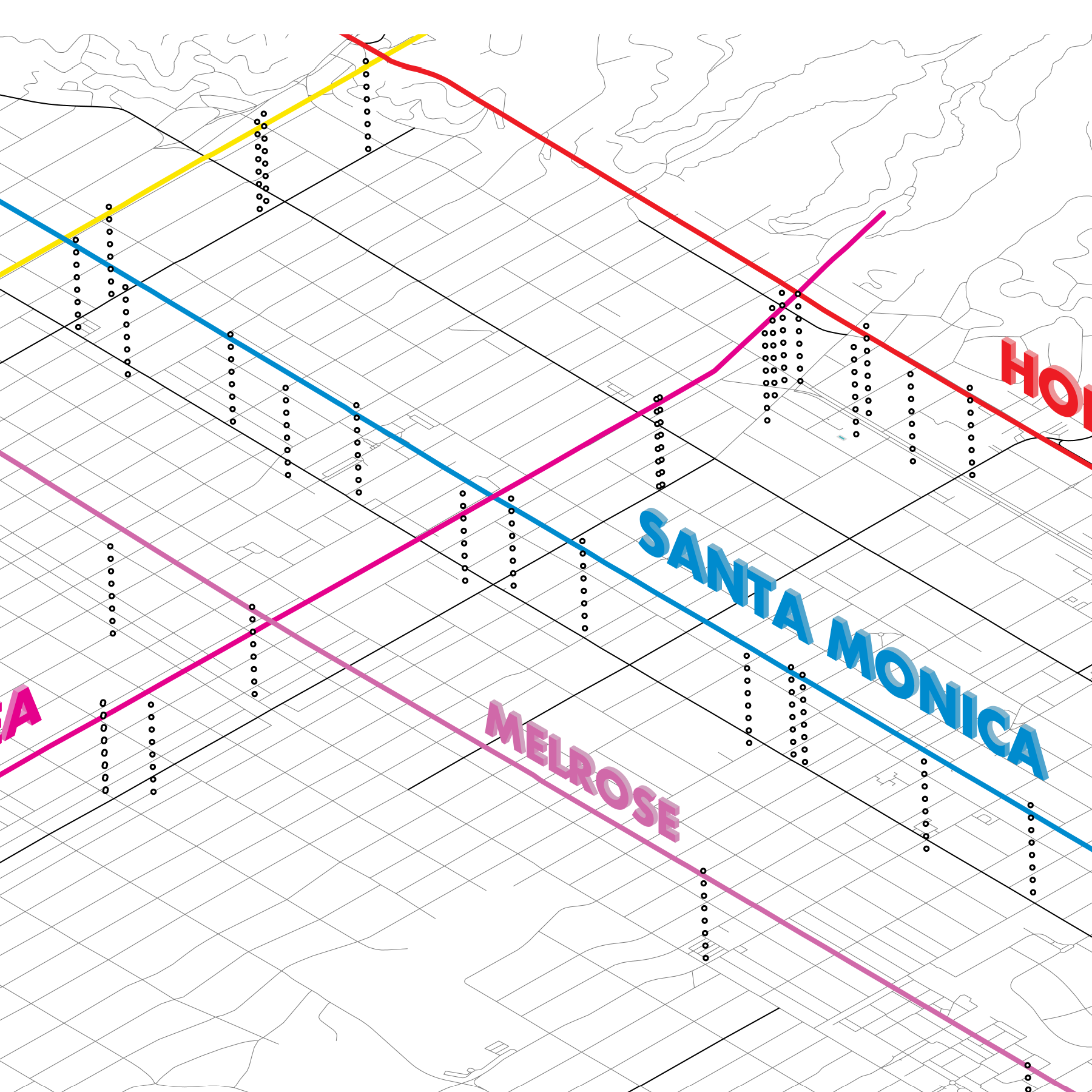
Los Angeles is a city shaped by spectacle—defined by its car-centric infrastructure and an urban language that thrives on instant attention and sensory overload. In a landscape built for speed and surface, the future city dweller—the hopeful pedestrian, the carless student—finds little space to pause, reflect, or simply be.
This thesis proposes a network of sensorial refuges dispersed throughout the city: spaces of retreat embedded within the chaos, architecturally defined by the vernacular materials of Los Angeles—the everyday objects and surfaces that quietly shape its urban fabric.
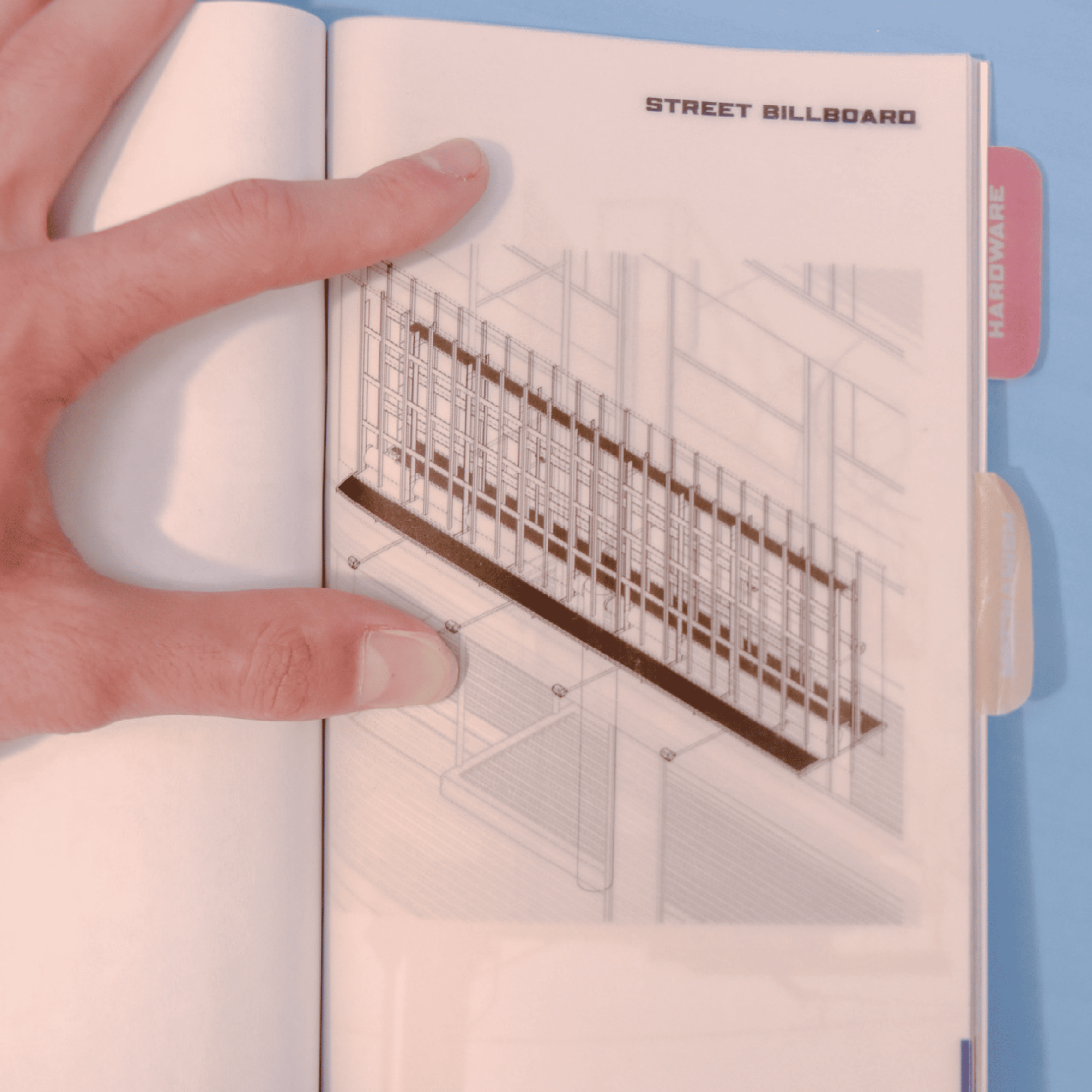
Reimagining the billboard—a symbol of LA’s visual excess—as a new urban beacon, these interventions offer moments of quiet introspection amid the noise. Anchoring this network, a central hub located on Melrose functions as an “urban cloister,” inviting passersby to step out of the overstimulated flow and into a space of calm, attention, and human-scale experience.
Vestigial Structures
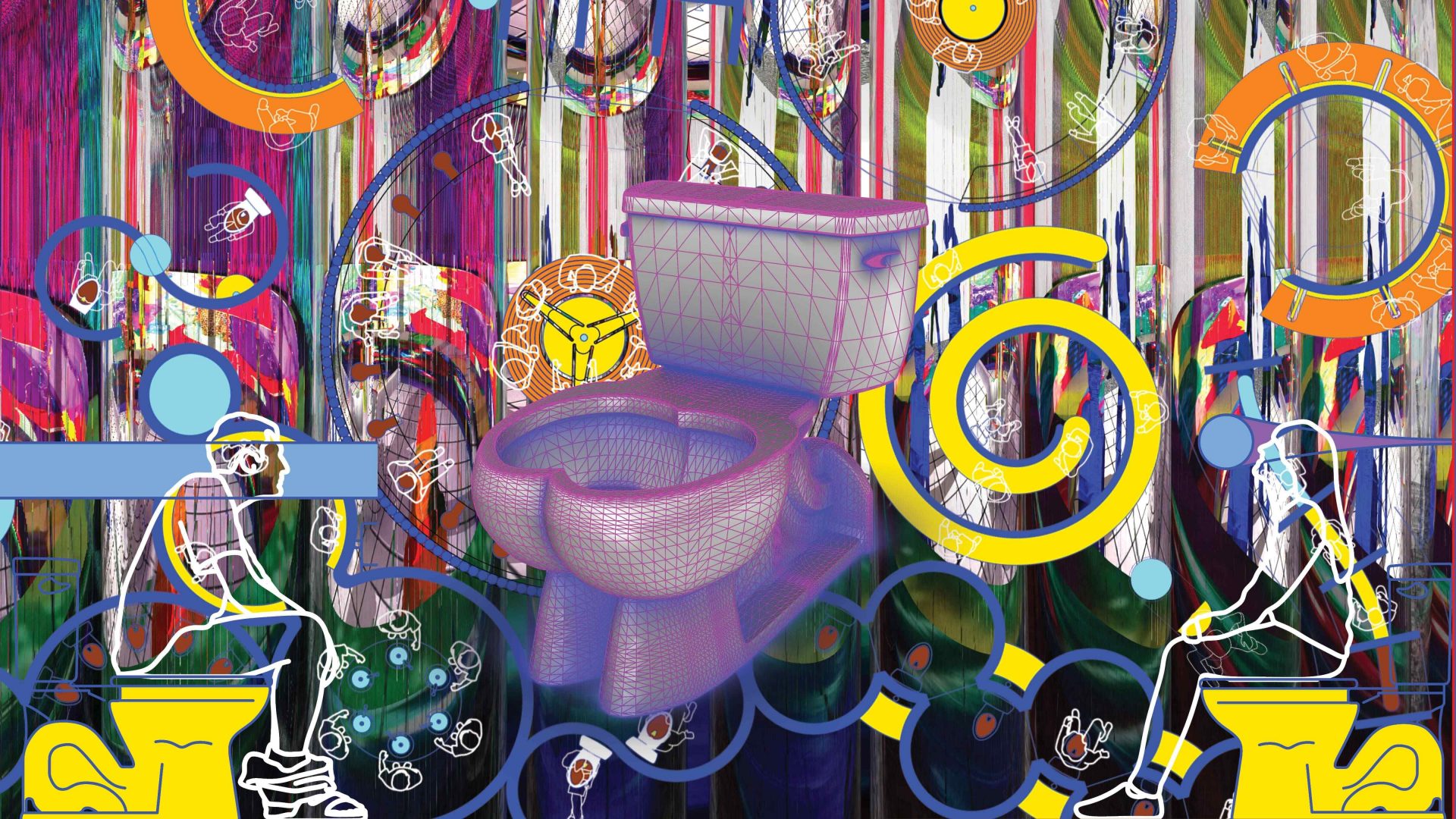
Public bathrooms are not neutral utility—they are relics of social control. Gender-segregated restrooms are vestigial structures of a patriarchal past, encoding binary ideologies into architecture. This project reclaims the bathroom as a biopolitical site of collective care. It proposes a modular, expandable public sanitation system that uses public land, fire hydrants, and sustainable water filtration to center equity, safety, and ecological responsibility. No longer hidden in back rooms, these bathrooms become visible civic statements—spaces of dignity, not division.
Constructed from reflective, permeable, and light-bending materials, the units promote transparency, hygiene, and visibility. Their form is as adaptive as the bodies they serve, offering not just toilets, but drinking water, showers, laundry, and shelter. This is infrastructure as sanctuary—a model for urban public space that transforms exclusion into inclusion, and waste into renewal. In doing so, it dismantles outdated codes and reimagines public bathrooms as sites of urban transformation.
In the Event of Total Loss
Two bodies field the impacts of the built environment’s destruction post-disaster: those who face damage to the structures they occupy, and the policies that govern their status after the event. United in an inverse relationship, insurance companies rely on risky behavior to shape profits while policyholders embrace the moral hazard of establishing themselves in places destined for eventual collapse. Absurdity is inherent to this connection; both the risk-sharing pools of insurance and the near guarantee of eventual natural destruction are paradoxical blankets of comfort. Building upon precedents of kit homes in cities at the epicenter of the inevitable Cascadia earthquake, this project interprets ruin as opportunity to create disaster resilience with a catalog of homes that – rather than evade loss – embrace the absurd irrationality of hazardous environments and homeowner’s policies by developing a design language that projects post-disaster payouts from individual willingness absorb risk.
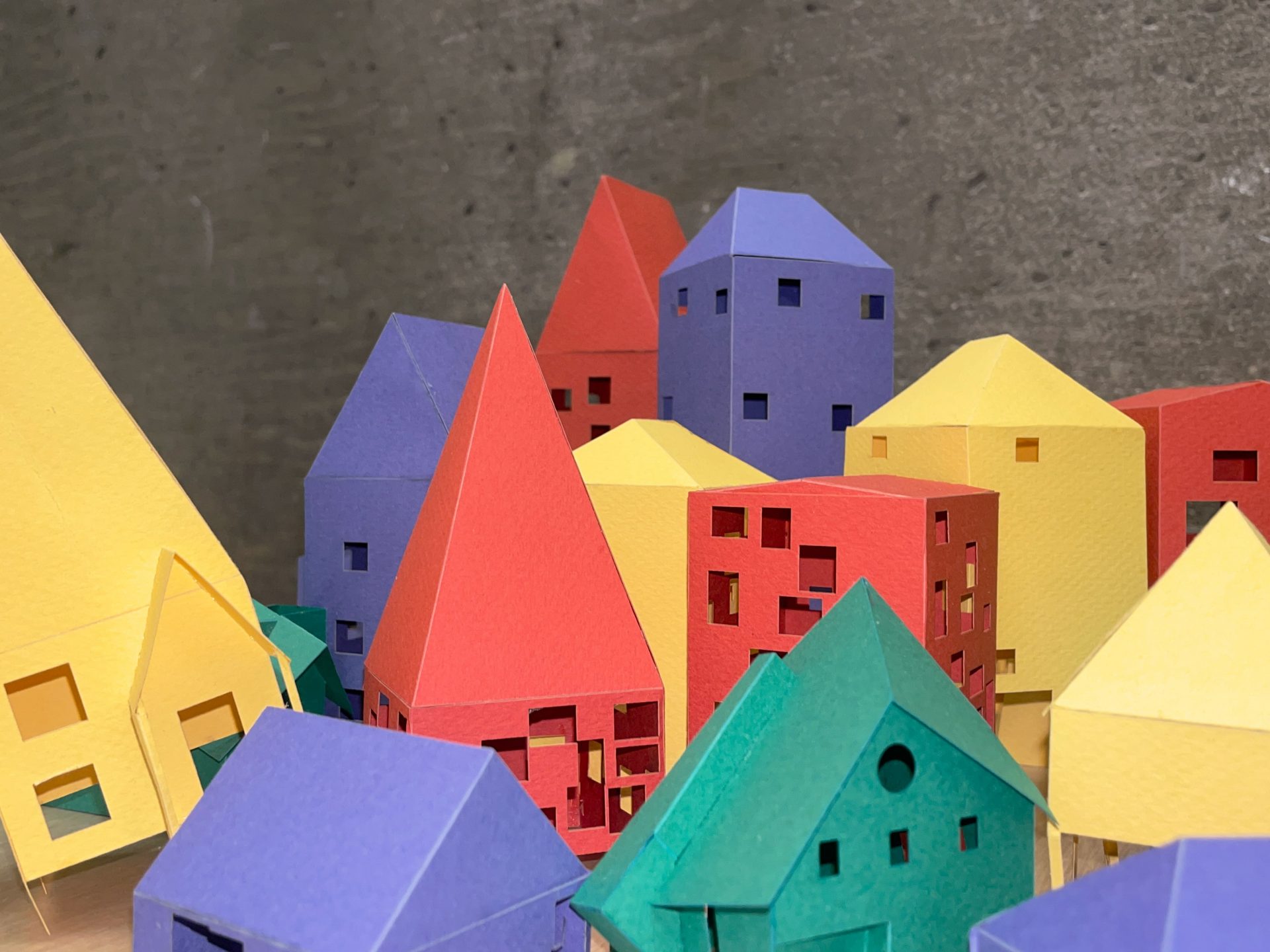
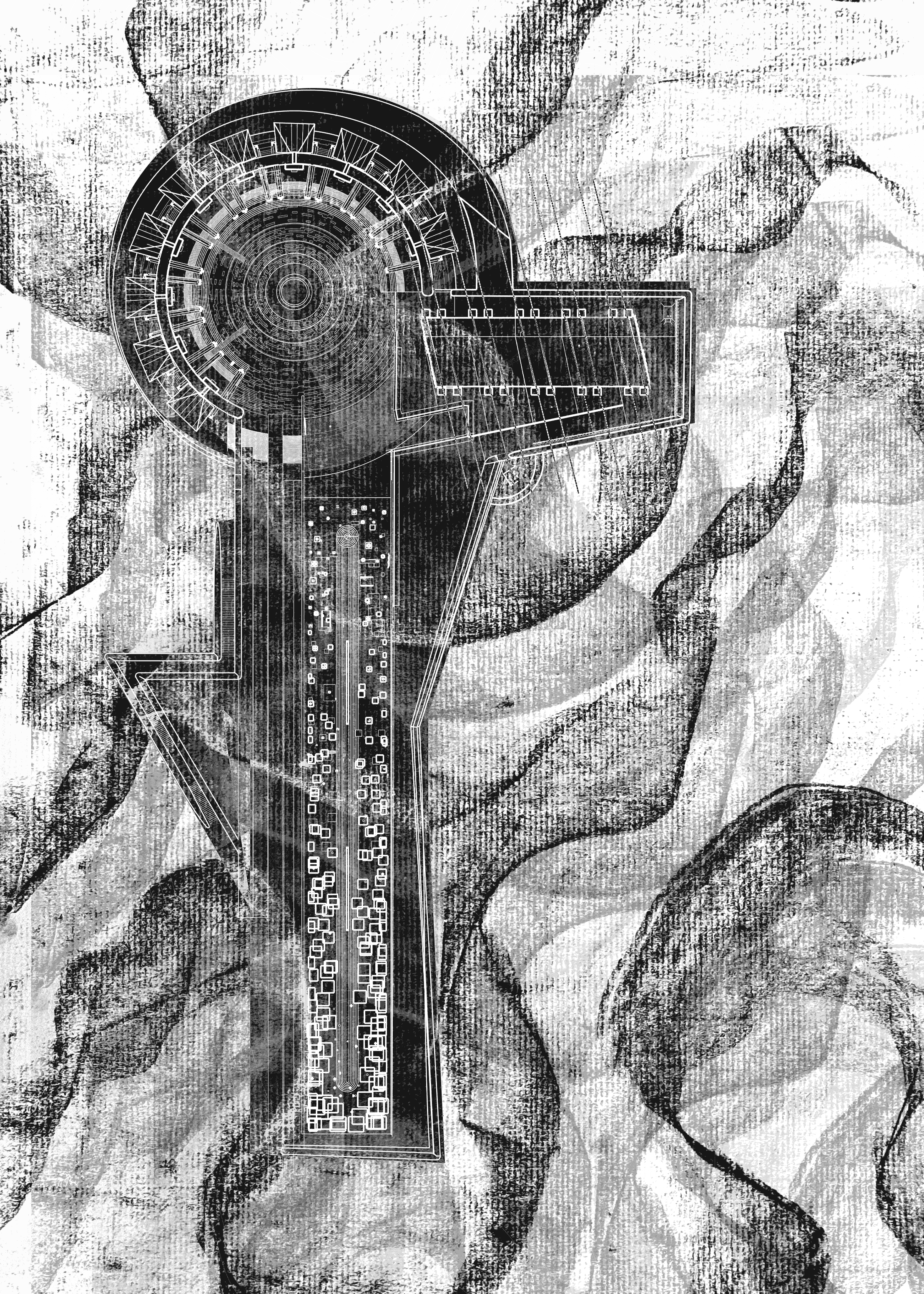
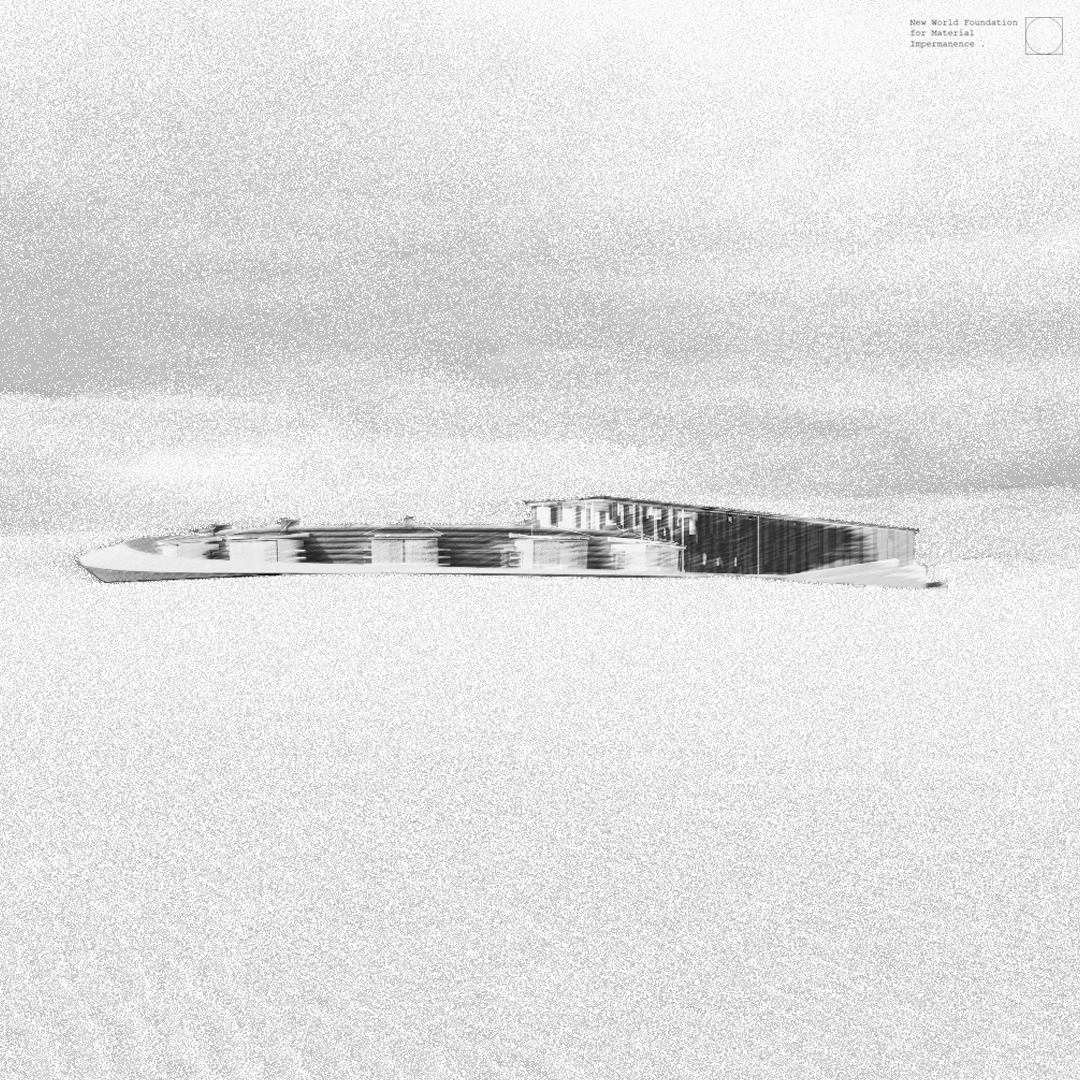
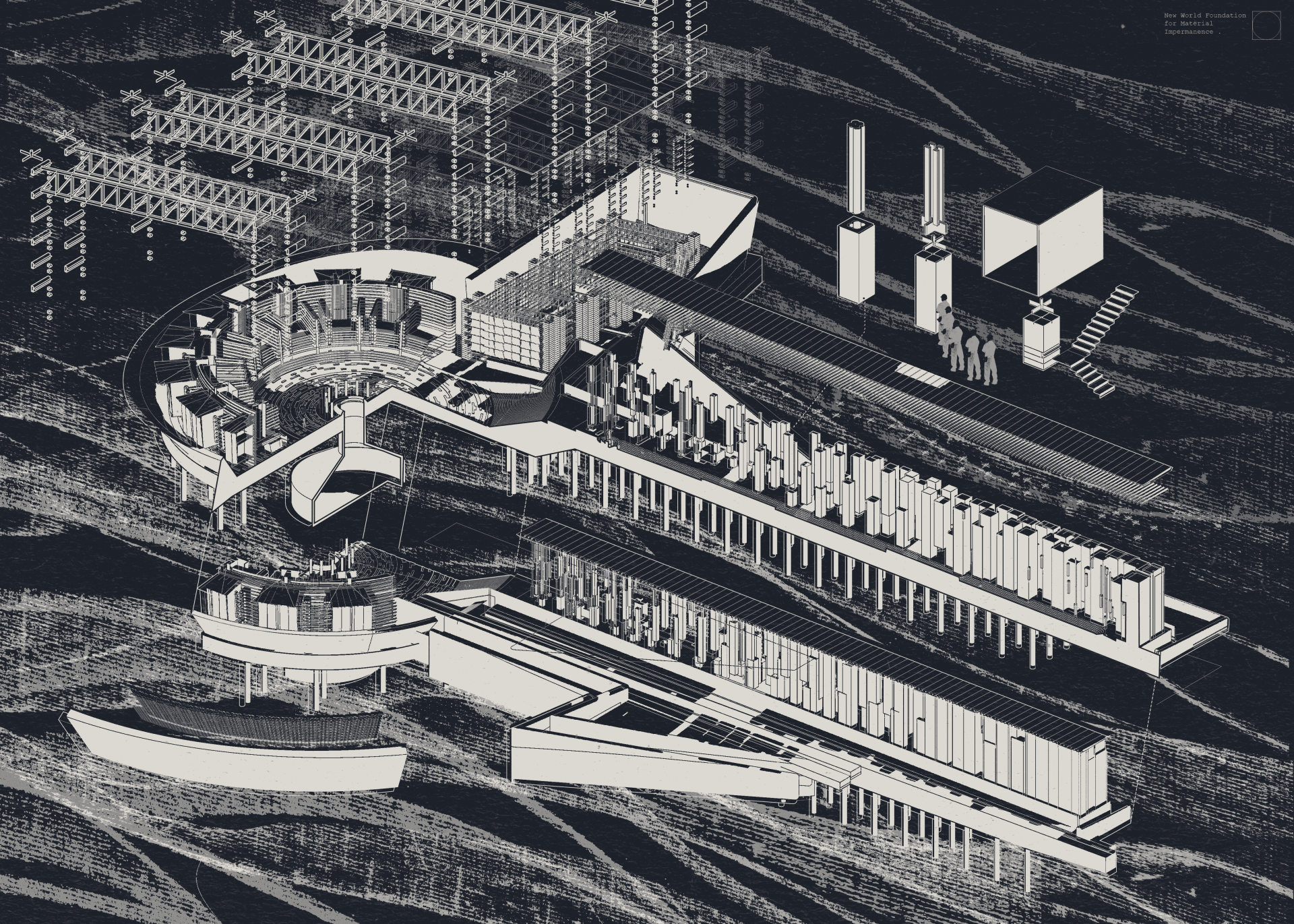
THE NEW WORLD FOUNDATION FOR MATERIAL IMPERMANENCE.
In a world that is perceptually becoming more immaterial, societies paradoxically rely on more material resources to facilitate the mirage of endless consumer goods. The fleeting nature of our experiences, objects, and buildings has left us disillusioned and dependent on economically driven building practices that perpetuate negative material habits. As building waste reaches a critical threshold, new construction must evolve to be intelligently responsive to change rather than resistant to it.
In the year 2482, following bureaucratic collapse and the decentralization of economies, the New World Foundation of Material Impermanence was formed. Their mission statement goes as follows:
“We represent an Ever-New Architecture – a sacred unfolding between the seemingly permanent and ephemeral. Through layering material systems with varying degrees of permanence, we are shifting the conventional linear trajectory—design, construction, and eventual obsolescence—toward a cyclical process of regeneration. The ebbs and flows of the material world manifest as a tectonic logic that anticipates future changes and inevitable obsolescence. Our work transcends mere reflection of exploitative material practices, it represents a meditation on death as a core principle of life. It is our voices, thoughts, and symbolic stones – all waiting to be swallowed by the sands”.